Pata de gallo
Asterogyne Martiana • Cortadera • Rabihorcao • Pico • Capoca • Pacuquilla • Suita
Pata de gallo in Motion
The Essence
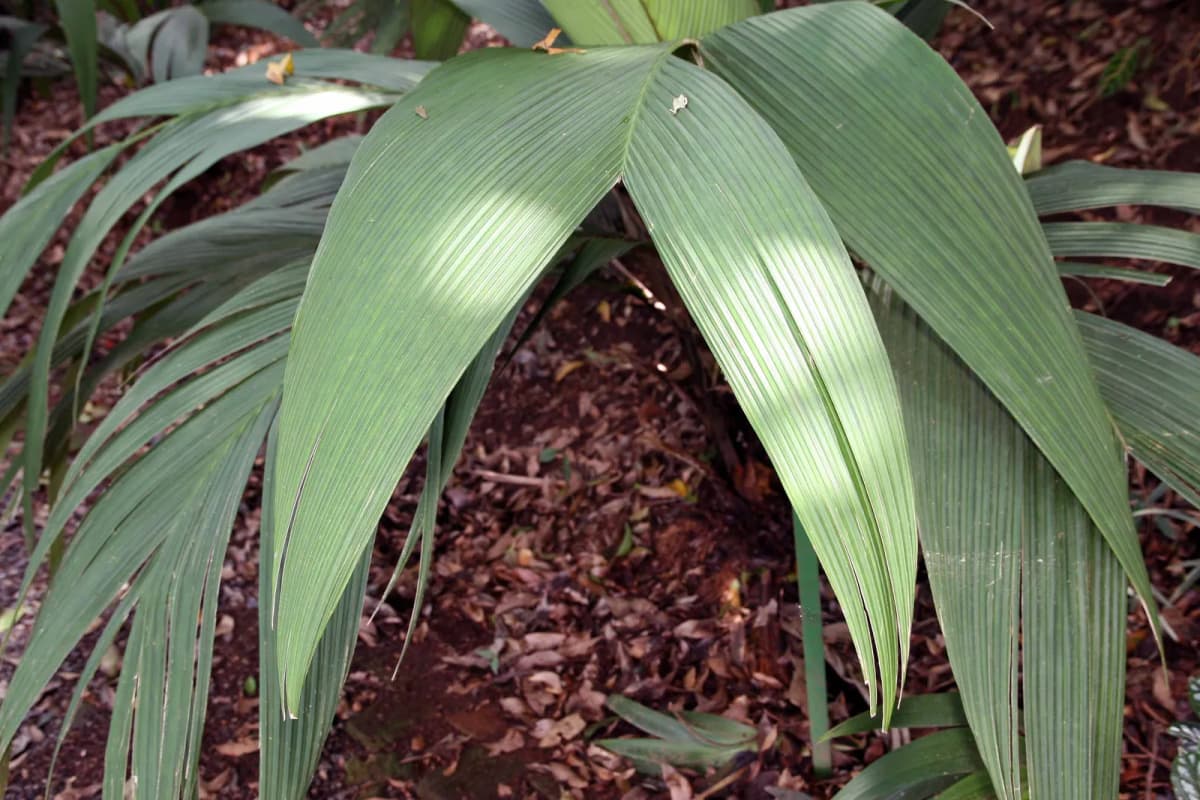
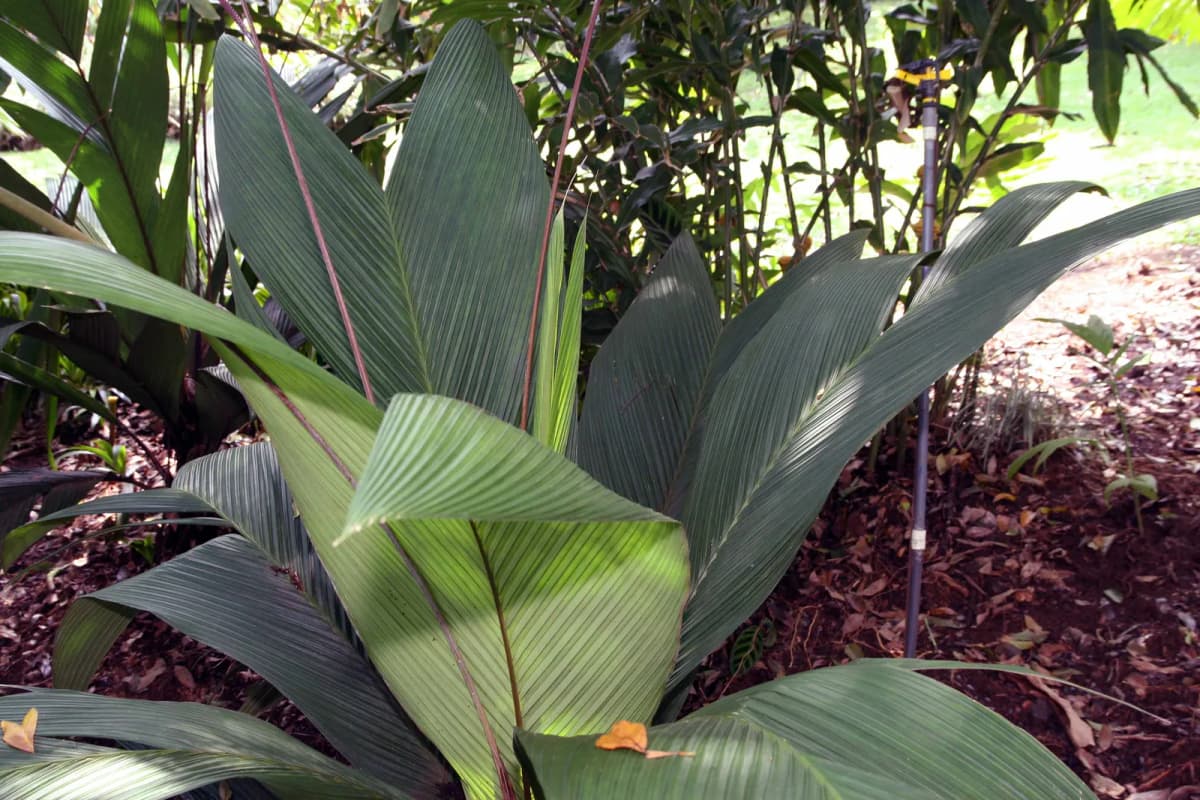
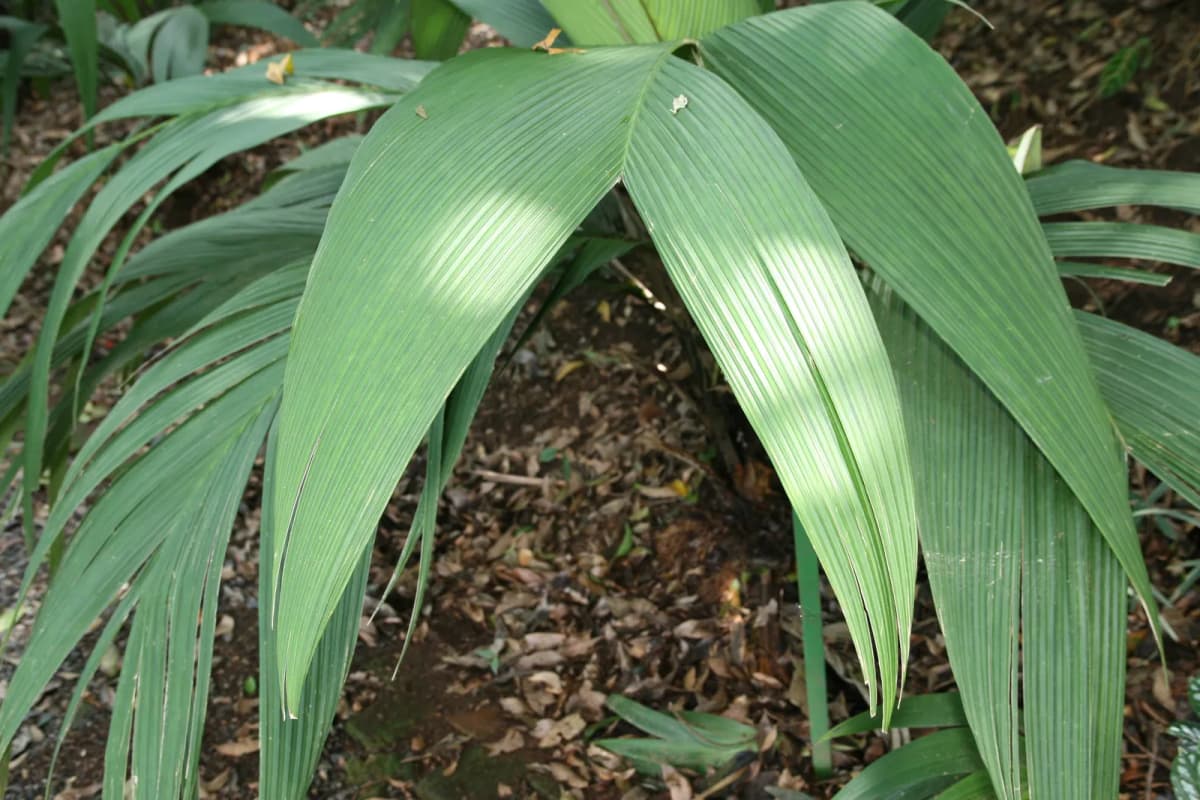
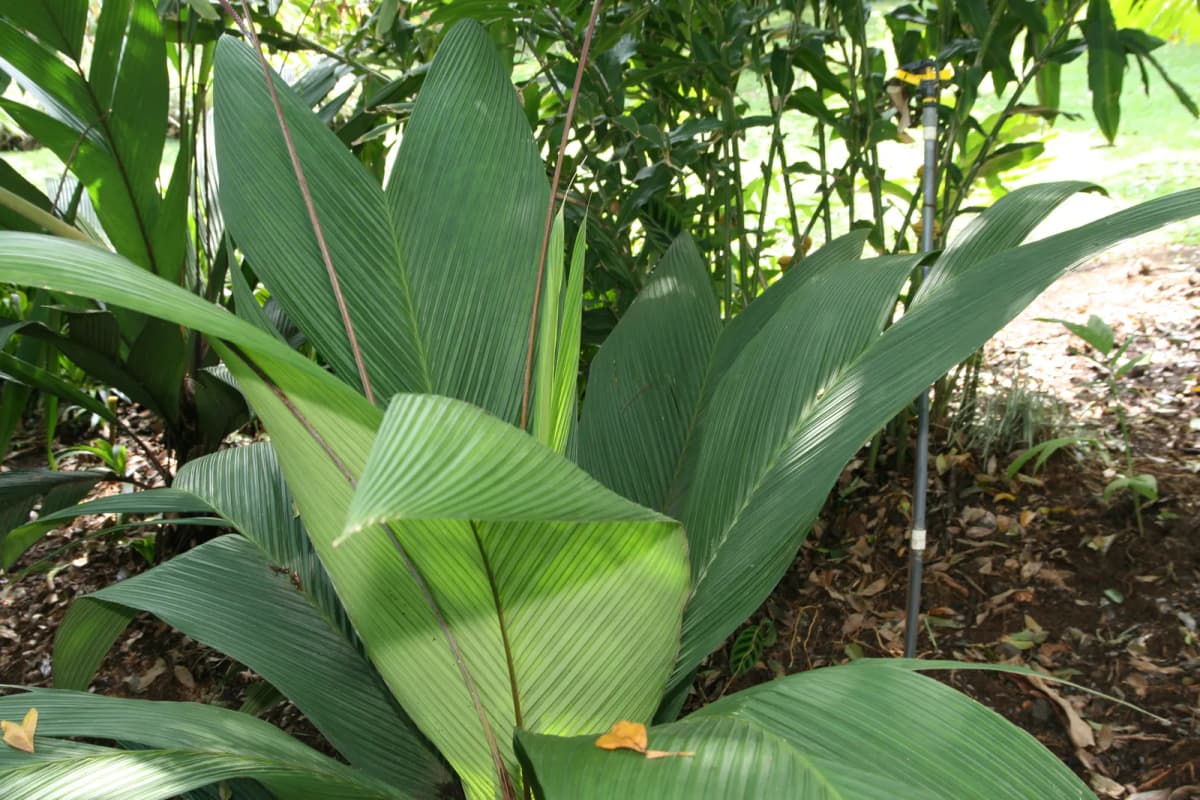
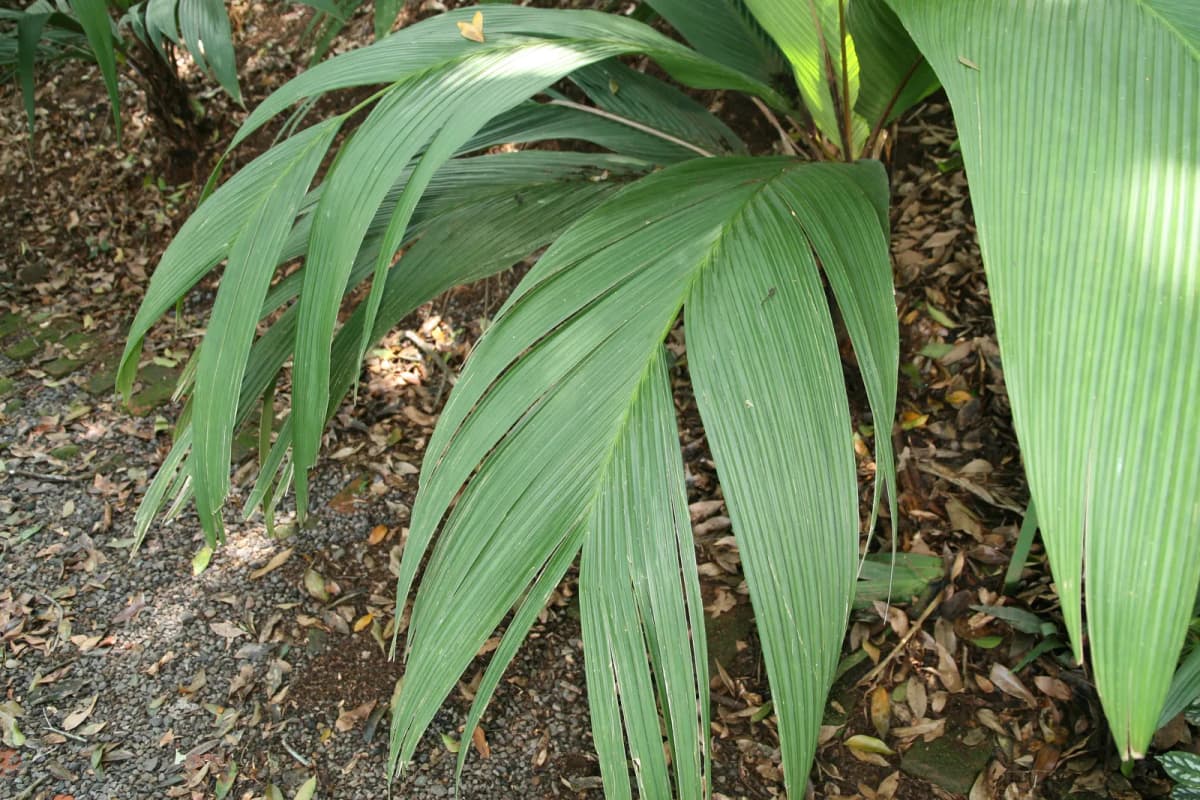
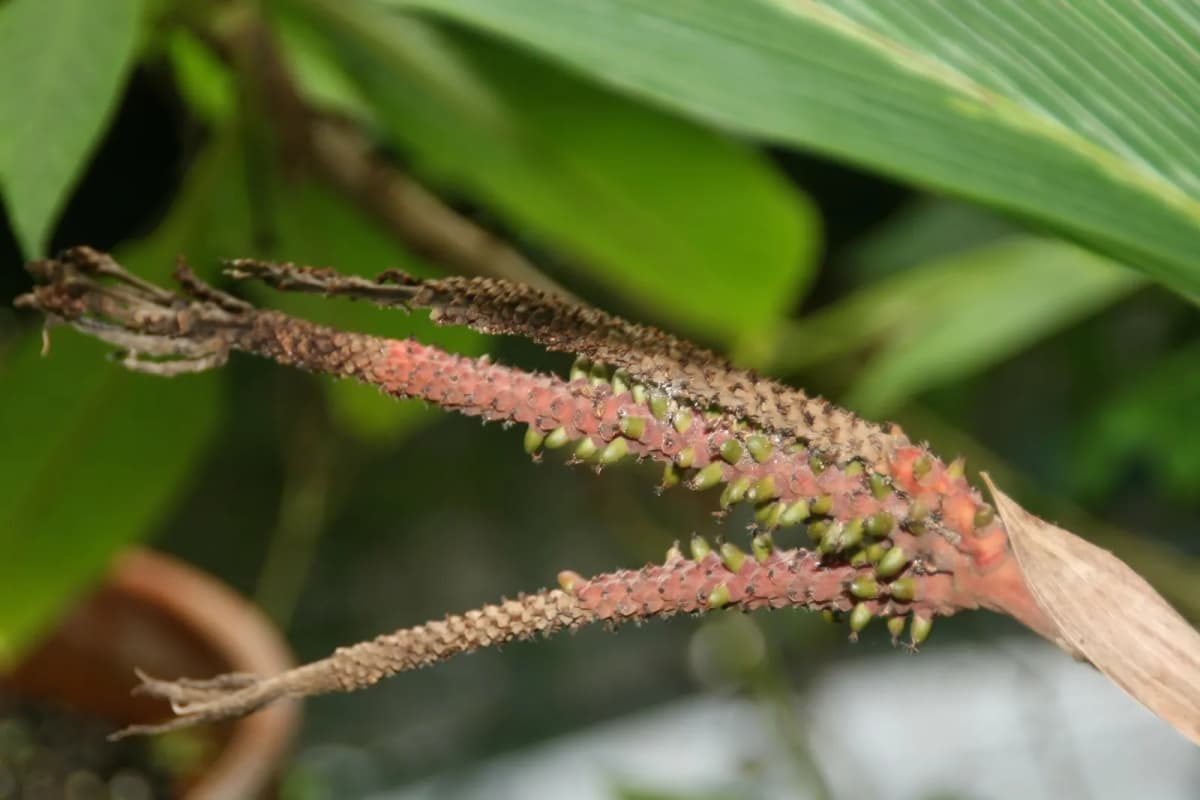
"Asterogyne martiana is by far the most widely distributed member of Asterogyne, a genus of five species in the tribe Geonomateae (subfamily Arecoideae); three of the others are Venezuelan endemics and the fifth is confined to French Guiana. It is a small solitary understorey palm reaching about 2.5 m, carrying a crown of roughly 8 to 15 simple, deeply notched bifid leaves. The genus name refers to its star-shaped female flowers, and the palm is pollinated by syrphid flies (hoverflies), the subject of a 1970 study by Schmid in Principes. The smooth, elongate fruit is reddish brown when immature and black at full maturity. Its long-lasting leaves are collected by local people to roof huts, and Useful Tropical Plants records the fruit as edible. It is also a popular palm with collectors and is grown as a shade ornamental, sold under the Nicaraguan vernacular name Pata de gallo. No IUCN Red List assessment could be found for the species - GBIF's Red List endpoint returns Not Evaluated - although it is described as abundant within its range."
Asterogyne combines the Greek aster (star) and gyne (female), referring to the star-shaped female flowers. The epithet martiana honours the German botanist and explorer Carl Friedrich Philipp von Martius (1794-1868), known for his work on palms and for initiating a comprehensive flora of Brazil.
First described as Geonoma martiana H.Wendl. in Linnaea 28: 342 (1856). The accepted combination, Asterogyne martiana (H.Wendl.) H.Wendl. ex Hemsl., dates to Biologia Centrali-Americana, Botany 3: 409 (1885). PALMweb and some other references instead cite the combination as H.Wendl. ex Drude, Nat. Pflanzenfam. 2(3): 59 (1889), which IPNI treats as an isonym. Synonyms include Geonoma martiana, Geonoma trifurcata and Asterogyne minor.
Natural Habitat
An understorey palm of wet and pluvial tropical forest, west of the Andes, mostly below 500 m elevation and ascending to about 1,100 m in Colombia. Useful Tropical Plants describes it as an abundant understorey plant of lowland rainforest. Its range runs from Central America south to northwestern Ecuador, where it reaches its southern limit.
Curated Specimens
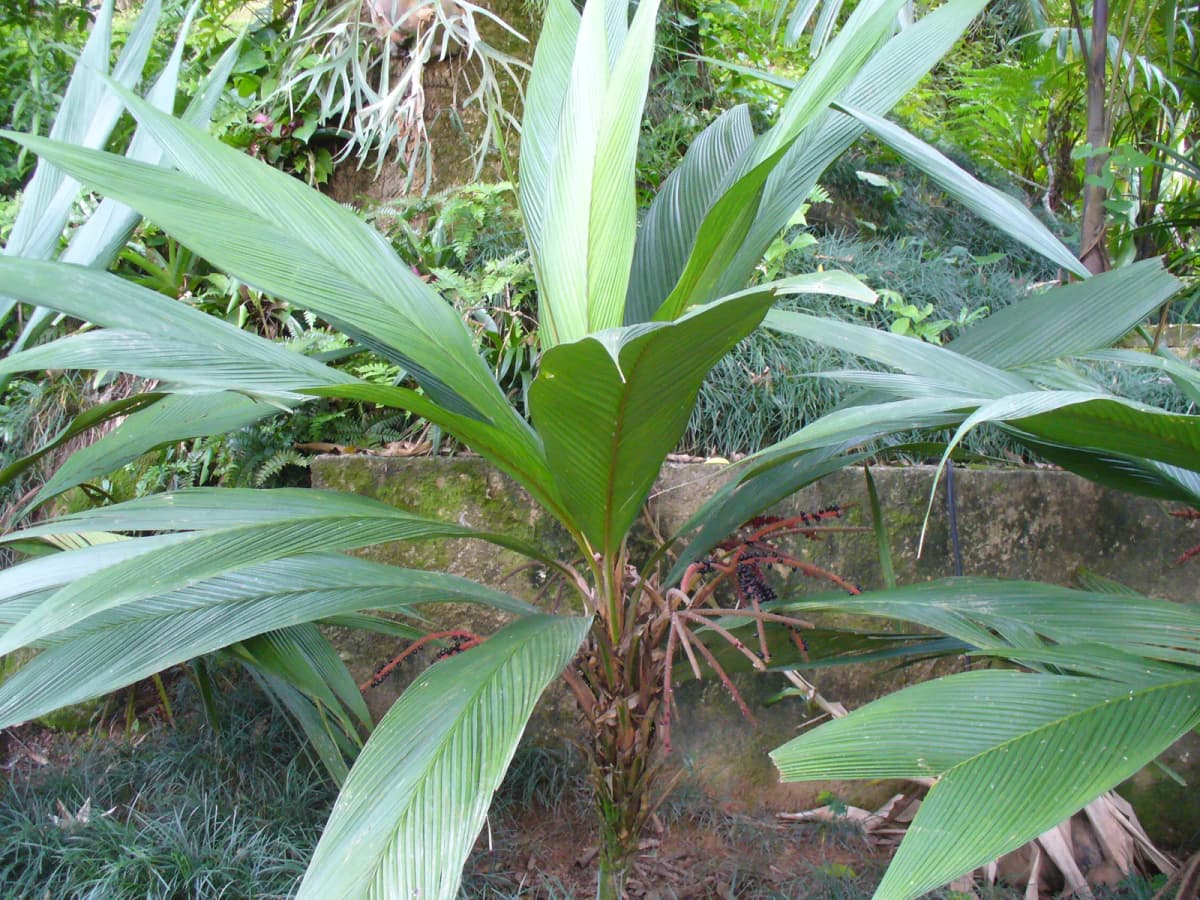
Botanical specimen of Asterogyne Martiana.
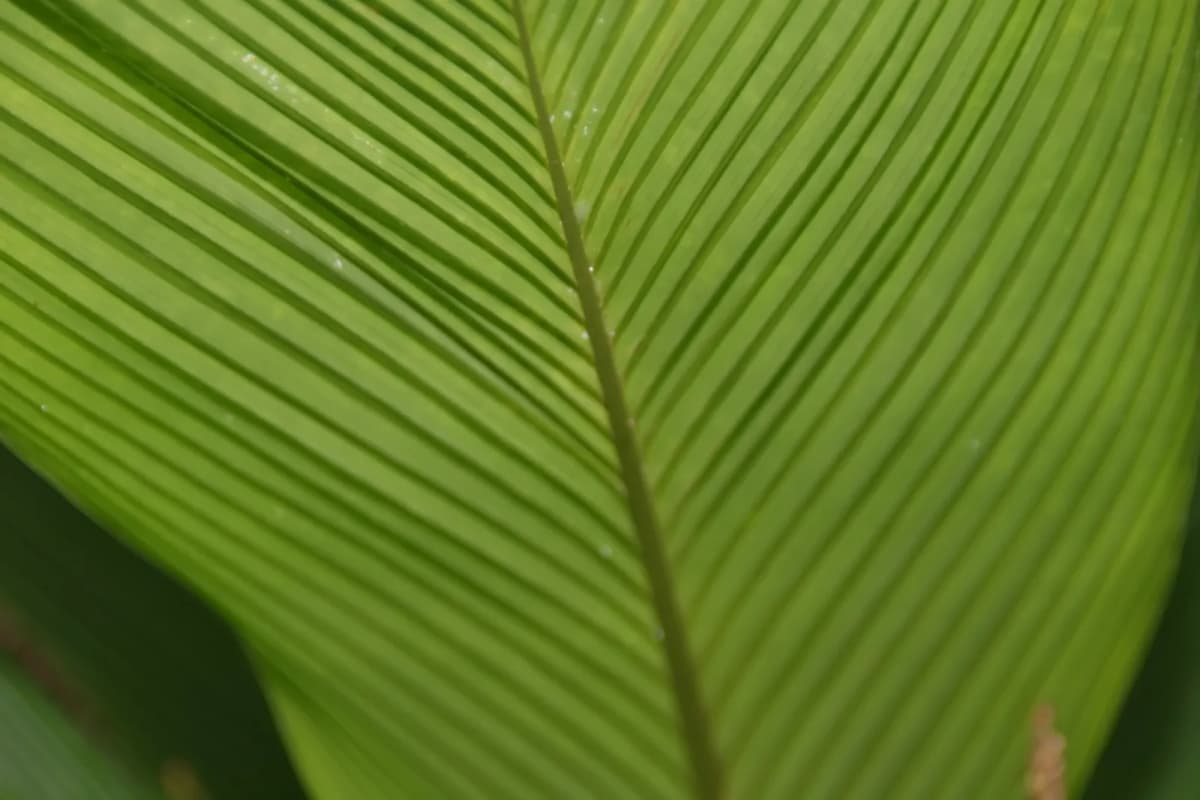
Botanical specimen of Asterogyne Martiana.
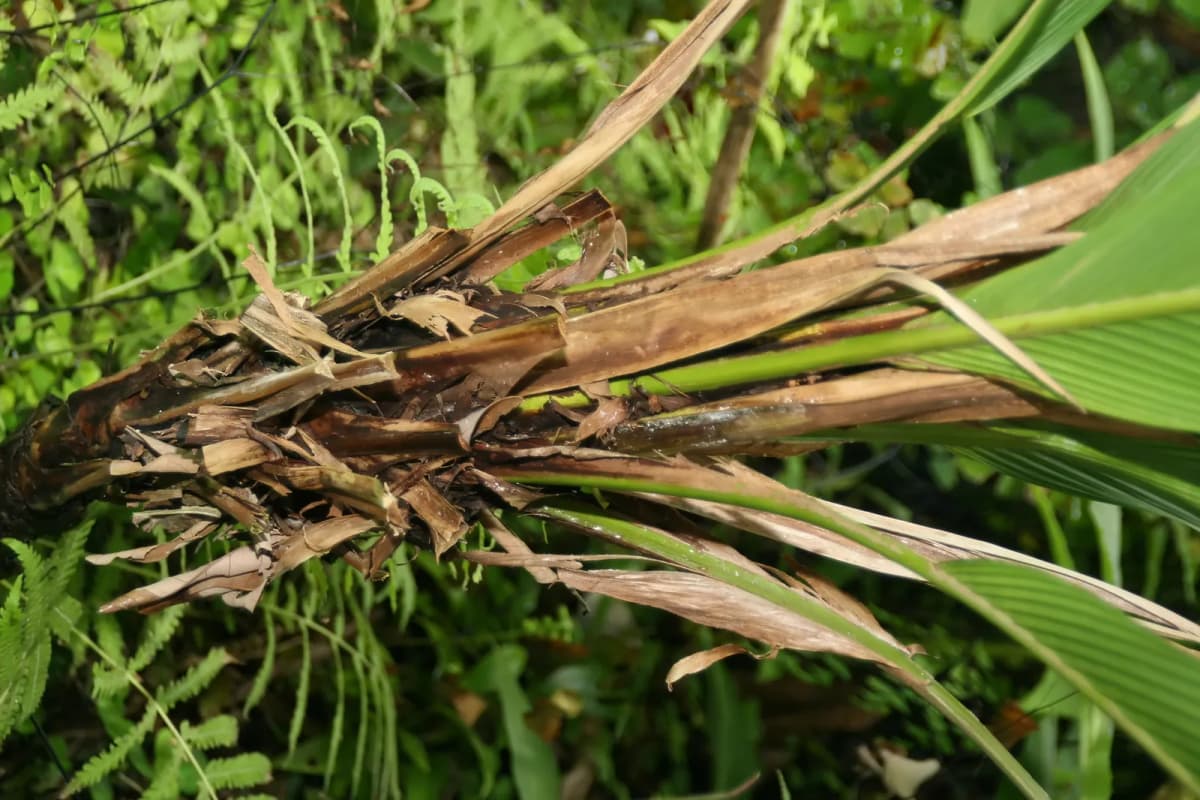
Botanical specimen of Asterogyne Martiana.
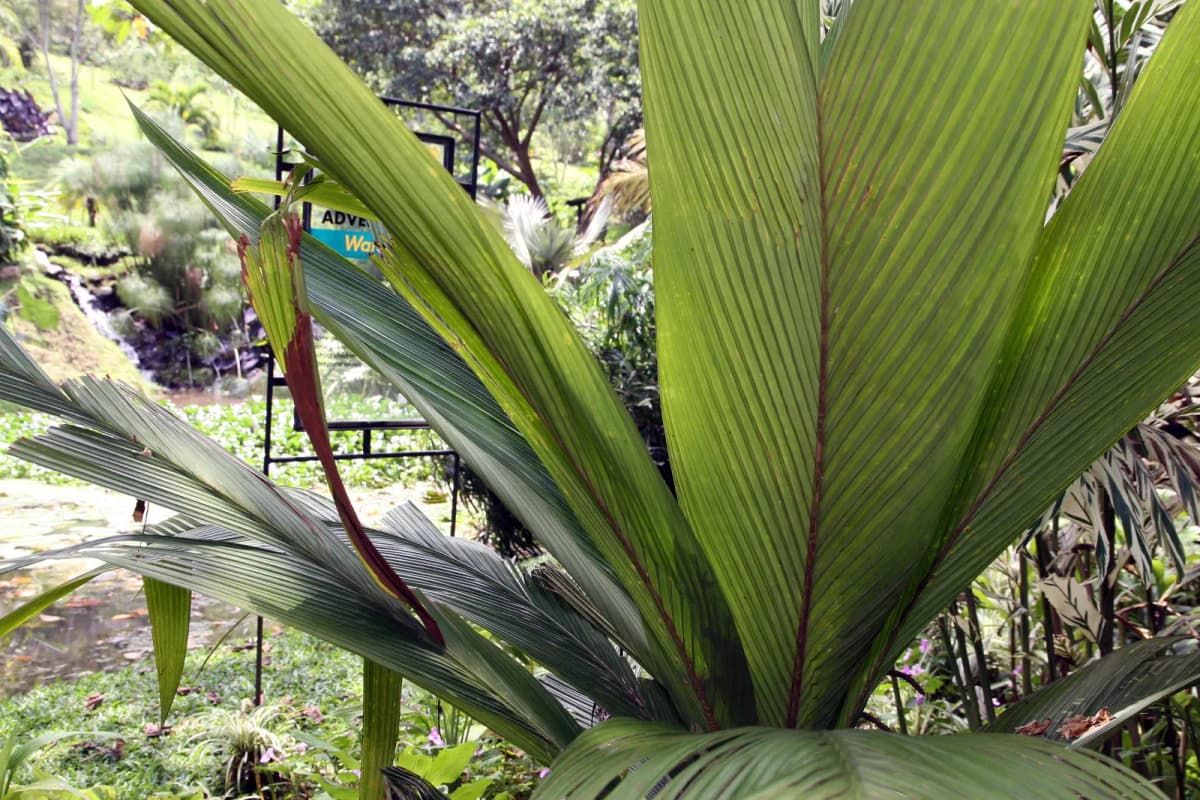
Botanical specimen of Asterogyne Martiana.
Botanical specimen of Asterogyne Martiana.
Botanical specimen of Asterogyne Martiana.
Botanical specimen of Asterogyne Martiana.
Botanical specimen of Asterogyne Martiana.
Botanical specimen of Asterogyne Martiana.
Botanical specimen of Asterogyne Martiana.
Biology & Morphology
"A small solitary evergreen palm reaching about 2.5 m, with an unbranched stem 2-3 cm in diameter below the crown (Useful Tropical Plants gives 3-5 cm) that is often subterranean and may be erect or creeping, rooting as it grows. The crown carries about 8-15 leaves, up to 18 by some accounts, the blades 60-100 cm long and 20-30 cm wide, simple and deeply notched at the tip or irregularly divided into 1-3 broad, multi-ribbed pinnae; new leaves emerge in shades from yellow and orange to pink and red, maturing dark green above and pale green beneath. Inflorescences are 50-80 cm long with 3-10 straight branches whose flower pits are set in distinct longitudinal rows, and the smooth, elongate fruit is about 1 cm long, reddish brown when immature and black at full maturity."
Morphology
Symmetrical columnar trunk with characteristic leaf-scar patterning and lignified outer cortex.
Adventitious root system spreading radially to maximize hydraulic intake in competitive soil matrices.
Distinctive unknown habit and medium stature providing a unique architectural profile.
Foliage
Vibrant green canopy featuring characteristic frond architecture optimized for photon interception and transpiration efficiency.
Specialized green tissues exhibiting moderate metabolic expansion rates.
Reproduction
Complex inflorescence branching typical of the Asterogyne clade, exhibiting seasonal reproductive synchrony.
Nutrient-dense drupes encased in a fibrous pericarp, optimized for protection and dispersal.
Dormant embryonic tissues with high endosperm density, characteristic of resilient Asterogyne specimens.
Ecology
Active rhizosphere communication with mycorrhizal fungal networks, enhancing phosphorus and micronutrient uptake.
Interlocked with local entomological vectors, primarily Meliponini bees or specialized coleoptera.
Gravity-mediated and animal-vectored dispersal mechanisms ensuring regional genetic distribution.
Germination & Propagation
Germination Timeline
Hydration soak.
Incubation in moist media.
Sprout emergence.
Germinates easily. No pre-treatment is described in the sources consulted, and no specific temperature range could be confirmed.
Cultivation & Care
Light
Requires shade. Monaco Nature Encyclopedia recommends shady positions sheltered by trees and shrubs, as in nature; Useful Tropical Plants recommends woodland shade, and PACSOA a sheltered, shady position.
Water
Needs good atmospheric humidity together with sharp drainage. Sources differ on soil moisture: Monaco Nature Encyclopedia warns that it does not stand humid soils or water stagnation and advises against frequent watering, while Useful Tropical Plants describes it as needing moist to wet conditions.
Soil
Very free-draining. Monaco Nature Encyclopedia recommends a mix of loam with river sand, agri-perlite and other inert material such as lapilli.
A tropical understorey palm with little cold tolerance. Monaco Nature Encyclopedia reports it standing lows of about 4 C only occasionally and for short periods, and considers it cultivable only in subtropical or warm temperate climates where it never freezes. No USDA zone rating was confirmed in the sources consulted.
Pests, Diseases & Care
Pests
Coraliomela brunnea (Leaf Miner)
LOWNecrotic galleries in young leaves, particularly in spiny species.
Targeted contact insecticides during peak emergence.
Strategus aloeus (Ox Beetle)
HIGHAdults bore into the base of young palms, causing structural instability.
Soil drenching and manual inspection of the root flare.
Diseases
Colletotrichum spp. (Anthracnose)
MODERATEBlack necrotic spots on leaflets under high humidity.
Copper-based fungicides and reduction of overhead irrigation.
Thielaviopsis punctulata (Black Scorch)
HIGHBlackening and dwarfing of newly emerging fronds.
Wound protection and application of thiophanate-methyl.
Nutritional Deficiencies
Interveinal chlorosis (Younger fronds)
Chelated Fe-EDDHA Soil Pulse
Marginal chlorosis (Older fronds)
Mg-Sulfate (Kieserite) saturation
Frizzletop / Distorted spear
Systemic Mn-Sulfate application
Care Tips
Biosurveillance pulse synchronized for America regional vectors.
Apply prophylactic fungicidal drench in the nocturnal phase.
Improve canopy ventilation to disrupt fungal sporulation cycles.
Sources & Conservation
Curated- Asterogyne martiana (H.Wendl.) H.Wendl. ex Drude - PALMweb (Borchsenius description: morphology, habitat, distribution, uses) · accessed 2026-08
- Asterogyne martiana - Useful Tropical Plants (cites Henderson et al., Field Guide to the Palms of the Americas) · accessed 2026-08
- Asterogyne martiana - Monaco Nature Encyclopedia · accessed 2026-08
- Asterogyne martiana - PACSOA Wiki (Palm & Cycad Societies of Australia) · accessed 2026-08
- Asterogyne (genus) - Wikipedia · accessed 2026-08
- International Plant Names Index (IPNI) record 664278-1 - nomenclature and basionym Geonoma martiana H.Wendl., Linnaea 28: 342 (1856) · accessed 2026-08
- GBIF IUCN Red List category for Asterogyne martiana (returns NOT_EVALUATED / NE) · accessed 2026-08
- Pollination Systems of Palms (Arecaceae) - Journal of Pollination Ecology (cites Schmid 1970, Principes 14: 39-49, on syrphid-fly pollination of Asterogyne martiana) · accessed 2026-08