Prickly palm
Bactris Plumeriana • Prickly pole • Coco macaque • Koko makak • Ti cro-cro • Catey • Palma de catey • Cocomacao
The Essence
"Bactris plumeriana is a spiny, usually clustering palm endemic to the Caribbean island of Hispaniola, native to both Haiti and the Dominican Republic. It grows 4-10 m tall, its stems ringed with blackish spines of various length facing in different directions, and carries a crown of six to nine slightly recurved pinnate leaves; the depressed-globose fruits, 1.3-1.5 cm across, ripen red to orange-red. The palm is known in Haiti as coco macaque (Haitian Creole koko makak) and in the Dominican Republic as catey. According to the IUCN assessment it is renowned in Haiti for stems worked into walking canes and clubs, and is used as an implement in Haitian Vodou to which magical properties are attributed; the durable poles also serve in construction, the oil-rich fruit is fed to pigs, and the endosperm is boiled and eaten. Monaco Nature Encyclopedia calls the crown particularly elegant but notes the palm is little used as an ornamental, because the long spines on stem and leaves force planting well away from paths and parking areas. Salzman & Judd (1995) placed it in a clade with B. cubensis and B. jamaicana, the other Greater Antillean species of Bactris. It was assessed as Least Concern (ver 3.1) in 2022 by J. Timyan for the IUCN SSC Palm Specialist Group, on the grounds of a wide range of life zones, an estimated extent of occurrence of 64,500 km2, presence in many protected areas and tolerance of disturbed ground; the assessment nevertheless notes that the species is nowhere common, typically occurring as a single clump or up to half a dozen individuals at any one site, and that an earlier national appraisal (Peguero et al. 2015, also reflected in the 2016 Dominican Republic Red List cited by iNaturalist) had rated it Endangered. It is documented by 189 occurrence records in GBIF and 51 observations on iNaturalist."
The genus name Bactris comes from the Greek substantive baktron, meaning stick or support, in reference to the use of the stems of some species in the genus as sticks; the epithet plumeriana honours the French botanist and naturalist Charles Plumier (1646-1704), who contributed considerably to the knowledge of the American flora (Monaco Nature Encyclopedia). Carl Friedrich Philipp von Martius published the name in 1844, in A.D. d'Orbigny's Voyage dans l'Amerique Meridionale 7(3): 64.
POWO lists two heterotypic synonyms, Palma gracilis Mill. (1768) and Bactris chaetophylla Mart. (1844). Henderson notes that B. chaetophylla, treated as an ambiguous name by Salzman & Judd, is a synonym of B. plumeriana whose type and description were based on a juvenile leaf. Henderson diagnoses the species by the combination of linear pinnae, 46-67 per side, and the depressed-globose red fruits 1.3-1.5 cm in diameter. The IUCN assessment records that both Acevedo-Rodriguez & Strong (2012) and Salzman & Judd (1995) treat the species as endemic to Hispaniola.
Natural Habitat
Henderson (2000, via Palmpedia) records submontane rain forest on slopes, or savannas, at 20-500 m elevation, and notes the palm along rainforest streams. The 2022 IUCN assessment gives a considerably wider elevation range of 5-1,100 m, in subtropical lowland and lower montane moist forest and rain forest, with annual rainfall from 1,000-1,200 mm in the northern Dominican Republic to 2,400-3,000 mm in the Haitian Massif de la Hotte and around Loma Quita Espuela; it is often present along streams, springs and seepages, and grows on the full range of island soils, from limestone and tuff to granite, serpentine, laterite and basalt. POWO classifies its climate as wet tropical and its lifeform as a tree, and Monaco Nature Encyclopedia describes it in forests and in open areas from sea level up to hilly altitudes.
Curated Specimens
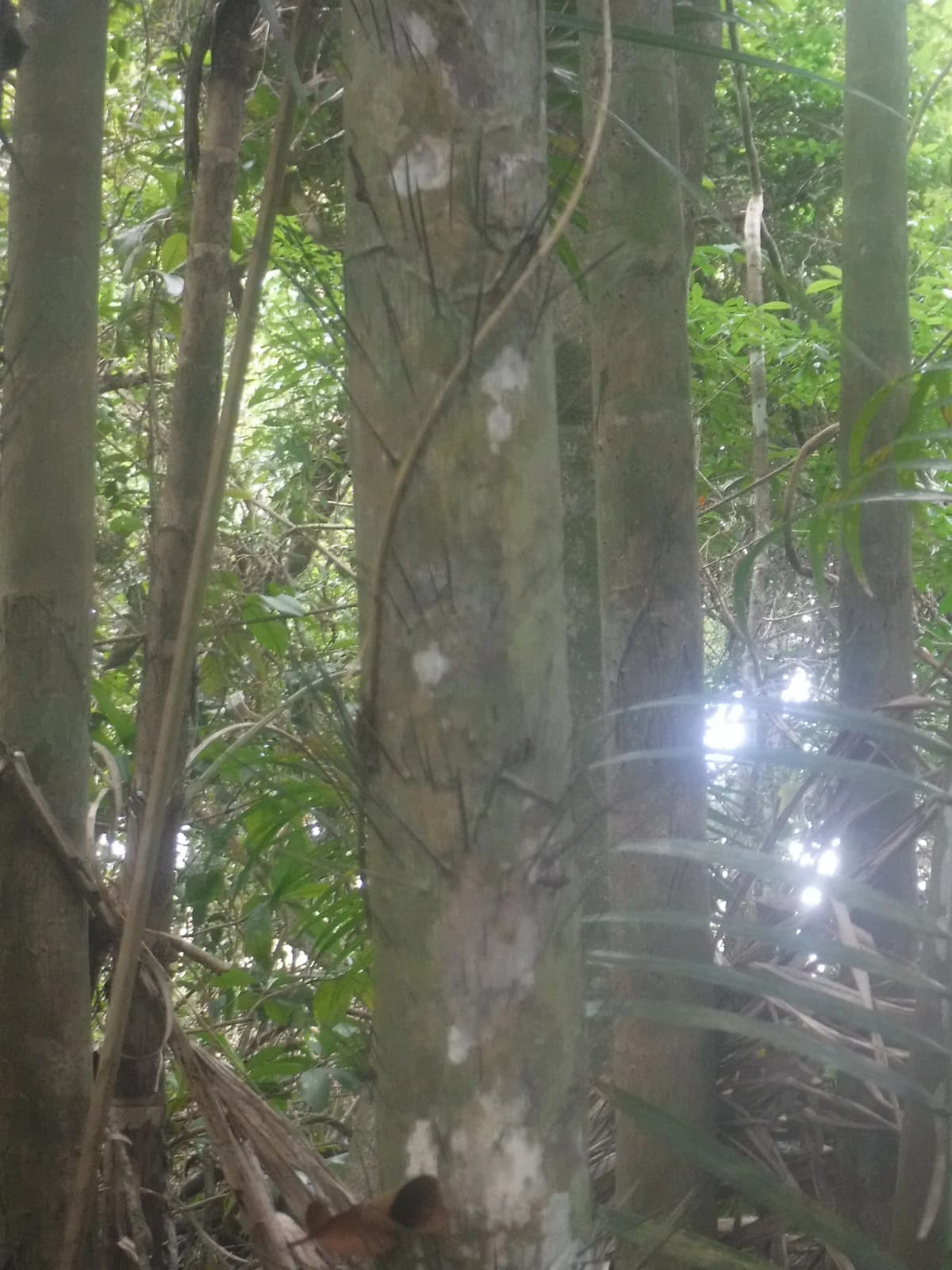
Botanical specimen of Bactris Plumeriana.
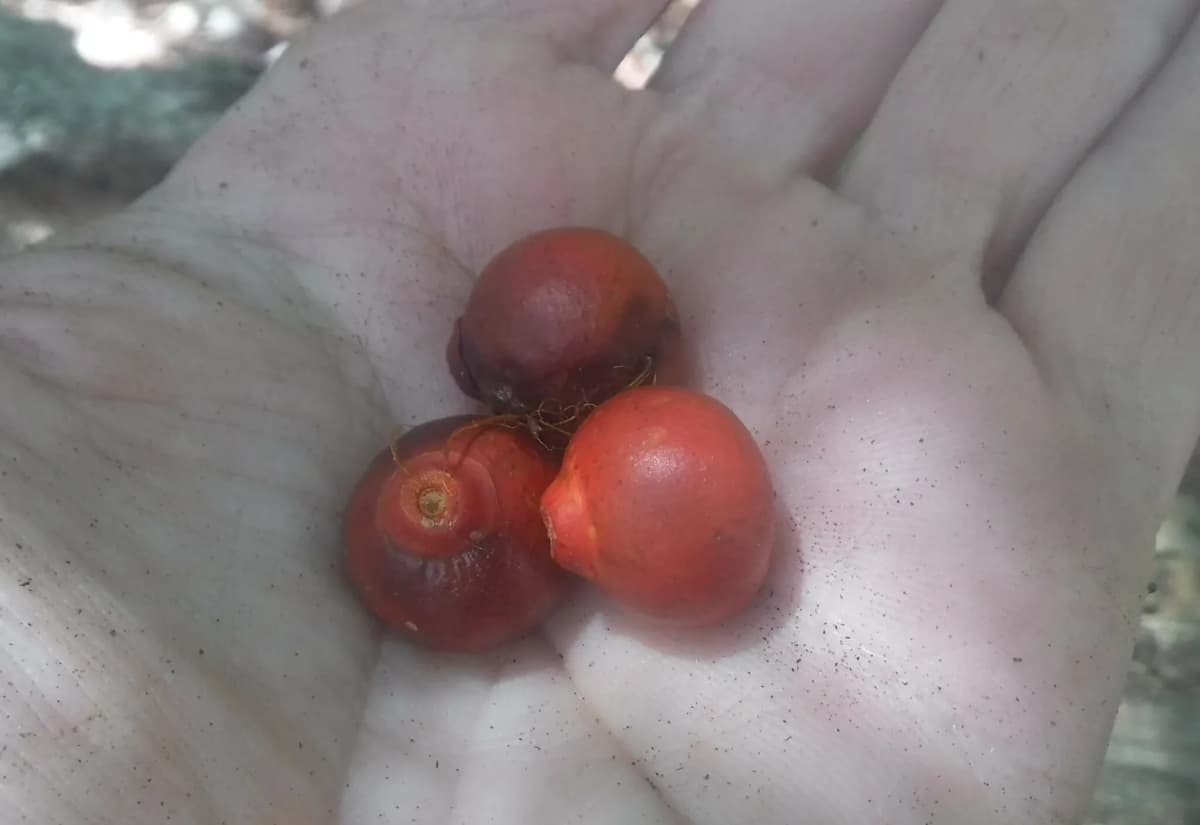
Botanical specimen of Bactris Plumeriana.
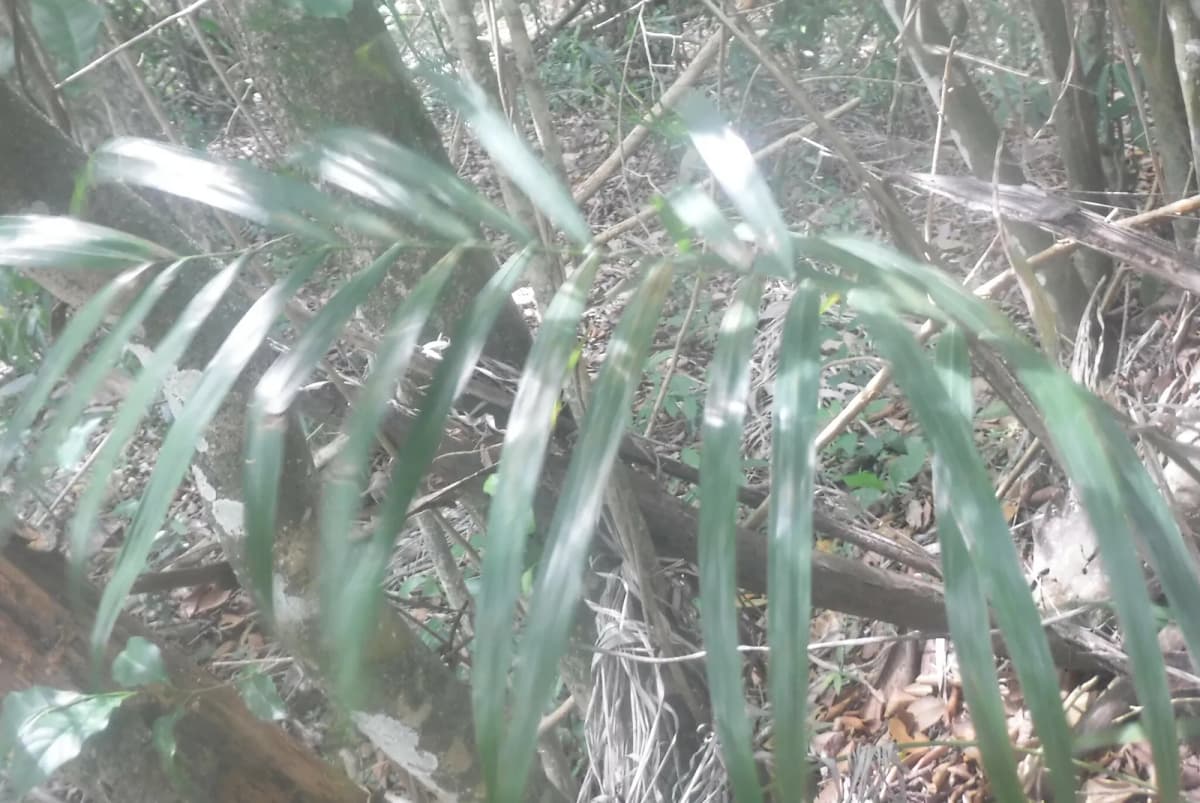
Botanical specimen of Bactris Plumeriana.
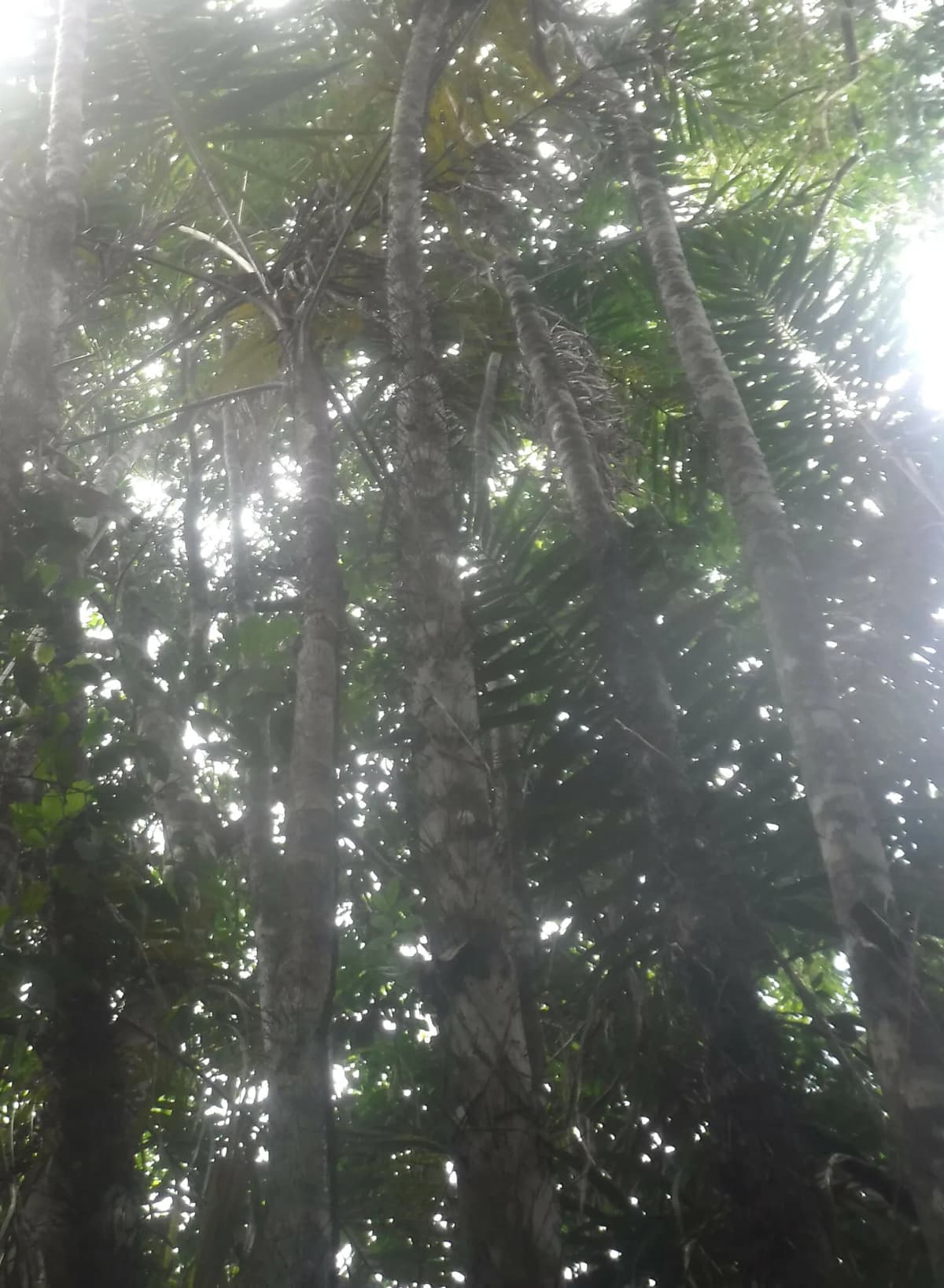
Botanical specimen of Bactris Plumeriana.
Sources & Conservation
Curated- Bactris plumeriana Mart. | Plants of the World Online | Kew Science · accessed 2026-09
- Bactris plumeriana - Palmpedia - Palm Grower's Guide (quoting Henderson, A.J. 2000, Bactris (Palmae), NYBG / Palmweb) · accessed 2026-09
- Bactris plumeriana - Wikipedia · accessed 2026-09
- Bactris plumeriana - The IUCN Red List of Threatened Species (Timyan, J. 2022, e.T201629A2709460) · accessed 2026-09
- Bactris plumeriana Mart. - GBIF · accessed 2026-09
- Bactris plumeriana - Monaco Nature Encyclopedia (Pietro Puccio / Giuseppe Mazza) · accessed 2026-09
- Bactris plumeriana Mart. - World Flora Online · accessed 2026-09
- Prickly palm (Bactris plumeriana) - iNaturalist · accessed 2026-09