Mexican Blue Fan Palm
Brahea Armata • Blue Hesper Palm
Mexican Blue Fan Palm in Motion
The Essence
"The Mexican Blue Palm (Brahea armata) is a masterpiece of xerophytic evolution, possessing a silver-blue canopy designed to reflect intense solar radiation in the deep canyons of the Baja Peninsula. This remarkable species is characterized by its A massive, solitary trunk reaching up to 15 meters, covered in a fibrous, persistent shag of old leaf bases in younger specimens, eventually becoming smooth and grey with age-rings. and a Architectural assembly of deeply divided, blue-glaucous leaves. The waxy bloom (glaucous coating) is a light-scattering adaptation to prevent cellular overheating.. It represents a unique evolutionary success in its native habitat."
The genus 'Brahea' is part of the ancient Arecaceae diversification. The species name reflects its unique morphological traits and regional heritage.
Historically, Brahea Armata has been The genus Brahea trace its lineage back to the Eocene, representing a resilient 'Living Fossil' of the arid New World.. It has served as a vital biological marker for biodiversity in its native tropical ecosystems for centuries.
Natural Habitat
Thrives in specialized tropical niches, specifically adapted to the environmental pressures described as: The Mexican Blue Palm (Brahea armata) is a masterpiece of xerophytic evolution, possessing a silver-blue canopy designed to reflect intense solar radiation in the deep canyons of the Baja Peninsula.
Curated Specimens
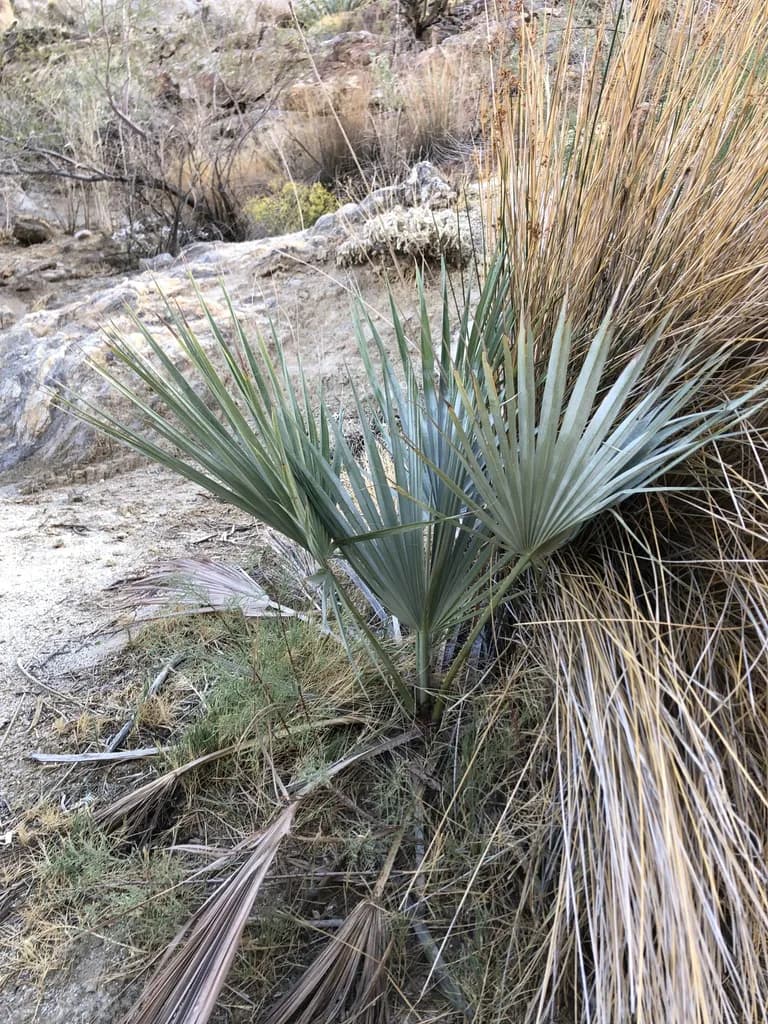
Botanical specimen of Brahea Armata.
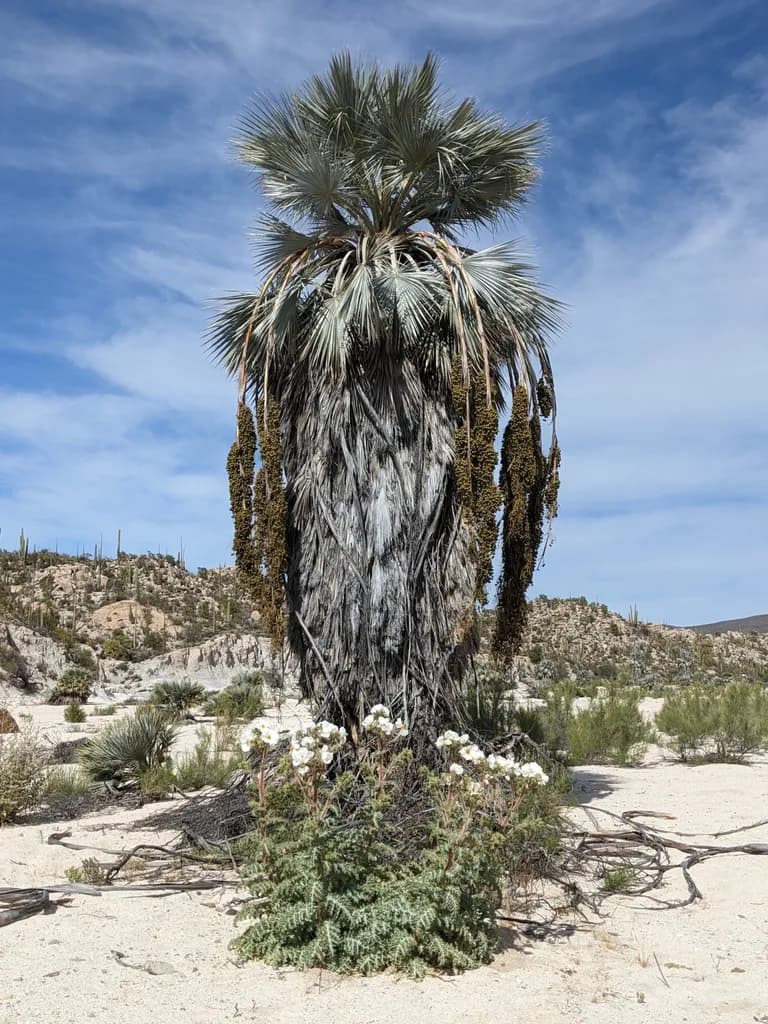
Botanical specimen of Brahea Armata.
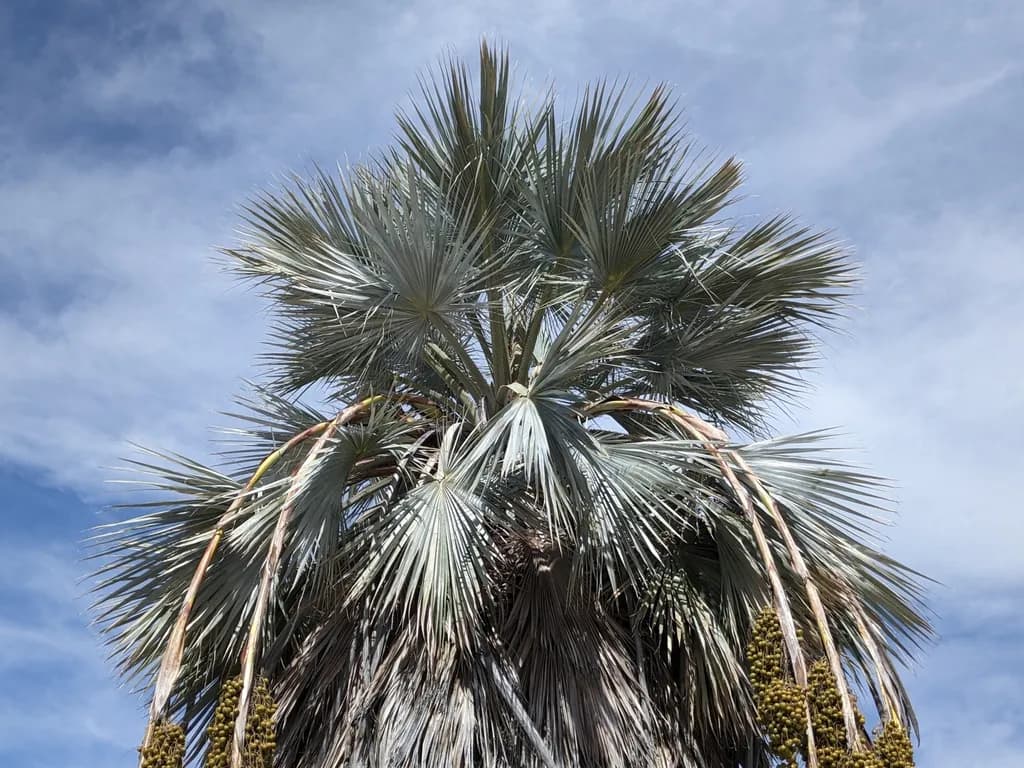
Botanical specimen of Brahea Armata.
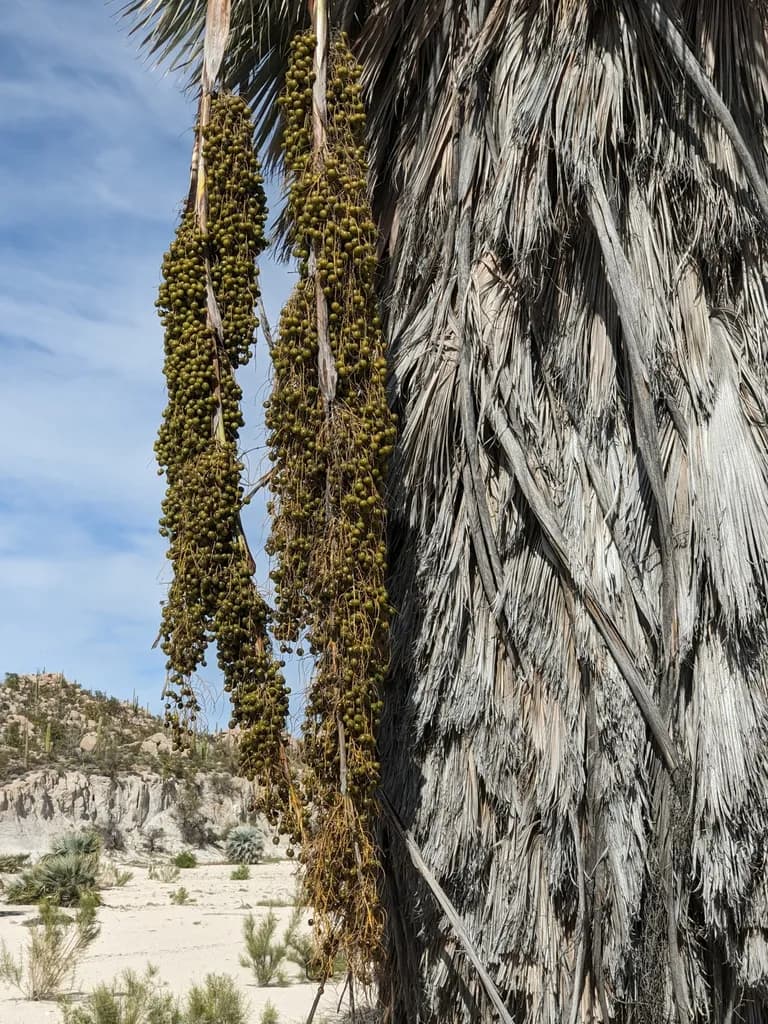
Botanical specimen of Brahea Armata.
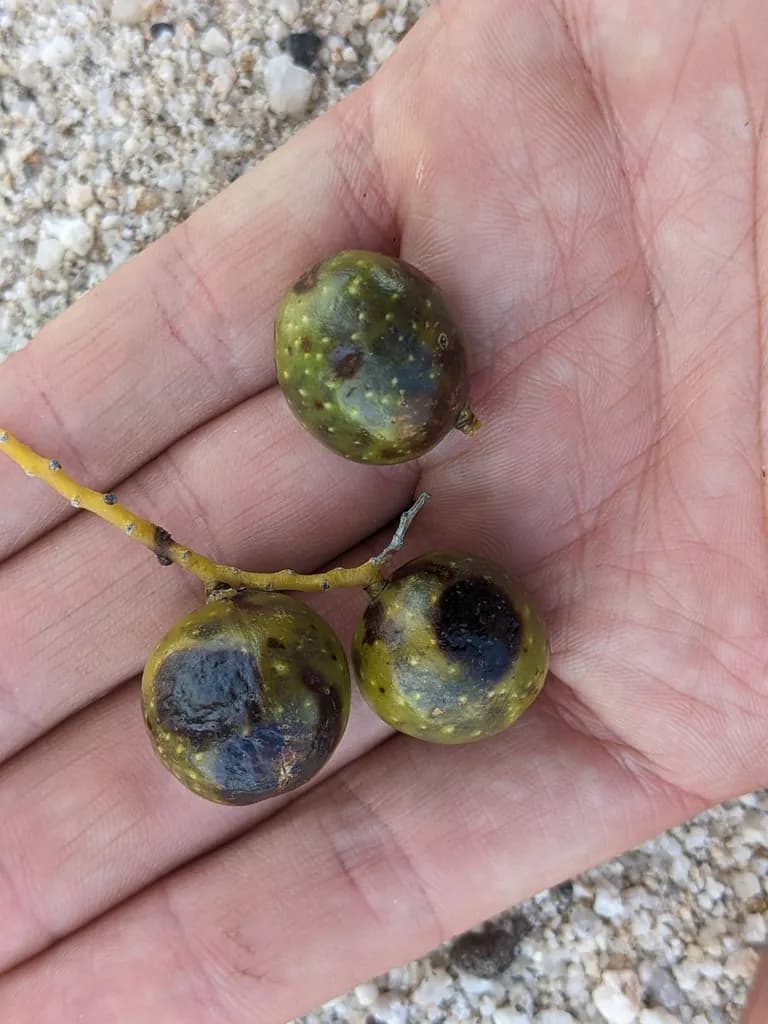
Botanical specimen of Brahea Armata.
Biology & Morphology
"A distinctive member of the Arecaceae family, Brahea Armata exhibits characteristic botanical resilience and morphological specialization adapted to its native tropical ecosystem. Its phylogenetic lineage within the Brahea genus reflects a history of specialized adaptation."
Morphology
Solitary, erect trunk with prominent vascular reinforcement and dense fibrous layering.
Adventitious root system spreading radially to maximize hydraulic intake in competitive soil matrices.
Distinctive solitary habit and medium stature providing a unique architectural profile.
Foliage
Vibrant blue-silver canopy featuring fan-shaped palmate leaves with deep costapalmate structure and rigid petiole attachments.
Specialized blue-silver tissues exhibiting slow metabolic expansion rates.
Reproduction
Complex inflorescence branching typical of the Brahea clade, exhibiting seasonal reproductive synchrony.
Nutrient-dense drupes encased in a fibrous pericarp, optimized for protection and dispersal.
Dormant embryonic tissues with high endosperm density, characteristic of resilient Brahea specimens.
Ecology
Active rhizosphere communication with mycorrhizal fungal networks, enhancing phosphorus and micronutrient uptake.
Interlocked with local entomological vectors, primarily Meliponini bees or specialized coleoptera.
Gravity-mediated and animal-vectored dispersal mechanisms ensuring regional genetic distribution.
Germination & Propagation
Germination Timeline
Soak seeds in warm water, changing it every 12 hours to remove inhibitors.
Lightly scarify the seed coat with sandpaper to facilitate water penetration.
Sow in a deep container with well-draining sandy mix (perlite/peat 1:1).
Maintain constant bottom heat at 30°C and high humidity.
Monitor for the first signs of the 'remote tube' projecting into the substrate.
Terminology
A wax-like, pale blue or greyish-white coating on the surface of leaves that can be rubbed off. It is an adaptation to reflect radiation and reduce water loss.
A leaf shape intermediate between palmate (fan-shaped) and pinnate (feather-shaped), where the petiole extends into the leaf blade as a distinct midrib or 'costa'.
A germination strategy where the cotyledonary petiole projects the embryo deep into the soil before any leaves emerge, ensuring root stability in unstable soils.
The innermost layer of the pericarp (fruit wall) which surrounds the seed. In Brahea, this layer is exceptionally hard and serves as a physical barrier to moisture.
The process by which prolonged exposure to specific temperatures triggers physiological changes. While mostly for flowering, in Brahea seeds, it refers to the thermal 'break' required for dormancy.
A type of germination where the cotyledons remain below the soil surface throughout the process, a common trait in desert palms.
The first leaf produced by a seedling. In Brahea, the first several eophylls are simple and strap-shaped, unlike the mature fan leaves.
Relating to a habitat with a moderate or well-balanced supply of moisture. Brahea armata is often found in 'Oasis Mesic' micro-climates.
The germination of Brahea armata is a masterclass in xerophytic adaptation. Unlike common tropical palms, this species anticipates the erratic moisture cycles of the Baja California canyons. Its deep physiological dormancy is a survival fallback, preventing the seed from wasting its energy during brief, deceptive rains. As a cultivator, you are not just planting a seed; you are managing a biological 'timer' that has been calibrated over millions of years to respond only to prolonged thermal and moisture signals. Consistency is paramount—any significant fluctuation in temperature or humidity during the first 60 days can cause the embryo to re-enter a state of secondary dormancy, effectively doubling your wait time. Professional growers should aim for a constant 31.5°C threshold with zero nocturnal dips to maintain metabolic velocity. This specimen represents the pinnacle of desert palm resilience, where every cell is prepared for a decades-long wait for the perfect hydrological window. Under SOTA conditions, expect emergence within 75-95 days.
Cultivation & Care
Light
Intense Full Sun (1000+ μmol/m²/s). Requires high UV-B exposure for protective wax deposition.
Water
Xeric Protocol. Deep substrate drying cycles. Sensitive to root-zone hypoxia.
Soil
Hyper-draining mineral matrix. 70% crushed granite/lava rock, 30% organic loam.
A xerophytic masterpiece. Thrives on neglect if light levels are sufficiently intense.
Pests, Diseases & Care
Pests
Strategus aloeus (Ox Beetle)
HIGHAdults bore into the base of young palms, causing structural instability.
Soil drenching and manual inspection of the root flare.
Rhynchophorus palmarum (South American Palm Weevil)
CRITICALLarvae tunnel through the apical meristem, leading to crown collapse.
Pheromone trapping and systemic insecticide injection.
Diseases
Colletotrichum spp. (Anthracnose)
MODERATEBlack necrotic spots on leaflets under high humidity.
Copper-based fungicides and reduction of overhead irrigation.
Ganoderma zonatum (Butt Rot)
LETHALRadial wood decay and structural instability at the base.
No chemical cure; immediate isolation and removal.
Nutritional Deficiencies
Interveinal chlorosis (Younger fronds)
Chelated Fe-EDDHA Soil Pulse
Marginal chlorosis (Older fronds)
Mg-Sulfate (Kieserite) saturation
Frizzletop / Distorted spear
Systemic Mn-Sulfate application
Care Tips
Biosurveillance pulse synchronized for America regional vectors.
Apply prophylactic fungicidal drench in the nocturnal phase.
Improve canopy ventilation to disrupt fungal sporulation cycles.