Vieillard's Kentia Palm
Burretiokentia Vieillardii • Tiger Palm
Vieillard's Kentia Palm in Motion
The Essence
"Burretiokentia vieillardii is the widespread member of a genus of five palms endemic to New Caledonia — the other four are only locally distributed. Genera Palmarum describes it as widely distributed from south-east to north-east New Caledonia, and calls it one of the most common palms in New Caledonia; Palmpedia adds that it is widespread throughout the mainland, occurring "from one end of the island to the other, seemingly wherever one enters the forest", often forming large, gregarious populations. Good places to see it include Col des Roussettes between Bourail and Houaïlou, and Mt. Aoupinié, where it forms large stands. It is a solitary, unarmed, monoecious palm of 10–20 m with glossy, prominently ringed stems and a well-developed crownshaft, whose covering Hodel describes as reddish brown or dark brown to glossy copper-coloured and which carries the striking "pin stripe" striations the palm is known for. That colouring distinguishes it from its closest relative B. hapala, which has a pale brown to whitish crownshaft covering and, in flower, an inflorescence densely coated in short pale brown hairs that gives it a fuzzy look. Palmpedia reports that it fruits year-round while the other species are seasonal. No uses are recorded. It remains rare in cultivation, and the crownshaft pin stripes are difficult to maintain there."
The genus honours German palm botanist Karl Ewald Maximilian Burret (1883–1964), combining his name with the generic name Kentia — itself named for William Kent (1779–1827), one-time curator of the botanic gardens at Buitenzorg, Java (now Kebun Raya Bogor). The epithet comes from the basionym Kentia vieillardii Brongn. & Gris and refers to Eugène Vieillard (1819–1896), a French physician and botanist who was employed as a surgeon with the merchant navy and afterwards spent a number of years on botanical investigations in New Caledonia, publishing "Étude sur les palmiers de la Nouvelle-Calédonie" (1873); more than 35 botanical species bear his name. The current combination was published by Pichi Sermolli in Webbia 11: 124 (1955).
Donald Hodel's account of the genus in PALMS 67(4): 196–201 (2023) was the second of four articles commissioned to highlight the palm diversity of New Caledonia, the destination for the IPS Biennial in 2024. It opens by suggesting that if the quintessential New Caledonia palm existed, there is a pretty good chance that it is a Burretiokentia.
Natural Habitat
Rain forest on slopes and gallery forest at 400–1300 m elevation, on more or less deep soil over ultramafic (serpentine) and sedimentary shale or schistose substrates; Genera Palmarum gives moist forest on serpentine or schists, and POWO places the species in the wet tropical biome. Jungle Music notes it grows at altitudes of almost 4,000 feet.
Curated Specimens
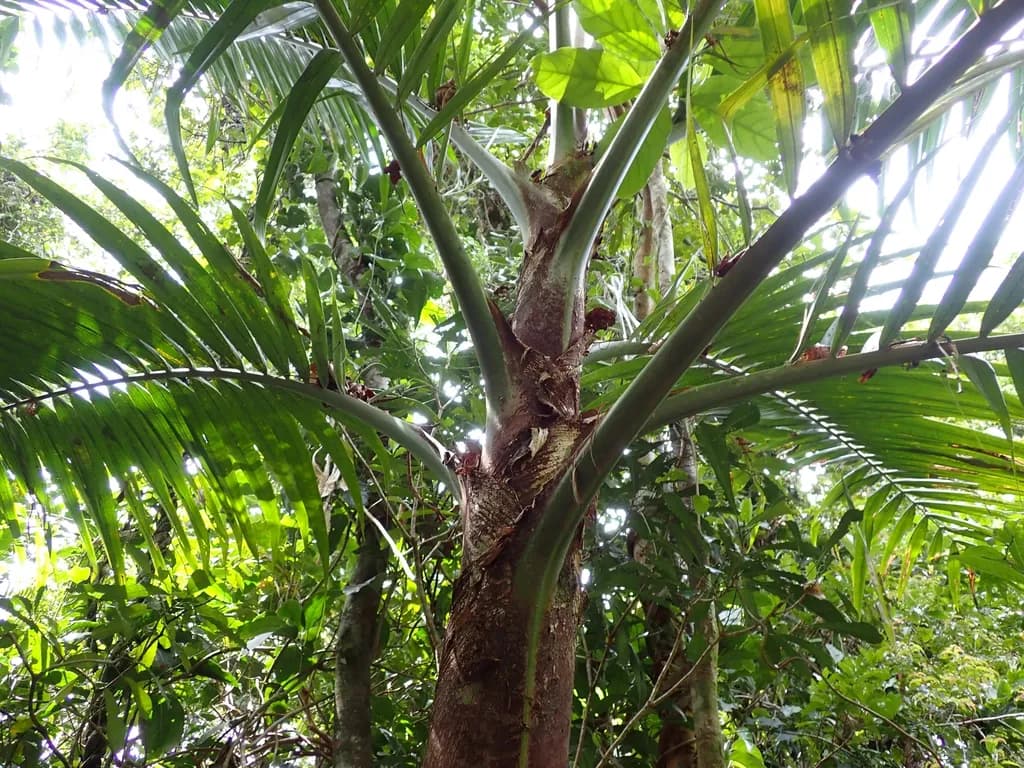
Botanical specimen of Burretiokentia Vieillardii.
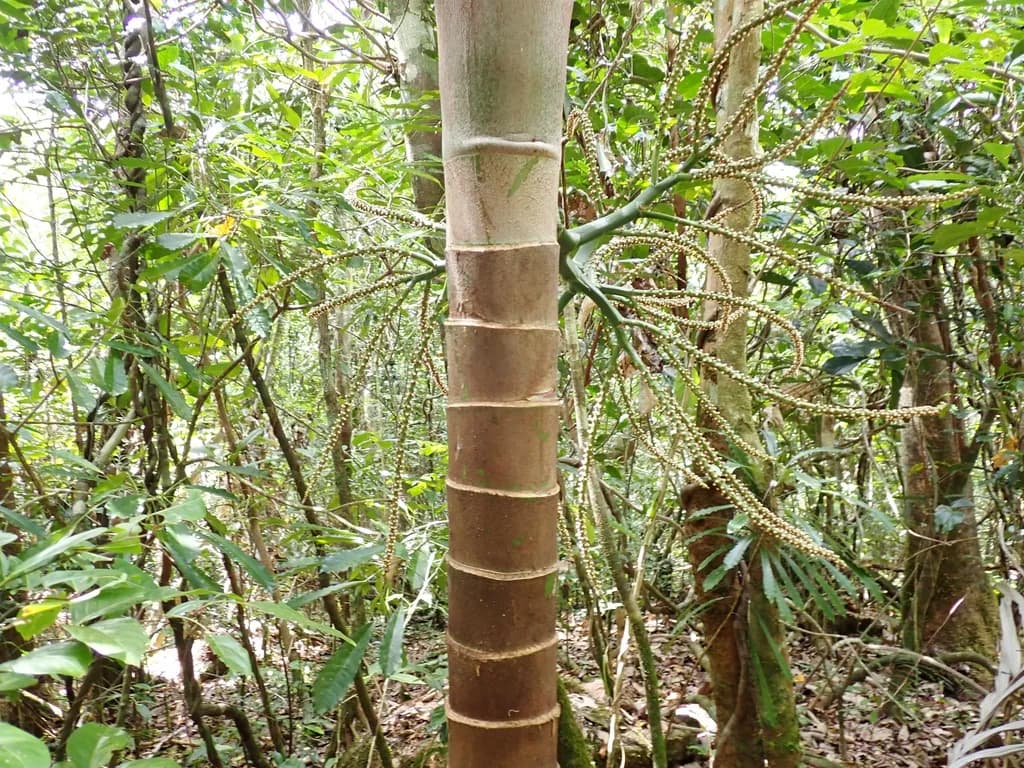
Botanical specimen of Burretiokentia Vieillardii.
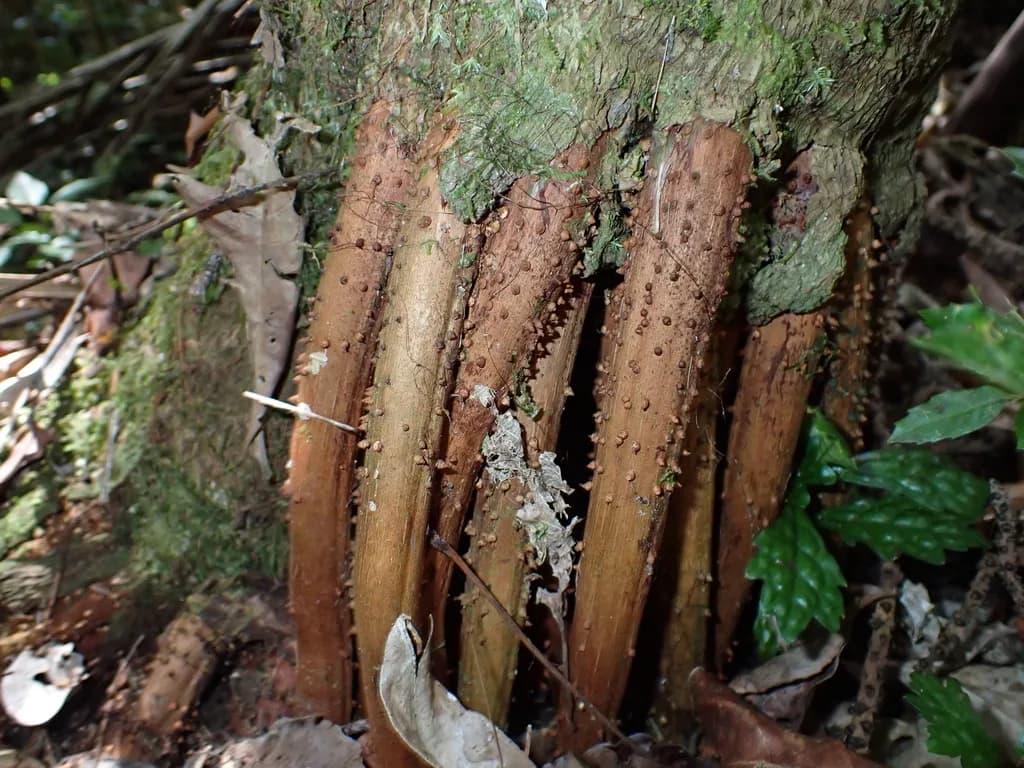
Botanical specimen of Burretiokentia Vieillardii.
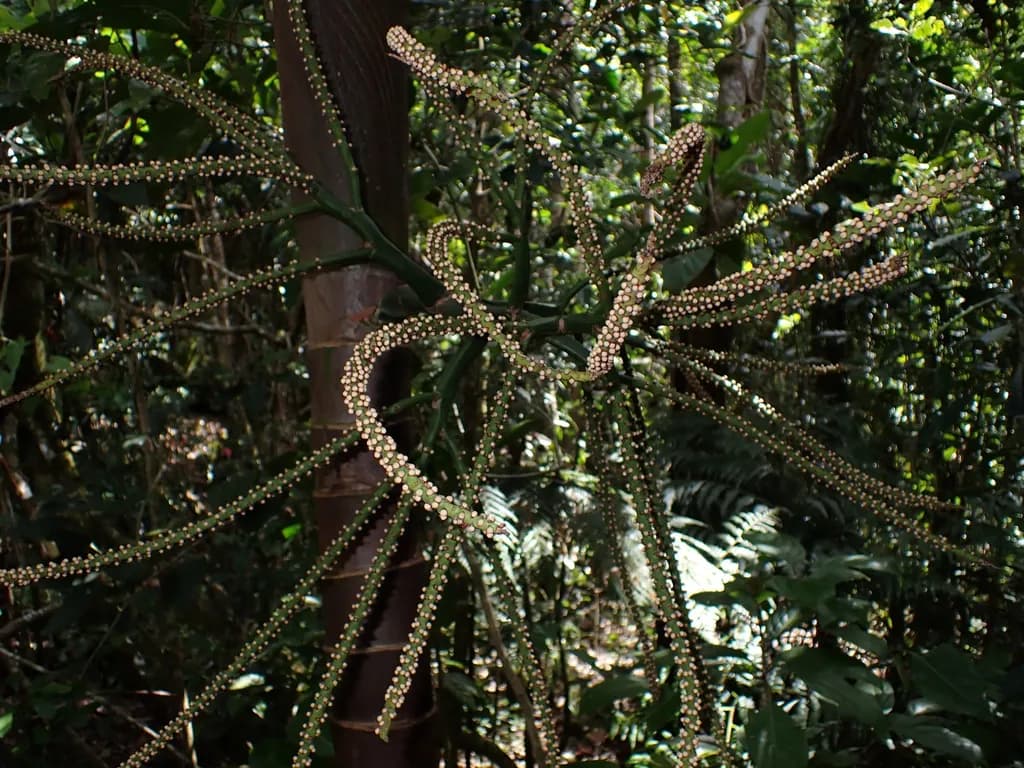
Botanical specimen of Burretiokentia Vieillardii.
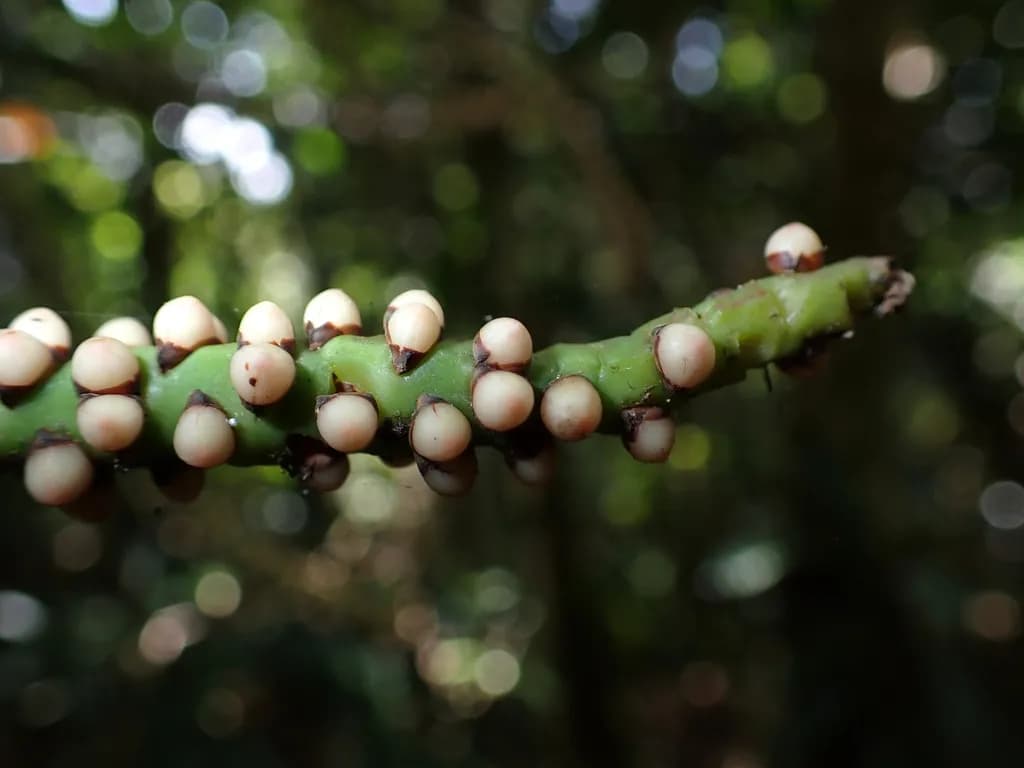
Botanical specimen of Burretiokentia Vieillardii.
Sources & Conservation
Curated- Burretiokentia vieillardii (Brongn. & Gris) Pic.Serm. — Plants of the World Online, Kew · accessed 2026-09
- Burretiokentia Pic.Serm. — PALMweb (Genera Palmarum 2008 genus treatment) · accessed 2026-09
- Burretiokentia vieillardii — PALMweb species page · accessed 2026-09
- Burretiokentia vieillardii — Palmpedia, Palm Grower's Guide · accessed 2026-09
- Burretiokentia vieillardii — Palms For California (Geoff Stein) · accessed 2026-09
- Hodel, D.R. 2023. Burretiokentia. PALMS 67(4): 196–201 (palms.org PDF, archived copy — the live URL now returns 404) · accessed 2026-09
- Amice, R. et al. 2017. Burretiokentia vieillardii. The IUCN Red List of Threatened Species 2017: e.T38461A115777392 · accessed 2026-09
- Burretiokentia vieillardii — GBIF (taxon 2732654; IUCN category endpoint returns LEAST_CONCERN) · accessed 2026-09
- Burretiokentia — Wikipedia · accessed 2026-09
- Eugène Vieillard — Wikipedia · accessed 2026-09
- Burretiokentia vieillardii – Vieillard's Kentia Palm — Rare Palm Seeds · accessed 2026-09
- Burretiokentia vieillardii, the Tiger Palm — Jungle Music Palms & Cycads (Phil Bergman) · accessed 2026-09