Maya palm
Chamaedorea Hooperiana • Hooper's palm • King Maya palm • Swooping bamboo palm • Tepejilote lancetilla
Maya palm in Motion
The Essence
"Chamaedorea hooperiana is a clustering understorey palm endemic to Mexico and known in the wild only from the state of Veracruz. It forms fairly dense clumps 3-4 m across and 4-5 m tall, the slender green stems arching away from a central point rather than erupting straight up, which Palms For California notes gives a less compact, more delicate clump than most clustering Chamaedorea. Two features set it apart from its relatives: new lateral shoots emerge from the tops of the old, dried, nearly woody basal leaf sheaths, and the leaflets are notably thick and durable - Hodel called them nearly plastic-like. In flower it resembles C. graminifolia, vegetatively C. pochutlensis. That toughness has horticultural consequences. Hodel judged it much superior as an indoor plant to its relatives and said it holds great promise for interior situations, thanks to its tolerance of low light and low humidity and its resistance to pests; he found it markedly more mite-resistant than C. costaricana and C. pochutlensis, and Rare Palm Seeds adds that the same thick leaves help it shrug off light freezes. Palms For California nonetheless rates its availability as rare. Anyone planting one should allow for its eventual bulk, since Hodel warns that mature clumps spread several metres across, with the perimeter stems leaning outward and taking up still more space."
The epithet honours Louis Hooper of La Habra, California, a leading Californian palm grower, from whose garden the type originated (Hodel 1992). Monaco Nature Encyclopedia derives the genus name from the Greek chamai, on the ground, and dory, spear, in reference to the plants' modest stature and slender stems, while noting that some authors instead take the second element from doron, gift. Palmpedia renders the name phonetically as kahm-eh-doh-REH-ah hoo-per'-ee-ahn-ah.
The species has an unusual discovery story that runs backwards, from garden to wild. Mature plants had been growing for years in a handful of southern Californian collections - Pauleen Sullivan's in Ventura, Lou Hooper's in La Habra, Jack Ingwersen's in Oceanside, and the Huntington Botanical Gardens in San Marino - as unidentified palms of uncertain origin, commonly assumed to descend from a single Central American introduction; the Huntington's plant, Hodel notes, may stem from a separate introduction. Hodel at first took them for C. karwinskyana, and material may have been distributed under that name; he later re-examined the type of C. karwinskyana and referred it to C. pochutlensis. Only in December 1989, during fieldwork in the Catemaco region of Veracruz, was the palm found growing wild, finally supplying a known locality. The type, however, is a cultivated specimen: D. R. Hodel 772, gathered in Louis Hooper's garden in Orange County, California on 16 April 1988, with the holotype at the Bailey Hortorium (BH) and isotypes at CR, HNT, K, MEXU, MO and NY. The species was published as Chamaedorea hooperiana Hodel in Principes 35: 188, figs. 6-8 (1991). Californian collectors have since produced hybrids between C. hooperiana and C. pochutlensis.
Natural Habitat
Hodel's field account describes dense, wet forest at 1,000-1,500 m elevation, and Rare Palm Seeds likewise places the 1989 rediscovery site in montane rainforest in Veracruz between 1000 and 1500 m. POWO instead classifies the species as a shrub of seasonally dry tropical climate, which sits oddly against the monograph; of the two, Hodel's is the account based on fieldwork at the locality.
Curated Specimens
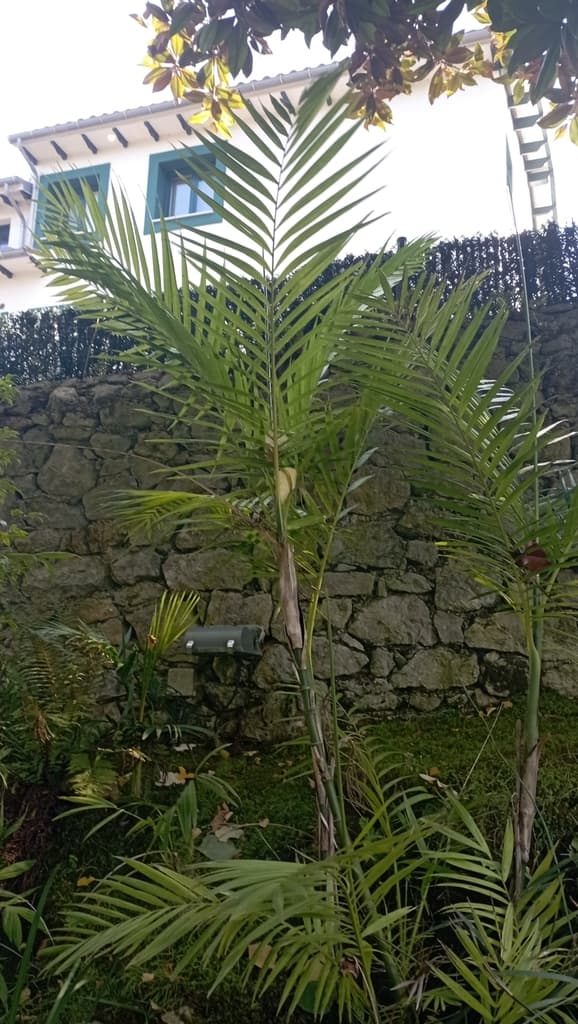
Botanical specimen of Chamaedorea Hooperiana.
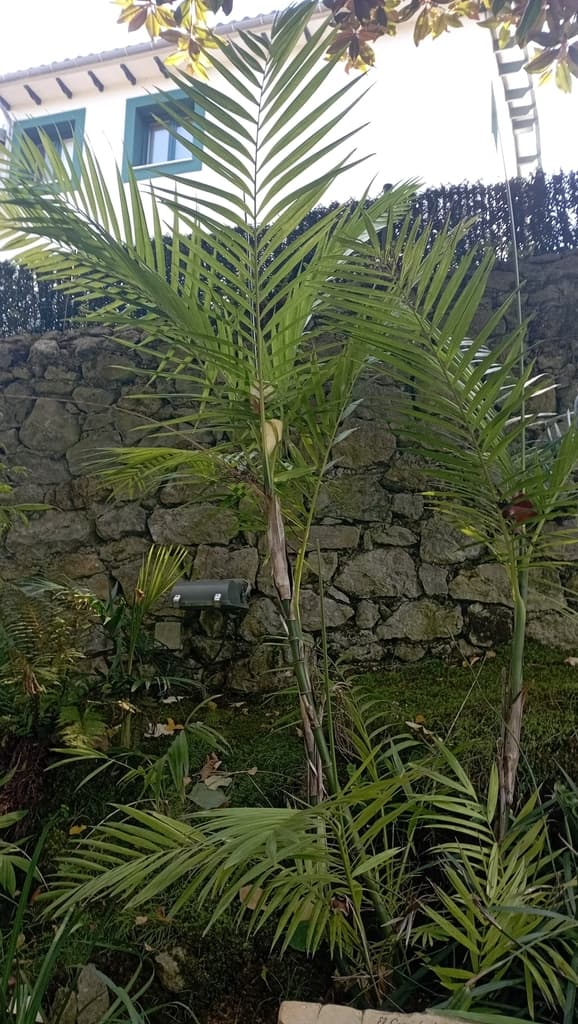
Botanical specimen of Chamaedorea Hooperiana.
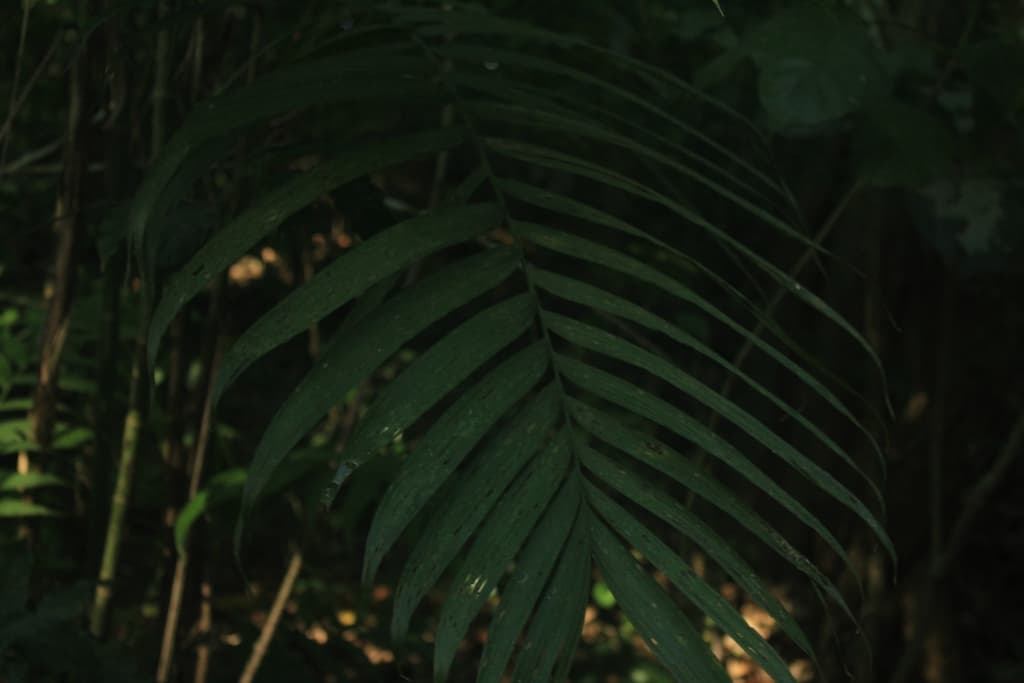
Botanical specimen of Chamaedorea Hooperiana.
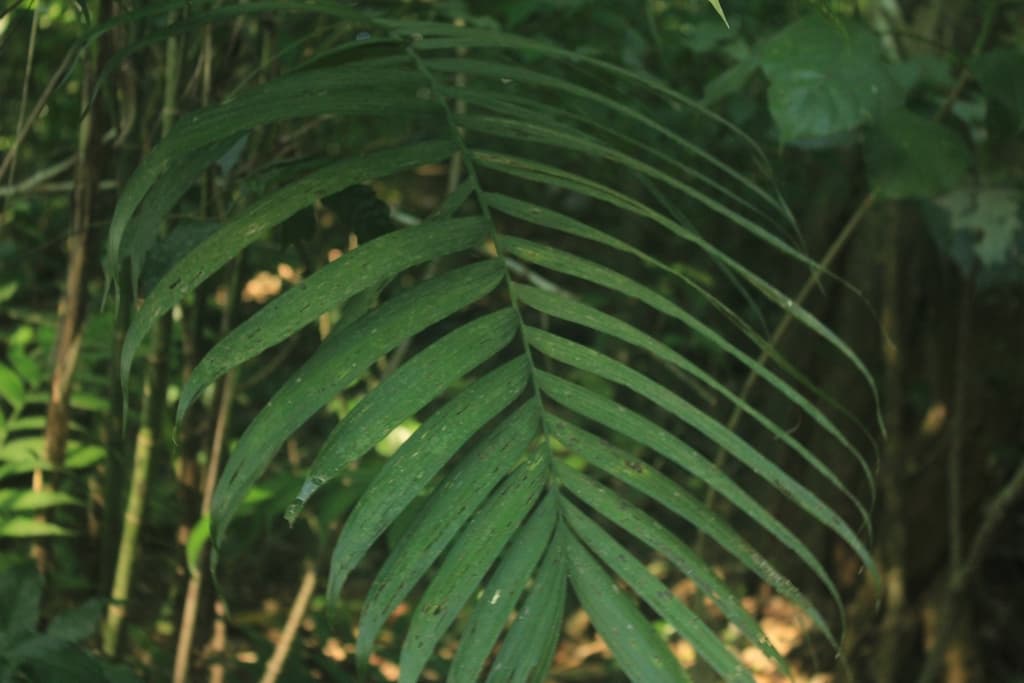
Botanical specimen of Chamaedorea Hooperiana.
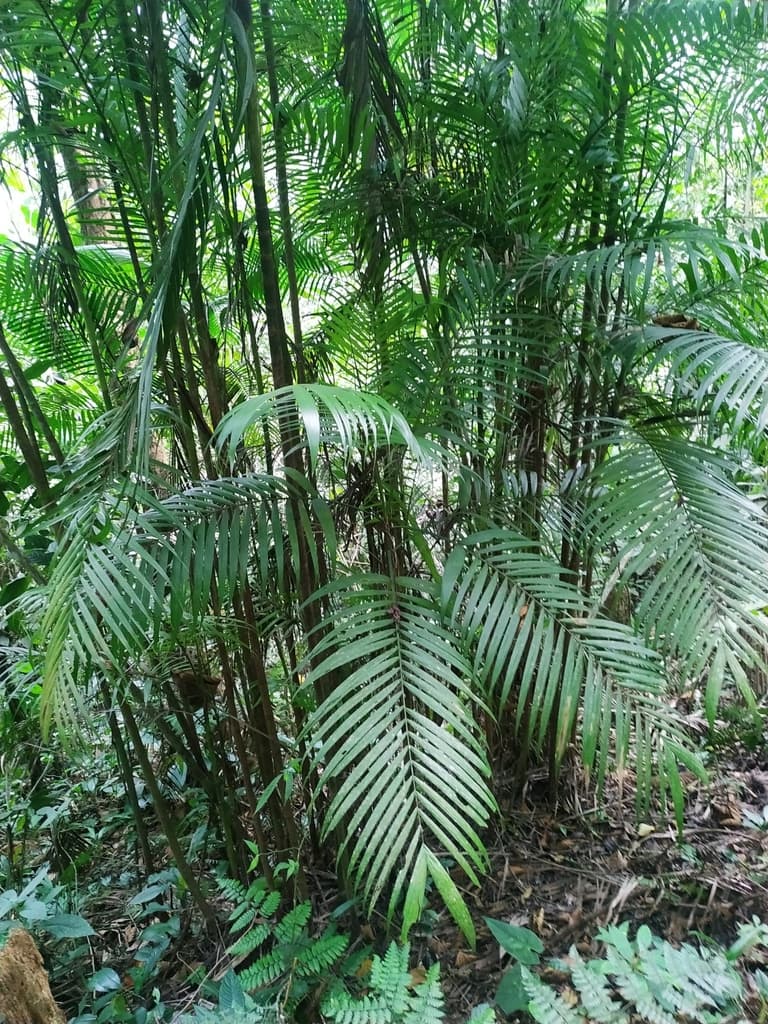
Botanical specimen of Chamaedorea Hooperiana.
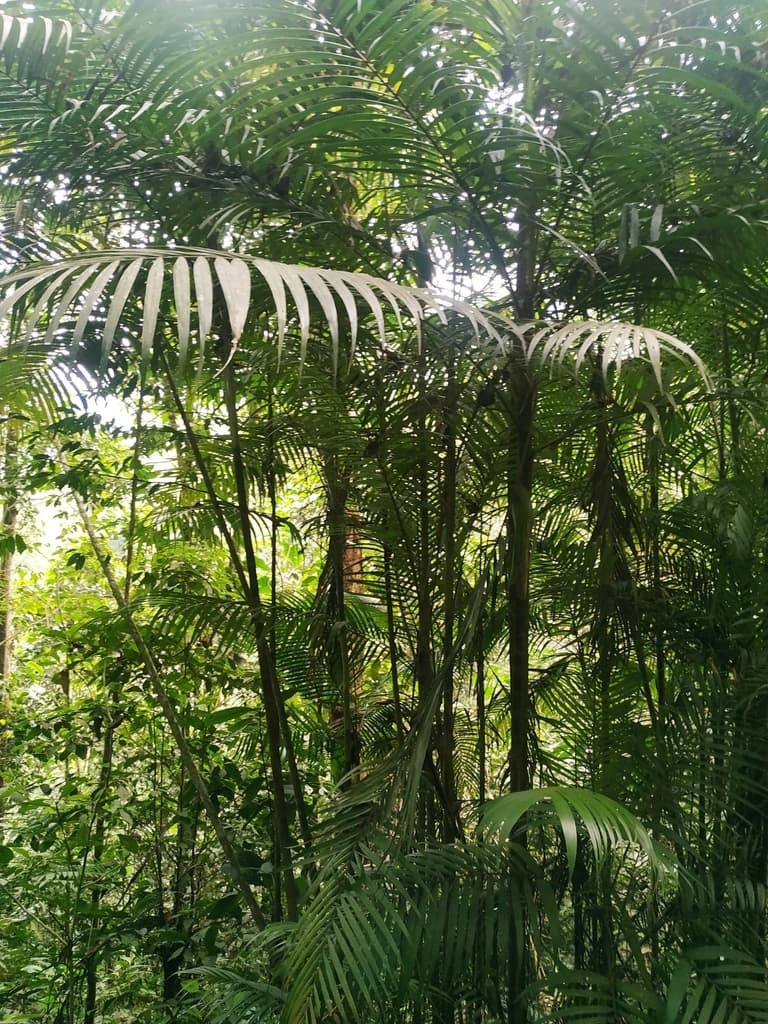
Botanical specimen of Chamaedorea Hooperiana.
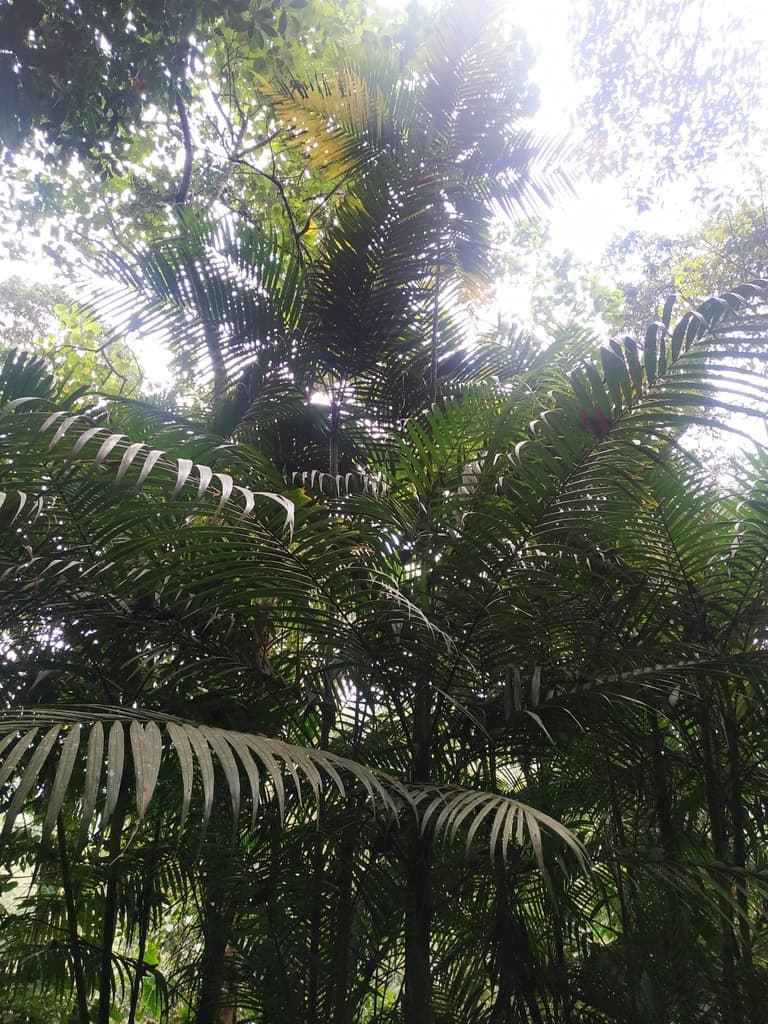
Botanical specimen of Chamaedorea Hooperiana.
Sources & Conservation
Curated- Chamaedorea hooperiana Hodel — Plants of the World Online (POWO), Royal Botanic Gardens Kew (accepted name; distribution Mexico, Veracruz; lifeform shrub; climate seasonally dry tropical) · accessed 2026-09
- Chamaedorea hooperiana Hodel, Principes 35: 188 (1991) — PALMweb (Hodel 1992 monograph account: full description, distribution, habitat, etymology and discussion) · accessed 2026-09
- Chamaedorea hooperiana — Palmpedia, Palm Grower's Guide (common names, pronunciation, culture notes, Hodel 1992 text) · accessed 2026-09
- Chamaedorea hooperiana — Palms For California (Palmpedia), by Geoff Stein (horticultural ratings: minimum temperature, tolerances, soil, light, availability) · accessed 2026-09
- Chamaedorea hooperiana Hodel — GBIF Backbone Taxonomy (taxon key 2734527; accepted; IUCN category NOT_EVALUATED; vernacular name Tepejilote lancetilla, from Catalogue of Life) · accessed 2026-09
- Chamaedorea hooperiana Hodel — International Plant Names Index (IPNI 304309-2), Principes 35: 188, figs. 6-8. 1991; type D.R. Hodel 772, holotype BH · accessed 2026-09