Metallic palm
Chamaedorea Metallica • Miniature fishtail palm • Palma metálica
Metallic palm in Motion
The Essence
"Chamaedorea metallica is a small, solitary understorey palm from eastern Mexico, unique in its genus for the shiny blue-green metallic cast of its broad, leathery, usually bifid (double-lobed) leaves — Palmpedia calls it the only known palm with such a sheen. Plants reach 2-3 m on a slender green, minutely white-spotted cane carrying 12-16 stiffly ascending leaves. It is dioecious: both sexes bear bright orange flowers at anthesis, the pistillate ones aromatic, and female plants carry a spicate inflorescence whose peduncle turns red-orange as the dull black fruits ripen. Its dwarf habit, slow growth, tolerance of low light and notable resistance to mites have made it one of the more common Chamaedoreas in cultivation, grown in Europe, Australia, the Orient, Hawaii, California, Florida and Central America, with seed traded commercially from both wild and cultivated plants in Mexico. The fruits contain mildly irritating oxalates."
Chamaedorea comes from the Greek chamai ('low') and dorea ('gift'), referring to the accessible fruits; the epithet metallica is Latin and refers to the metallic sheen of the leaves (NParks; Palmpedia). O.F. Cook had recognised the plant as a distinct species and suggested the epithet, which H.E. Moore adopted when he formally published the name in 1966 — hence the author string O.F.Cook ex H.E.Moore.
O.F. Cook collected this palm as early as 1905 at Cordoba, Veracruz, and again from cultivated plants in St. Louis, Missouri (1907) and at the Doheny Estate in Los Angeles (1912 and 1914). Apart from Cook's collections no herbarium specimens existed, and the plant escaped the attention of botanists and horticulturists until the 1960s. In 1960 Horace Anderson of Leucadia, California sent seed he had collected in Mexico to Nat DeLeon in Miami, who forwarded some to H.E. Moore Jr. at Cornell; the resulting plants matured in 1965, were hand-pollinated, fruited in 1966, and Moore named the species from them (Principes 10: 45, figs. 1-4, 1966). It was long confused with Chamaedorea tenella in cultivation and in the literature; C. tenella has green blades without the metallic sheen, a spicate staminate inflorescence and yellow staminate flowers. The metallic sheen also separates it from the closely similar C. ernesti-augusti, which lacks it.
Natural Habitat
An understorey palm of dense, wet forest on the Atlantic slope at 50-600 m elevation, usually on limestone (Hodel 1992). NParks lists its native habitat as primary terrestrial rainforest, where it grows in the understorey. Sources disagree: POWO records it as a shrub growing primarily in the seasonally dry tropical biome, which conflicts with the wet-forest habitat Hodel describes. In 1989 Hodel found it on limestone rocks near Temazcal, Veracruz, alongside Chamaedorea elatior, C. sartorii, C. oblongata and the cycad Dioon spinulosum, where residents reported it very common on an island in Lake Temazcal.
Curated Specimens
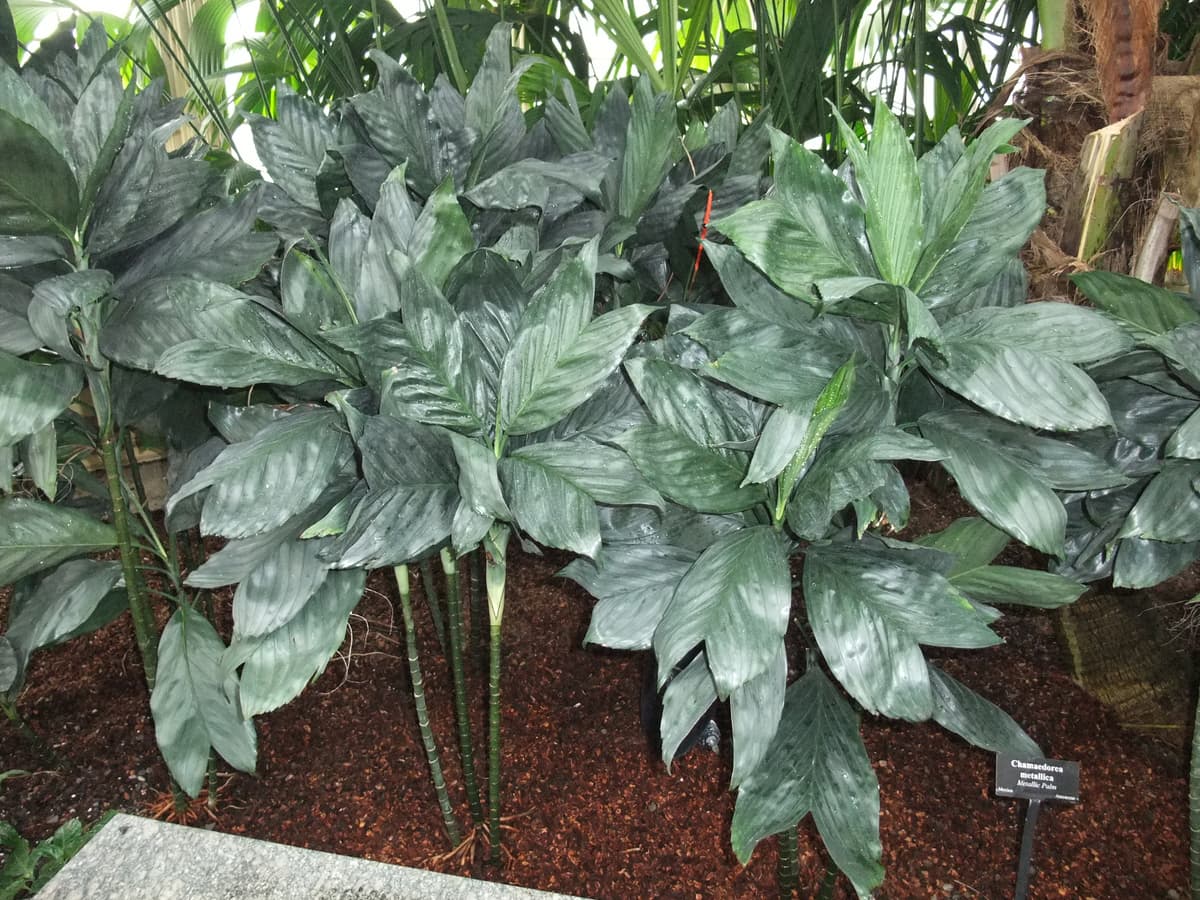
Botanical specimen of Chamaedorea Metallica.

Botanical specimen of Chamaedorea Metallica.
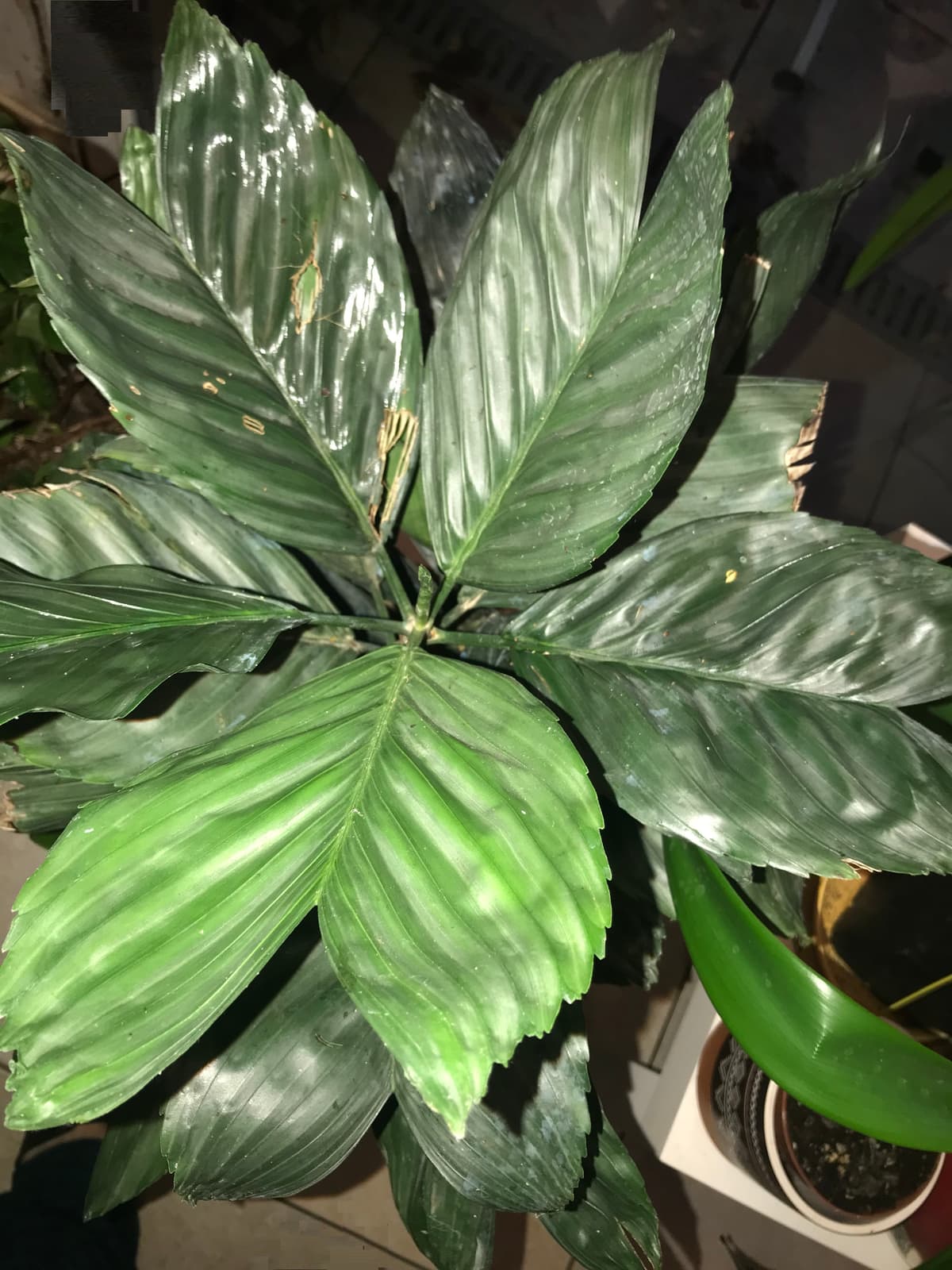
Botanical specimen of Chamaedorea Metallica.
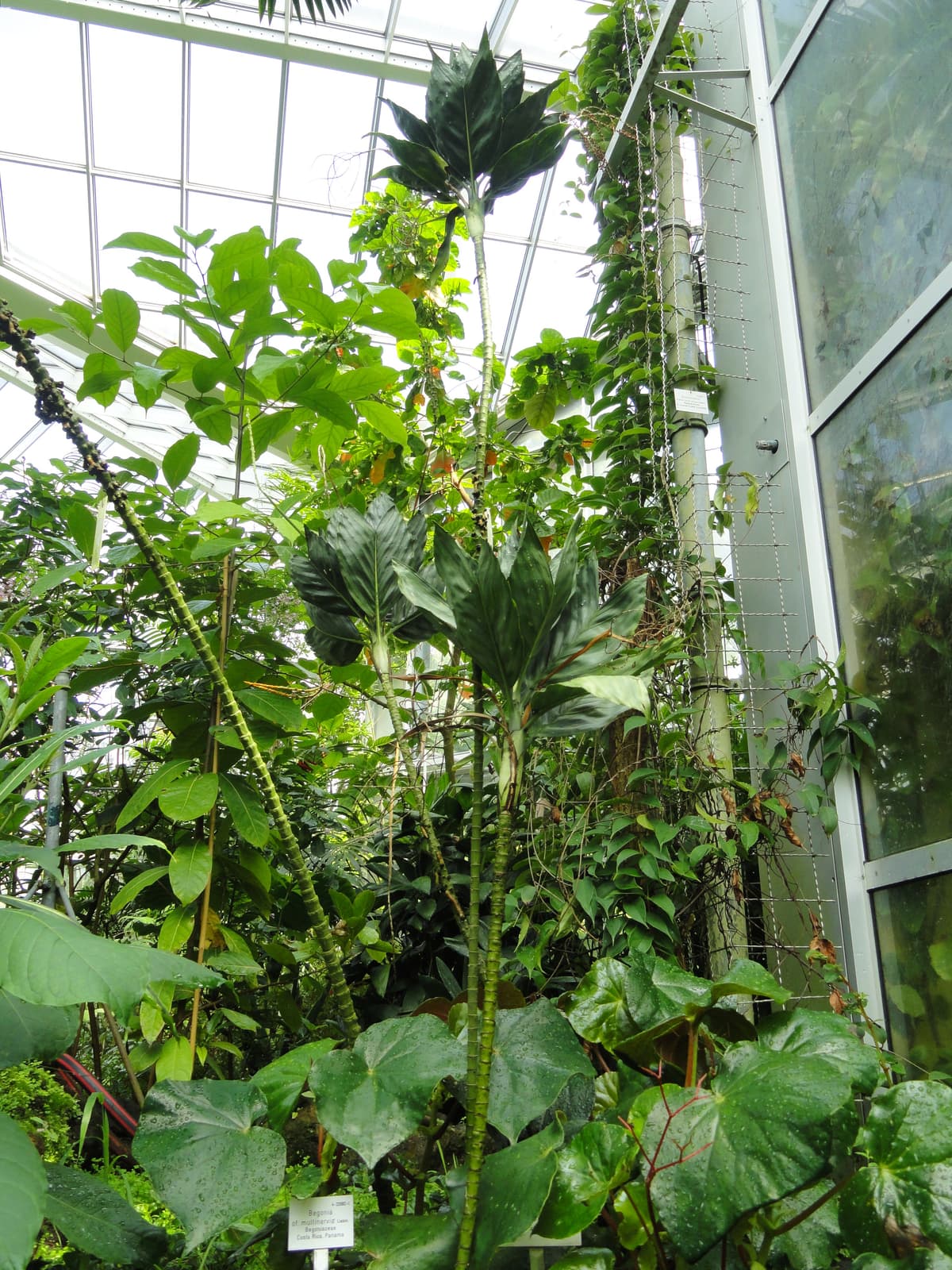
Botanical specimen of Chamaedorea Metallica.
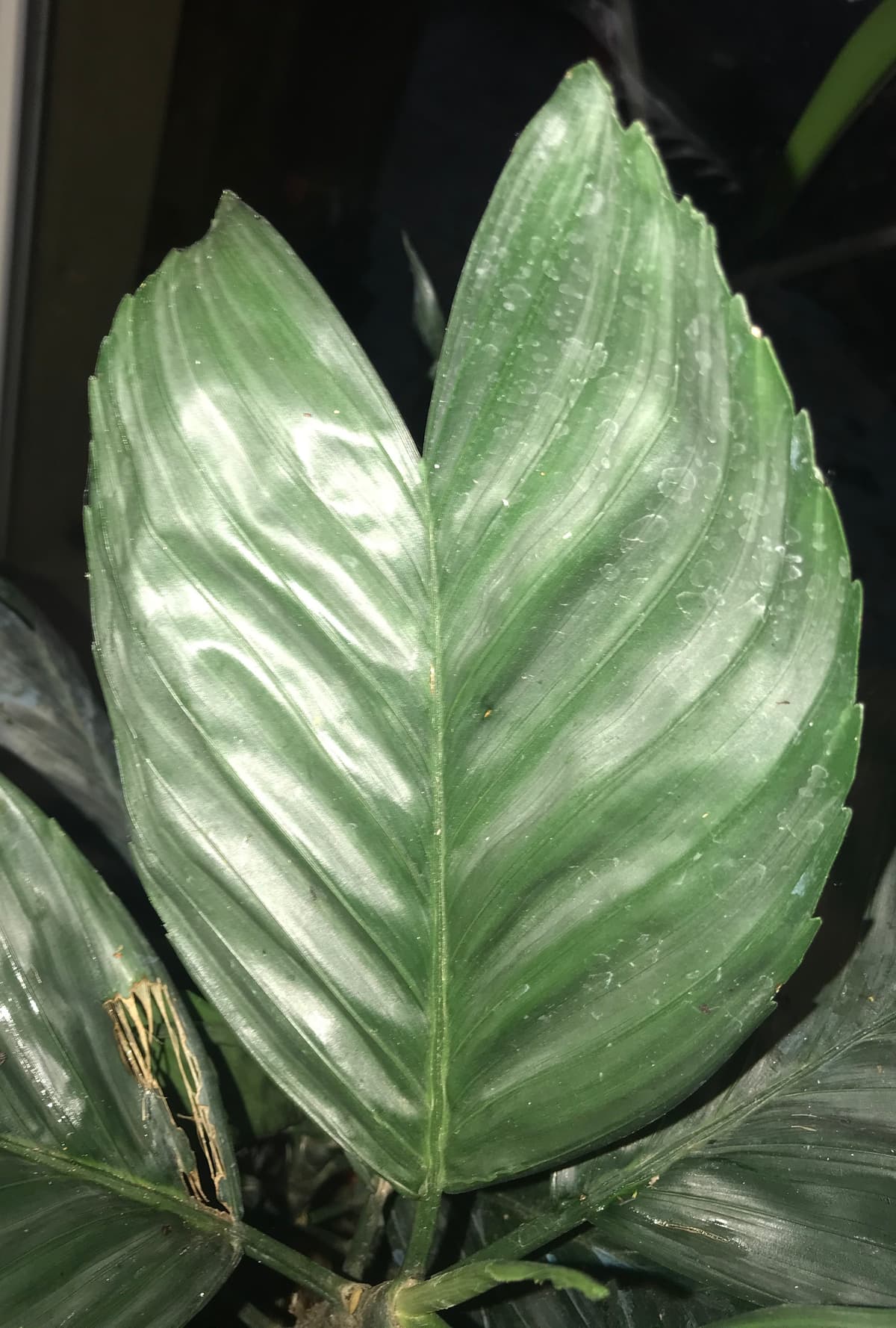
Botanical specimen of Chamaedorea Metallica.
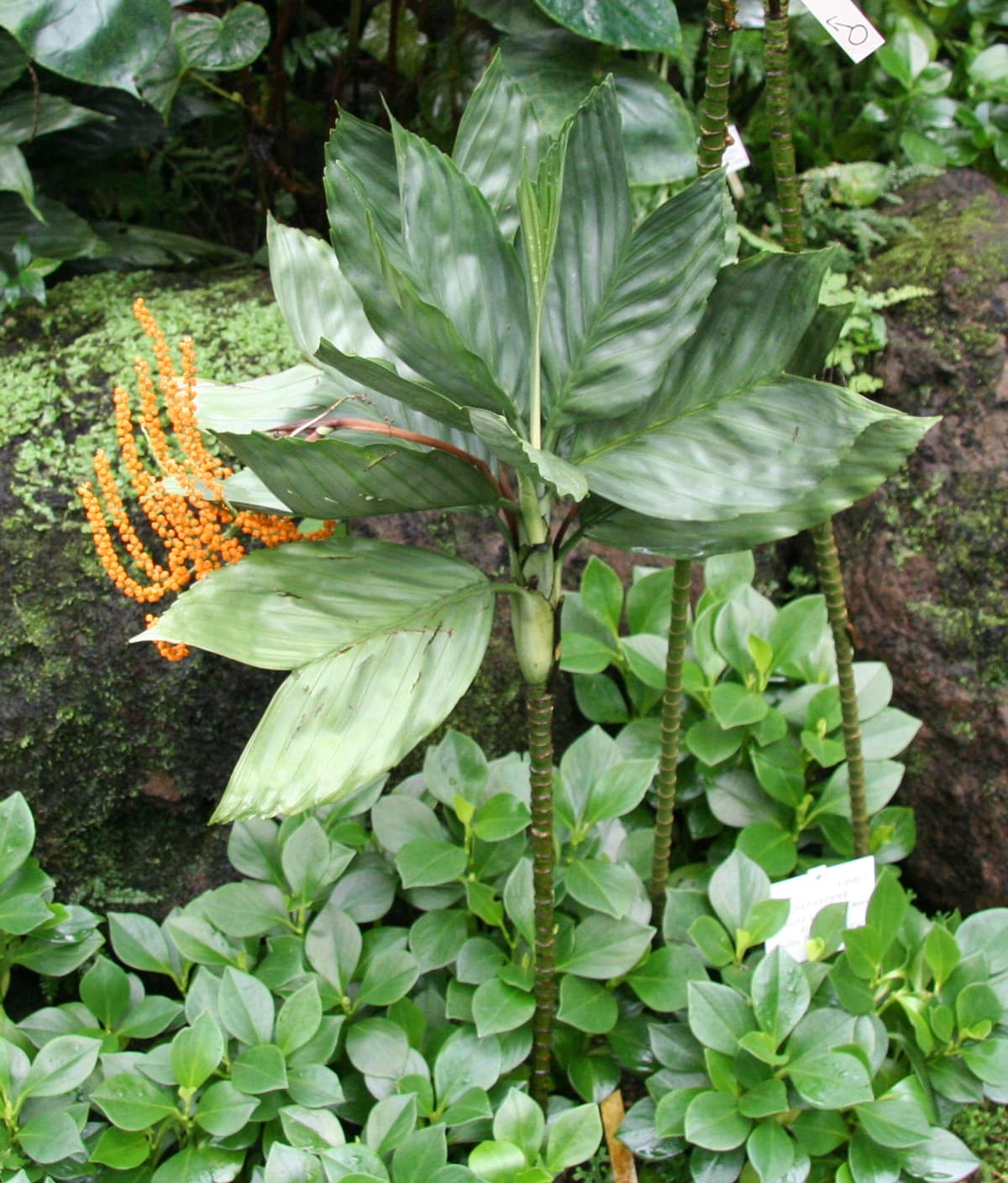
Botanical specimen of Chamaedorea Metallica.