Pacaya palm
Chamaedorea Tepejilote • Pacaya • Tepejilote • Palmito dulce • Caña verde • Pacaya grande • Guaya
Pacaya palm in Motion
The Essence
"Chamaedorea tepejilote is the only species in the large neotropical genus Chamaedorea cultivated as a food source, grown for its immature staminate (male) inflorescence — the vegetable known across Central America as pacaya. It is a dioecious understorey palm of moist and wet tropical forest, ranging from southern Mexico through Central America to western Colombia, and one of the largest members of its genus, with a green, prominently ringed stem that Palmpedia likens to a bamboo culm. Hodel called it "a variable species throughout its very wide range," which is why so many segregate names were later sunk into synonymy. That variability includes a genuine case of palm domestication in progress. Cultivated Guatemalan pacaya is solitary and bears larger, more highly branched inflorescences, while wild Guatemalan pacaya is caespitose with smaller inflorescences and a non-overlapping distribution; in the 2017 PALMS sampling, the male inflorescence of the cultivated form carried on average twice as many rachillae as the wild form. The morphological gulf was wide enough that Cook and Doyle (1939) placed the cultivated Alta Verapaz palm in a separate genus altogether, as "Edanthe veraepacis" — an interpretation taxonomists did not adopt. Growers also prize a fasciated inflorescence variant called "patush," whose anarchically organized, extra-branched tissues tend to be particularly tender and perhaps less bitter. Female plants produce inflorescences too bitter to be eaten and may be taken for palm heart or left as seed sources. The palm is likewise a source of palm heart (harvesting the apical bud kills the plant), and is grown as an ornamental — Hodel calls it a handsome ornamental and a striking specimen for background planting."
Tepejilote comes from Nahuatl and means "mountain maize" (Wikipedia) or "mountain corn" (PALMS 2017); Monaco Nature Encyclopedia renders it "mountain ear." The name refers to the unopened male inflorescence, which superficially resembles a cob of maize in size and appearance. The genus name Chamaedorea derives from Greek roots meaning "on the ground" and "gift" (Monaco Nature Encyclopedia). The common name "pacaya" may derive from Guatemala's Pacaya volcano: Wikipedia notes it "could be derived from" the volcano, and the PALMS 2017 authors likewise report the speculation that the volcano gave its name to the vegetable, since C. tepejilote has been cultivated on its slopes for many centuries. Liebmann named the species, published in Martius, Historia Naturalis Palmarum 3: 308 (1849).
Linguistic evidence suggests pacaya has been exploited in Central America for two or three millennia (Brown 2009, cited in PALMS 2017). Liebmann apparently discovered the palm at Matlaluca, Veracruz, Mexico, although Hodel notes that the holotype at Copenhagen and the isotypes at Paris and the Smithsonian are all from Oaxaca. Collectors including Liebmann, Linden, Warscewicz and Wendland sent material to Europe, where the species has been cultivated since before the middle of the 19th century. Alta Verapaz is Guatemala's leading pacaya-producing department; harvested inflorescences are sold without removing the bracts, which protect them during transport, and a productive palm typically carries about half a dozen pacaya buds per season. Pacaya is compared to asparagus for its slightly bitter but pleasant taste, is eaten boiled and seasoned or battered with egg as fritters (envueltos de pacaya), and is a key ingredient of fiambre, the traditional Guatemalan dish eaten to celebrate the Day of the Dead and All Saints Day. Bottled in acidified water it is exported to North America, where demand among Central American expatriates has made it a "nostalgia food." The 2017 survey also recorded fewer and less intensively managed plantations than in the 1990s, some abandoned, which the authors suggest may reflect rural depopulation and the westernization of consumer habits — while cautioning that the lack of official data on pacaya cultivation, consumption and trade makes any generalized conclusion impossible at present.
Natural Habitat
Understorey palm of moist or wet tropical forest. Hodel (1992, via Palmpedia) gives moist or wet forest on both the Atlantic and Pacific slopes from 0 to 1,600 m, often on limestone; Useful Tropical Plants records moist, humus-rich soils in rainforest understorey to the same elevation, and Monaco Nature Encyclopedia extends the range to about 1,800 m on mainly calcareous soils. POWO classifies it as a shrub of the wet tropical biome. The 2017 PALMS survey in Guatemala sampled it in cloud forest around the Quetzal Biotope (1,500-2,348 m, roughly 2,000 mm annual rainfall) and on mid-altitude volcanic soils in the south; in smallholdings it is commonly interplanted with coffee, and was also seen growing closely with bananas and maize.
Curated Specimens
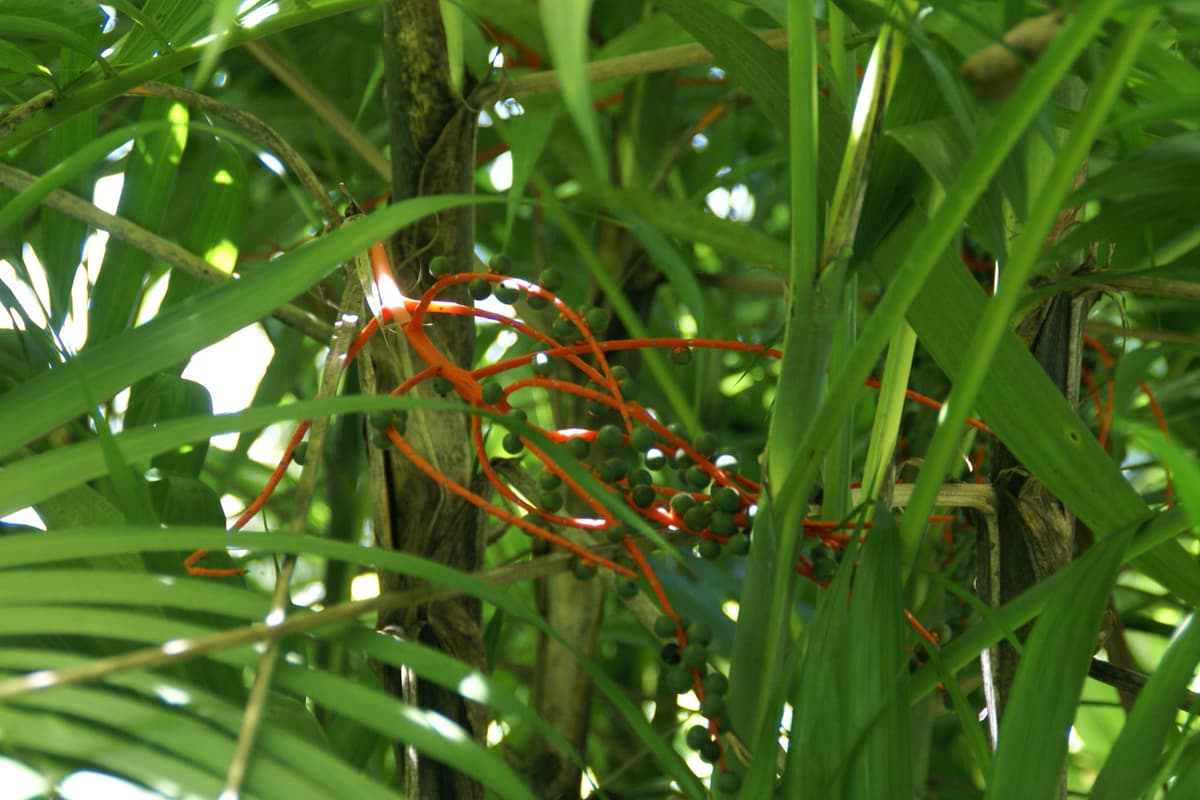
Botanical specimen of Chamaedorea Tepejilote.
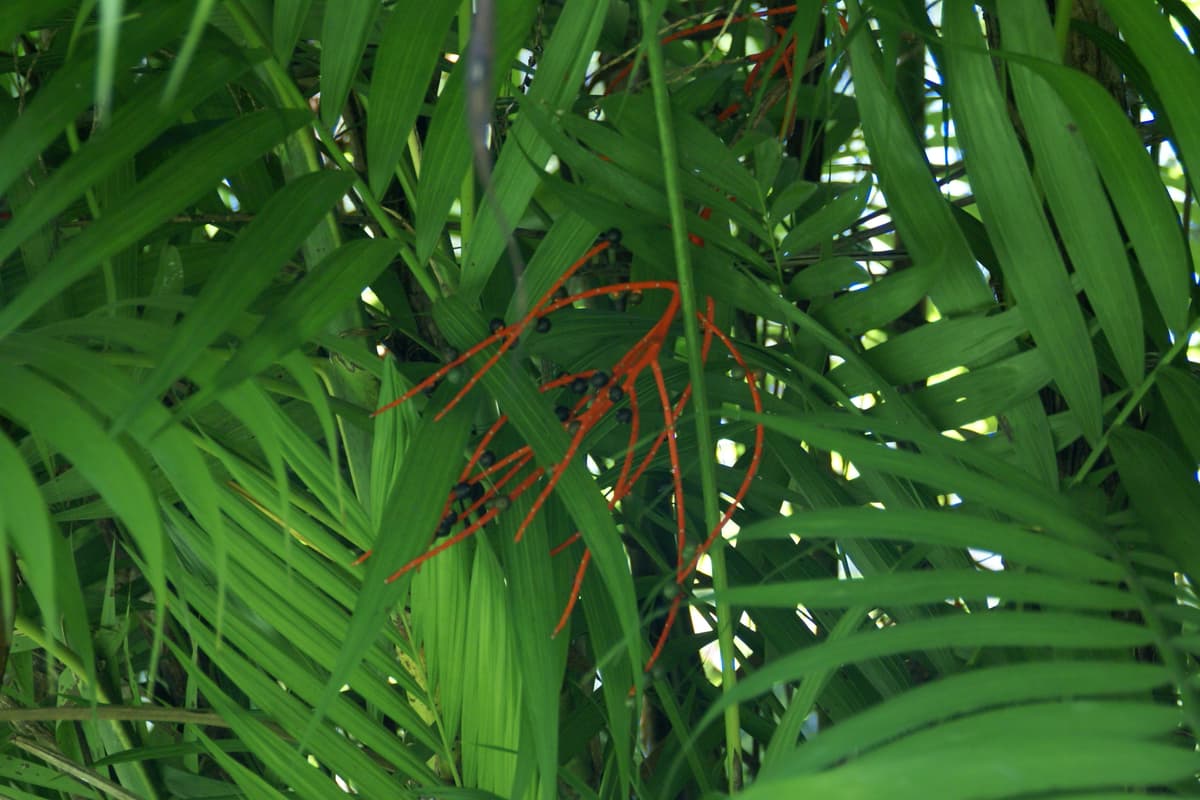
Botanical specimen of Chamaedorea Tepejilote.
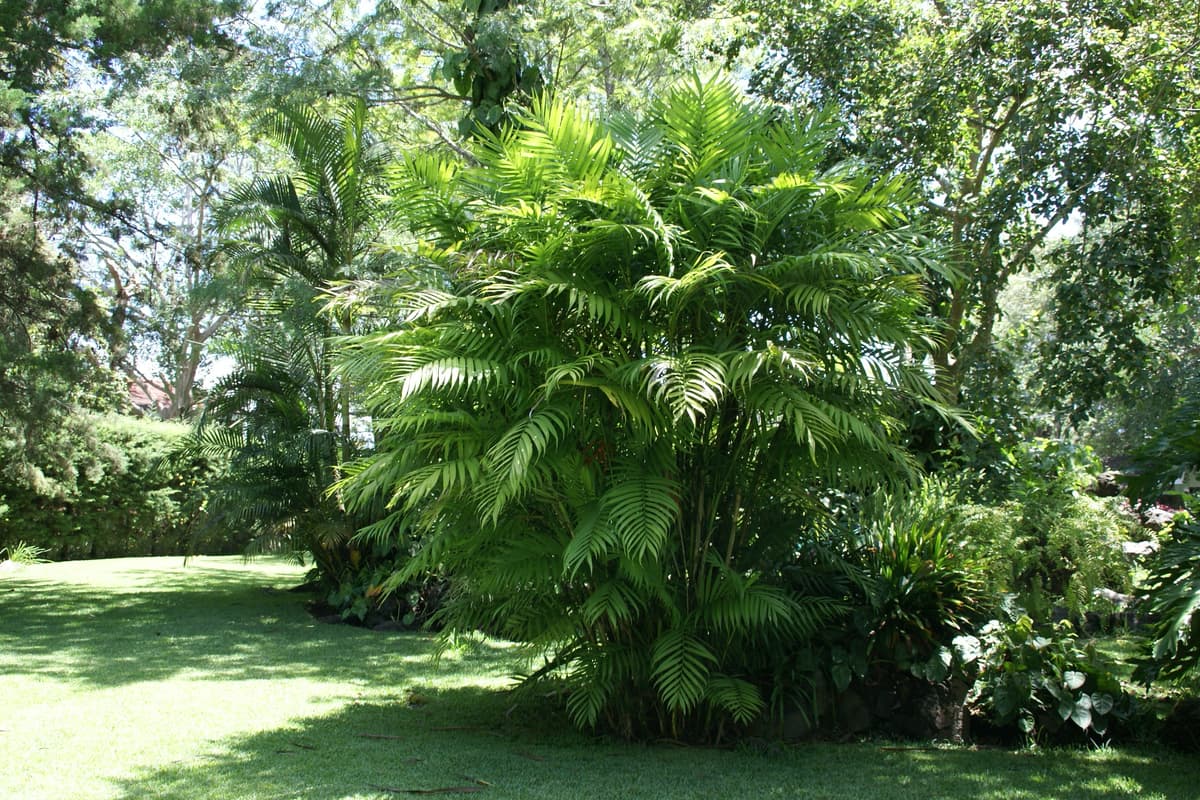
Botanical specimen of Chamaedorea Tepejilote.
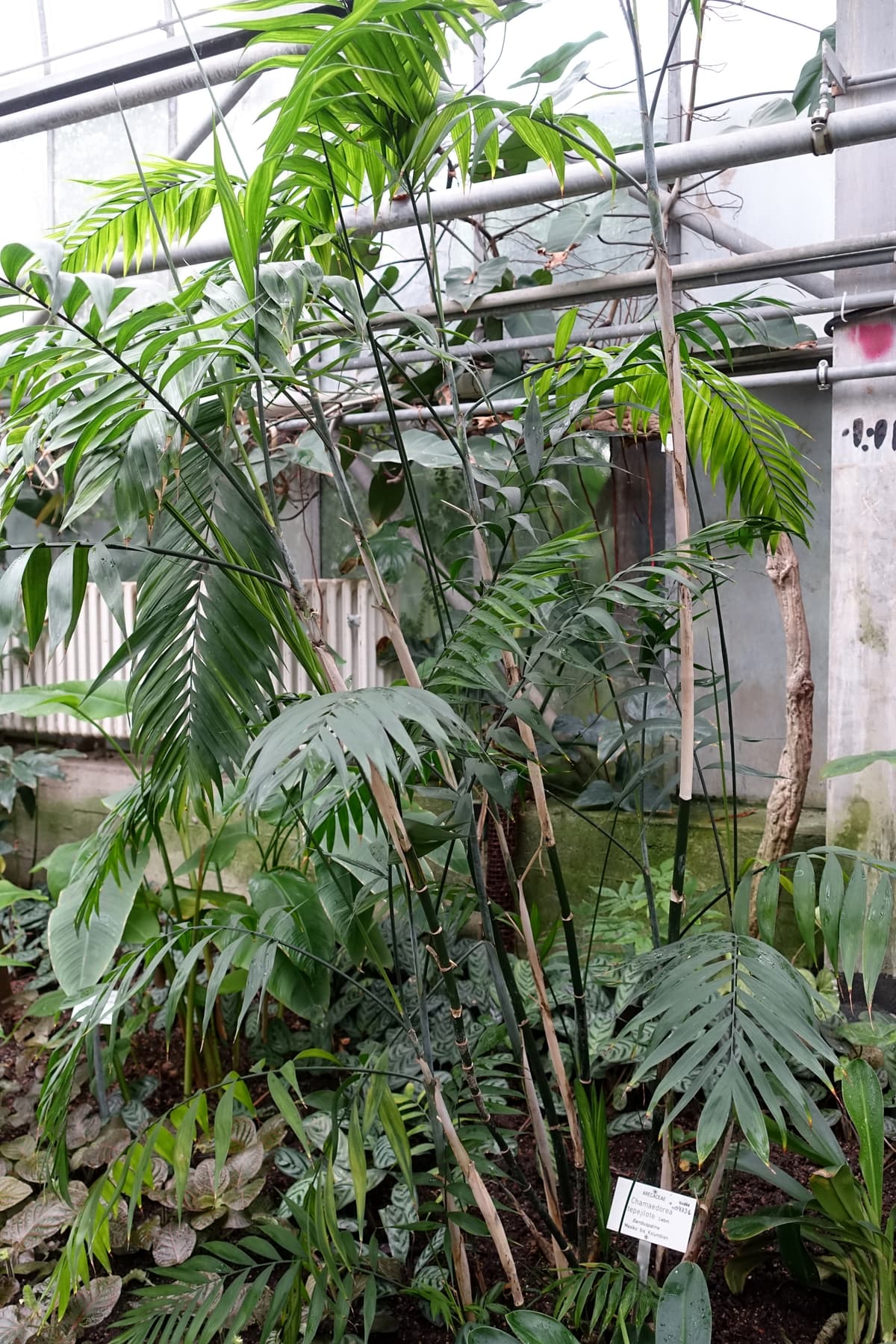
Botanical specimen of Chamaedorea Tepejilote.
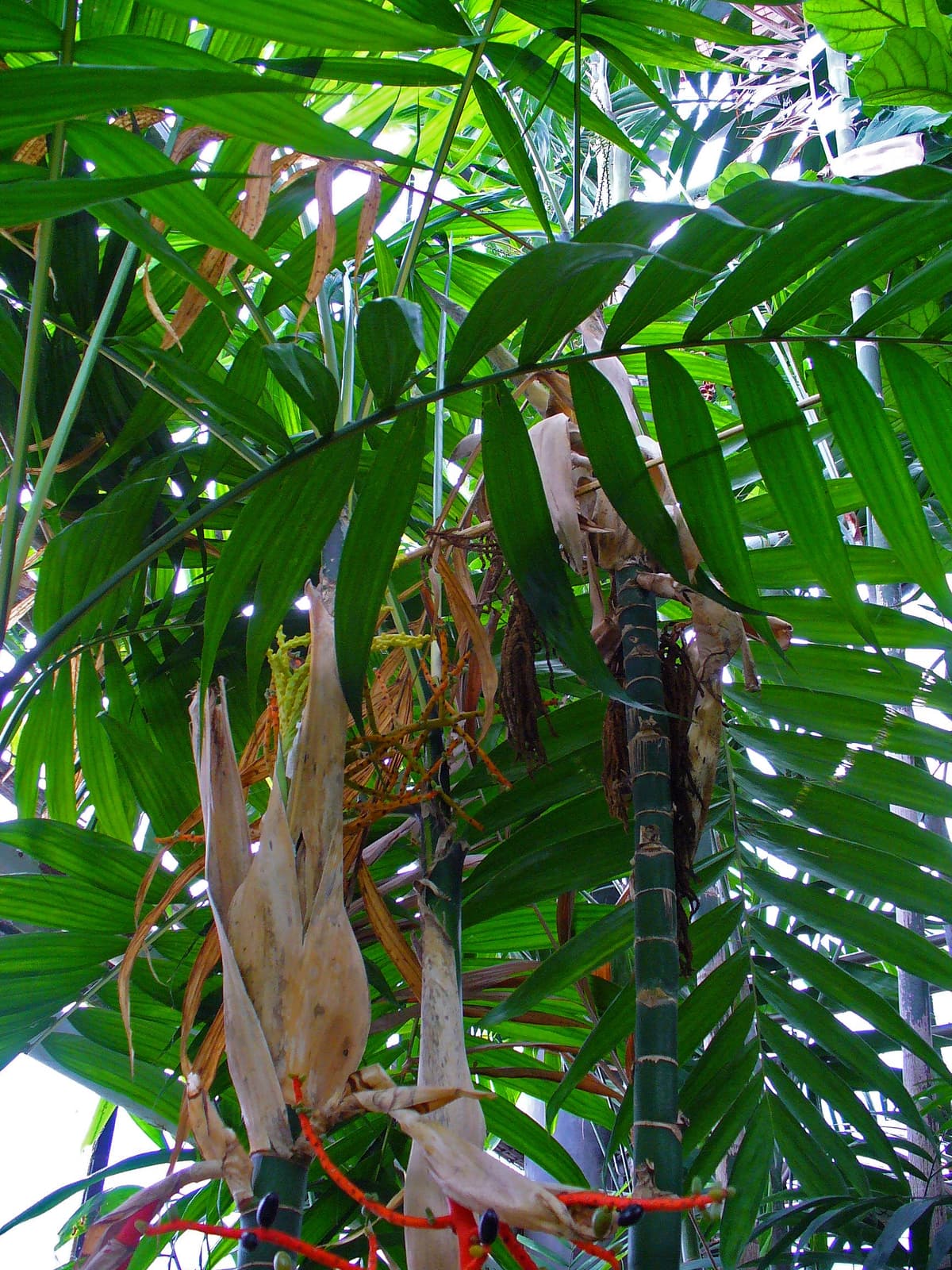
Botanical specimen of Chamaedorea Tepejilote.