Red Coral Palm
Clinosperma Bracteale
Red Coral Palm in Motion
The Essence
"Clinosperma bracteale is one of only four species in a genus endemic to New Caledonia, where it grows in rainforest from sea level to about 1,200 m in the centre and south of the island. It is a solitary palm reaching roughly 15 m on a slender trunk of uniform 10 cm diameter, gray to tan and ringed with leaf scars. Its most distinctive feature is the 60 cm crownshaft, which bulges markedly to one side at the base to give a triangular outline; it is covered in hairy tomentum and white wax, so depending on the concentration of each it can read brown, green or white. The infrafoliar inflorescence unfolds bright red - the trait behind the Rare Palm Seeds trade name Red Coral Palm - carrying small white to yellow unisexual flowers in triads on bright red branches, followed by globose fruit that ripens from shiny green to black. Rare Palm Seeds calls it one of the most adaptable of the island's palms, yet despite being rather widespread in the wild it remains virtually unknown in cultivation, foremost perhaps because ripe seed is difficult to obtain."
Clinosperma combines the Greek klinein ('to slant' or 'slope') with sperma ('seed'), perhaps because the seed is inserted obliquely in the immature endocarp (Genera Palmarum, via PALMweb). The species epithet bracteale refers to the bracts of the inflorescence.
First described by Brongniart in 1873 as Cyphokentia bractealis, and transferred by Beccari to Clinosperma in Palme Nuova Caledonia: 52 (1920); Beccari's earlier combination Clinostigma bracteale (Malesia 1: 40, 1877) is the other homotypic synonym recognised by POWO. Molecular studies strongly support the monophyly of Clinosperma and its sister relationship to Cyphokentia, the two genera making up subtribe Clinospermatinae. Neither PALMweb nor Palmpedia records a common name or any documented use for the genus.
Natural Habitat
Rainforest in central and southern New Caledonia, from sea level to 1,200 m (3,900 ft). Genera Palmarum, via PALMweb, records the genus from wet forests on serpentine soils and schists, and the same substrates are cited for this species. POWO gives the native range as Central and S. New Caledonia and places the species primarily in the wet tropical biome.
Curated Specimens
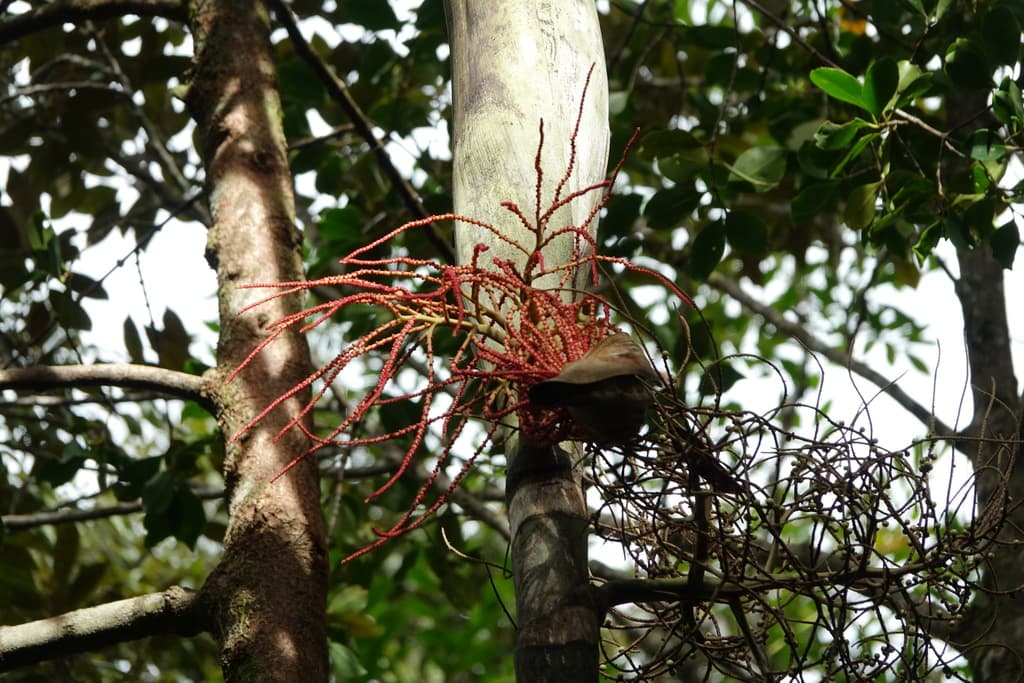
Botanical specimen of Clinosperma Bracteale.
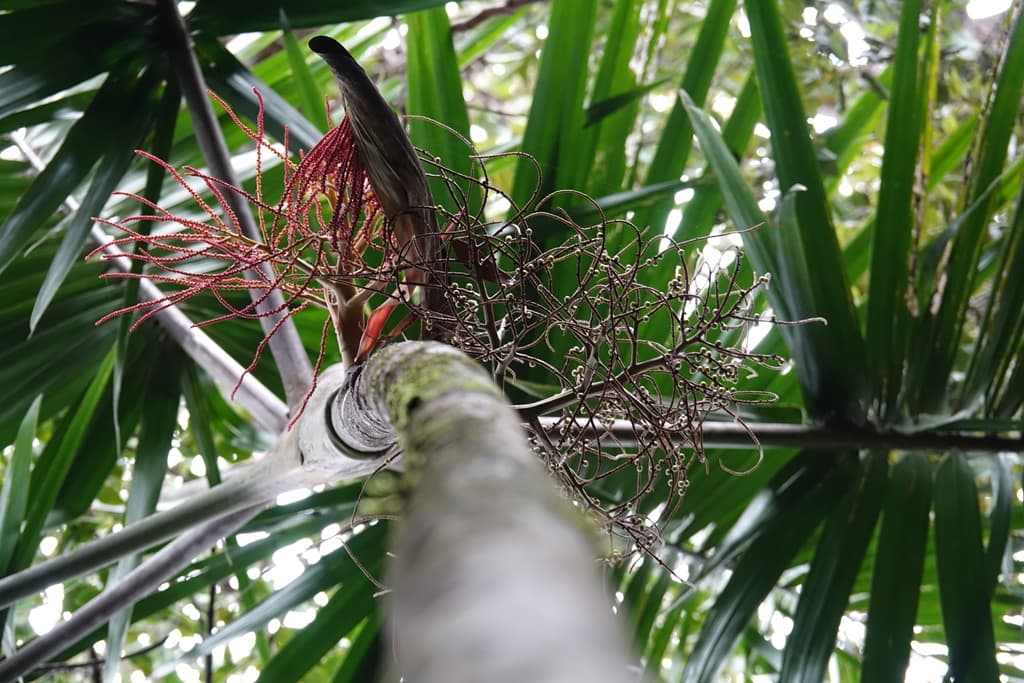
Botanical specimen of Clinosperma Bracteale.
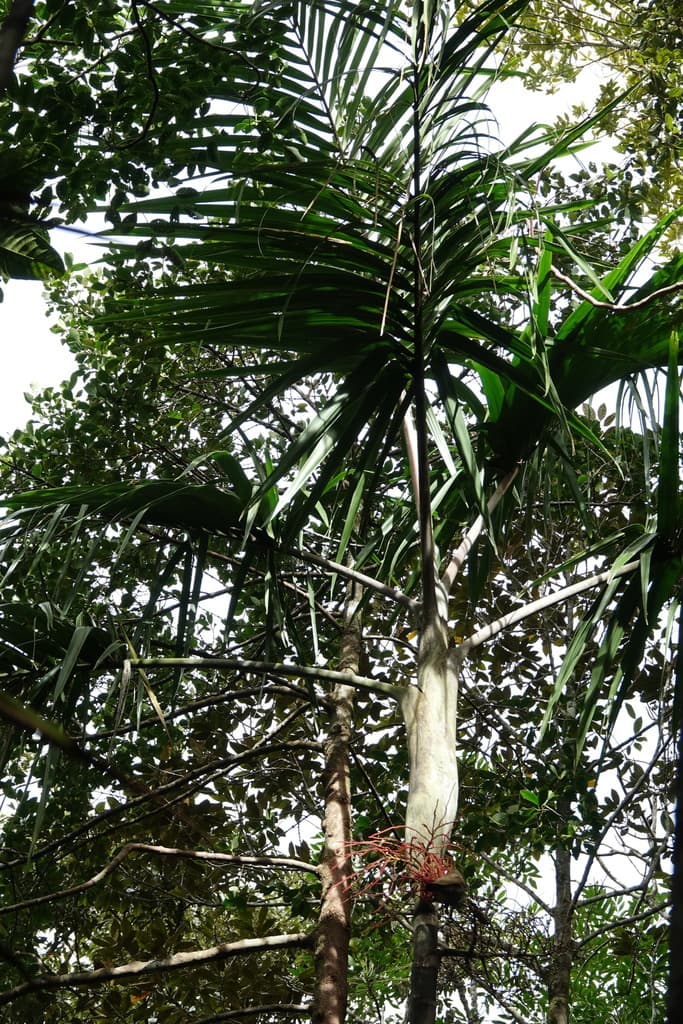
Botanical specimen of Clinosperma Bracteale.
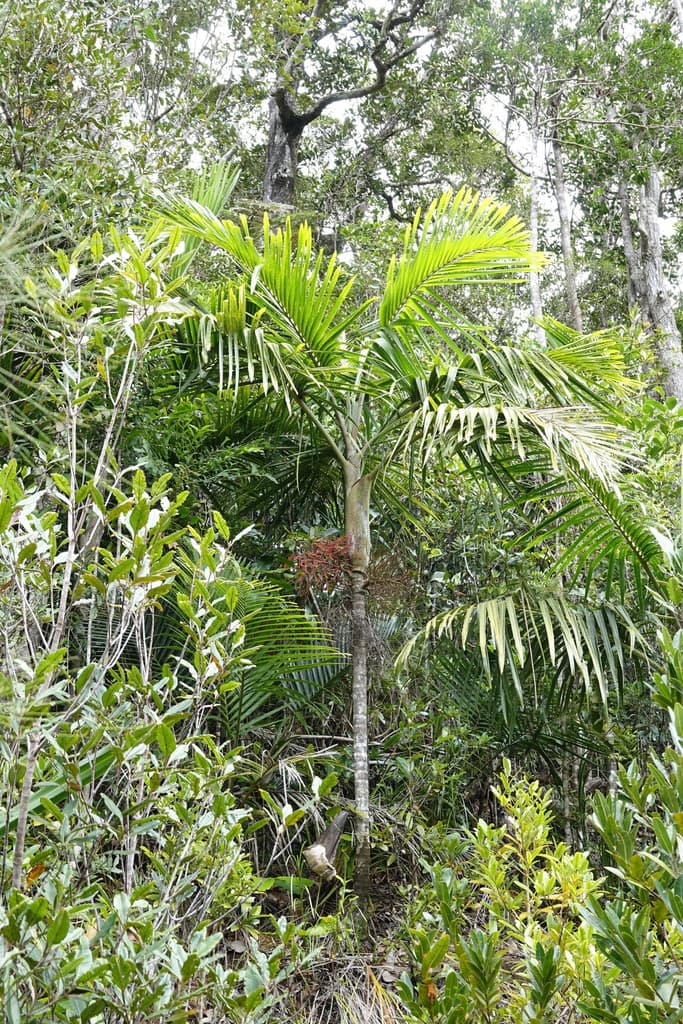
Botanical specimen of Clinosperma Bracteale.
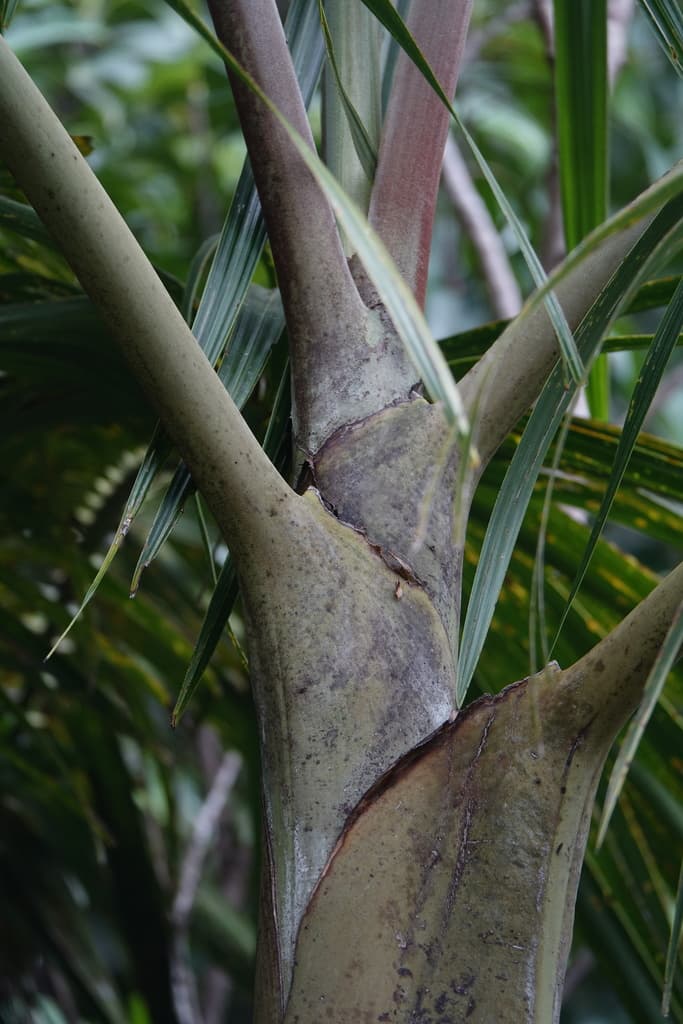
Botanical specimen of Clinosperma Bracteale.
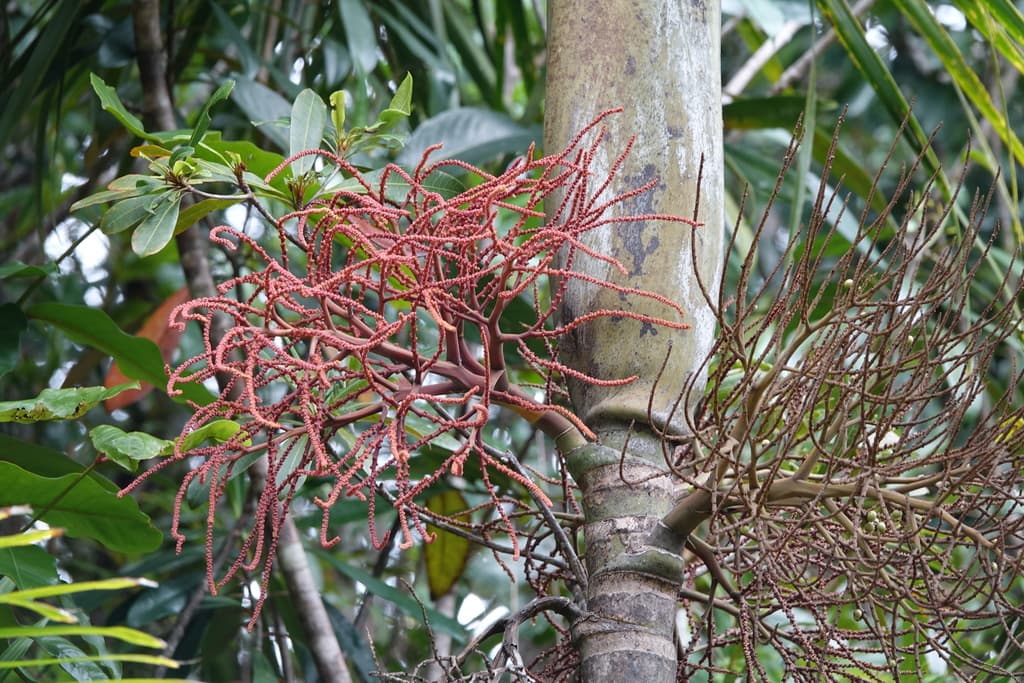
Botanical specimen of Clinosperma Bracteale.
Biology & Morphology
"A solitary palm to 15 m with a gray to tan trunk of uniform 10 cm diameter ringed by leaf scars, a 60 cm crownshaft that bulges to one side into a triangular shape, a crown of 12-15 pinnate leaves about 1.5 m long on 30 cm petioles with stiff once-folded pinnae to 90 cm, bright red infrafoliar inflorescences bearing flowers in triads, and globose fruit ripening shiny green to black around a single light brown seed."
Morphology
Symmetrical columnar trunk with characteristic leaf-scar patterning and lignified outer cortex.
Adventitious root system spreading radially to maximize hydraulic intake in competitive soil matrices.
Distinctive unknown habit and medium stature providing a unique architectural profile.
Foliage
Vibrant green canopy featuring characteristic frond architecture optimized for photon interception and transpiration efficiency.
Specialized green tissues exhibiting moderate metabolic expansion rates.
Reproduction
Complex inflorescence branching typical of the Clinosperma clade, exhibiting seasonal reproductive synchrony.
Nutrient-dense drupes encased in a fibrous pericarp, optimized for protection and dispersal.
Dormant embryonic tissues with high endosperm density, characteristic of resilient Clinosperma specimens.
Ecology
Active rhizosphere communication with mycorrhizal fungal networks, enhancing phosphorus and micronutrient uptake.
Interlocked with Pacific avian and entomological vectors adapted to island ecosystems.
Gravity-mediated and animal-vectored dispersal mechanisms ensuring regional genetic distribution.
Germination & Propagation
Germination Timeline
Hydration soak.
Incubation in moist media.
Sprout emergence.
No germination specifics were found in the sources consulted. Cultivation is extremely rare, foremost perhaps because of the difficulty in obtaining ripe seeds.
Cultivation & Care
Light
Full Sun to Partial Shade
Water
Water requirements are rated High by Rare Palm Seeds, consistent with a wet-tropical rainforest species.
Soil
No explicit cultivation soil advice has been published. In habitat the palm is associated with schists and serpentine (ultramafic) soils, indicating tolerance of these substrates.
Frost tolerance is rated Light by Rare Palm Seeds, which expects it to adapt well to many tropical and warm temperate climates; no minimum-temperature or USDA zone figure was published in the sources consulted. Growth rate is rated Slow, and the palm is extremely rare in cultivation.
Pests, Diseases & Care
Pests
Promecotheca caerulipennis (Fiji Leafminer)
MODERATEBlistering of leaflets leading to significant photosynthetic loss.
Augmentation of native hymenopteran parasitoids.
Brontispa longissima (Coconut Leaf Beetle)
HIGHBrowning and drying of young fronds; high impact on tropical palms.
Biological control using parasitic wasps (Tetrastichus brontispae).
Diseases
Colletotrichum spp. (Anthracnose)
MODERATEBlack necrotic spots on leaflets under high humidity.
Copper-based fungicides and reduction of overhead irrigation.
Ganoderma zonatum (Butt Rot)
LETHALRadial wood decay and structural instability at the base.
No chemical cure; immediate isolation and removal.
Nutritional Deficiencies
Interveinal chlorosis (Younger fronds)
Chelated Fe-EDDHA Soil Pulse
Marginal chlorosis (Older fronds)
Mg-Sulfate (Kieserite) saturation
Frizzletop / Distorted spear
Systemic Mn-Sulfate application
Care Tips
Biosurveillance pulse synchronized for Oceania regional vectors.
Apply prophylactic fungicidal drench in the nocturnal phase.
Improve canopy ventilation to disrupt fungal sporulation cycles.
Sources & Conservation
Curated- Plants of the World Online (Kew) - Clinosperma bracteale (Brongn.) Becc. · accessed 2026-09
- Wikipedia - Clinosperma bractealis · accessed 2026-09
- Wikipedia - Clinosperma (genus) · accessed 2026-09
- Palmpedia - Clinosperma bracteale · accessed 2026-09
- GBIF - Clinosperma bracteale (Brongn.) Becc. · accessed 2026-09
- IUCN Red List - Clinosperma bracteale (Least Concern) · accessed 2026-09
- PALMweb - Clinosperma Becc. · accessed 2026-09
- Rare Palm Seeds - Clinosperma bracteale (Red Coral Palm) · accessed 2026-09