Cyphosperma Balansae
The Essence
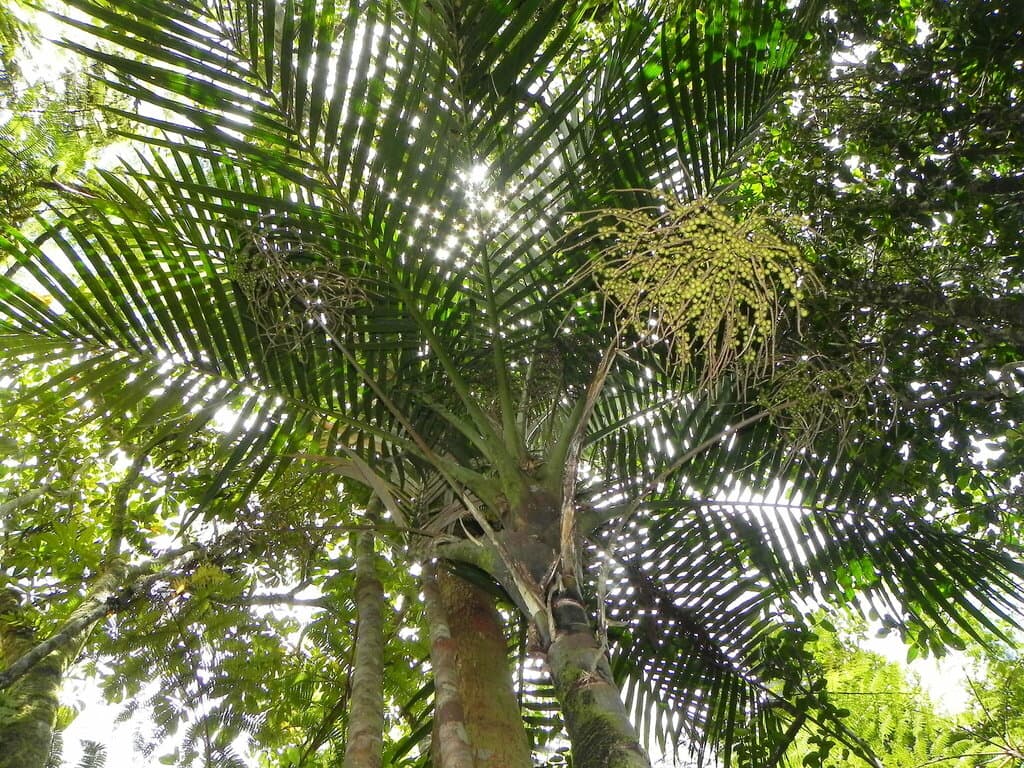
"Cyphosperma balansae is a solitary pinnate palm endemic to New Caledonia, scattered through the central and northeastern parts of Grande Terre. It is the only member of its genus in New Caledonia; the rest of Cyphosperma occurs in Fiji and Vanuatu. It reaches about 12 m, with a dark green to purplish-black trunk 9-20 cm thick and prominently ringed by leaf scars, carrying a crown of 10 to 20 stiff, erect leaves 1.5 to 3 m long. The leaves are tristichous, arranged in three ranks, and in cultivated plants their near-vertical orientation gives a silhouette likened to a shuttlecock. There is almost no crownshaft; the leaf bases are instead covered with a purplish-brown tomentum that turns green towards the top. Arched, hanging inflorescences arise from beneath the petioles and carry nearly globular fruit 1 to 1.2 cm across, red when ripe. Growers separate it from other New Caledonian palms by the combination of stiffly ascending leaves, lack of a crownshaft and long arching inflorescences. Seeds are collected for the international horticultural trade, but the palm remains very rare in cultivation, and by one account it is the only Cyphosperma to have reached California."
The genus name Cyphosperma comes from the Greek kyphos (bent, humped) and sperma (seed), probably in reference to the irregular humps and ridges on the seed. The epithet balansae commemorates Benjamin Balansa (1825-1891), the French botanist who stayed in New Caledonia and the Loyalty Islands from 1868 to 1872, during which time he was Director of the Jardin d'Acclimatation in Noumea.
The species was described by Brongniart as Cyphokentia balansae in Comptes Rendus Hebdomadaires des Seances de l'Academie des Sciences 77: 400 (1873). The combination Cyphosperma balansae, attributed to H. Wendland ex Salomon, was published in Gartenflora 33: 272 (1884) and is the name accepted by Plants of the World Online. The IUCN assessment follows the taxonomy of Pintaud & Baker's 2008 revision of the palm genera of New Caledonia in Kew Bulletin 63(1): 61-73.
Natural Habitat
Humid forest from 10 to 900 m elevation, on soils derived from either schist or ultramafic rocks; Palmpedia adds that it grows in deep ultramafic substrate but primarily on volcano-sedimentary substrate. It occupies the rainforest interior, from the undergrowth up to the canopy. The range is widespread but scattered, with an extent of occurrence of 2,823 km2 against an area of occupancy of only 36 km2, and the palm is moderately common in the central part of Grande Terre. It is protected by legislation in Province Nord and occurs in two protected areas, Aoupinie and Mont Panie.
Curated Specimens
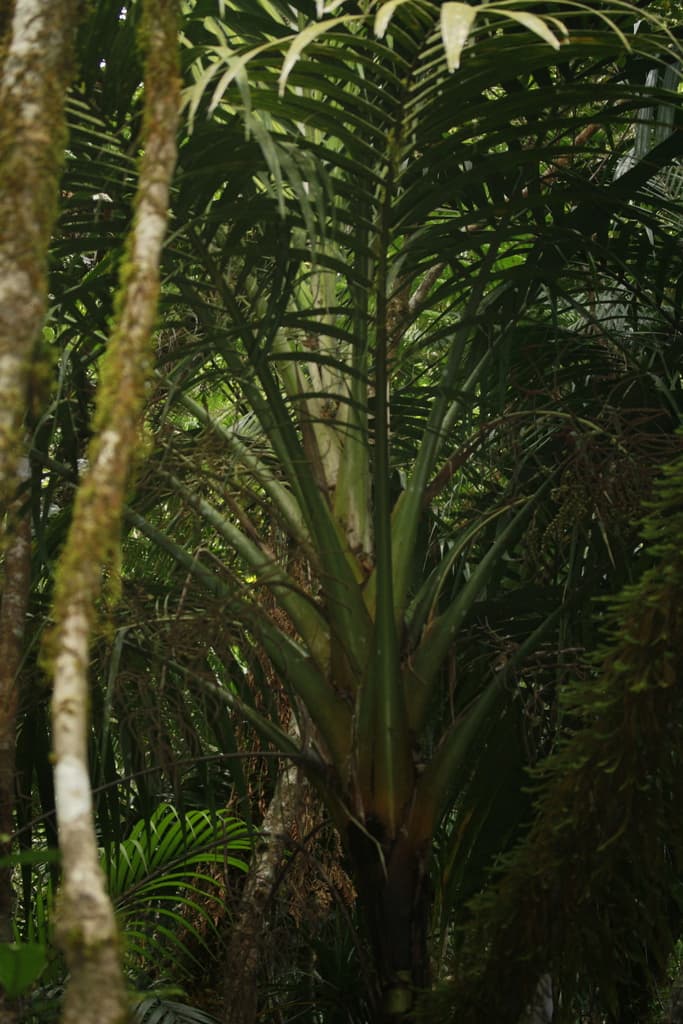
Botanical specimen of Cyphosperma Balansae.
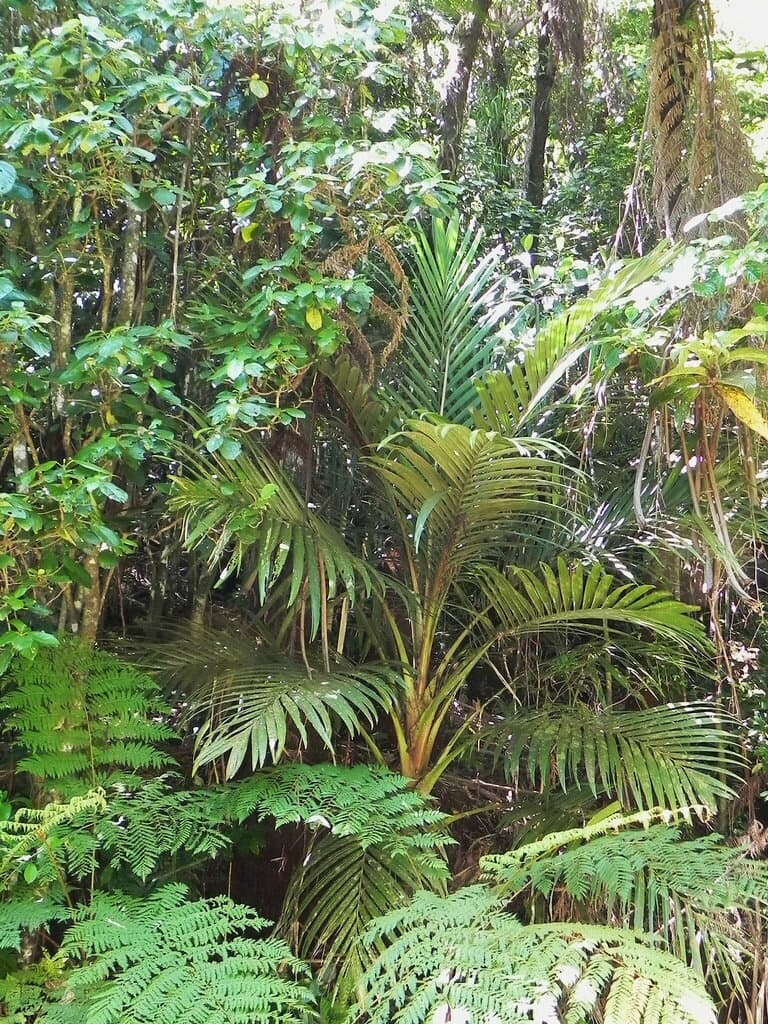
Botanical specimen of Cyphosperma Balansae.
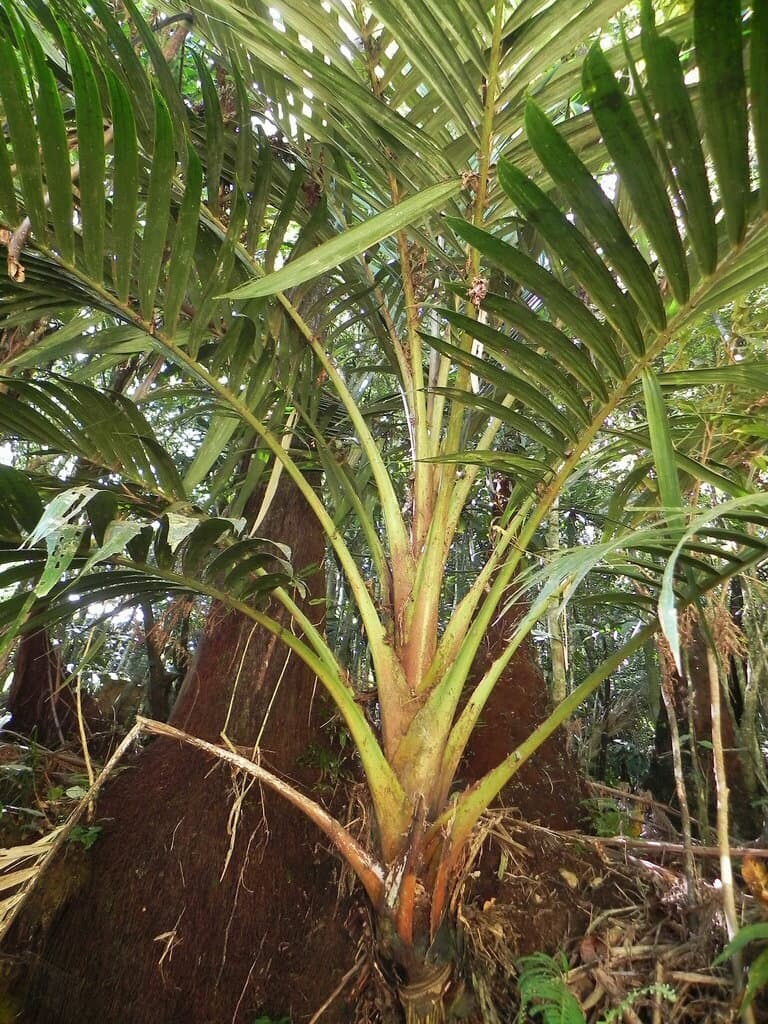
Botanical specimen of Cyphosperma Balansae.
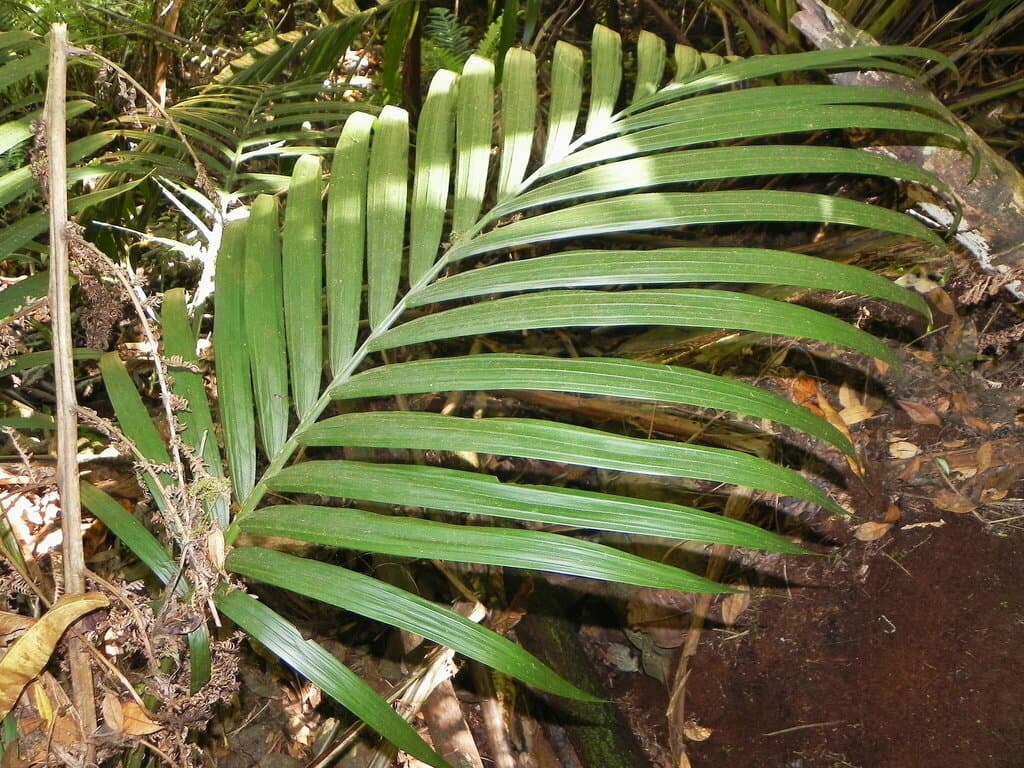
Botanical specimen of Cyphosperma Balansae.
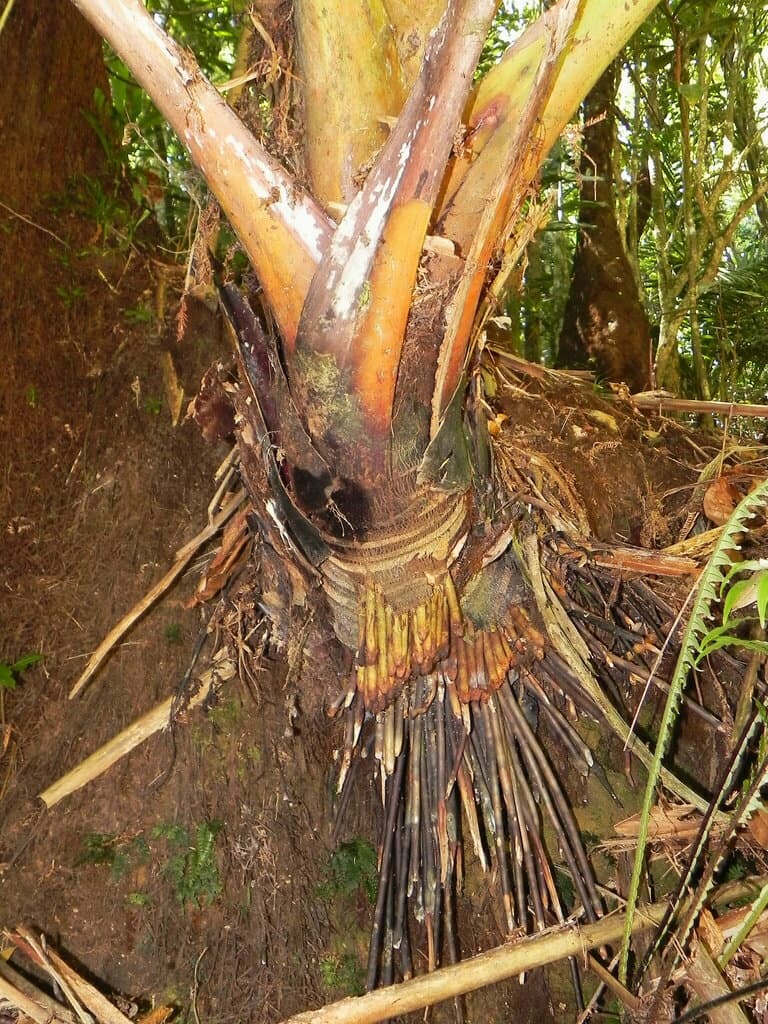
Botanical specimen of Cyphosperma Balansae.
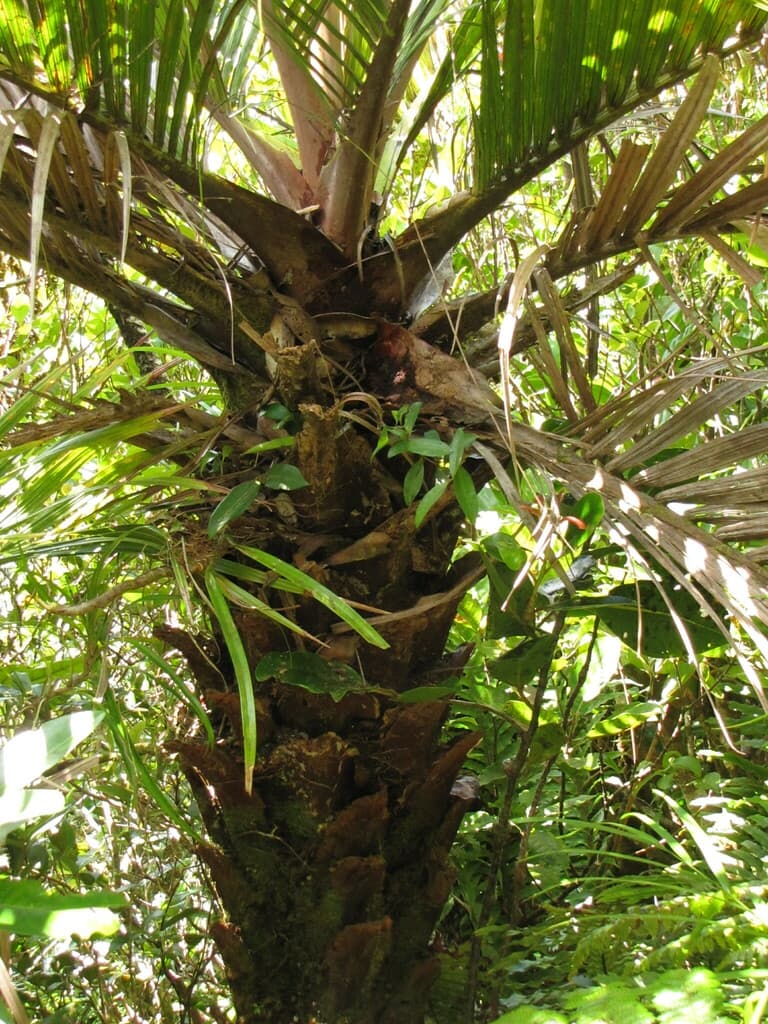
Botanical specimen of Cyphosperma Balansae.
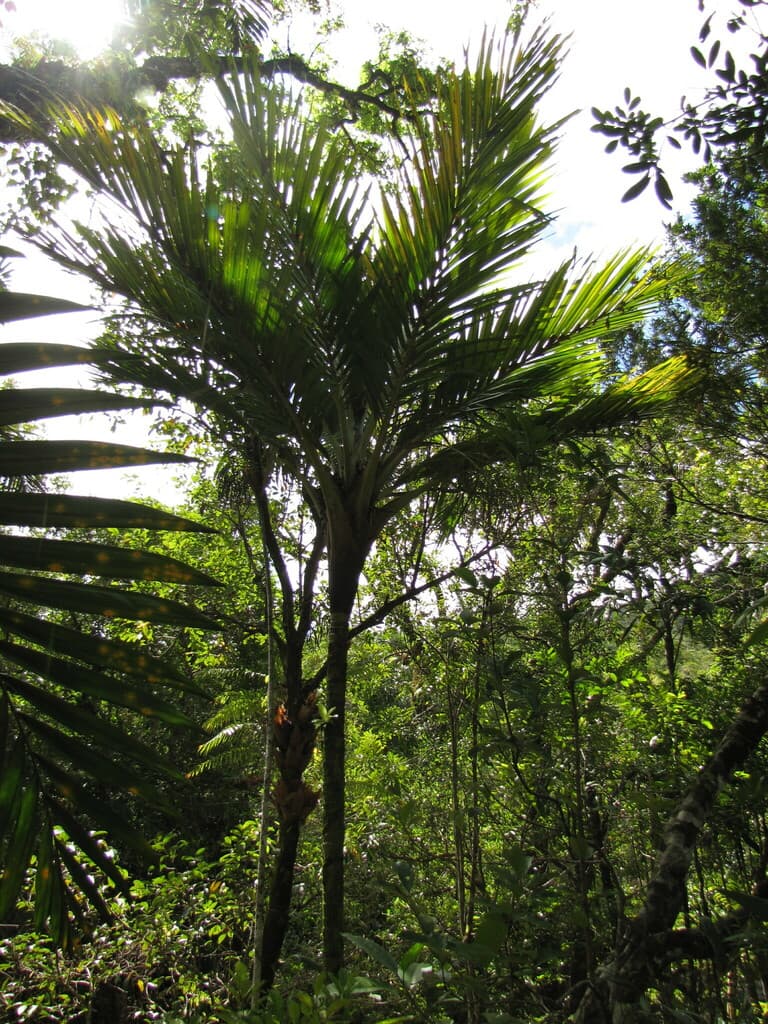
Botanical specimen of Cyphosperma Balansae.
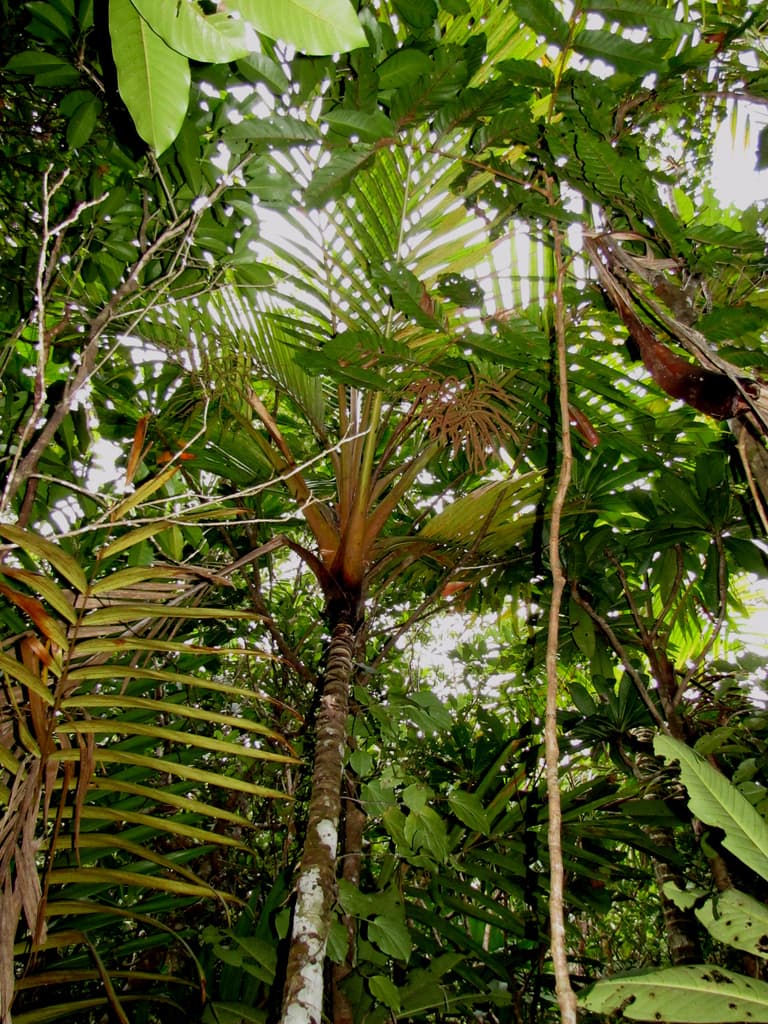
Botanical specimen of Cyphosperma Balansae.
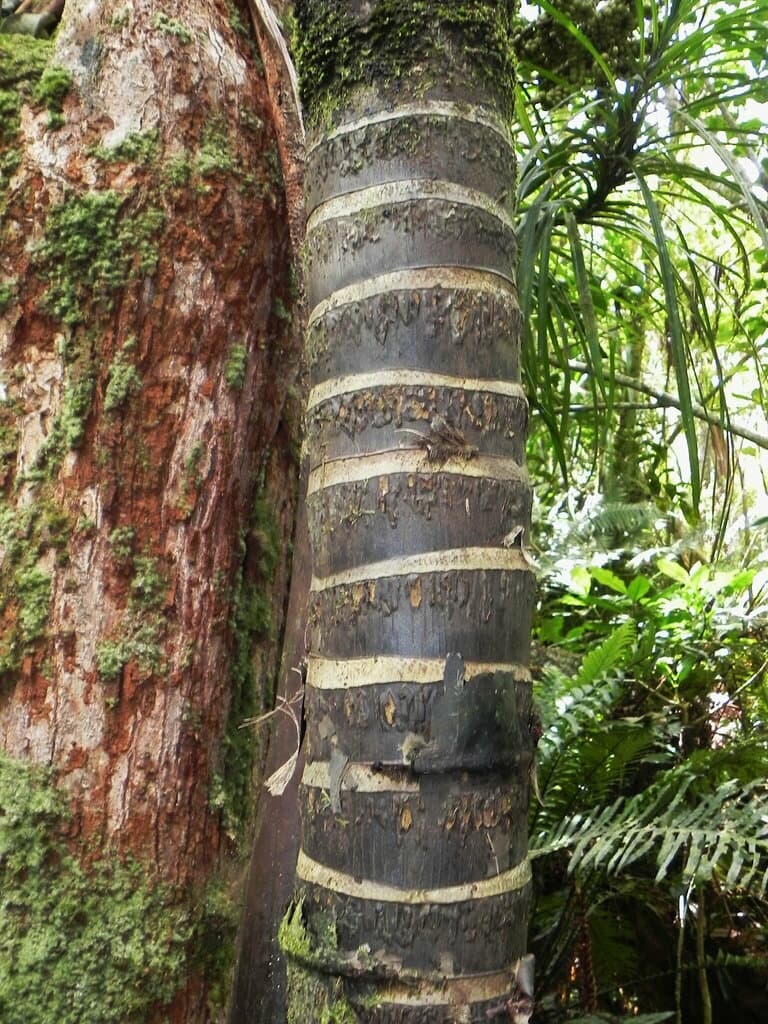
Botanical specimen of Cyphosperma Balansae.
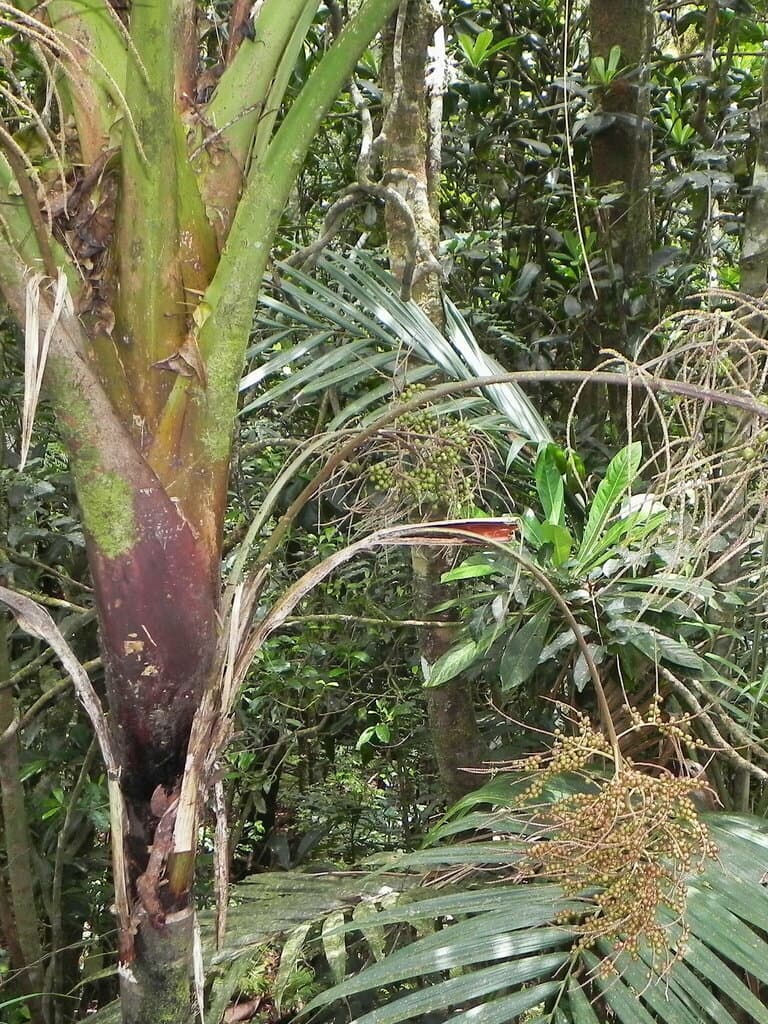
Botanical specimen of Cyphosperma Balansae.
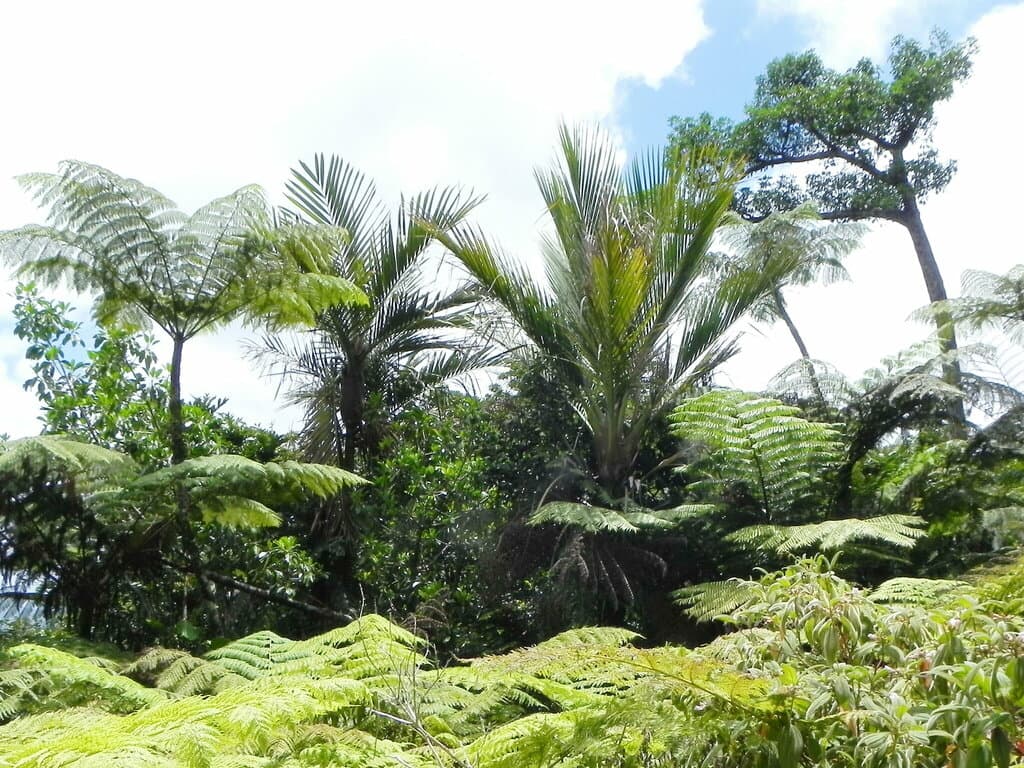
Botanical specimen of Cyphosperma Balansae.
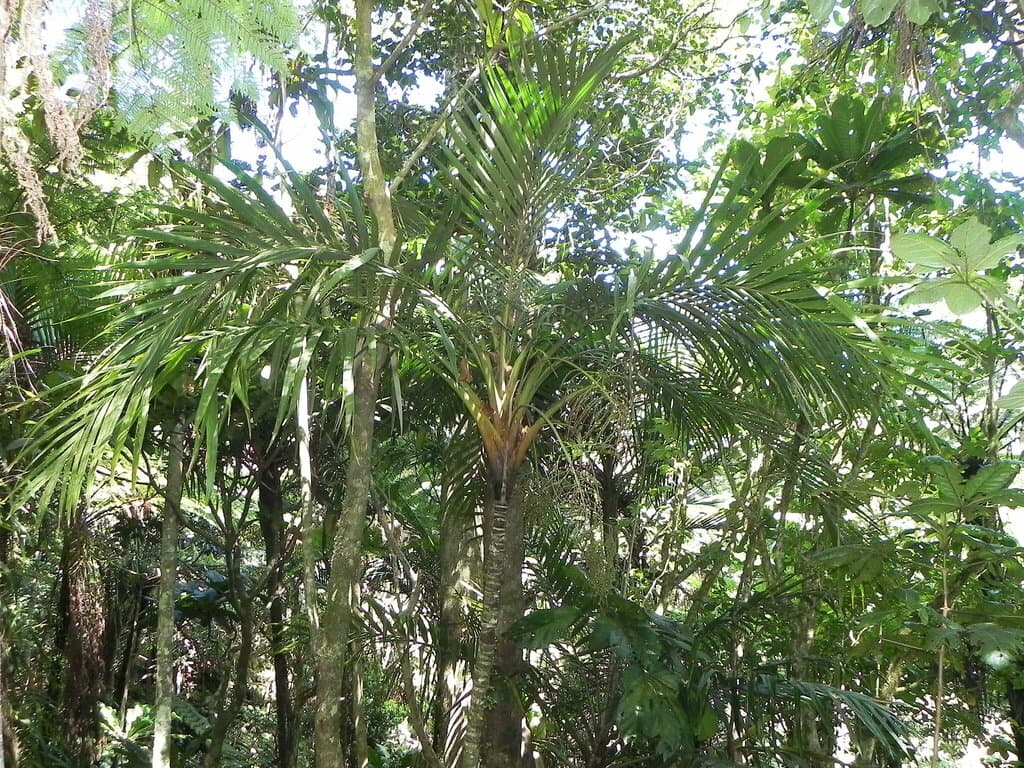
Botanical specimen of Cyphosperma Balansae.
Botanical specimen of Cyphosperma Balansae.
Biology & Morphology
"A solitary palm to 12 m with a ringed trunk 9-20 cm in diameter and a crown of 10-20 stiff, erect, three-ranked leaves 1.5-3 m long, each with 24-35 pinnae per side; arched, hanging inflorescences arise from beneath the petioles and bear red, nearly globular fruit 1-1.2 cm in diameter."
Morphology
Symmetrical columnar trunk with characteristic leaf-scar patterning and lignified outer cortex.
Adventitious root system spreading radially to maximize hydraulic intake in competitive soil matrices.
Distinctive unknown habit and medium stature providing a unique architectural profile.
Foliage
Vibrant green canopy featuring characteristic frond architecture optimized for photon interception and transpiration efficiency.
Specialized green tissues exhibiting moderate metabolic expansion rates.
Reproduction
Complex inflorescence branching typical of the Cyphosperma clade, exhibiting seasonal reproductive synchrony.
Nutrient-dense drupes encased in a fibrous pericarp, optimized for protection and dispersal.
Dormant embryonic tissues with high endosperm density, characteristic of resilient Cyphosperma specimens.
Ecology
Active rhizosphere communication with mycorrhizal fungal networks, enhancing phosphorus and micronutrient uptake.
Interlocked with Pacific avian and entomological vectors adapted to island ecosystems.
Gravity-mediated and animal-vectored dispersal mechanisms ensuring regional genetic distribution.
Germination & Propagation
Germination Timeline
Hydration soak.
Incubation in moist media.
Sprout emergence.
Reported as not difficult to germinate and maintain, with seeds said to germinate readily. The seedling stage is the difficult phase; once past it, the palm is described as an easy grow. Seeds are collected for sale to the international horticultural trade.
Cultivation & Care
Light
Shade to filtered sun. As a palm of the rainforest undergrowth, it should not be given too much sun while young.
Water
Needs constant moisture and humidity; drought tolerance and dry-heat tolerance are both rated low, and it is described as touchy with dry heat. Geoff Stein notes it is particularly fastidious about humidity and rarely looks perfect even in the best California climates, and a South Florida grower reports that a seedling planted out in shade was failing in that heat and humidity.
Soil
Moist but well-draining soil in cultivation. In habitat it grows on schist- and ultramafic-derived soils and, according to Palmpedia, primarily on volcano-sedimentary substrate.
Not a hardy palm: a minimum temperature of 32 F (0 C) is listed, and in California it is thought likely to succeed only near the coast or another warm, large body of water where it rarely if ever freezes. Growth rate is very slow and availability rare. A Leu Gardens (Orlando) botanist reports that the New Caledonian palms in his collection proved cool-hardy and should do well in protected locations barring a severe freeze or a drop below 25 F, but that is a general remark about New Caledonian palms, not a tested rating for this species.
Pests, Diseases & Care
Pests
Brontispa longissima (Coconut Leaf Beetle)
HIGHBrowning and drying of young fronds; high impact on tropical palms.
Biological control using parasitic wasps (Tetrastichus brontispae).
Promecotheca caerulipennis (Fiji Leafminer)
MODERATEBlistering of leaflets leading to significant photosynthetic loss.
Augmentation of native hymenopteran parasitoids.
Diseases
Phytophthora palmivora (Bud Rot)
CRITICALNecrosis of the spear leaf and decay of the meristem.
Fosetyl-Al application and optimizing canopy ventilation.
Colletotrichum spp. (Anthracnose)
MODERATEBlack necrotic spots on leaflets under high humidity.
Copper-based fungicides and reduction of overhead irrigation.
Nutritional Deficiencies
Interveinal chlorosis (Younger fronds)
Chelated Fe-EDDHA Soil Pulse
Marginal chlorosis (Older fronds)
Mg-Sulfate (Kieserite) saturation
Frizzletop / Distorted spear
Systemic Mn-Sulfate application
Care Tips
Biosurveillance pulse synchronized for Oceania regional vectors.
Apply prophylactic fungicidal drench in the nocturnal phase.
Improve canopy ventilation to disrupt fungal sporulation cycles.
Sources & Conservation
Curated- Cyphosperma balansae (Brongn.) H.Wendl. ex Salomon - Plants of the World Online, Kew · accessed 2026-09
- Amice, R. et al. 2017. Cyphosperma balansae. The IUCN Red List of Threatened Species 2017: e.T38503A115776187 · accessed 2026-09
- Cyphosperma balansae - Palmpedia, Palm Grower's Guide · accessed 2026-09
- Cyphosperma balansae - Palms For California (Geoff Stein) · accessed 2026-09
- Cyphosperma H.Wendl. ex Hook.f. - PALMweb (text from Dransfield et al. 2008, Genera Palmarum) · accessed 2026-09
- Pintaud, J.-C. & Baker, W.J. 2008. A revision of the palm genera (Arecaceae) of New Caledonia. Kew Bulletin 63(1): 61-73 · accessed 2026-09
- Cyphosperma balansae - GBIF Backbone Taxonomy (verified via GBIF species API, key 2736057) · accessed 2026-09
- Cyphosperma - Wikipedia · accessed 2026-09
- Benjamin Balansa - Wikipedia · accessed 2026-09