Desmoncus Isthmius
The Essence
"Desmoncus isthmius is no longer an accepted name. L.H. Bailey published it from Panama in Gentes Herbarum in 1943, but Andrew Henderson's 2011 revision of the genus reduced it to a synonym of Desmoncus myriacanthos Dugand, which had appeared several months earlier the same year. POWO, World Flora Online and Catalogue of Life all follow that treatment, so herbarium material labelled D. isthmius - Panamanian collections from the Canal area and Barro Colorado Island, Colon, Darien, San Blas and Panama province - belongs to D. myriacanthos. The accepted taxon is a clustering, heavily spiny climbing palm of lowland forest, running from central and eastern Panama through northwestern Colombia and just reaching Zulia in Venezuela. Like almost all of its genus it climbs by a whip-like cirrus at the leaf tip armed with reflexed grapnel acanthophylls, the feature that makes Desmoncus, in the words of Genera Palmarum, the New World counterpart of the Asiatic and African calamoid rattans. Palmpedia lists its use simply as rattan and describes it as virtually unknown in cultivation. Henderson regarded its scattered distribution as "likely to be an artifact of insufficient collecting" (Henderson 2011, via PALMweb) rather than evidence of real rarity."
The genus name combines Greek desmos, a band, with ogkos, a hook, "referring to the acanthophylls at the leaf tip" (Genera Palmarum, via PALMweb). No source consulted explains the epithet isthmius; it is the Latin adjective meaning of the isthmus, and IPNI records Bailey's 1943 name as published from Panama, that is, the Isthmus of Panama. No retrieved source explains the accepted epithet myriacanthos either, so no derivation is offered here.
Bailey described the species in Gentes Herbarum 6: 211, fig. 108 (1943) from Panamanian material; Palmpedia still gives the distribution as Marraganti and vicinity in Panama, extending through to Colombia. Dugand's competing name had appeared in Caldasia 2: 75 (1943). Henderson's 2011 monographic revision in Phytotaxa 35 placed Bailey's name in synonymy under D. myriacanthos, noting that although both were published in 1943, Dugand's name predates Bailey's by several months. As of August 2026 GBIF holds 151 occurrence records under the accepted name - 70 from Colombia, 67 from Panama and 13 from Venezuela - and the material filed under D. isthmius includes a 1970 T.B. Croat collection from Barro Colorado Island in the Panama Canal area. Of the 24 species Henderson recognised in Desmoncus, 23 are climbers; only D. stans is free-standing.
Natural Habitat
Lowland rainforest at 10-125 m elevation, averaging about 73 m (Henderson 2011, via PALMweb); POWO classifies the climate as wet tropical and the lifeform as climber. GBIF occurrence records from northwestern Colombia add nuance: the 34 records from Cordoba sit at roughly 40-140 m and most are labelled bosque seco tropical (tropical dry forest), with a further group labelled bosque transicional seco-humedo (dry-to-humid transitional forest). That fits Henderson's own note that the southernmost specimen, from the Choco, comes from one of the wettest areas in Colombia, in contrast to the much drier habitat of the other northwestern Colombian specimens. At genus level, Genera Palmarum notes that most Desmoncus are lowland palms, often found in open areas, swamps and on riverbanks, and more rarely in the undergrowth of tropical rain forest.
Curated Specimens
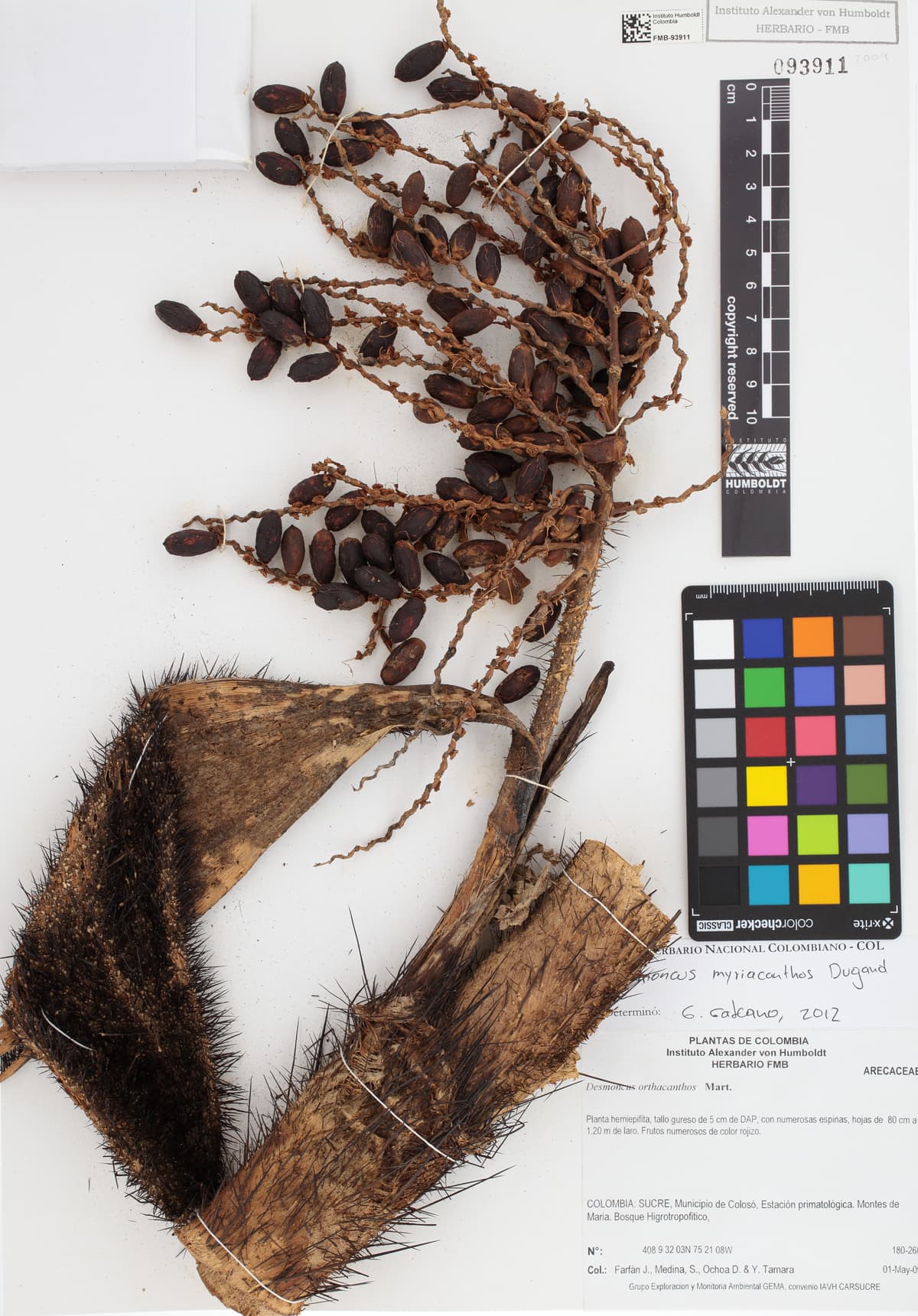
Botanical specimen of Desmoncus Isthmius.
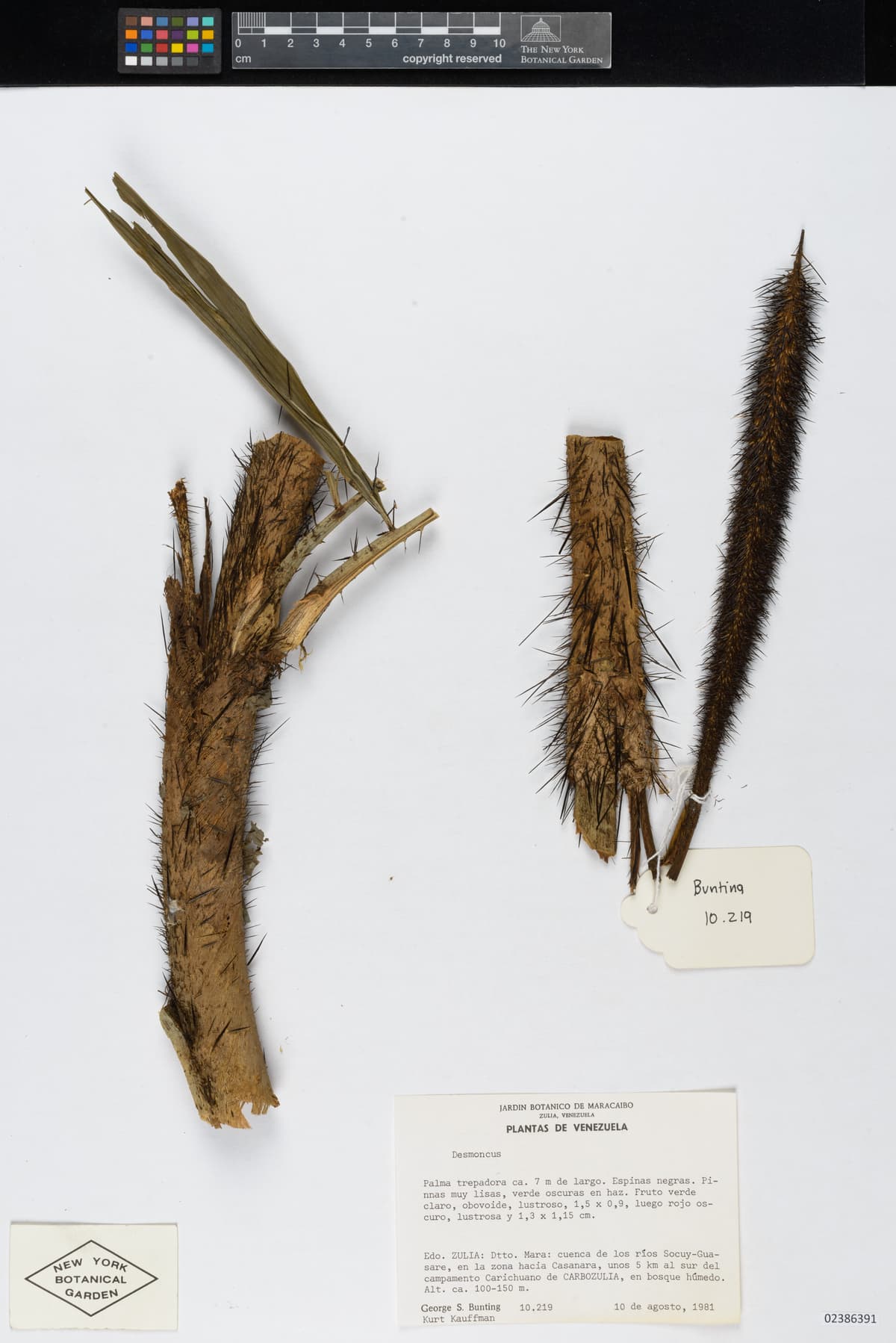
Botanical specimen of Desmoncus Isthmius.
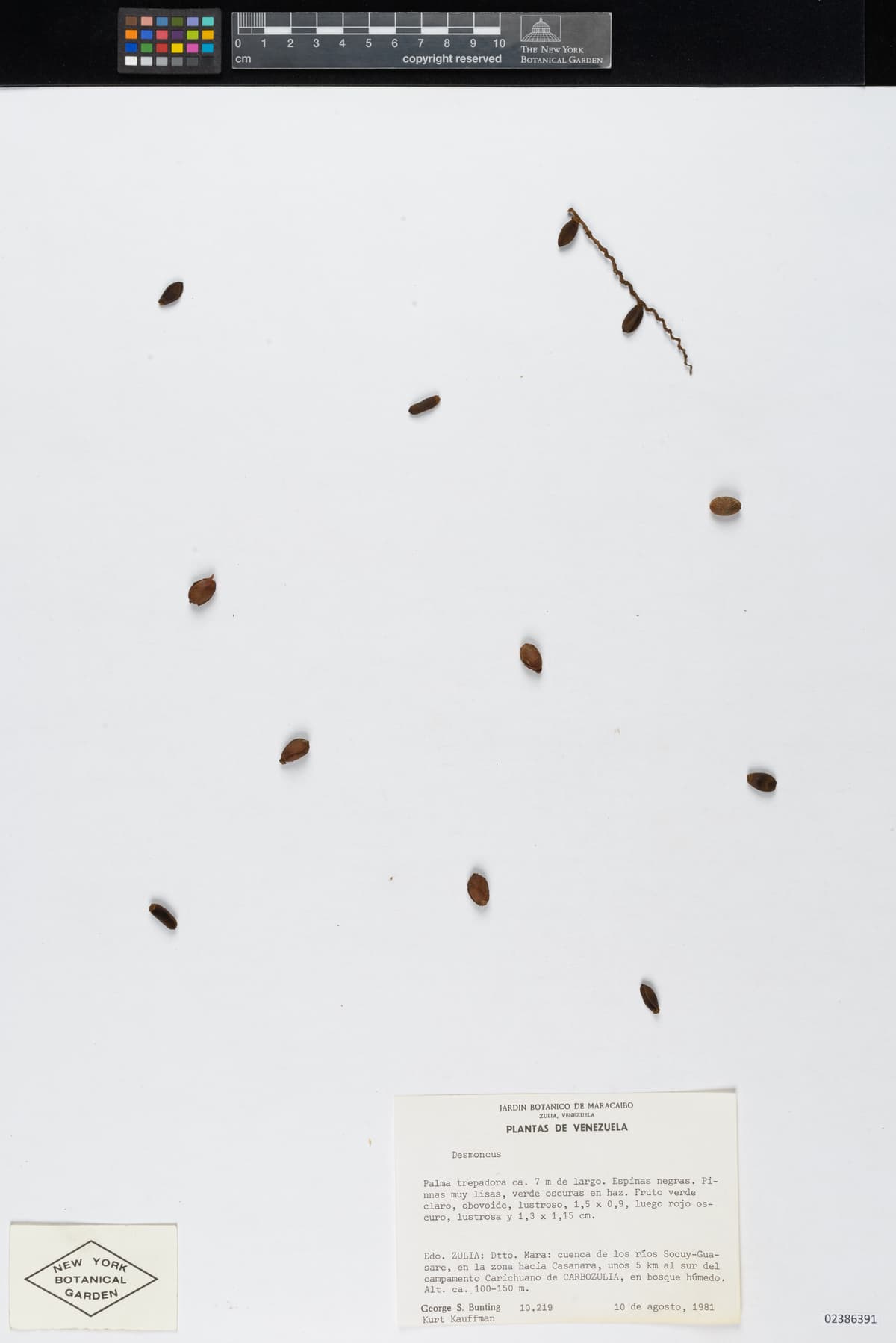
Botanical specimen of Desmoncus Isthmius.
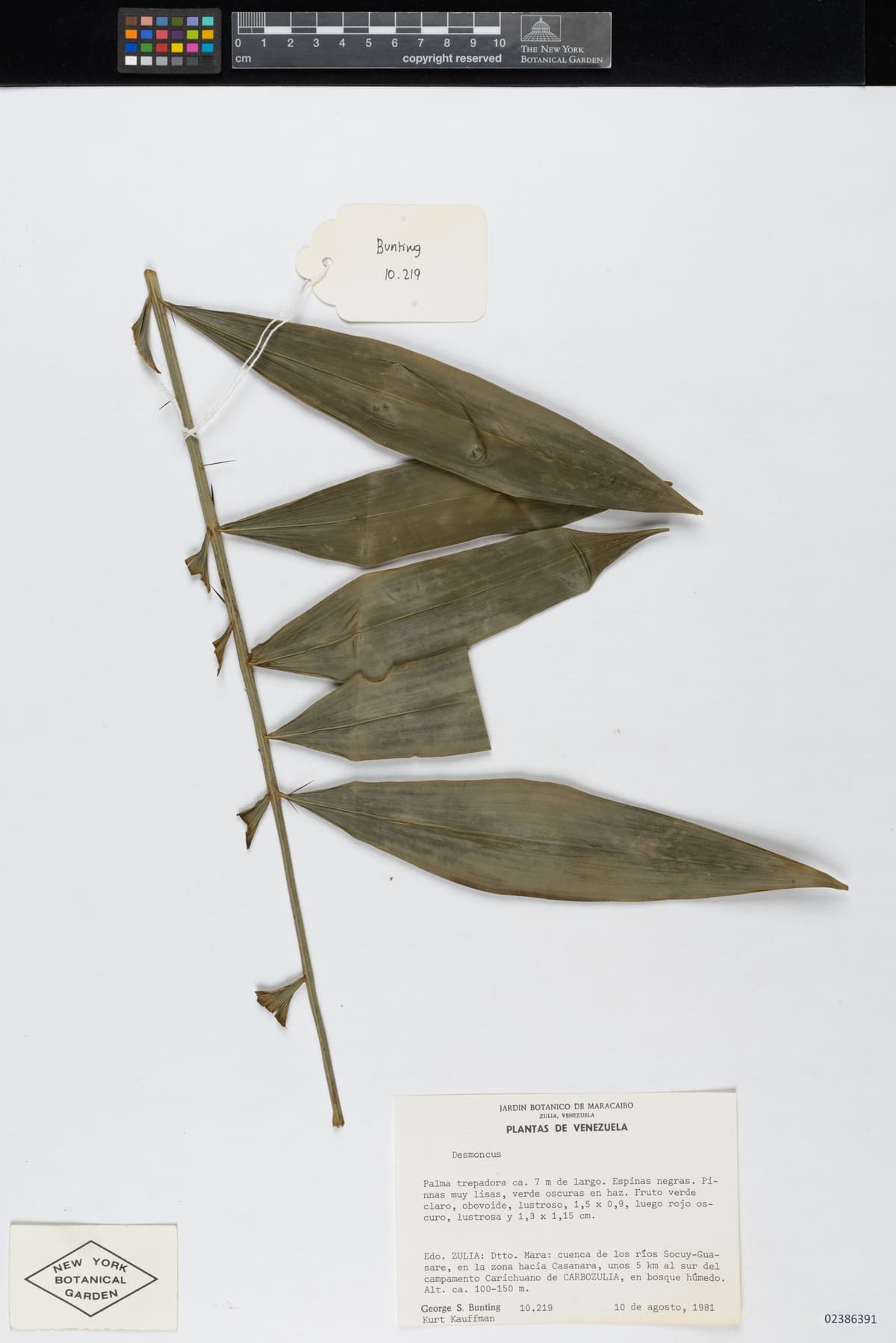
Botanical specimen of Desmoncus Isthmius.
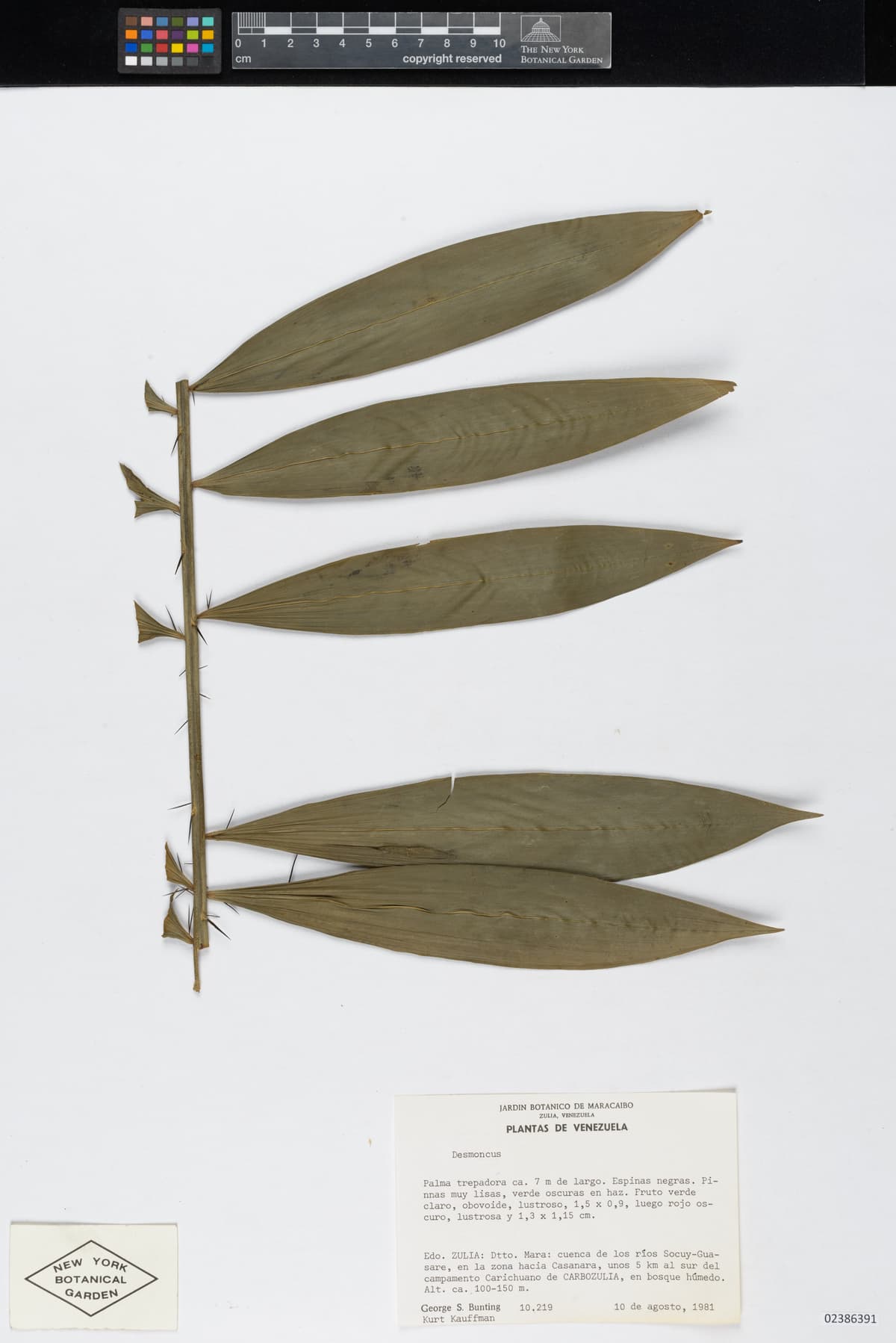
Botanical specimen of Desmoncus Isthmius.
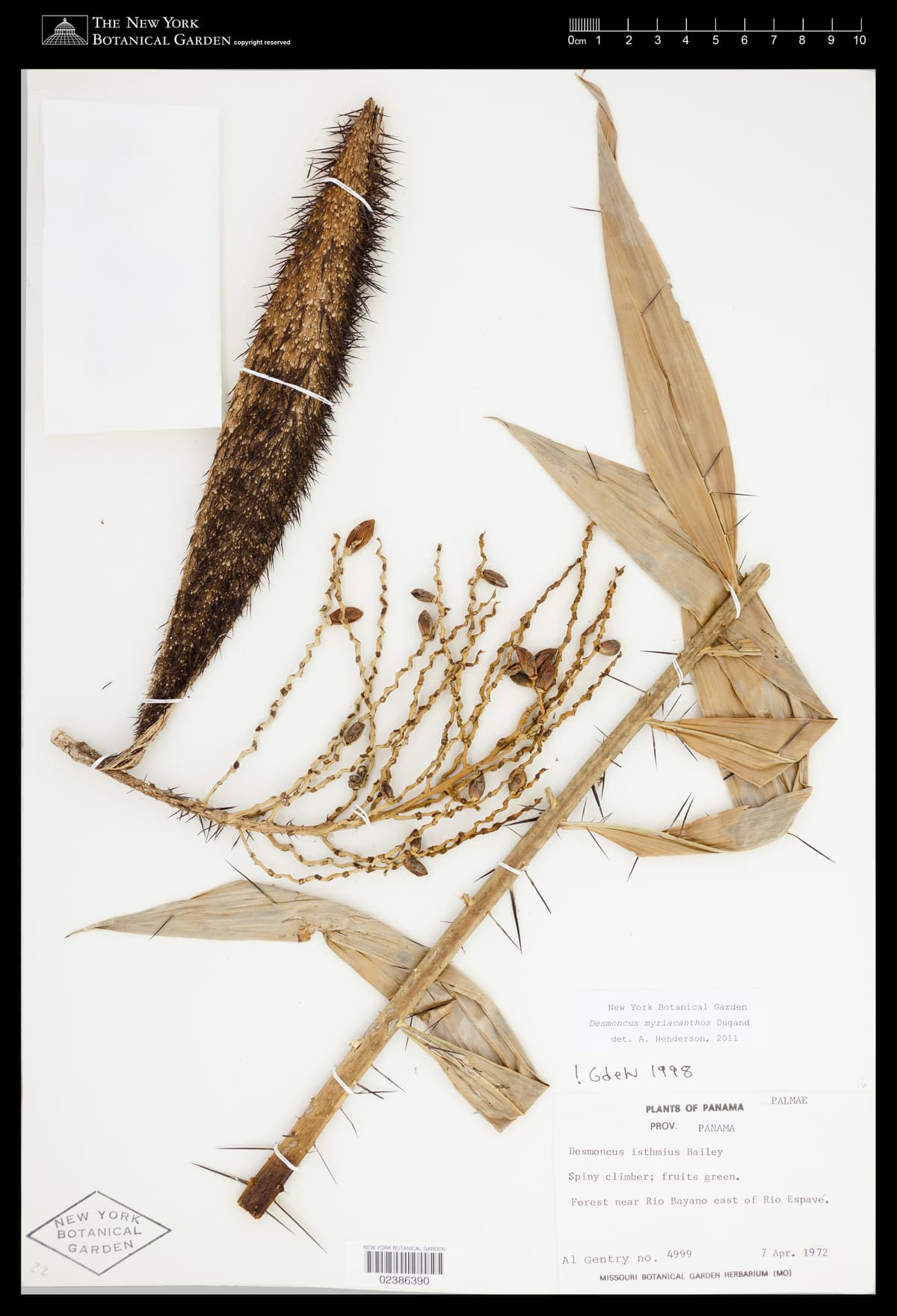
Botanical specimen of Desmoncus Isthmius.
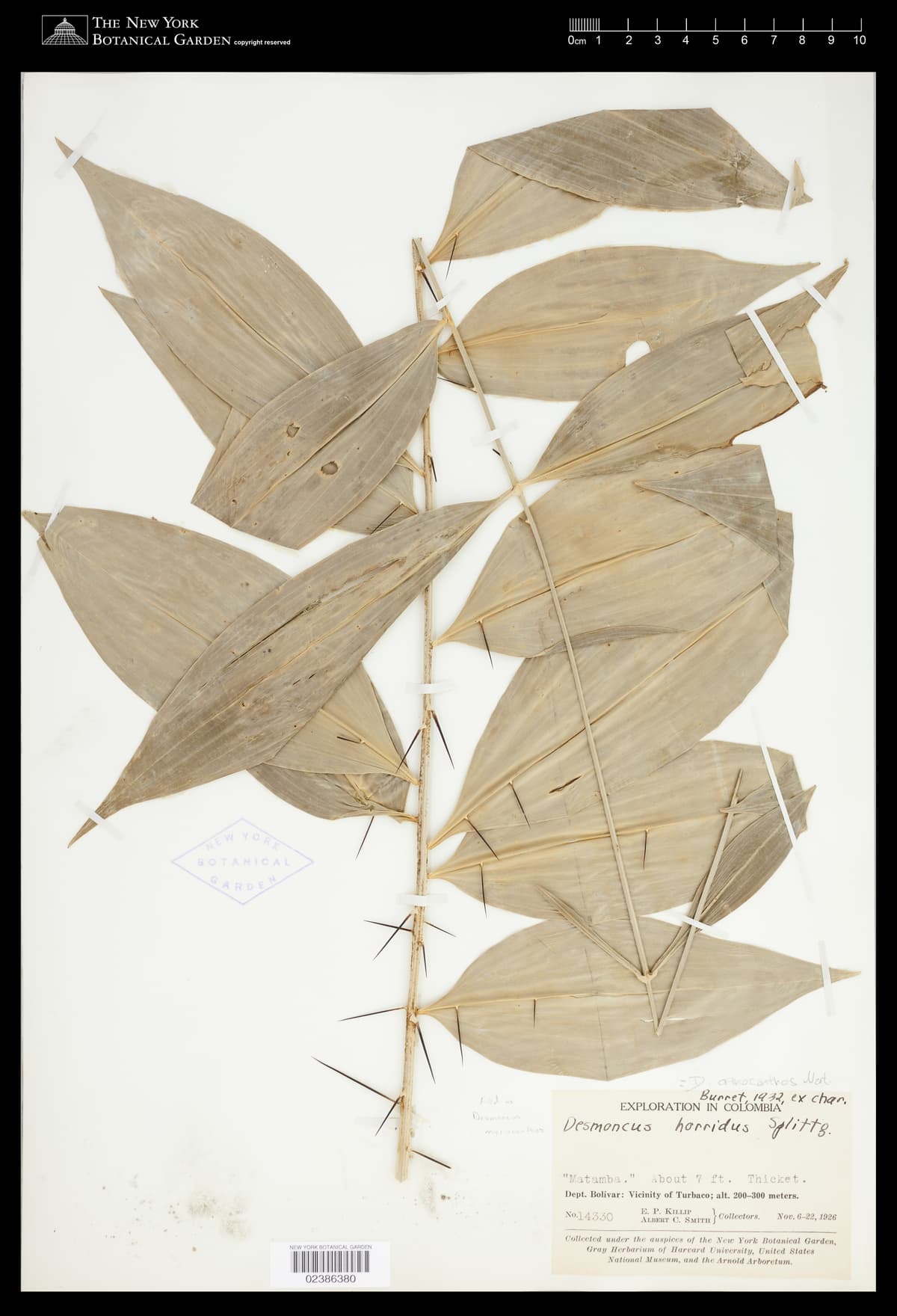
Botanical specimen of Desmoncus Isthmius.
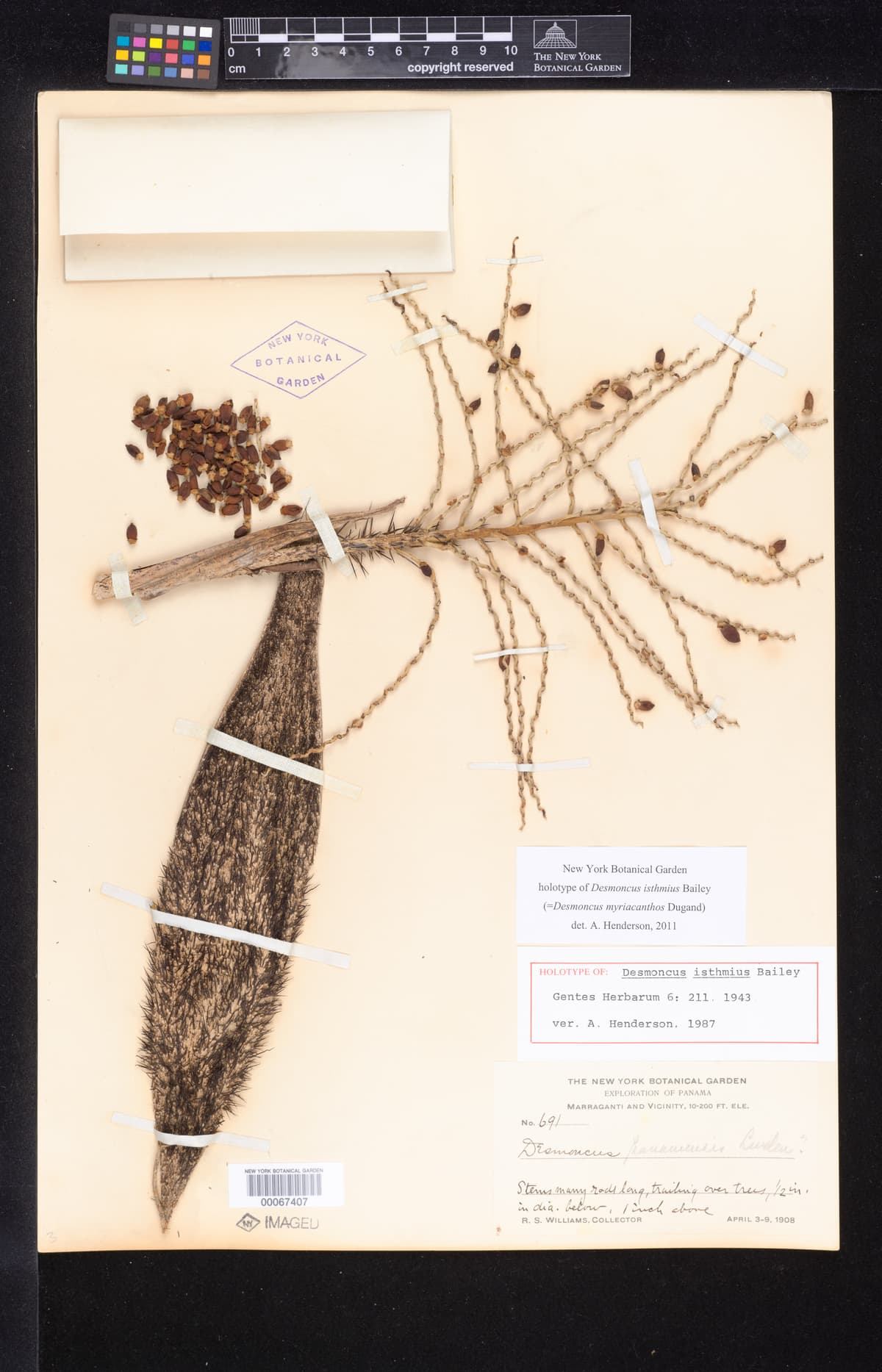
Botanical specimen of Desmoncus Isthmius.
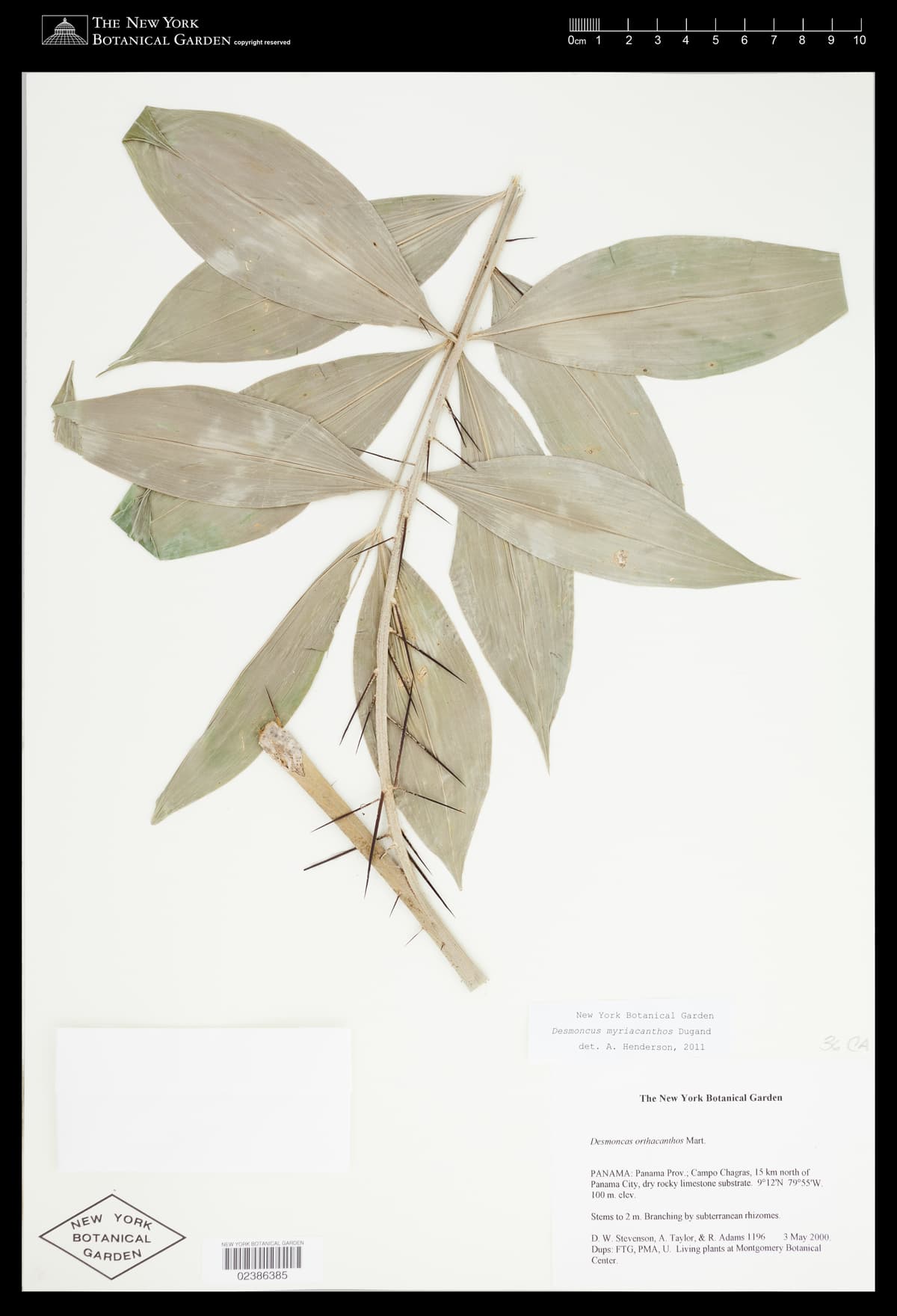
Botanical specimen of Desmoncus Isthmius.
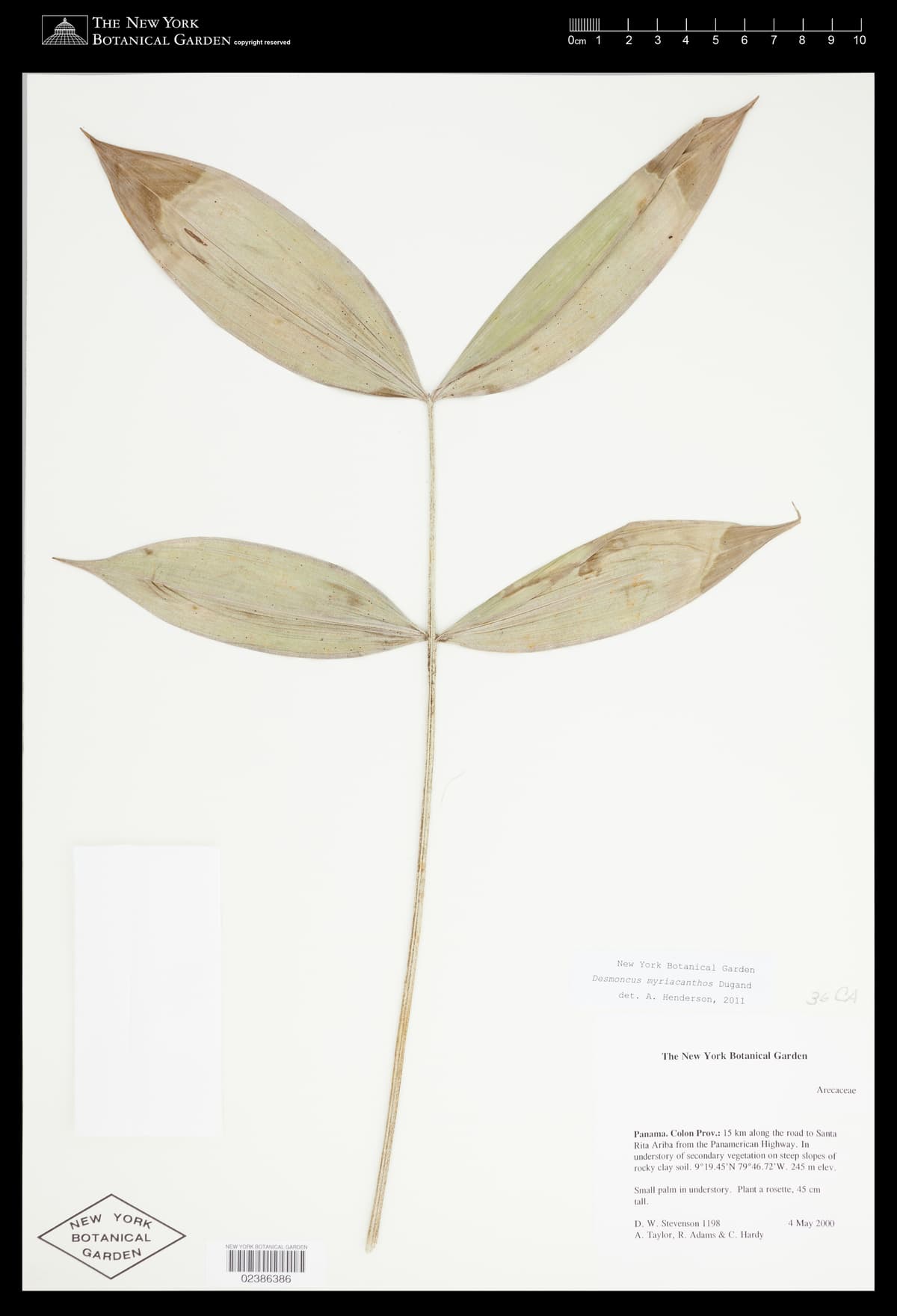
Botanical specimen of Desmoncus Isthmius.
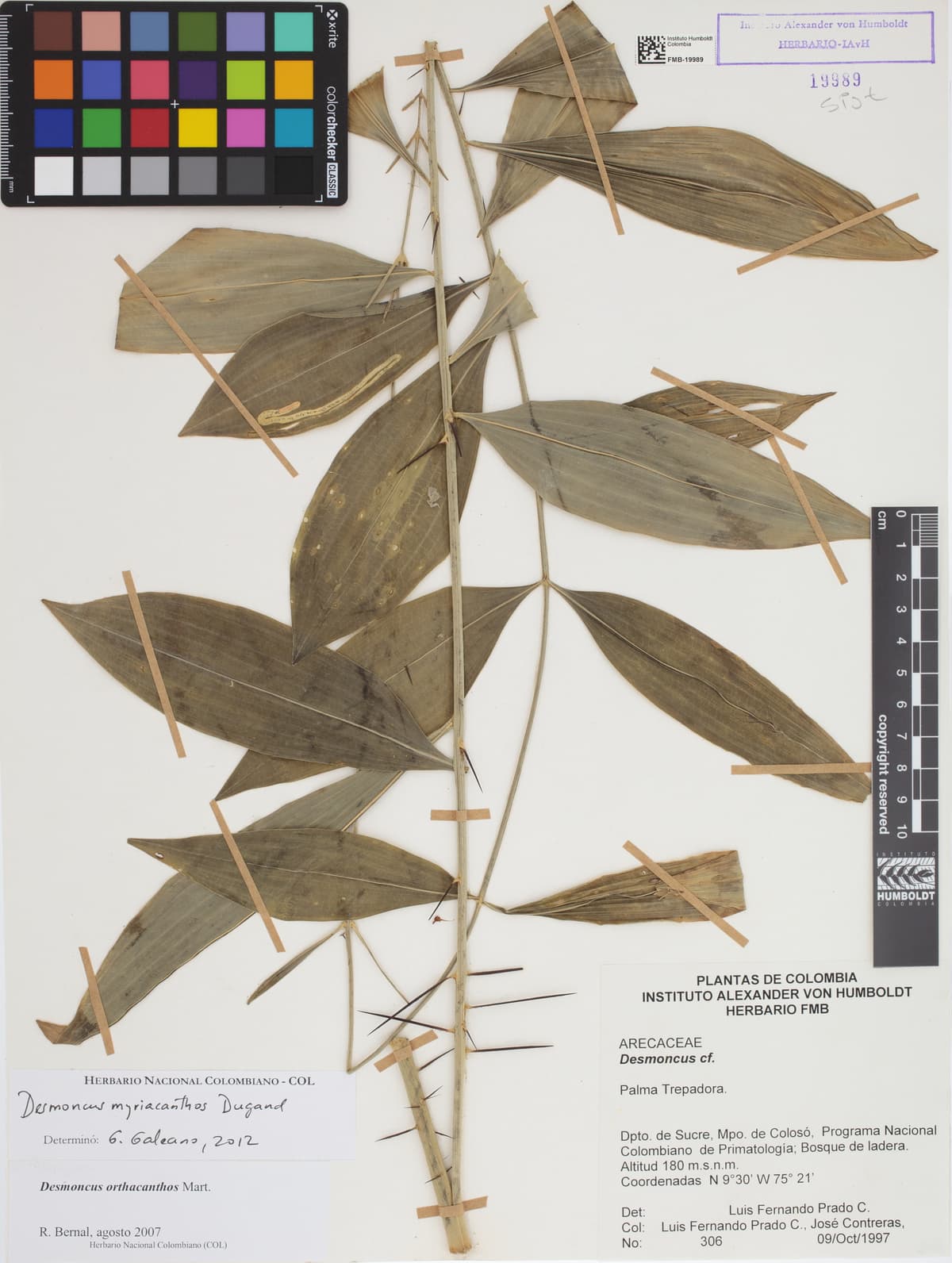
Botanical specimen of Desmoncus Isthmius.
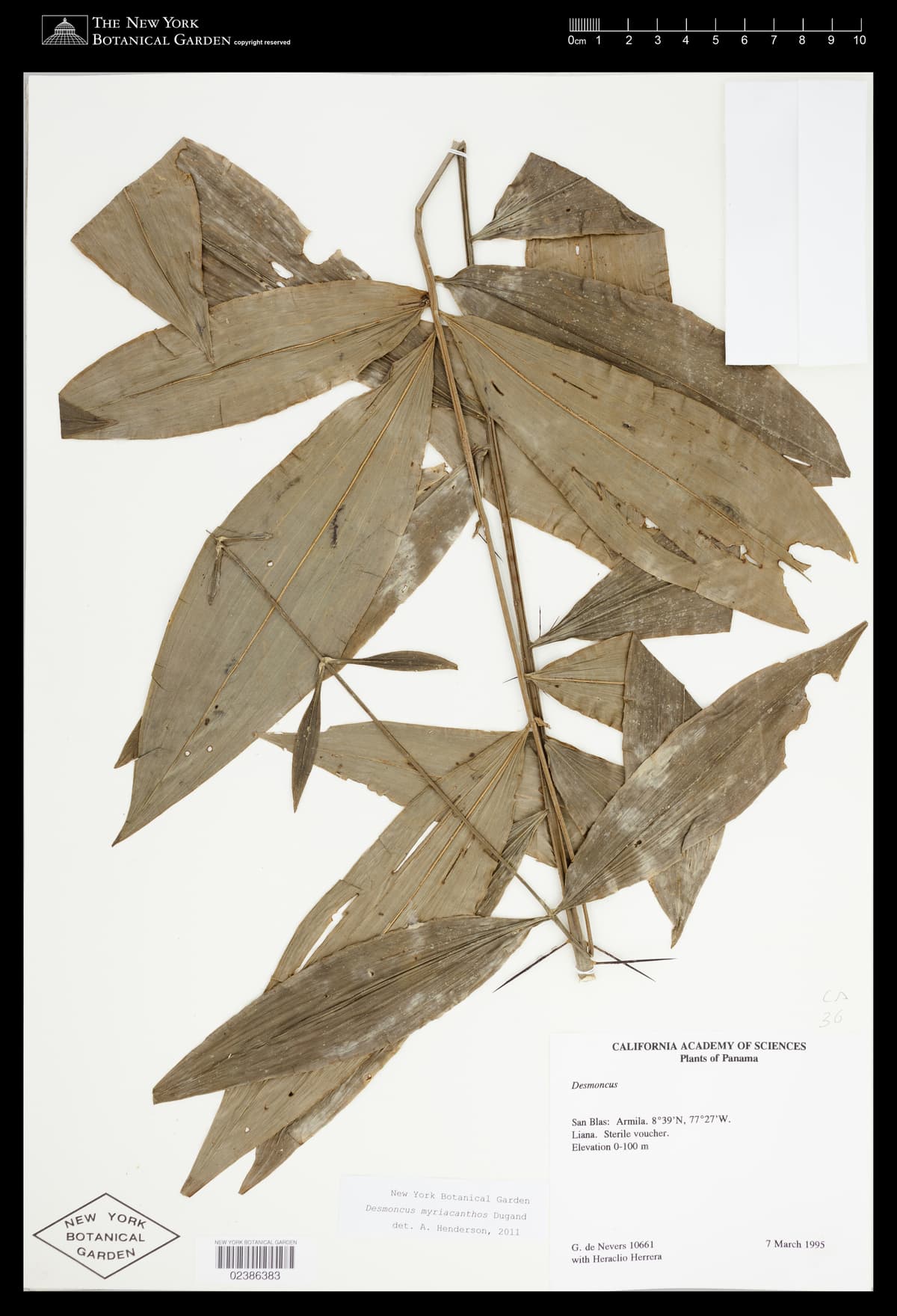
Botanical specimen of Desmoncus Isthmius.
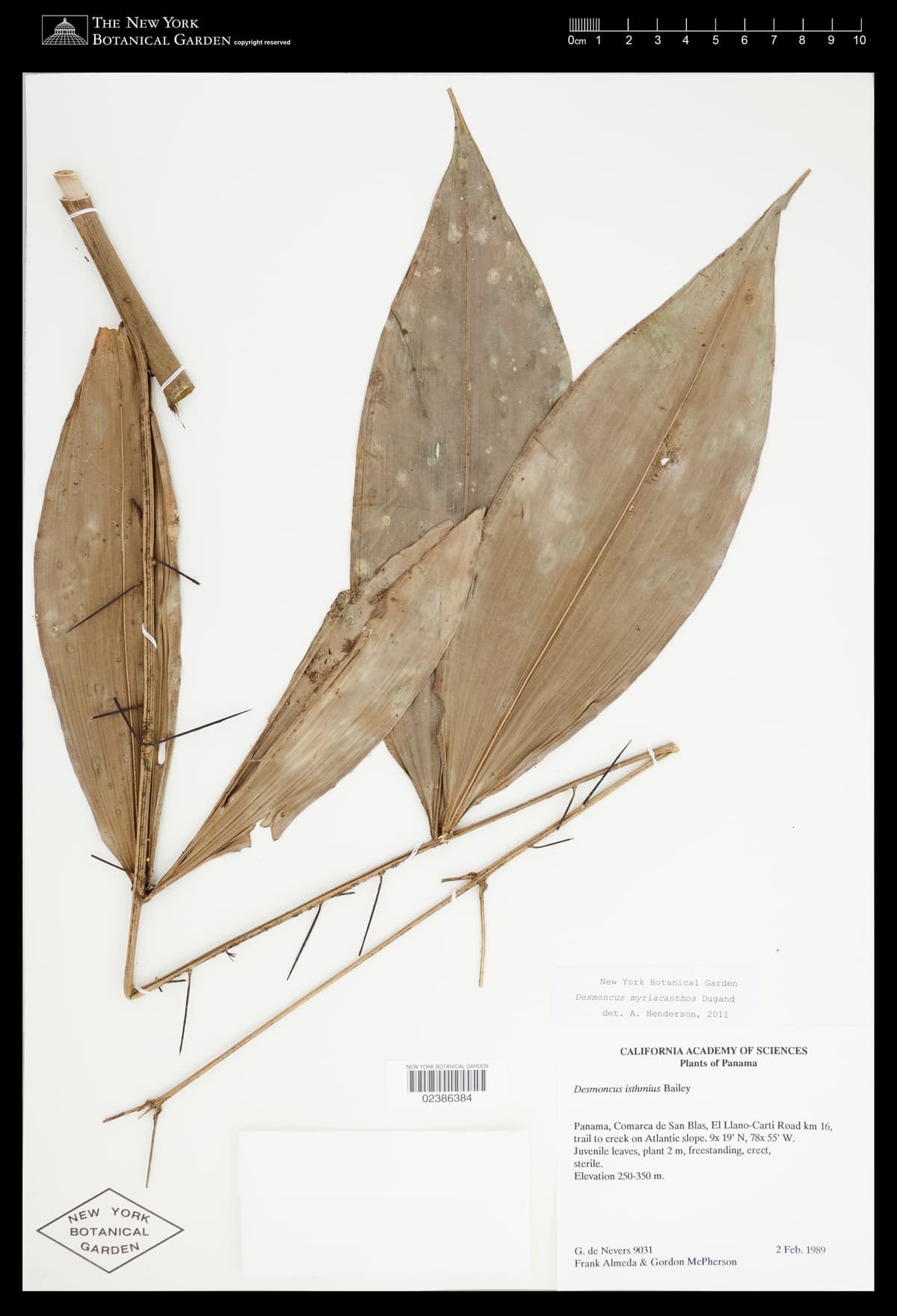
Botanical specimen of Desmoncus Isthmius.
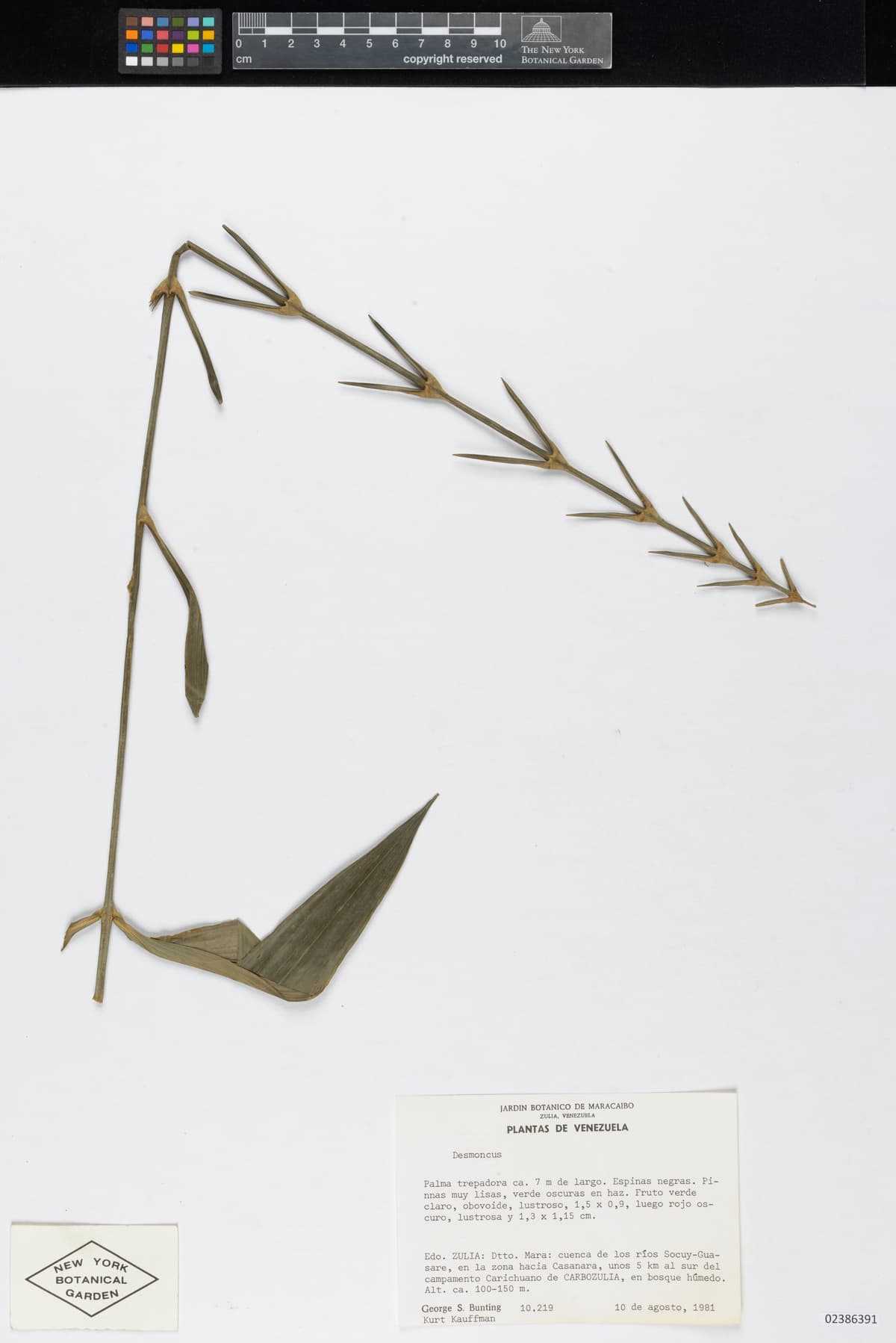
Botanical specimen of Desmoncus Isthmius.
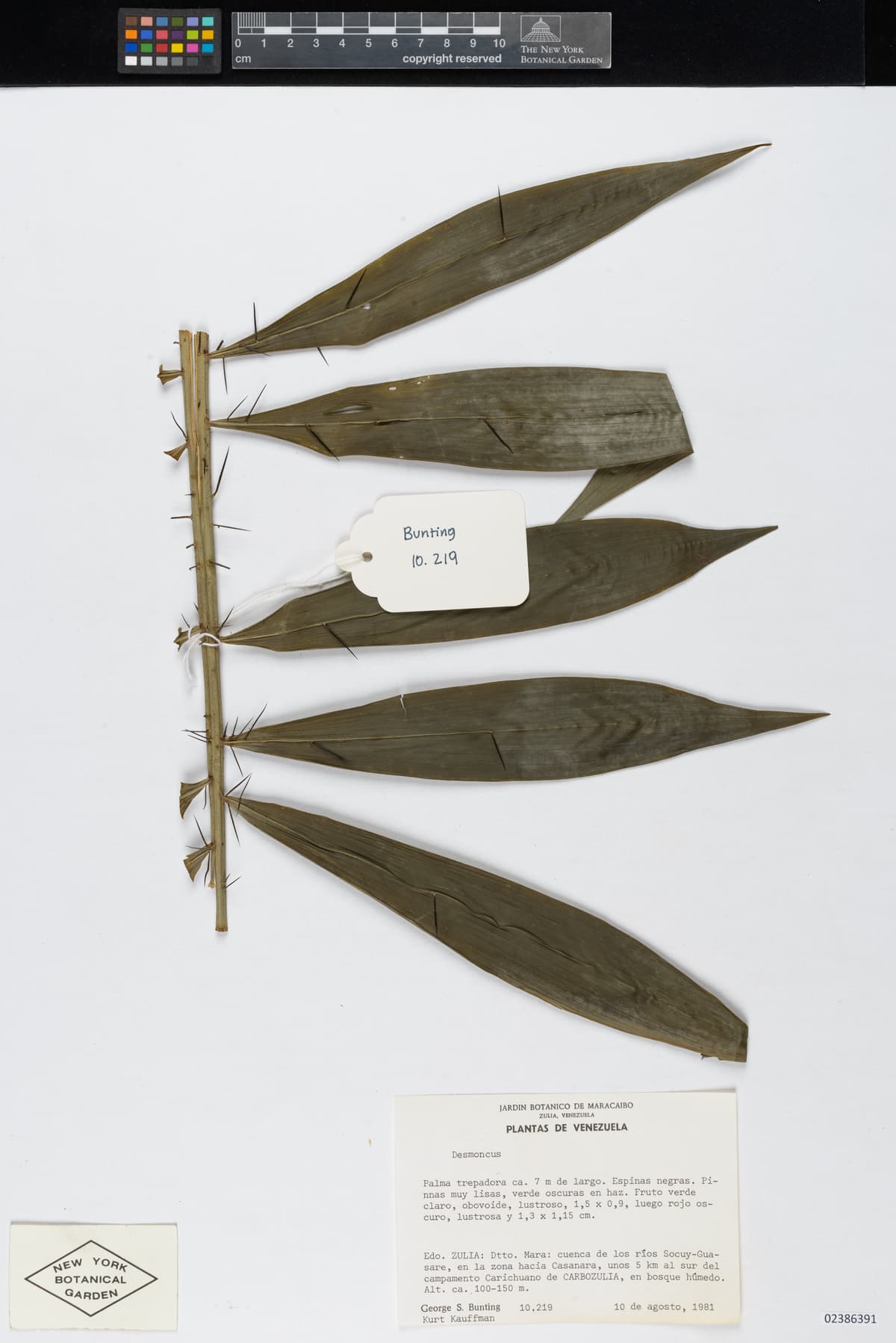
Botanical specimen of Desmoncus Isthmius.
Botanical specimen of Desmoncus Isthmius.
Sources & Conservation
Curated- POWO (Kew) - Desmoncus isthmius L.H.Bailey (heterotypic synonym record) · accessed 2026-08
- POWO (Kew) - Desmoncus myriacanthos Dugand (accepted name) · accessed 2026-08
- IPNI - Desmoncus isthmius L.H.Bailey, Gentes Herbarum 6: 211, fig. 108 (1943) · accessed 2026-08
- PALMweb - Desmoncus myriacanthos Dugand (Henderson 2011, A revision of Desmoncus, Phytotaxa 35: 1-88) · accessed 2026-08
- PALMweb - Desmoncus Mart. (genus account, Genera Palmarum 2008) · accessed 2026-08
- Palmpedia - Desmoncus isthmius · accessed 2026-08
- World Flora Online - Desmoncus myriacanthos Dugand (wfo-0000941970) · accessed 2026-08
- GBIF - Desmoncus isthmius L.H.Bailey (backbone, synonym) · accessed 2026-08
- GBIF - Desmoncus myriacanthos Dugand (accepted; 151 occurrences, CO/PA/VE) · accessed 2026-08
- Catalogue of Life / ChecklistBank - name usage search for Desmoncus isthmius · accessed 2026-08
- Wikipedia - Desmoncus (genus) · accessed 2026-08