Pink lipstick palm
Dransfieldia Micrantha • Mini pink lipstick palm • Ititohoho • Kapis • Tama'e
The Essence
"Dransfieldia micrantha is the only species in the genus Dransfieldia, a slender understorey palm endemic to far western New Guinea. It is usually clustering, rarely solitary, with smooth unarmed stems to 10 m tall and only 2-5 cm thick, often reddish when young and turning brown with age. Four to seven pinnate leaves, each 1-2 m long, sit above a strictly tubular crownshaft 50-60 cm long, green with a white bloom and sometimes orange-red near the apex; new leaves emerge reddish before turning green. The branched inflorescences are borne below the leaves and are red to purple at flowering, carrying small purple male and female flowers, and the olive-shaped fruit ripen black. Records come from Waigeo Island in the Raja Ampat Archipelago, the Kepala Burung (Bird's Head) Peninsula around Sorong and Bintuni Bay, the lower slopes of the Wondiwoi Mountains and the vicinity of Etna Bay; the describing authors put the small number of localities down to low collecting density rather than genuine rarity, and treat grower reports of the palm in Papua New Guinea as unconfirmed, most likely a misinterpreted seed source. GBIF currently holds just 24 occurrence records, 17 of them from Indonesia. Ethnobotanical uses recorded with the 2006 description are stems for harpoons, leaves for thatch, and unspecified parts used for sewing thatch. The species is grown as an ornamental in the USA and Australia but is not yet widely available in the horticultural trade, valued by collectors for its colourful new leaves and inflorescences and its slim habit. Its describing authors gave it a preliminary assessment of Near Threatened in the 2006 protologue, noting that it meets the extent-of-occurrence threshold for Vulnerable but not the further subcriteria, and that widespread legal and illegal logging could soon push it into a higher threat category. That figure is the authors' own assessment; the species has no published IUCN Red List assessment."
The genus commemorates Dr John Dransfield, former Head of Palm Research at the Royal Botanic Gardens, Kew, co-author of Genera Palmarum, and, in the authors' words, friend and mentor to all of them, in recognition of his contributions to Malesian palm systematics and to palm biology as a whole. The epithet micrantha means small-flowered, reflecting the small male flowers, and comes from the basionym Ptychosperma micranthum Becc., published by Odoardo Beccari in Malesia 1: 52 (1877) from material he had collected in 1872. The accepted name is Dransfieldia micrantha (Becc.) W.J.Baker & Zona, Syst. Bot. 31: 62 (2006); synonyms are Ptychosperma micranthum Becc. (basionym), Rhopaloblaste micrantha and Heterospathe micrantha.
Beccari collected the palm in Indonesian New Guinea in 1872 and named it Ptychosperma micranthum. Joseph Hooker, working from Beccari's published description rather than the plant itself, moved it to Rhopaloblaste in 1883, and Harold E. Moore transferred it to Heterospathe in 1970 after studying the single Florence herbarium specimen, which included part of a crownshaft, a structure absent from all Heterospathe. In 2000 Bill Baker, with Indonesian colleagues Charlie Heatubun and Rudi Maturbongs, collected a puzzling palm in New Guinea, only the second gathering of the species since 1872. DNA analysis by Carl Lewis at Fairchild Tropical Botanic Garden, confirmed independently by Maria Norup at Kew, showed it matched no known genus, and Dransfieldia was published in 2006, 134 years after the first collection; Fairchild notes that the previous new palm genus, Satranala from Madagascar, had been described back in 1995. Fairchild described the genus as "hiding in plain sight": the original specimen had sat in Florence for 130 years, and the palm had been growing in Fairchild's Windows to the Tropics Conservatory since 1998, having entered the nursery trade as Australian collectors explored New Guinea's rainforests. Its relationships remain unsettled; Fairchild suggests its closest relatives may lie in New Caledonia, more than 2000 miles away, while Palmweb reports it resolving as sister to Linospadix and Laccospadix in subtribe Linospadicinae, but with low bootstrap support.
Natural Habitat
An understorey palm of dense lowland rain forest. Palmweb and Palmpedia record it from lowland forest and forest on slopes and ridge tops between 10 and 180 m above sea level, and Llifle describes scattered populations in dense lowland rainforest undergrowth with high humidity and frequent rainfall.
Curated Specimens
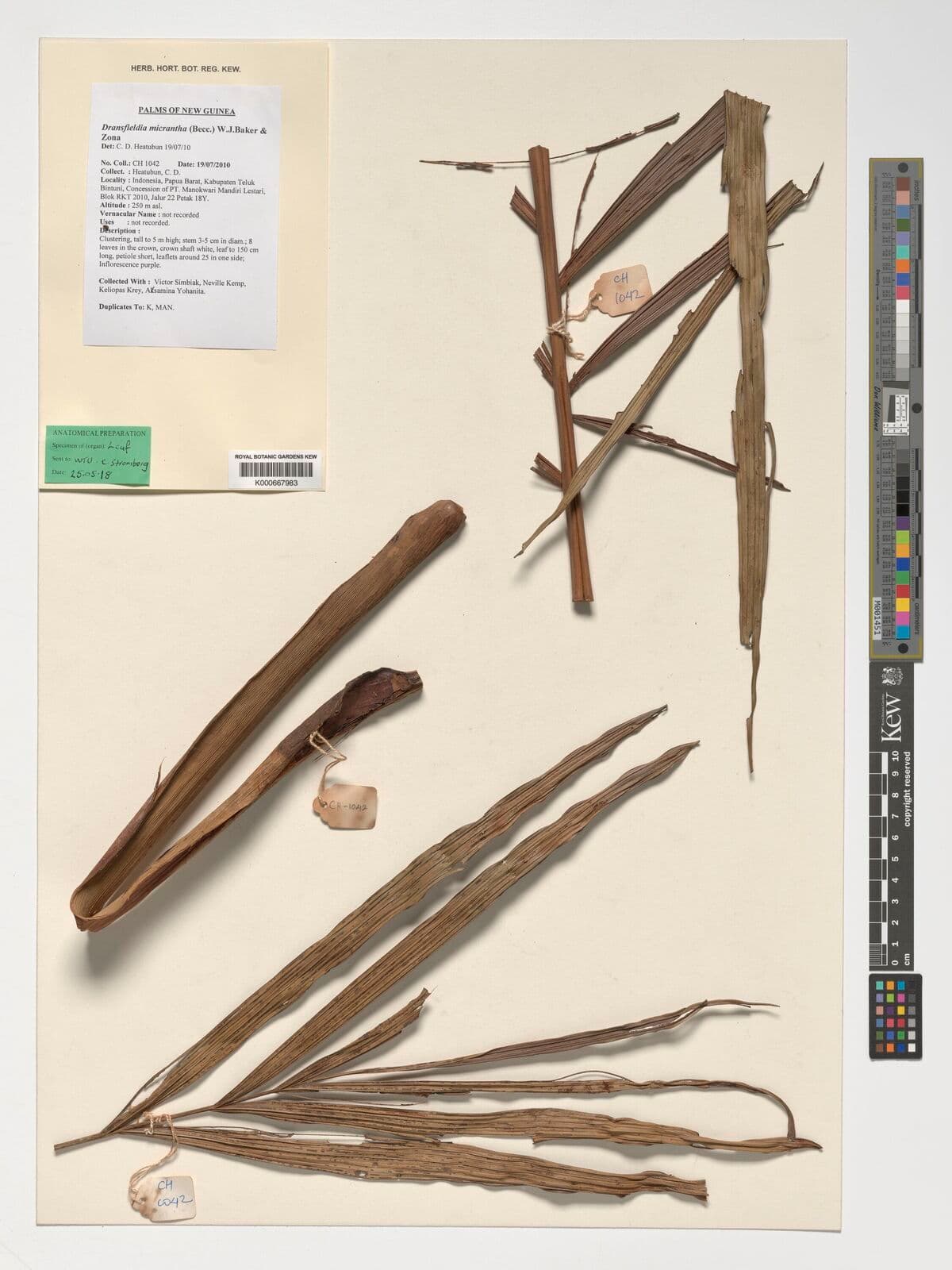
Botanical specimen of Dransfieldia Micrantha.
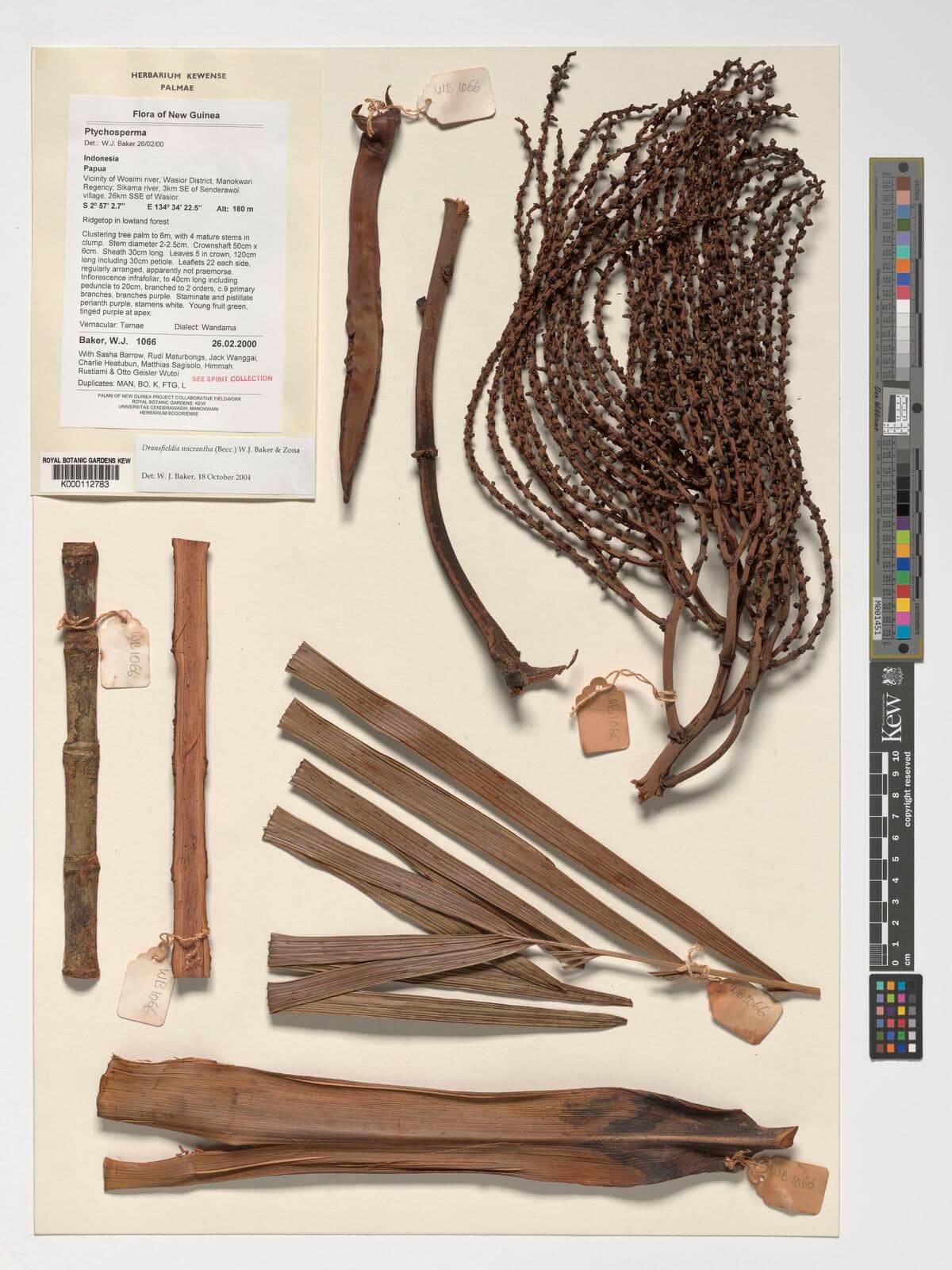
Botanical specimen of Dransfieldia Micrantha.
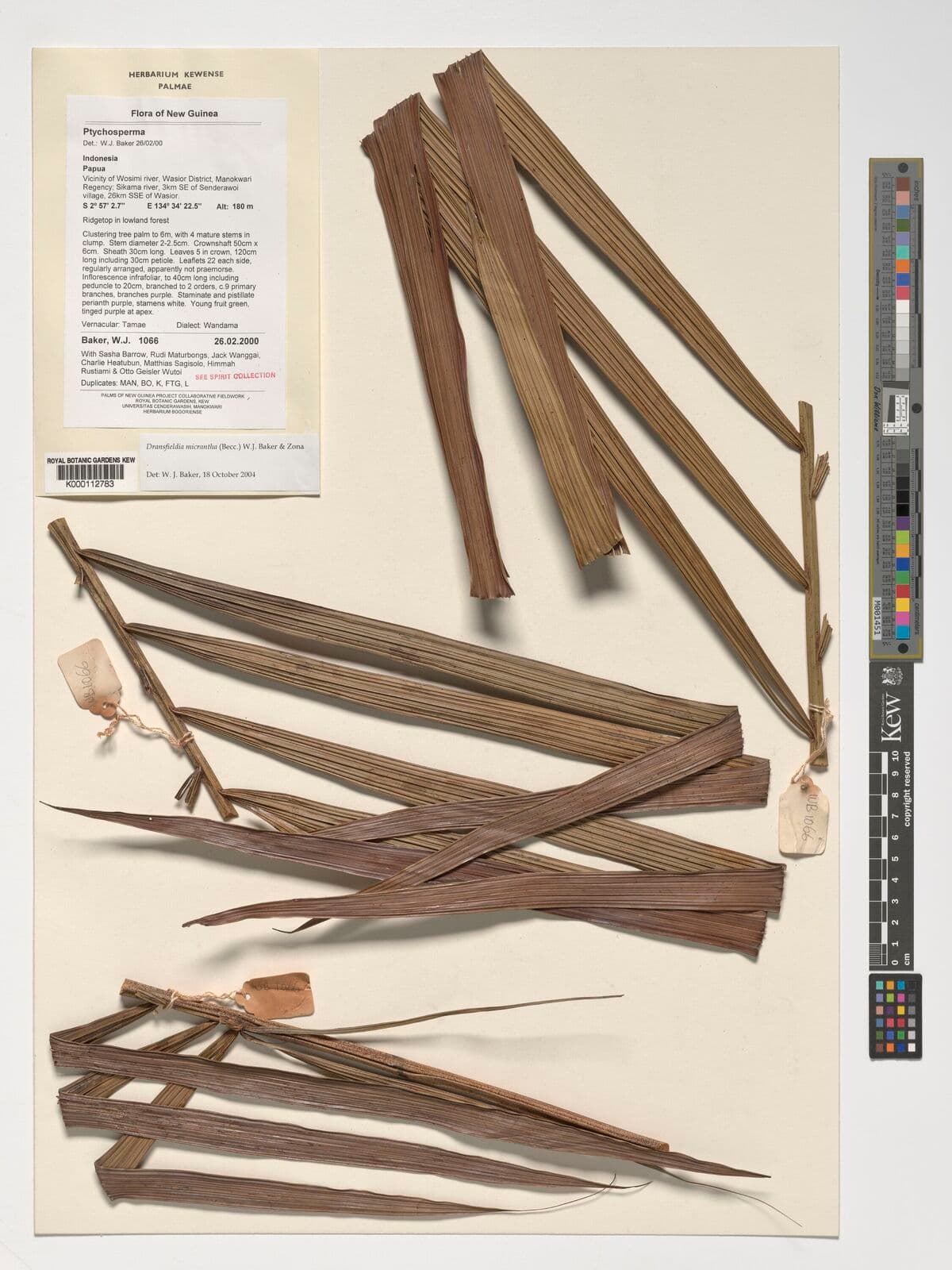
Botanical specimen of Dransfieldia Micrantha.
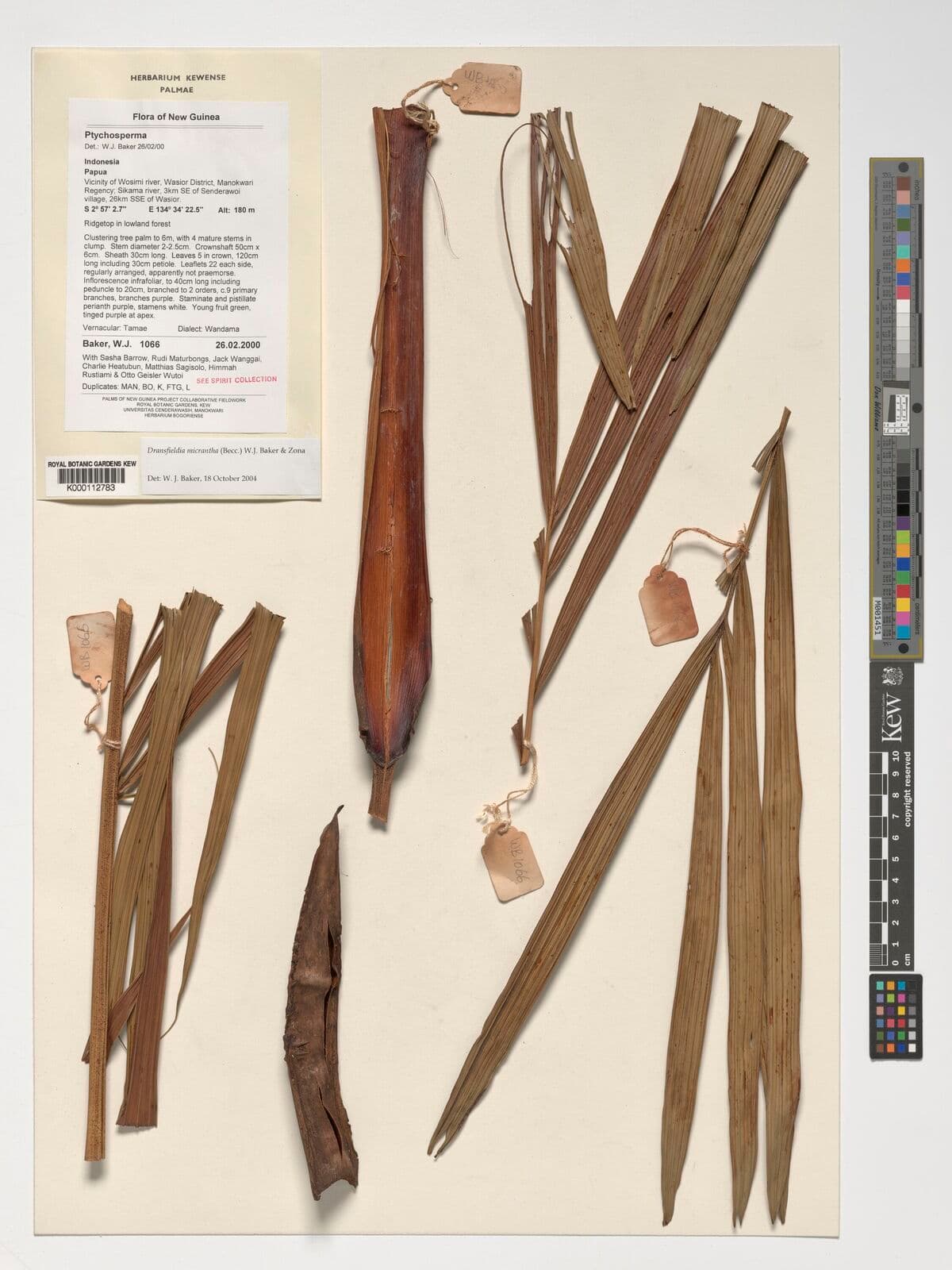
Botanical specimen of Dransfieldia Micrantha.
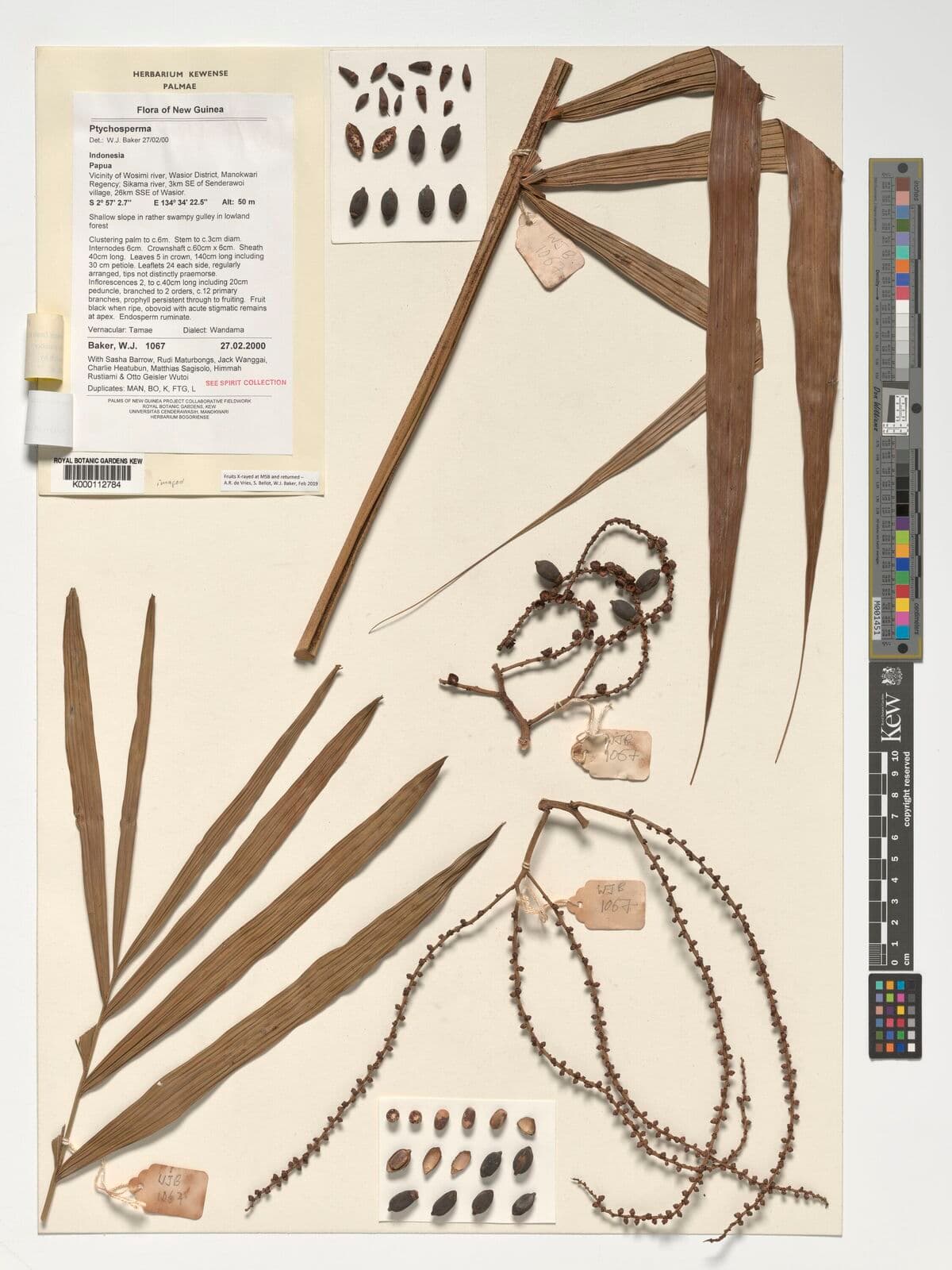
Botanical specimen of Dransfieldia Micrantha.
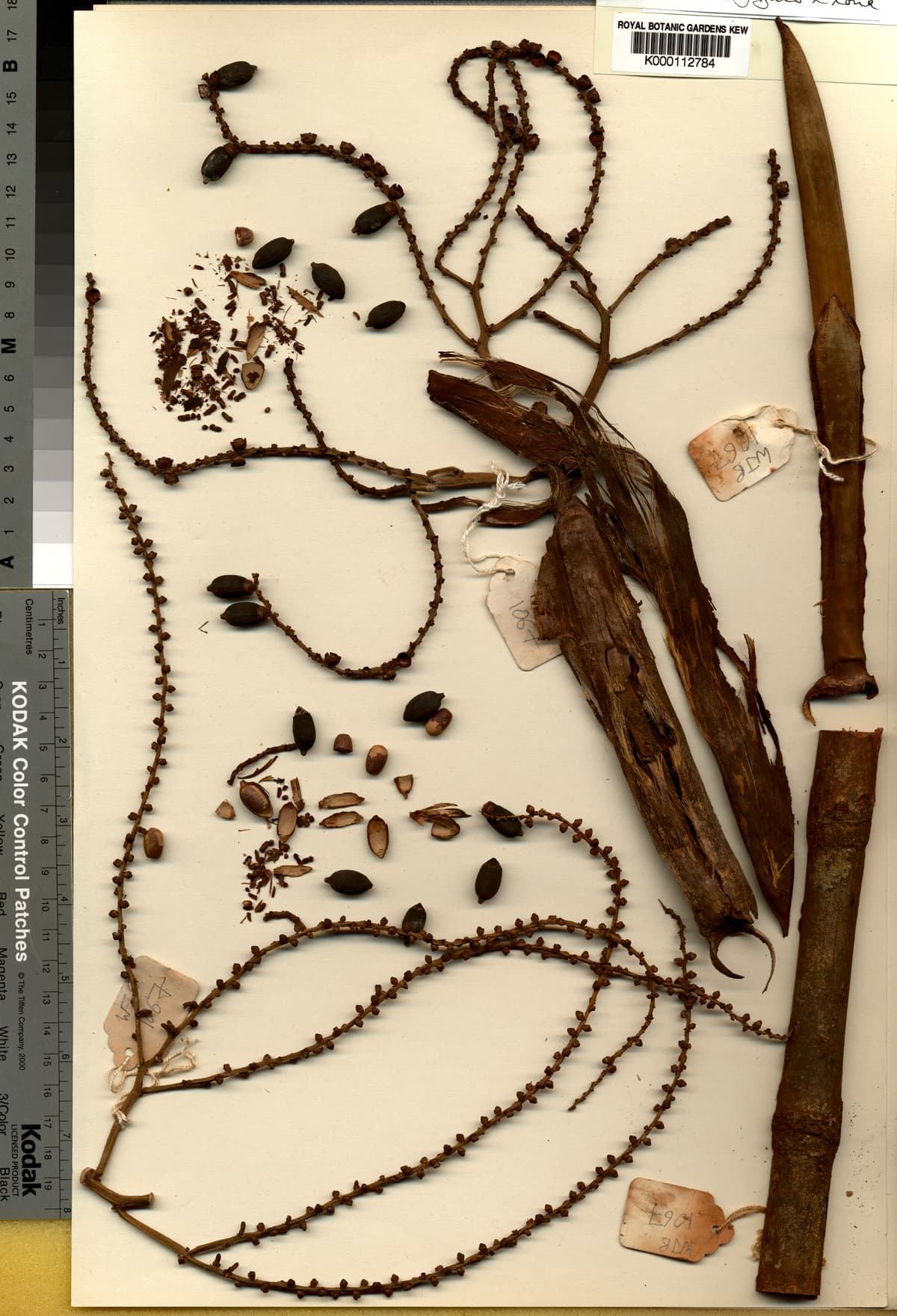
Botanical specimen of Dransfieldia Micrantha.
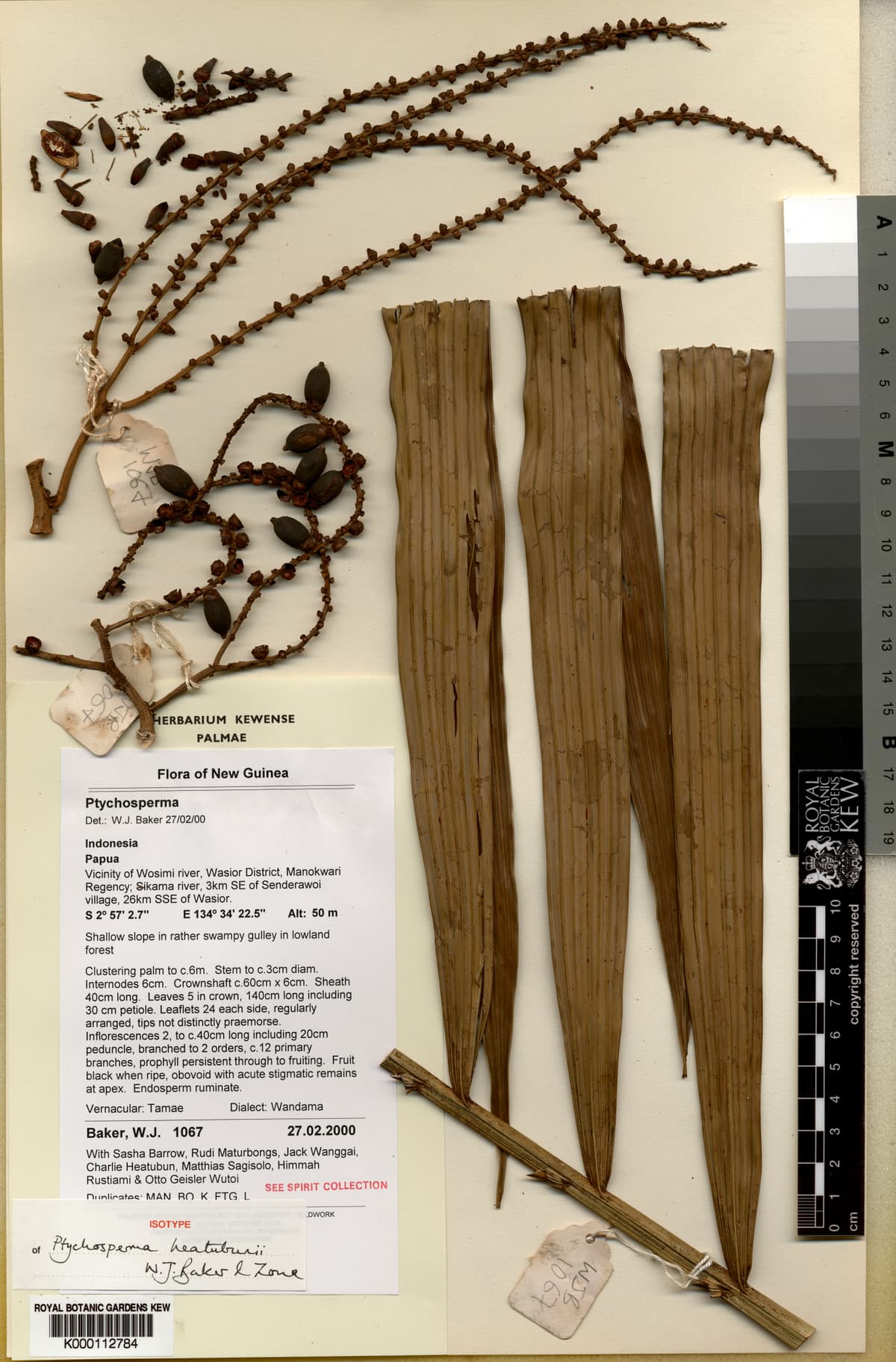
Botanical specimen of Dransfieldia Micrantha.
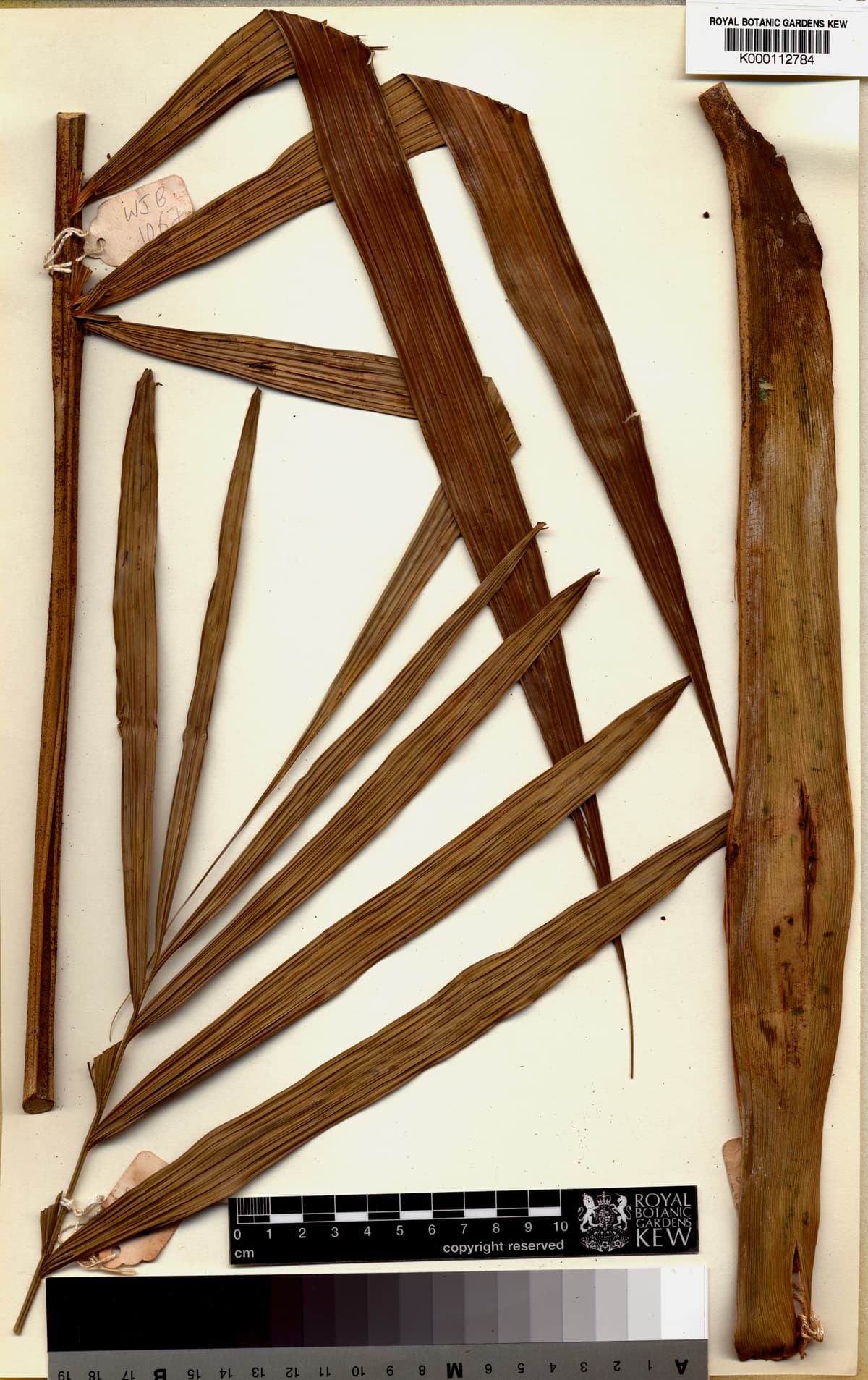
Botanical specimen of Dransfieldia Micrantha.
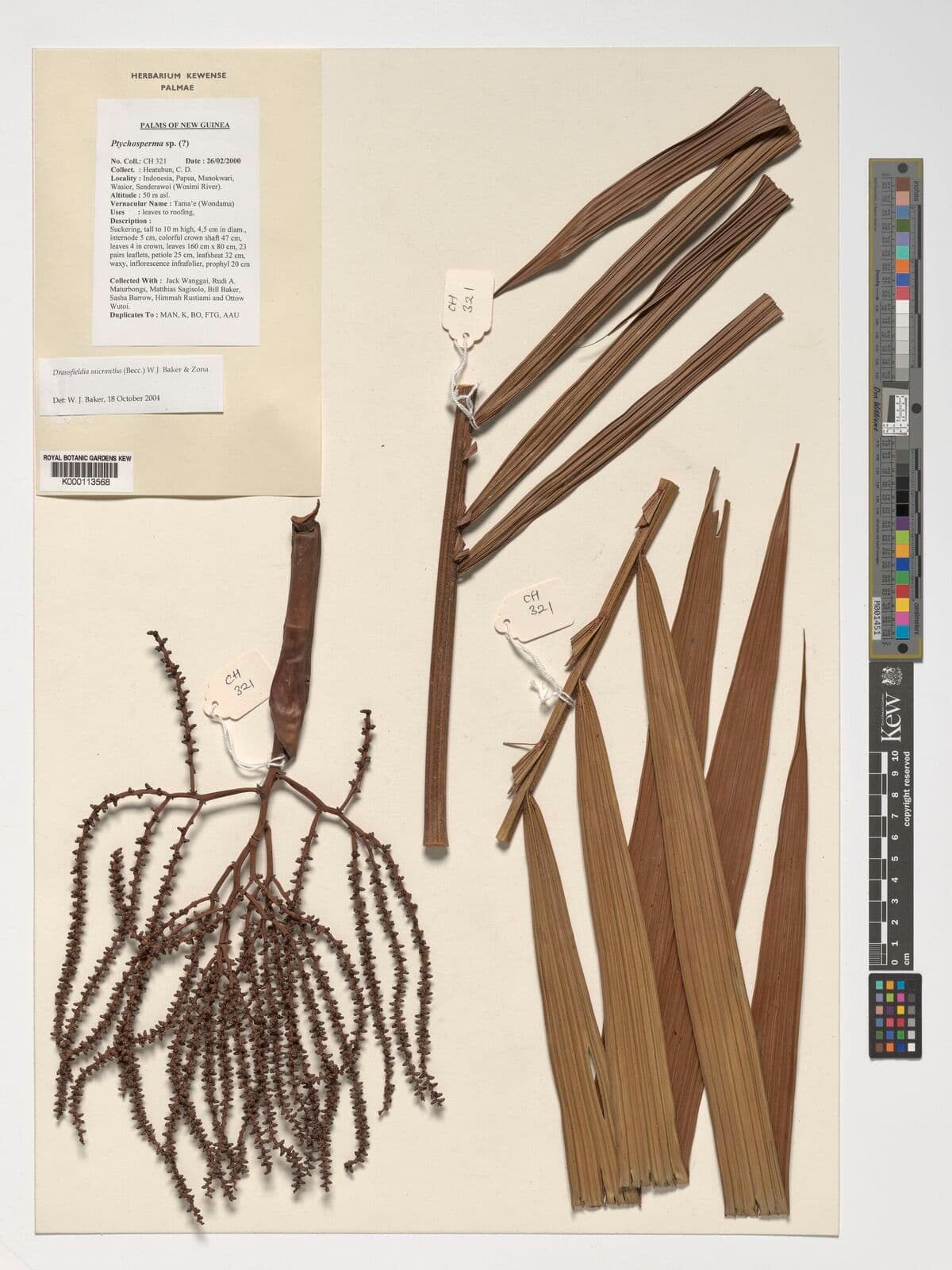
Botanical specimen of Dransfieldia Micrantha.
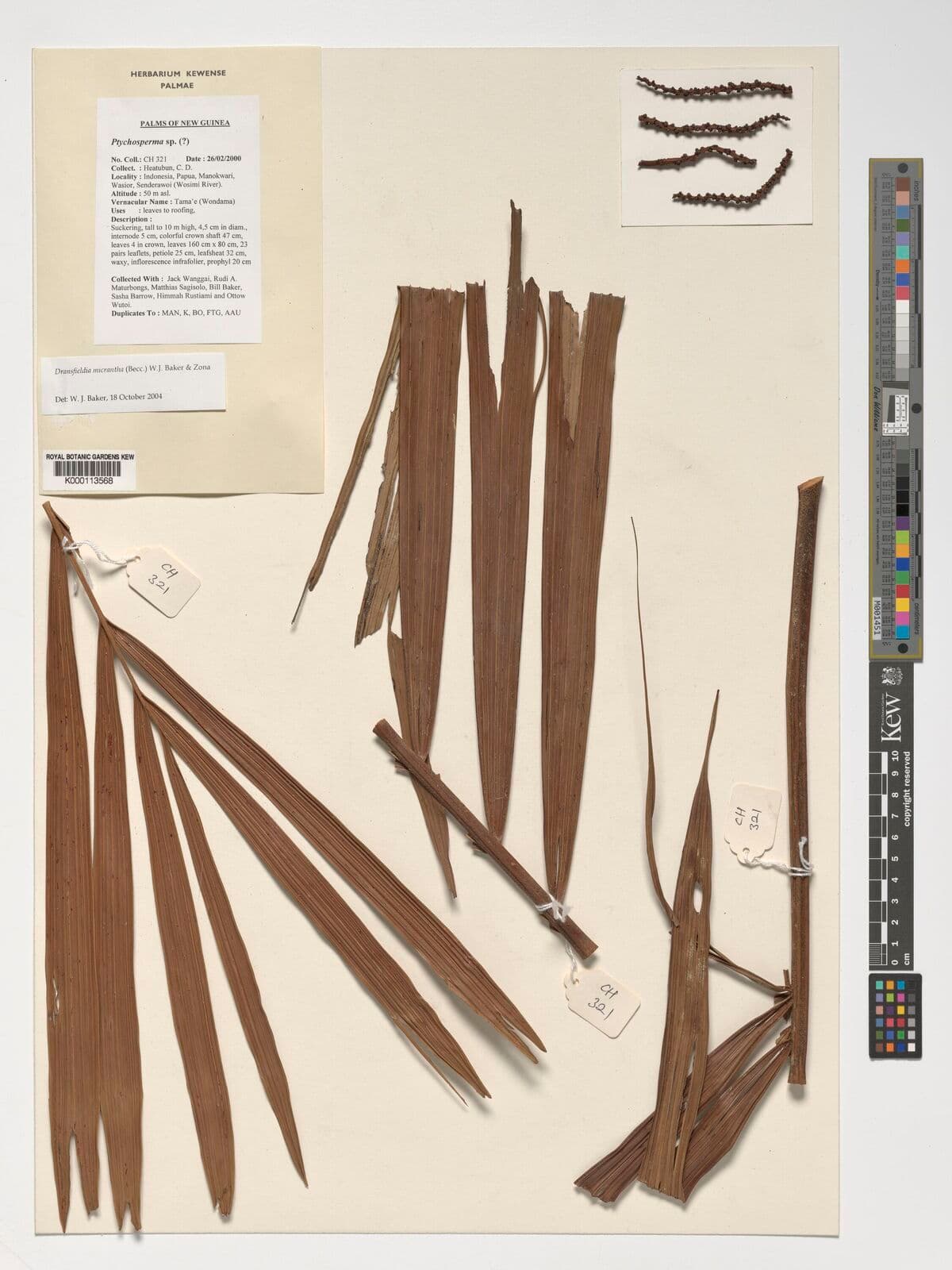
Botanical specimen of Dransfieldia Micrantha.
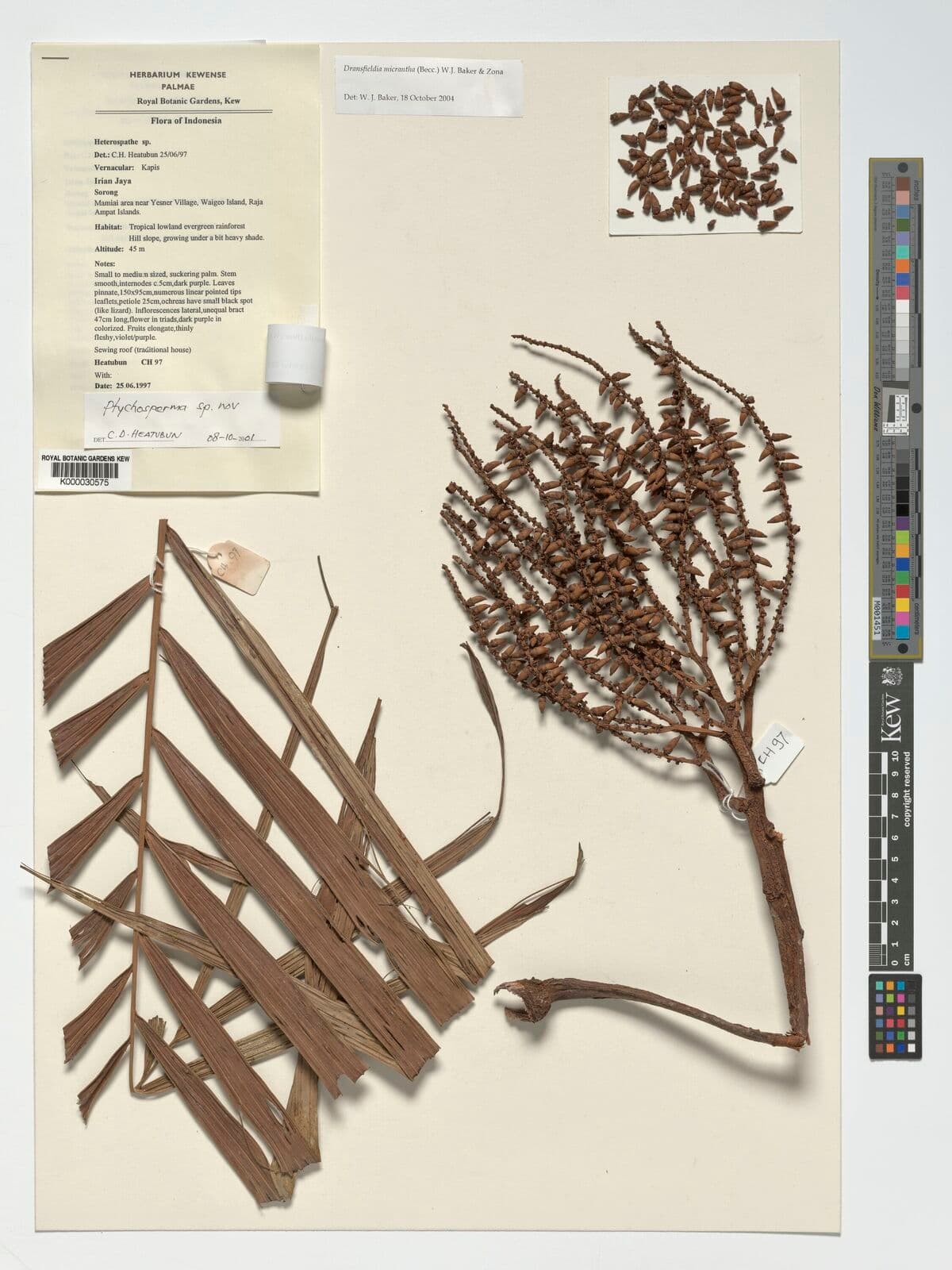
Botanical specimen of Dransfieldia Micrantha.

Botanical specimen of Dransfieldia Micrantha.
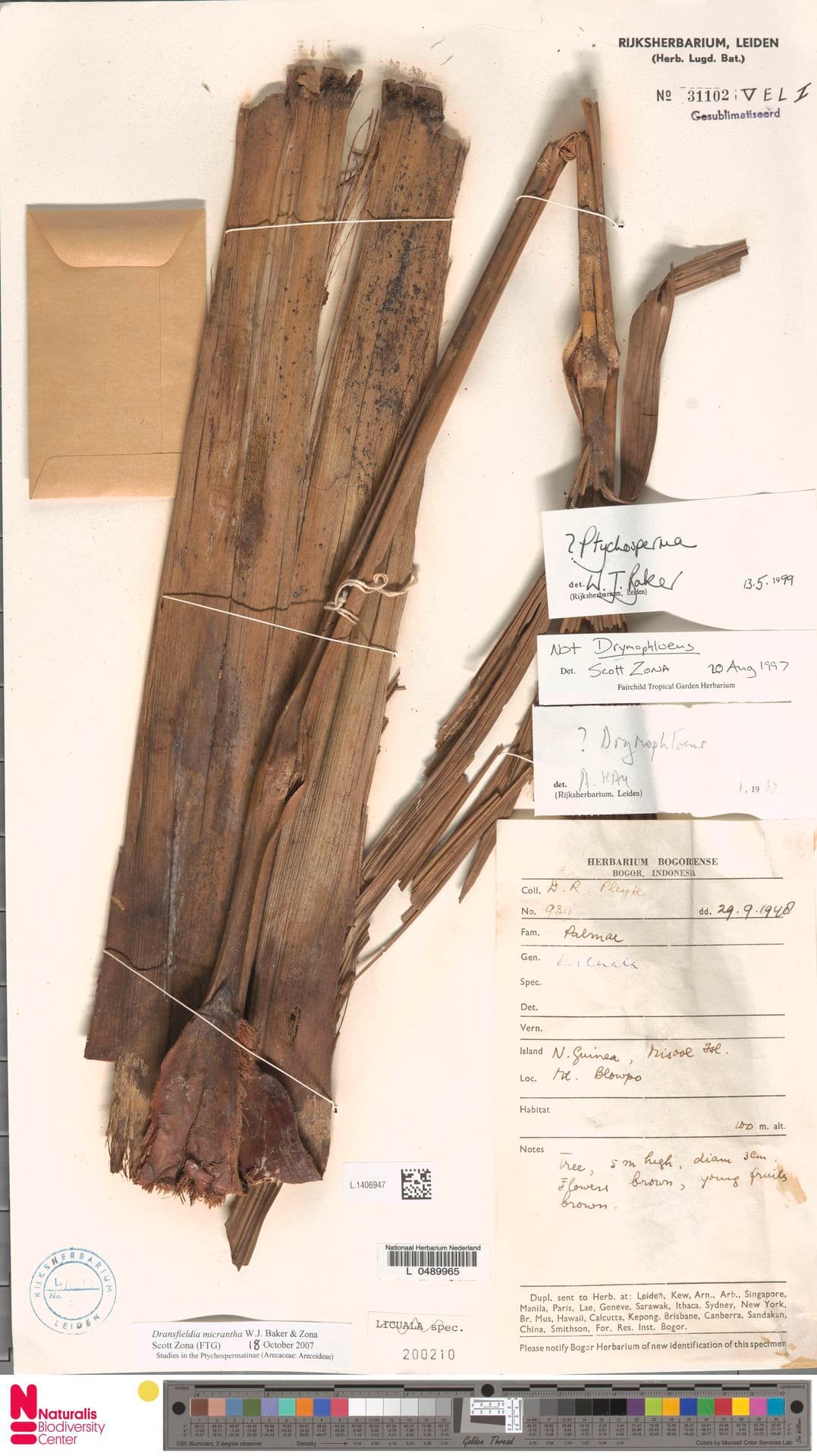
Botanical specimen of Dransfieldia Micrantha.
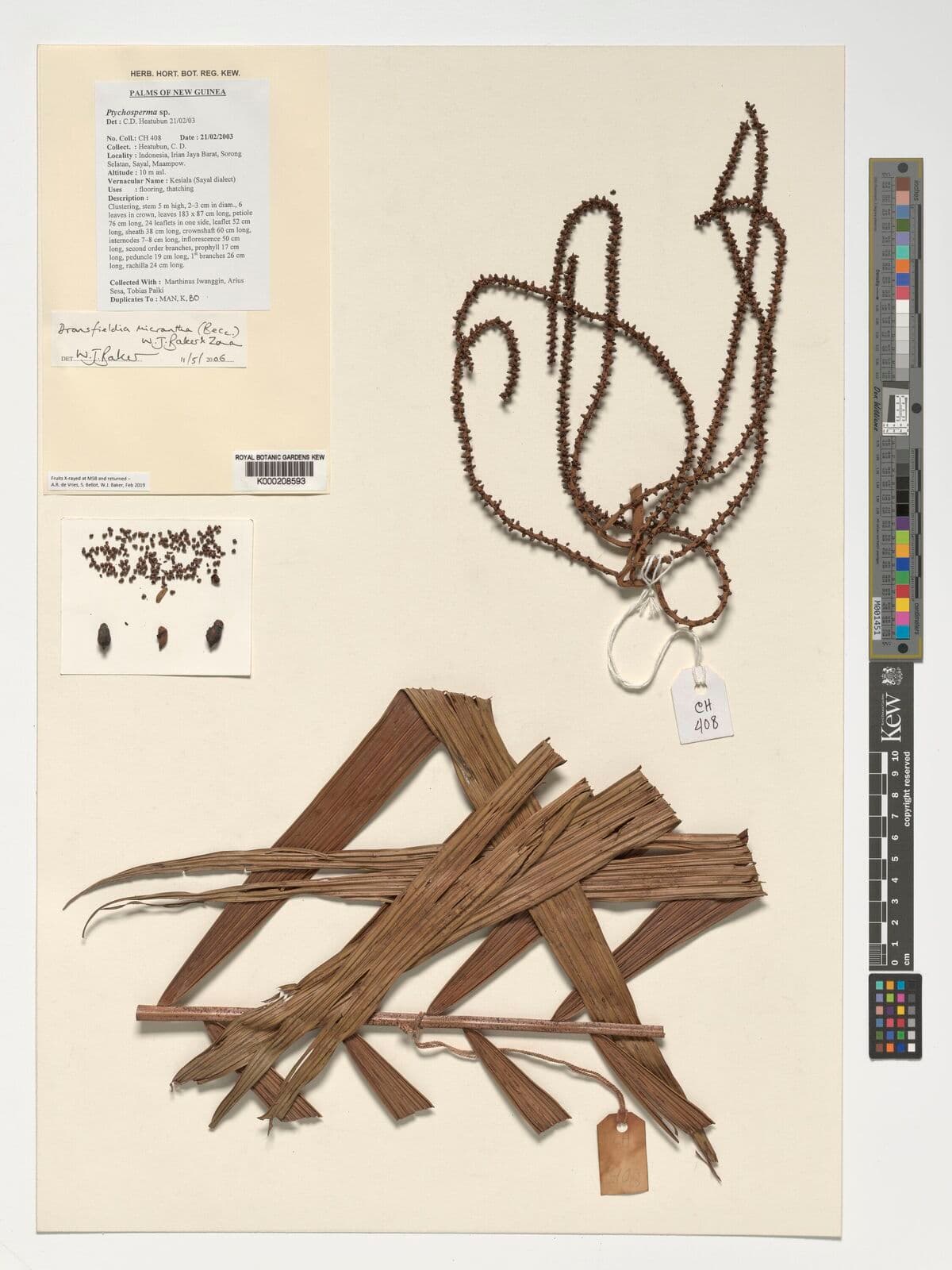
Botanical specimen of Dransfieldia Micrantha.
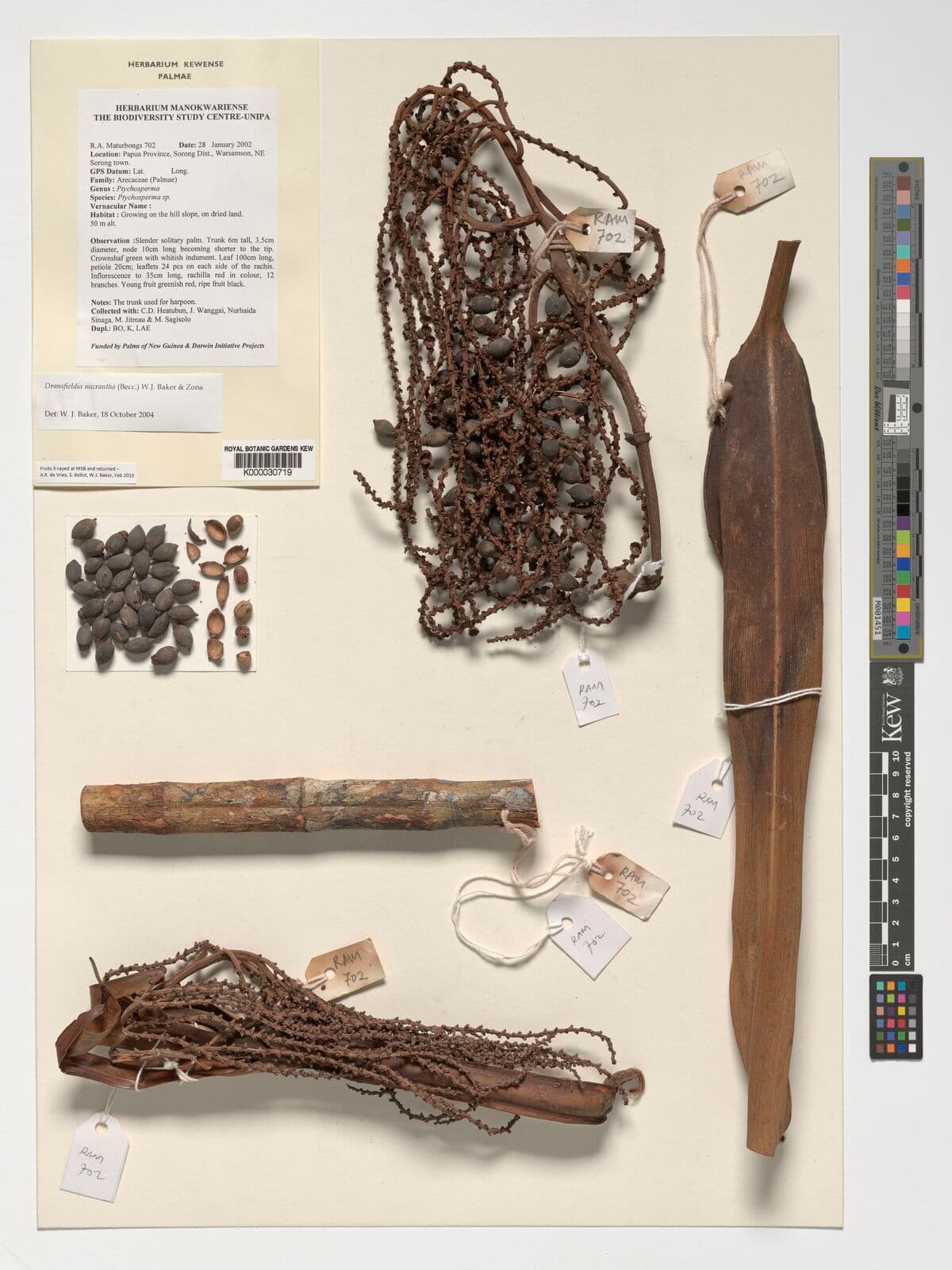
Botanical specimen of Dransfieldia Micrantha.
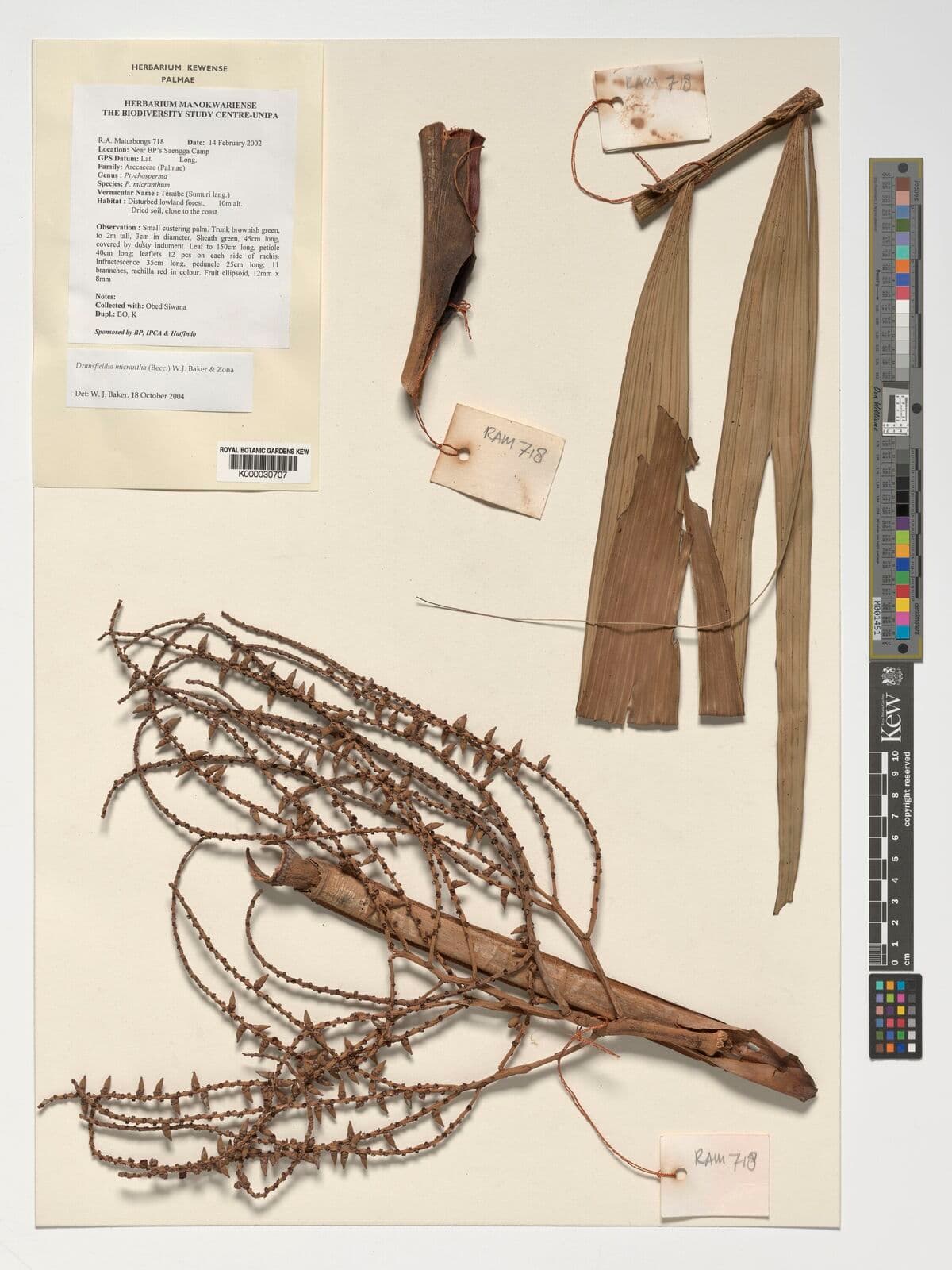
Botanical specimen of Dransfieldia Micrantha.
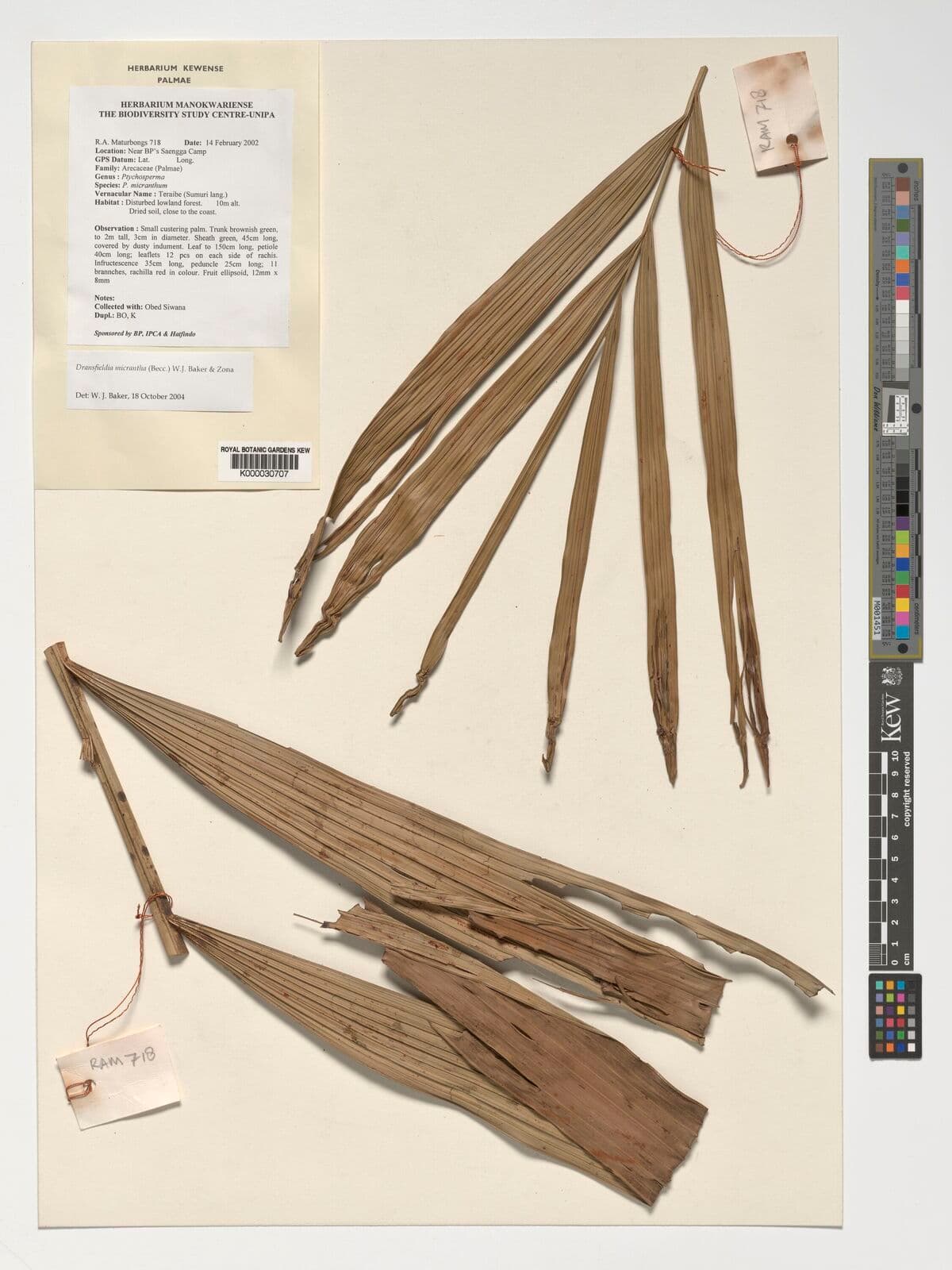
Botanical specimen of Dransfieldia Micrantha.
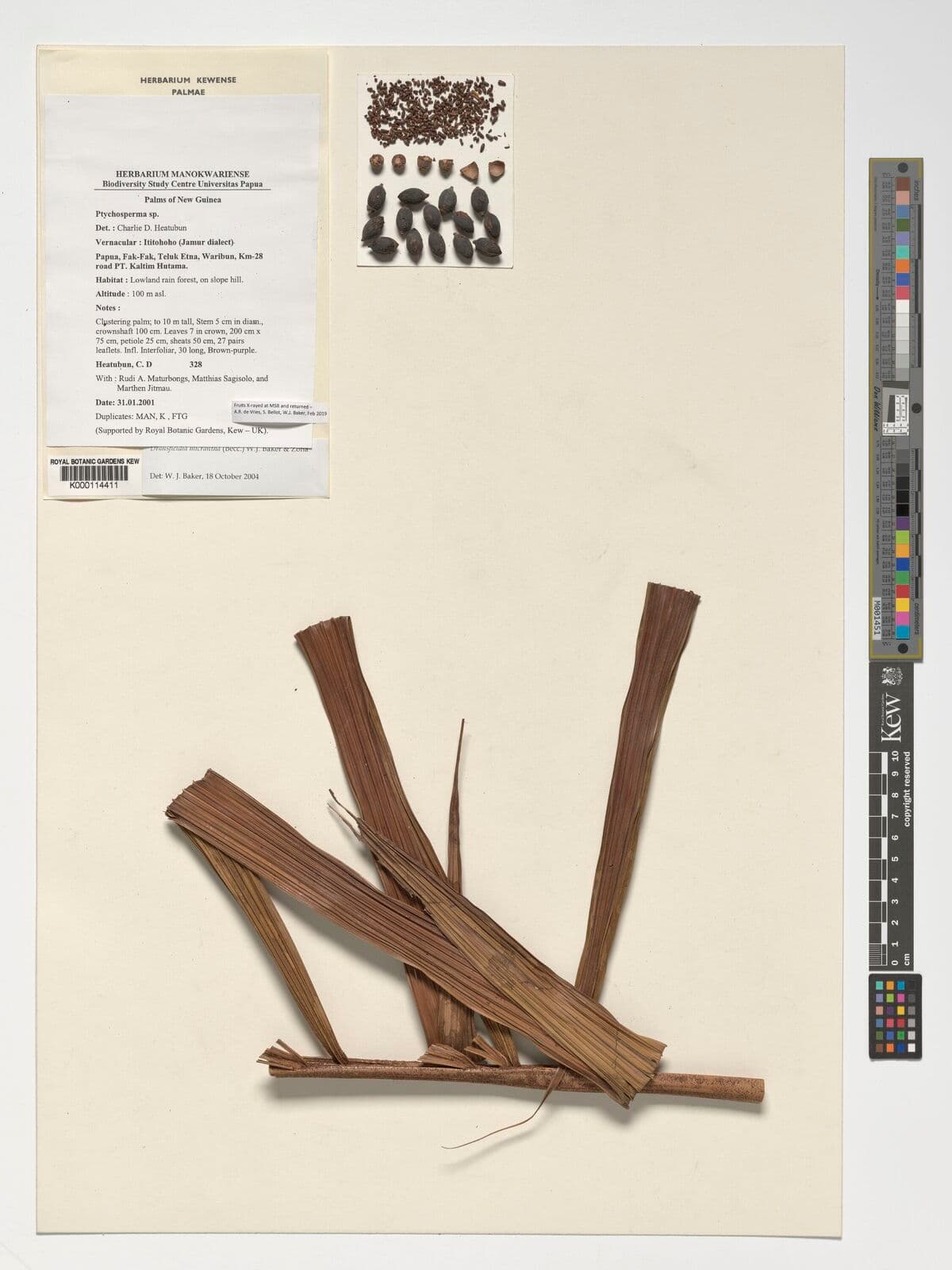
Botanical specimen of Dransfieldia Micrantha.
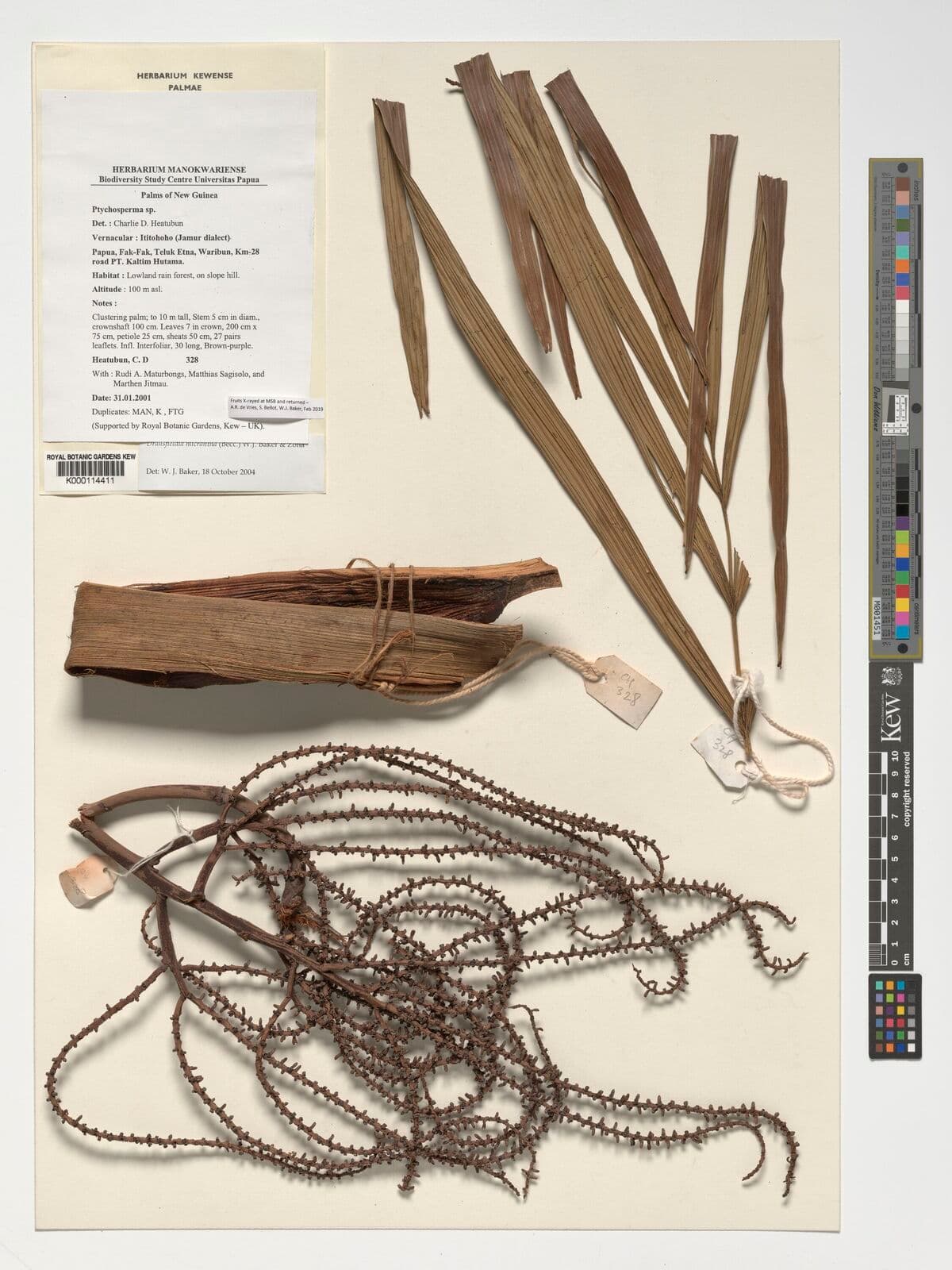
Botanical specimen of Dransfieldia Micrantha.
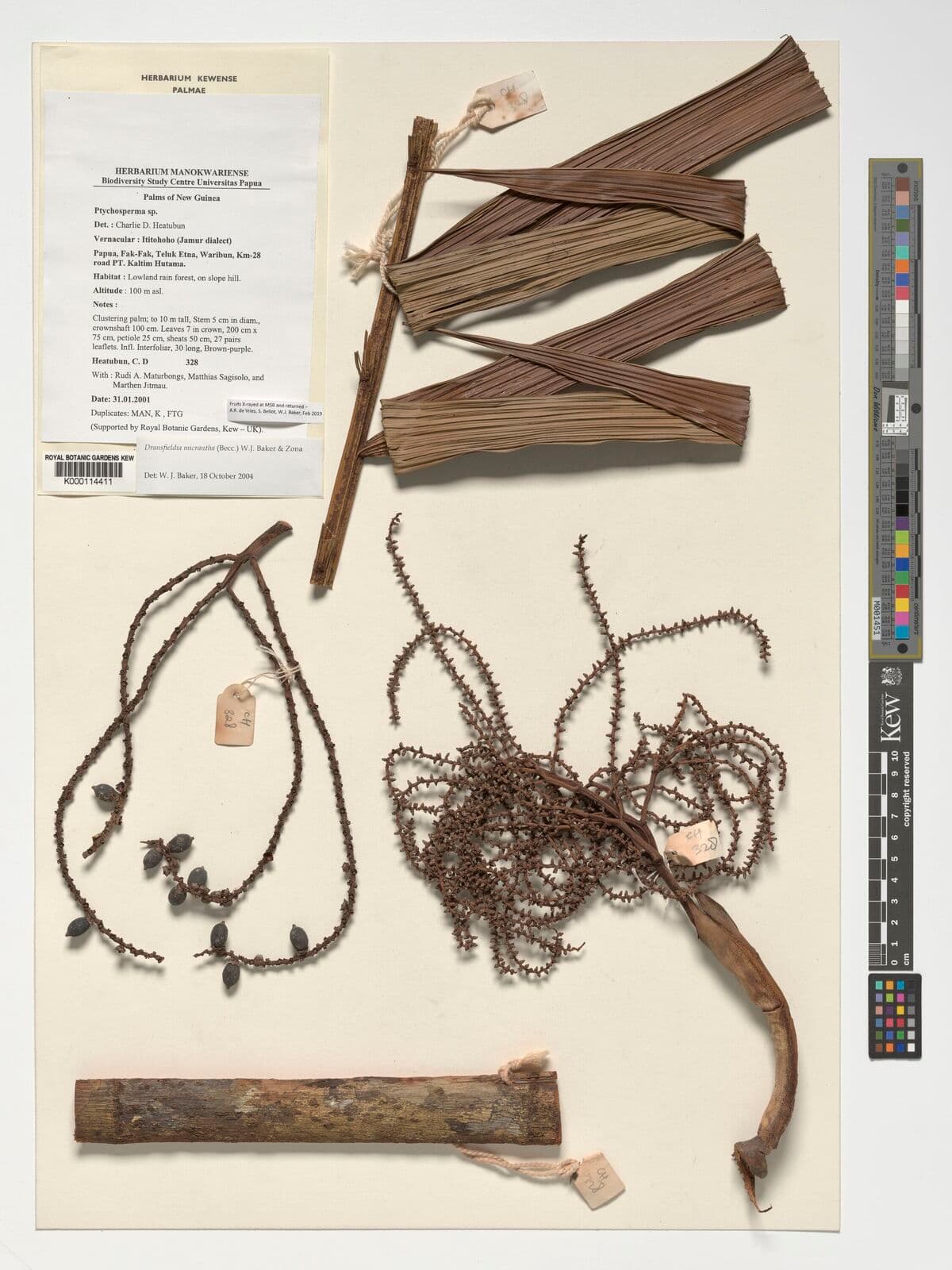
Botanical specimen of Dransfieldia Micrantha.
Sources & Conservation
Curated- Dransfieldia W.J. Baker & Zona - PALMweb (Royal Botanic Gardens, Kew) · accessed 2026-08
- Dransfieldia micrantha - Palmpedia, Palm Grower's Guide (reproducing Baker et al. 2006 / Palmweb) · accessed 2026-08
- Dransfieldia, A New Genus for an Old Palm - Zona & Lewis, Fairchild Tropical Botanic Garden Virtual Herbarium · accessed 2026-08
- Dransfieldia - Wikipedia · accessed 2026-08
- Dransfieldia micrantha (Becc.) W.J.Baker & Zona - World Flora Online · accessed 2026-08
- Dransfieldia micrantha - GBIF Backbone Taxonomy (API record, key 2735126) · accessed 2026-08
- Dransfieldia micrantha - IPNI (International Plant Names Index) 60441732-2 · accessed 2026-08
- Dransfieldia micrantha - Llifle Encyclopedia of Palms and Cycads