Jumagua Palm
Hemithrinax Ekmaniana • Lollipop Palm • Palmita de Jumagua • Trinac
Jumagua Palm in Motion
The Essence
"Hemithrinax ekmaniana is among the rarest palms on Earth, confined to a single hill system in central Cuba: the Mogotes de Jumagua, a line of eight connected Upper Cretaceous karst limestone hills near Sagua La Grande, Villa Clara Province, about 16 km from the northern coast. It survives on only three of those eight mogotes, growing mostly on north-facing cliffs at and near the hilltops from 20 to 80 m above sea level, and the entire population occupies about 2.3 hectares within a 10-hectare site. A 2014 census counted 504 plants — 311 adults, 115 juveniles and 78 seedlings — barely changed from 493 in 2004. The IUCN, which listed the palm as Critically Endangered in 1998, reassessed it in 2022 as Vulnerable under criterion D1, with the population judged stable. The palm is unmistakable. A pencil-thin trunk, 6.4–7.6 cm across at the base, carries some 40–60 living leaves plus 50–70 persistent dead ones on petioles no longer than 10 cm, so the crown packs into an obovoid, almost spherical, spiky ball; it is sold in the seed trade as the Lollipop Palm. Plants reach maturity and fruit while still under a metre tall, though the 2017 monograph in Palms describes trees to 7 m. Growth is very slow — about 1.27 cm of trunk per year, and roughly six years before a trunk begins to form. The monograph's authors rate its ornamental potential as great, and judge it especially suitable for subtropical and tropical gardens in areas with a pronounced, lengthy dry season and poor, rocky or limestone soils."
Hemithrinax combines the Greek prefix 'hemi-' (half) with the genus name Thrinax — in effect a 'half-Thrinax'. The genus was erected by Joseph Dalton Hooker in 1883. The epithet ekmaniana honours the Swedish botanist and explorer Erik Leonard Ekman (1883–1931), who made the type collection 'on steep rock' at Sagua La Grande on 20 February 1924 (Ekman 18536); Max Burret named the species from it in 1929. Borhidi and Muñiz transferred it to Thrinax in 1985 — Thrinax ekmaniana is the only synonym recognised by Plants of the World Online — and, as the 2017 monograph reports, Lewis and Zona returned it to Hemithrinax in 2008 using mostly molecular data.
Burret described the palm in 1929 from Ekman's 1924 collection; León collected it again at the Mogotes de Jumagua in April 1940 and published his treatment of the Cuban Hemithrinax in 1941, giving the precise locality. In 1976 a quarry was established on one of the hills for the mining of limestone aggregates, and the destruction it caused drew the speleological and archaeological group Sabaneque to the site in early 1977; Sabaneque successfully made the case for protecting the mogotes from mining and other destructive activity. Popular sources also describe a rediscovery of the palm itself around this time, but differ on the year — Palmpedia and Wikipedia give 1978, crediting the Sabaneque group, while Monaco Nature Encyclopedia gives 1976. Formal conservation activity began in 1984, and in 2008 Cuba's Council of State legally established Mogotes de Jumagua, designating 453 hectares as an area of national significance; the site holds 442 vascular plant species in 302 genera and 106 families. In cultivation, a seed collection made in 1996 by specialists of the Palmetum of Santa Cruz de Tenerife placed plants in a handful of botanical gardens, but wild-collected seed reached the commercial trade only in 2007.
Natural Habitat
Bare karst limestone cliffs and hilltops — coded by the IUCN as rocky areas such as inland cliffs and mountain peaks. Conditions are extreme: exposure to the prevailing north and north-east winds, high solar radiation, warm temperatures, a porous substrate with almost no humus, and a pronounced, lengthy dry season, through which the palms survive six months on only about 20% of an already low annual rainfall (roughly 1,020 mm in the rainy season, 20 May–15 October, against about 270 mm in the dry season). Morici (2000) called it the most xerophytic species of the genus. It is perhaps the most conspicuous element of the site's semi-deciduous mesic forest and 'Mogote Vegetation Complex', growing alongside companion species including Agave legrelliana, Capparis grisebachii, Guapira discolor, Selenicereus grandiflorus and Sideroxylon foetidissimum, as well as the co-endemic small tree Tabebuia saxicola.
Curated Specimens
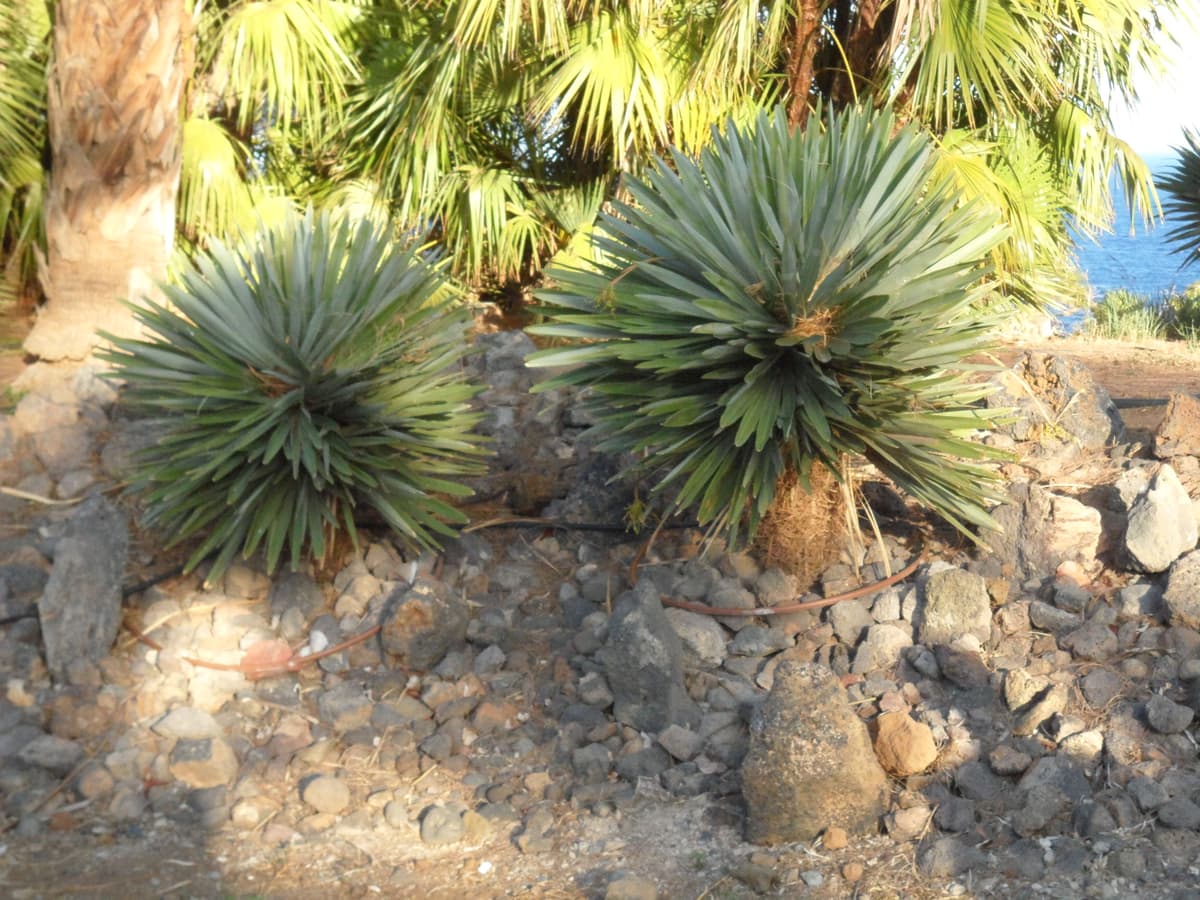
Botanical specimen of Hemithrinax Ekmaniana.
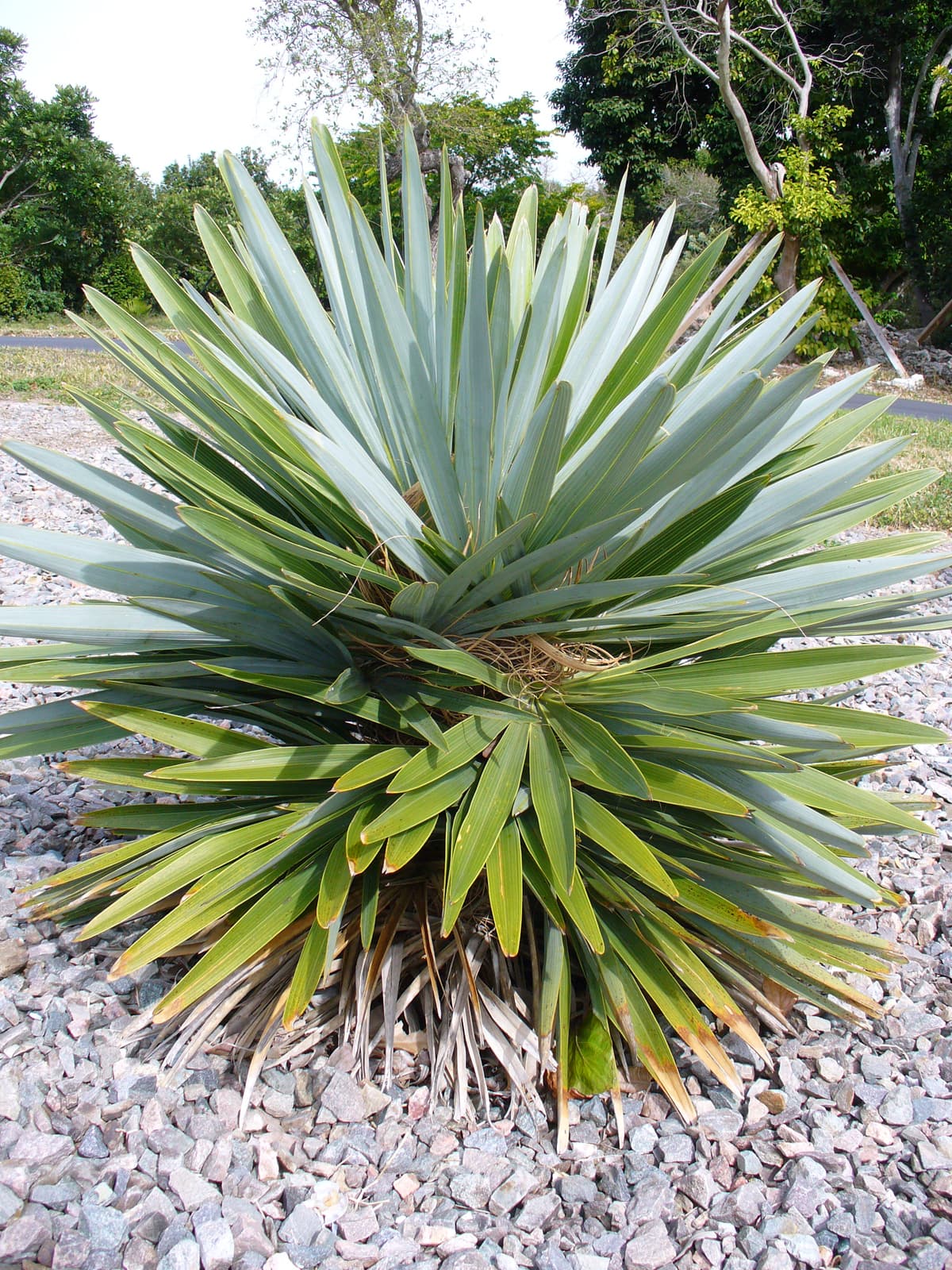
Botanical specimen of Hemithrinax Ekmaniana.