Doum palm
Hyphaene Thebaica • Gingerbread palm • Gingerbread tree • Egyptian doum palm • African doum palm
Doum palm in Motion
The Essence
"Hyphaene thebaica, the doum palm, is the classic branching palm of the Nile — it grows along the river in Egypt and Sudan, and along the Niger in West Africa — and one of the very few palms with a truly branching trunk: the stem forks dichotomously, often into a distinctive Y, and can divide repeatedly until a single tree carries up to 16 crowns. Its native range runs from Mauritania, Senegal and Gambia east across the Sahel and Central Africa to Egypt, Sudan and Somalia, and on into the Levant and the Arabian Peninsula. In East Africa it meets the related Hyphaene compressa, a doum palm endemic to that region, and checklists disagree on whether H. thebaica itself reaches Kenya — the IUCN lists it there, while Kew's Plants of the World Online does not. A desert palm, it follows groundwater along river valleys, wadis and oases. The ancient Egyptians cultivated it and held it sacred, burying its fruits in pharaohs' tombs; in 2007 a team led by Zahi Hawass reported eight baskets of 3,000-year-old doum fruit in Tutankhamun's tomb, and the gingerbread-flavoured fruit is still sold by street vendors and herbalists in Egypt and made into sweetmeats, cakes and cold drinks. Across its dryland range it is an extremely useful multipurpose tree: the leaves are woven into mats, baskets, rope and thatch — the genus is literally named for weaving — the male palm's timber is prized as borer- and termite-proof, palm wine is prepared from the sap (a stem cut for tapping dies, though the tree coppices back from the root), the dried bark yields a black dye, and the hard kernels serve as a substitute for vegetable ivory in cheap buttons. A mature tree can bear about 50 kg of fruit a year, and elephants and baboons eat the fruits and disperse the seeds. The IUCN assessed the species as Least Concern in 2017, listing agriculture and drought among the pressures on it."
The genus name Hyphaene comes from the Greek hyphaino, 'to weave' — explained either by the leaf fibres so widely used for weaving or by the interlacement of fibres in the pulp of the fruit. The epithet thebaica refers to Thebes, the ancient capital of Upper Egypt. Linnaeus first described the species in 1753 as Corypha thebaica; Martius transferred it to Hyphaene in Historia Naturalis Palmarum (1838). The type traces to Richard Pococke's 1743 'A Description of the East', whose plate 73 was designated lectotype by Moore and Dransfield in 1979.
The doum palm was cultivated in ancient Egypt and considered sacred, and its fruits were buried in the tombs of pharaohs. In 2007 a team of Egyptian archaeologists led by Zahi Hawass discovered eight baskets of 3,000-year-old doum fruit in King Tutankhamun's tomb. The fruit remains part of everyday life in Egypt, sold by street vendors and in herbalist shops and made into molasses, cakes, sweetmeats and a cold drink.
Natural Habitat
A palm of arid and semi-arid desert climates that tracks groundwater rather than rainfall: it lines the Nile in Egypt and Sudan and the Niger in West Africa, and grows in river valleys, around oases, on floodplains and in moist places in grassland and woodland, but also in drier locations. It occurs where mean annual rainfall is only (50–)200–600 mm (one source gives 100–600 mm), from about 100 m below sea level up to 1,000 m altitude (one source gives up to 1,400 m). The Hyphaene research project associates it with arid, desert climates on the heavy soils of drainage lines and alluvial flats with high water tables, and its presence is considered an indicator of good soil with a high groundwater table. It withstands fire and tolerates mild frost and moderate salinity, but does not tolerate stagnant water.
Curated Specimens
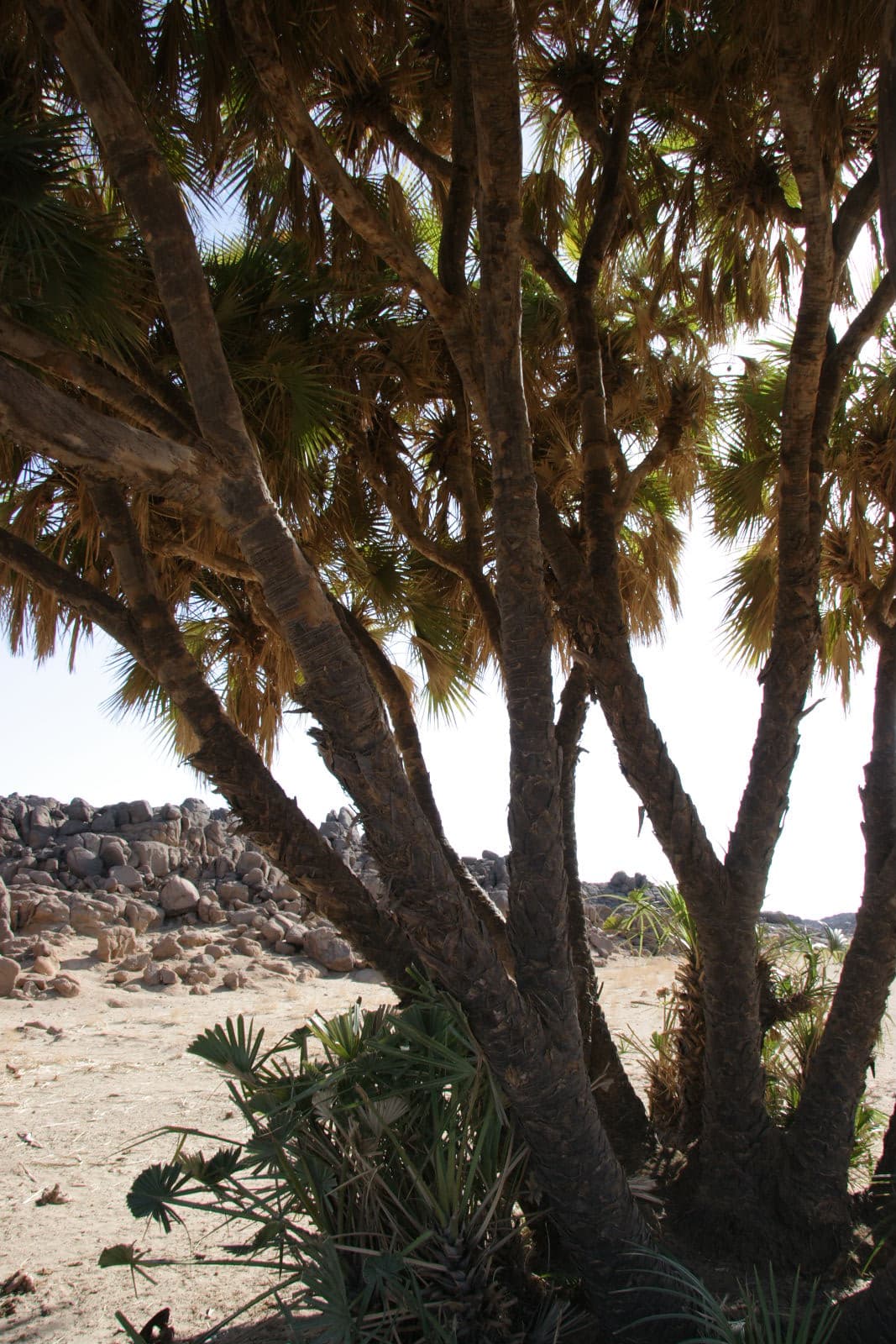
Botanical specimen of Hyphaene Thebaica.
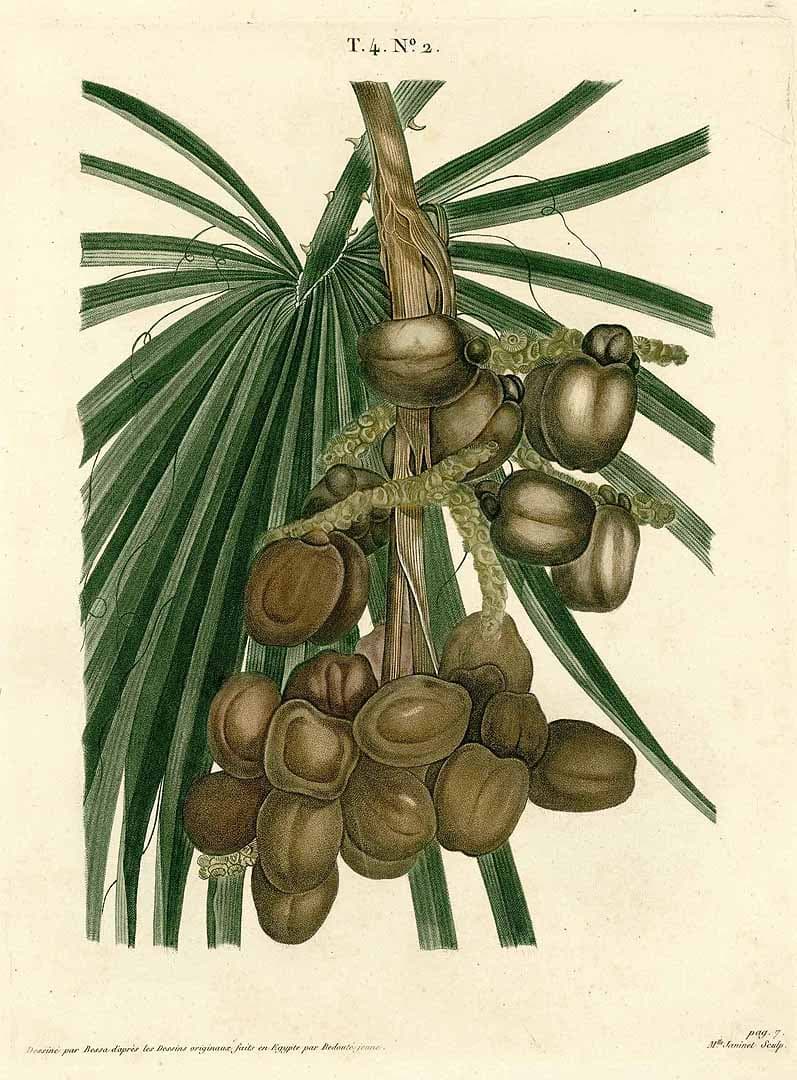
Botanical specimen of Hyphaene Thebaica.
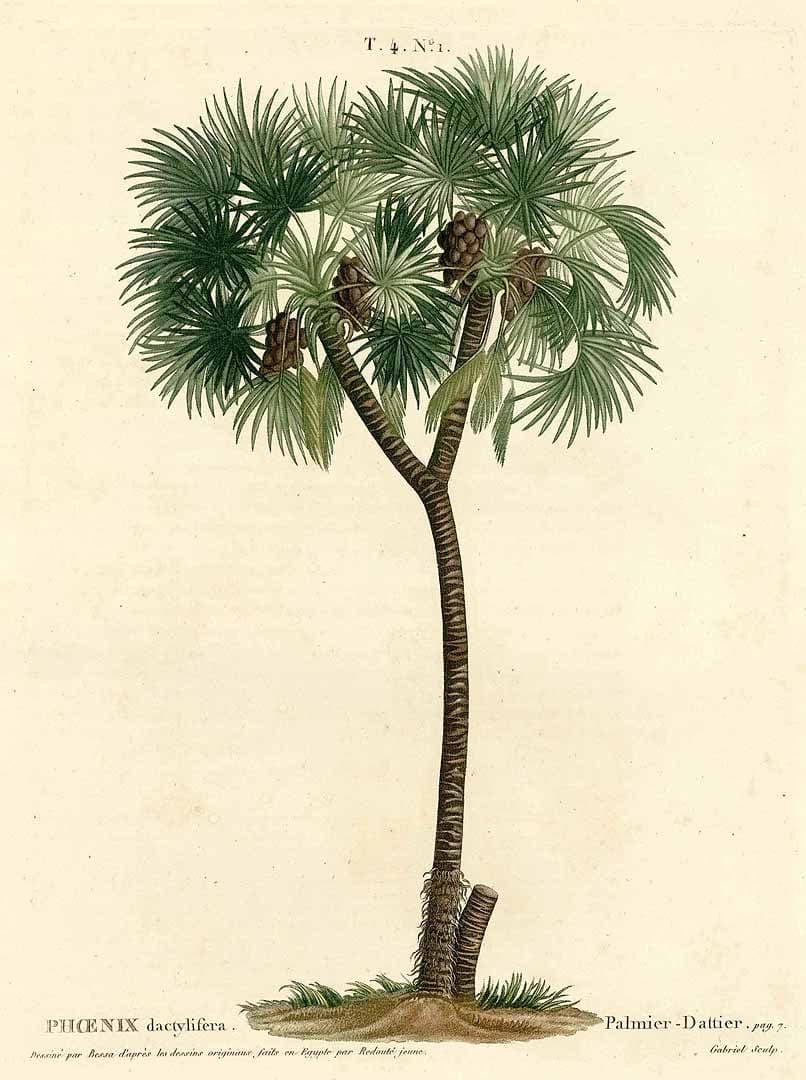
Botanical specimen of Hyphaene Thebaica.
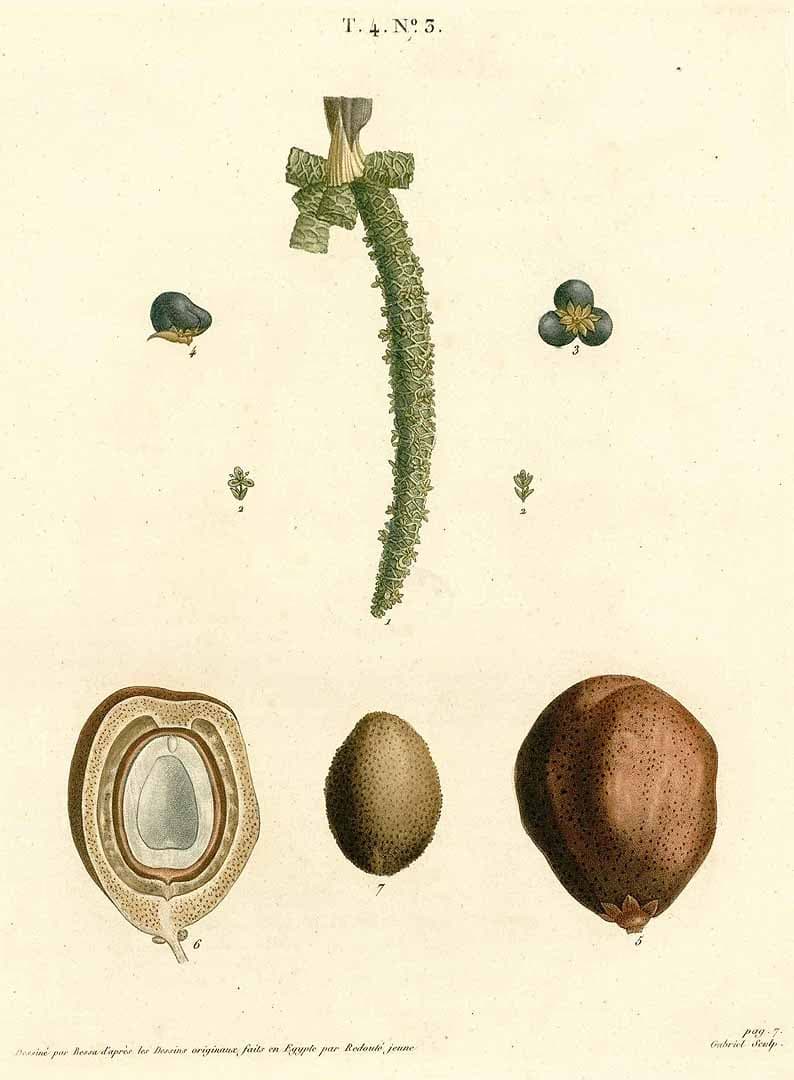
Botanical specimen of Hyphaene Thebaica.
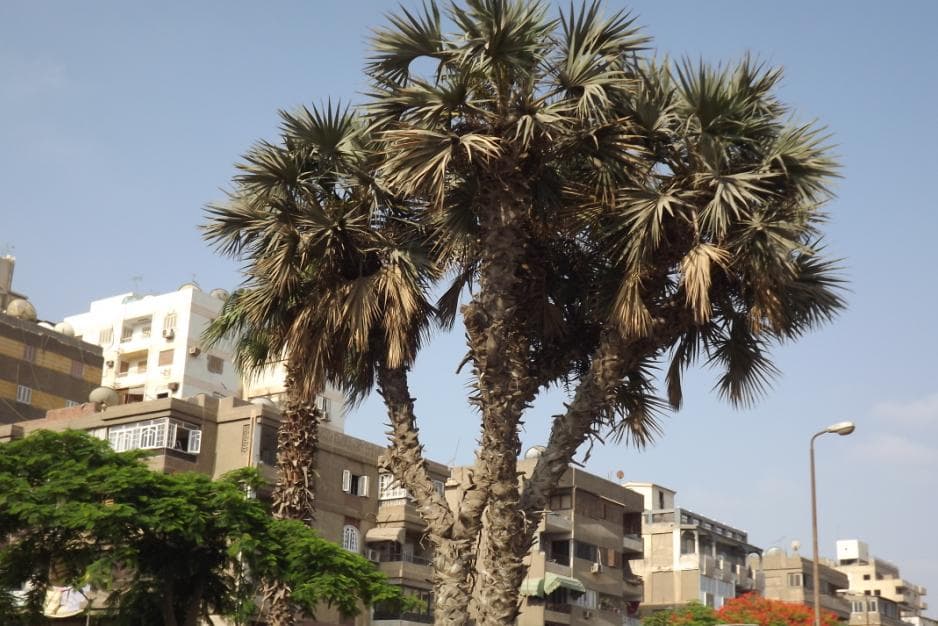
Botanical specimen of Hyphaene Thebaica.