Chilean wine palm
Jubaea Chilensis • Chile cocopalm • Honey palm • Palma chilena • Palma de miel • Palma de coquitos • Palmera chilena
Chilean wine palm in Motion
The Essence
"Jubaea chilensis, the Chilean wine palm, is a huge solitary feather palm endemic to central Chile, where it survives in seasonally dry valleys of the coastal mountains. It reaches 25–30 m, with a bare grey trunk 1.5–2 m across — often thicker in the middle than at the base — and by Wikipedia's ranking it is the second most massive of all palm species, exceeded only by the floodplain form of Borassus aethiopum. It is the classic wine palm: a single tree can yield over 400 litres of sap, fermented into palm wine or concentrated into miel de palma (palm honey), but traditional extraction meant felling the whole tree, a practice now restricted by legal protection. Its small coconut-flavoured seeds are widely eaten as coquito nuts, and its leaves have been used for baskets and thatch. Centuries of exploitation cut the population from an estimated 5 million trees in 1550 to no more than about 120,000 today; the species is assessed as Endangered on the IUCN Red List (2021), and in December 2025 it was added to CITES Appendix I at CoP20 in Samarkand, strictly restricting international trade in plants, seeds and derivatives. Remarkably cold-hardy for so large a feather palm — survival of −16°C has been recorded in France — it is valued in temperate gardens and holds the RHS Award of Garden Merit, though it may take 50–60 years to reach reproductive maturity."
The genus Jubaea honours King Juba II, ruler of ancient Numidia in North Africa; the epithet chilensis means "of Chile". Henri Ernest Baillon made the current combination in 1895, based on Molina's Palma chilensis; Jubaea spectabilis and Cocos chilensis are synonyms.
Charles Darwin visited the palm groves at La Campana during the voyage of HMS Beagle in 1834 and dismissively called them "ugly trees". Exploitation for palm wine and miel de palma — which traditionally meant felling the tree — together with deforestation, urbanisation and wildfire intensified by Chile's megadrought reduced the population from an estimated 5 million trees in 1550 to no more than about 120,000 today; some 75,000 grow protected in La Campana (~40,500) and Las Palmas de Cocalán (~35,000) parks, while fruit harvesting and browsing of seedlings by invasive European rabbits — shown to create a critical bottleneck in natural regeneration — still hamper recovery. A palm raised from seed in 1846 grew into the celebrated Temperate House specimen at Kew, about 19 m tall when it was felled in 2013 after reaching the top of the glasshouse. The extinct Easter Island palm was originally placed in Jubaea before being segregated as the genus Paschalococos in 1991.
Natural Habitat
Seasonally dry river valleys and slopes near the coast of central Chile, usually associated with sclerophyllous forest and spiny matorral, at elevations up to 1,400 m. The remaining distribution is highly restricted and fragmented, mostly in the coastal mountains between roughly 32°S and 35°S, with records from La Serena south to the Maule region.
Curated Specimens

Botanical specimen of Jubaea Chilensis.
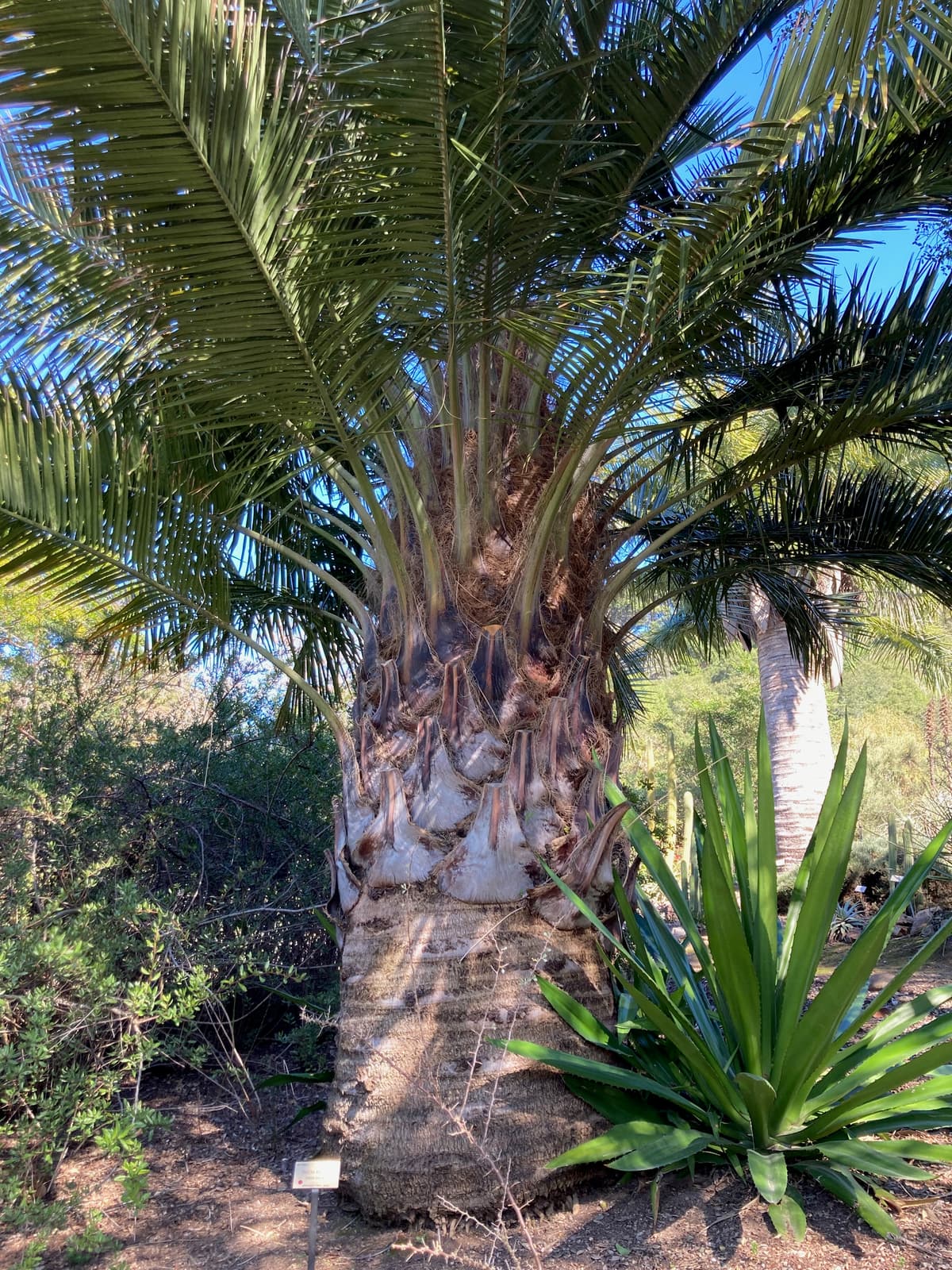
Botanical specimen of Jubaea Chilensis.
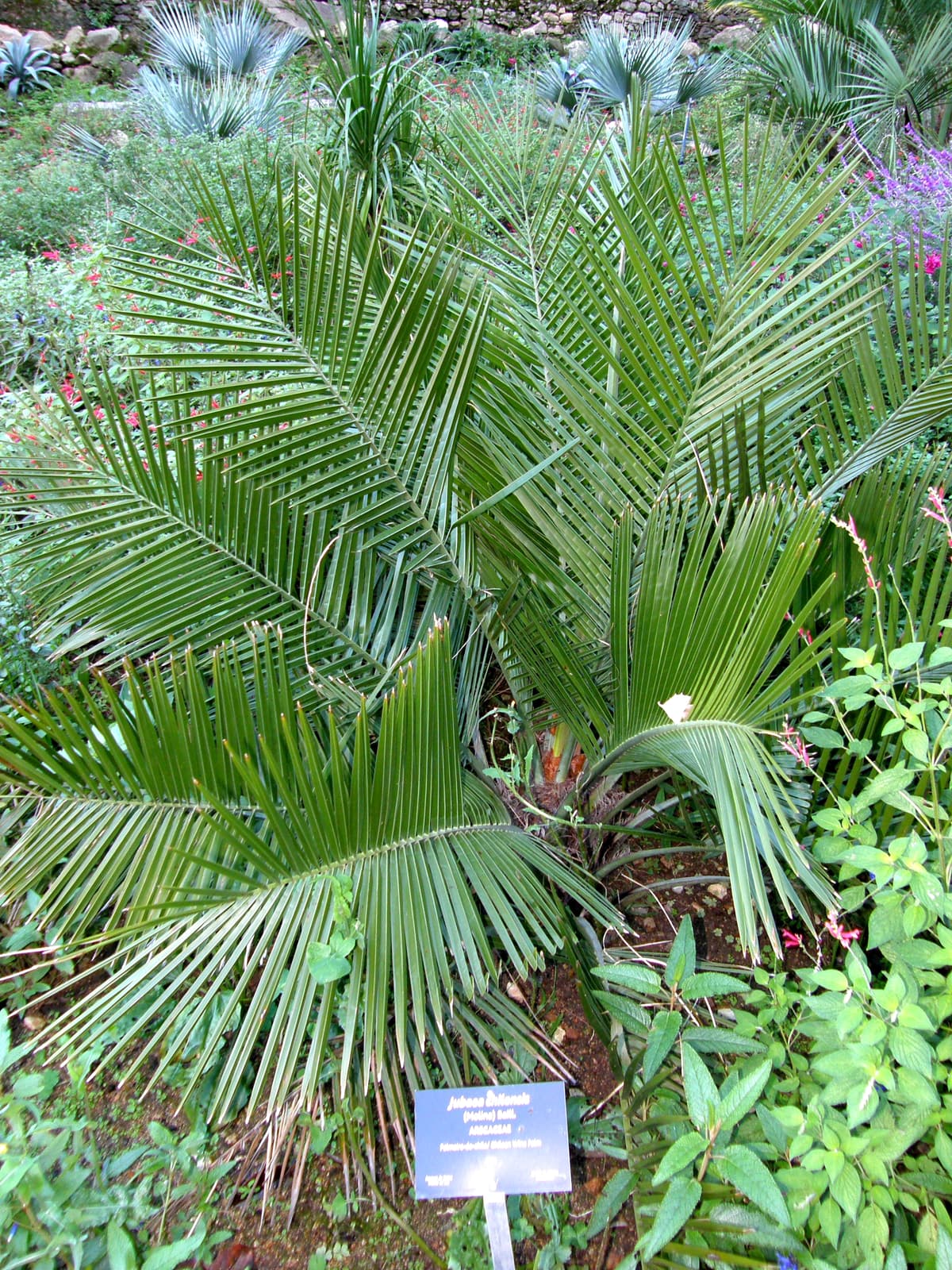
Botanical specimen of Jubaea Chilensis.
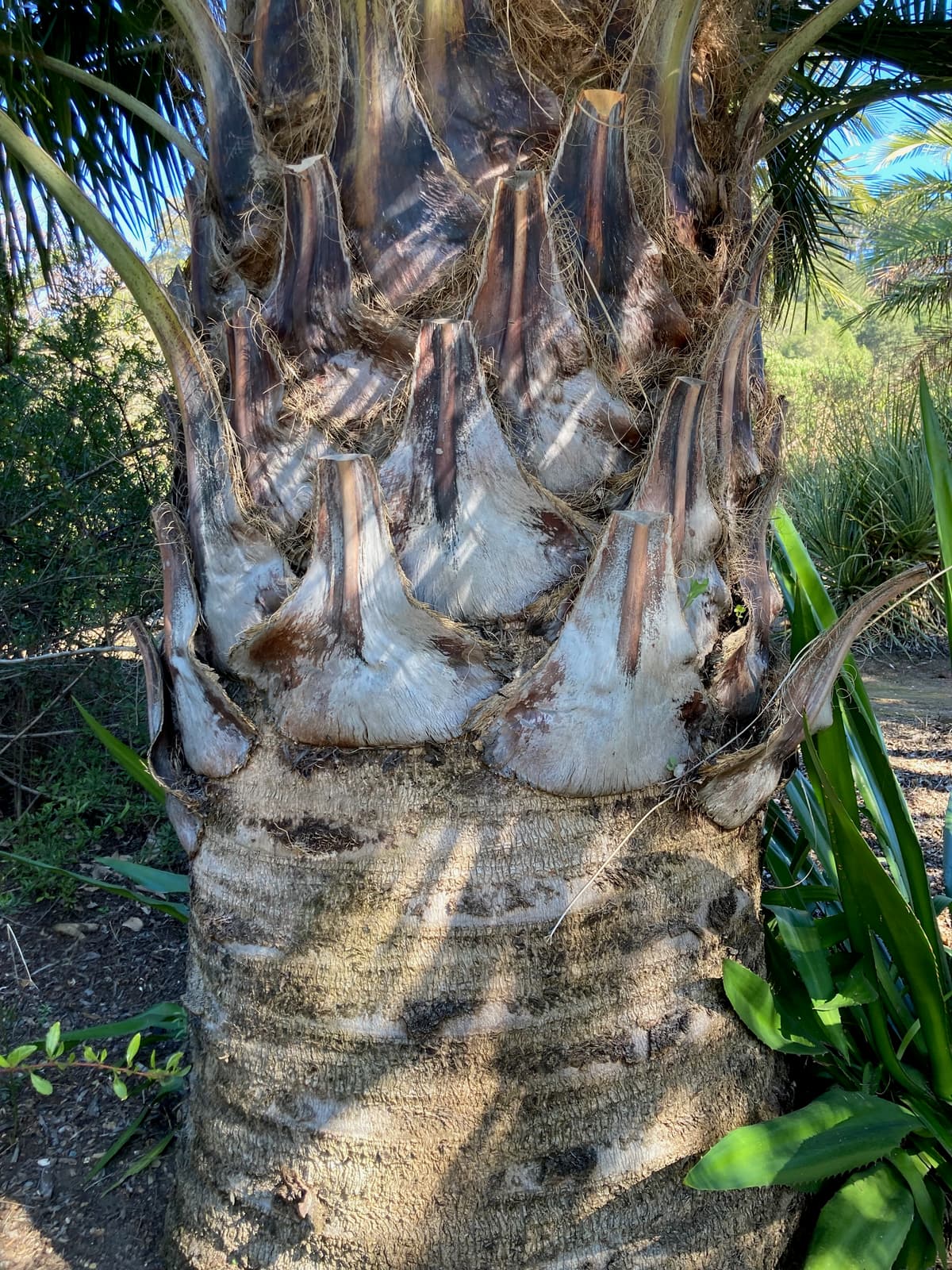
Botanical specimen of Jubaea Chilensis.
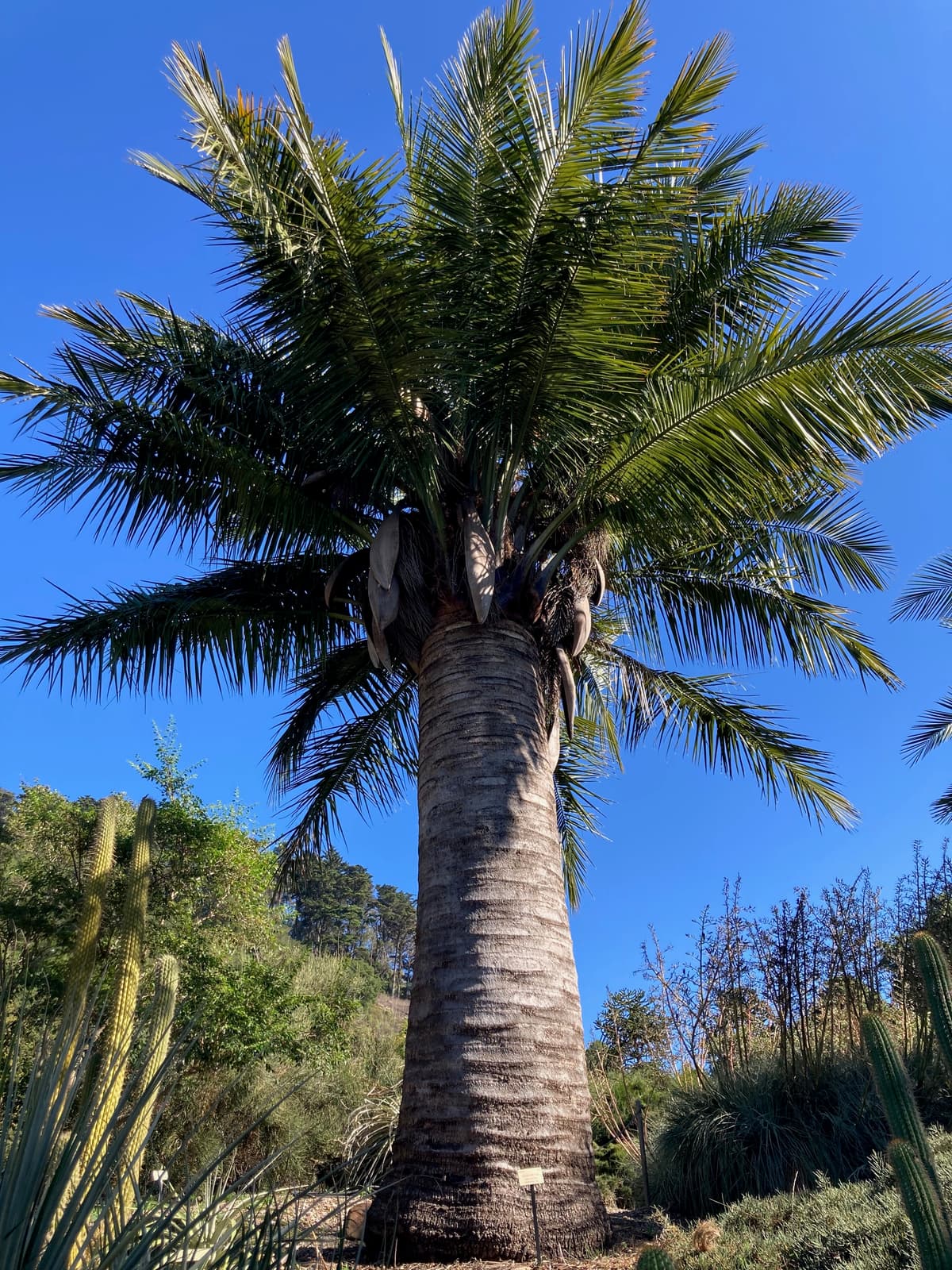
Botanical specimen of Jubaea Chilensis.