Pondoland palm
Jubaeopsis Caffra • Pondo palm • Pondo coconut • Pondoland coconut • Mkambati palm • Dwarf Pondoland palm • Dwarf palm • Palmboom • Pondo-kokospalm • Rivierpalm • Rivierpalmboom • Ikomba • Inkomba
Pondoland palm in Motion
The Essence
"Jubaeopsis afra, long known as Jubaeopsis caffra, is a clustering, multi-stemmed South African palm and the only species in its genus. Genera Palmarum records it as the sole African member of subtribe Attaleinae, notable for stems that branch dichotomously, both at the base and aerially by forking, and for an exceptionally high chromosome count of 2n = 160-200; phylogenetically it is placed as sister to all other Attaleinae except Beccariophoenix. The genus name records a resemblance to Jubaea, the Chilean wine palm, in floral and fruit characters. The round orange fruits look like miniature coconuts, roughly 2 cm across, with white 'meat' and a small amount of milk inside, and they are eaten by local people and by baboons. Weaver birds make heavy use of the palm for nesting material. Within each flower group the male flowers shed pollen before the neighbouring female is receptive, an outbreeding mechanism; pollination is presumed to involve insects but is not documented. The wild population is very small. SANBI's Red List records two subpopulations: the larger, on the Mtentu River, holds roughly 20-50 mature individuals and lies outside any protected area, while a smaller one on the Msikaba River sits inside Mkambati Nature Reserve. The population trend is stable, and PlantZAfrica notes that it is vegetative reproduction, rather than seed, that is presently maintaining the natural population of adult individuals. Recorded threats are harvesting of the fruits for food, collecting for the horticultural trade in which the species is very popular internationally, and fire damage along the upper cliff margins. Tree SA gives it South African Tree No. 27 and remarks that there may now be more trees growing in California than in South Africa. PlantZAfrica is blunt about what this means for would-be growers: its advice is 'DON'T!' - the palm is protected, there is no legal source of seed, and seedlings are almost certainly raised illegally too."
Jubaeopsis combines the palm genus Jubaea with the Greek suffix -opsis, 'looks like', for its resemblance to Jubaea in floral and fruit characters. Jubaea itself commemorates a King Juba of Numidia in North Africa, though sources differ on which one: PlantZAfrica names King Juba, who died in 46 BC, while Wikipedia names King Juba II. Tree SA glosses the epithet caffra as meaning 'from south-eastern Africa', but the word is now regarded as offensive. At the July 2024 International Botanical Congress botanists voted to replace caffra-based epithets with afra-based ones, and POWO, SANBI and Wikispecies now use Jubaeopsis afra, afra meaning 'of Africa'. The GBIF backbone taxonomy still lists Jubaeopsis caffra Becc. as the accepted name.
Scientific documentation of the palm began in 1898, and Odoardo Beccari described it as a new genus in 1913, in Webbia volume 4; sources differ on the exact page. Tree SA notes that the species has been successfully planted in California and remarks that there may now be more trees growing there than in South Africa.
Natural Habitat
Wild plants grow in Pondoland coastal forest on steep sandstone cliffs above river banks, 10-80 m above sea level, in the Eastern Cape. PlantZAfrica records the species naturally from the banks of just two rivers, only one of which lies in a protected area; Tree SA names these as the northern banks of the Msikaba and Mtentu rivers, within about 5 km of the coast, while PACSOA additionally lists the Mzintlava. Palmweb records that it grows gregariously on the steep, rocky north banks of the rivers near sea level. SANBI lists the vegetation types as Eastern Valley Bushveld and Pondoland-Ugu Sandstone Coastal Sourveld. In nature the species is restricted to Natal Group Sandstone and is endemic to the Pondoland Centre of Endemism. Plants seen further north on the KwaZulu-Natal south coast, as far as Durban, are cultivated rather than wild.
Curated Specimens
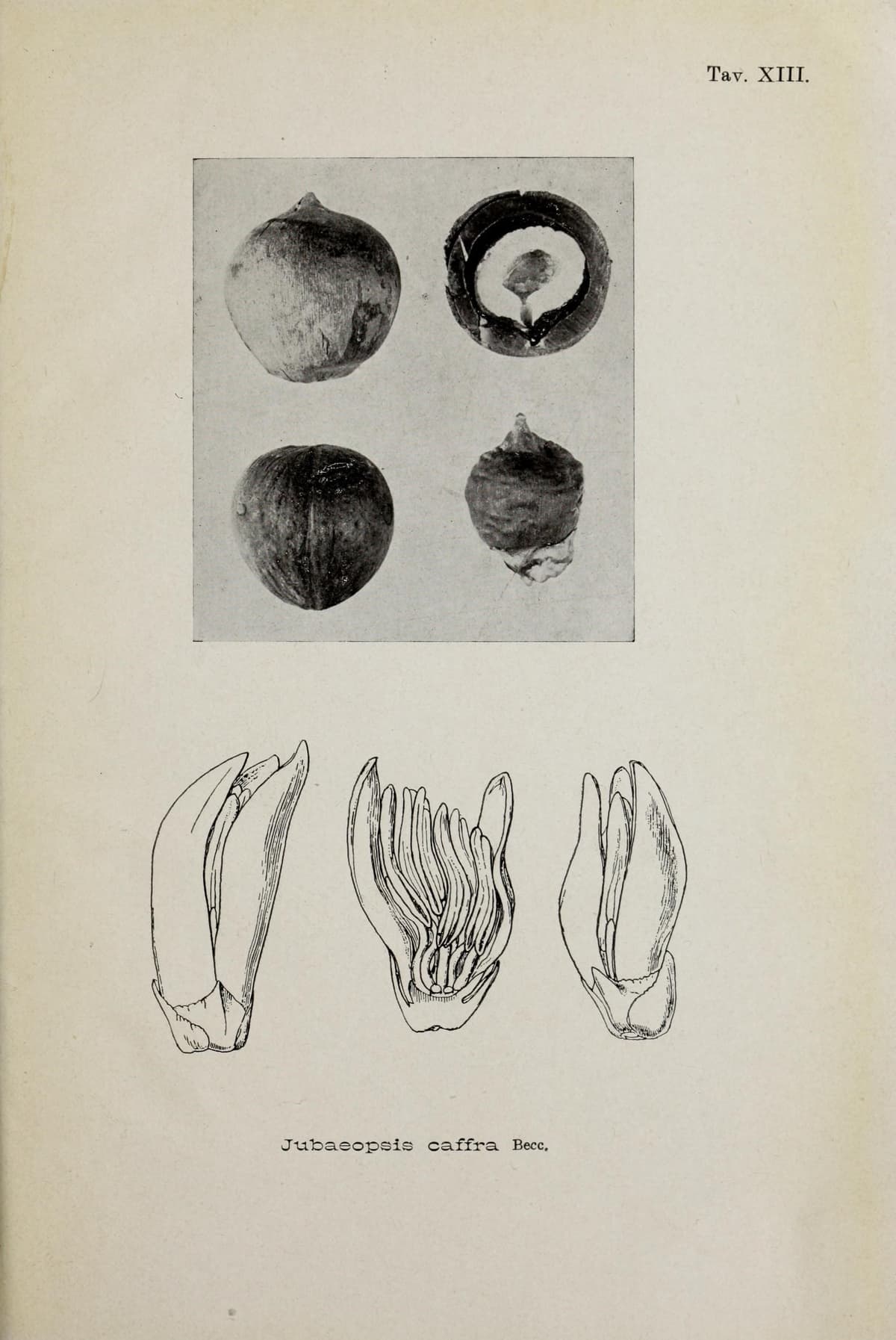
Botanical specimen of Jubaeopsis Caffra.
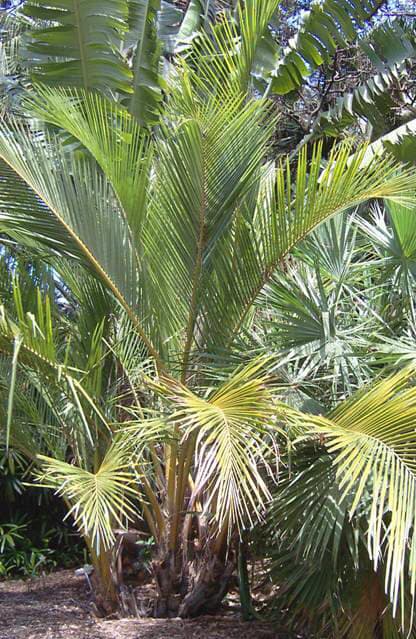
Botanical specimen of Jubaeopsis Caffra.
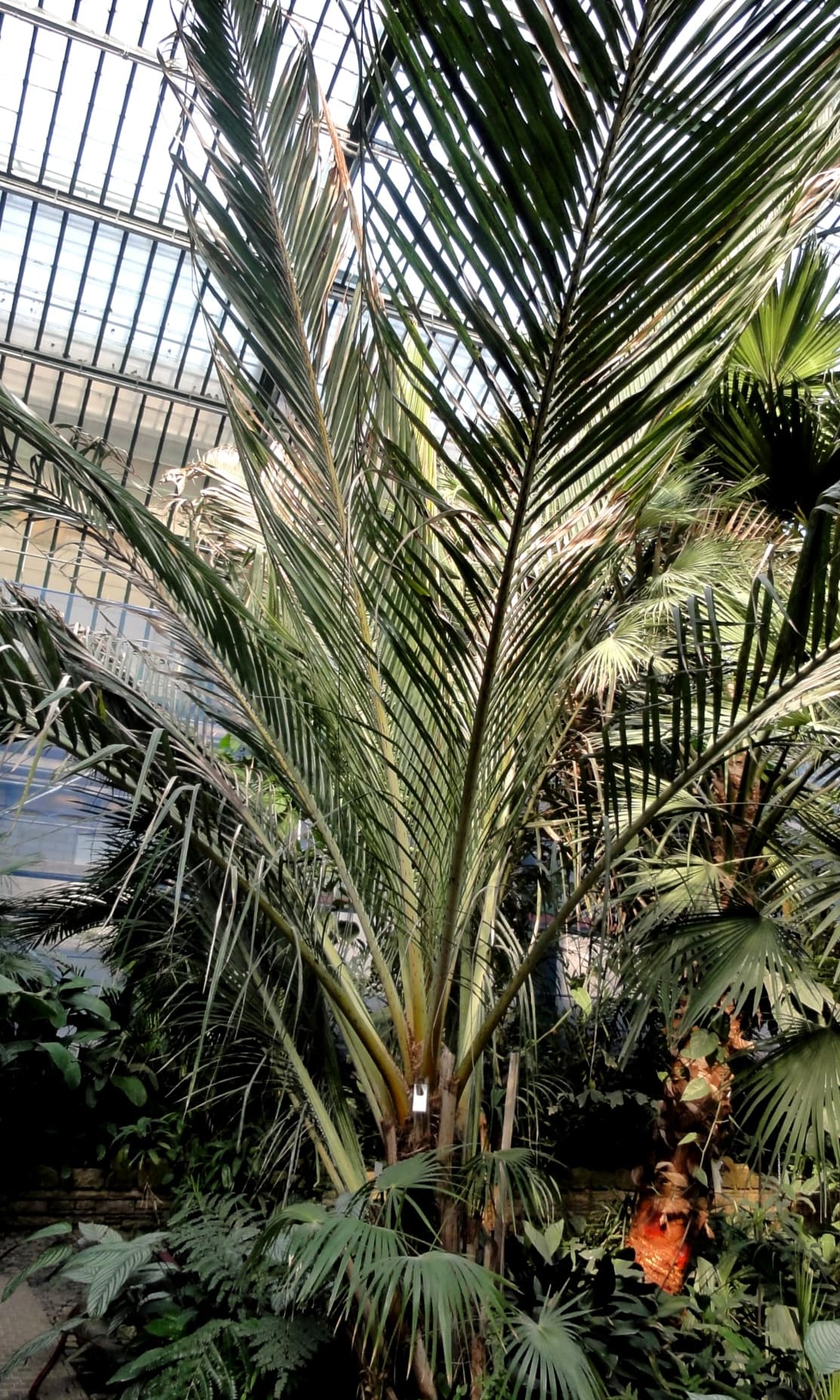
Botanical specimen of Jubaeopsis Caffra.
Sources & Conservation
Curated- Jubaeopsis afra - PlantZAfrica, South African National Biodiversity Institute · accessed 2026-08
- Jubaeopsis caffra Becc. - SANBI Red List of South African Plants (national assessment: Endangered D) · accessed 2026-08
- Jubaeopsis Becc. - PALMweb (Genera Palmarum account) · accessed 2026-08
- Jubaeopsis caffra - PACSOA Wiki (Palm & Cycad Societies of Australia) · accessed 2026-08
- Jubaeopsis caffra - Tree SA (South African tree database) · accessed 2026-08
- Jubaeopsis caffra - Biodiversity Explorer, Iziko Museums of South Africa