Tindéa palm
Kentiopsis Oliviformis • Canala palm • Kipe
Tindéa palm in Motion
The Essence
"Kentiopsis oliviformis is one of New Caledonia's grandest palms: a gregarious emergent tree to about 30 m that rises above transitional semi-humid forest in the centre of Grande Terre. The 19th-century collector Vieillard, who recorded the vernacular name 'Kipe' at Canala, reported that it exceeded 30 m and outgrew the coconut palms, from which it differed only by its small red fruits — olive-shaped, and the source of the epithet oliviformis. In valley bottoms of the Tindéa–Boghen area it forms numerous nearly pure stands of 0.1–1 ha along temporary streams, regenerating only at the periphery of each stand where mature trees are more widely spaced. Since 2021 the accepted name in Plants of the World Online has been Chambeyronia oliviformis, but the palm is still traded as Kentiopsis oliviformis under the name 'Tindéa palm', and though usually thought slow-growing it has shown impressive growth in south-east Queensland and Hawaii. The IUCN Red List assesses it as Endangered: all populations lie in areas under agricultural pressure and none regenerates normally, with cattle grazing, forest clearing and harvesting of trees for the edible palm heart behind much of the decline."
The genus name Kentiopsis combines Kentia with the Greek 'opsis' (appearance), meaning 'resembling Kentia'. The epithet oliviformis derives from the Latin 'oliva' (olive) and '-formis' (shaped) — it means 'olive-shaped' and refers to the shape of the fruits.
Brongniart & Gris described the species in 1864 as Kentia olivaeformis from an incomplete Vieillard collection made at Canala, which lacked leaves and male flowers; in 1873 Brongniart transferred it to his newly established genus Kentiopsis. In 2021 Hodel & Barrett sank Kentiopsis into Chambeyronia, making the accepted name Chambeyronia oliviformis. Trees have long been cut for the edible 'cabbage' (palm heart), and the government of New Caledonia's South Province has fenced an experimental cattle-exclusion area near Boghen to protect one stand.
Natural Habitat
A gregarious, emergent palm found only in transitional semi-humid forest with Aleurites (candlenut), restricted to low elevations of about 10–300 m in central New Caledonia, on schists and basalts often mixed with serpentine colluvium. In valley bottoms of the Tindéa–Boghen area it forms numerous nearly pure stands of 0.1–1 ha, usually on flat land along temporary streams; continuous leaf fall from the tall mature trees prevents regeneration inside each stand, so seedlings establish only at the periphery where trees are more widely spaced. In the Koh region of Kouaoua, under a more humid climate, and around Farino, it escapes the valley bottoms and scatters onto well-drained hill slopes.
Curated Specimens
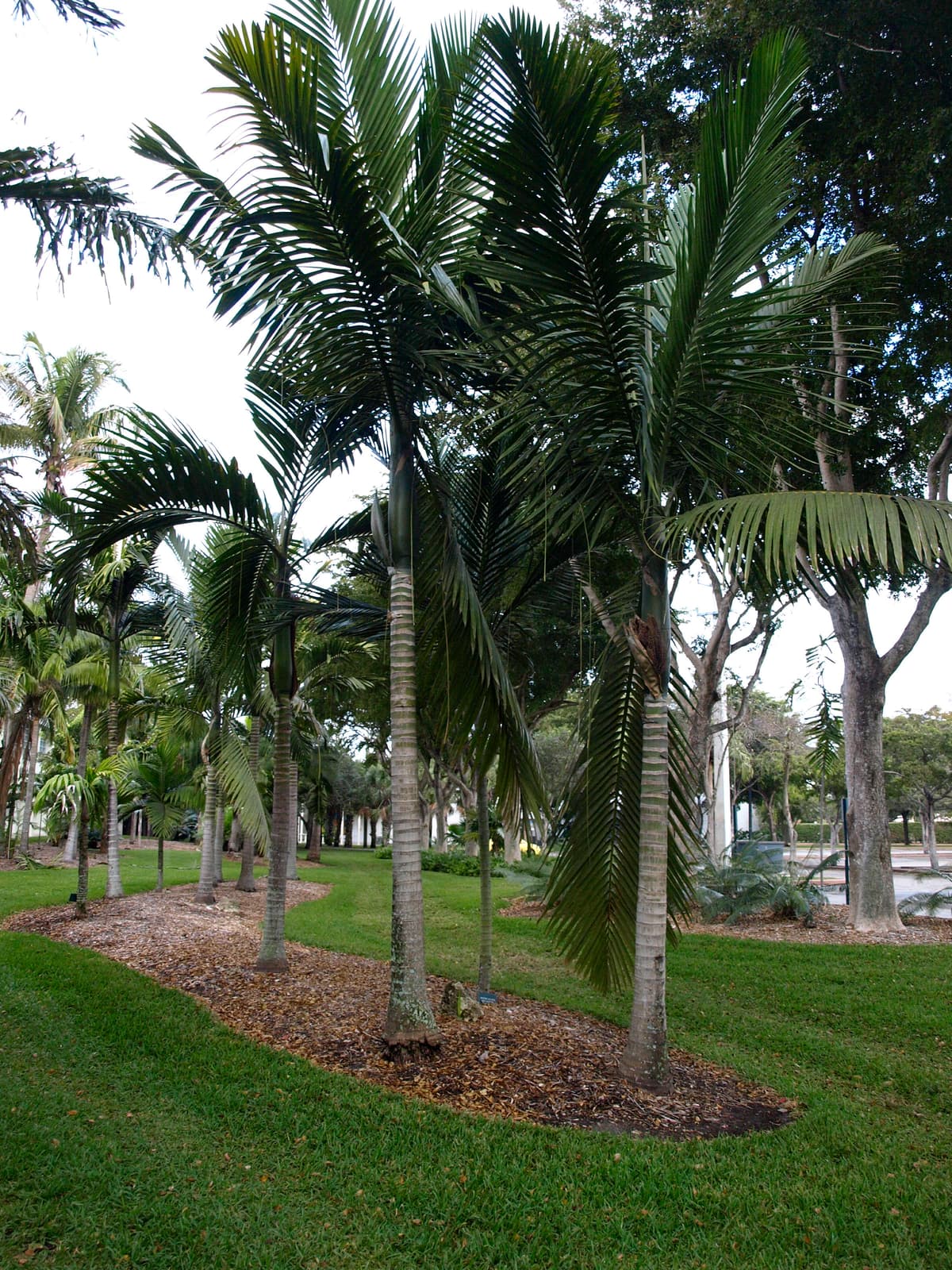
Botanical specimen of Kentiopsis Oliviformis.
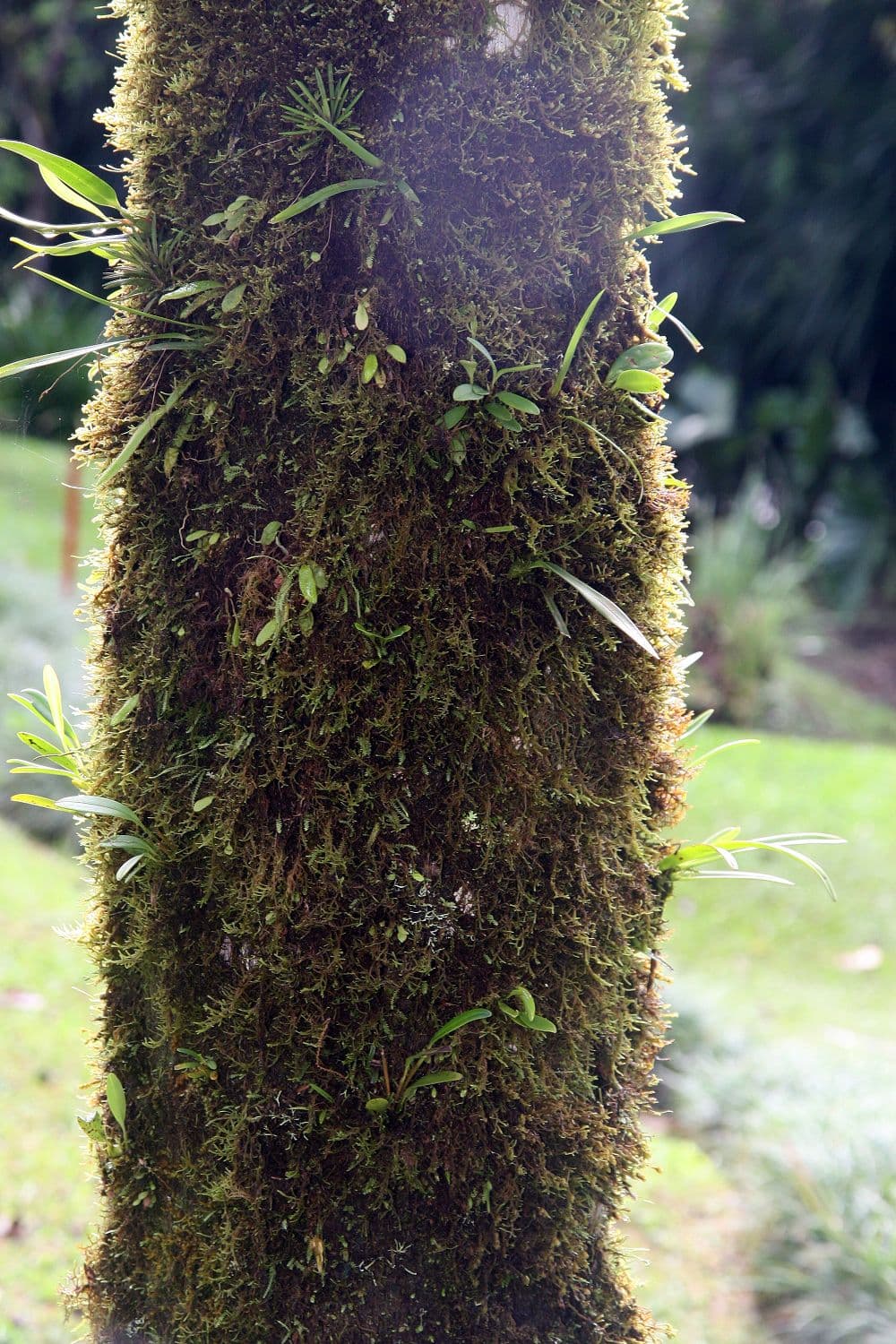
Botanical specimen of Kentiopsis Oliviformis.
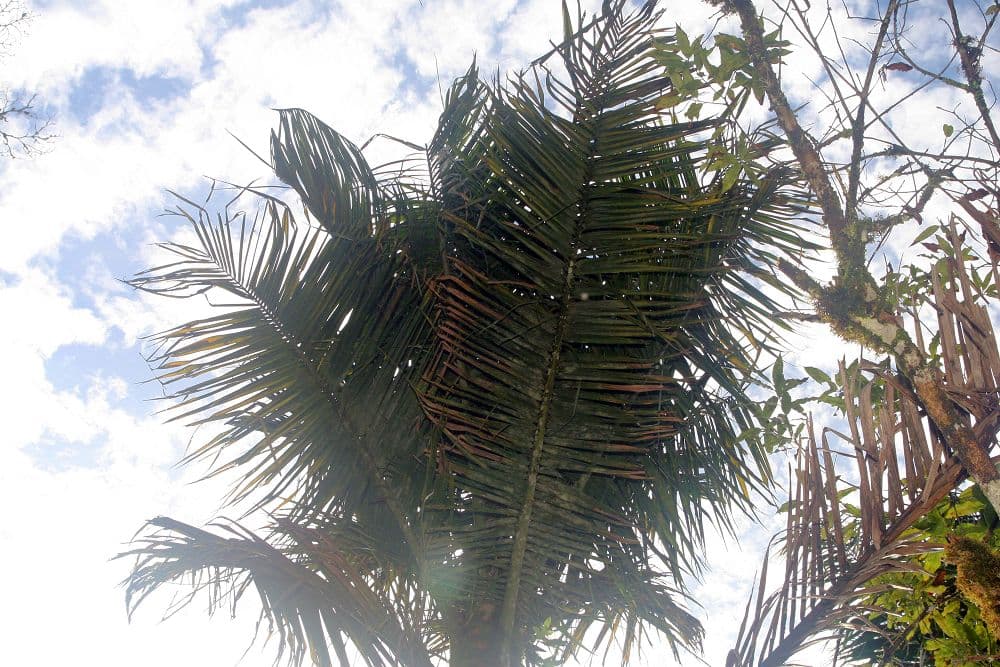
Botanical specimen of Kentiopsis Oliviformis.
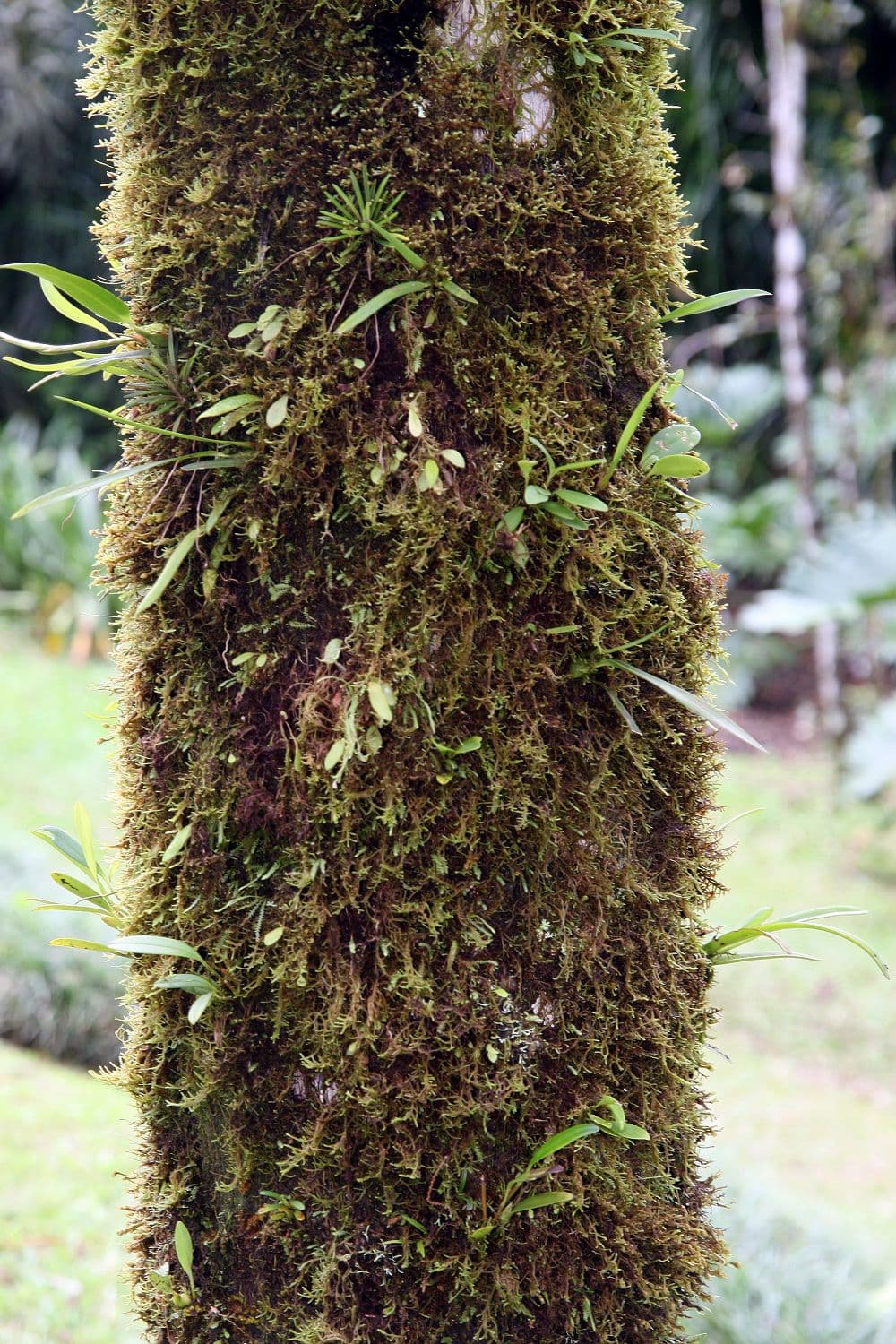
Botanical specimen of Kentiopsis Oliviformis.
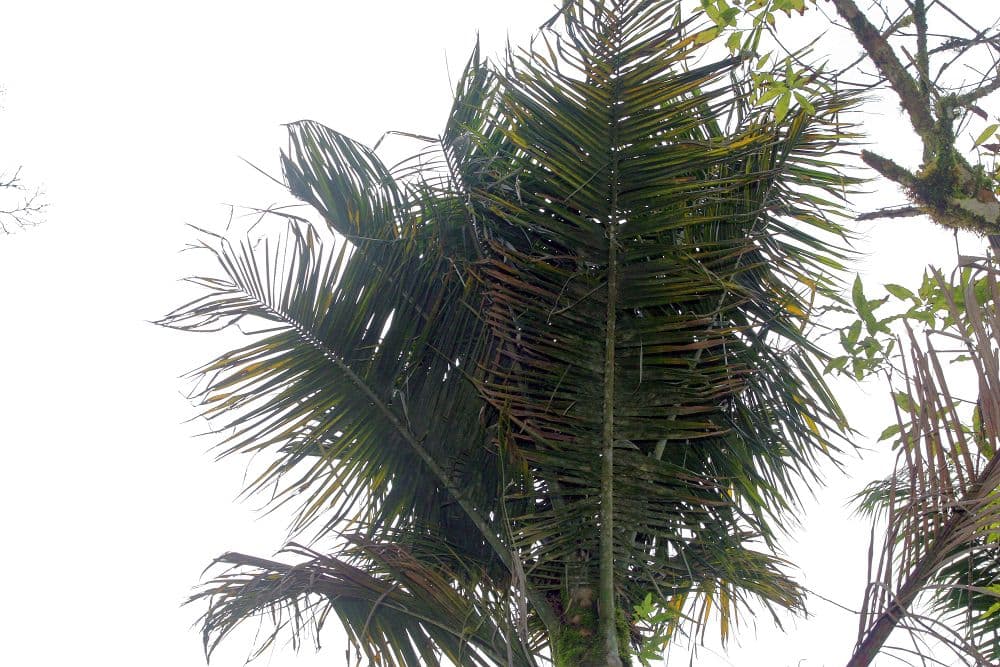
Botanical specimen of Kentiopsis Oliviformis.