White elephant palm
Kerriodoxa Elegans • White-backed palm • King Thai palm • Elephant palm • Praya Thalang • Chao Muang Thalang • Thang Lang Khao
White elephant palm in Motion
The Essence
"Kerriodoxa elegans is the only species in its genus, a solitary, dioecious fan palm endemic to peninsular Thailand. It was described by John Dransfield in 1983, in Principes 27(1): 4, more than half a century after it was first collected in the Khao Phra Thaew reserve on 11 March 1929. Genera Palmarum records it growing gregariously in the understorey of rather dry evergreen forest on hillslopes at roughly 100-300 m, at just two known localities. Its signature is the leaf: an almost circular fan about 2 m across with roughly 90 single-fold segments, divided only about a quarter to a third of the radius, glossy dark green above and covered beneath with dense white indumentum. Petioles reach 2 m and have hard, very sharp margins. Genera Palmarum describes the stem as very short; Monaco Nature Encyclopedia reports it reaching about 5 m tall and 20 cm in diameter. Male and female plants bear dissimilar inflorescences, the staminate branched to four orders, the pistillate to two orders only; the fruit is orange-yellow, covered in low pustules, with one or rarely two seeds. Genera Palmarum is blunt about how little is known: no local uses have been recorded, cytology is not studied, there is no fossil record, and "little is known of its natural history". Horticulture is the exception, and since its description the palm has become widespread in cultivation. The IUCN Red List assessment published in 2025 rates it Endangered; note that the English Wikipedia taxobox still displays an older "possibly extinct in the wild" label that conflicts with the current assessment."
Kerriodoxa combines doxa, "glory", with the name of Arthur Francis George Kerr (1877-1942), an Irish medical doctor who became a prolific collector of Thai plants - so, roughly, "Kerr's glory". The epithet elegans means "elegant".
First collected in the Khao Phra Thaew reserve on 11 March 1929, the palm waited until 1983 to be described by John Dransfield in Principes 27(1): 4, as both a new genus and a new species.
Natural Habitat
Understorey palm of rather dry evergreen forest, growing gregariously on hillslopes at about 100-300 m elevation, restricted to two known localities in peninsular Thailand, on the west coast of the peninsula.
Curated Specimens
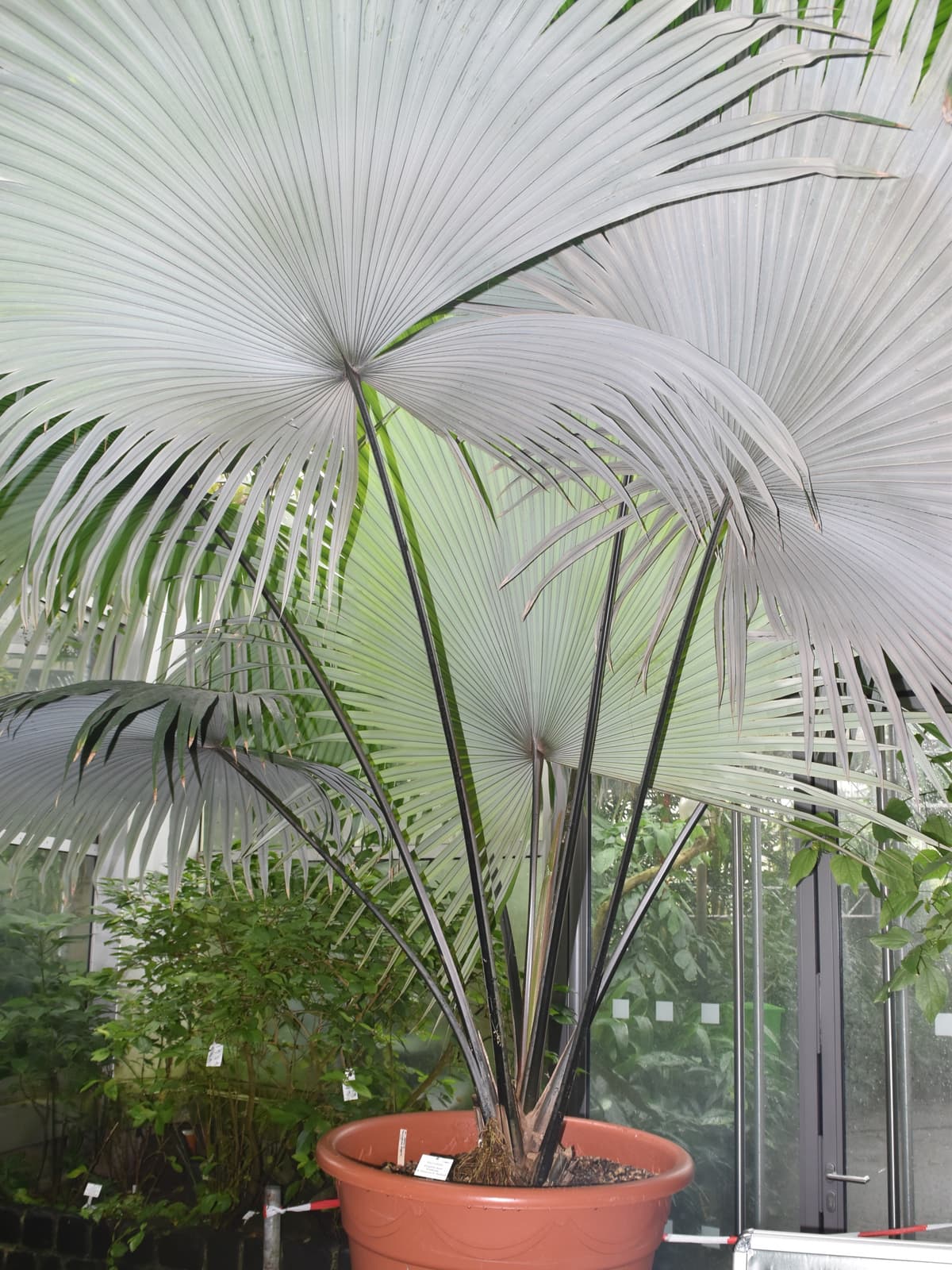
Botanical specimen of Kerriodoxa Elegans.
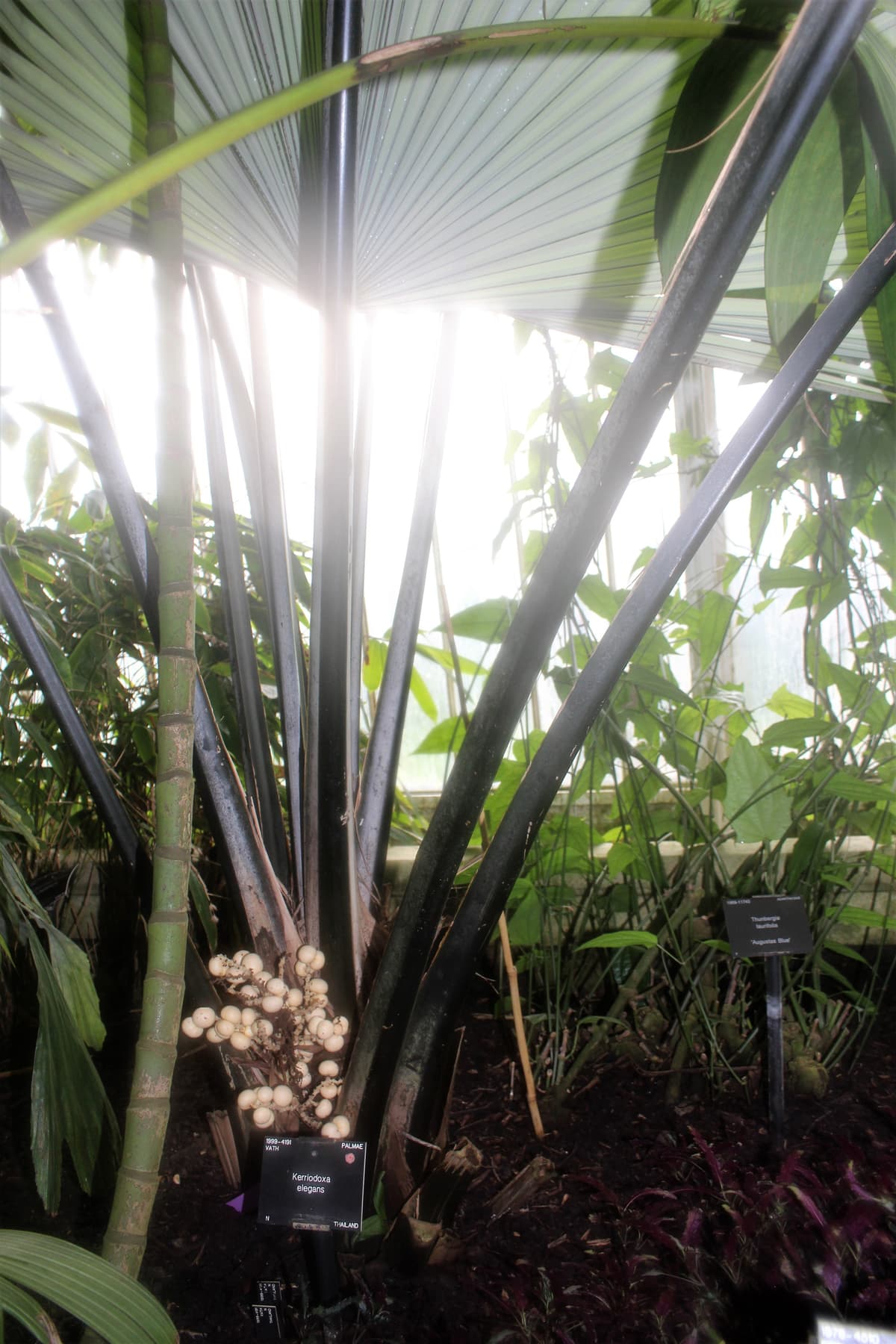
Botanical specimen of Kerriodoxa Elegans.
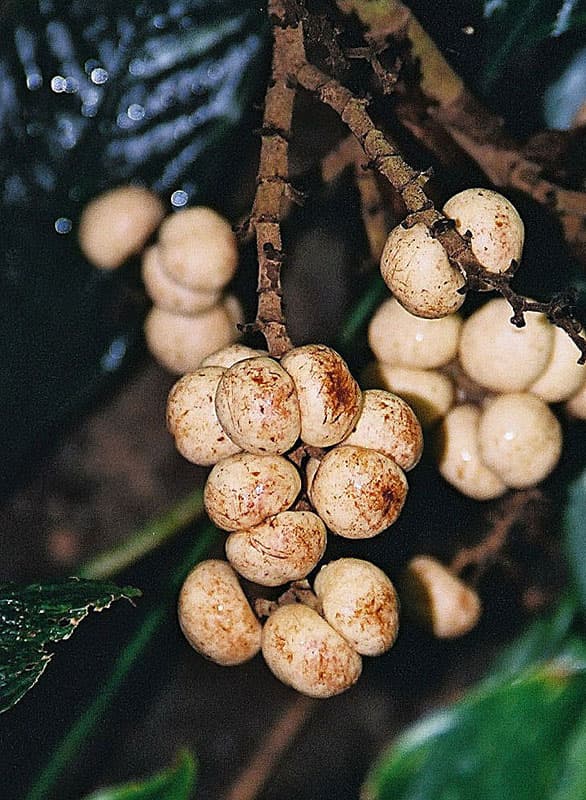
Botanical specimen of Kerriodoxa Elegans.
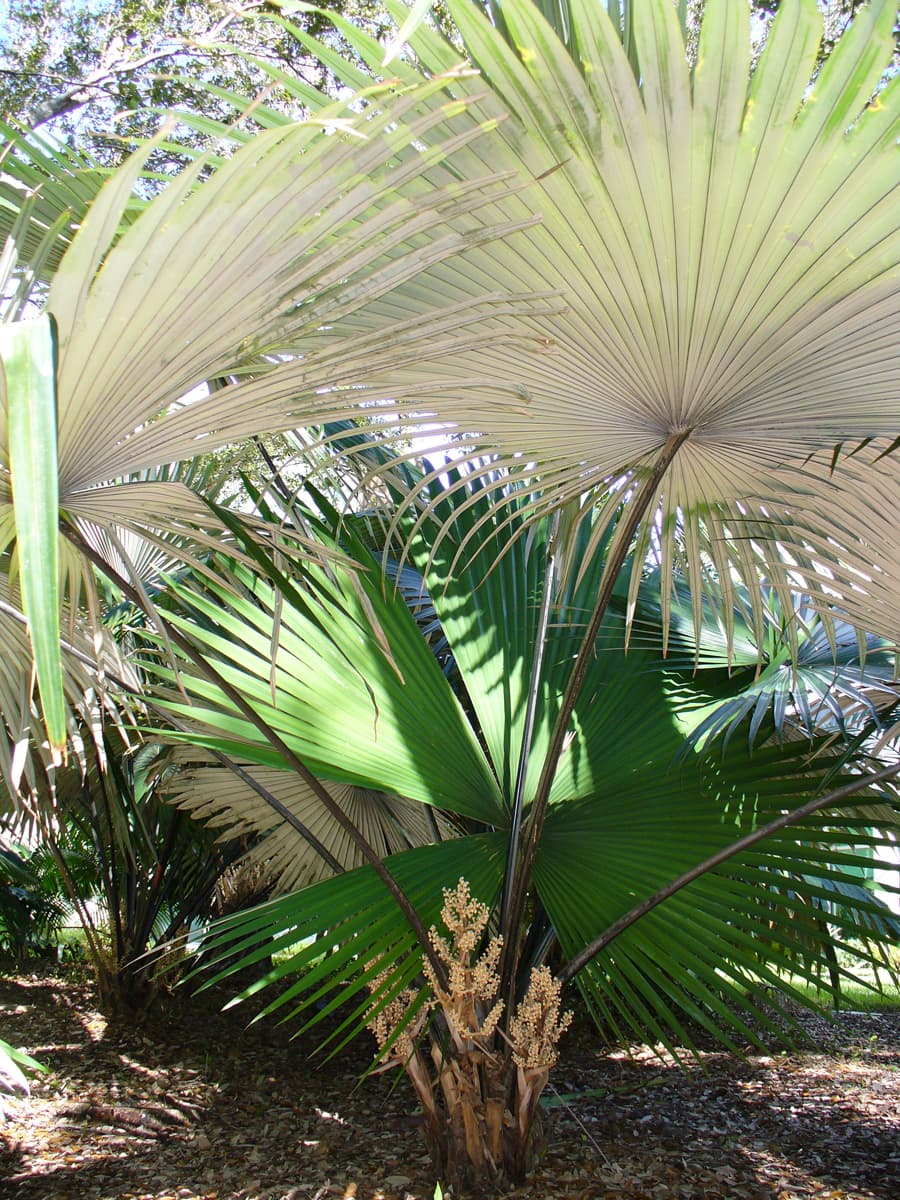
Botanical specimen of Kerriodoxa Elegans.
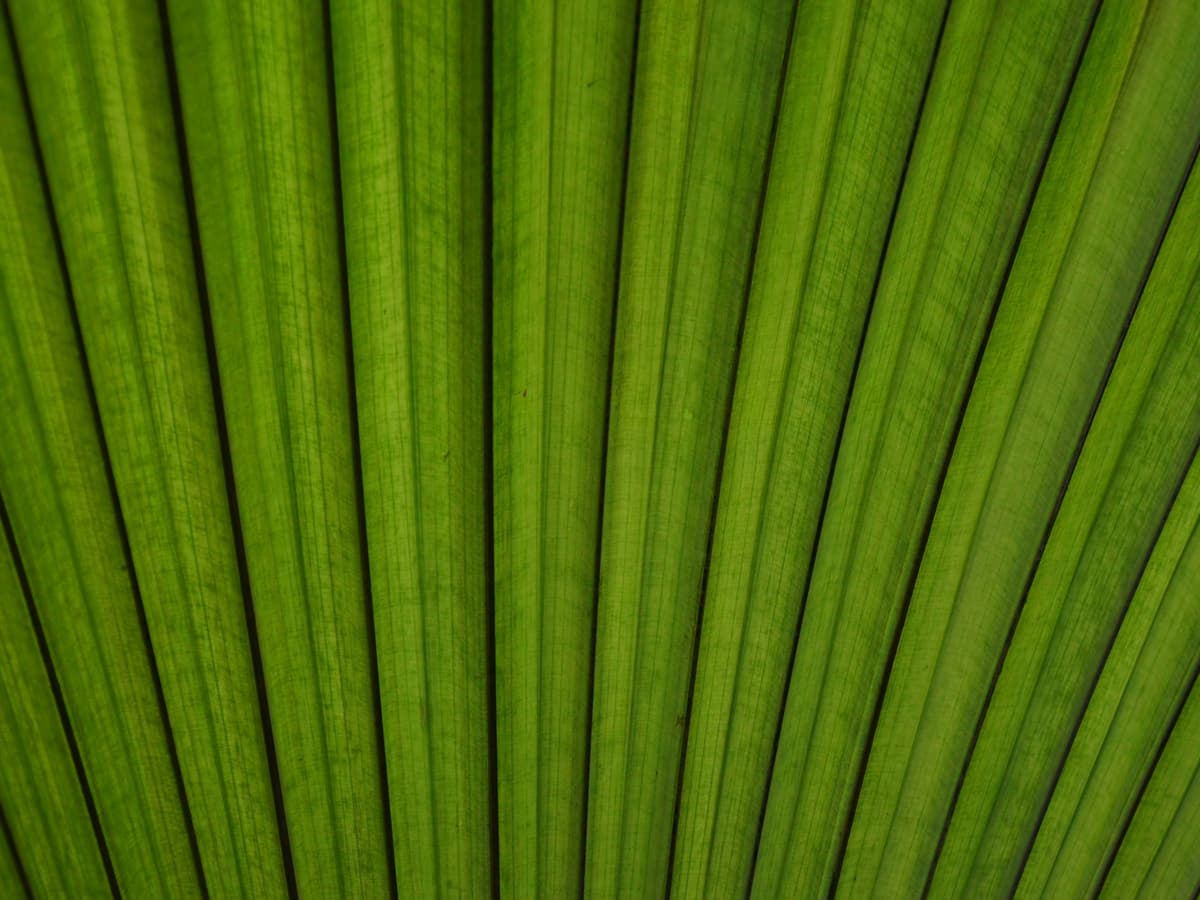
Botanical specimen of Kerriodoxa Elegans.