Red lemur palm
Lemurophoenix Halleuxii • Hovitra varimena
The Essence
"Lemurophoenix halleuxii is an immense pinnate palm endemic to northeast Madagascar, restricted to the Bay of Antongil area - the Masoala Peninsula, Mananara Avaratra and the Rantabe region - where it survives as three fragmented subpopulations of about 300 mature individuals in total. It was found only in the 1980s and described as an entirely new genus by John Dransfield in Kew Bulletin in 1991; Beentje and Dransfield later called it "probably the grandest palm of the whole island". A trunk to 20 m carries a greyish-pink crownshaft, leaves to 4.5 m with a crimson young rachis, and vast branched inflorescences whose bracts are bright crimson outside. The chestnut-brown fruit, about 50 mm across with skin cracked into low corky warts, is a type unique in Madagascar to this genus. Beneath mature trees the ground is carpeted with fallen endocarps while seedlings are very scarce, and Dransfield remarked that it is hard to imagine which extant Malagasy animal could disperse so large a diaspore. The IUCN assesses the species as Endangered, threatened by clearance for shifting agriculture and logging, and by trees being felled so that seed can be harvested for the international horticultural trade."
Genera Palmarum derives the genus name from Lemur, the Madagascan primate, plus phoenix, a general name for a palm, in reference to the Malagasy vernacular name hovitra varimena, the red lemur palm. The specific epithet halleuxii commemorates Halleux, though the sources consulted do not agree on his given name or his exact part in the discovery. John Dransfield published the genus in Kew Bulletin 46: 61 (1991) and the species on the following page, 46: 62, within an article running to page 68.
Described in 1991 from a discovery made in the 1980s, the palm puzzled its author: Dransfield could not place it in any existing subtribe of Areceae and deferred subtribal placement, suggesting a new monotypic subtribe might be needed. Genera Palmarum (2008), reproduced on Palmweb, later noted that the phylogeny with the greatest sampling of Dypsis places Lemurophoenix as sister to the rest of the Dypsidinae. Dransfield judged its horticultural potential very great indeed, comparing its stature to the Caribbean royal palm Roystonea oleracea but with the added pink-tinged grey crownshaft, and warned at the same time that annual export of large quantities of seed from the only known population would ultimately affect regeneration and endanger its survival. The genus is widely described as monotypic, and Genera Palmarum observed that seeds exported by merchants in the late 1990s hinted at a second species with smaller fruit lacking corky warts; POWO now accepts that second species, Lemurophoenix laevis, published in Palms 62: 70 (2018). Sources also disagree about the wild population: the IUCN/SSC Palm Specialist Group flagship page heads the species as Critically Endangered and mentions past felling of trees for edible palm hearts, and PACSOA reports a decline from about 30 mature individuals at discovery to somewhere in the low teens, mainly through cutting for firewood - neither figure matches the official 2012 Red List category or estimate. A 2012 Conservation Genetics study by Shapcott, Quinn, Rakotoarinivo and Dransfield surveyed all known populations of this palm and of Voanioala gerardii, found contrasting levels and patterns of genetic diversity between them, and called for changed seed-collection methods and the involvement of local villagers and land managers to prevent their extinction.
Natural Habitat
Lemurophoenix halleuxii grows on steep slopes and in deep narrow valleys in primary moist lowland forest, generally at 200-450 m above sea level and occasionally as high as 700 m; POWO classifies its climate as wet tropical. Dransfield's field account of the type locality - a valley below the ridge east of the village of Sahavary, at about 350-450 m - notes forest rich in many palm species with little peculiar about the habitat, yet the palm does not occur in similar valleys nearby. Dropping down from the ridge crest one becomes suddenly aware of immense palms in the canopy of the valley bottom, their huge greyish-pink crownshafts and vast fruit bunches standing out amidst the surrounding green.
Curated Specimens
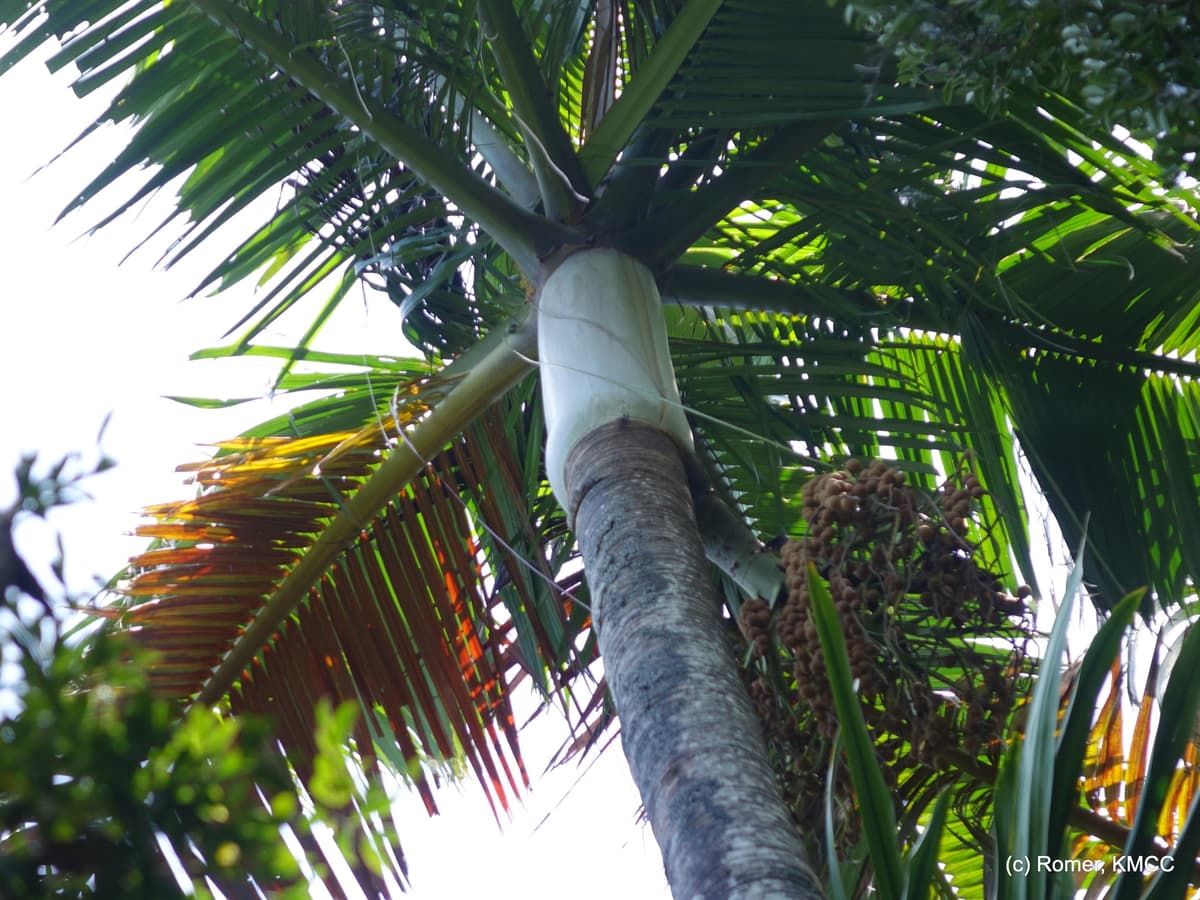
Botanical specimen of Lemurophoenix Halleuxii.
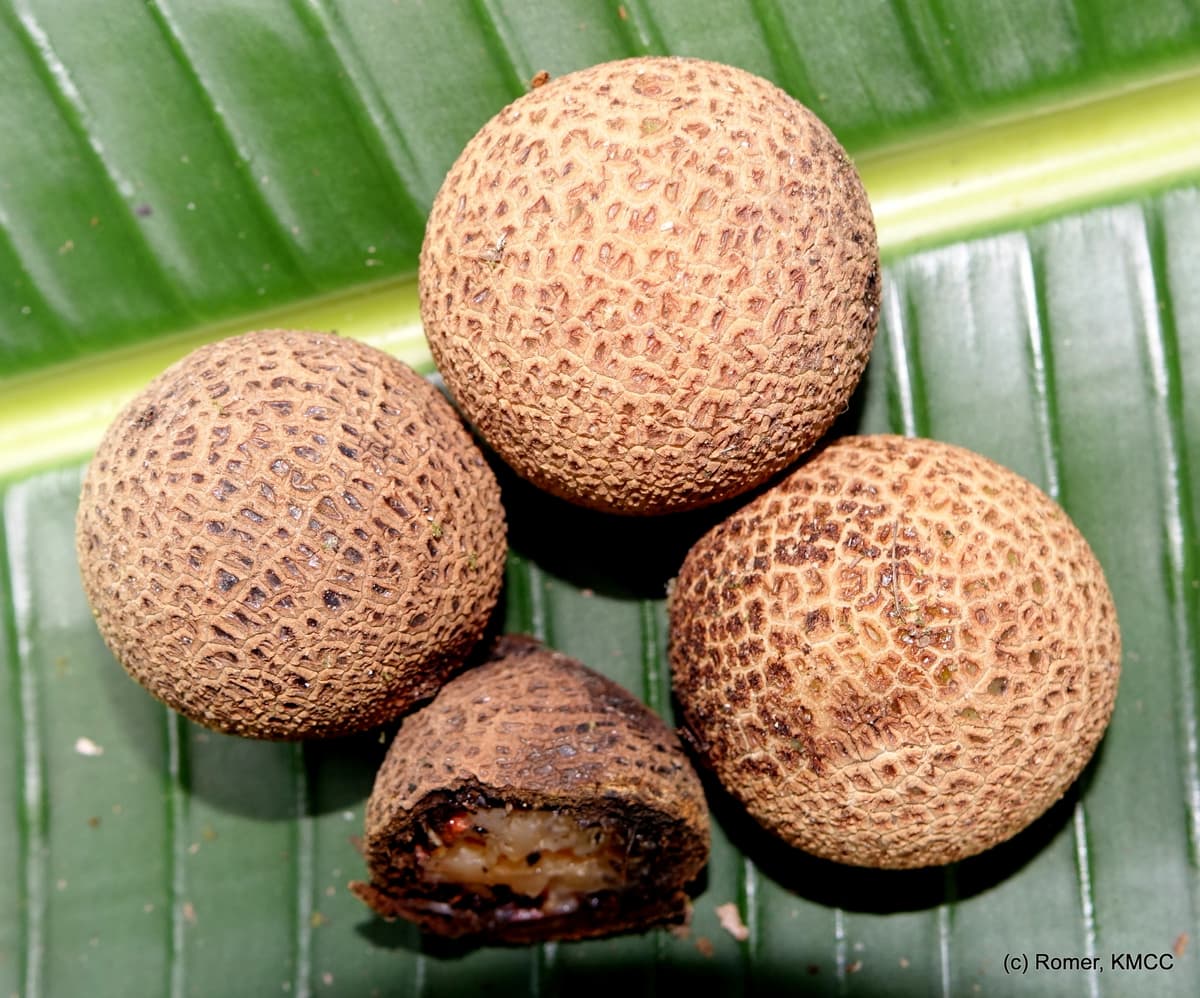
Botanical specimen of Lemurophoenix Halleuxii.
Sources & Conservation
Curated- Lemurophoenix halleuxii J.Dransf. | Plants of the World Online (POWO), Kew · accessed 2026-08
- Lemurophoenix halleuxii - Wikipedia · accessed 2026-08
- Lemurophoenix halleuxii - IUCN Red List of Threatened Species 2012: e.T38592A2880539 (Rakotoarinivo & Dransfield) · accessed 2026-08
- Lemurophoenix halleuxii - Palmpedia (includes the full Dransfield 1991 protologue description via Palmweb) · accessed 2026-08
- Lemurophoenix halleuxii - PACSOA Wiki · accessed 2026-08
- Lemurophoenix J.Dransf., Kew Bull. 46: 61 (1991) - PALMweb (Genera Palmarum genus account, etymology and relationships) · accessed 2026-08
- Lemurophoenix halleuxii - IUCN/SSC Palm Specialist Group flagship species page (J. Dransfield) · accessed 2026-08
- Shapcott, Quinn, Rakotoarinivo & Dransfield (2012), Contrasting patterns of genetic diversity between two endangered palms with overlapping distributions, Voanioala gerardii (Arecoideae) and Lemurophoenix halleuxii (Arecoideae), from North-east Madagascar - Conservation Genetics 13(5): 1393-1408 · accessed 2026-08
- Lemurophoenix laevis J.Dransf. & Marcus, Palms 62: 70 (2018) - Plants of the World Online · accessed 2026-08
- Lemurophoenix halleuxii - Red Lemur Palm - RarePalmSeeds (cultural requirements) · accessed 2026-08
- Lemurophoenix halleuxii - Floribunda Palms & Exotics · accessed 2026-08
- Lemurophoenix halleuxii J.Dransf. - GBIF taxon key 2732315 (verified via api.gbif.org) · accessed 2026-08