Ruffled fan palm
Licuala Grandis • Vanuatu fan palm • Ruffled fan leaf palm • Palas palm • Palas payung • Palmier-cuillere • Nokolo • Nondoobu • Te purauki
Ruffled fan palm in Motion
The Essence
"Licuala grandis is a small, solitary, slow-growing fan palm of the rainforest understory. Plants of the World Online gives its native range as the Santa Cruz Islands and Vanuatu, and NTBG describes it as native to lowland rainforests of the Solomon Islands and Vanuatu. Its reputation rests on one feature: an almost perfectly circular, undivided, regularly pleated leaf about 90 cm across, notched around the rim and carried on a long petiole armed with curved spines. An older account quoted by PIER likens the leaves to knife-pleated skirts or corrugated roofs. Despite that narrow native range it is widely grown as an ornamental. PIER records it as introduced or cultivated in the Cook Islands, Kosrae, Fiji, the Marquesas and Society Islands, Hawaii, the Marshall Islands, New Caledonia, Singapore and the Seychelles, and POWO records it as introduced in Malaya, the Society Islands and Trinidad-Tobago. That popularity has a cost: PIER gives it a weed risk assessment score of 6 (Evaluate), records it as widely naturalised on Taha'a, locally naturalised in a botanical garden on Tahiti, a potential invader on Raiatea, and a potential invasive on Majuro Atoll where it grows well even under other trees; NTBG likewise flags it as potentially invasive in French Polynesia. Growth is famously slow. One Palmpedia contributor reports that a curator at Fairchild Tropical Botanic Garden estimated the age of the 10 to 15 foot trunked specimens there at close to fifty years. NTBG lists its IUCN status as Not Evaluated while also noting that the palm has been declared rare; no IUCN Red List assessment could be confirmed for this species."
Monaco Nature Encyclopedia says the genus name Licuala derives from leko wala, the local name given to these palms in the Maluku Islands. The epithet grandis is the Latin adjective for big.
Published as Licuala grandis (T.Moore) H.Wendl. in Illustration Horticole 27: t. 412 (1880). POWO lists its homotypic synonym, the basionym, as Pritchardia grandis T.Moore in Gardeners' Chronicle, n.s., 1: 92 (1874). Some sources, including Wikipedia and PIER, cite the authority instead as (hort. ex W. Bull) H.Wendl. The GBIF backbone lists the name as accepted under usageKey 8008690.
Natural Habitat
Understory of primary and secondary tropical rainforest at low altitudes, in the wet tropical biome. Monaco Nature Encyclopedia records it in pluvial forest mainly along water streams; POWO classifies its lifeform as shrub or tree.
Curated Specimens
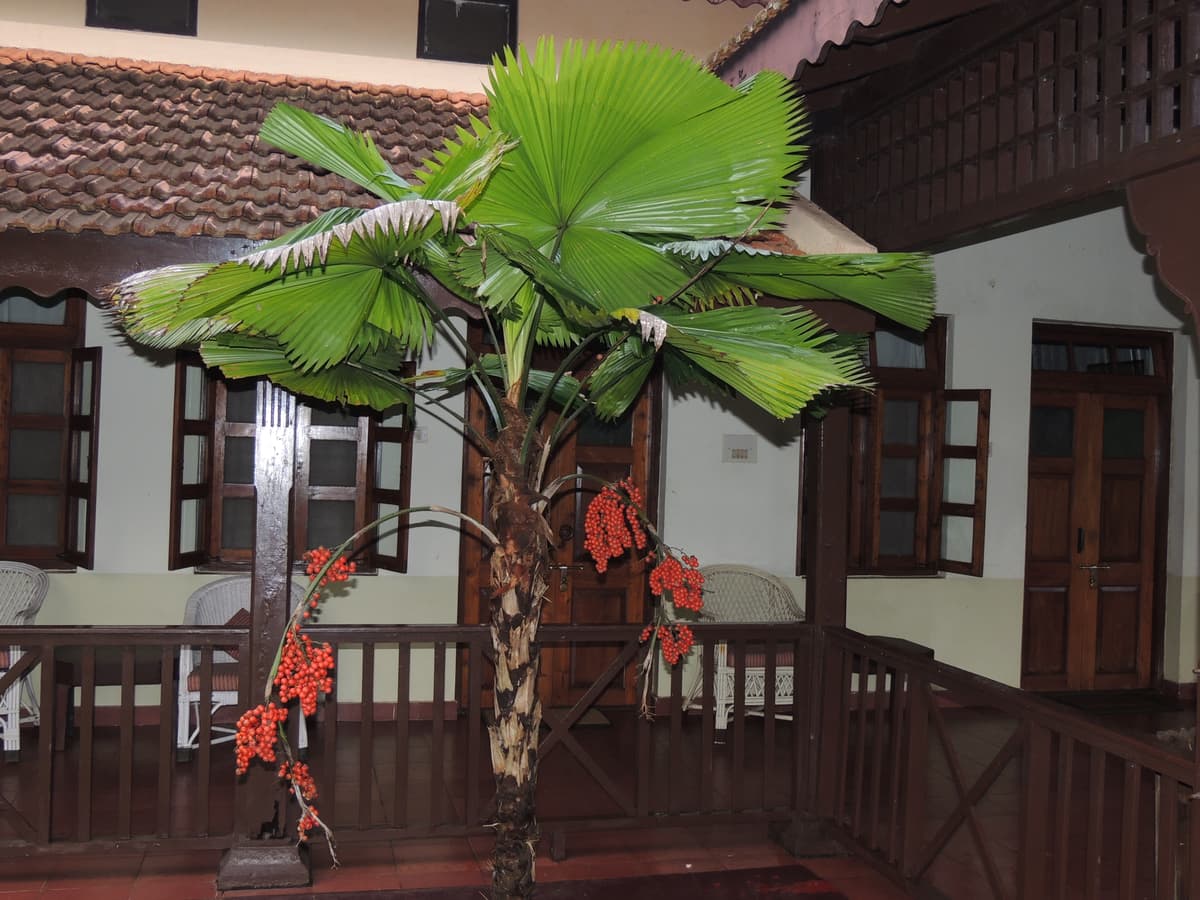
Botanical specimen of Licuala Grandis.
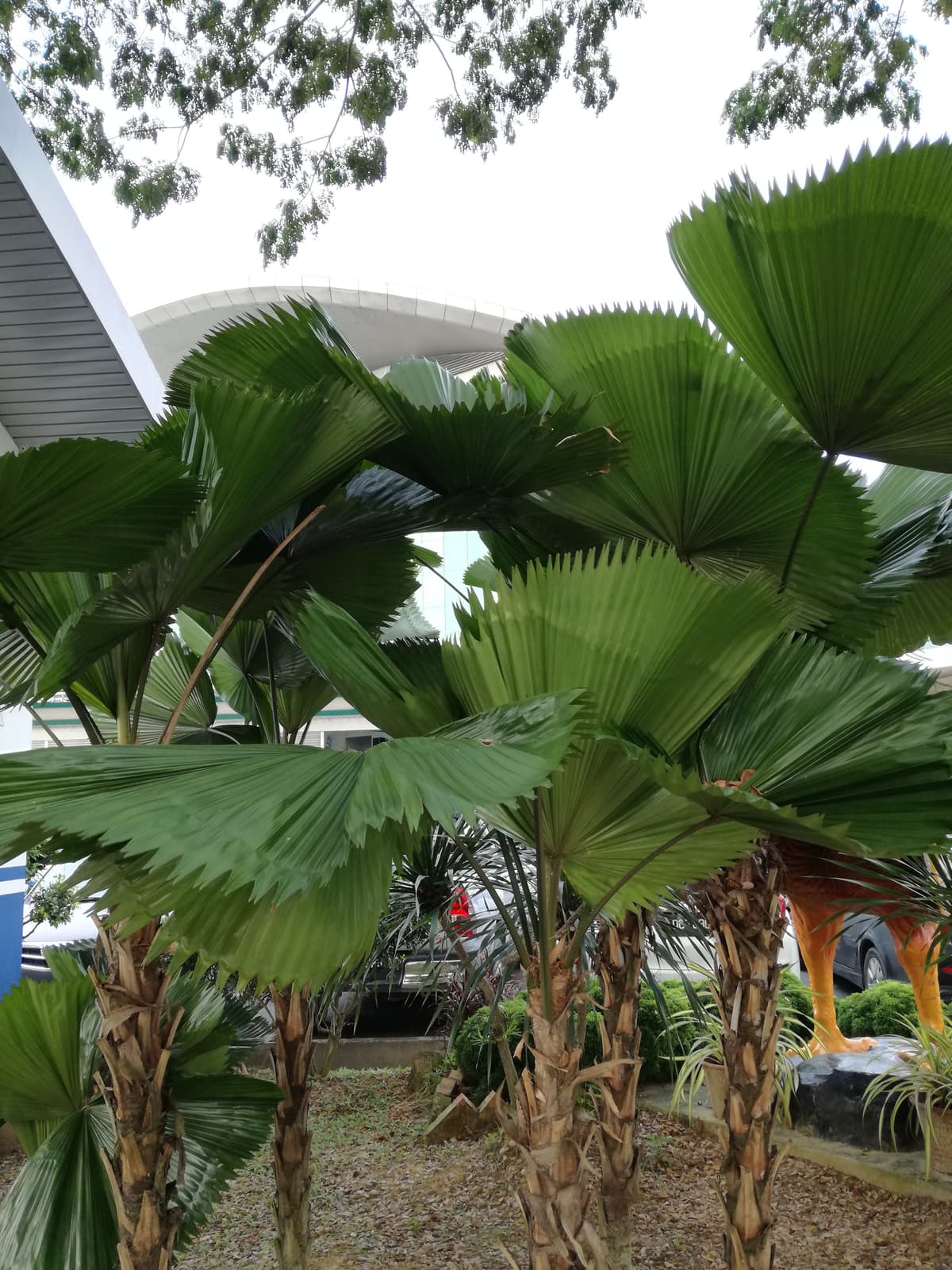
Botanical specimen of Licuala Grandis.
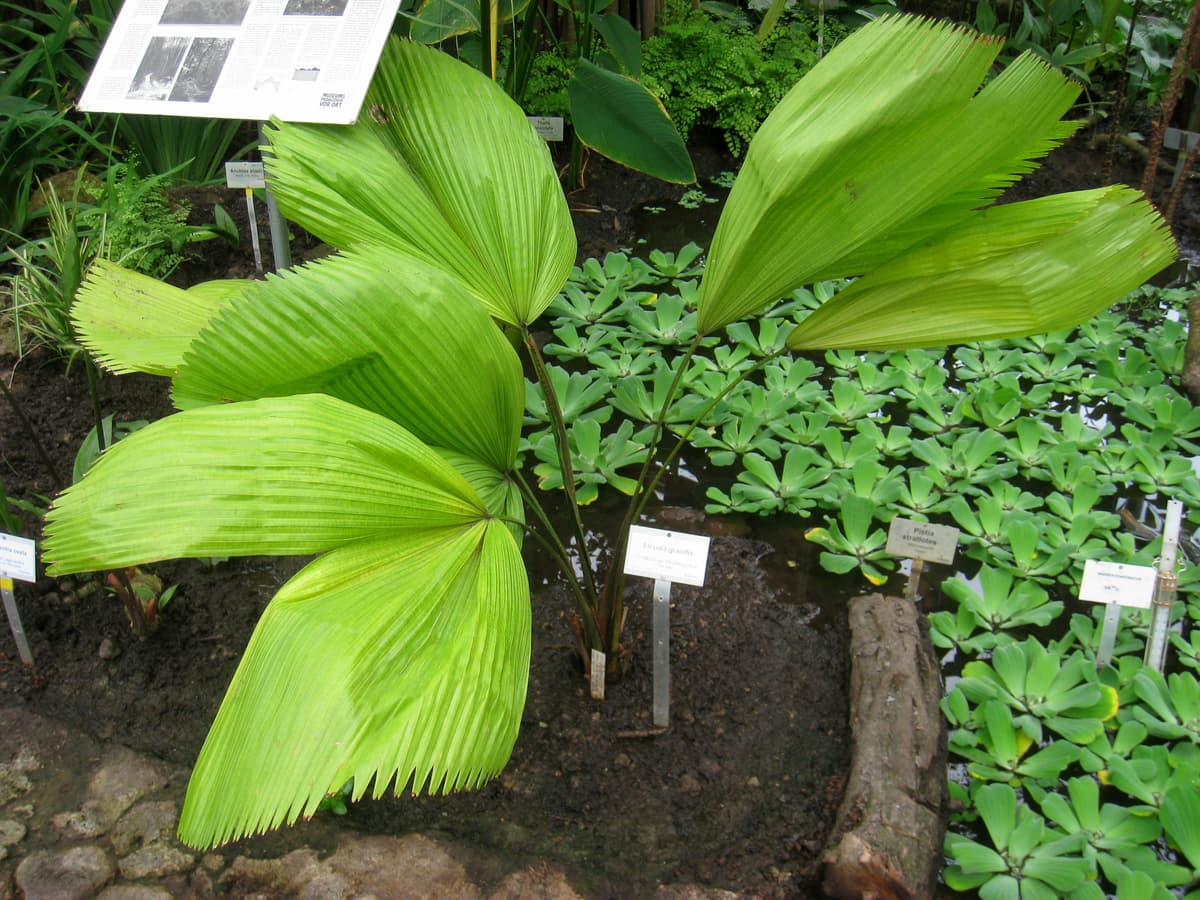
Botanical specimen of Licuala Grandis.
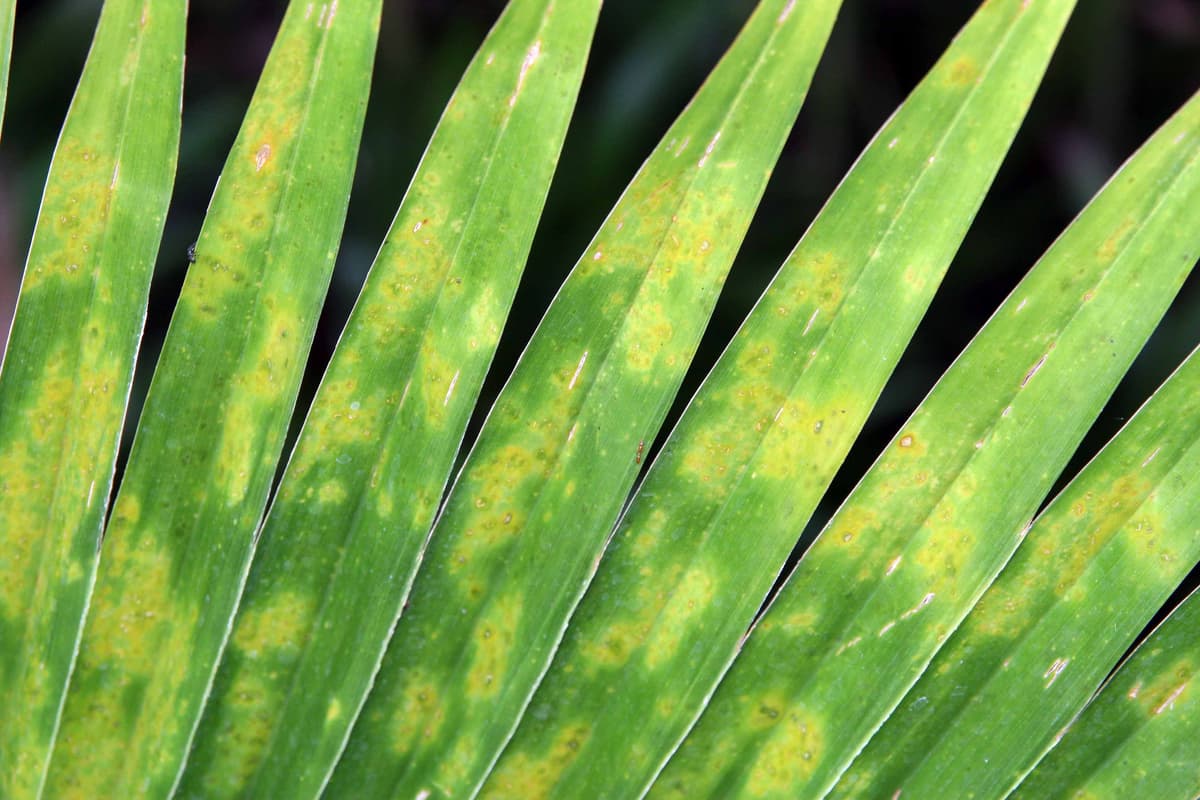
Botanical specimen of Licuala Grandis.
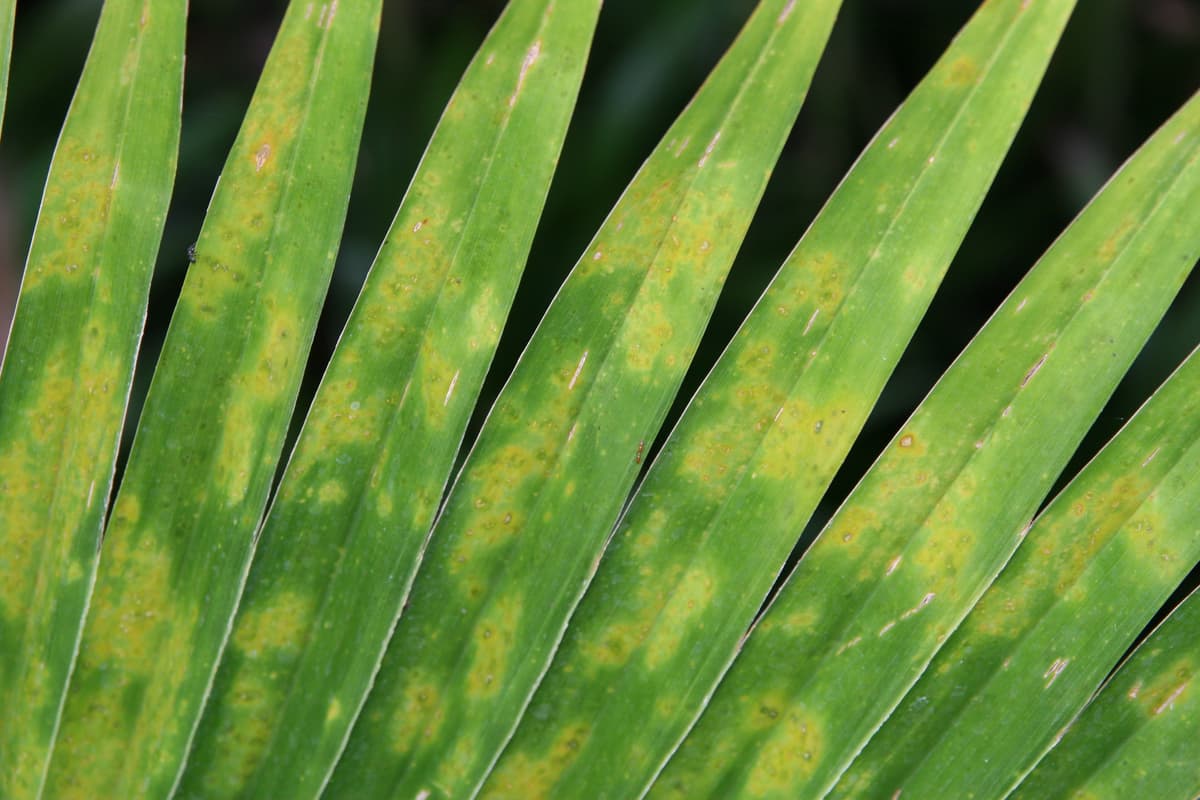
Botanical specimen of Licuala Grandis.
Biology & Morphology
"Solitary, slow-growing palm reaching about 3 m tall, with a thin erect stem 5-8 cm in diameter covered by the brown fibres of the old petiole bases, bearing a crown of twelve to twenty almost circular, undivided, plicate bright green leaves up to about 90 cm across, notched at the tips, on petioles up to 1 m long armed along the margins with curved thorns. The branched inflorescences emerge among the leaves, exceed 1 m in length, and carry hermaphroditic yellowish-white flowers about 5 mm long that ripen into globose reddish-orange to bright red fruits 0.8-1.2 cm in diameter, each containing a single seed."
Morphology
Multi-stemmed clumping architecture with slender, clustering canes exhibiting high tensile strength.
Adventitious root system spreading radially to maximize hydraulic intake in competitive soil matrices.
Distinctive solitary/clumping habit and dwarf stature providing a unique architectural profile.
Foliage
Vibrant green canopy featuring fan-shaped palmate leaves with deep costapalmate structure and rigid petiole attachments.
Specialized green tissues exhibiting slow metabolic expansion rates.
Reproduction
Complex inflorescence branching typical of the Licuala clade, exhibiting seasonal reproductive synchrony.
Nutrient-dense drupes encased in a fibrous pericarp, optimized for protection and dispersal.
Dormant embryonic tissues with high endosperm density, characteristic of resilient Licuala specimens.
Ecology
Active rhizosphere communication with mycorrhizal fungal networks, enhancing phosphorus and micronutrient uptake.
Interlocked with local entomological vectors, primarily Meliponini bees or specialized coleoptera.
Gravity-mediated and animal-vectored dispersal mechanisms ensuring regional genetic distribution.
Germination & Propagation
Germination Timeline
Hydration soak.
Incubation in moist media.
Sprout emergence.
Propagated by seed, sown in an aerated, draining organic loam kept humid; the first leaf is simple, plicate and toothed at the margin. Palmpedia, quoting Rare Palm Seeds, reports that the seed germinates readily and that the plant grows slowly but steadily in a tropical or warm subtropical garden, producing a slim trunk in the process. In the wild, PIER cites Meyer, Lavergne and Hodel (2008) suggesting the small fleshy fruits, about 1 cm in diameter, might be dispersed over long distances by frugivorous birds.
Cultivation & Care
Light
An understory plant that prefers partial shade or dappled sun when young. Older specimens tolerate more sun, and even full sun, where humidity is high; in the subtropics some shade remains necessary. NTBG stresses shade and protection, especially from wind, which will tear its large pleated fronds, and Monaco Nature Encyclopedia likewise advises a position sheltered from wind.
Water
Needs consistently moist soil and regular, abundant watering, particularly in climates with long dry periods. Indoors the soil should never be allowed to dry out. High ambient humidity is essential.
Soil
Fast-draining but fertile, organic-rich soil, acidic to slightly alkaline, kept constantly moist. Palmpedia recommends sandy soil amended with plenty of humus. It responds favourably to frequent light feeding, with Monaco Nature Encyclopedia suggesting a balanced water-soluble fertiliser with microelements at half the recommended dose, monthly from spring to autumn.
Frost-tender. Palmpedia lists cold hardiness zone 10b and advises planting only where temperatures do not fall below about 3 C, although it notes some plants are known to have survived -1.5 C, and a Palm Beach grower reports a specimen weathering 40 F easily. Chicago Botanic Garden gives zones 11-13 and states it will not withstand temperatures below 40 F. Monaco Nature Encyclopedia gives best daytime temperatures of 24-28 C with night lows not under 16 C, and notes it suits climates where temperatures below 10 C are exceptional and very short-lived.
Pests, Diseases & Care
Pests
Rhynchophorus ferrugineus (Red Palm Weevil)
CRITICALLethal internal boring; often undetected until crown collapse.
Acoustic monitoring and early-stage trunk infusion with fipronil.
Chrysomphalus aonidum (Florida Red Scale)
MODERATEYellow spotting and premature leaf drop in high-humidity zones.
Introduction of Aphytis holoxanthus (parasitic wasp).
Diseases
Thielaviopsis punctulata (Black Scorch)
HIGHBlackening and dwarfing of newly emerging fronds.
Wound protection and application of thiophanate-methyl.
Ganoderma zonatum (Butt Rot)
LETHALRadial wood decay and structural instability at the base.
No chemical cure; immediate isolation and removal.
Nutritional Deficiencies
Interveinal chlorosis (Younger fronds)
Chelated Fe-EDDHA Soil Pulse
Marginal chlorosis (Older fronds)
Mg-Sulfate (Kieserite) saturation
Frizzletop / Distorted spear
Systemic Mn-Sulfate application
Care Tips
Biosurveillance pulse synchronized for Asia regional vectors.
Apply prophylactic fungicidal drench in the nocturnal phase.
Improve canopy ventilation to disrupt fungal sporulation cycles.
Sources & Conservation
Curated- Licuala grandis (T.Moore) H.Wendl. | Plants of the World Online | Kew Science · accessed 2026-08
- Licuala grandis H.Wendl., Ill. Hort. 27: t. 412 (1880) | PALMweb · accessed 2026-08
- Licuala grandis - Pacific Island Ecosystems at Risk (PIER), HEAR / University of Hawaii · accessed 2026-08
- Licuala grandis - Tropical Plants Database, National Tropical Botanical Garden (NTBG) · accessed 2026-08
- Licuala grandis - Palmpedia, Palm Grower's Guide · accessed 2026-08
- Licuala grandis (fan licuala palm) - Chicago Botanic Garden Plant Finder · accessed 2026-08
- Licuala grandis - Wikipedia · accessed 2026-08
- Licuala grandis (T.Moore) H.Wendl. - GBIF Backbone Taxonomy (usageKey 8008690) · accessed 2026-08
- Licuala grandis - Monaco Nature Encyclopedia · accessed 2026-08