Parasol Palm
Licuala Orbicularis • Biris • Biru Bulat • Biru Balat • Biru Ruai • Berupat • Daun Nisang • Gereneh • Palmier Parasol
Parasol Palm in Motion
The Essence
"Licuala orbicularis is a trunkless fan palm endemic to Borneo, restricted to southwestern Sarawak in Malaysia. Its stem is thin and either underground or just emerging, so the plant reads as a cluster of leaves rising from the forest floor. Each leaf is a single undivided, almost circular, flat plicate blade — leathery, glossy deep green, with slightly wavy toothed margins. Reported dimensions differ between sources: Monaco Nature Encyclopedia gives a blade about 1 m broad carried on a thin petiole about 1.5 m long, the Useful Tropical Plants database gives leaves up to 75 cm across on petioles 40–75 cm long, and NParks describes the foliage as reaching up to 1.2 m tall. PACSOA sums the species up as "A small fan palm with entire leaves" and calls it "One of the most attractive of all palms. Much sought after by collectors, and expensive when found." Monaco Nature Encyclopedia likewise rates it among the most spectacular palms in absolute terms, while noting it is quite rare in cultivation because seeds are poorly available and its cultivation requirements are particular. Growth is slow, and RarePalmSeeds files it under "For Advanced" growers. It is sparsely documented in the wild: as of August 2026 GBIF held only 36 occurrence records worldwide, 29 of them from Malaysia. The leaves have practical uses — Useful Tropical Plants records them wrapping cooked rice and tobacco, thatching temporary structures, and going into "Langko" hats, while Monaco Nature Encyclopedia adds hats, umbrellas and other handicrafts, makeshift shelter from sun and rain, and floral arrangements. Both NParks and RarePalmSeeds record the leaves being cut as temporary umbrellas by local people, RarePalmSeeds adding that they are thrown away as soon as the rain stops. The palm is legally protected in Sarawak: the Forest Department Sarawak lists Licuala orbicularis, local name Biris, among the Protected Plants in the Second Schedule Part II of the Wild Life Protection Ordinance 1998, under which no person may collect, cultivate, cut, trim, remove, injure, sell, offer for sale, import, export or possess the plant or any part of it except in accordance with a licence, with penalties of a fine of RM10,000 and imprisonment for one year; native rural residents of traditional lifestyle who legitimately need to collect the forest produce for their own use may do so without a licence. NParks notes that the foliage looks similar to that of Licuala grandis, but that unlike L. grandis it has no trunk."
The genus name Licuala comes from "leko wala", the local name given to this genus of palms in the Molucca Islands, and the epithet orbicularis is the Latin adjective for "circular", referring to the shape of the leaf.
Odoardo Beccari described the species in Malesia 3: 83, dated 1886 by IPNI and GBIF, though PALMweb and Monaco Nature Encyclopedia cite 1889. It reached European horticulture under two other names, both now treated as synonyms: Pritchardia grandis H.J.Veitch (1885), which IPNI records from a Veitch nursery catalogue as "Catal. (1885) 54", and Licuala veitchii W.Watson ex Hook.f., figured in Curtis's Botanical Magazine (Bot. Mag. 115: t. 7053, 1889).
Natural Habitat
A rainforest understorey palm of mixed dipterocarp forest and kerangas forest — moist heath forest on acidic, sandy soils — growing in moist valleys and on hill slopes from 20 to 550 m elevation; Monaco Nature Encyclopedia gives sea level to about 500 m, and NParks records it from both primary and secondary rainforest.
Curated Specimens
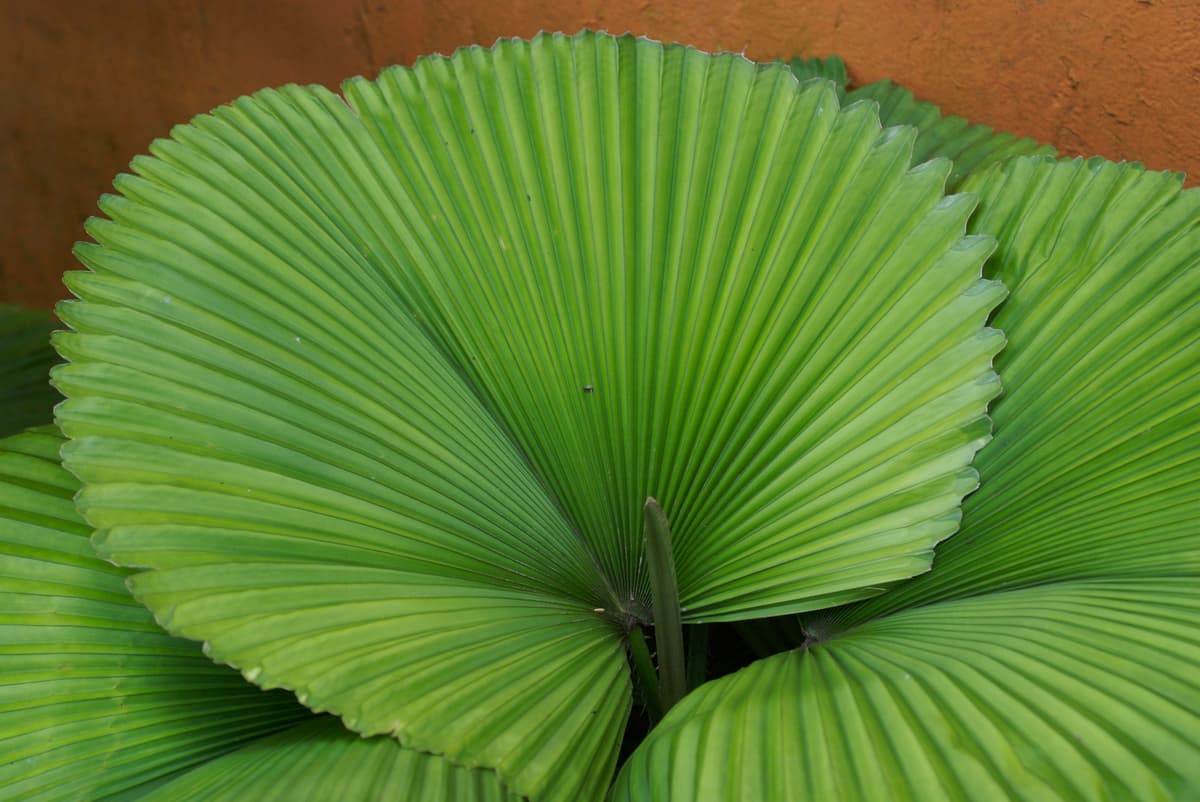
Botanical specimen of Licuala Orbicularis.
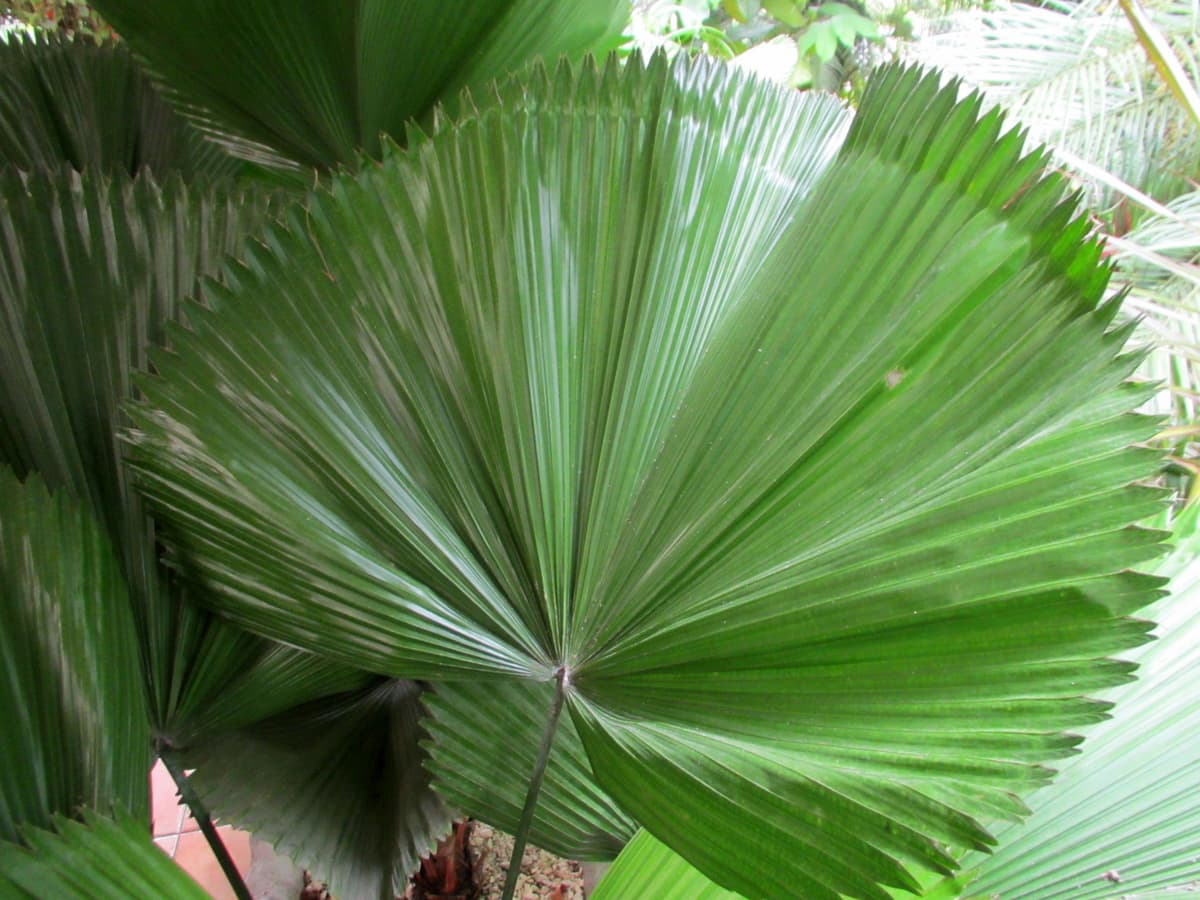
Botanical specimen of Licuala Orbicularis.
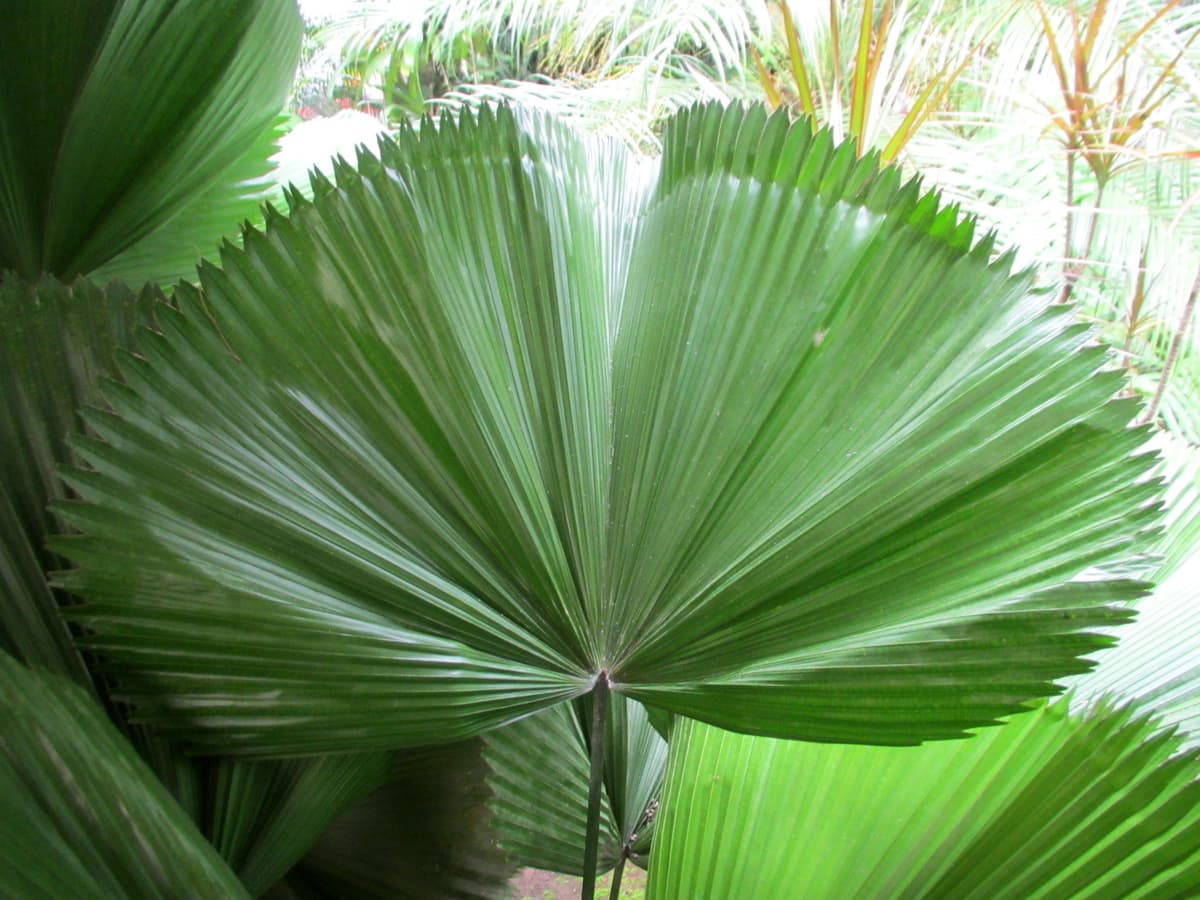
Botanical specimen of Licuala Orbicularis.
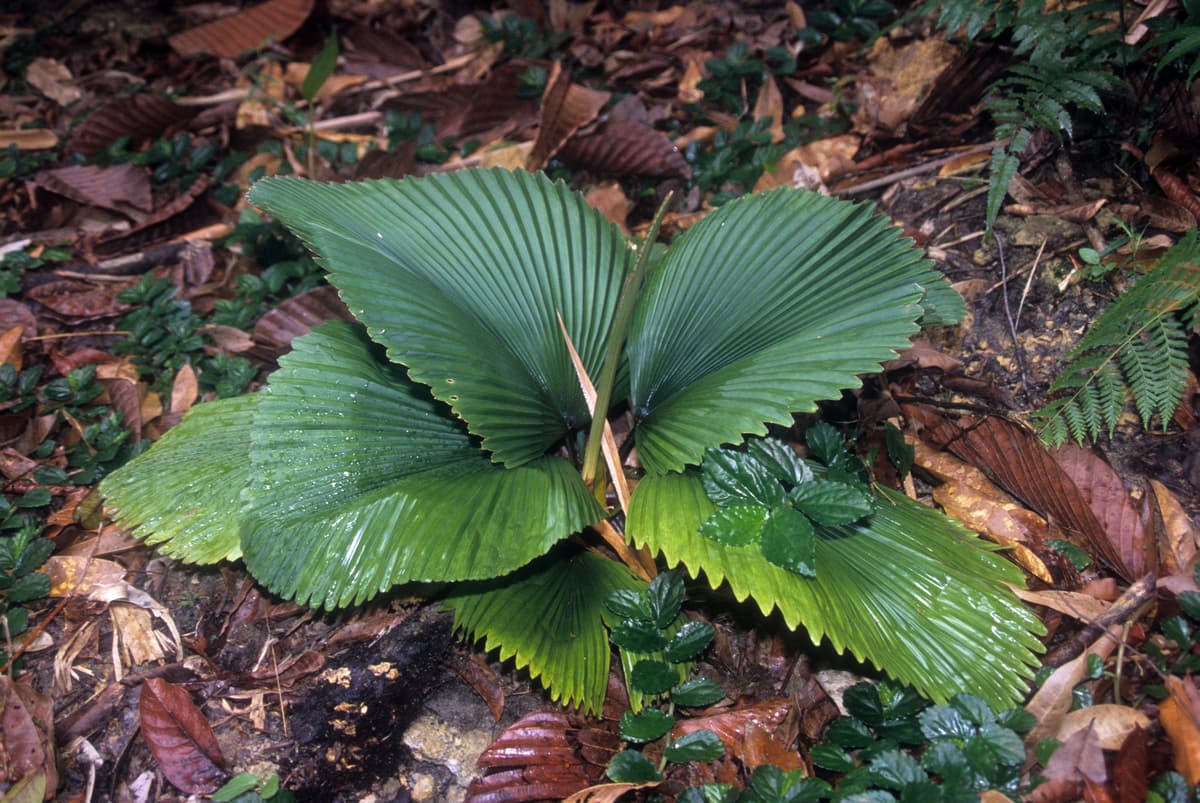
Botanical specimen of Licuala Orbicularis.
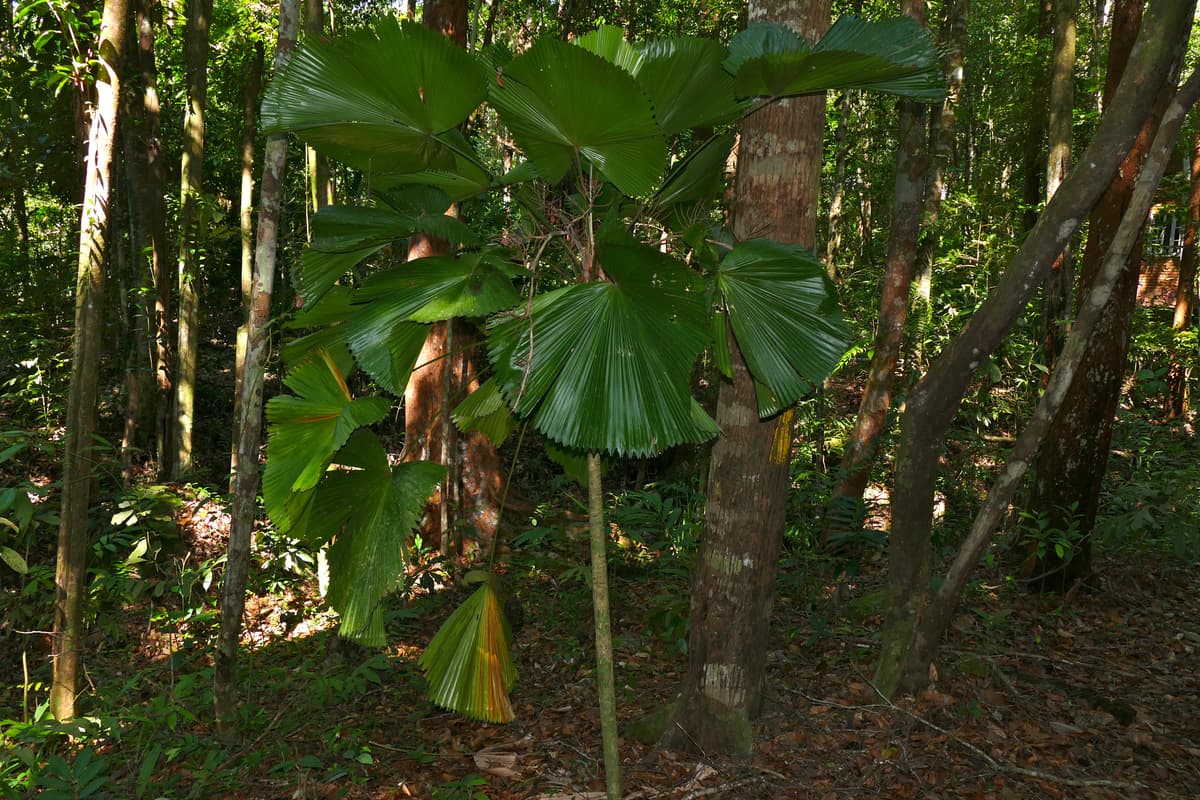
Botanical specimen of Licuala Orbicularis.