Mangrove fan palm
Licuala Spinosa • Spiny licuala • Palas • Pha'aw
Mangrove fan palm in Motion
The Essence
"Licuala spinosa is the most widespread species in a genus of about 134 palms whose members are mostly forest-undergrowth plants, many of them very local. It ranges from Bangladesh and Myanmar through Thailand, Cambodia, Vietnam and the Malay Peninsula to Borneo, Java, Sumatra and the Philippines, with the Andaman and Nicobar Islands at its western edge. Genera Palmarum places it in forest on the landward fringe of mangrove, and that setting shapes the plant: open, slightly swampy ground, lowland alluvial, peat and mangrove swamp forest, and beach forest, sometimes immediately behind the mangrove within the influence of salt water. It grows as a dense clump of slender stems - to about 5 m tall and only some 5-7 cm thick - each carrying a crown of about 15-17 costapalmate, near-circular leaves whose segments are all of similar size with squared-off ends, so the leaf reads as a broken circle. The petioles, up to 2 m long, are armed along their entire length with black triangular spines - hence the epithet spinosa, Latin for thorny, and the name spiny licuala. Erect to pendulous inflorescences 1.5-3 m long push above the crown, bearing bisexual cream to white flowers followed by small globose fruit, green when immature and orange to red when ripe. Rare Palm Seeds calls it one of the most robust species of Licuala, fast growing and - unlike most others in the genus - tolerant of full sun and considerable coastal exposure, though NParks rates its growth as slow. Its uses are unusually varied. In Singapore the young leaves wrap ketupat daun palas, eaten at Muslim festivals such as Hari Raya Aidilfitri, and young leaves are used more generally to wrap glutinous-rice foods; leaves are also made into hats, raincoats, roofing thatch, walking sticks and binding material. In Borneo the leaf's fireproof durability matters in preparing blowpipe dart poison: latex of Antiaris toxicaria is held on a folded, boat-shaped young leaf over a small flame for about a week. Young shoots are eaten raw or cooked - in Thailand with shrimp paste and chilli sauce - and the heart and terminal bud are prized as a vegetable in Cambodia. Medicinally, the bark of the trunk is used in combination with other plants against tuberculosis, and in Cambodian tradition the root serves as a febrifuge."
Licuala is a Latinization of leko wala, the vernacular name reportedly used for this species at Makassar in Sulawesi - so the whole genus is effectively named after the local name for Licuala spinosa (Genera Palmarum). Monaco Nature Encyclopedia instead attributes the name to the Moluccan Islands. The epithet spinosa is Latin for thorny, referring to the thorns on the margins of the petiole.
Described by Friedrich von Wurmb (1742-1781) in 1780, first published in Verh. Batav. Genootsch. Kunsten 2: 474. The accepted name absorbs several once-separate names, including Licuala horrida Blume, L. ramosa Blume, L. pilearia (Lour.) Blume and Corypha pilearia Lour. POWO records the species as introduced in Hawaii and Trinidad-Tobago and lists Hainan under 'recorded in error', although the older World Checklist of Arecaceae, still displayed on Palmweb, gave Hainan as present; NParks additionally records it as native to Singapore. Rare Palm Seeds offers a natural hybrid with Licuala poonsakii, described as coming from Thailand.
Natural Habitat
Wet tropical biome. Genera Palmarum records it in forest on the landward fringe of mangrove; Palmpedia adds open, slightly swampy ground, lowland alluvial forest, peat and mangrove swamp forest, beach forest and primary forest, describing a water-loving palm of coastal areas. Brown (1920) noted growth near the sea, sometimes immediately behind the mangrove within the influence of salt water, and sometimes on banks and in ravines near the sea; Henderson (2009) records lowland rain forest in low, wet places, and also savannahs, scrub forest and disturbed areas. The IUCN assessment summarises its habitat as forest and savanna.
Curated Specimens
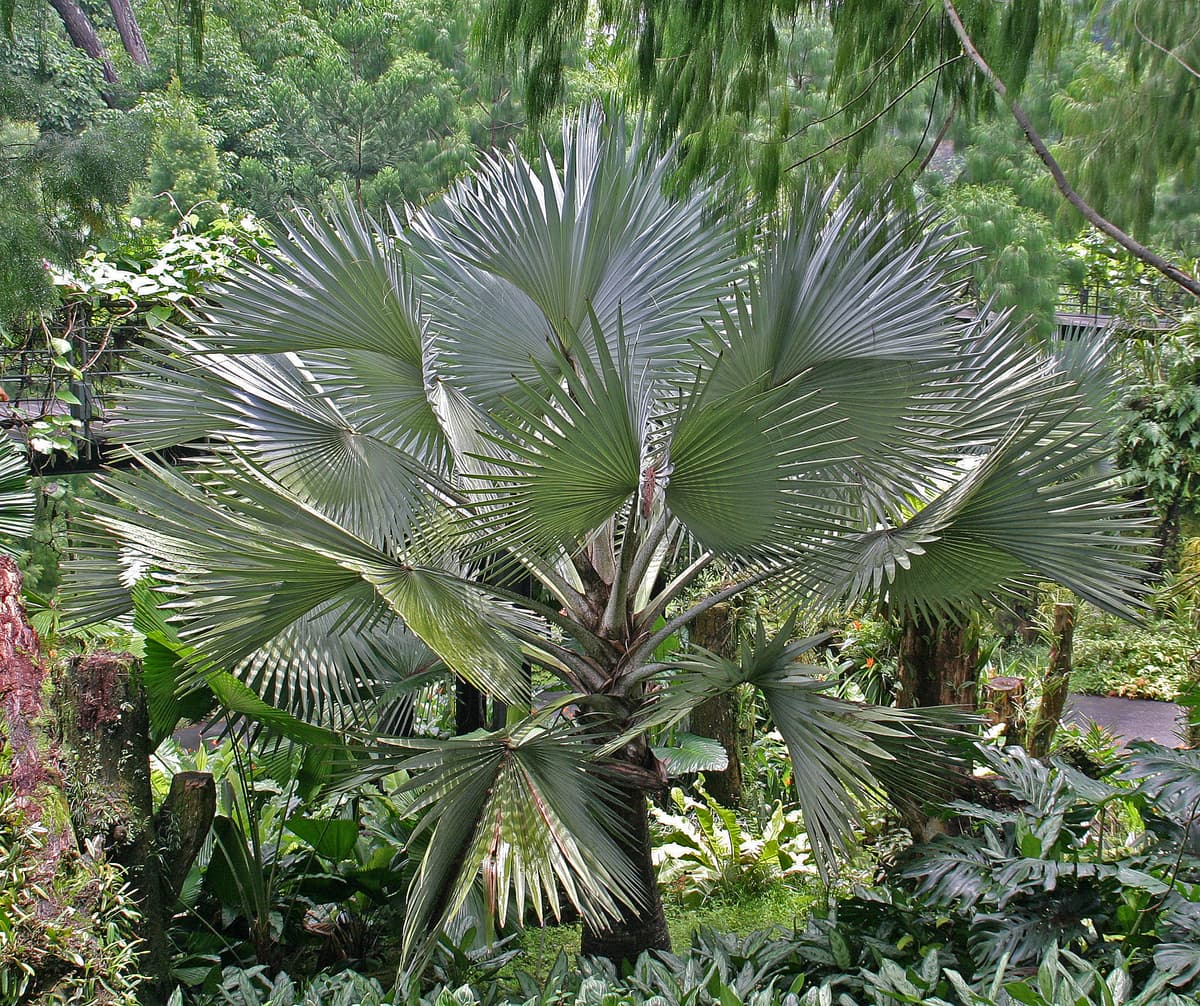
Botanical specimen of Licuala Spinosa.
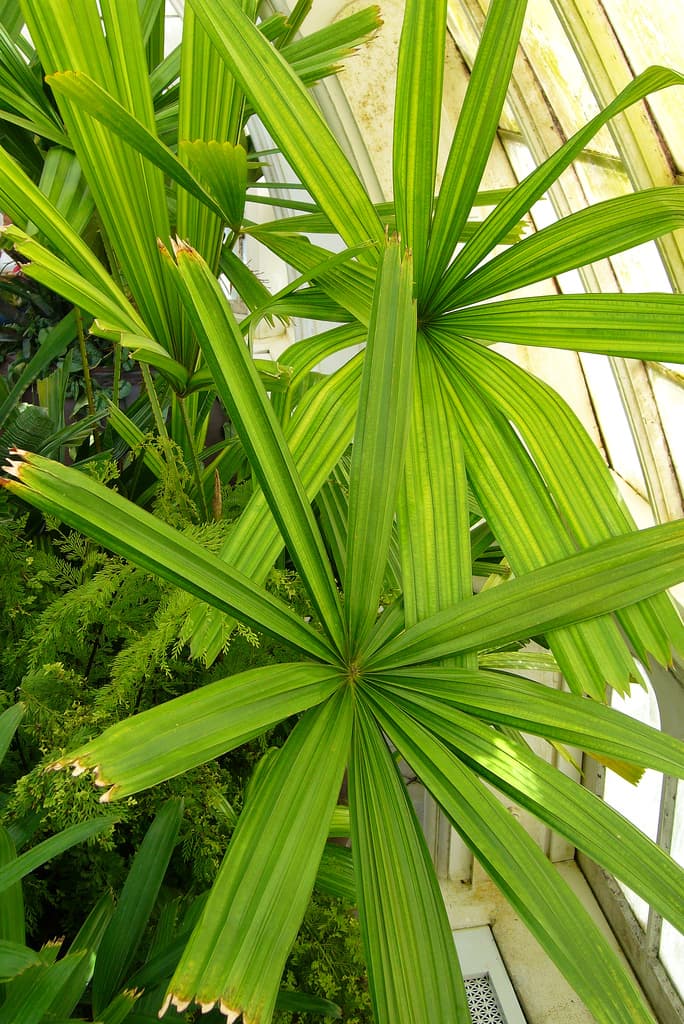
Botanical specimen of Licuala Spinosa.
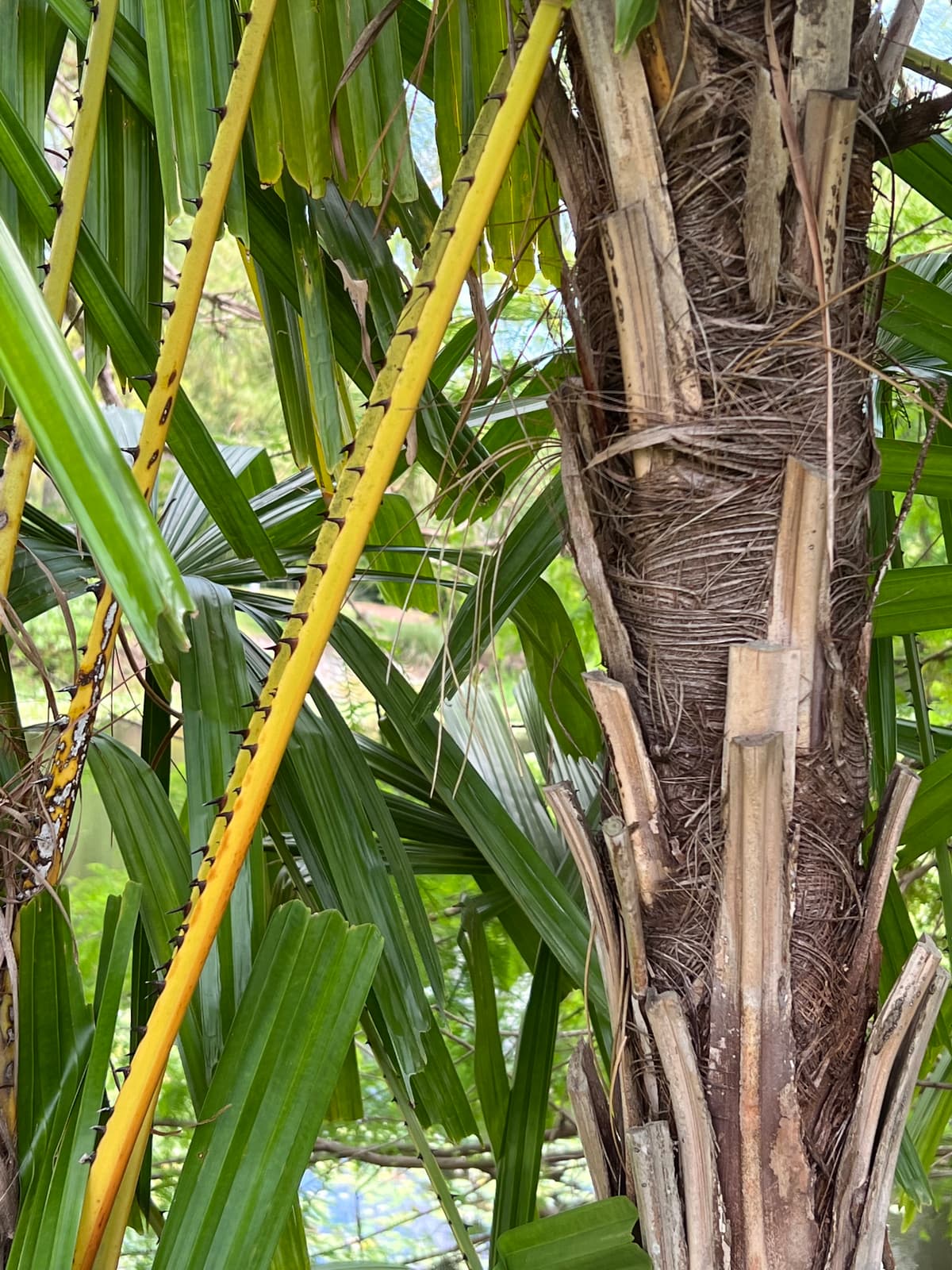
Botanical specimen of Licuala Spinosa.
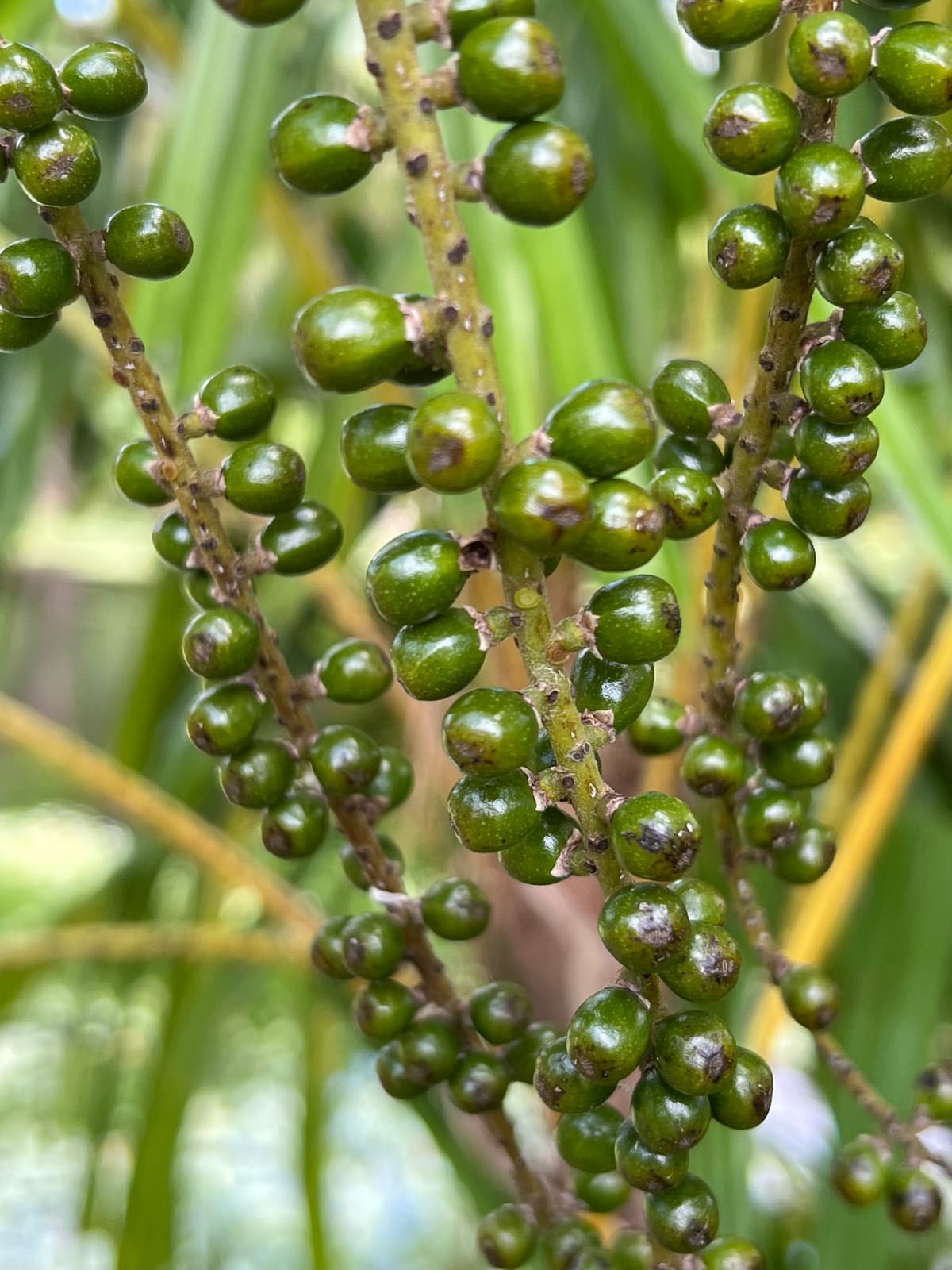
Botanical specimen of Licuala Spinosa.
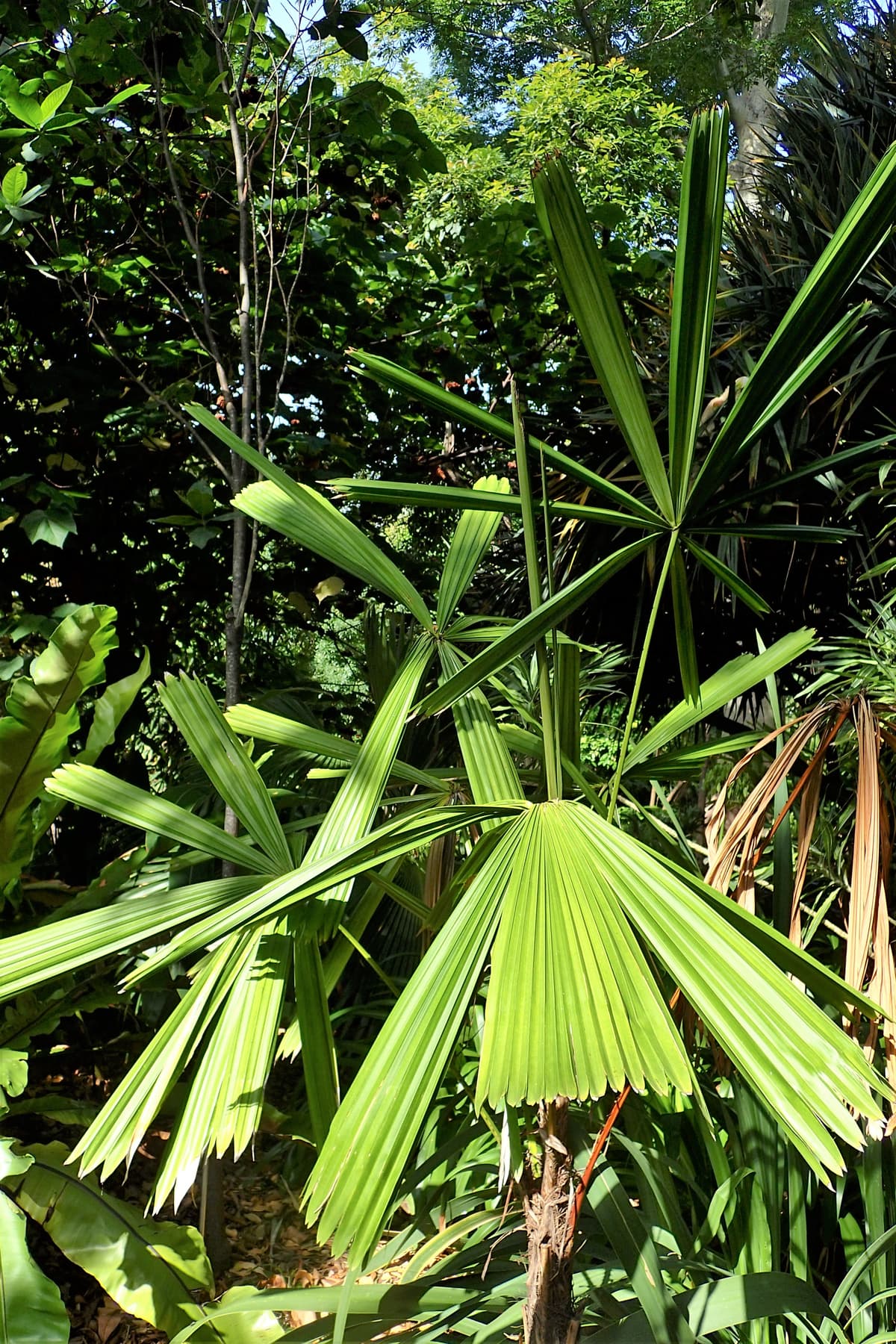
Botanical specimen of Licuala Spinosa.