Argun palm
Medemia Argun • Medemia palm • Nubian Desert palm
Argun palm in Motion
The Essence
"Medemia argun is the only species in its genus: a solitary-stemmed, dioecious desert fan palm of the Nubian Desert, occurring as scattered individuals and populations in southern Egypt and northern Sudan, and surviving only where its roots can reach groundwater. It is one of botany's great rediscovery stories, known to science first from fruits left in ancient Egyptian tombs, later thought possibly extinct, and found again in 1995 in small, fragmented populations that showed signs of regeneration. The IUCN assessment puts the global population at about 7,400 individuals in the mid-2000s, counted largely from satellite imagery, with more than 90% of them in northern Sudan; the area of occupancy is just 880 km2 within an extent of occurrence of 103,152 km2. Egypt's share is minute: 32 individuals were counted at Dungul Oasis in 2007, and only 23 there by 2013. A 2021 genome-wide marker study estimated 7,370 palms in Sudan and reported previously unknown dense stands, including a population in the north-western Sahara within Sudan. The species was assessed as Vulnerable under criterion B2ab(iii) on 19 October 2019 and published in the 2020 Red List. An earlier 1998 assessment had rated it Critically Endangered, which the current assessors describe as an overstatement of extinction risk caused by a lack of accurate population data; some sources still repeat that older category. The main threat is gold mining in northern Sudan, where long-standing artisanal digging has been joined since the 2000s by commercial concessions, causing large-scale excavation and tunnelling, the felling of palms for firewood and shelters, and pollution of groundwater with mercury and cyanide. Less frequent rainfall limits the recruitment of juveniles, and the assessors note that the palm will likely have to be up-listed to Endangered in due course. In Egypt it occurs within the Wadi Allaqi Biosphere Reserve, and in 2003 an ex situ experiment at the University of Aswan established 21 seedlings in the university's desert garden, some of which now fruit. For the Ababda and Bisharin Bedouin the leaves supply mats, cordage, camel harnesses and other everyday objects. The fruit is inedible fresh but becomes edible and somewhat sweet after storage in soil, with a flavour reported to resemble coconut, and the palm was cultivated for its fruit in ancient Egypt."
The genus name may derive from the Greek pronominal adjective medeis, medemia, meden, meaning "nobody", possibly a reference to the empty desert the palm inhabits. The species epithet argun is the vernacular name used by the Ababda and Bisharin Bedouin. The accepted name is Medemia argun (Mart.) Wurttemb. ex H.Wendl., first published in Bot. Zeitung (Berlin) 39: 93 (1881), when Hermann Wendland re-evaluated the borassoid palms and erected Medemia as a genus separate from Hyphaene; the "Wurttemb. ex" in the citation refers to Friedrich Paul Wilhelm von Wurttemberg, who found the living palm in 1837. The basionym is Hyphaene argun Mart. (1845); further synonyms are Areca passalacquae Kunth and Medemia abiadensis H.Wendl.
The fruits of this palm were known to science before the living plant. Giuseppe Passalacqua, an Italian fortune-seeker, found many of them among the offerings to the dead in ancient Egyptian tombs, and Karl Kunth described these tomb fruits as Areca passalacquae in 1826; the fruits came from tombs dating back to 2500 BC. The living palm was not found until 1837, at Wadi Delah in the Nubian Desert of northern Sudan, by Friedrich Paul Wilhelm von Wurttemberg and the botanist Theodor Kotschy, and Martius described it as Hyphaene argun in 1845. Unger made the link between the tomb fruits and the living palm in 1859. Observations dwindled through the 20th century, with sightings in Egypt in 1963 and 1964 followed by more than thirty years of silence, and by the end of the 1980s the species was thought possibly extinct. Fieldwork in 1995 and 1996 rediscovered it in northern Sudan at Wadi Delah and Wadi Shigrib, and shortly afterwards in Egypt at Dungul Oasis.
Natural Habitat
Confined to the desert and dry shrubland biome of the Nubian Desert, growing in wadis (dry creek beds) and oases where groundwater is within reach of its roots. The surrounding landscape is one of rocky mountains, sand dunes and hundreds of valleys carrying seasonal watercourses, with average annual rainfall around 75 mm. Conditions are extreme: rain may not fall for years, and summer temperatures can exceed 40 C.
Curated Specimens
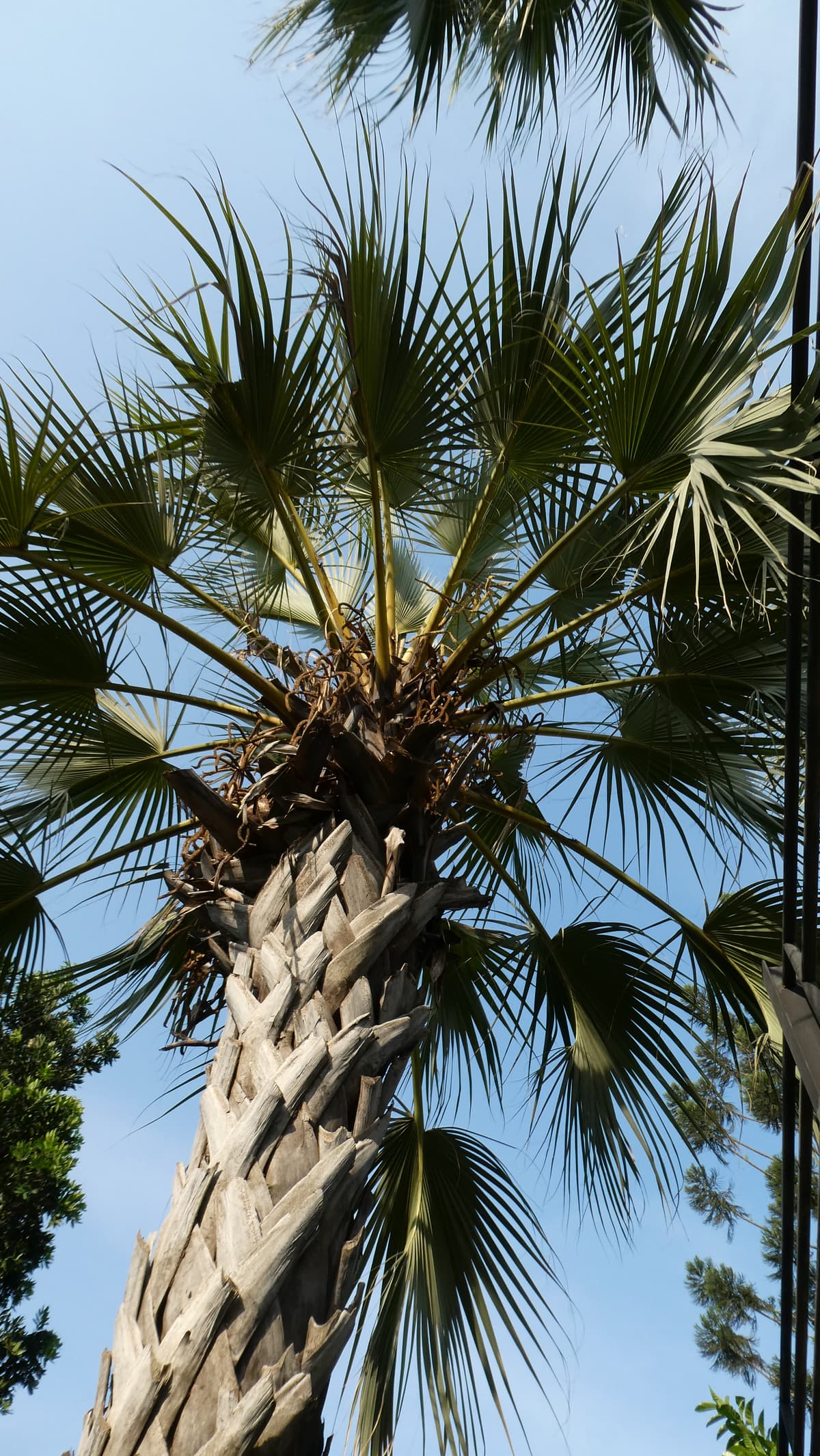
Botanical specimen of Medemia Argun.

Botanical specimen of Medemia Argun.

Botanical specimen of Medemia Argun.
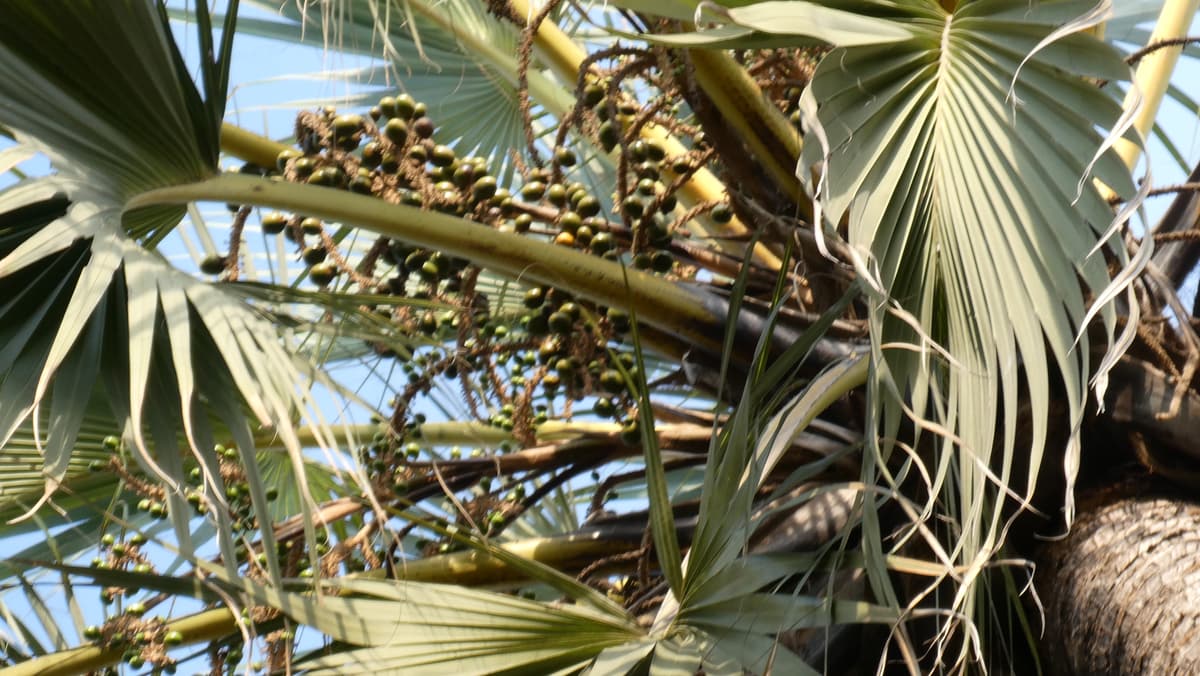
Botanical specimen of Medemia Argun.