Jatata Shadowpalm
Geonoma Deversa • Jatata • Palmiche • Ponilla • Chontilla de loma • Chontilla del monte • Chontillo • Palmeirinha • Ubim • Cajtafa • Omawe • Way-cochon • Man tasi
The Essence
"Geonoma deversa is the most wide-ranging species in its entire genus, running from Belize and Guatemala south to Brazil and Bolivia, and it is also one of the most economically important. It is not a horticultural palm: Nigel Smith calls it arguably the most commonly used palm in the genus for thatching dwellings. In Bolivia, jatata is the palm most used and most appreciated for roofing, its leaves woven into panels ("paños") of roughly 3 by 0.5 m; a conventional 3-metre panel recorded in Peru takes around 430 to 450 leaves. Reported roof life varies sharply by region and source - 10 to 15 years in Pando, Bolivia, 15 to 20 years elsewhere in Bolivia and over 30 years in one account, against only 3 to 5 years in French Guiana and 1 to 4 years in Colombia where leaves are smoked before use as a conservation measure. The leaves are repeatedly noted as more fire-resistant than other palm thatch. Palmweb's use records document thatching by the Matsigenka in Peru, the Shuar and Huaorani in Ecuador, and Yuracare/Trinitario, Tsimane/Mosetene, Tacana, Ese Ejja and Mestizo peoples in Bolivia, along with combs and improvised hunting spears made from the stem, roots used as brooms, and fruits chewed against bad coughs; the whole palm is burned, the ashes boiled and filtered, to obtain a salt. Four subspecies are accepted - deversa, belizensis, peninsularis of the Osa Peninsula, and quadriflora of the northwest Amazon, distinguished by quadricussate rather than tricussate flower pits. Despite the vast range, Henderson found it variable but not as much as that range would suggest, and delimited the subspecies statistically: Belize and Guatemala material differs from other Central American specimens in 14 measured variables, Osa Peninsula material in 12."
The genus Geonoma was published by Carl Ludwig Willdenow in 1805, in Species Plantarum edition 4, volume 4(1), pages 174 and 593, as recorded by IPNI. The name derives from the Greek geonomos, "colonist" - a reference, as the French Wikipedia article explains, to the habit of many species in the genus of forming colonies in the forest understorey. Pierre-Antoine Poiteau described this species in 1822 as Gynestum deversum; Karl Sigismund Kunth transferred it to Geonoma in 1841 in Enumeratio Plantarum 3: 231, hence the authority "(Poit.) Kunth". No source consulted gives a meaning for the epithet deversa, so none is offered here.
Flores & Ashton (2000, Economic Botany) studied harvesting impact in the Peruvian Amazon and found that cutting only the leaves is a better method than severing the whole crown: both reduce clone size and reproductive output and lower the number of ramets available for the next harvest, but crown-cutting hits the residual stock harder. Net present value of leaf harvesting ranged from 3 to 191 US$ per hectare, standing leaf value only 2 to 26 US$ per hectare, with labour making up 55 to 86 percent of palm thatch revenues. The commercial chain around the leaf is long-standing: Palmweb's use records note Chimane people in Bolivia's Beni Biosphere Reserve working in the jatata trade as employees of traders (Chicchon 1992), and a market for woven paños in Santa Cruz and Trinidad with one beginning in Cochabamba (Hinojosa et al. 2001). Flores & Ashton's own bibliography cites Rioja's 1992 account of "the jatata project" as a pilot experience in Chimane empowerment.
Natural Habitat
Understorey of lowland to premontane rain forest, mainly on well-drained soils and rarely in seasonally inundated ground, usually at elevations up to 600 m and occasionally ascending to 1,200 m. Trebrown calls it one of the most common and abundant palms in the understorey of lowland rain forest, and Nigel Smith describes it as mostly confined to upland, non-flooded forest. It forms groups of many individuals in the understorey, and ranges from Central America through the whole Amazon basin.
Curated Specimens
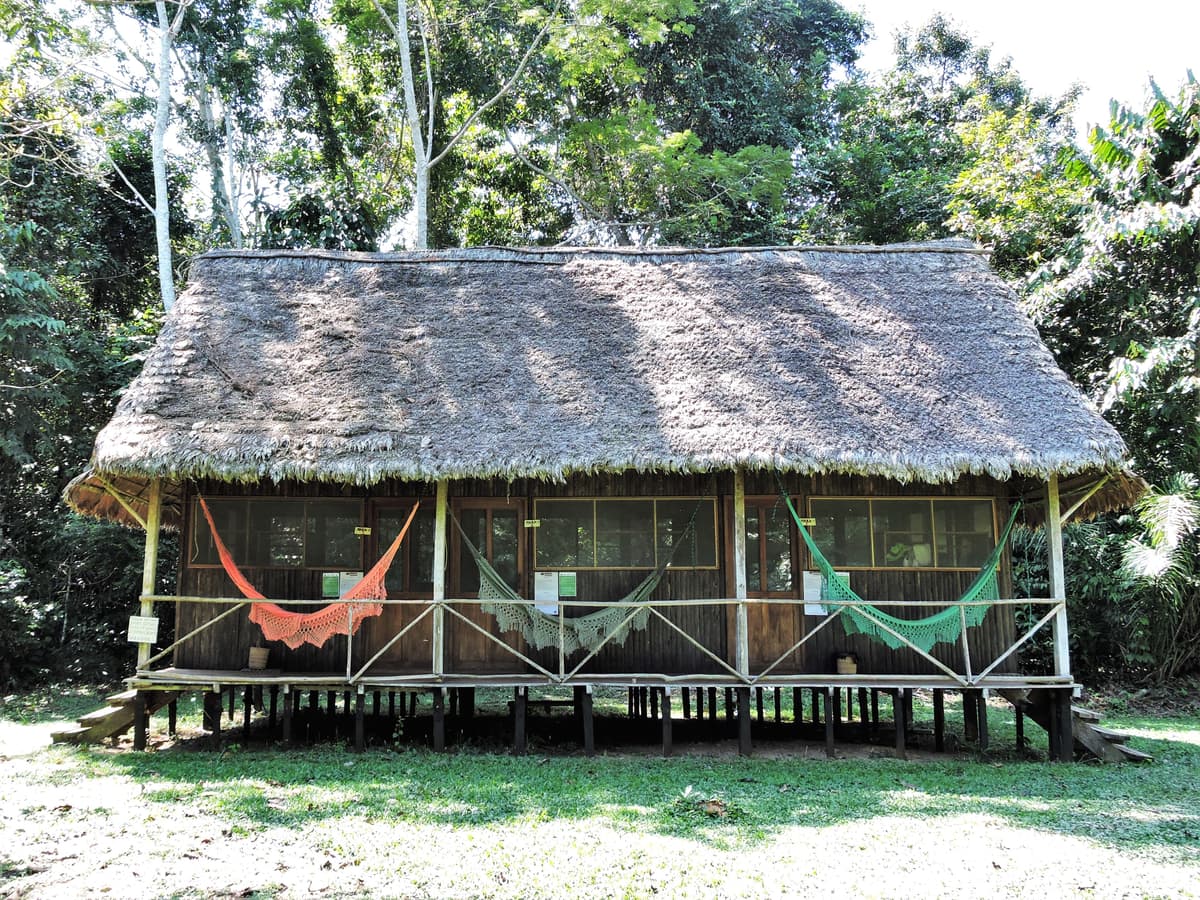
Botanical specimen of Geonoma Deversa.
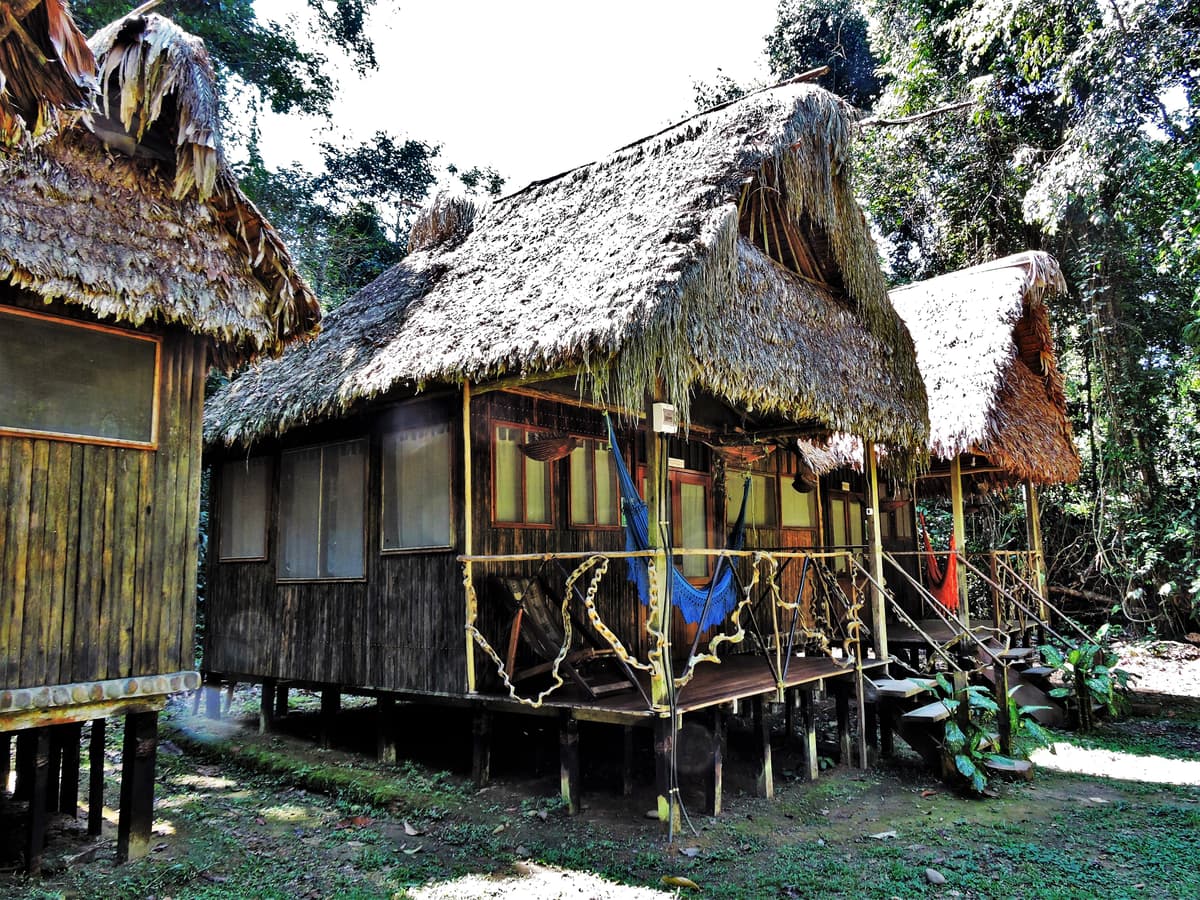
Botanical specimen of Geonoma Deversa.
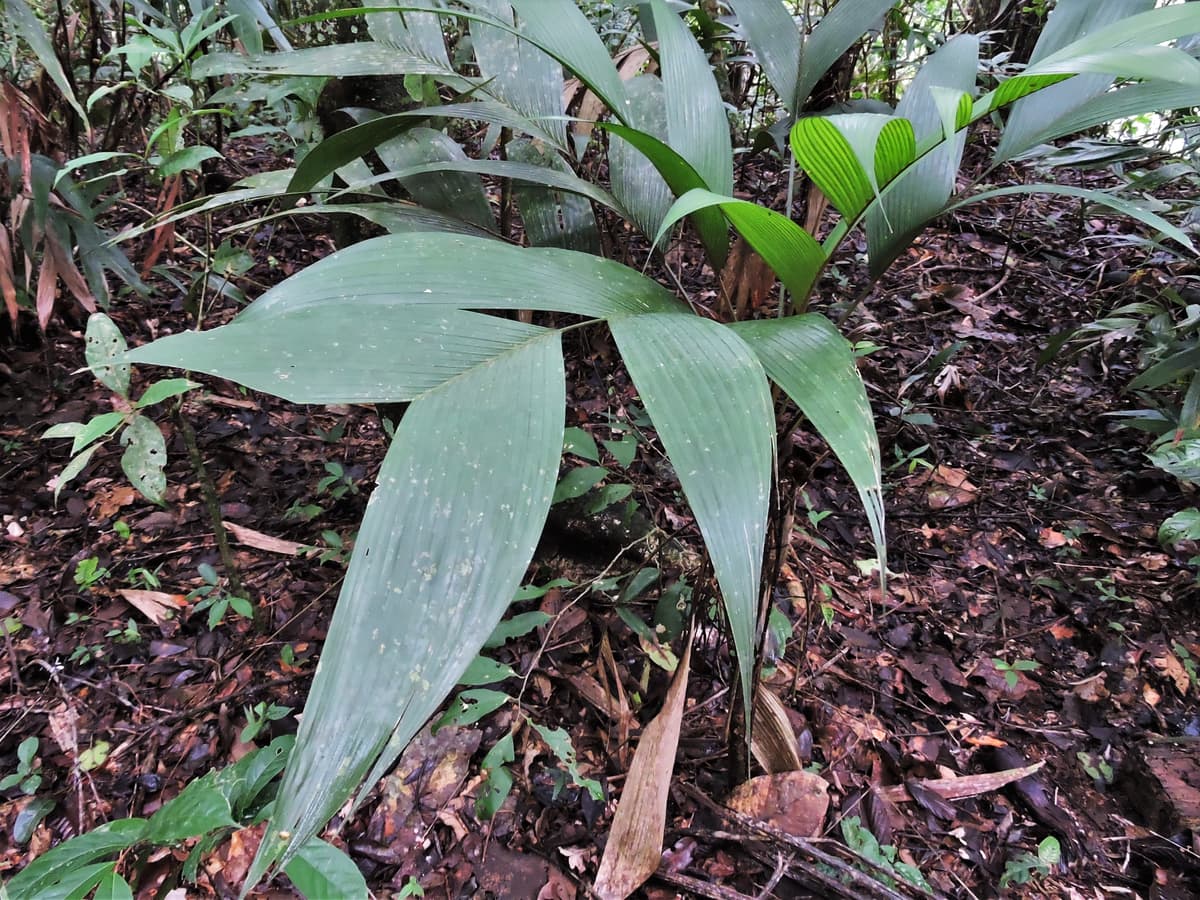
Botanical specimen of Geonoma Deversa.
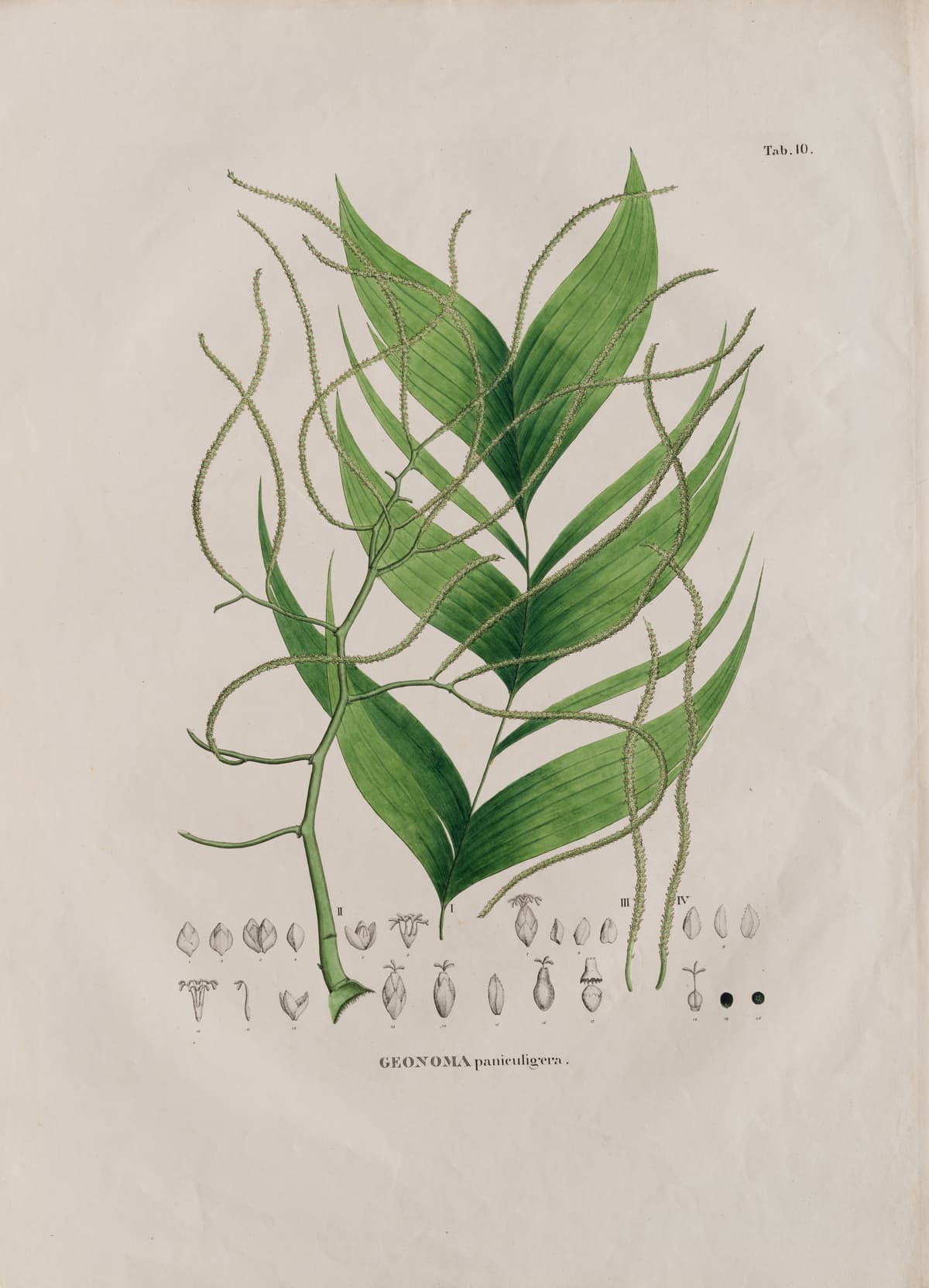
Botanical specimen of Geonoma Deversa.
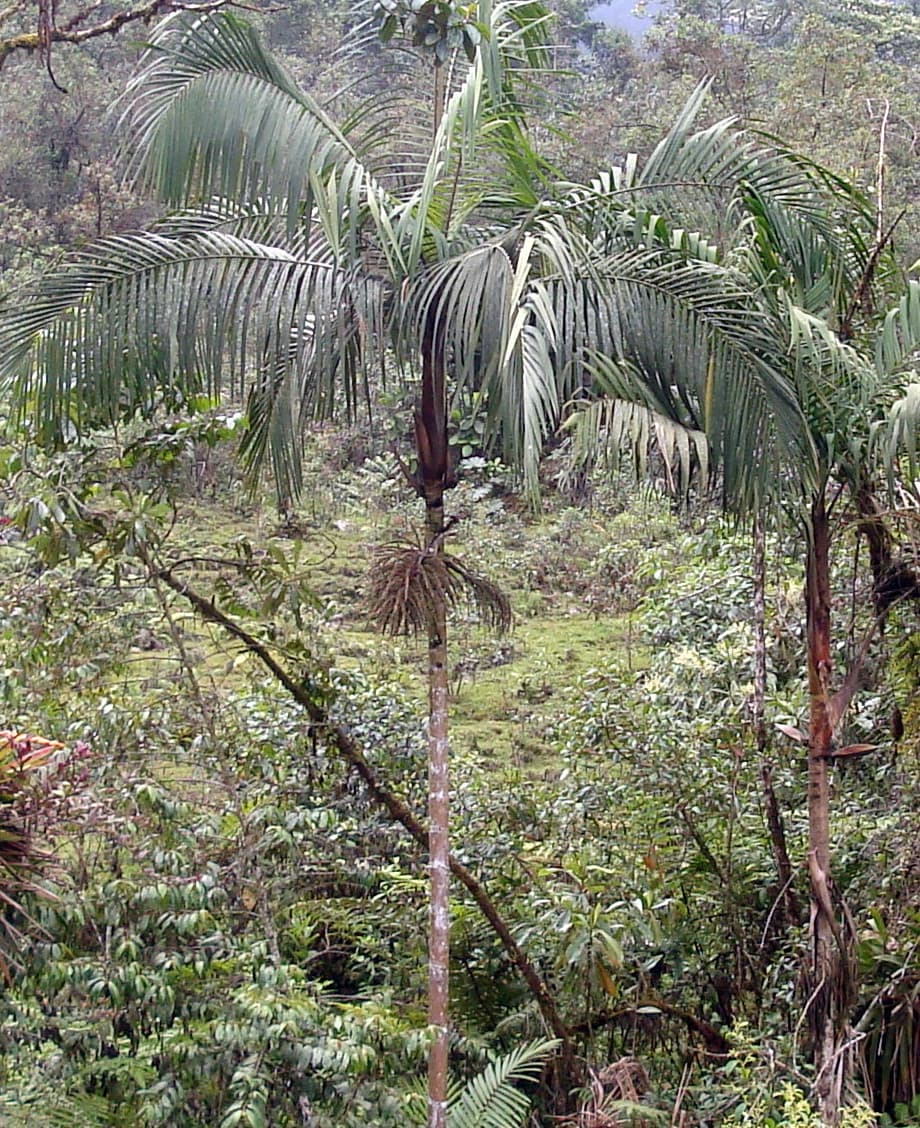
Botanical specimen of Geonoma Deversa.
Sources & Conservation
Curated- Geonoma deversa (Poit.) Kunth — PALMweb (Henderson's 2011 revision of Geonoma: full morphological description, TDWG distribution, subspecies discussion, and ethnobotanical use records with vernacular names) · accessed 2026-08
- Geonoma deversa — Useful Tropical Plants (habitat and elevation, range, thatch and salt uses; cultivation listed as "Not known", propagation as seed) · accessed 2026-08