Yarinilla
Geonoma Macrostachys • Palmiche • Ponilla • Calzon panga • Mo • Mo bengana • Cofage
The Essence
"Geonoma macrostachys is a small, short-stemmed understorey palm of the western Amazon, ranging from Venezuela, Colombia, Ecuador and Peru into northern Brazil and Bolivia. It is genuinely common rather than a local rarity — GBIF holds more than 31,000 occurrence records — and it is listed as Least Concern on the IUCN Red List. Its reputation among botanists rests on how variable it is. Andrew Henderson's 2011 revision of Geonoma called it "the most variable species in the whole genus, and most difficult taxonomically", concluding that no satisfactory treatment was possible from herbarium specimens because the variation is so complex. He therefore recognised one broad species containing nine informally named morphotypes, absorbing names previously treated as separate species, among them G. acaulis, G. atrovirens, G. tamandua, G. supracostata and G. ecuadoriensis. POWO lists sixteen synonyms and recognises no accepted varieties — the name Geonoma macrostachys var. acaulis is itself one of those sixteen. The variation is more than a filing problem. In western Amazonia small and large forms grow side by side yet are, in Borchsenius and colleagues' words, morphologically and genetically distinct: flowers of the small form open two to three hours earlier than those of the large form, and differences in floral scent probably reduce the number of pollinators they share. Hand pollination still set fruit in both directions, so the isolation is incomplete. A 2021 genomic study found four leaf-shape morphogroups that were not recovered as monophyletic, indicating leaf shape has evolved repeatedly, and found that the reproductive barriers recorded in Peru and Ecuador were absent in Colombia — evidence the barriers arose more than once. Habitat is partitioned too: Roncal found var. acaulis more often in floodplain forest and var. macrostachys on tierra firme, with soil texture and potassium content separating the two better than light conditions did. For people across the western Amazon it is above all a thatch palm. Svenning and Macía, exploring the sustainability of harvesting its leaves in 2002, recorded it as the species most used for the inner layer of Huaorani roofs, with other Geonoma species substituted when its leaves ran short. PALMweb's use records add leaf thatch for Cofán, Quichua, Secoya and Shuar communities in Ecuador, house construction by the Cocama in Peru, and unattributed thatch records from Colombia and Bolivia. Reported durability varies sharply by source: up to about four years at Araracuara in Colombia, seven to ten years among the Cofán of Dureno, and more than twenty years for the tamandua form. Beyond roofing, the leaves serve as umbrellas, wrappers for fish, chicha and freshly hunted meat, tablecloths, napkins, funnels for preparing curare, quickly made baskets and temporary seats and beds in the forest; young leaves are used as male adornment by the Cofán, stems are worked into spears and blowguns by the Huaorani, and fruits are eaten by people, mammals and birds. Medicinal records from near Iquitos include a leaf decoction for bathing, root used in hair care, flowers against fever and vomiting, and a petiole infusion for menstrual pain, while a Secoya record describes the palm heart being boiled with other plants to make a poison to kill witches. Smith (2015) notes that the palm can form dense stands in upland Amazon forest and that overharvesting of the fronds has occurred in some areas. In cultivation it remains a niche collector's palm, photographed at Floribunda Nursery in Hawaii, the Quindío Botanical Garden near Armenia in Colombia, on La Réunion and in northern New South Wales."
Genera Palmarum (Dransfield et al. 2008), quoted on PALMweb's Geonoma page, glosses the genus name as "Geonomos — colonist, presumably referring to the clustering, spreading habit of many species." The epithet macrostachys is standard botanical Greek — makros, long or large, plus stachys, an ear of grain and hence a spike — that is, long-spiked, which fits the unbranched inflorescence with its single rachilla up to 31 cm long. No palm-specific source explicitly stating the epithet's derivation was found, so those roots are given from general botanical Greek rather than from a Geonoma monograph.
Carl Friedrich Philipp von Martius published the species as Geonoma macrostachys in Historia Naturalis Palmarum 2: 19 (1823), hence the author abbreviation Mart.; both POWO and GBIF cite that place of publication. Over the following two centuries its extreme variability generated a series of separately described species, several of which Henderson's 2011 revision in Phytotaxa folded back into a single broad concept.
Natural Habitat
An understorey palm of lowland and montane rainforest, recorded by Henderson from 75 to 1800 m with a mean of 443 m, though Useful Tropical Plants describes it mainly as a lowland rainforest plant at elevations up to about 600 m. It grows both on well-drained soils and on ground subject to seasonal inundation, and Smith reports it forming dense stands in upland Amazon forest. Growers report it abundant alongside Geonoma deversa in the lower-elevation Andean cloudforest, in conditions that are cool and wet all year.
Curated Specimens
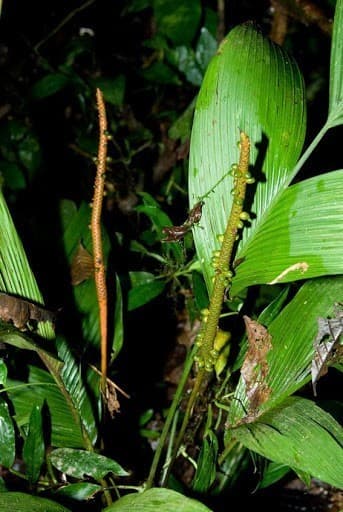
Botanical specimen of Geonoma Macrostachys.
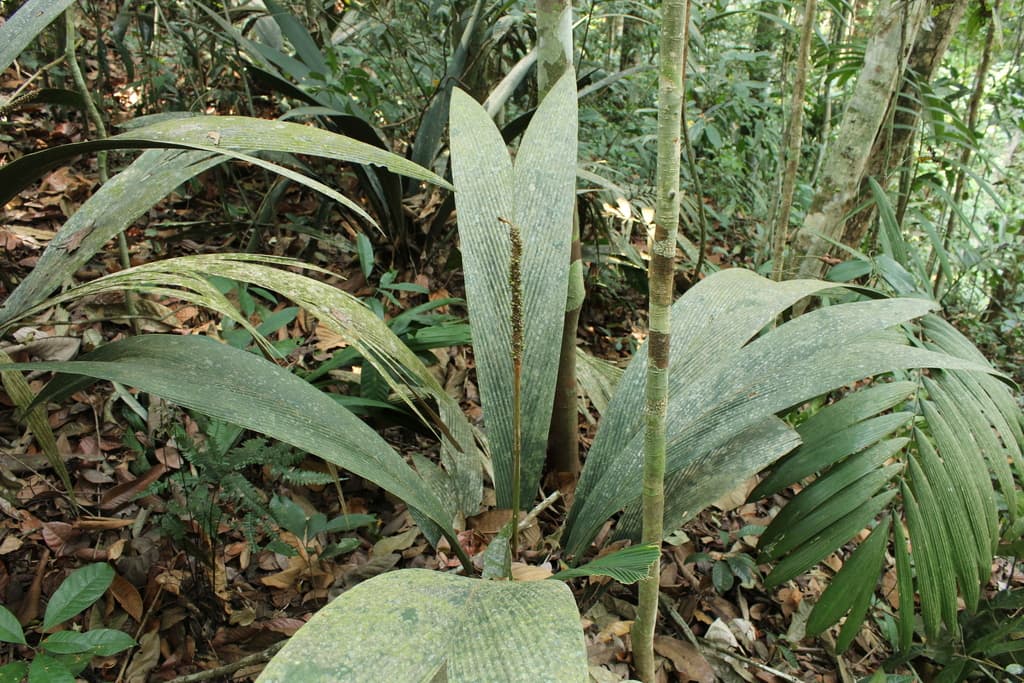
Botanical specimen of Geonoma Macrostachys.
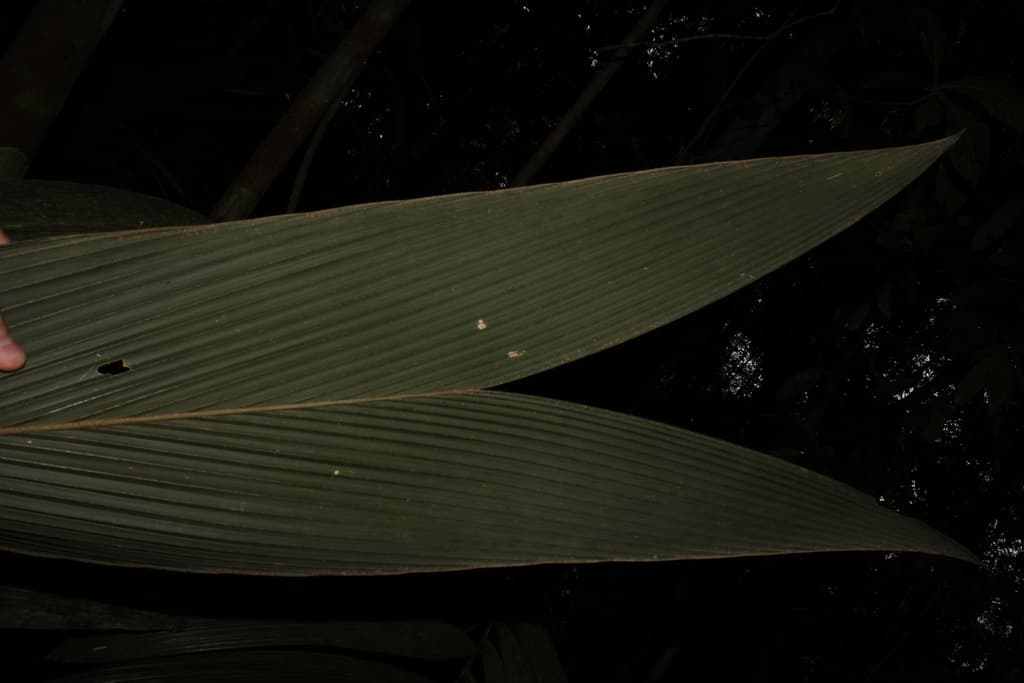
Botanical specimen of Geonoma Macrostachys.
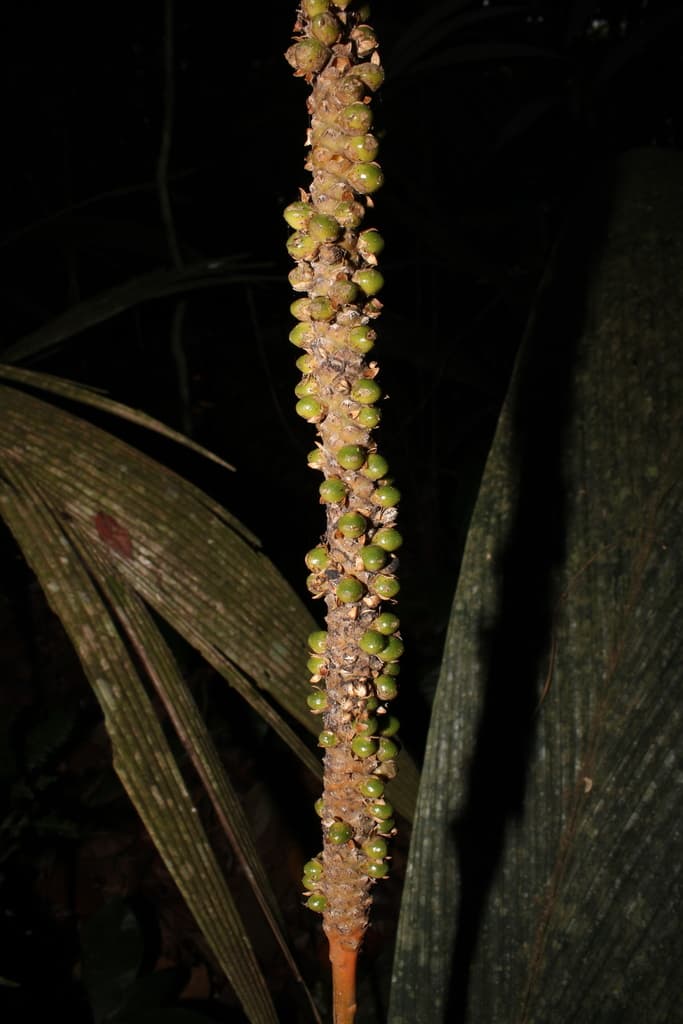
Botanical specimen of Geonoma Macrostachys.
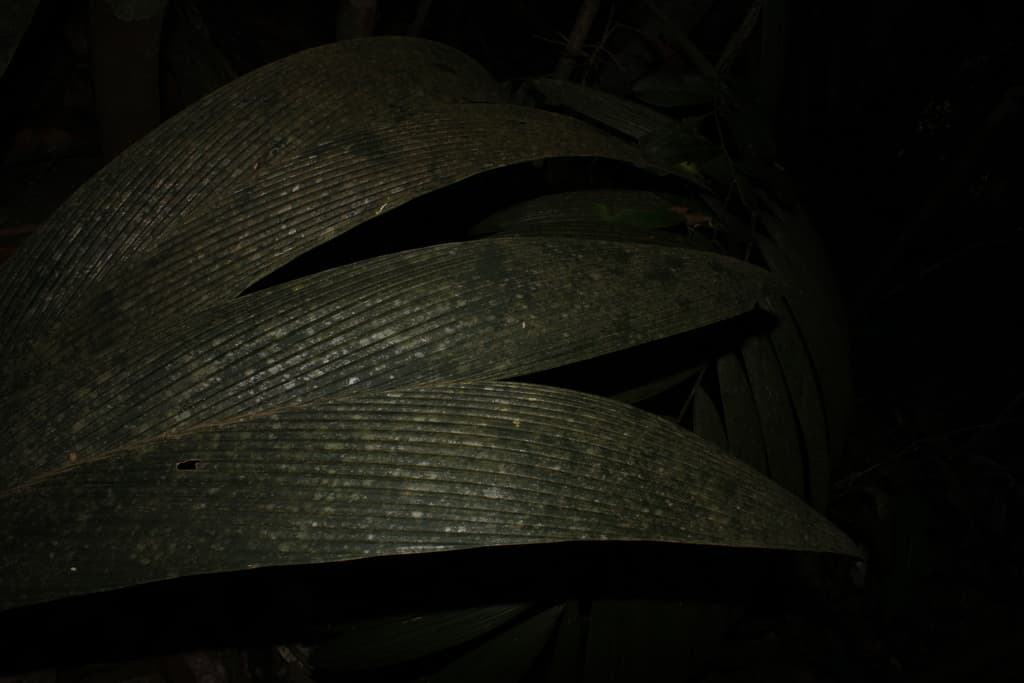
Botanical specimen of Geonoma Macrostachys.
Sources & Conservation
Curated- Geonoma macrostachys Mart. | Plants of the World Online, Kew Science (POWO) — accepted name, publication, native range, 16 synonyms, no accepted varieties · accessed 2026-08
- Geonoma macrostachys Mart., Hist. Nat. Palm. 2: 19 (1823) | PALMweb — full monographic description and taxonomic discussion (Henderson 2011, Phytotaxa 17) plus ethnobotanical use records · accessed 2026-08
- Geonoma Willd. | PALMweb — genus page carrying the Genera Palmarum (Dransfield et al. 2008) etymology · accessed 2026-08
- Geonoma macrostachys - Palmpedia, Palm Grower's Guide · accessed 2026-08
- Geonoma macrostachys - Useful Tropical Plants (tropical.theferns.info)