Inca Palm
Geonoma Undata • Red Inca Palm • Red Crownshaft Palm • Undulate Shadowpalm • Palmiche • Palmicho • Palmicha • Carmaná • Cananá • Palma colepato • Macana • Maraña
Inca Palm in Motion
The Essence
"Geonoma undata is one of the most widespread and most variable palms of the Neotropics. Johann Friedrich Klotzsch described it in 1847, and its range runs from southern Mexico through Central America and the Leeward and Windward Islands of the Caribbean to the Guianas, and south along the Andes to Bolivia. It is a slender understorey or subcanopy palm of montane rainforest and cloud forest, solitary or clustered, with undivided or irregularly pinnate leaves. Andrew Henderson's 2011 revision calls it, in so many words, the second most variable species of Geonoma; Plants of the World Online accepts ten subspecies, and Useful Tropical Plants lists 27 synonyms. Henderson separates it from the species it most resembles chiefly by the prophyll, whose ridged, densely tomentose surfaces carry unequal ridges that divide from and rejoin one another, with margins bearing irregular, spine-like projections (rarely absent). Together with Ceroxylon parvifrons it is reported to grow at the highest altitude of any palm in the world, tolerating frost and snow above 3,000 m; Henderson records subsp. undata up to 3,370 m. A 2025 genomic study of 156 plants from 26 Colombian localities described the complex as a "hyper-cryptic radiation", recovering five genetically distinct populations shaped by geographical and elevational isolation, drift during recent population expansion, and selection on phenology-related genes. Leaves are used for thatch, stems for house posts and axe handles, and the fruits as a source of dark dye. The palm is harvested for heart of palm in Central America, and wild plants are taken illegally for palm heart even inside protected areas. In cultivation it is very rare, best known from the population along the Inca Trail in southern Ecuador."
The epithet undata comes from the Latin for wavy or wave-like. Klotzsch published the name in Linnaea 20: 452 (1847). The same idea carries into the vernaculars: the French name recorded by Catalogue of Life is Géonoma ondulé, wavy Geonoma, and the English book name is Undulate Shadowpalm.
Named in 1847, the species accumulated 27 synonyms, among them Geonoma andicola, G. edulis, G. weberbaueri, G. densa and Roebelia solitaria, before Andrew Henderson's 2011 revision of Geonoma consolidated the group into ten accepted subspecies, the arrangement POWO now follows. Henderson placed it in a high-elevation species complex alongside G. lehmannii, G. orbignyana, G. talamancana and G. trigona; three of these — G. undata, G. orbignyana and G. lehmannii — he describes as extremely complex internally and difficult to tell apart, and Trebrown calls it a poorly understood species. Subspecies boundaries are broadly geographic: subsp. edulis covers Mexico to western Panama, subsp. dussiana is confined to Dominica, Guadeloupe and Martinique, subsp. appuniana to the Guayana Highland of Venezuela, Brazil and Guyana, subsp. tumucensis to the Tumuc-Humac mountains, and the typical subsp. undata to the Andes from Venezuela to Bolivia.
Natural Habitat
An understorey and subcanopy palm of montane rainforest and Neotropical cloud forest; POWO records the biome simply as wet tropical. Henderson (2011) gives subsp. undata a mean elevation of 1,964 m with a range of 550-3,370 m in montane rainforest. Useful Tropical Plants narrows the typical band to 1,400-2,400 m, RarePalmSeeds gives an overall span of 200-3,300 m, and Colombian records run 1,200-2,700 m (or up to 3,200 m, depending on the source). One subspecies departs from this pattern: subsp. pulcherrima grows at 750-1,130 m on eastern Andean slopes of southeastern Ecuador, along river banks subject to flooding, where its plants are reported to be rheophytes.
Curated Specimens
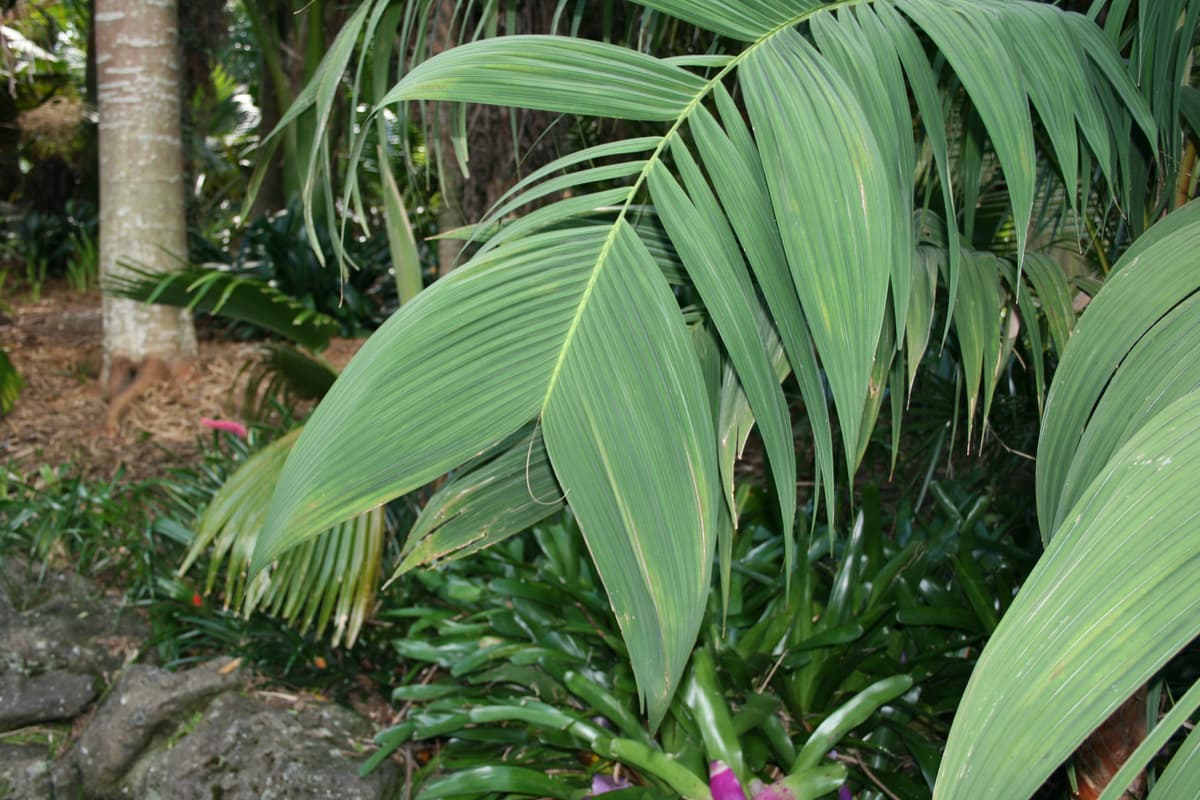
Botanical specimen of Geonoma Undata.
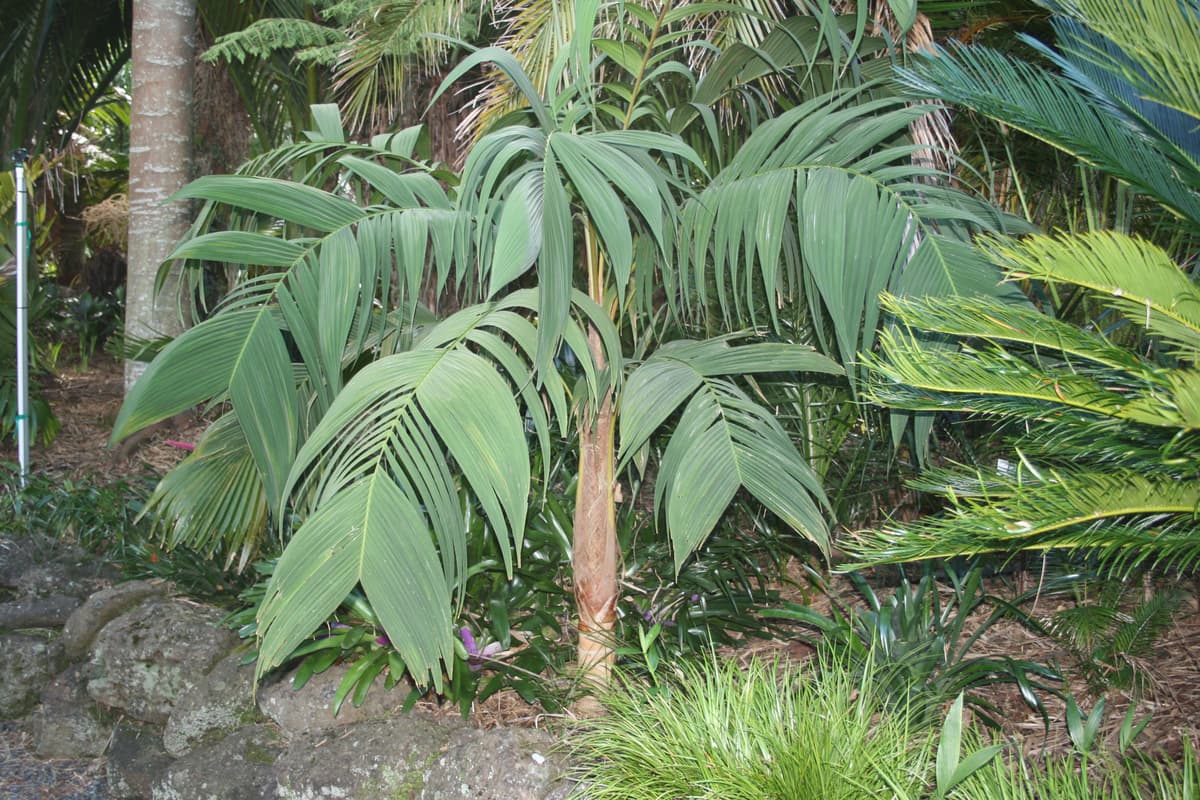
Botanical specimen of Geonoma Undata.
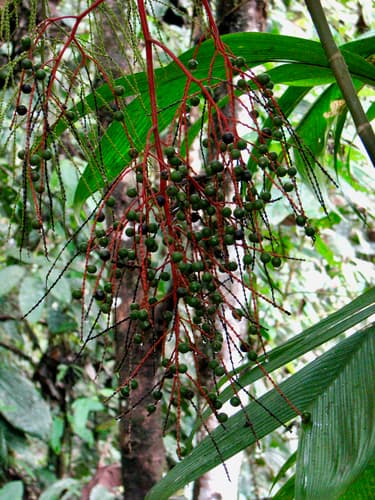
Botanical specimen of Geonoma Undata.