Curly palm
Howea Belmoreana • Belmore sentry palm • Sentry palm
Curly palm in Motion
The Essence
"Howea belmoreana, the curly palm, grows wild in exactly one place: Lord Howe Island, Australia. It is one of only two species in Howea, and the pair are a celebrated example of speciation — they probably evolved from a common ancestor on the island through sympatric speciation, kept apart because H. forsteriana flowers about seven weeks earlier, making hybrids rare, and because the two partition the island by soil and elevation. H. belmoreana holds the hilly interior on volcanic basaltic soils at roughly 50–400 m, while its sister also colonises the calcareous coastal sands. A slender, very slow-growing palm to about 12 m, it is easily told from the Kentia palm by its strongly recurved leaves, arched into nearly a half circle, with dark green leaflets angled upward from the rachis in a pronounced V rather than drooping. It flowers November to early January on a single unbranched pendulous spike, ripening ovoid brown-red fruit 3–4 cm long. Long grown as a durable houseplant like its famous sister, it is less often seen, slower and touchier in pots. It holds the Royal Horticultural Society's Award of Garden Merit and was assessed as Vulnerable on the IUCN Red List in 1998."
The genus name Howea commemorates Lord Howe Island, the palm's only home. The epithet belmoreana honors Sir Somerset Richard Lowry-Corry, 4th Earl of Belmore, Governor of New South Wales from 1868 to 1872.
Originally described as Kentia belmoreana C.Moore & F.Muell. in 1870, the species received its accepted name Howea belmoreana (C.Moore & F.Muell.) Becc. in Malesia 1: 66 (1877); Grisebachia belmoreana is a further synonym. A 2018 study in New Phytologist (Osborne et al.) found arbuscular mycorrhizal fungi significantly depleted in H. forsteriana roots on volcanic soil compared with H. belmoreana on the same soil, helping to explain how the two sister species coexist. Howea seed is cultivated on Norfolk Island for export, the mainstay of that island's palm seed industry.
Natural Habitat
Hilly, mountainous rainforest of the island interior, not the coastal lowlands where H. forsteriana forms palm forests. It grows on basaltic (volcanic) soils on lower slopes throughout Lord Howe Island at 50–400 m altitude, occurring as scattered individuals but becoming abundant at higher elevations up to about 450 m. Unlike H. forsteriana, which also grows on calcareous sands, it is restricted to volcanic soils.
Curated Specimens
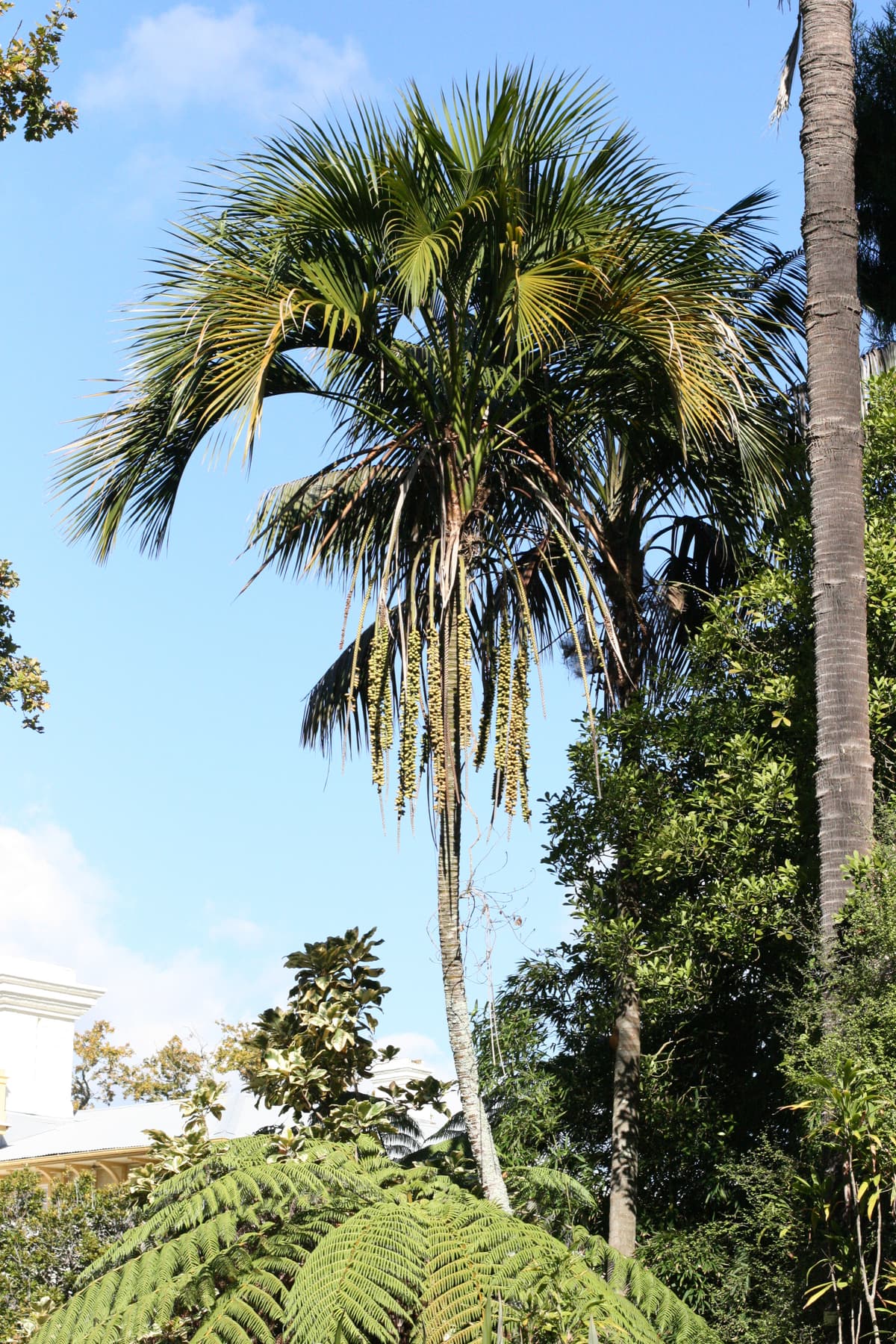
Botanical specimen of Howea Belmoreana.
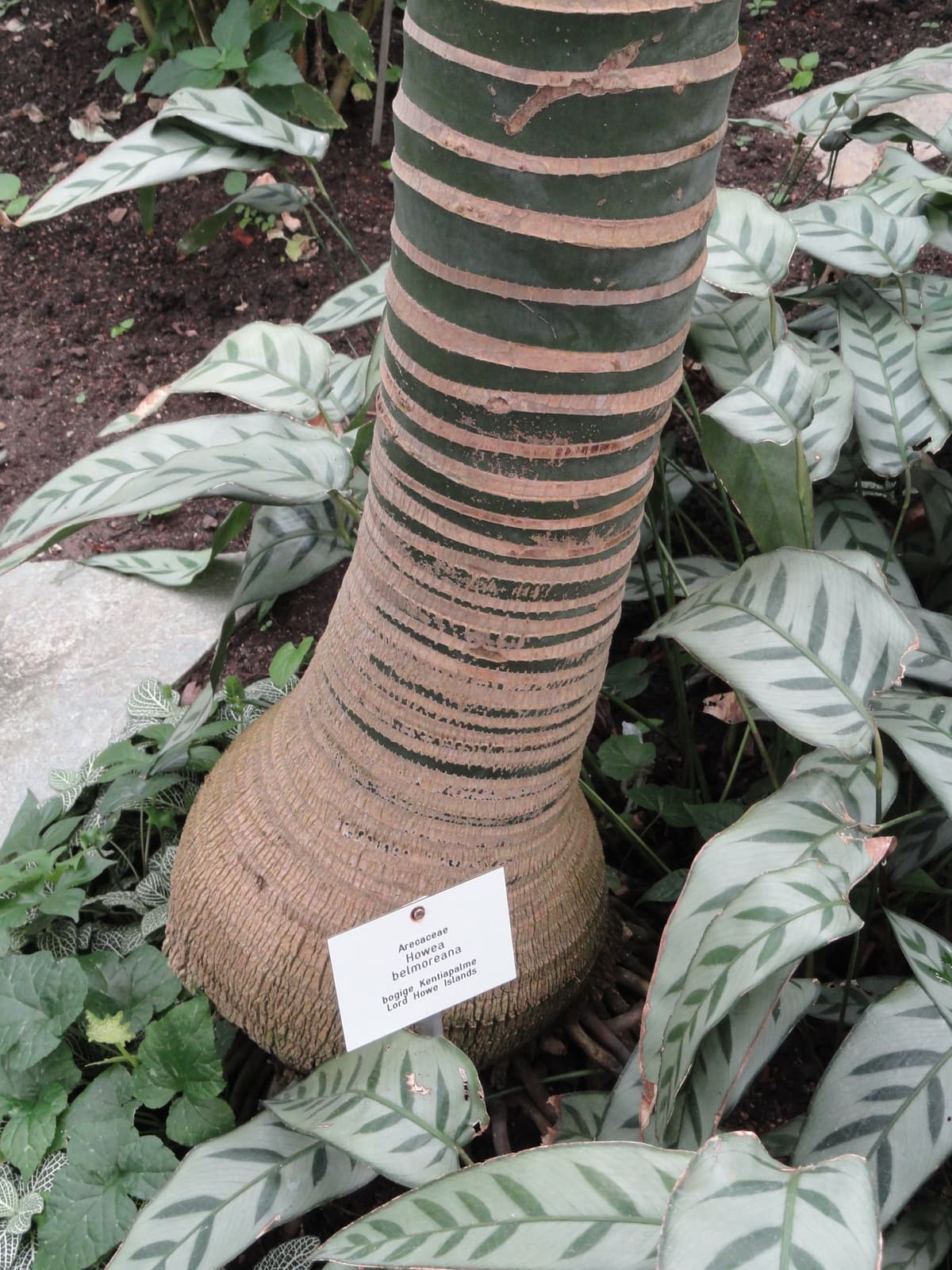
Botanical specimen of Howea Belmoreana.
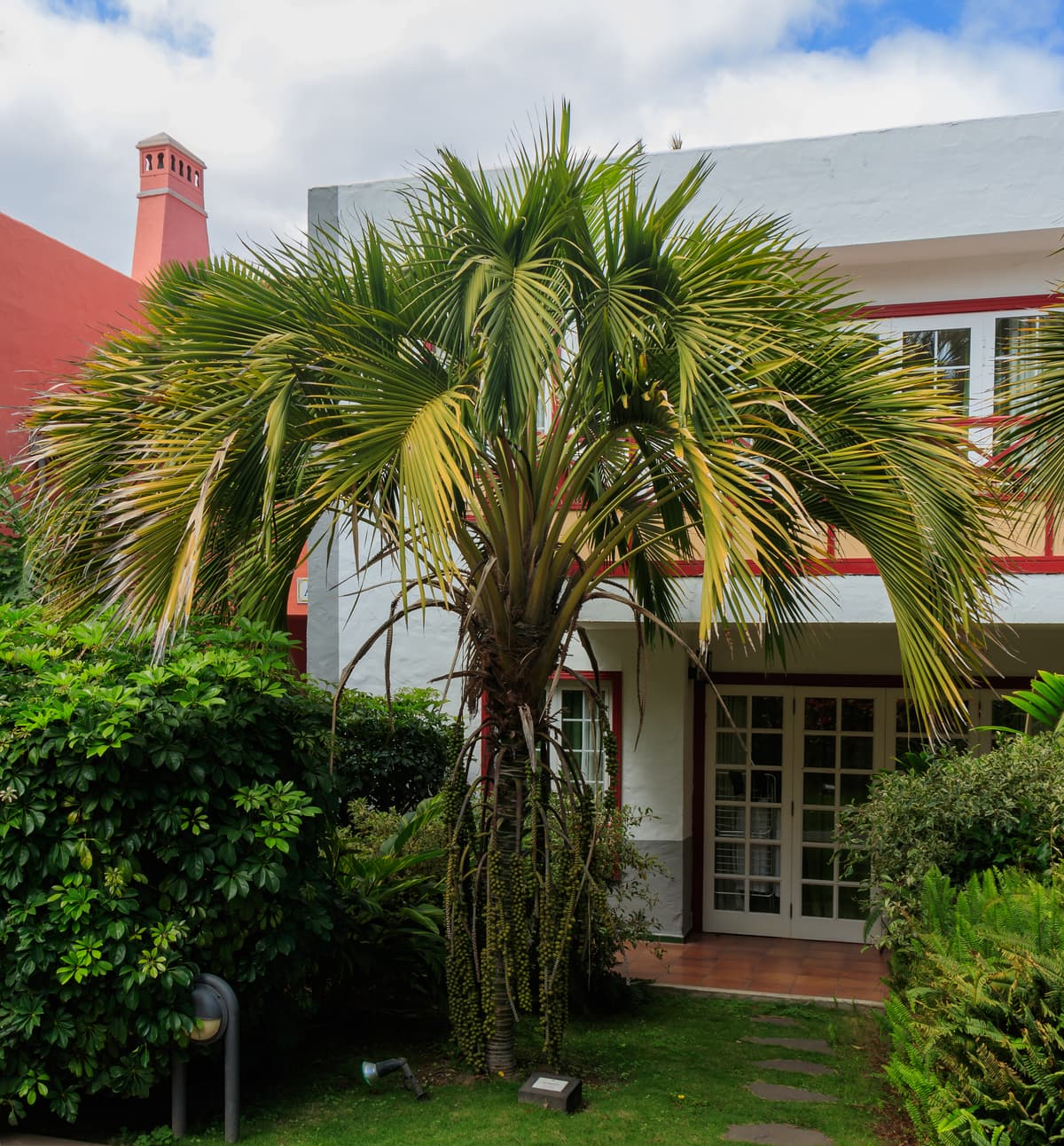
Botanical specimen of Howea Belmoreana.
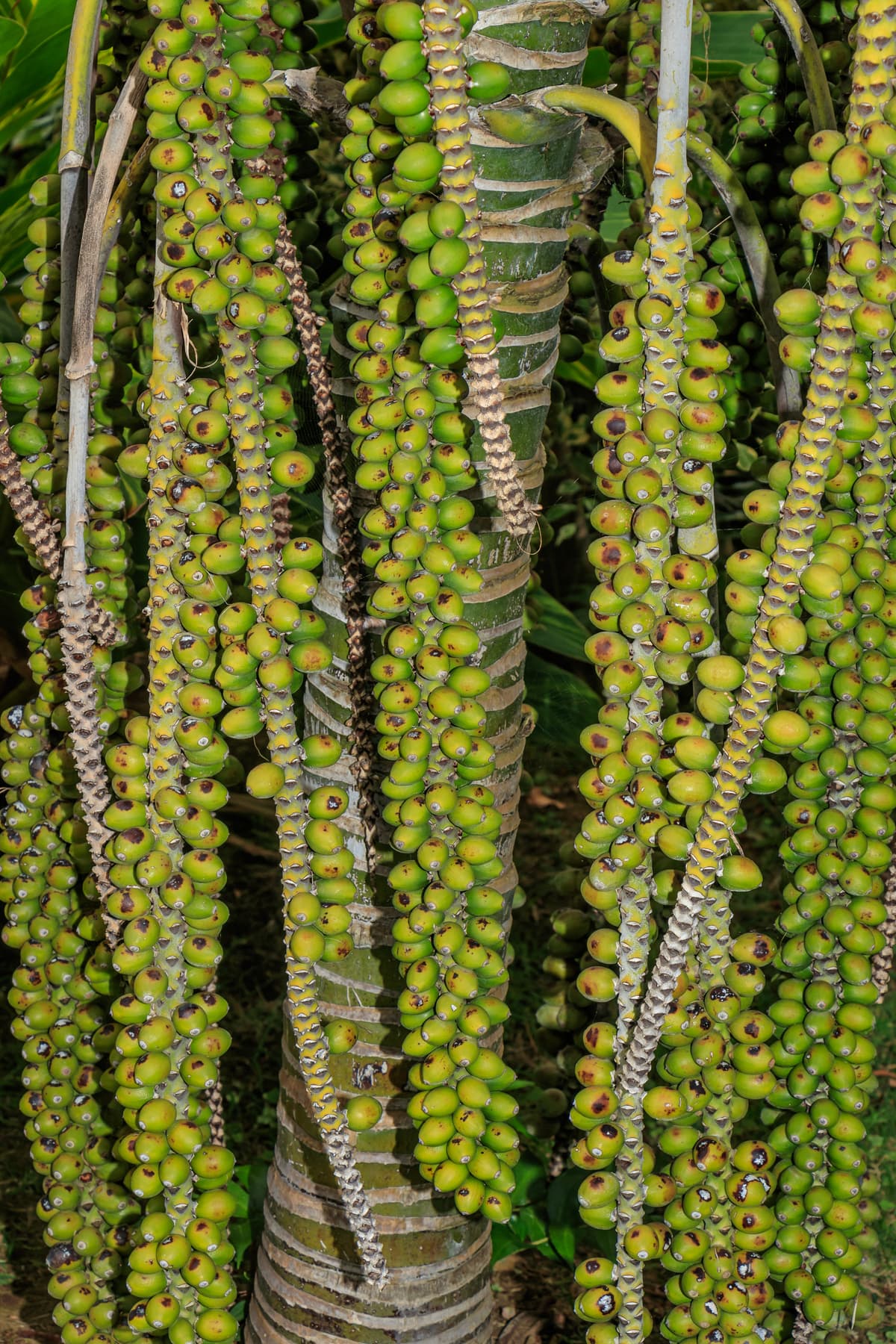
Botanical specimen of Howea Belmoreana.
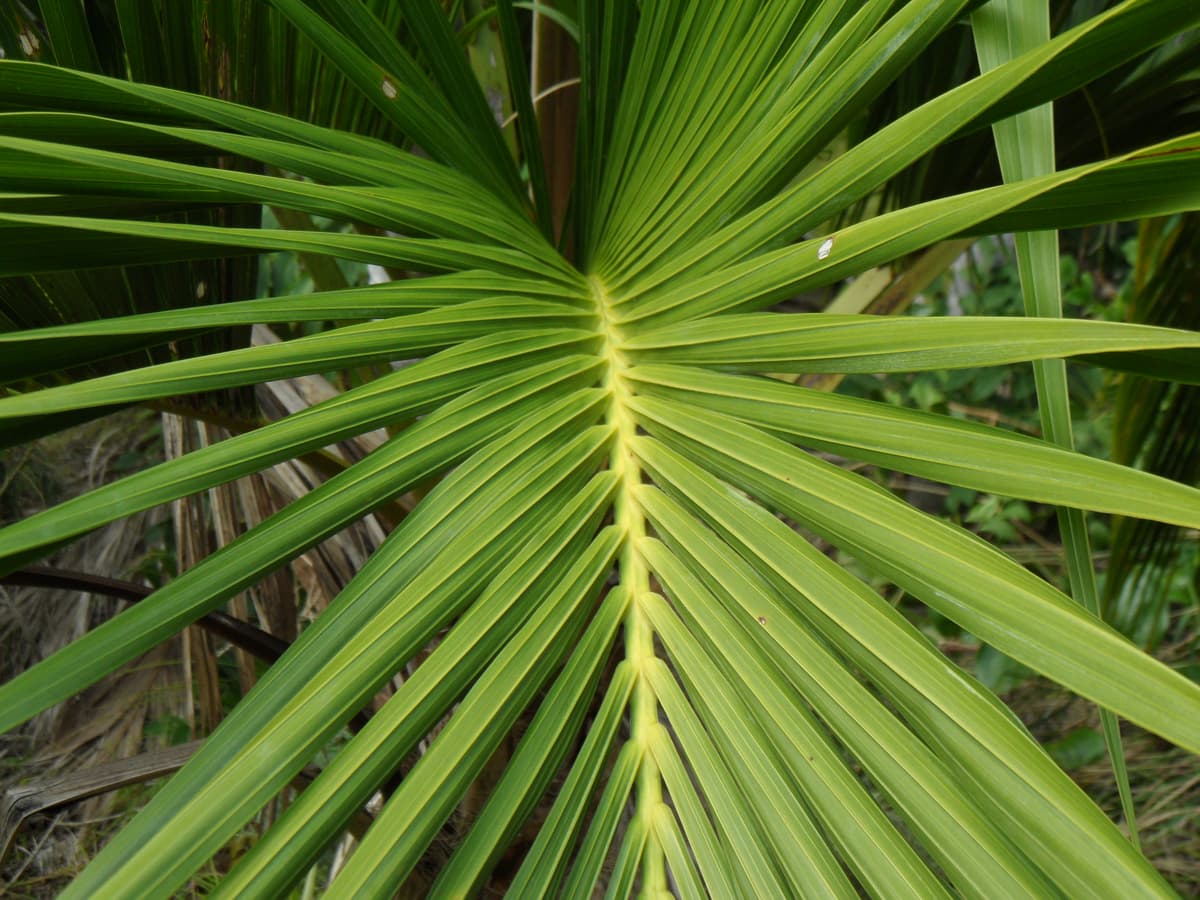
Botanical specimen of Howea Belmoreana.