Chinese Fan Palm
Livistona Chinensis • Fountain Palm
Chinese Fan Palm in Motion
The Essence
"The Chinese fan palm (Livistona chinensis), also called the Chinese fountain palm or simply fountain palm, is a single-stemmed tree grown worldwide as a popular ornamental in gardens and conservatories. Its appeal lies in the large, fan-shaped (costapalmate) leaves, 3 to 4 feet across and up to 6 feet long, whose segment tips droop gracefully to give the crown a fountain-like cascade. Mature plants reach about 9 to 15 m (30 to 50 ft) tall with a spread of roughly 4 m, and flower stalks up to 6 feet long emerge from within the crown, though they are relatively inconspicuous. The small fruits are blue-green to gray-blue. Native to southern Japan, Taiwan, the Ryukyu Islands, south-eastern China and Hainan, it is hardy in USDA zones 9 to 11 and tolerates temperatures down to about 22 degrees F (-6 degrees C). Tough and easy to grow, it handles light shade or full sun and is considered drought tolerant, which helps explain its wide popularity."
The genus Livistona was named by Robert Brown after Patrick Murray (1634-1671), Baron of Livingston, a botanist and horticulturist largely responsible for establishing the botanical gardens in Edinburgh; the Latinised name derives from the family's seat. The species epithet chinensis is Latin for 'of or from China', referring to its origin in south-eastern China.
Two notable native populations in Japan occupy islands near Miyazaki Prefecture: Aoshima and Tsuki Shima.
Natural Habitat
Native range spans southern Japan, Taiwan, the Ryukyu Islands (Nansei-shoto), south-eastern China and Hainan. It grows primarily in the subtropical biome, in coastal forests on various soils, often in sand, sometimes forming dense single-species colonies and otherwise small isolated ones, at elevations up to 100 metres. It has been introduced or naturalised in many regions, including Bermuda, Florida, Hawaii, Mauritius, Reunion, New Caledonia, Puerto Rico and the Dominican Republic.
Curated Specimens
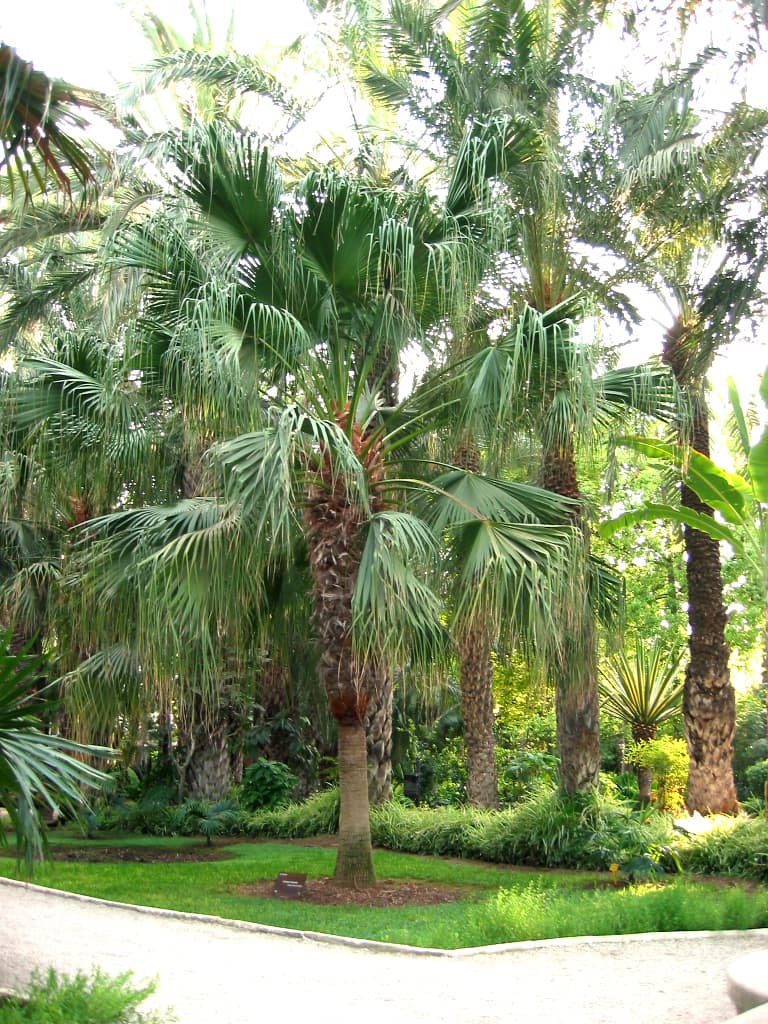
Botanical specimen of Livistona Chinensis.
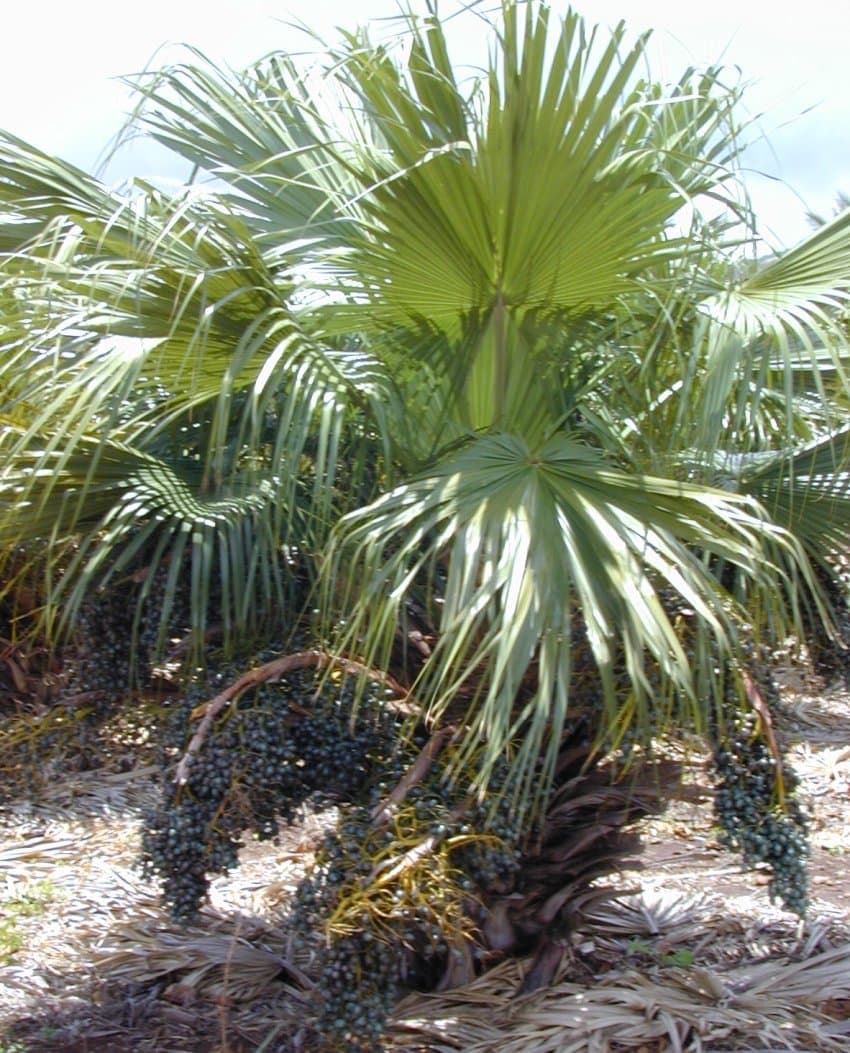
Botanical specimen of Livistona Chinensis.
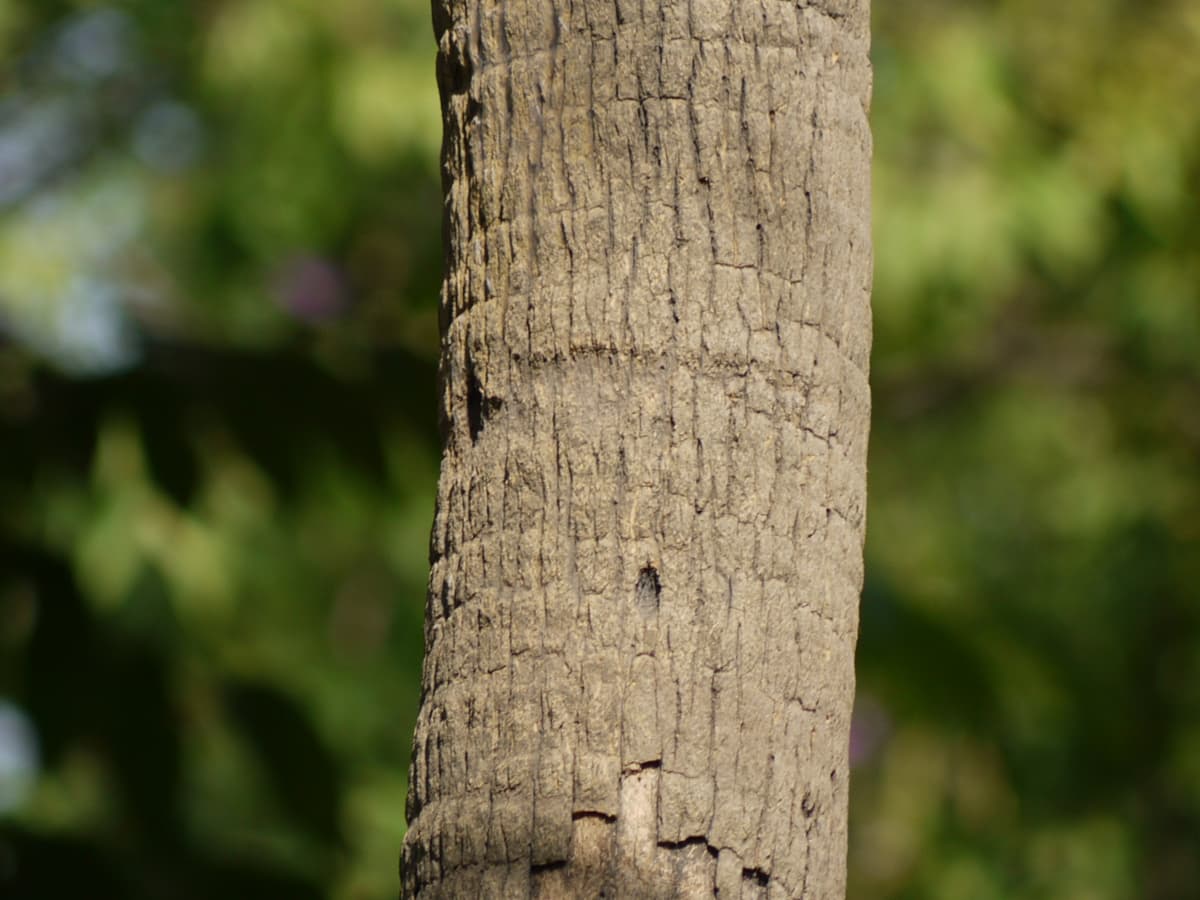
Botanical specimen of Livistona Chinensis.
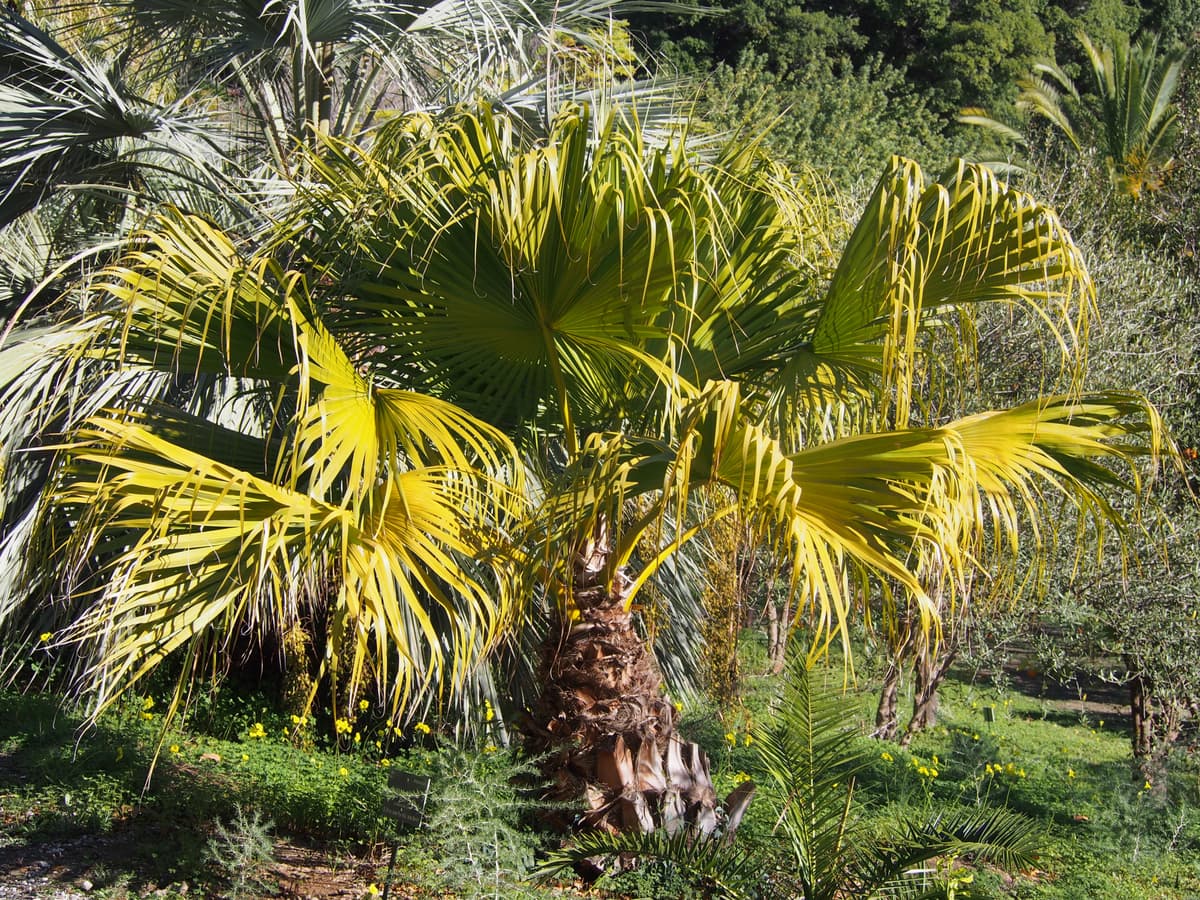
Botanical specimen of Livistona Chinensis.
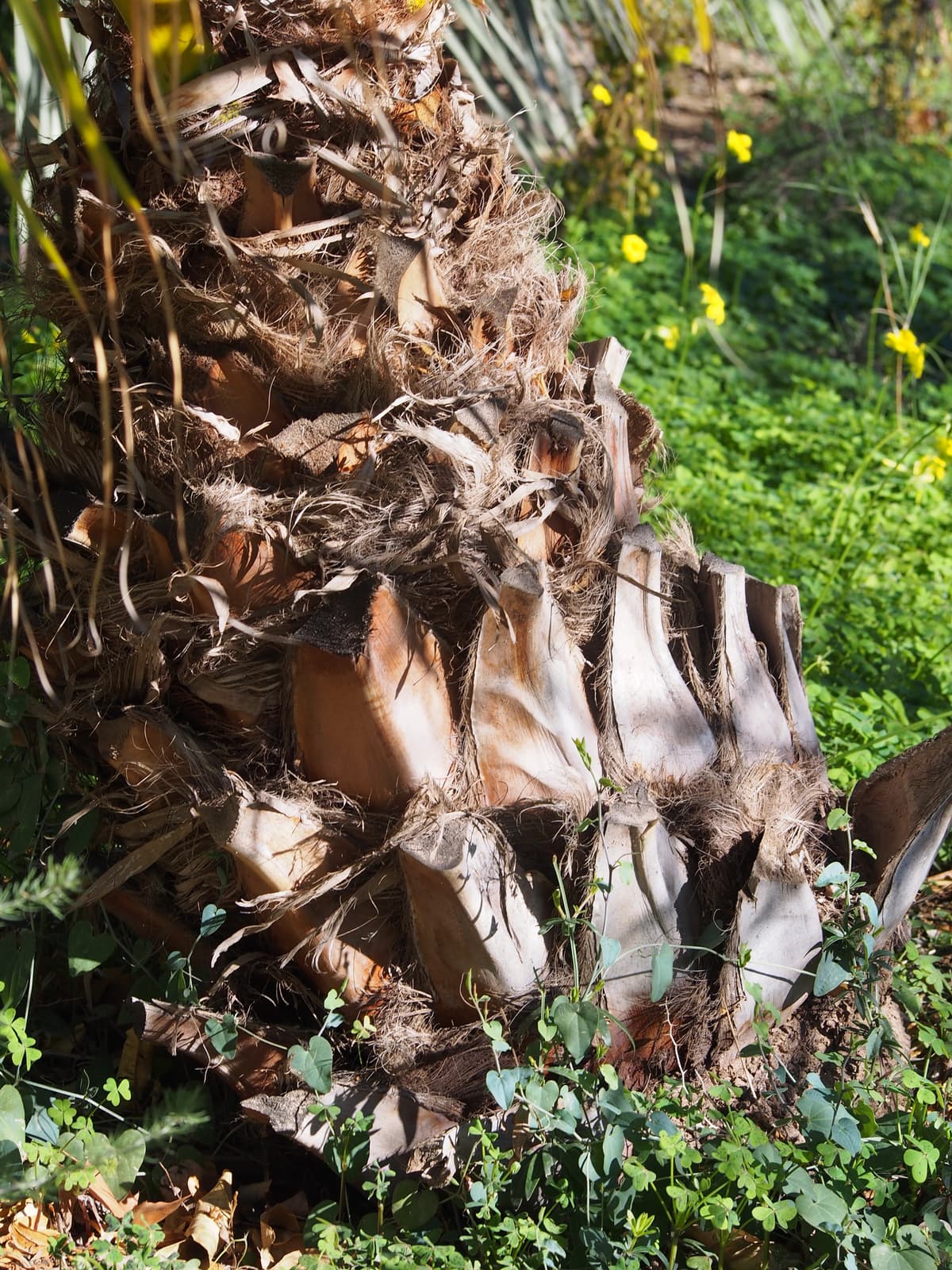
Botanical specimen of Livistona Chinensis.
Biology & Morphology
"A single-stemmed fan palm reaching about 9 to 15 m (30 to 50 ft) tall with a spread of roughly 4 m, bearing costapalmate, fan-shaped leaves 3 to 4 feet across and up to 6 feet long whose segment tips droop gracefully, with inconspicuous flower stalks up to 6 feet long and blue-green to gray-blue fruits about 1/2 by 3/4 inch."
Morphology
Solitary, erect trunk with prominent vascular reinforcement and dense fibrous layering.
Adventitious root system spreading radially to maximize hydraulic intake in competitive soil matrices.
Distinctive solitary habit and large stature providing a unique architectural profile.
Foliage
Vibrant green canopy featuring fan-shaped palmate leaves with deep costapalmate structure and rigid petiole attachments.
Specialized green tissues exhibiting moderate metabolic expansion rates.
Reproduction
Complex inflorescence branching typical of the Livistona clade, exhibiting seasonal reproductive synchrony.
Nutrient-dense drupes encased in a fibrous pericarp, optimized for protection and dispersal.
Dormant embryonic tissues with high endosperm density, characteristic of resilient Livistona specimens.
Ecology
Active rhizosphere communication with mycorrhizal fungal networks, enhancing phosphorus and micronutrient uptake.
Interlocked with local entomological vectors, primarily Meliponini bees or specialized coleoptera.
Gravity-mediated and animal-vectored dispersal mechanisms ensuring regional genetic distribution.
Germination & Propagation
Germination Timeline
Soak seeds in warm water (25°C).
Sow in high-porosity mix at 2cm depth.
Maintain surface moisture; monitor for initial spike.
Terminology
A common name referring to the drooping, water-fountain-like appearance of its fronds.
The rapid absorption of water by the seed to activate internal enzymes.
Fruits germinate readily, and seed sown fresh germinates in 1 to 2 months. No specific pre-treatment or germination temperature is stated in the authoritative sources.
Cultivation & Care
Light
Grows well in light shade or full sun. It prefers light shade but tolerates a wide range of conditions.
Water
Considered tolerant of drought. It prefers a sunny, moist position, yet is a tough, easy-to-grow palm that copes with a wide range of conditions.
Soil
Adaptable to a wide range of soils, and moderately tolerant of salt spray. In the wild it grows on various soils, often sand.
Hardy in USDA zones 9 to 11, tolerating temperatures down to about 22 degrees F (-6 degrees C), so it needs protection or a frost-free site below that. Be aware that it can naturalise and become weedy or invasive in some regions, including Bermuda, Hawaii, Florida wetlands and parts of the Caribbean, where fallen berries germinate around the base and form thickets that crowd out and overshadow native species.
Pests, Diseases & Care
Pests
Rhynchophorus ferrugineus (Red Palm Weevil)
CRITICALLethal internal boring; often undetected until crown collapse.
Acoustic monitoring and early-stage trunk infusion with fipronil.
Chrysomphalus aonidum (Florida Red Scale)
MODERATEYellow spotting and premature leaf drop in high-humidity zones.
Introduction of Aphytis holoxanthus (parasitic wasp).
Diseases
Colletotrichum spp. (Anthracnose)
MODERATEBlack necrotic spots on leaflets under high humidity.
Copper-based fungicides and reduction of overhead irrigation.
Phytophthora palmivora (Bud Rot)
CRITICALNecrosis of the spear leaf and decay of the meristem.
Fosetyl-Al application and optimizing canopy ventilation.
Nutritional Deficiencies
Interveinal chlorosis (Younger fronds)
Chelated Fe-EDDHA Soil Pulse
Marginal chlorosis (Older fronds)
Mg-Sulfate (Kieserite) saturation
Frizzletop / Distorted spear
Systemic Mn-Sulfate application
Care Tips
Biosurveillance pulse synchronized for Asia regional vectors.
Apply prophylactic fungicidal drench in the nocturnal phase.
Improve canopy ventilation to disrupt fungal sporulation cycles.
Sources & Conservation
Curated- Livistona chinensis (Jacq.) R.Br. ex Mart. | Plants of the World Online | Kew Science · accessed 2026-06
- Livistona chinensis - Wikipedia · accessed 2026-06
- Livistona (genus etymology) - Wikipedia · accessed 2026-06
- ENH-524/ST365: Livistona chinensis: Chinese Fan Palm - UF/IFAS · accessed 2026-06
- Livistona chinensis - Useful Tropical Plants · accessed 2026-06
- Livistona chinensis - Global Invasive Species Database (IUCN ISSG) · accessed 2026-06