Kase
Masoala Madagascariensis • Hovotralanana • Mandanozezika
The Essence
"Masoala madagascariensis is one of only two species in the genus Masoala, both endemic to Madagascar. It is a solitary, squat but massive litter-trapping palm: 20-31 stiff leaves 3-4 m long are held in a shuttlecock crown that catches falling debris, and the palm sends aerial roots up into the trapped litter. Genera Palmarum separates the genus from the superficially similar Marojejya by its lax bisexual rather than congested unisexual inflorescences, and by its symmetrical fruit with apical stigmatic remains. It is also among the world's rarest palms. The IUCN assessment, dated 17 December 2010 and published in 2012, lists it as Critically Endangered under criteria C2a(i); D, with just 30 mature individuals in a severely fragmented, declining population recorded from six to eight locations. The threats recorded are shifting agriculture, gathering of terrestrial plants, and logging and wood harvesting; the species occurs in at least one protected area, and is protected in Marojejy, Masoala and Mananara Avaratra. Uses recorded by IUCN include thatch and handicrafts from the leaves, an edible palm heart, and fruits with edible nuts, alongside international trade in seed for horticulture. Among growers it is a prized collector's palm - Palmpedia quotes a grower calling it one of the "holy grail" palms - but a very slow one, apparently taking decades to form a trunk in cultivation. Documented specimens include plants at Floribunda Palms in Hawaii, in Thailand, and in the Gold Coast hinterland of Queensland, Australia."
The genus Masoala is named after the Masoala Peninsula in northeast Madagascar, where, according to Genera Palmarum, the palm was first collected and described. The epithet madagascariensis is botanical Latin for "of Madagascar". Both genus and species were described by the French botanist Henri Lucien Jumelle (author abbreviation Jum.), first published in Annales du Musee Colonial de Marseille, ser. 5, 1(1): 8 (1933). Palmpedia gives the phonetic rendering mah-soh-AH-lah mad-ah-gas-kahr-ee-EN-sis.
The type material was collected by Perrier (Perrier 11938) at Marambo, Antalaha, in October 1912 and is held at Paris (P). Although named in 1933, the palm remained effectively unknown as a living plant for a further half-century: until 1986 it was represented only by very incomplete material in the Paris Herbarium, which gave little indication of its appearance or relationships. Genera Palmarum could therefore place Masoala only in an uncertain position among the arecoid palms, until new material was collected as the book went to press. The 1995 monograph assessed the palm as Vulnerable, noting it was then known from only three recent sites, all with low numbers; IUCN likewise published a Vulnerable listing in 1998, before the 2010 assessment moved it to Critically Endangered.
Natural Habitat
A palm of very humid lowland rain forest in northeastern Madagascar. It grows on dry hillsides through to swampy valley bottoms, and occasionally on ultramafic soils. The Palms of Madagascar (1995) recorded it at 200-420 m; later survey work revised this to 50-700 m, the limits IUCN uses. The monograph knew it from Marojejy, Masoala and Mananara, from the Marojejy Massif south to the Bay of Antongil; later fieldwork extended the known distribution to eight discontinuous locations between Mahavelona and Marojejy, with IUCN recording 6-8 locations. IUCN classifies the system as terrestrial and the habitat as subtropical/tropical moist lowland forest, and reports continuing decline in its area, extent and quality. POWO records the species as a tree of the wet tropical biome.
Curated Specimens
Botanical specimen of Masoala Madagascariensis.
Botanical specimen of Masoala Madagascariensis.
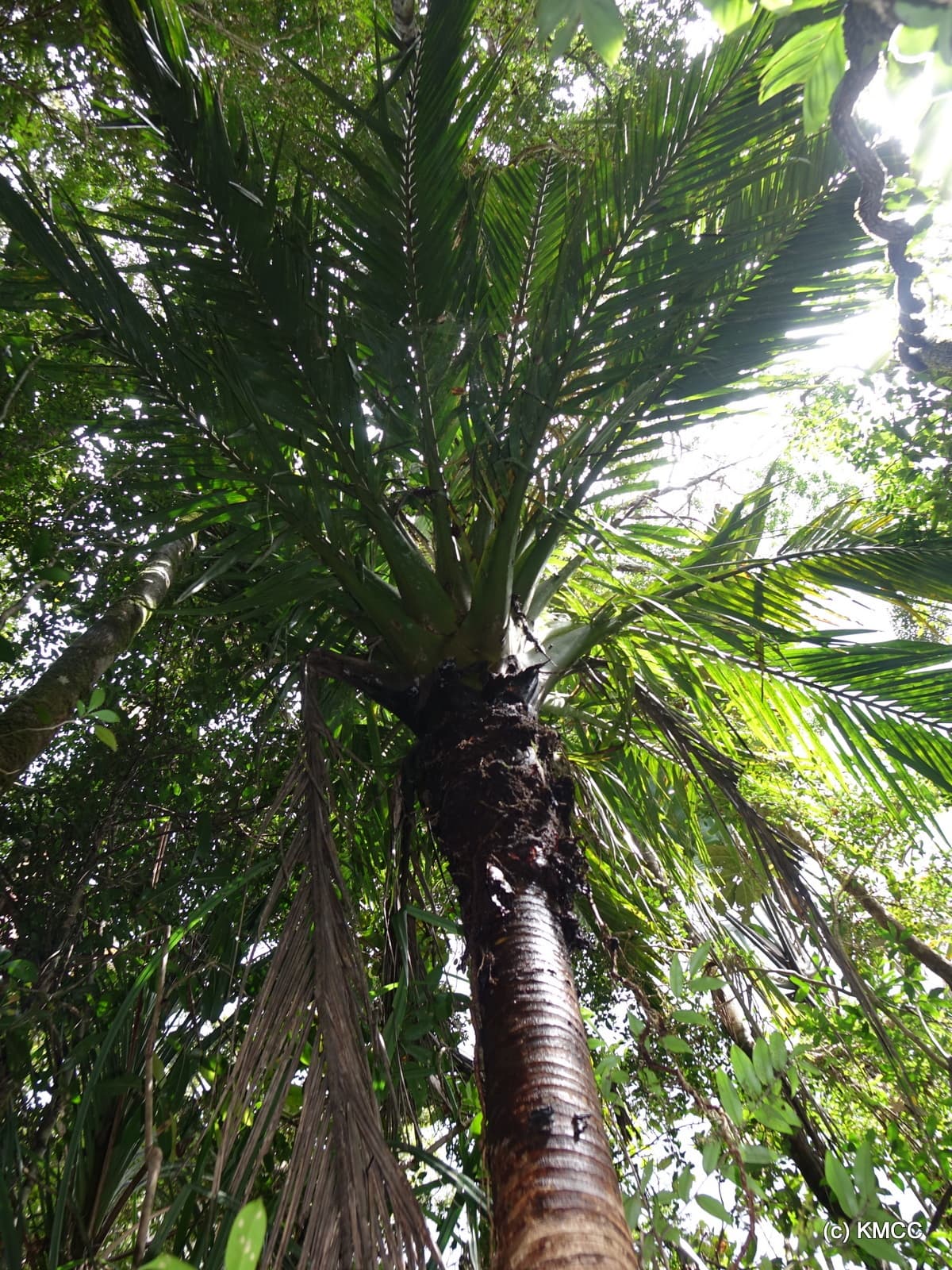
Botanical specimen of Masoala Madagascariensis.
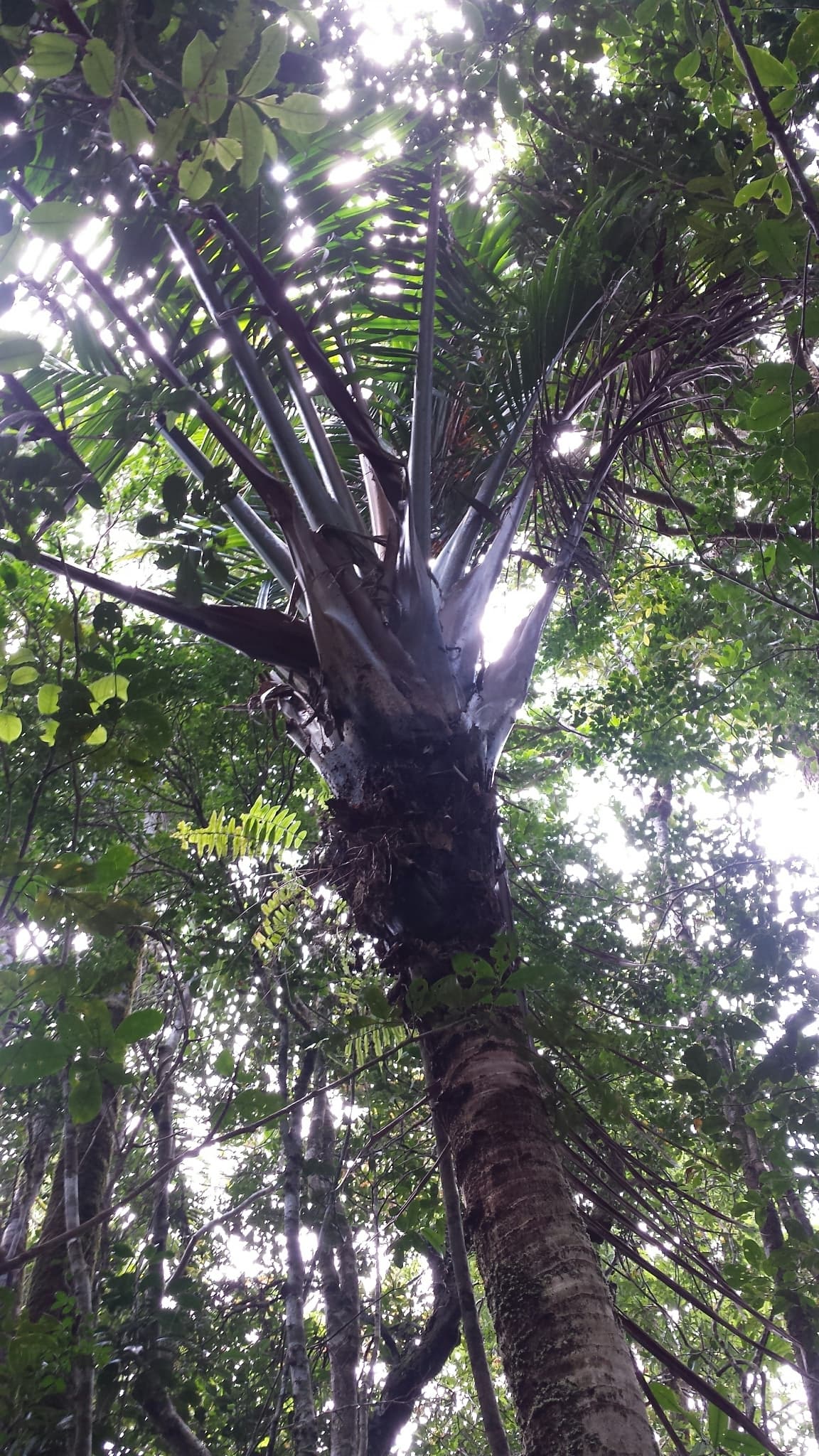
Botanical specimen of Masoala Madagascariensis.
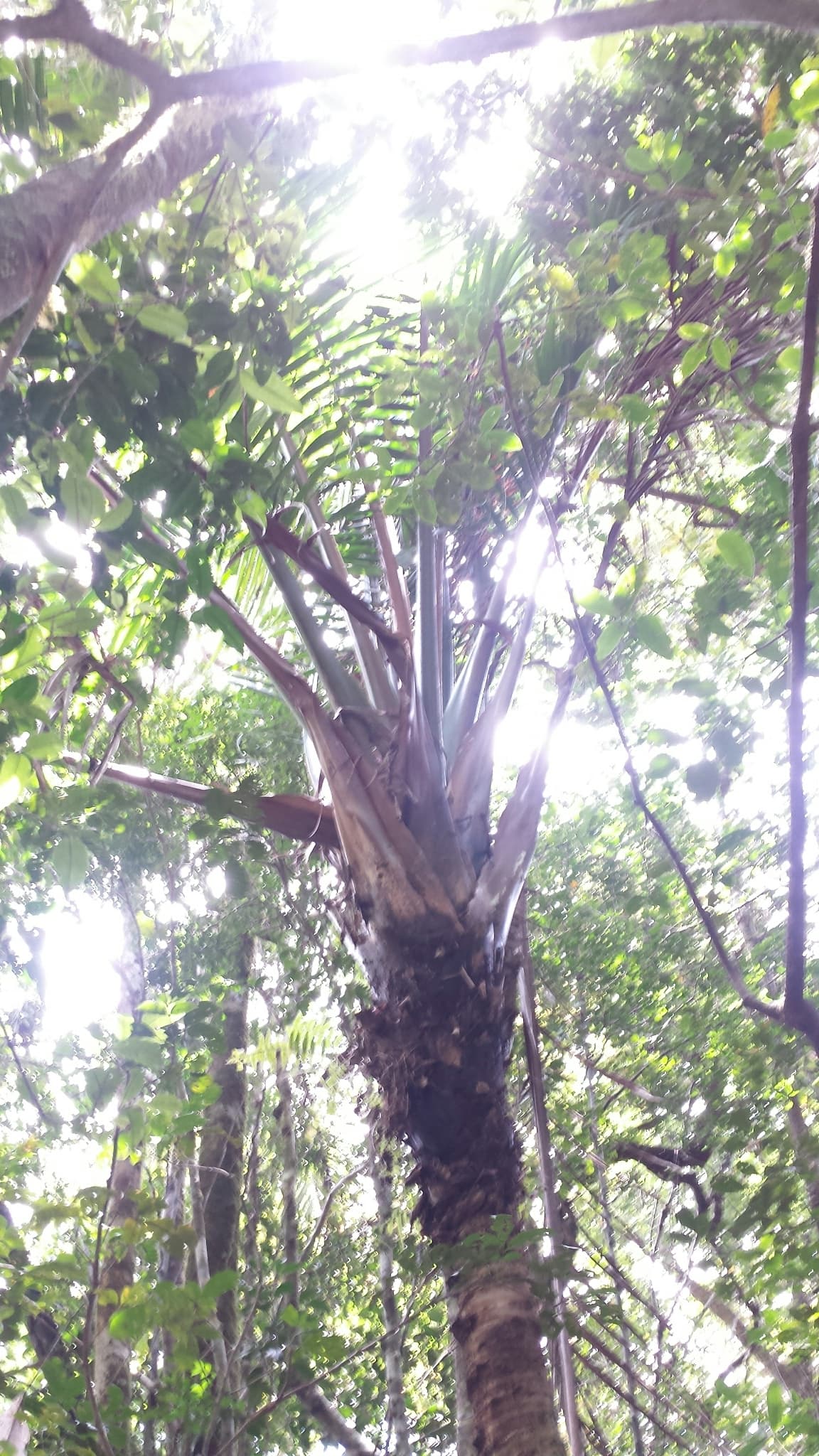
Botanical specimen of Masoala Madagascariensis.
Sources & Conservation
Curated- Masoala madagascariensis Jum. | Plants of the World Online | Kew Science (POWO) · accessed 2026-08
- Masoala madagascariensis. The IUCN Red List of Threatened Species 2012: e.T38608A2880970 (Rakotoarinivo & Dransfield) · accessed 2026-08
- Masoala madagascariensis Jum. | PALMweb (full description from Dransfield & Beentje 1995, The Palms of Madagascar, RBG Kew / IPS) · accessed 2026-08
- Masoala Jum. (genus) | PALMweb - etymology, diagnosis and description from Genera Palmarum (Dransfield et al. 2008, RBG Kew) · accessed 2026-08
- Masoala madagascariensis - Palmpedia, Palm Grower's Guide · accessed 2026-08
- Masoala madagascariensis - Rare Palm Seeds (description and cultural requirements) · accessed 2026-08
- Masoala madagascariensis - Wikipedia · accessed 2026-08
- Masoala (palm genus) - Wikipedia · accessed 2026-08
- GBIF Backbone Taxonomy - Masoala madagascariensis Jum. (taxon key 5293757) · accessed 2026-08