Chambira palm
Astrocaryum Chambira • Chambira • Cumare • Tucum • Tucuma • Coco chambira • Coco • Corombolo • Palma de cumare • Palma coquillo • Behtáñó • Beto • Betoñi
Chambira palm in Motion
The Essence
"Astrocaryum chambira is a solitary canopy palm, sometimes emergent, of the western Amazon, recorded from Brazil North, Colombia, Ecuador, Peru and Venezuela and described as common in Ecuador. It grows at low densities in lowland rain forest, usually on terra firme, and is much more common in disturbed and deforested ground. The trunk reaches 30 m and is armed with black spines up to 20 cm long; the erect, funnel-shaped crown carries leaves 5 m or more long, and the obovoid fruits, 6-8 cm long, ripen from greyish green to yellow or orange. Fibre is the palm's best-known product. Stripped from the youngest, unexpanded leaves, it is twisted into string at home by both men and women and woven into hammocks, nets, bags and necklaces; bags and hammocks are marketed through the craft industry network at regional and national level in Colombia, Ecuador and Peru. An account of its use among four different indigenous groups in Ecuador reports these products as the main source of cash income for many people, with the highest value obtained from sale directly to tourists. The fibre is also used as a floss to clean the teeth. Other uses span food, medicine, fuel and materials: the apical bud is eaten as a vegetable, which kills the palm because it cannot produce side-shoots; both mature and immature fruits are eaten raw; and the liquid endosperm is drunk to cleanse the internal organs, especially the kidneys and liver, and to reduce fevers. Because the very spiny trunk causes work accidents, it is common to plant a climbing tree next to the palm so that fibre and fruit can be harvested safely. The National Red List of Colombia (2021) rates the species Least Concern, but harvesting pressure is a local concern: mature trees are often cut down to gather the fibre, which kills them, a single large hammock may require as many as twenty trees, and the resource can become scarce where a village remains in one area for a long time."
The genus name Astrocaryum G.Mey. comes from the Greek astron, "star," and karyon, "nut," referring to the star-like pattern of fibres around the endocarp pores. The epithet chambira takes up the Amazonian vernacular name for the palm, documented as a common name in Colombia and Peru; no source consulted states the derivation of the epithet explicitly, so this connection is inferred from the recorded vernacular usage. The species was described by Burret in Repertorium Specierum Novarum Regni Vegetabilis 35: 122 (1934).
Historically, Astrocaryum Chambira has been Ancient lineage within the Arecaceae family, isolated in America.. It has served as a vital biological marker for biodiversity in its native tropical ecosystems for centuries.
Natural Habitat
Lowland rain forest, usually on terra firme - land not subject to inundation - where it occurs in low densities and is much more common in disturbed and deforested areas; it also grows on periodically flooded alluvial soils. POWO classes it as a tree of the wet tropical biome. In Colombia it is recorded from Amazonia, the Guiana Shield and Orinoquia between 100 and 500 m elevation, its habitat given under the IUCN Habitats Classification as forest and woodland, shrubland, inland wetlands and artificial terrestrial. GBIF held 2,969 occurrence records for the species in August 2026.
Curated Specimens
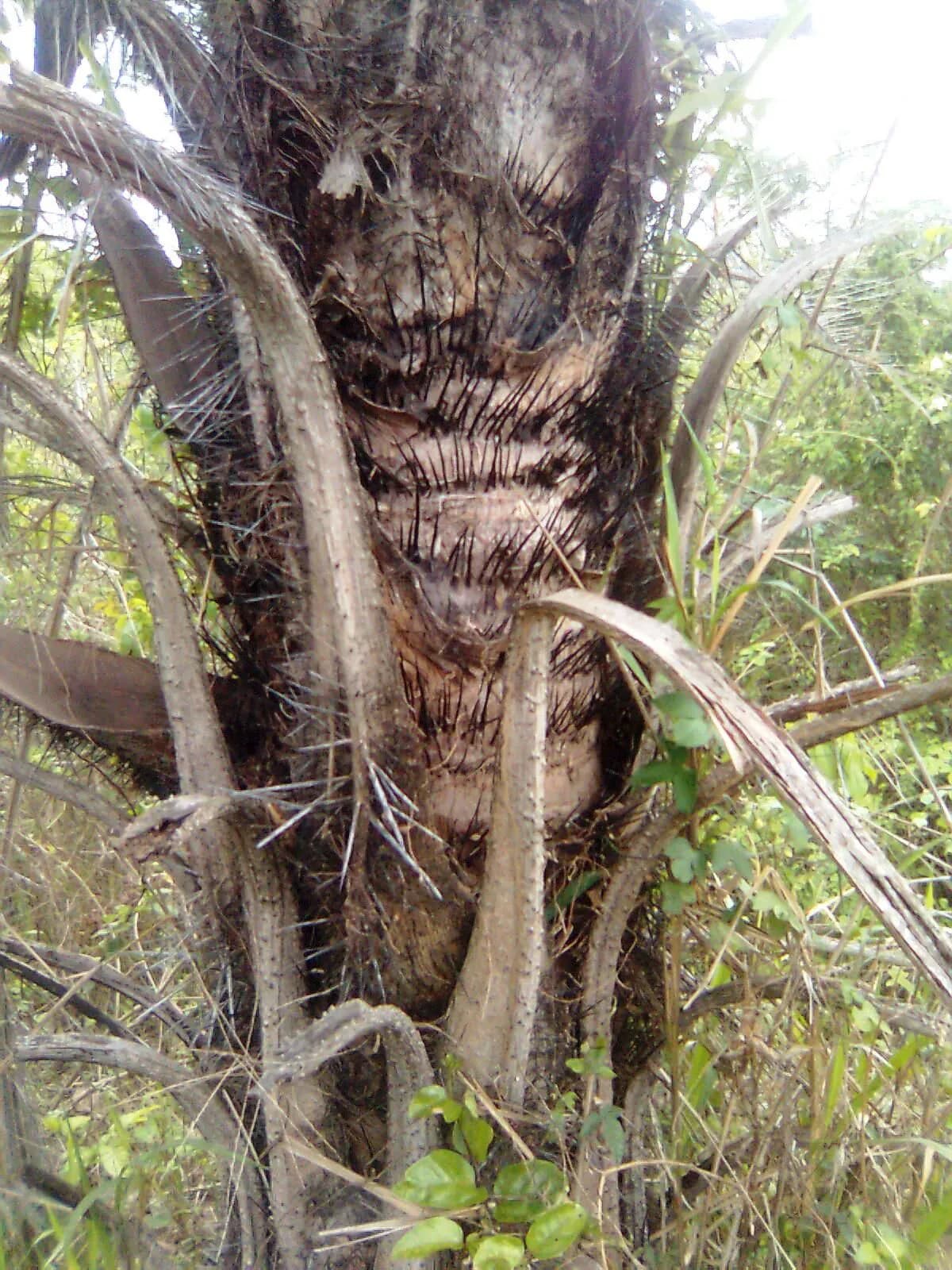
Botanical specimen of Astrocaryum Chambira.