Chocho palm
Astrocaryum Mexicanum • Chocho • Chapay • Chichon
Chocho palm in Motion
The Essence
"Astrocaryum mexicanum is a small, heavily armed understorey palm of lowland rainforest from southern Mexico through Central America, and one of the most intensively studied tropical plant populations in the world. At Los Tuxtlas in Veracruz it is a dominant structural element of the forest floor, representing 20-61% of total plant density, and where it is most dominant it has the effect of reducing the number of individuals of other species. Its scientific value comes from an unusual property: the stem grows at a constant 4.8 cm per year, so an individual's age can be estimated from its height - rare among tropical trees, which generally lack annual rings. Long-term demographic work there has recorded adults 80-140 years old, first reproduction at roughly forty years of age, and most reproductive individuals standing two to six metres tall. It is monoecious and dichogamous, visited by many insect species but mainly by small beetles; no fruit is produced by natural self-pollination, though the palm is not strictly self-incompatible when artificial self-pollination is performed. Flowering peaks in April and mature fruits fall to the ground five months later, travelling a mean of only 0.78-2.35 m from the mother palm, with secondary dispersal by rodents thought to be important. Local people eat the young inflorescences, the palm heart and the seeds, which taste like coconut; the leaves are used for thatch and the stems for tool handles and rural construction. Fruit is also taken by rodents, monkeys and fish. It is only occasionally planted as an ornamental, in places such as Hawaii and Southern California."
The genus name Astrocaryum combines the Greek aster (star) and karyon (nut, seed), referring to the markings on the seed; the epithet mexicanum refers to its Mexican origin.
The species was published by Martius from Liebmann's material as Astrocaryum mexicanum Liebm. ex Mart., Hist. Nat. Palm. 3: 323 (1853). Synonyms include Hexopetion mexicanum, Astrocaryum chichon, A. cohune, A. rostratum, A. warszewiczii and Bactris cohune. From the mid-1970s onwards it became the subject of sustained demographic research at Los Tuxtlas, Veracruz, beginning with Pinero and Sarukhan (1977); continuous demographic monitoring there started in 1975.
Natural Habitat
An understorey palm of the wet tropical biome, growing as a shrub or tree in dense, wet mixed lowland rainforest on well-drained land, particularly hillsides. Elevation records run from sea level to about 400-500 m. It does not grow in areas that remain inundated.
Curated Specimens
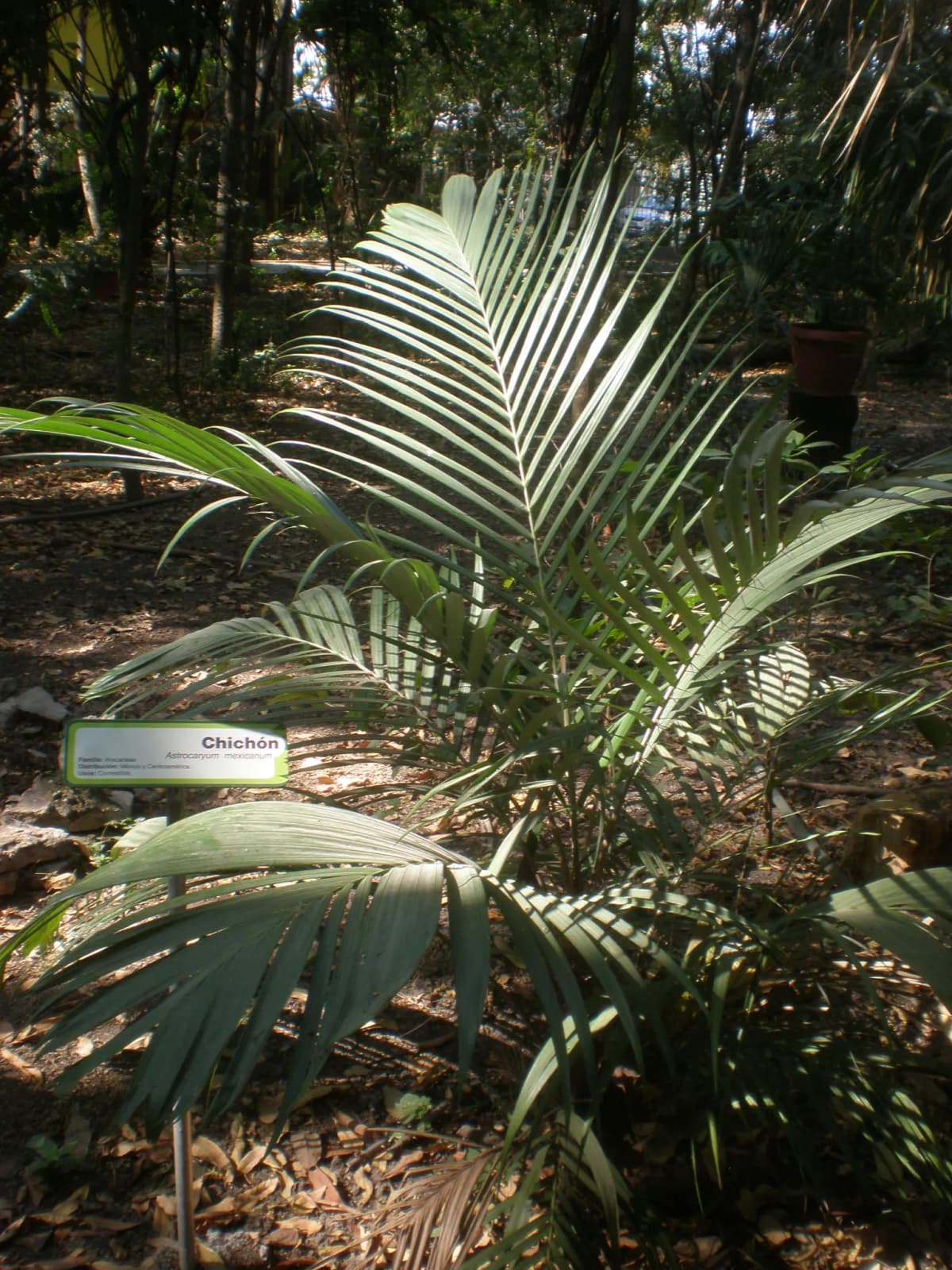
Botanical specimen of Astrocaryum Mexicanum.
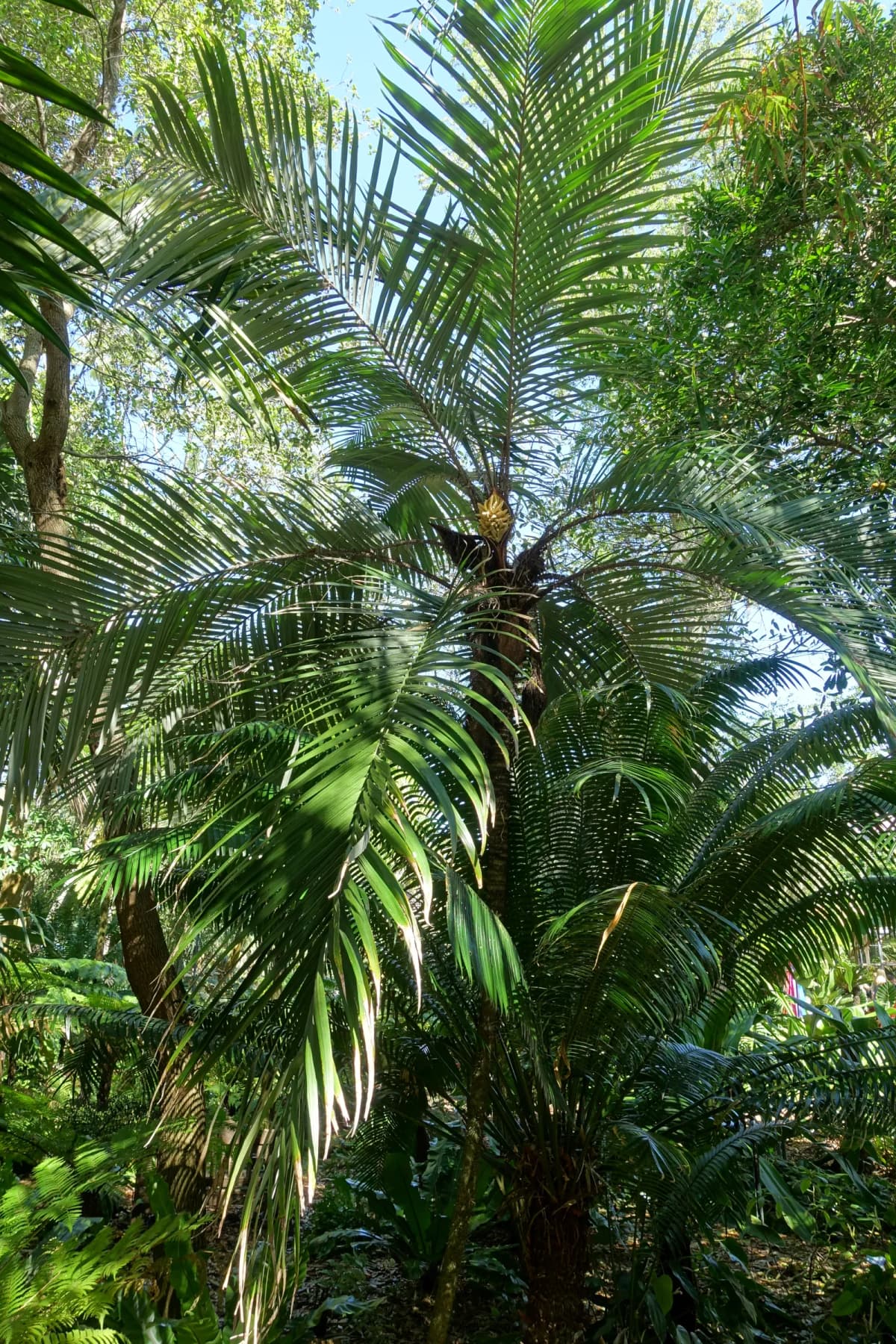
Botanical specimen of Astrocaryum Mexicanum.