Pumbo wax palm
Ceroxylon Echinulatum • Wax palm • Palma de ramos • Palma real • Ramito • Pumbo
The Essence
"Ceroxylon echinulatum is a solitary, dioecious wax palm of the Andes of Ecuador and northern Peru, described only in 1995 by the Colombian palm botanist Gloria Galeano, in Caldasia 17: 399. POWO gives its native range as "Ecuador to Peru"; the 2011 revision of the genus by Sanin & Galeano records it from the western and eastern Andes of Ecuador and the eastern Andes of Peru. It now absorbs the former Ceroxylon alpinum subsp. ecuadorense Galeano, which POWO lists as its only synonym. Palmweb reports that molecular work by Trenel et al. (2007b, 2008), using AFLP and a six-gene dataset, found the two entities well supported as monophyletic and detected active gene flow between them, concluding that cline divergence and Quaternary dispersal have maintained them as one biological continuum. Sanin & Galeano (2011) diagnose the species by a specific combination of characters: a very long petiole, leaves arched with the pinnae regularly arranged and slightly to completely pendulous, staminate flowers with 9-12 stamens and very long-acuminate petals, and fruits whose exocarp is densely covered with prominent, irregular and acute bulges. Its ethnobotany is unusually rich. Young unexpanded leaves (cogollo or ramo) are cut for Palm Sunday processions, woven into ceremonial baskets at Easter and sold for that purpose; the basal portion of the peduncle of young inflorescences is cooked and added to salads; the seeds are roasted or cooked before eating; the fruits are eaten by pigs, which is why palms are often left standing in pastures; the stems are used for houses and fences; and the wax covering the stems was formerly used in Ecuador to make candles. Several of those uses also drive its decline. Palmweb names deforestation and the cutting of young leaves for Palm Sunday (Borchsenius & Skov 1999, Valencia et al. 2000), and reports that Pintaud & Anthelme (2008) consider the destructive use of the stems for house and fence construction, together with habitat loss from forest clearing, to be severely diminishing natural populations. The same authors report the species' use in agroforestry systems and its cultivation for wood extraction as a sustainable alternative already being implemented in the Upper Urumba Valley of northern Peru. Its Red List assessment is old and narrower in scope than its accepted range. Montufar & Pitman assessed it as Vulnerable (A4cd; D2) in 2003, listing country occurrence as Ecuador alone and describing two isolated subpopulations on the eastern Andean slopes there, the northern one in disturbed areas and pastures near Cosanga in Napo province, the southern in Zamora-Chinchipe. The assessment is annotated "Needs Updating" and notes the species is not known from Ecuador's protected-area network. The palm has become a test case for sustainable harvesting. Duarte & Montufar (2012) monitored 60 young palms over two years and found that leaf growth rate and the number of new leaves produced per individual were not adversely affected by leaf harvest, harvested treatments equalling or exceeding the control, although the balance of leaves in the crown was negative after harvest. They concluded that biennial harvesting of one young leaf per individual could be sustainable, marking palms with nine or more crown leaves in separate quadrants for rotational, monitored extraction. In horticulture the palm is essentially absent: Useful Tropical Plants records its cultivation status simply as "Wild", and illustrates it with a plant grown in the Botanical Gardens of Quito."
Ceroxylon derives from Ancient Greek keros (wax) and xylon (wood), referring to the wax coating the trunks. In botanical Latin echinulatus means "with very small prickles", echinulate, and the related echinatus derives from Latin echinus, hedgehog or sea urchin. No source retrieved states the derivation for this species explicitly, but the sense corresponds directly to the character Sanin & Galeano use to diagnose it: fruits whose exocarp is densely covered with prominent, irregular and acute bulges. Palmpedia gives the phonetic rendering as seh-ROKS-ih-lon ehk-heen-oo-LAH-tuhm.
A relatively recently recognised species, described by Gloria Galeano Garces (1958-2016), a Colombian botanist and agronomist specialising in palms, in Caldasia 17: 399 (1995). The wax covering its stems was formerly used in Ecuador to make candles, and its young leaves have long been cut for Palm Sunday processions and Easter basketry.
Natural Habitat
Humid premontane and lower montane Andean forest. Published elevation ranges differ between sources: 1,600-2,200 m (Sanin & Galeano 2011, via Palmweb); 1,800-1,920 m of montane rain forest (Henderson et al. 1995); 1,500-2,000 m (IUCN 2003); and 1,200-2,250 m (Duarte & Montufar 2012, whose abstract instead says 1,000-2,000 m). POWO records it as a tree growing primarily in the wet tropical biome. Beyond intact forest it persists in pastures, coffee plantations, crop plots and forest remnants, forming populations of hundreds of individuals, though it was apparently far more abundant in the past. On Ecuador's eastern Andes extensive populations of old individuals still stand in the middle of pastures, and regeneration is usually very abundant near forest patches left along streams.
Curated Specimens
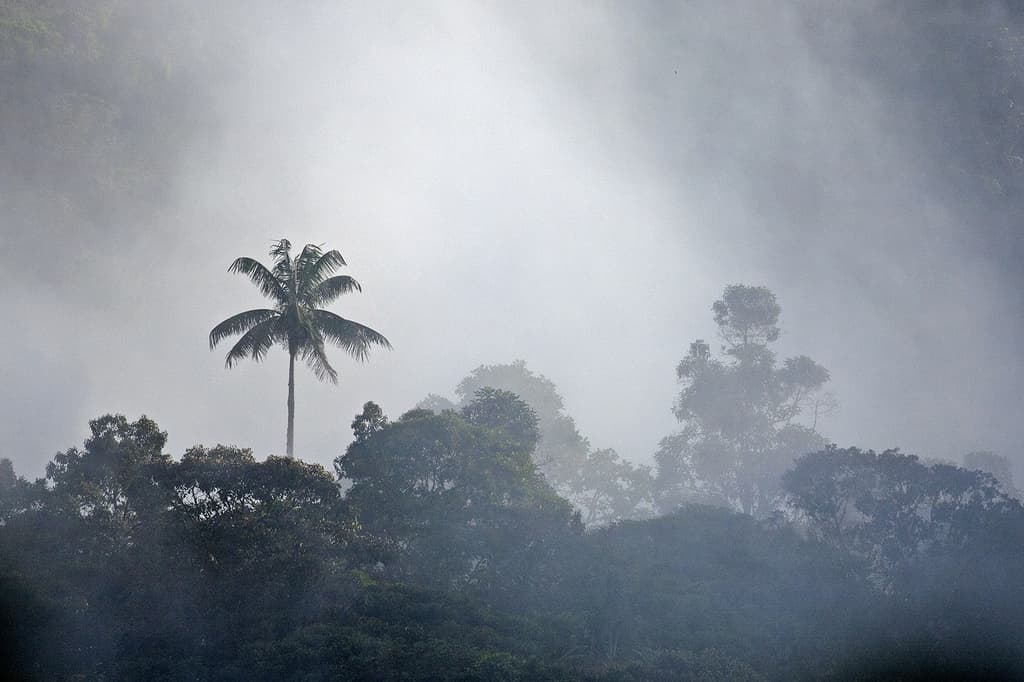
Botanical specimen of Ceroxylon Echinulatum.
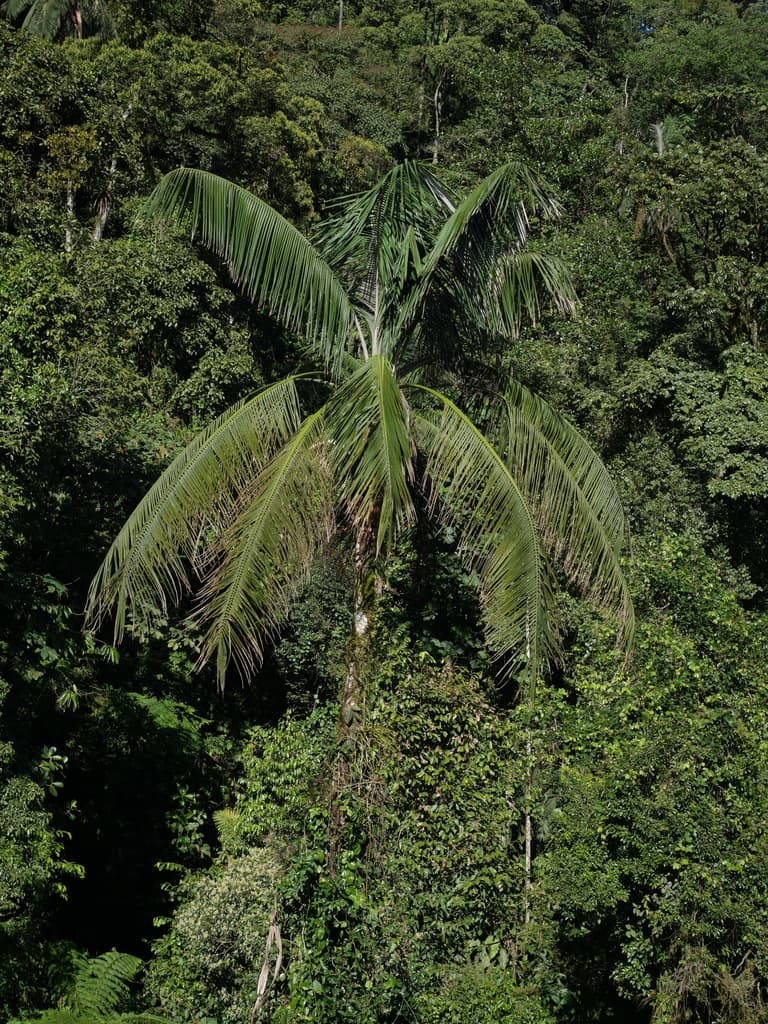
Botanical specimen of Ceroxylon Echinulatum.
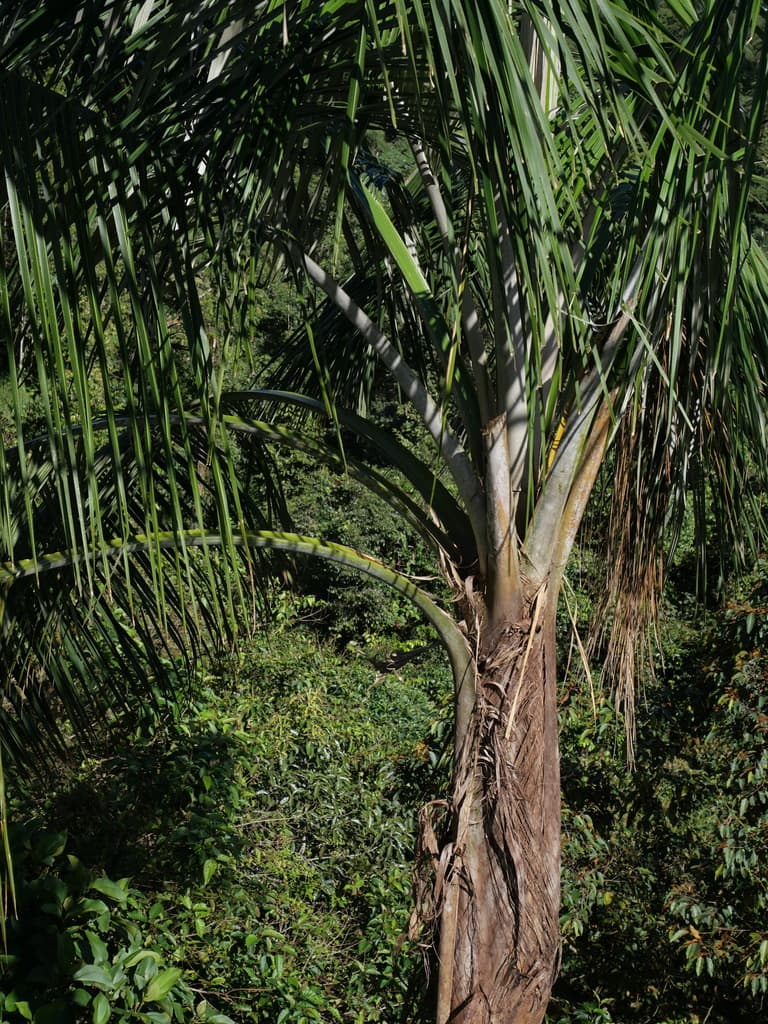
Botanical specimen of Ceroxylon Echinulatum.
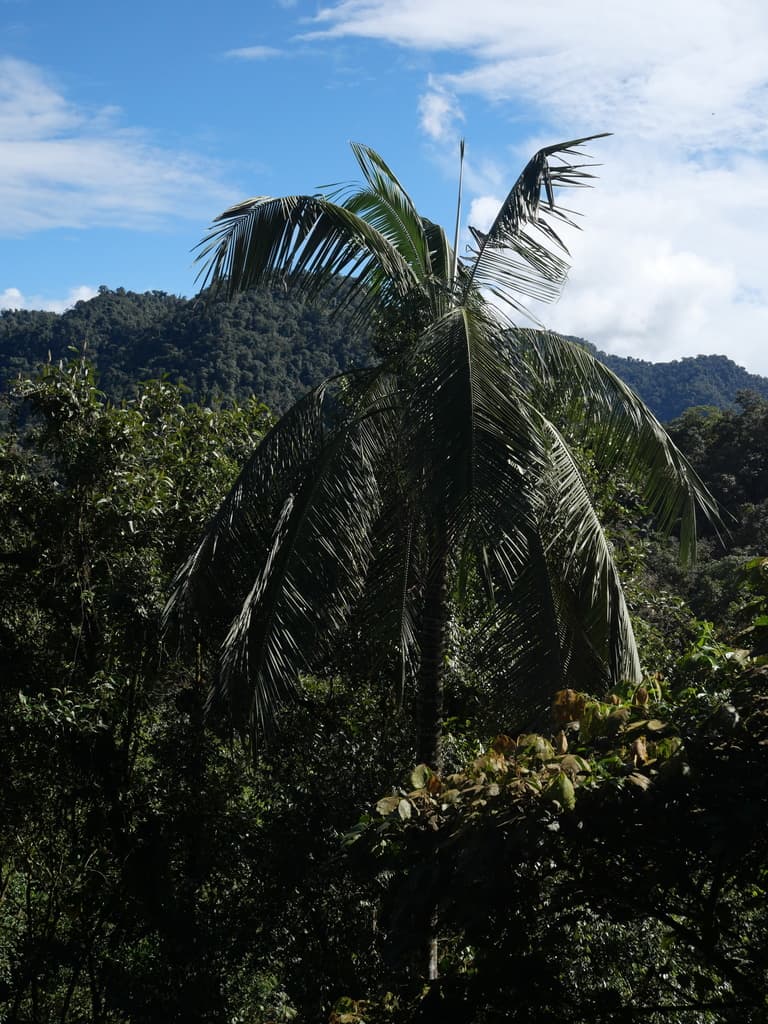
Botanical specimen of Ceroxylon Echinulatum.
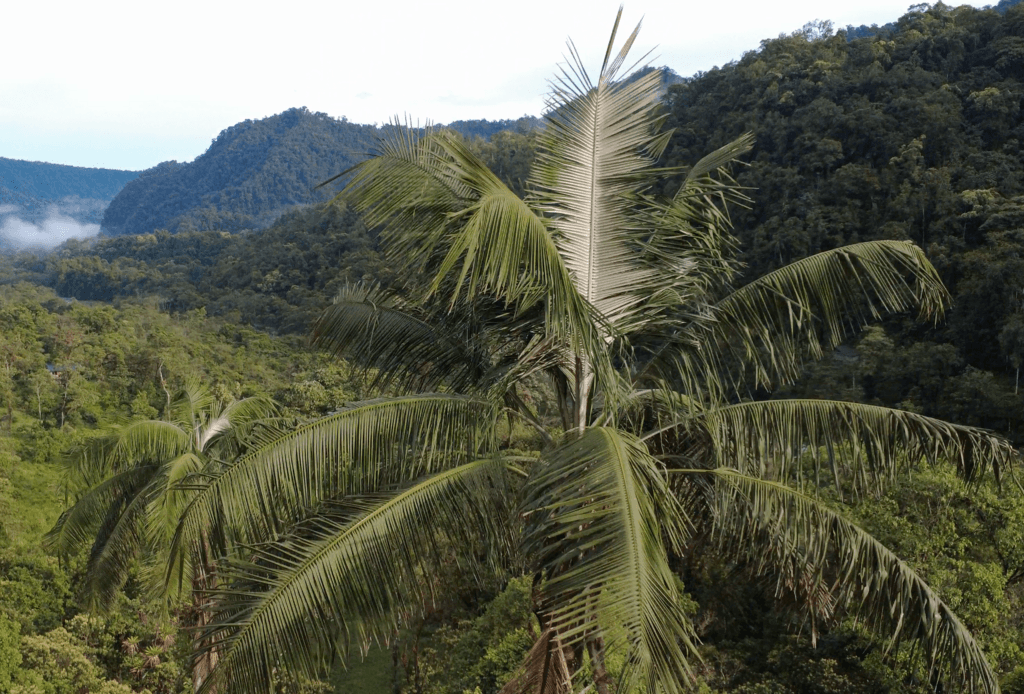
Botanical specimen of Ceroxylon Echinulatum.
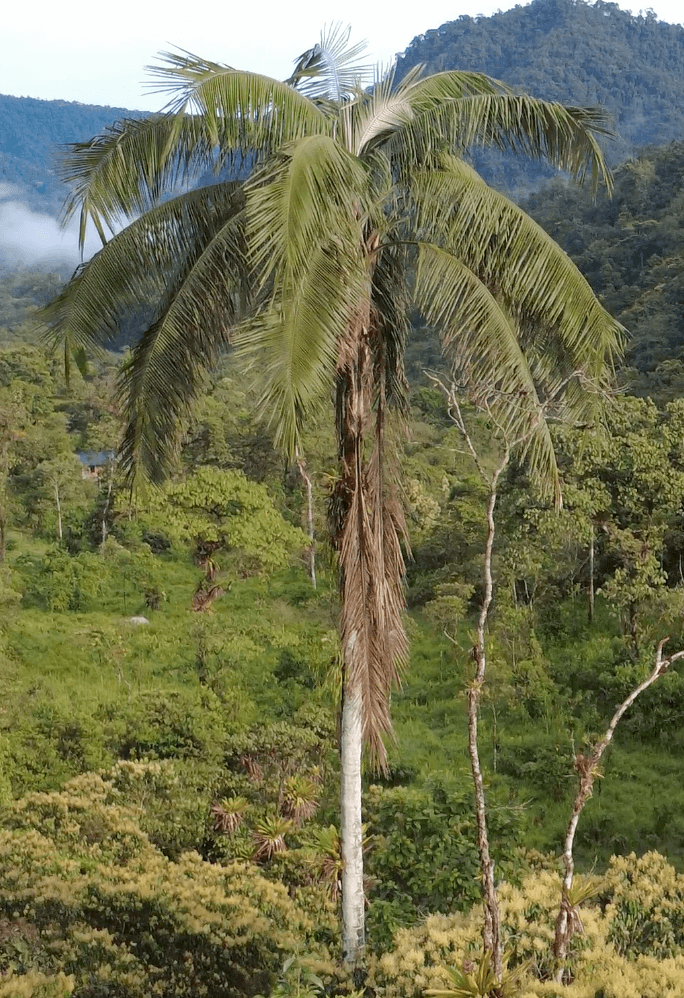
Botanical specimen of Ceroxylon Echinulatum.
Sources & Conservation
Curated- Ceroxylon echinulatum Galeano | Plants of the World Online | Kew Science · accessed 2026-09
- Ceroxylon echinulatum Galeano, Caldasia 17: 399 (1995) | PALMweb · accessed 2026-09
- Ceroxylon echinulatum - Palmpedia, Palm Grower's Guide (carrying Sanin & Galeano 2011 and Borchsenius 1998 via Palmweb) · accessed 2026-09
- Ceroxylon echinulatum - Useful Tropical Plants (citing Henderson, Galeano & Bernal 1995) · accessed 2026-09
- Ceroxylon echinulatum - IUCN Red List of Threatened Species (Montufar & Pitman 2003, Vulnerable A4cd; D2) · accessed 2026-09
- GBIF Backbone Taxonomy - Ceroxylon echinulatum Galeano (key 2731842) · accessed 2026-09