Quindío wax palm
Ceroxylon Quindiuense • Andean wax palm • Wax palm • Palma de cera • Palma de ramo • Palma del Quindío
Quindío wax palm in Motion
The Essence
"Ceroxylon quindiuense is the tallest palm in the world and the tallest recorded monocot, with a solitary white, wax-covered stem reaching (13–)20–45(–60) m; Sanín and Galeano's 2011 revision figures a measured individual of 52 m. It grows in humid Andean cloud forest, usually at 2000–3000 m, and has been Colombia's national tree since 1985, with legal protection under Law 61 of 1985. Its ecological role is substantial: the fruits feed thrushes (Turdus spp.), green jays, emerald toucanets and parrots, including the critically endangered yellow-eared parrot (Ognorrhynchus icterotis), which is closely associated with this palm. The species is long-lived and slow-growing, and is now assessed as Critically Endangered on the IUCN Red List; within Colombia it is separately listed as Endangered on the national palm Red List. Most of its forest has been converted to pasture, so that while hundreds of adult palms still stand, the young seedlings do not grow; years of cutting young leaves for Palm Sunday killed many individuals and delayed growth, and an unknown disease has been causing the death of many adult palms."
The genus name Ceroxylon derives from Greek kèròs, wax, and xýlon, wood, in reference to the thick white wax found on the trunks. The epithet quindiuense refers to the Quindío Pass in the Colombian Andes, where the palm occurs in great numbers. The species was published as Klopstockia quindiuensis H.Karst. (1859) and transferred to Ceroxylon by H. Wendland in Bonplandia (Hannover) 8: 70 (1860); the lectotype, designated by Moore & Anderson (1976), is Karsten's own published plate. Ceroxylon floccosum Burret is a heterotypic synonym.
The genus Ceroxylon was described by Bonpland and Humboldt in 1804 on the type species C. alpinum — a palm long confused with the parapatric C. quindiuense until Moore and Anderson disentangled the two in 1976. Extraction of the stem wax was economically important in 19th-century Colombia for making candles and matches sold at local markets: people climbed the stem but more often felled the palm, and indigenous people sold the wax in small cakes (Boussingault 1849). The practice declined with the advent of electricity but persisted until the Second World War, when artificial wax replaced it, and Colombian statistics still reported wax export to France in 1945–46. At Ocol in Amazonas, Peru, wax extraction persists today: palms are felled each year during October, laid on black cloths and pounded so the waxy litter gathers as flakes, which are melted with beeswax and impregnated into twisted linen torches for outdoor lighting. Stems are also cut for posts, houses and fencing, or split to line indoor walls.
Natural Habitat
Humid montane (cloud) forest, usually at 2000–3000 m and rarely to 3150 m; POWO gives a wider band of 1550–3100 m and places the species in the wet tropical biome. It usually forms large, dense populations, many of which remain on pastures and forest remnants, especially on very steep slopes — so many surviving stands are relict adults standing in cleared pasture rather than intact forest, where no regeneration can take place.
Curated Specimens
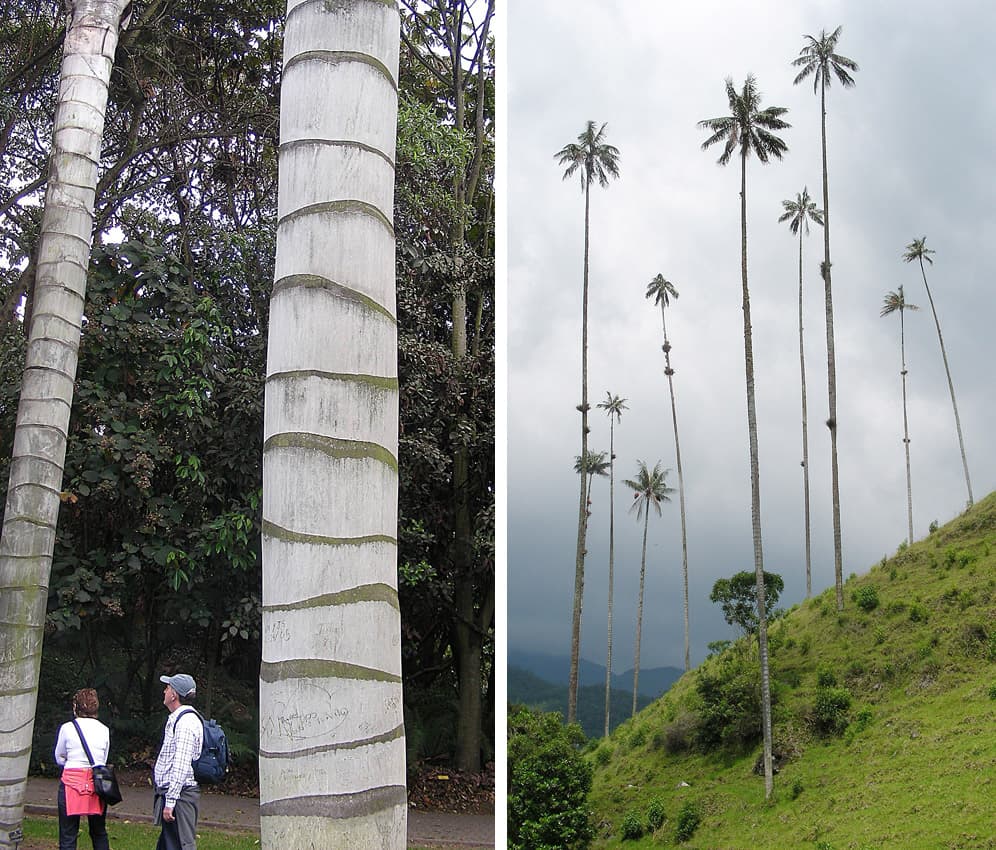
Botanical specimen of Ceroxylon Quindiuense.
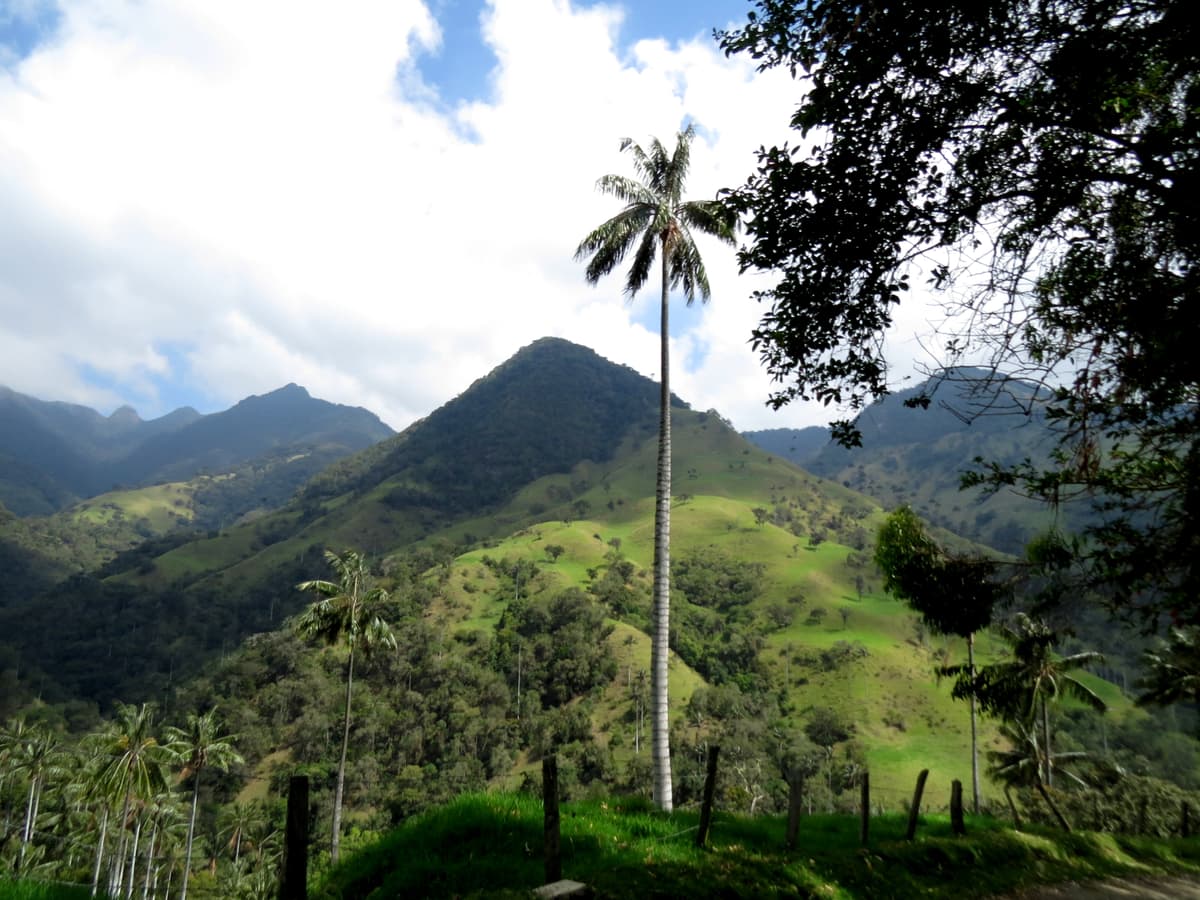
Botanical specimen of Ceroxylon Quindiuense.
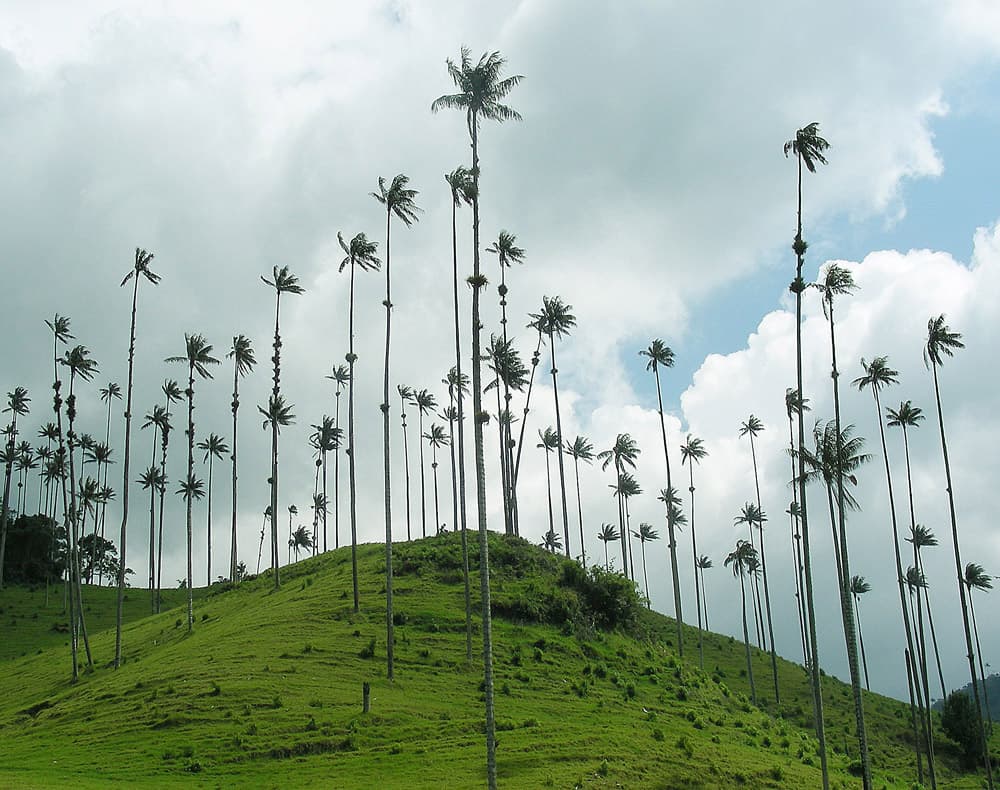
Botanical specimen of Ceroxylon Quindiuense.
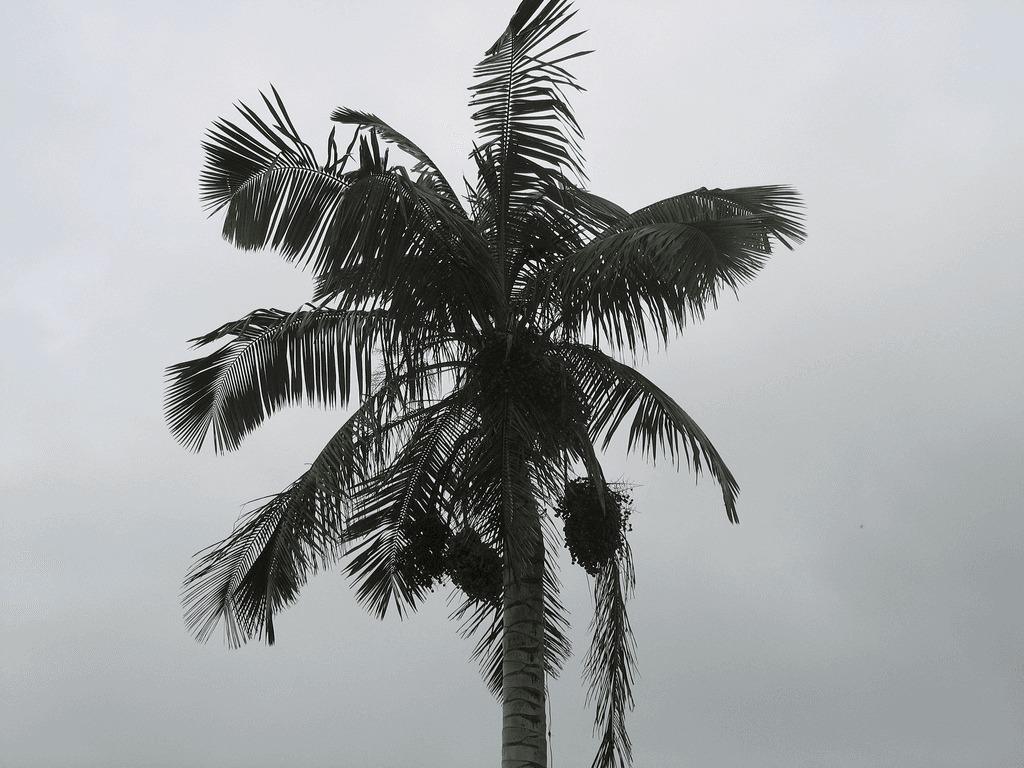
Botanical specimen of Ceroxylon Quindiuense.
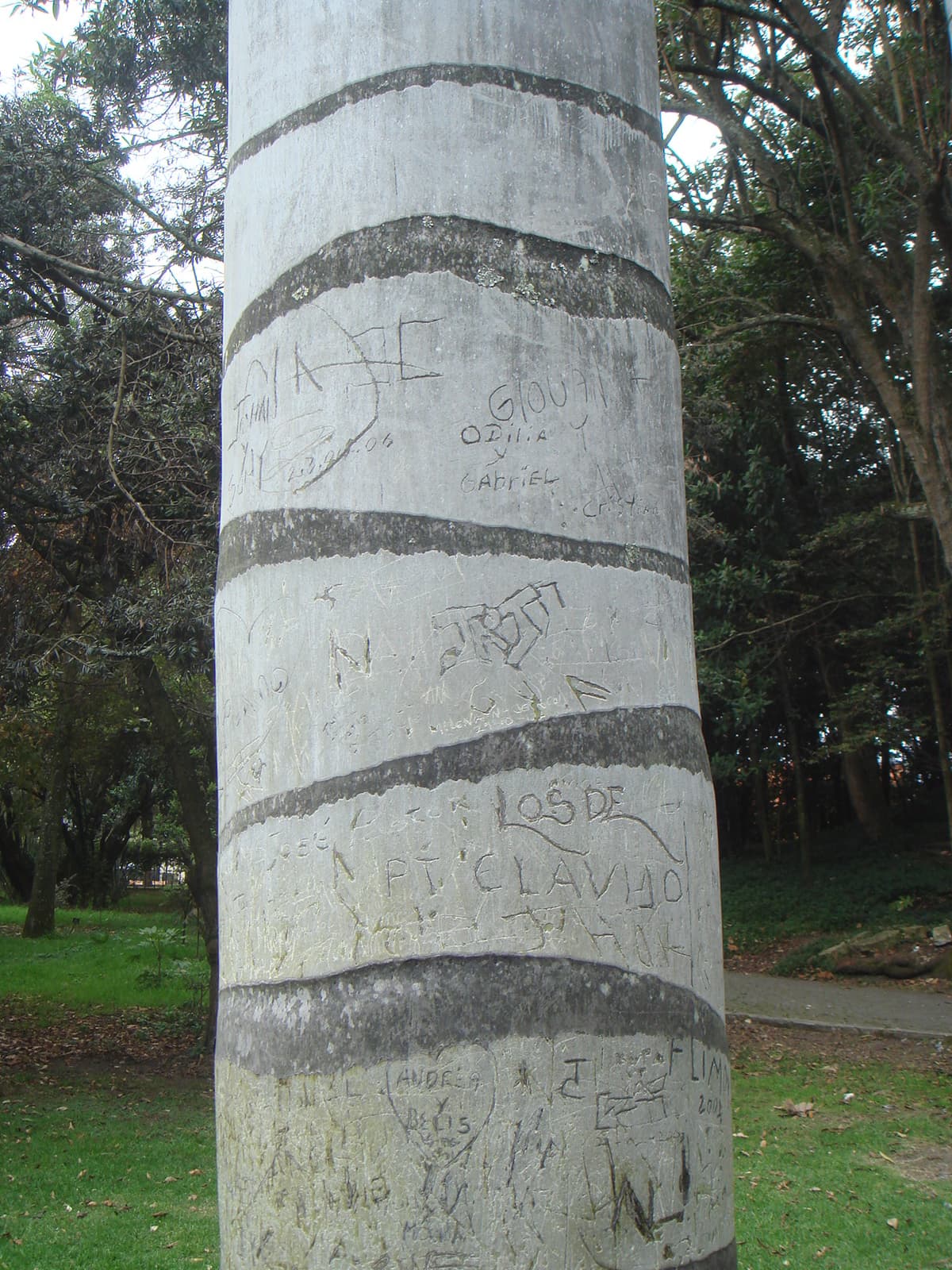
Botanical specimen of Ceroxylon Quindiuense.
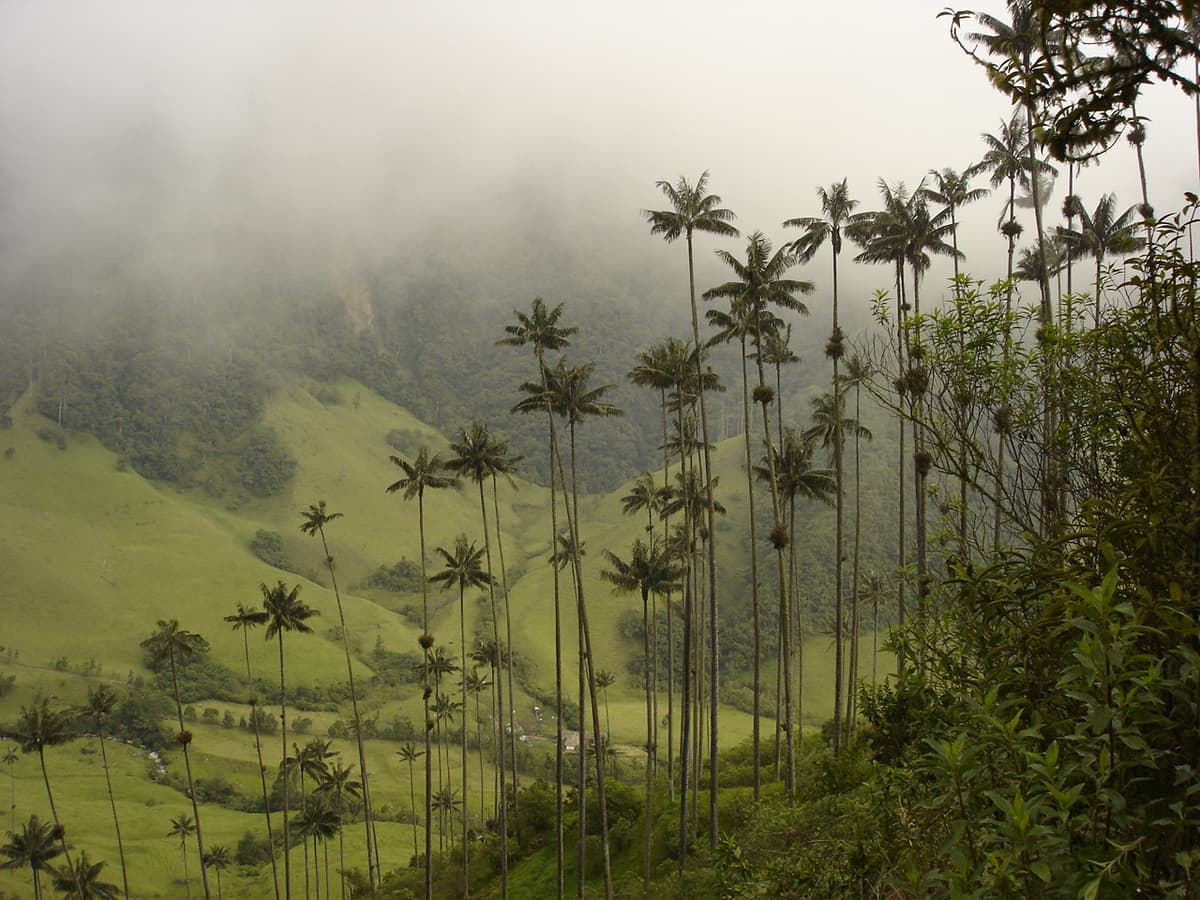
Botanical specimen of Ceroxylon Quindiuense.
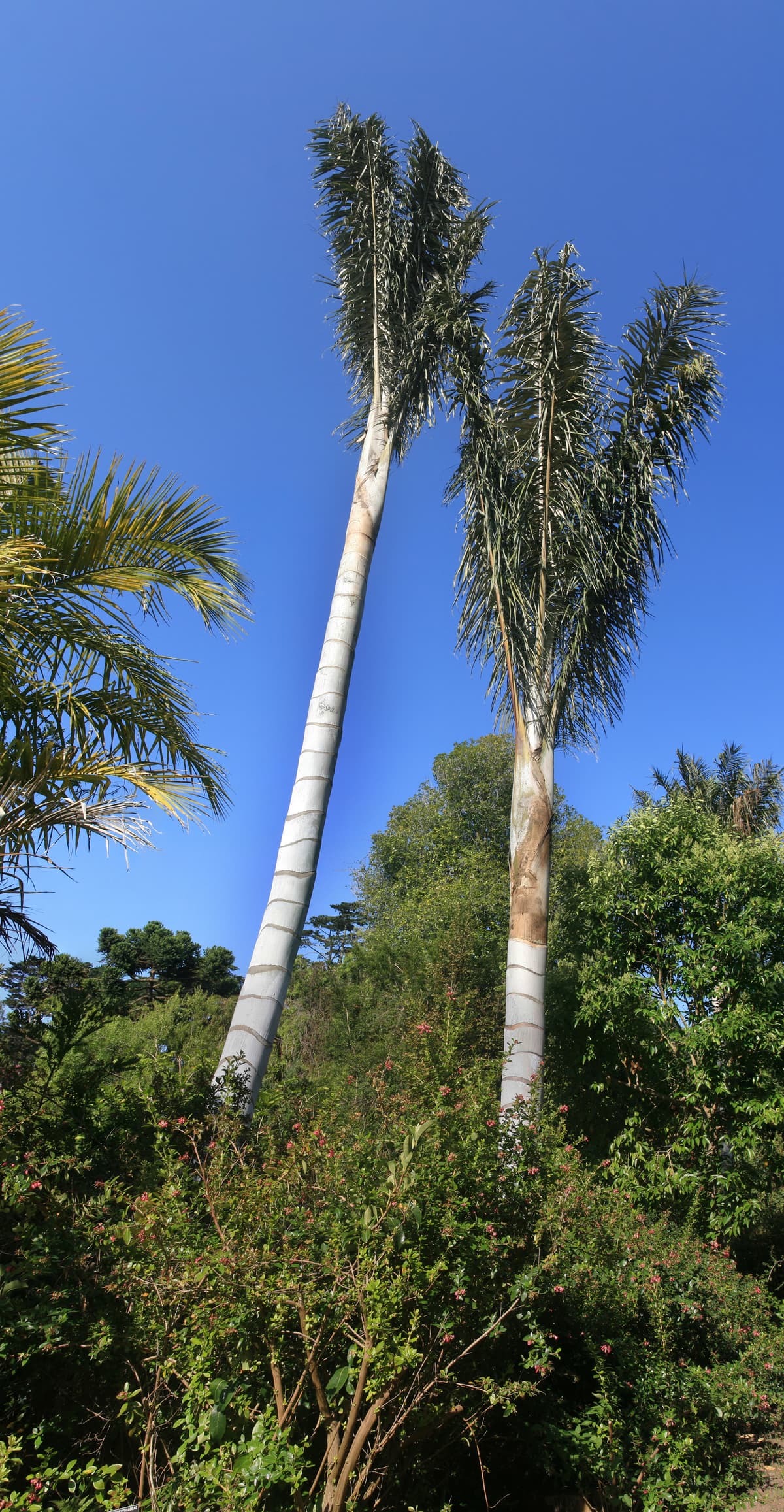
Botanical specimen of Ceroxylon Quindiuense.
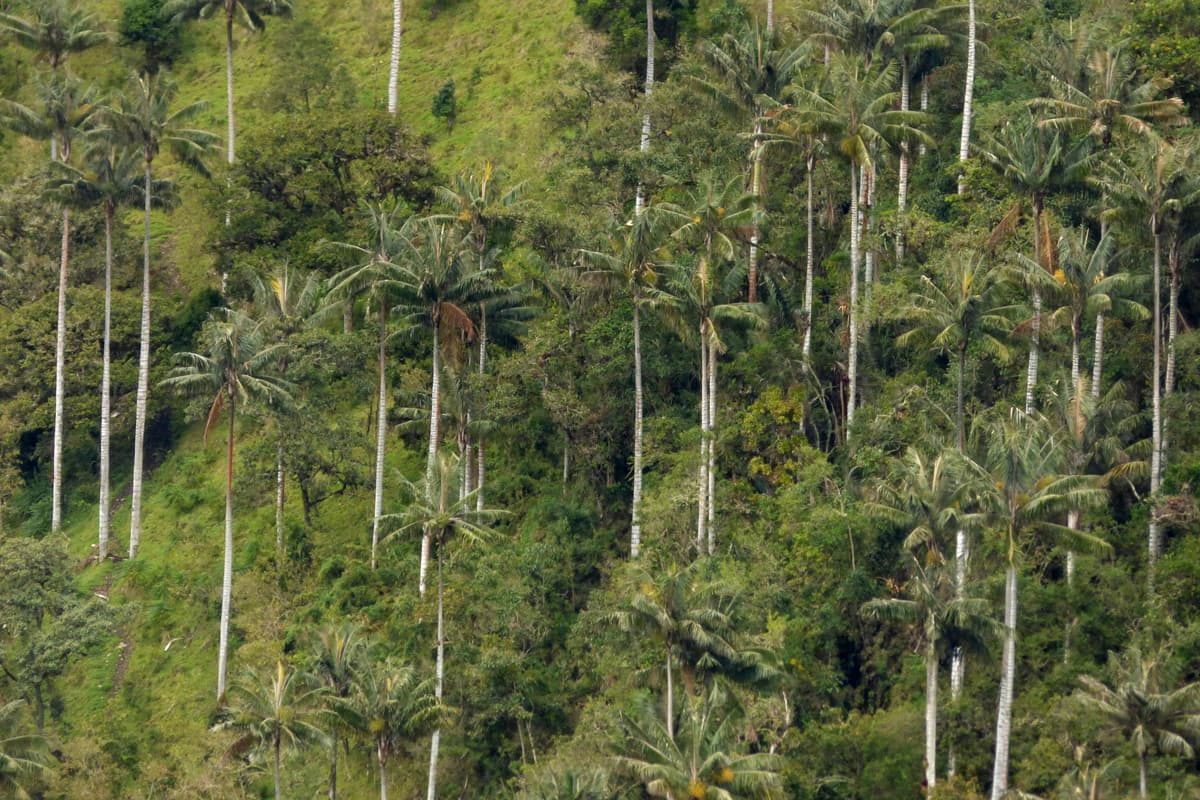
Botanical specimen of Ceroxylon Quindiuense.
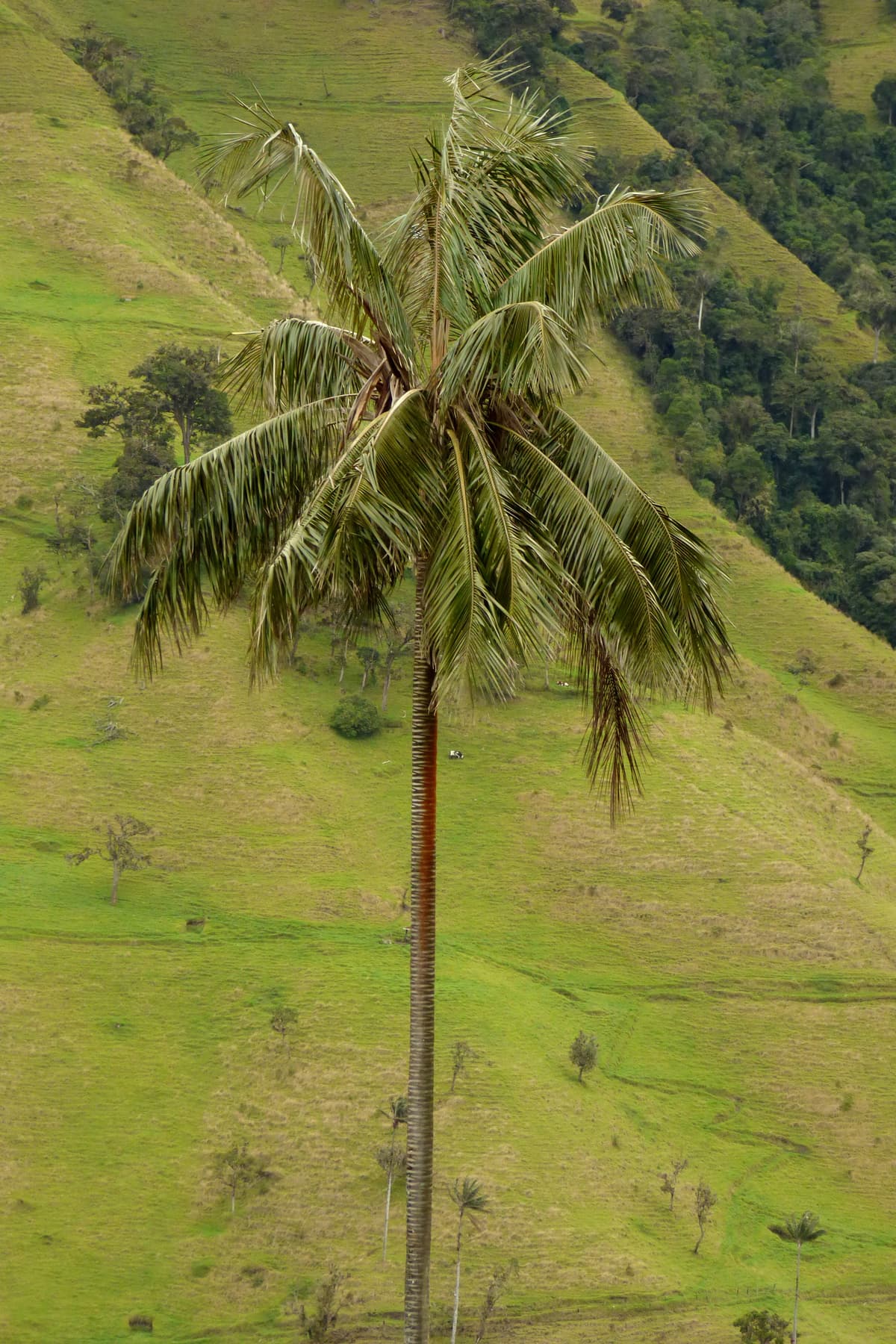
Botanical specimen of Ceroxylon Quindiuense.
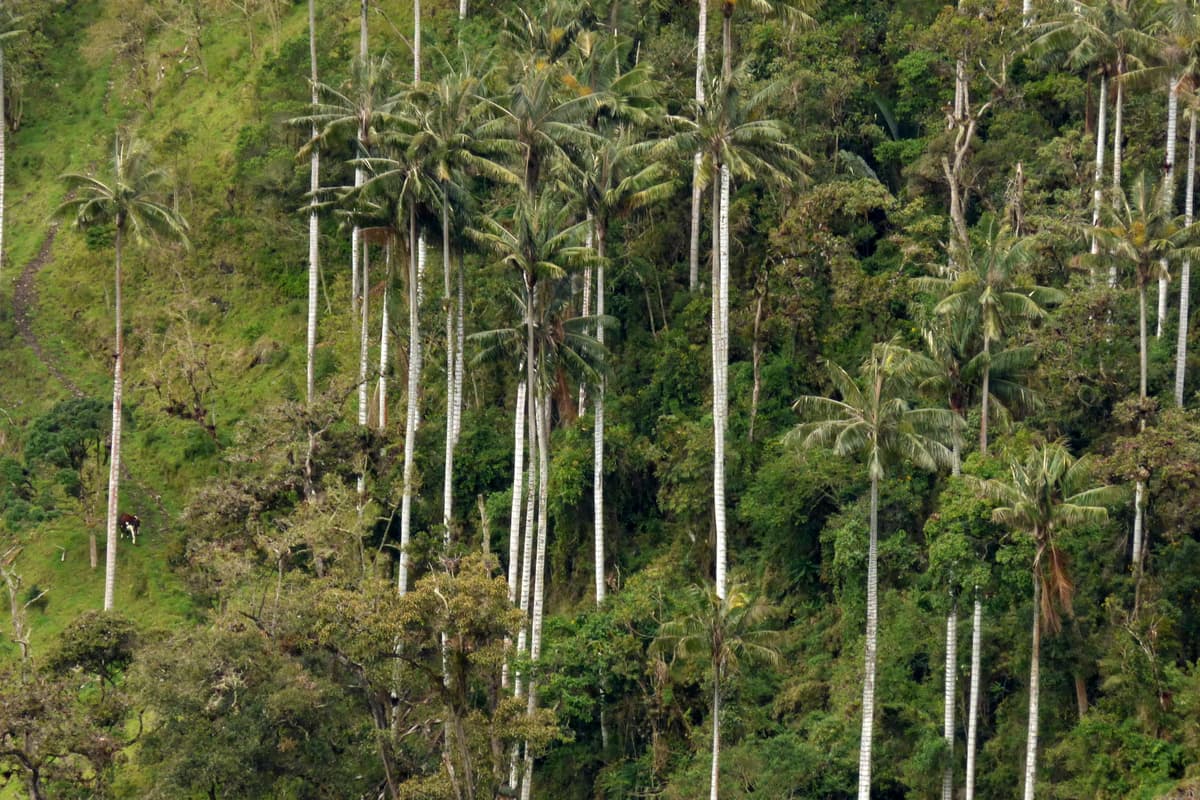
Botanical specimen of Ceroxylon Quindiuense.