Old man palm
Coccothrinax Crinita • Cuban thatch palm • Thatch palm • Palma petate • Guano barbudo • Guano petate • Latanier chevelu
Old man palm in Motion
The Essence
"Coccothrinax crinita, the old man palm, is a solitary fan palm endemic to Cuba, growing in low-lying, seasonally flooded savannas and thorny scrub on serpentine soils. Two subspecies are accepted: subsp. crinita and subsp. brevicrinis, the latter with shorter and less dense leaf-sheath fibres and occurring in central Cuba. Its name comes from the trunk, which persistent leaf sheaths wrap in a thick layer of wool-like fibre that makes a stem only 8-20 cm thick look bulky and shaggy. Young trees carry the heaviest growth of stringy tan fibre, which sheds on mature specimens to reveal a narrow brown trunk. That beard has made it a sought-after collector's palm, grown in botanical collections: Fairchild Tropical Botanic Garden holds six accessioned specimens across five plots. In the wild it is close to disappearing. Subsp. crinita is strictly endemic to Bahía Honda municipality in western Cuba, near Las Pozas in Artemisa province, and is treated as Critically Endangered on the Cuban red list. A 2018 conservation review in Oryx found it is conserved in no protected area, reported recruitment in the wild population but no population-size estimate, and identified unsustainable ethnobotanical harvest for broom manufacture, uncontrolled fires, invasive alien species and interspecific hybridization among the threats facing the group; one widely repeated figure, given by Wikipedia, puts the remaining wild trees at 60-130. A field study of one locality sampled 10 palms within a 500 m² area. The same fibres are the pressure: leaves are cut for thatch and bowls, the fibre used for rope, brooms, mattress stuffing, hats, purses and fence poles. Growth is famously slow, and propagation research - a 2017 seed-dormancy study and separate work on the palm's arbuscular mycorrhizal associations - has been framed around supporting propagation and conservation of the species."
The genus name Coccothrinax combines coccus, the Latin word for berry, with the genus name Thrinax. The epithet crinita is Latin for hairy, referring to the hair-like fibres covering the trunk. The Spanish name guano barbudo pairs guano, the Cuban term for thatch palm, with barbudo, bearded, while palma petate refers to the petate, the woven palm matting the leaves are used for.
The combination was published by Beccari in Webbia 2: 334, dated by IPNI to 31 December 1907, although Palmweb and World Flora Online cite 1908. IPNI and GBIF give the basionym as Thrinax crinita R.D.Hoyt, published in Gardening (Chicago) 2(46): 369 in 1894, while Wikipedia, Palmweb and World Flora Online cite the authorship as (Griseb. & H.Wendl. ex C.H.Wright) Becc. Kew's current treatment in POWO, and a recent Kew Bulletin paper on the palm's nomenclatural history, both use (R.D.Hoyt) Becc. Antia crinita and Thrinax crinita are listed as synonyms. Ethnobotanical use of the palm is extensive - leaves for thatch and bowls, fibre for pillows, rope, brooms, mattress stuffing, hats and purses, and the trunk for shelter and fence poles - and that harvesting is now itself a driver of the species' decline.
Natural Habitat
Low-lying, seasonally flooded savannas, occasionally in hilly areas, on serpentine soils from sea level to about 300 m, with Wikipedia giving up to 500 m. Soils are typically serpentine or otherwise poor in nitrogen, potassium and phosphorus. At one studied wild locality in the Pan de Guajaibón foothills the vegetation is thorny xerophytic scrub on serpentine with secondary shrub cover, at 36-156 m elevation on a lithic Calcic Cambisol derived from serpentinite, with a mean annual temperature of 24.9 °C and 1,307 mm of rainfall.
Curated Specimens
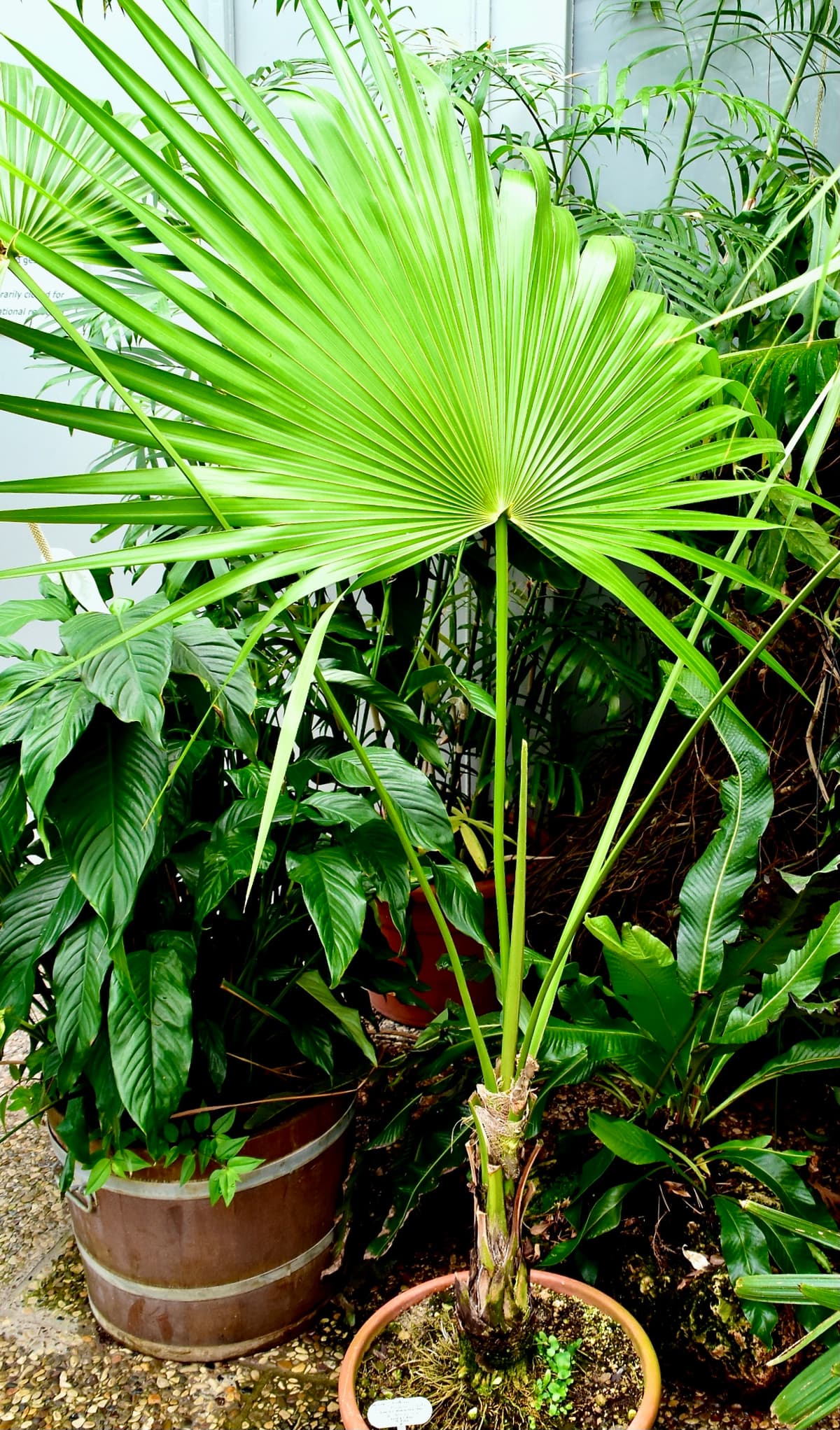
Botanical specimen of Coccothrinax Crinita.
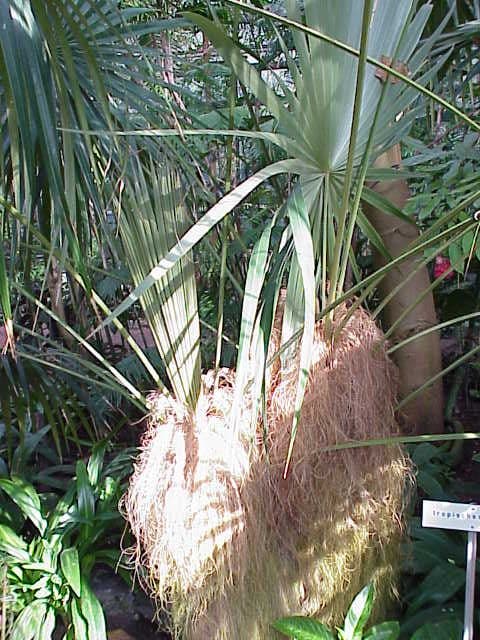
Botanical specimen of Coccothrinax Crinita.
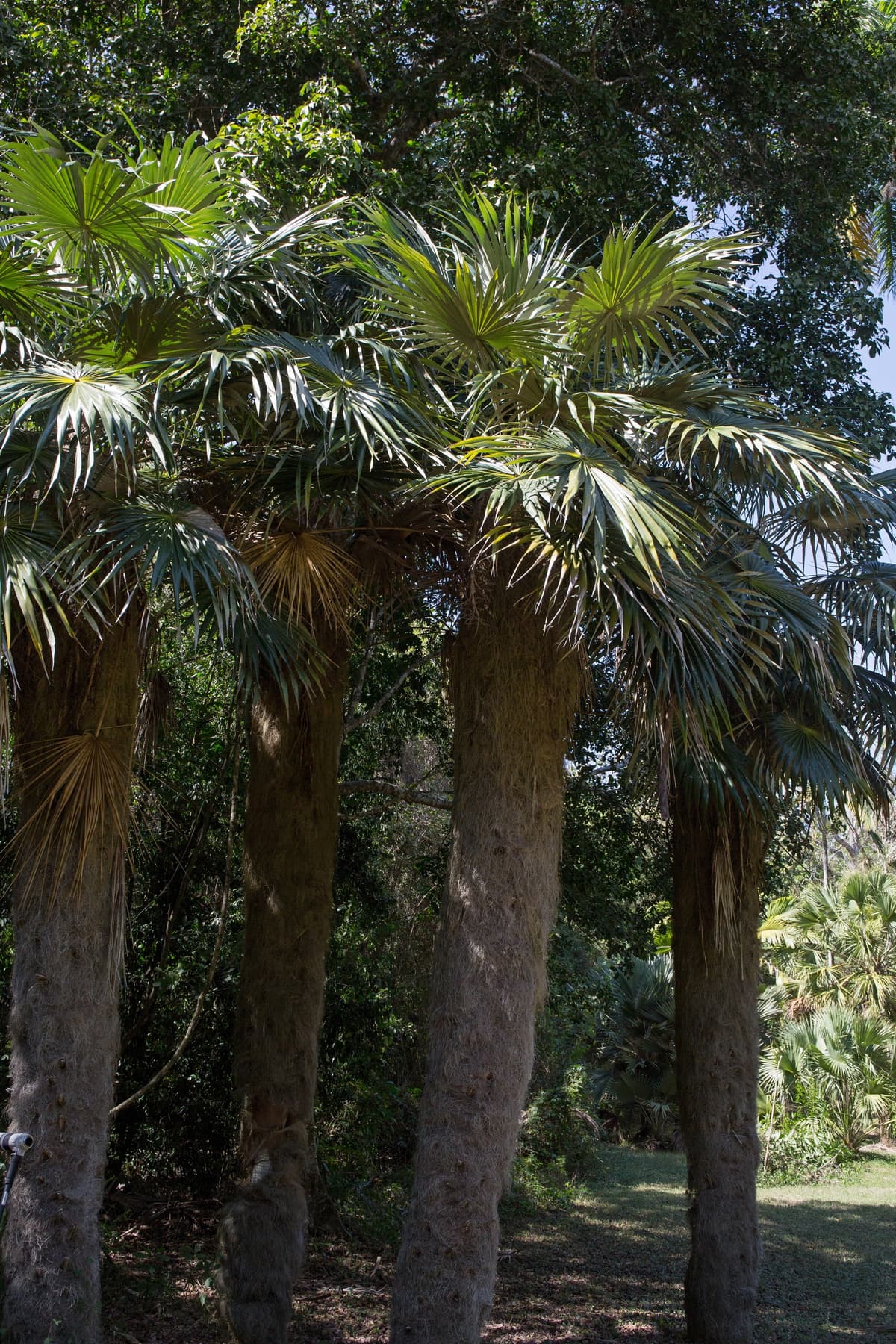
Botanical specimen of Coccothrinax Crinita.
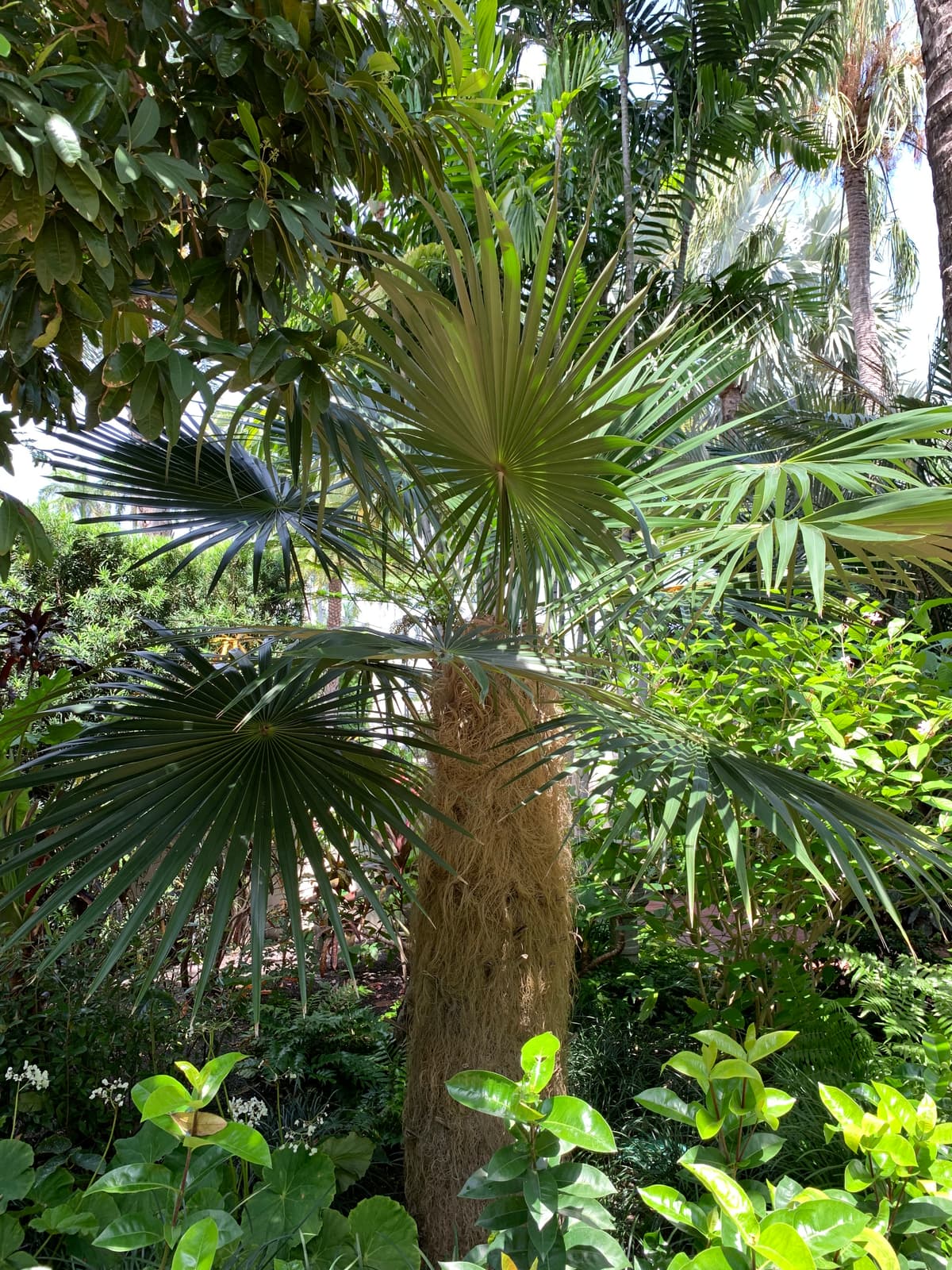
Botanical specimen of Coccothrinax Crinita.