Diamond joey palm
Johannesteijsmannia Altifrons • Joey palm • Umbrella leaf palm • Litter collecting palm • Daun payung
Diamond joey palm in Motion
The Essence
"Johannesteijsmannia altifrons is a trunkless understorey palm of the wet tropical forests of southern Thailand, Peninsular Malaysia, Sumatra and Borneo. It is the most widespread of the four species in its genus; the other three — J. lanceolata, J. magnifica and J. perakensis, all described by John Dransfield in 1972 — are restricted endemics of Peninsular Malaysia. Instead of a visible trunk it has a creeping subterranean stem, from which rises a dense crown of 20 to 30 huge, undivided, pleated, diamond-shaped leaves. LLIFLE lists 'litter collecting palm' among its English names. Its small cream flowers are unusual in scent: Wikipedia records a smell of sour milk, while NParks Singapore describes a strong sweet-and-sour odour. The Malay name Daun payung, 'umbrella leaf', reflects use of the fronds as thatching and as improvised umbrellas; LLIFLE also reports the young endosperm as edible."
The genus honours Johannes Elias Teijsmann (1808–1882), the Dutch botanist associated with the Bogor Botanical Gardens in Java from 1830 to 1869. The epithet altifrons combines Latin altus, 'high' or 'tall', with frons, 'foliage', referring to the tall leaves. H.E. Moore established the genus name in Principes 5: 116 (1961), replacing the earlier illegitimate Teysmannia Rchb.f. & Zoll. (1858).
Published as Johannesteijsmannia altifrons (Rchb.f. & Zoll.) H.E.Moore in Principes 5: 116 (1961), based on the basionym Teysmannia altifrons Rchb.f. & Zoll., Linnaea 28: 657 (1858). GBIF lists the name as an accepted species in Arecaceae.
Natural Habitat
Grows in humid primary rainforest on ridge-tops and hillsides, on well-drained soils covered by a thick layer of decaying plant material. Elevation figures vary by source: Palmpedia describes montane rainforest up to 1200 m, NParks Singapore gives 0–1000 m in hill dipterocarp forest, and Monaco Nature Encyclopedia notes it occurs mainly between 300 and 800 m. LLIFLE states it never appears in secondary forest, and NParks records it primarily from undisturbed primary forest.
Curated Specimens
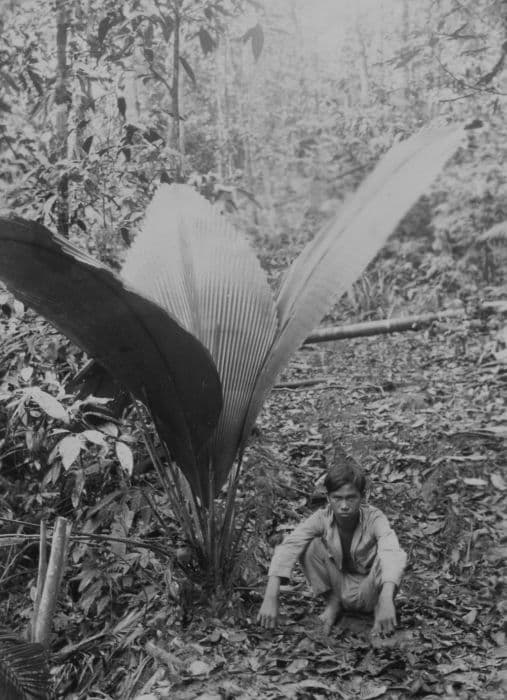
Botanical specimen of Johannesteijsmannia Altifrons.
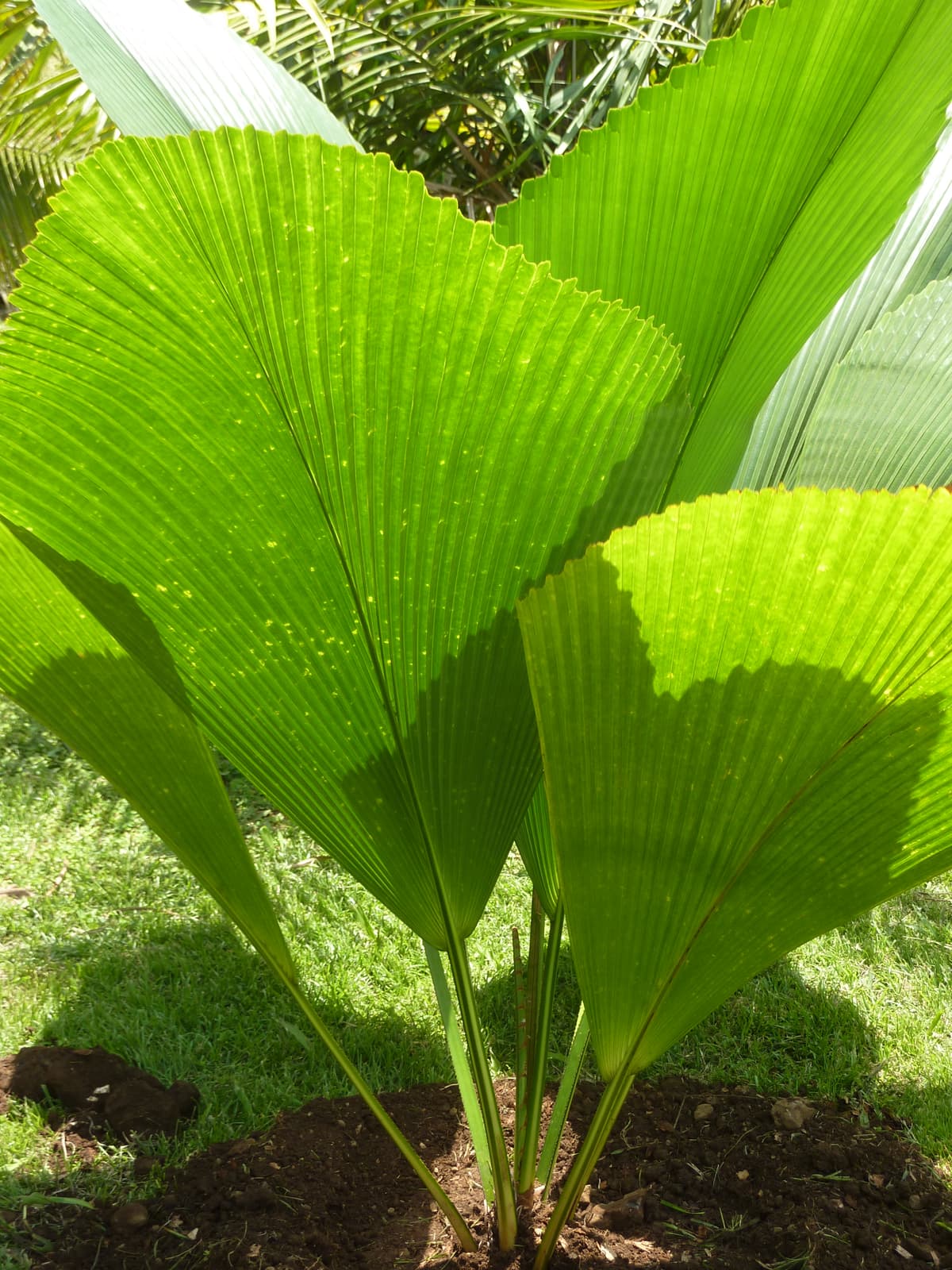
Botanical specimen of Johannesteijsmannia Altifrons.
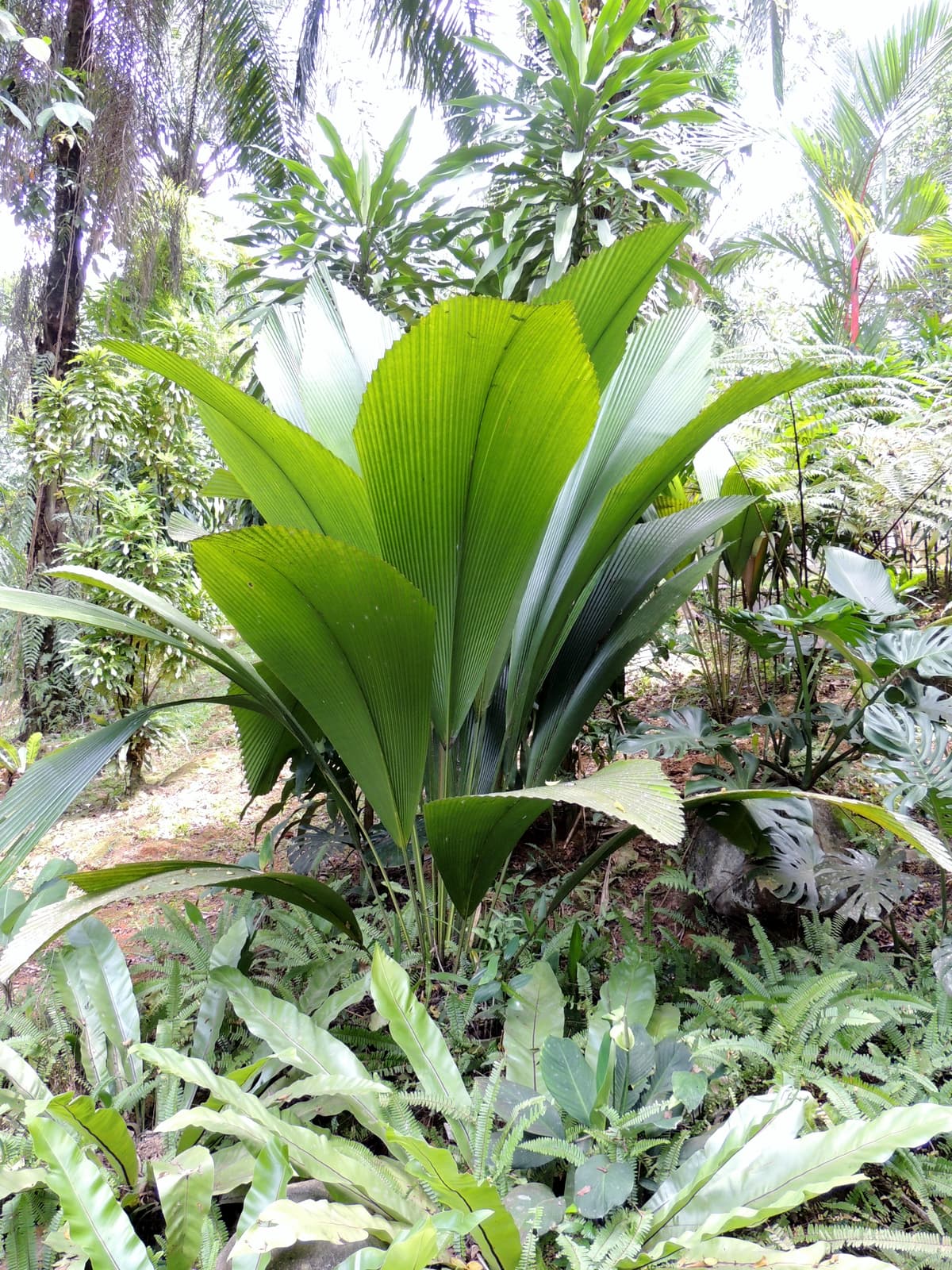
Botanical specimen of Johannesteijsmannia Altifrons.
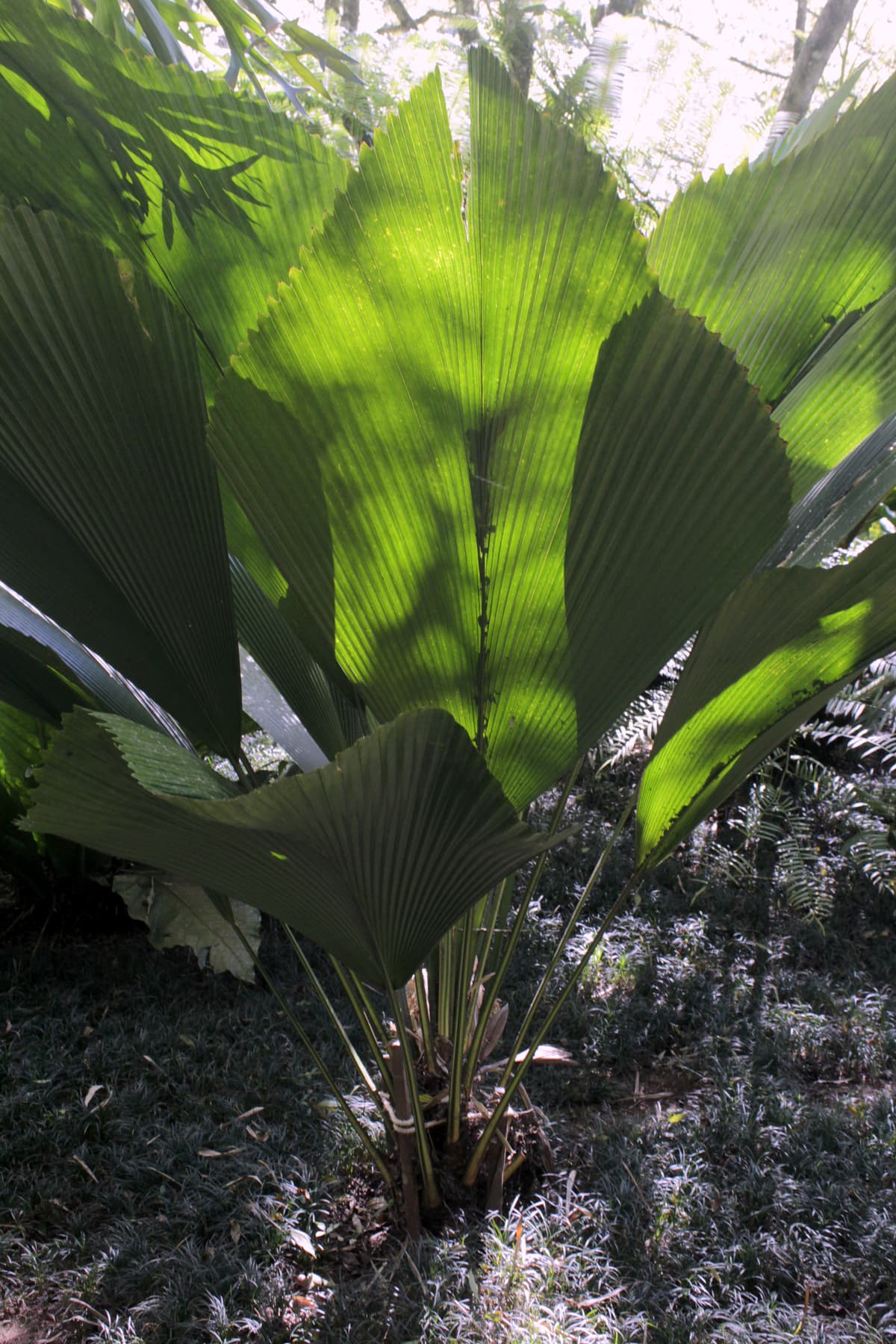
Botanical specimen of Johannesteijsmannia Altifrons.
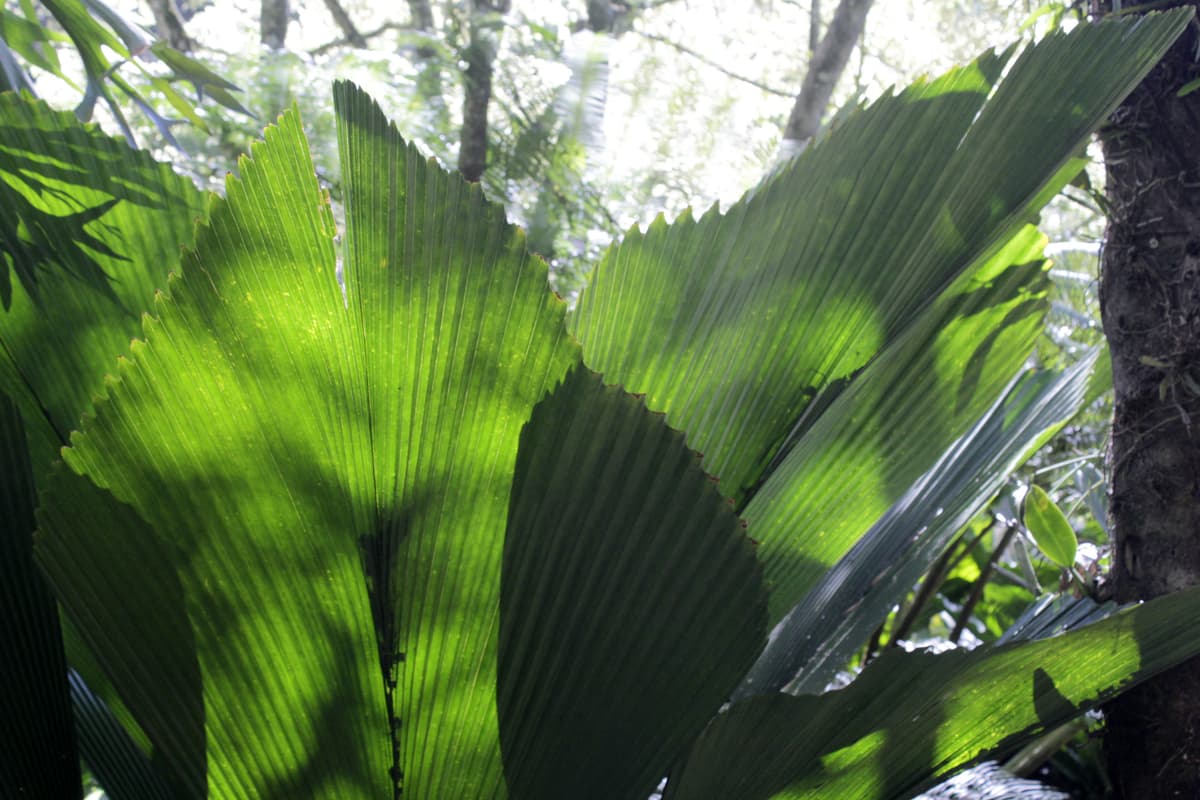
Botanical specimen of Johannesteijsmannia Altifrons.