Miraguama palm
Coccothrinax Miraguama • Miragua palm • Miraguano • Yuraguana
Miraguama palm in Motion
The Essence
"Coccothrinax miraguama is a solitary fan palm endemic to Cuba, where it is described as the most widespread species of its genus. Its signature is the trunk: the upper stem is wrapped in a dense, interwoven mat of dark leaf-sheath fibres, likened on Palmpedia to weathered burlap, together with triangular old leaf bases, while the lower trunk eventually weathers bare and grey. That tight woven fibre mat is the easiest way to separate it from the shaggy, near-white beard of C. crinita. Published height figures vary between sources, from about 4-5 m up to roughly 10 m. POWO accepts three subspecies: subsp. miraguama, subsp. havanensis of western Cuba, and subsp. roseocarpa, which has pink ripe fruit; the former subsp. arenicola is now treated as Coccothrinax acuminata. Conservation status differs sharply between them - Monaco Nature Encyclopedia reports subsp. miraguama as Least Concern, holding the largest population of any Coccothrinax on Cuban territory, subsp. roseocarpa as Near Threatened and subsp. havanensis as Critically Endangered. In Cuba the leaves are harvested for thatching and weaving, and the fibres of the leaf bases are made into brooms and brushes. Subsp. miraguama is fairly common in cultivation in botanical gardens and private collections across the tropical and subtropical belt; Rare Palm Seeds, quoted on Palmpedia, calls it a highly desirable species best suited to the drier tropics."
The genus name Coccothrinax combines the Greek kokkos (berry) with the name of the related genus Thrinax, which these palms resemble. The epithet miraguama refers to the plant's local Cuban vernacular name, miraguamo.
The species has moved between several genera, having been placed in Corypha, Copernicia and Thrinax. The basionym is Corypha miraguama Kunth, and Copernicia miraguama, Thrinax miraguama and Thrinax yuraguana A.Rich. are homotypic synonyms. Beccari published the current combination in Webbia 2: 295 (1907) according to IPNI and POWO; PALMweb dates the same page to 1908.
Natural Habitat
Occurs across a range of Cuban habitats: hills, savannas, open woodland, rocky places and low, open coastal areas, on limestone, serpentine and sandy soils. Subspecies havanensis is the only one growing close to the coast and has a thinner leaf blade with drooping segments. POWO classifies the species as a shrub or tree of the wet tropical biome, though its subsp. havanensis page instead flags the seasonally dry tropical biome and records the range as western Cuba.
Curated Specimens
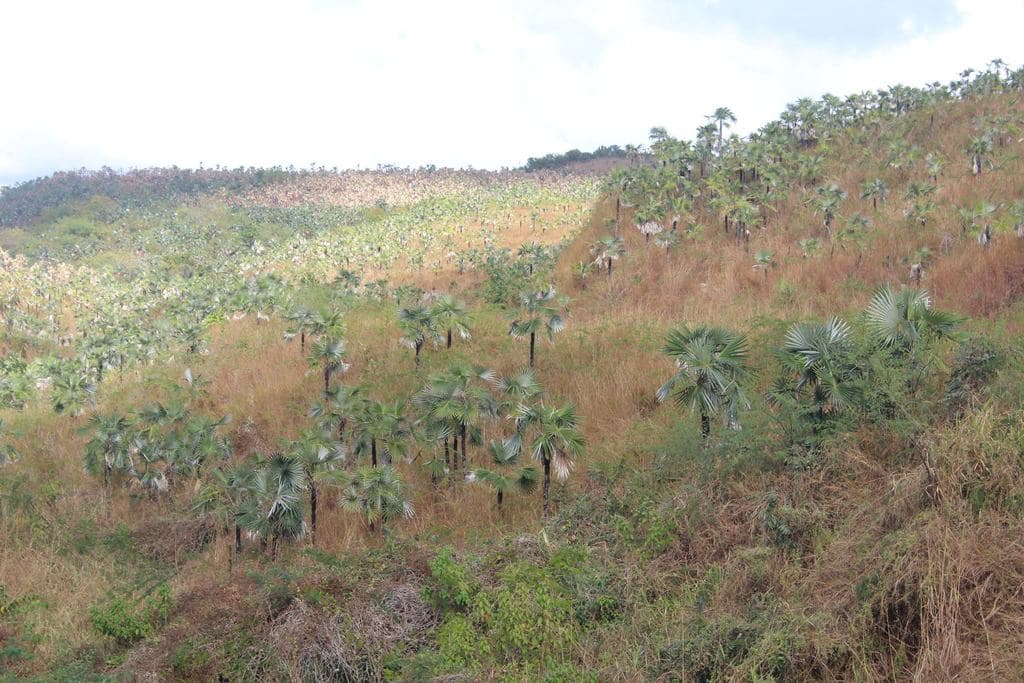
Botanical specimen of Coccothrinax Miraguama.
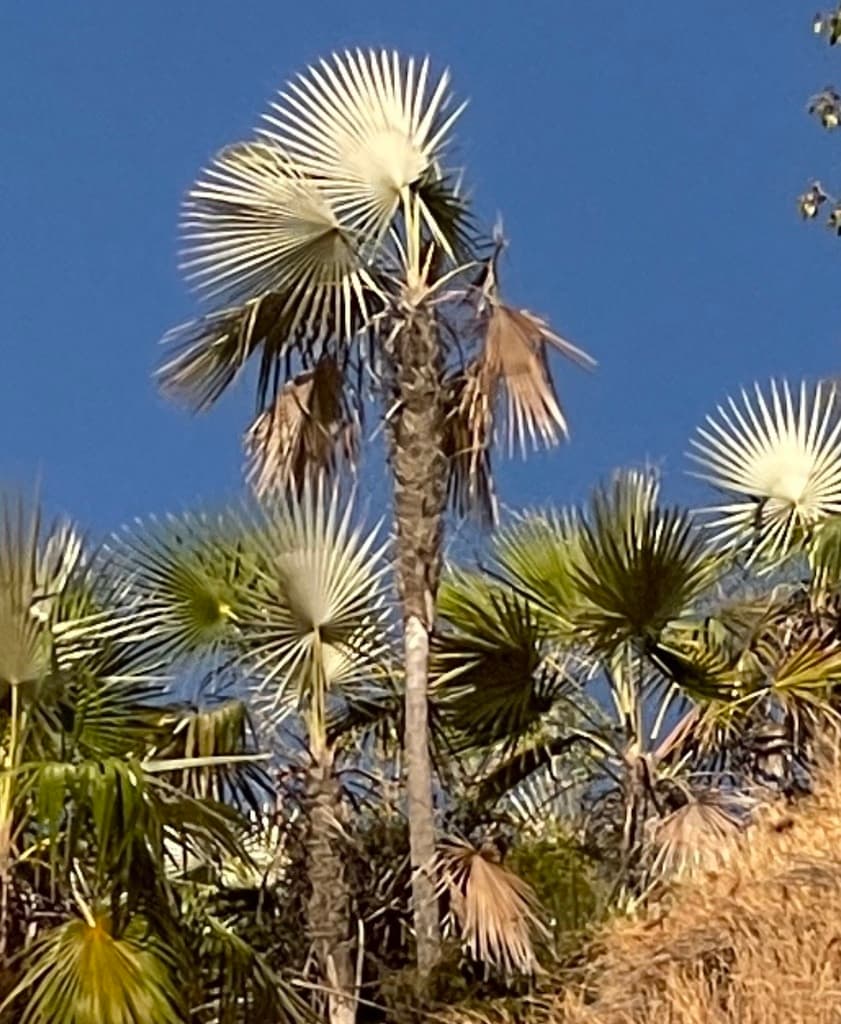
Botanical specimen of Coccothrinax Miraguama.
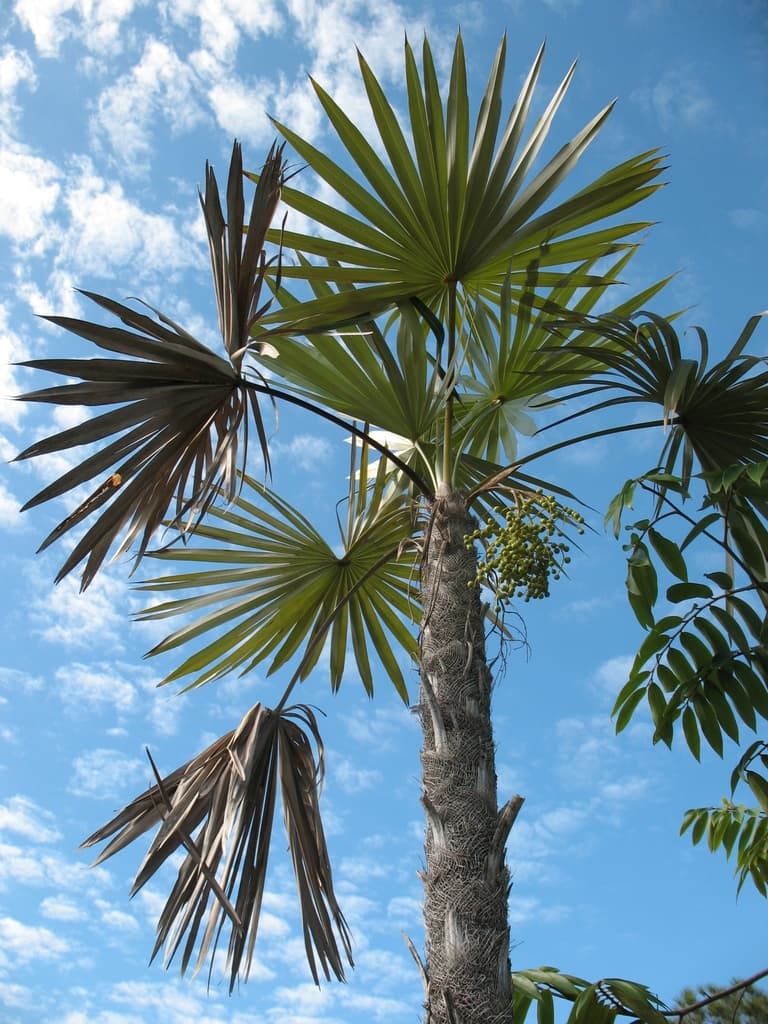
Botanical specimen of Coccothrinax Miraguama.
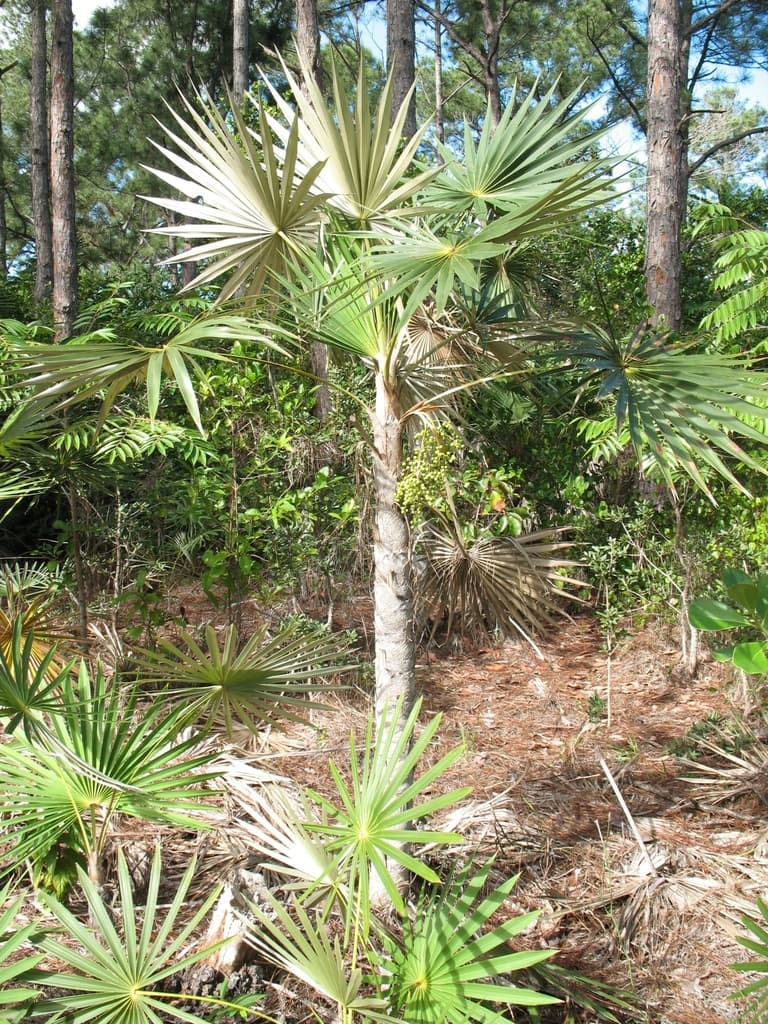
Botanical specimen of Coccothrinax Miraguama.