Loneliest palm
Hyophorbe Amaricaulis • Lonely palm
Loneliest palm in Motion
The Essence
"Hyophorbe amaricaulis is a palm endemic to Mauritius that survives as a single individual in the Curepipe Botanic Gardens, in Curepipe. It is the last living member of its species — an endling. In the 1700s the palm was described from specimens taken on the mountain Pieter Both, where it seems to have been widespread at the time; it was then believed extinct until one tree was identified at Curepipe in 1942. It is not known whether that tree was planted there or was a survivor of the local wild population that was enclosed when the garden was established. Kew's Plants of the World Online marks its distribution as Extinct in Mauritius, and Kew's own article describes it as Extinct in the Wild. The tree cannot reproduce naturally: its female flowers open only after the male flowers have fallen, so seed cannot be set without artificial pollination, and Kew reports that the resulting seed cannot be germinated under normal horticultural conditions. Laboratory attempts have come close and failed. From immature seeds collected in 1985, 51 isolated embryos were cultured in vitro in an experiment published in 1987; 15 grew for four months, three produced roots, two produced shoots and one grew a true leaf. Kew's Dr Viswambharan Sarasan collected ten fruits in 2006 and reported in 2010 that over 80% of the isolated embryos germinated, the seedlings growing for three months to 25 cm before dying abruptly for reasons that remain uncertain; his embryo-rescue seedlings failed to survive beyond the weaning stage. It was reported in 2022 that pollen had been collected from the palm for a further attempt at seed production. The surviving tree is protected from cyclones and vandals by metal fences and scaffolding. In 2019, BGCI's Paul Smith described it enclosed by a kind of cage and supporting platform, looking old and tired, with damage to its trunk and signs of a bacterial infection in the wound. The IUCN Red List assessed the species as Critically Endangered in 2000, an assessment IUCN itself flags as needing updating. It is one of five Hyophorbe species, all confined to the Mascarene Islands — Mauritius, Réunion and Rodrigues."
The genus name Hyophorbe comes from the Greek hys, hyos (pig) and phorbe (food). The epithet amaricaulis combines Latin amarus — of taste, harsh, disagreeable, bitter or pungent — with caulis, stalk or stem, giving the literal sense bitter-stemmed. The sources consulted do not explain how the epithet applies to this species.
In the 1700s the palm was described from specimens taken on the mountain Pieter Both, and the original description reported plants 18 m (59 ft) tall. The botanical name Hyophorbe amaricaulis Mart. was published in Historia Naturalis Palmarum 3: 309 (1849); synonyms recorded by POWO include Hyospathe amaricaulis (Mart.) Hook.f. and Areca speciosa Verschaff. The species was believed extinct until a single specimen was identified at the Curepipe Botanic Gardens in 1942, and that tree remains the only one in existence. Extensive deforestation on Mauritius, including at Pieter Both, makes undiscovered wild individuals unlikely, and 1990 surveys of palms labelled H. amaricaulis in eight botanical gardens abroad found that all were misidentified H. lagenicaulis. The species has since become a flagship case for conservation horticulture, through Kew's embryo-rescue work and BGCI's Global Trees Campaign.
Natural Habitat
POWO describes Hyophorbe amaricaulis as a tree growing primarily in the wet tropical biome, and the IUCN assessment records its system as terrestrial and its habitat type as forest. The species was described from Pieter Both mountain in Mauritius, its type locality. No wild population remains: the sole surviving individual grows in the Curepipe Botanic Gardens, where according to BGCI it has lived for roughly the past 150 years.
Curated Specimens
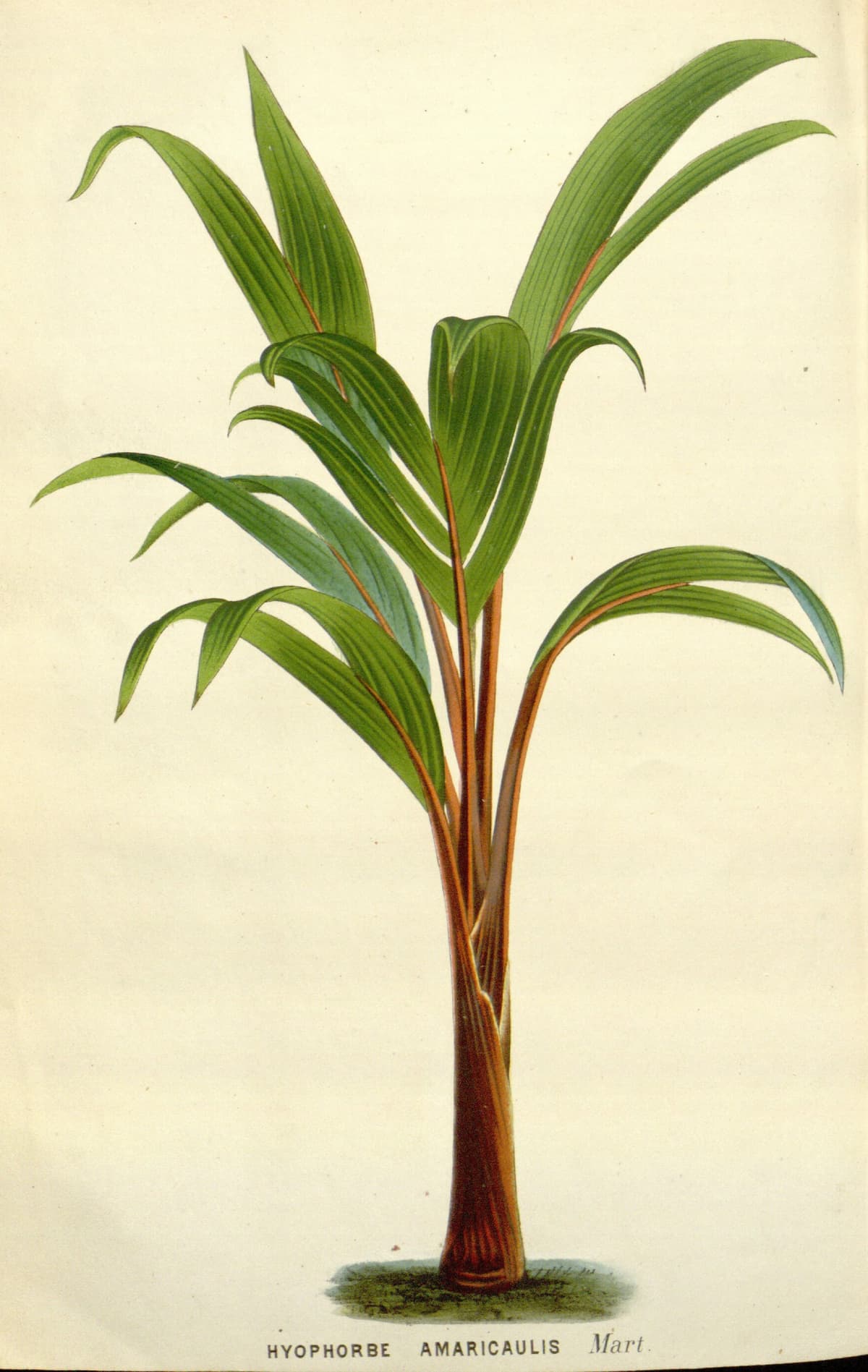
Botanical specimen of Hyophorbe Amaricaulis.
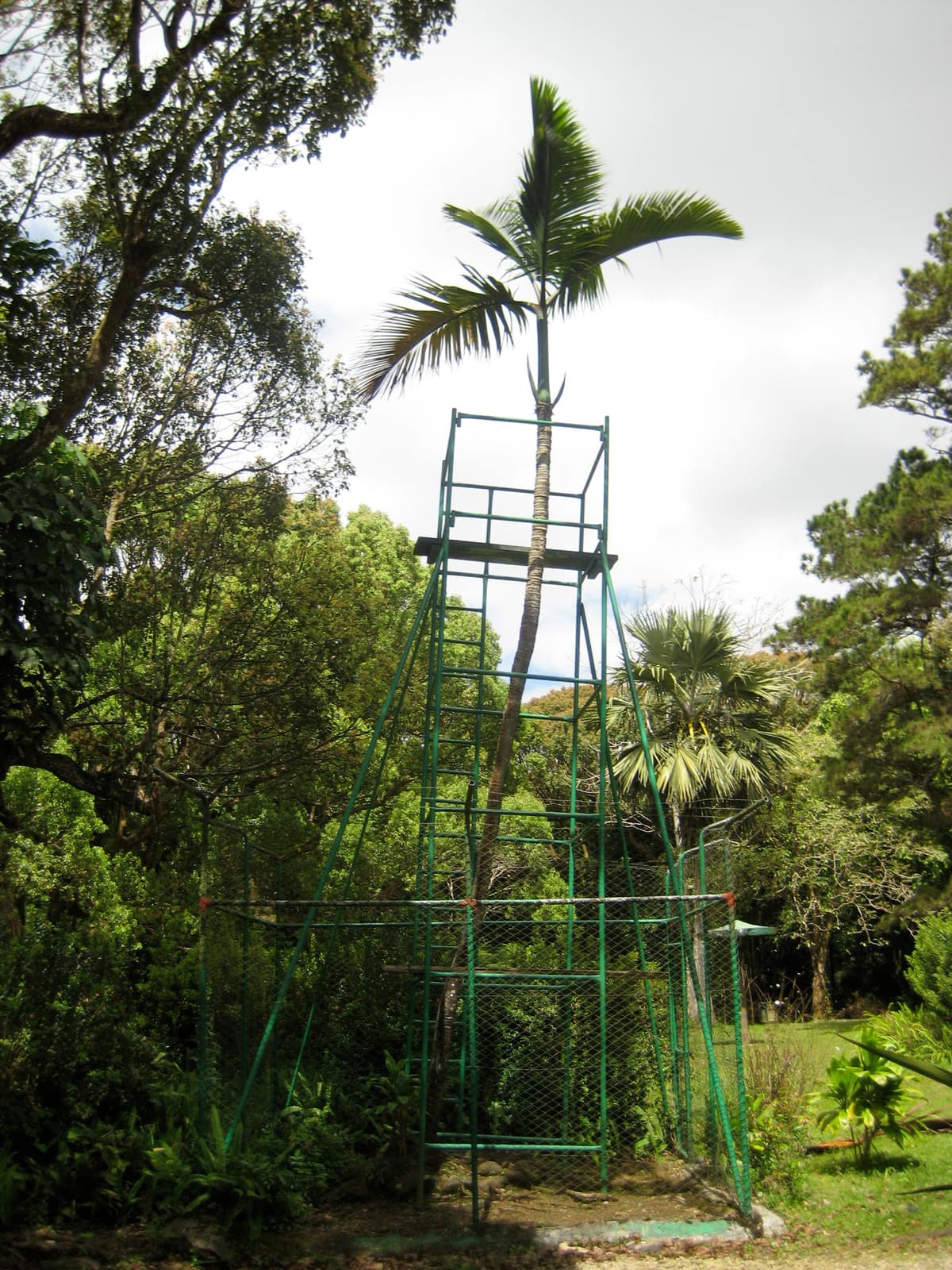
Botanical specimen of Hyophorbe Amaricaulis.
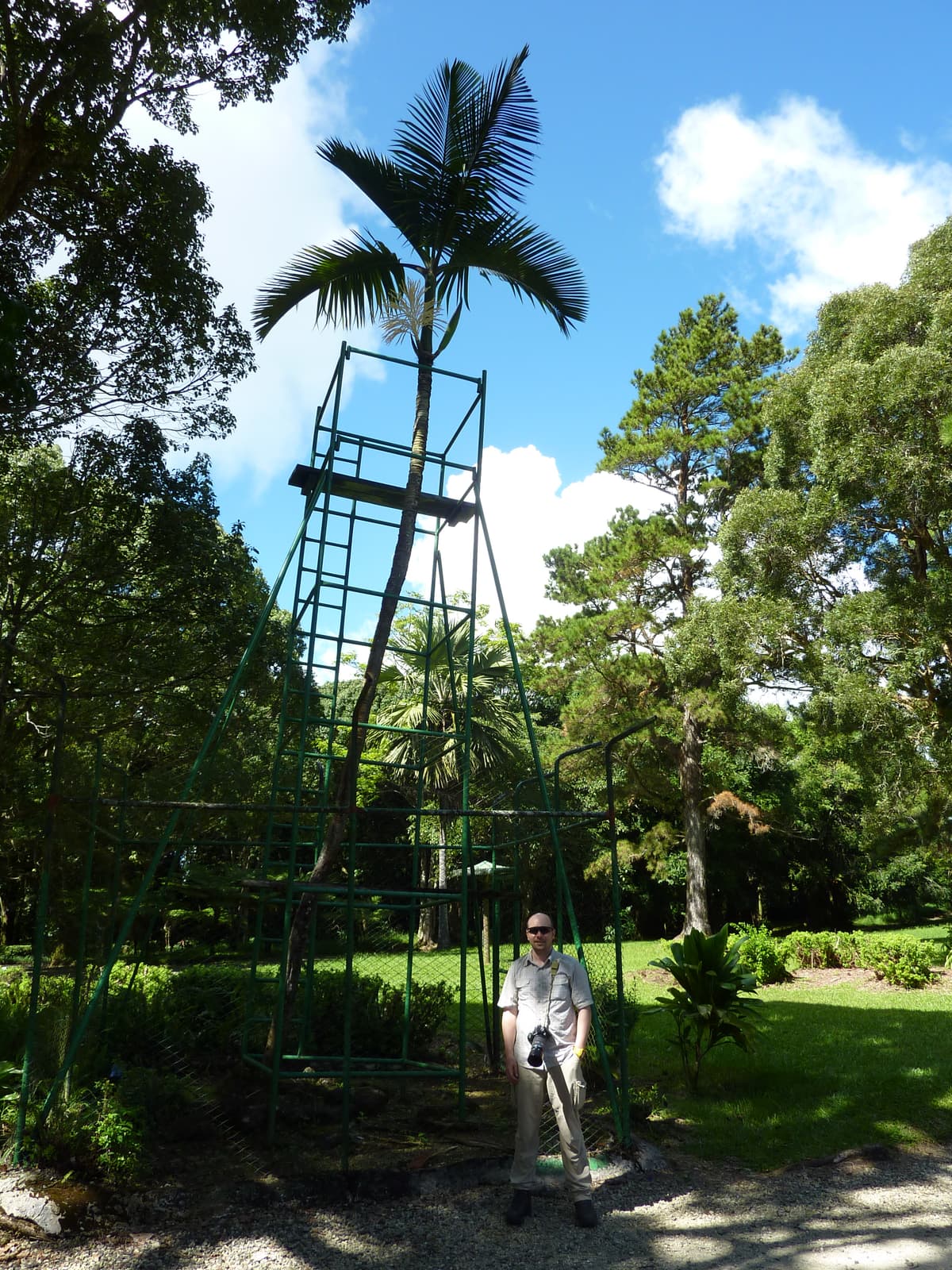
Botanical specimen of Hyophorbe Amaricaulis.
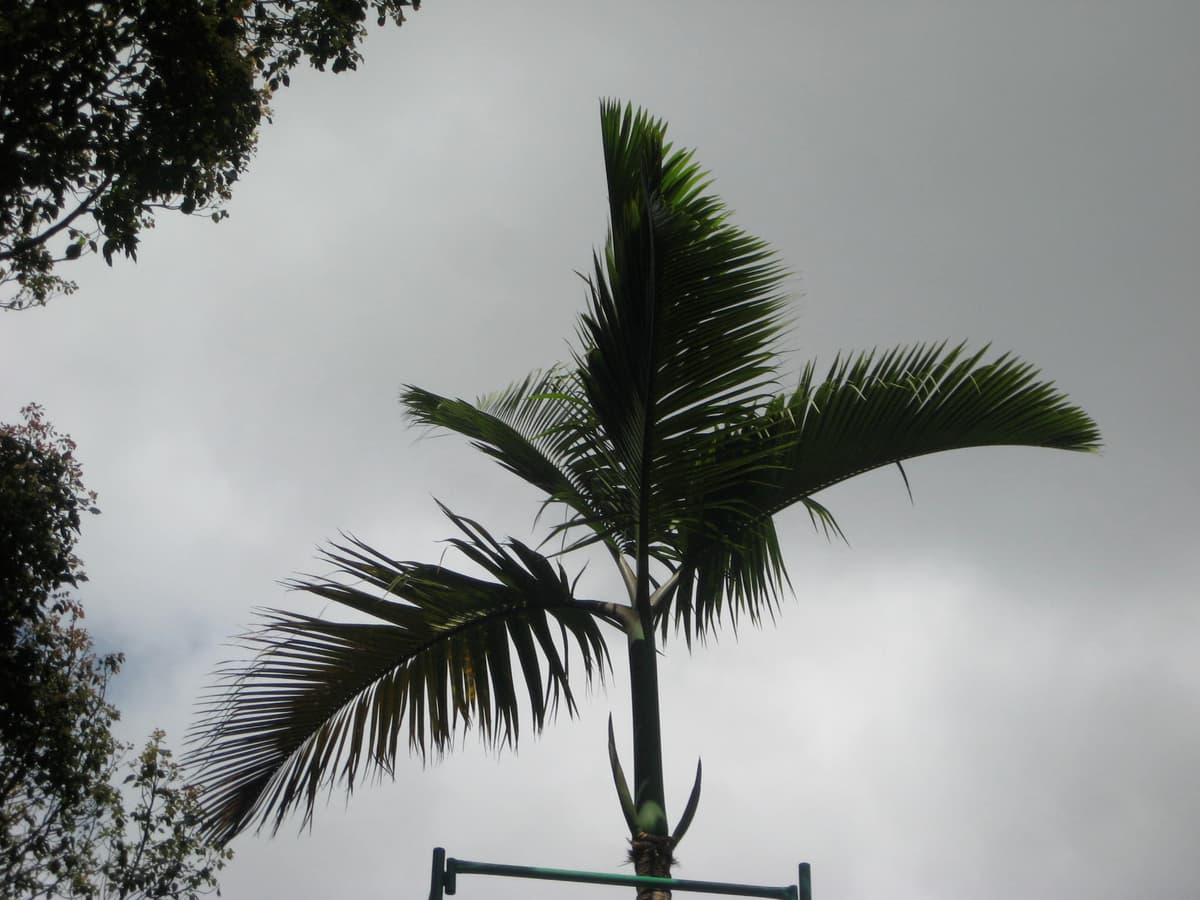
Botanical specimen of Hyophorbe Amaricaulis.
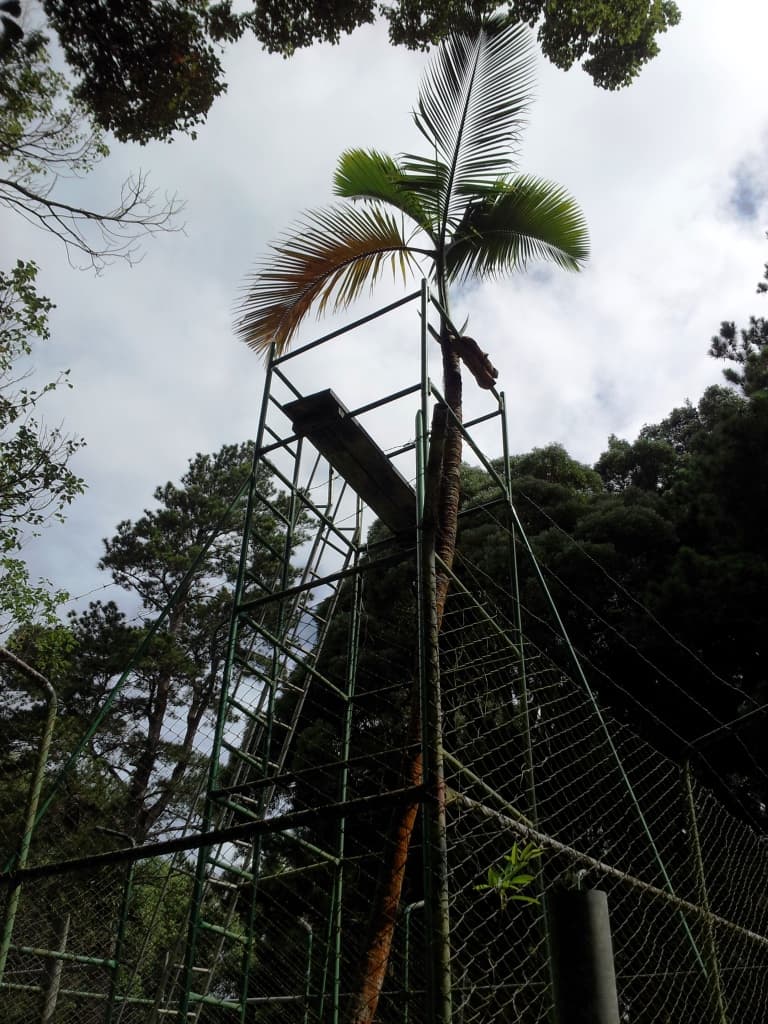
Botanical specimen of Hyophorbe Amaricaulis.
Sources & Conservation
Curated- Wikipedia — Hyophorbe amaricaulis · accessed 2026-08
- Plants of the World Online (POWO), Kew — Hyophorbe amaricaulis Mart. · accessed 2026-08
- IUCN Red List — Hyophorbe amaricaulis (Bachraz & Strahm 2000, e.T38578A10125958) · accessed 2026-08
- Royal Botanic Gardens, Kew — Meet the plant undateables · accessed 2026-08
- BGCI — The loneliest tree in the world (Paul Smith, 19 August 2019) · accessed 2026-08
- Palmpedia — Hyophorbe amaricaulis · accessed 2026-08
- PALMweb — Hyophorbe amaricaulis Mart., Hist. Nat. Palm. 3: 309 (1849) · accessed 2026-08
- Monaco Nature Encyclopedia — Hyophorbe lagenicaulis (cited only for the genus-name etymology) · accessed 2026-08
- Missouri Botanical Garden, A Grammatical Dictionary of Botanical Latin — 'amarus' · accessed 2026-08
- Wiktionary — caulis · accessed 2026-08
- Nature news (Irwin, 2022) — The loneliest trees: can science save these threatened species? · accessed 2026-08