Champagne palm
Hyophorbe Indica • Poison palm • Palmiste poison • Palmiste cochon • Palmier cochon • Palmier bâtard
The Essence
"Hyophorbe indica is the only member of its genus native to Réunion; the other four species are confined to Mauritius, Round Island (Île Ronde) and Rodrigues. Gaertner published it in 1791, and the epithet indica, "of India", is misleading — the palm grows nowhere near India. It is the slender cousin of the bottle palm (H. lagenicaulis) and spindle palm (H. verschaffeltii), sharing their grey, leaf-scarred trunk but none of their swelling: the stem stays cylindrical, reaching about 10 m and 13–18 cm thick, only slightly enlarged at the base. Two colour forms are recognised — a green form on the east coast of Réunion, and a red form endemic to the Tampon region with rusty-red crownshaft and red petioles. The species is becoming increasingly rare. The IUCN Red List lists it as Endangered under criterion D, the very-small-population criterion; the assessment was made by D. Johnson in 1998 and the Red List itself flags it as needing updating, with residential and commercial development, cropping and livestock farming recorded as threats. Oddly, it is scarce even at home: French sources note it is little seen in public or private plantings on Réunion, while bottle-trunked Hyophorbe from the neighbouring islands are planted by the hundreds. Molecular work places Hyophorbe in tribe Chamaedoreeae beside New World genera — Wendlandiella of the western Amazon, Gaussia, Synechanthus and Chamaedorea; plastid DNA recovers it as sister to Wendlandiella, while most nuclear data instead place it sister to the rest of the tribe. In cultivation it is a recent arrival — one Florida grower does not remember it being offered for sale before 1998 — and it grows fast, with good hurricane resistance and no insect damage observed."
The genus name combines the Greek "ὗς, ὑός" (ys, yós — swine, sow) and "φορβή" (phorbé — forage, food), that is "pig food", in reference to the past use of the fruits as pig feed. The specific epithet is the Latin adjective indicus, "of India" — a misleading name for a palm endemic to Réunion. Published by Gaertner in 1791 (Fruct. Sem. Pl. 2: 186, t. 120).
The Réunion name "palmiste cochon" comes from the plant having been given as fodder to pigs; its heart (palm cabbage) is not edible. Palmweb notes that some Hyophorbe species apparently have poisonous cabbage, whereas that of others — H. amaricaulis, for instance — was eaten in the past despite being very bitter. In horticulture the palm is a recent arrival: a Florida grower writes that he does not remember it being offered for sale prior to 1998.
Natural Habitat
Humid forest at roughly 200–600 m elevation (English Wikipedia gives 175–600 m, and French sources describe humid low-altitude forest up to about 700 m), with relatively few individuals surviving. Known stands include the forests of Basse-Vallée and Mare-Longue at Saint-Philippe. POWO gives the native range simply as Réunion and notes that the species is a tree growing primarily in the wet tropical biome; the original protologue records the locality only as "Ins. Mascar.", the Mascarenes.
Curated Specimens
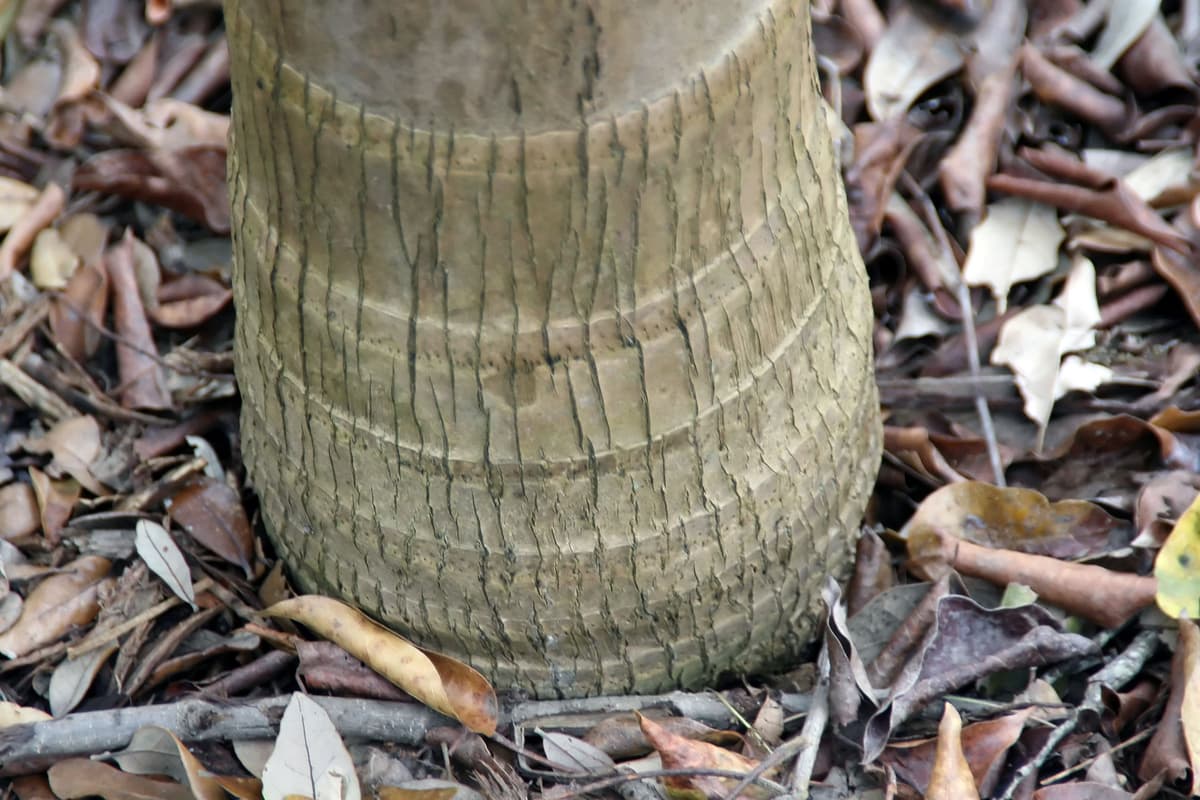
Botanical specimen of Hyophorbe Indica.
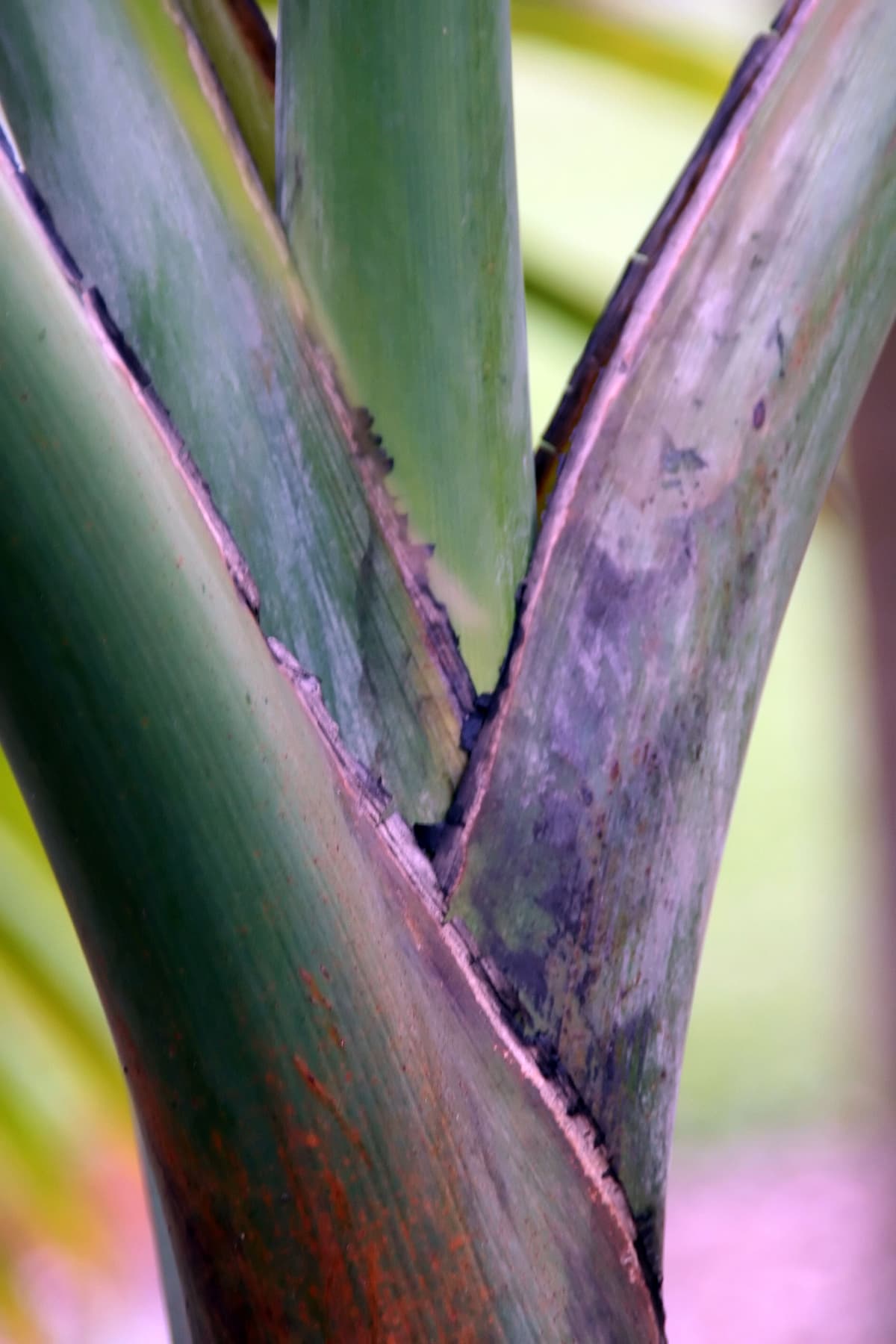
Botanical specimen of Hyophorbe Indica.
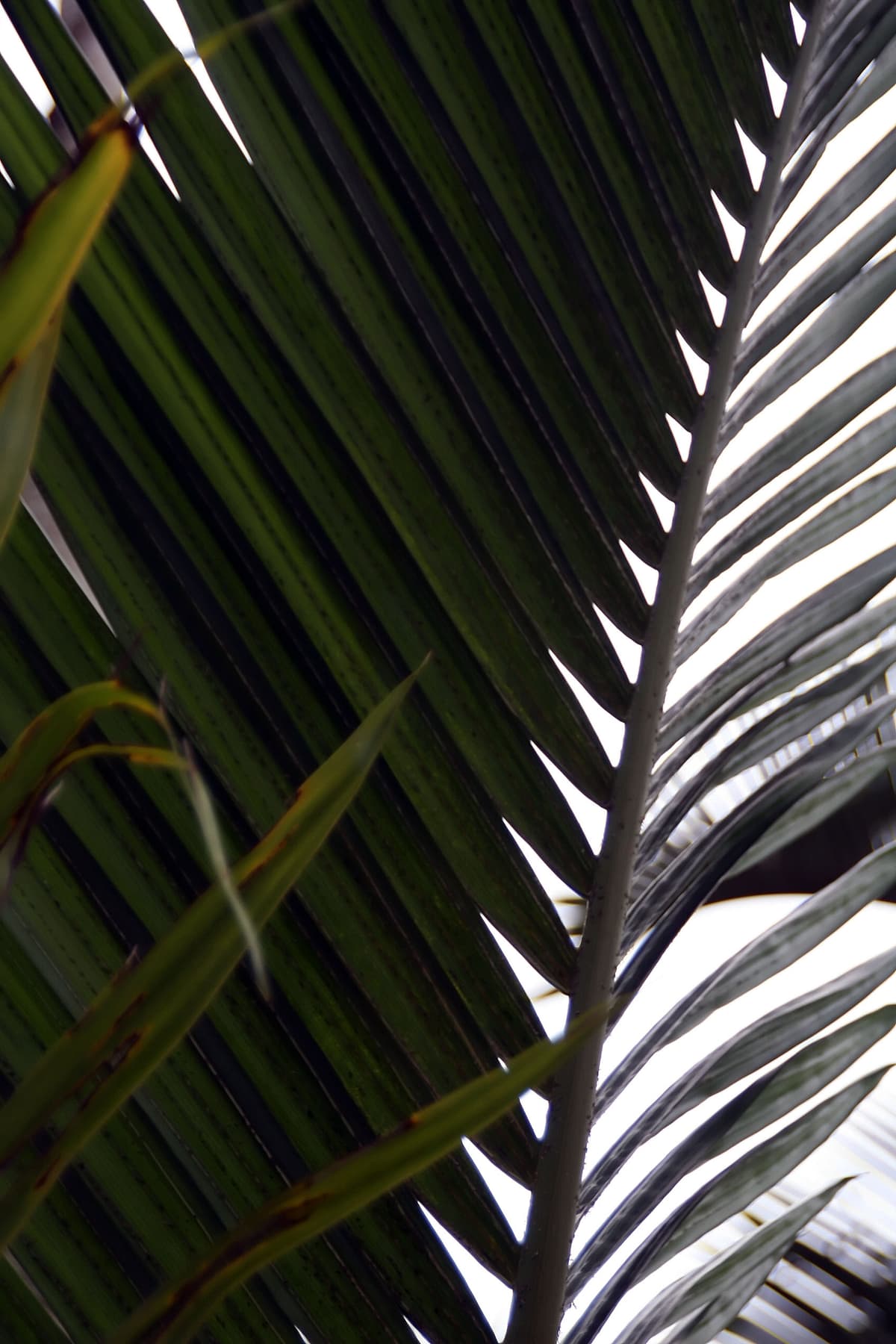
Botanical specimen of Hyophorbe Indica.
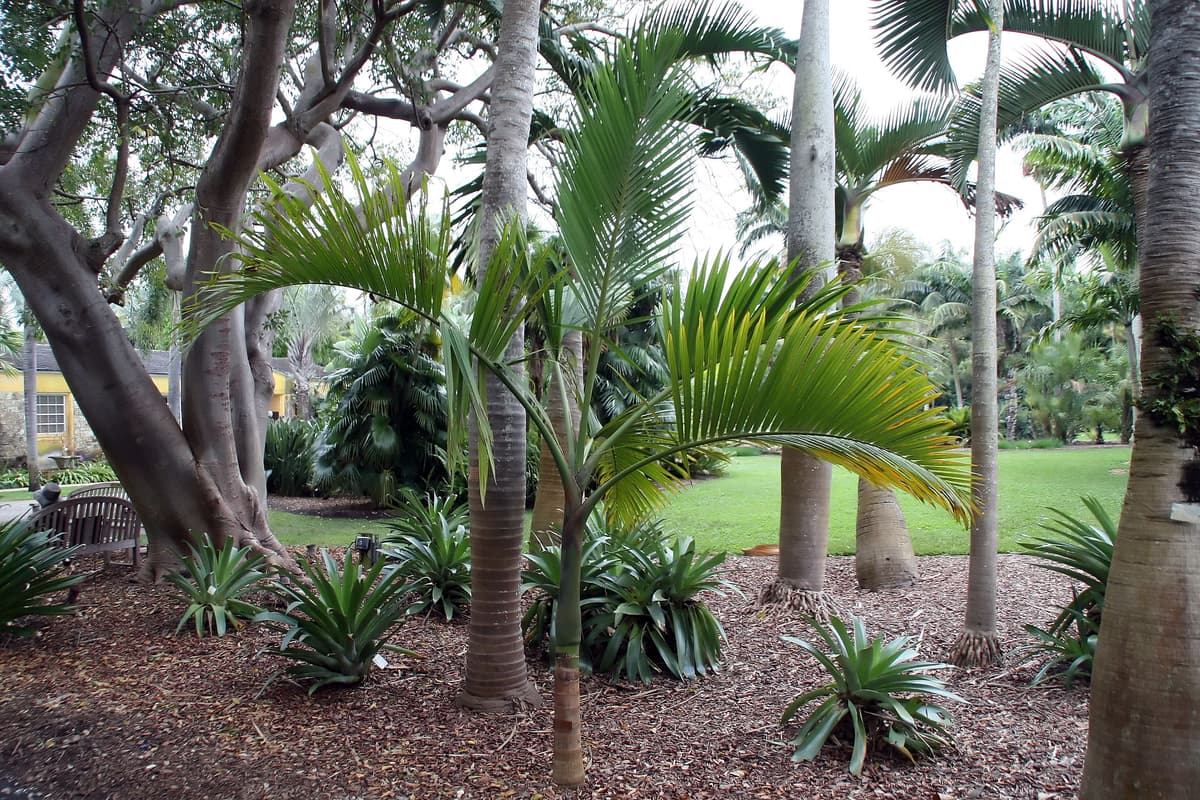
Botanical specimen of Hyophorbe Indica.
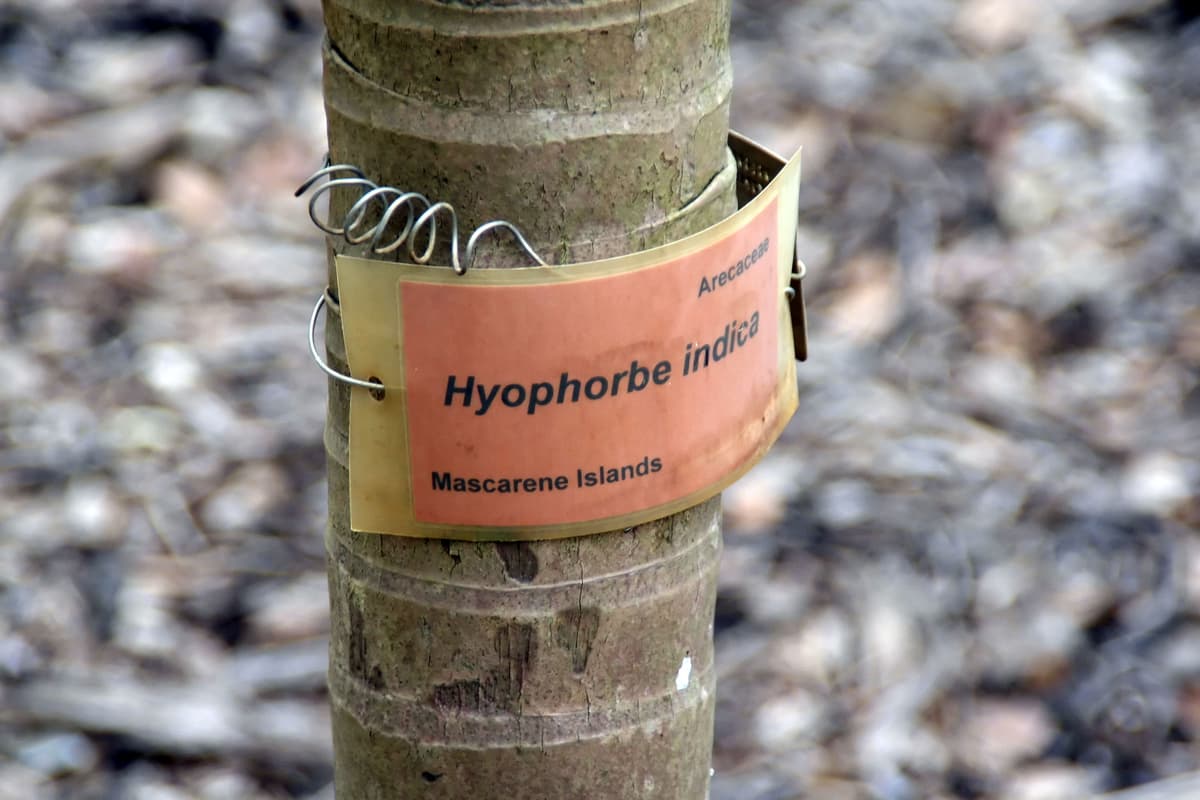
Botanical specimen of Hyophorbe Indica.
Sources & Conservation
Curated- Hyophorbe indica Gaertn. | Plants of the World Online | Kew Science · accessed 2026-08
- Hyophorbe indica Gaertn. | International Plant Names Index (IPNI) · accessed 2026-08
- Hyophorbe indica Gaertn. | GBIF (species key 2735601, confirmed via api.gbif.org) · accessed 2026-08
- Hyophorbe indica | IUCN Red List of Threatened Species (Johnson, D. 1998, e.T38579A10126091 — Endangered D, ver 2.3) · accessed 2026-08
- Hyophorbe indica | Wikipedia (English) · accessed 2026-08
- Hyophorbe | Wikipedia (English, genus article) · accessed 2026-08
- Palmiste poison | Wikipédia (French) · accessed 2026-08
- Hyophorbe indica | Palmpedia - Palm Grower's Guide · accessed 2026-08
- Hyophorbe indica Gaertn., Fruct. Sem. Pl. 2: 186 (1791) | PALMweb · accessed 2026-08
- Hyophorbe Gaertn. | PALMweb (genus account) · accessed 2026-08
- Hyophorbe indica | Monaco Nature Encyclopedia (text by Pietro Puccio) · accessed 2026-08
- Growing Hyophorbe indica in Palm Beach County (Charlie Beck) | Palm Beach Palm & Cycad Society · accessed 2026-08