Hyophorbe Vaughanii
The Essence
"Hyophorbe vaughanii is a Critically Endangered palm endemic to Mauritius, where a single genuinely wild population survives in tropical montane rainforest at 400-550 m; Rare Palm Seeds places the few surviving mature specimens in the highlands of southwestern Mauritius. It is one of three Hyophorbe species occurring naturally on the island, alongside the widely grown bottle palm (H. lagenicaulis) and H. amaricaulis, which is down to a single living specimen. The IUCN assessed the species in 2000 as Critically Endangered under criterion D - the criterion for a population estimated at fewer than 50 mature individuals - with a decreasing population trend and invasive non-native species as the only coded threat. The assessment carries the annotation "Needs updating", and its number-of-mature-individuals field is left blank. PACSOA independently reports fewer than 50 plants left in the wild, and attributes the decline to land clearing. Despite being much sought after by collectors, the palm is very rarely seen for sale or in collections. Conservation work has enabled reintroductions into managed upland forest reserves on Mauritius, including Brise Fer, Macchabee, Mare Longue and Florin. The species appears to have no established vernacular name: GBIF holds zero vernacular names for the taxon, and POWO, IUCN, PACSOA, Palmweb and Rare Palm Seeds all give none."
The epithet vaughanii honours Reginald Edward Vaughan (1895-1987), the British-born botanist who came to Mauritius in 1923, founded the Mauritius Herbarium in 1959, worked with Paul Octave Wiehe on the creation of 16 nature reserves between 1951 and 1974, and helped initiate the Flore des Mascareignes; Hyophorbe vaughanii is listed among the species named in his honour. The species was described by Liberty Hyde Bailey and first published in Gentes Herbarum 6: 70 (1942).
The plight of H. vaughanii is typical of its region. Maunder and colleagues (2002, Oryx 36(1): 56-65) reviewed the five genera and 11 palm species endemic to the Mascarene Islands and found all of them threatened with extinction: nine were Critically Endangered and two Endangered on the 2000 Red List, two taxa survived as single wild specimens (Hyophorbe amaricaulis and Dictyosperma album var. conjugatum), and a further seven had wild populations of 100 individuals or fewer. Wikipedia cites this paper as the source for the reintroduction of H. vaughanii into managed upland forest reserves.
Natural Habitat
Tropical montane rainforest at 400-550 m altitude on Mauritius (PACSOA). Rare Palm Seeds locates the surviving mature specimens in montane rainforest in the highlands of southwestern Mauritius, at the same altitude. POWO classes the species as growing primarily in the wet tropical biome, and the IUCN assessment records its habitat only as terrestrial forest. One caveat worth flagging: the opening line of the Wikipedia article calls the natural habitat subtropical or tropical dry forest, which contradicts Wikipedia's own habitat section and PACSOA - the montane rainforest description is the better-supported one.
Curated Specimens
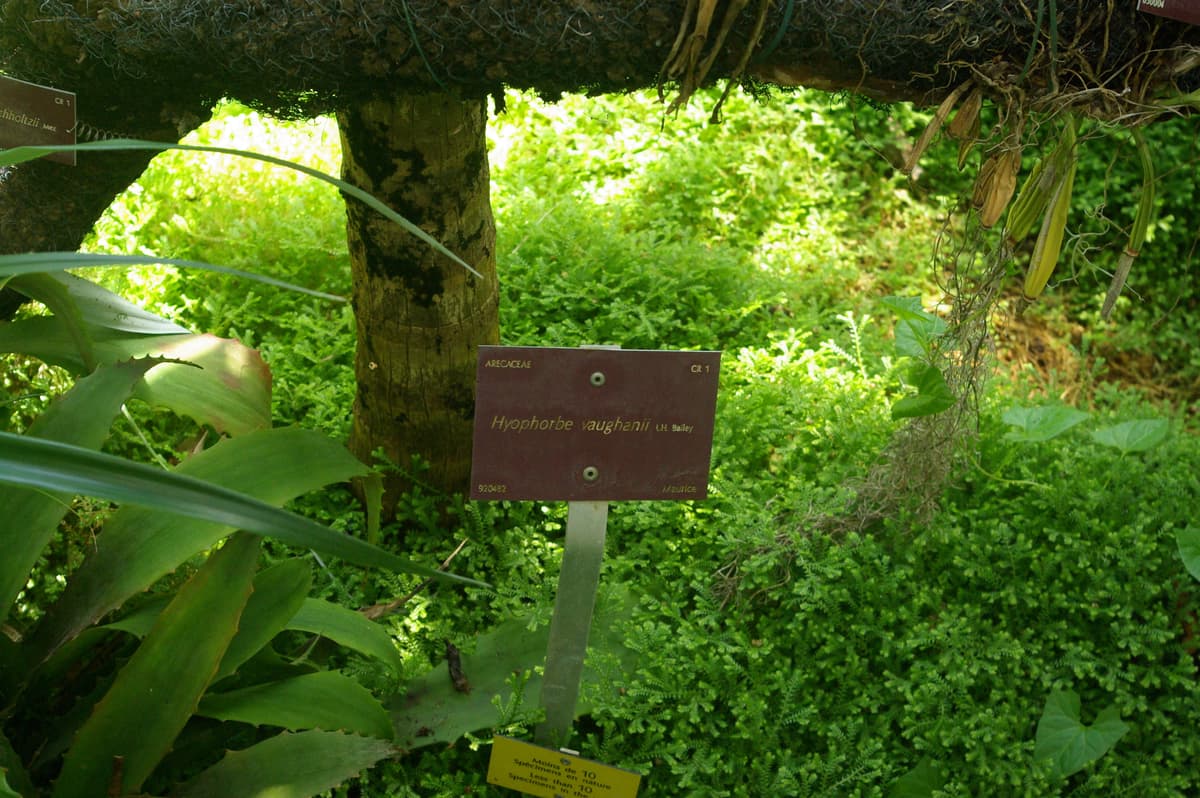
Botanical specimen of Hyophorbe Vaughanii.
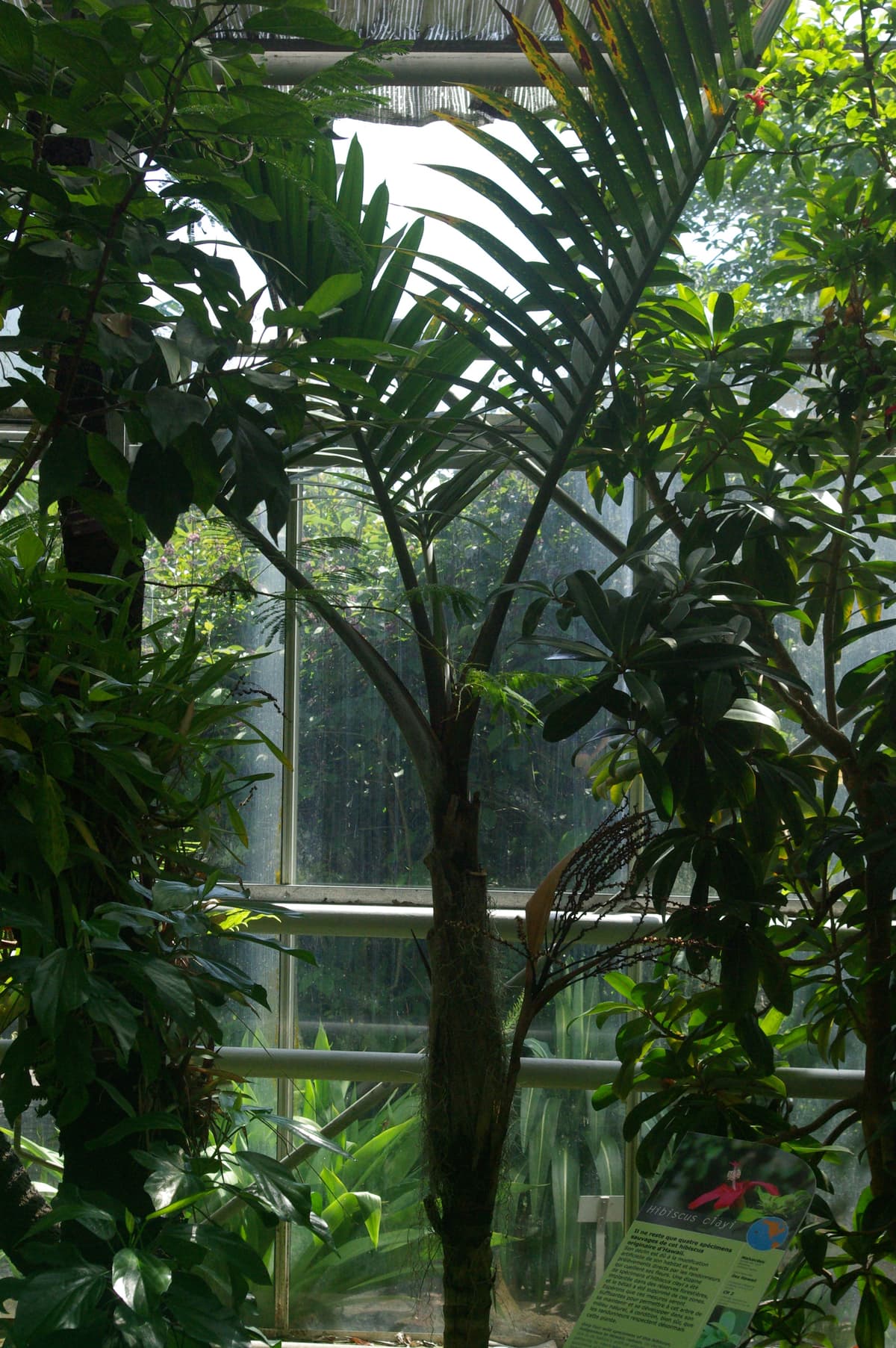
Botanical specimen of Hyophorbe Vaughanii.
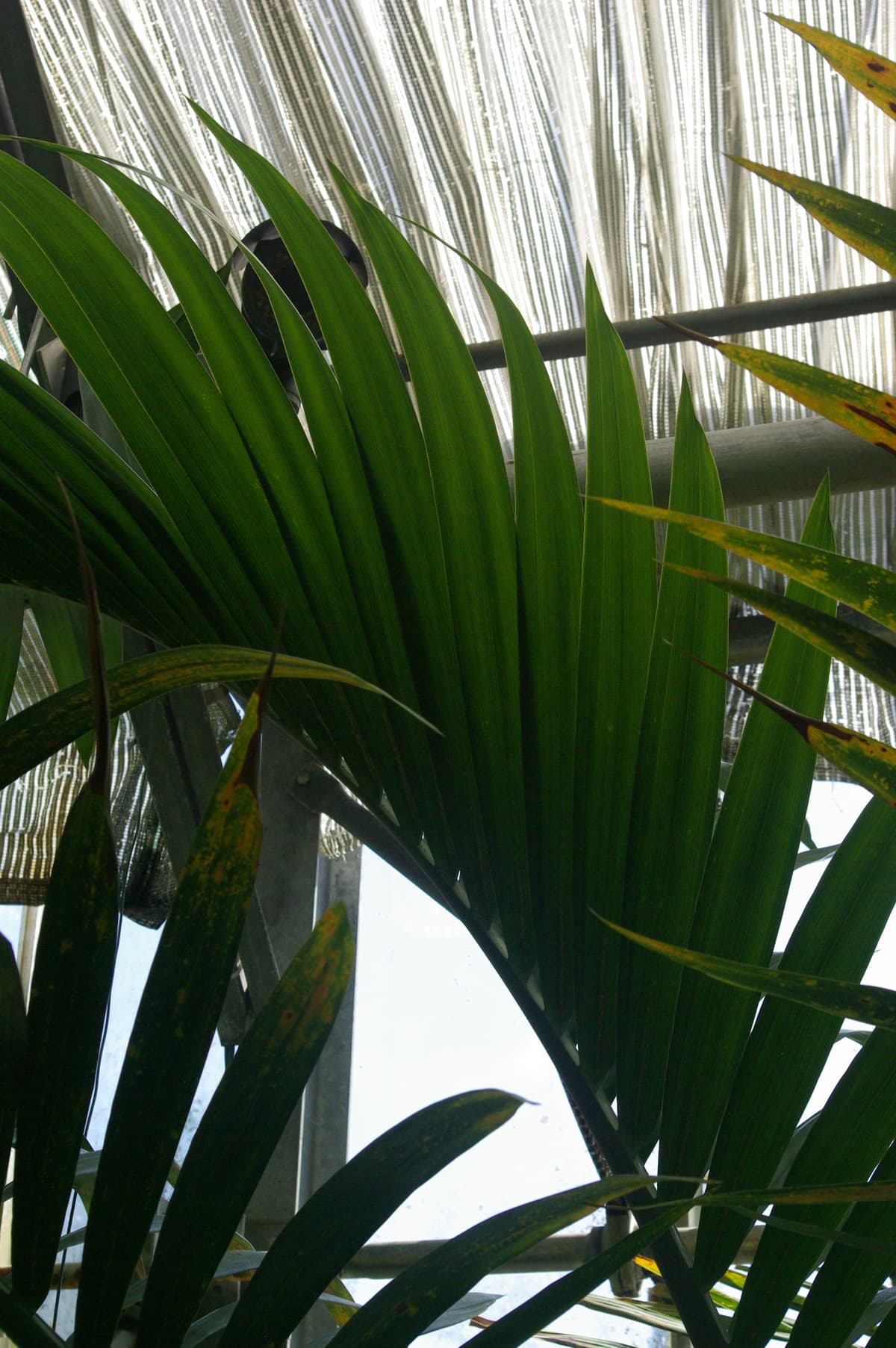
Botanical specimen of Hyophorbe Vaughanii.
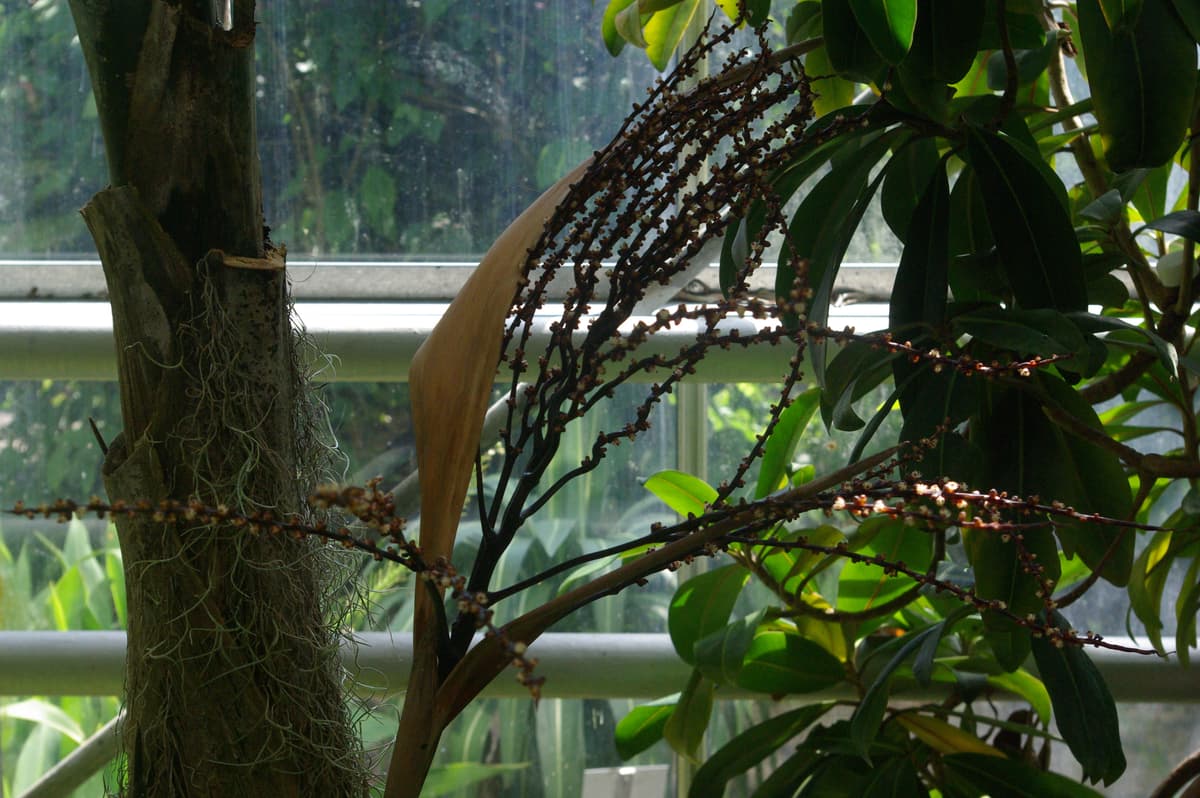
Botanical specimen of Hyophorbe Vaughanii.
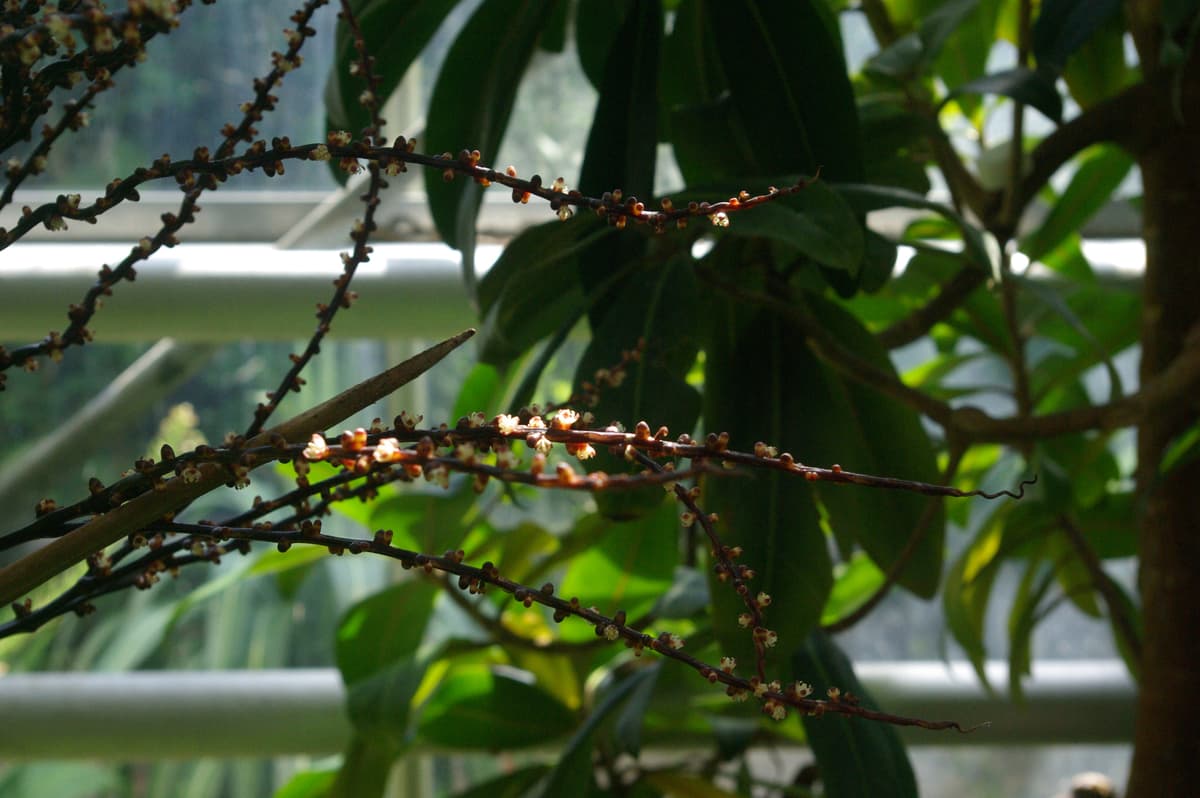
Botanical specimen of Hyophorbe Vaughanii.
Sources & Conservation
Curated- Hyophorbe vaughanii L.H.Bailey | Plants of the World Online (POWO), Royal Botanic Gardens Kew · accessed 2026-08
- Hyophorbe vaughanii - IUCN Red List of Threatened Species (Florens, D. 2000, e.T38581A10126601; Critically Endangered D, ver 2.3, annotated "Needs updating") · accessed 2026-08
- Hyophorbe vaughanii - Wikipedia · accessed 2026-08
- Hyophorbe vaughanii - PACSOA Wiki (Palm and Cycad Societies of Australia) · accessed 2026-08
- Hyophorbe vaughanii L.H.Bailey, Gentes Herb. 6: 70 (1942) | PALMweb (Royal Botanic Gardens Kew) · accessed 2026-08
- Hyophorbe vaughanii L.H.Bailey - World Flora Online · accessed 2026-08
- Hyophorbe vaughanii L.H.Bailey - GBIF Backbone Taxonomy (taxon key 2735600; vernacular names verified empty via api.gbif.org/v1/species/2735600/vernacularNames) · accessed 2026-08
- Hyophorbe vaughanii - Rare Palm Seeds (species description and cultural requirements) · accessed 2026-08
- Maunder, M. et al. (2002). The decline and conservation management of the threatened endemic palms of the Mascarene Islands. Oryx 36(1): 56-65 (abstract) · accessed 2026-08
- Reginald Edward Vaughan - Wikipedia (species named in his honour, incl. Hyophorbe vaughanii) · accessed 2026-08