Spindle palm
Hyophorbe Verschaffeltii • Palmiste marron
Spindle palm in Motion
The Essence
"Hyophorbe verschaffeltii, the spindle palm, is endemic to Rodrigues, a small island of the Mascarene archipelago that forms part of Mauritius. It is a solitary, unarmed, pinnate-leaved tree of roughly 6-8 m, whose smooth grey trunk is ringed with leaf scars and swollen at or near the midpoint of its height - the character that gives the palm its name and separates it from its close relative the bottle palm, Hyophorbe lagenicaulis, whose trunk bulges at the base. A prominent crownshaft carries six to eight lightly recurved leaves (Wikipedia gives eight to ten), and the branched inflorescence pushes out below them as a distinctive erect, horn-shaped bud. The single-seeded fruits are about 1.8-2.4 cm long and 1.2-1.6 cm across, ripening from orange-red to bluish-black. Hyophorbe comprises five species endemic to the Mascarenes - one each on Rodrigues and Reunion and three on Mauritius and Round Island - and Genera Palmarum records that these palms once covered the mountains and valleys of those islands but are now all nearly extinct in the wild; only a single tree of H. amaricaulis remains, growing in the botanic garden at Curepipe, Mauritius. H. verschaffeltii is the Rodrigues endemic, and the one species of the genus found on both volcanic soils and calcarenite limestones. The 2021 IUCN assessment records just 19 mature individuals at nine locations, counted in 2019, with dead stumps of old trees at a number of localities, no evidence of natural regeneration, strong grazing pressure from free-roaming animals, and a genetic risk of hybridisation with the introduced Round Island bottle palm. The result is a species that is at once widely planted as an ornamental across the tropics and critically endangered in the wild. It has been introduced to Florida, Pacific islands and elsewhere for its ornamental value, and more than 1,000 propagated individuals have been planted across Rodrigues in protected areas and as landscaping trees, though these are still F1 and are excluded from the Red List count. On Rodrigues its leaves are sometimes used for decoration at special occasions such as weddings. Palmpedia warns that the fruits contain oxalates and should not be eaten or even chewed."
The genus name Hyophorbe comes from the Greek hys/hyos, "pig," and phorbe, "food" or "forage" - Genera Palmarum explains it as a reference to the past use of the fruits as pig food. The epithet verschaffeltii honours Ambroise Verschaffelt (1825-1886), a Belgian horticulturist. The species was first published as Areca verschaffeltii W.Bull ex J.Dix in 1861 and transferred to Hyophorbe by Hermann Wendland in Ill. Hort. 13: t. 462 (1866); POWO also lists Mascarena verschaffieltii (W.Bull ex J.Dix) L.H.Bailey (1942) as a synonym.
Balfour reported in 1879 that the palm was spread over the whole of Rodrigues except on coralline limestone. Strahm assessed it as Endangered in 1989, with fewer than 60 wild individuals at Grand Montagne, Anse Quitor and Ravine de la Cascade, St Louis, surviving as isolated trees or very small groups with no regeneration. By 2019 only 19 truly wild individuals were known, and the 2021 Red List assessment lists 19 mature individuals.
Natural Habitat
Grows in the seasonally dry tropical biome, in forest and rocky areas such as inland cliffs and mountain peaks. The IUCN account records it between 10 m and 350 m elevation, growing on calcarenite near sea level through to basalt above 300 m, and notes that it may grow anywhere on the island; extent of occurrence and area of occupancy are both estimated at 36 km2, across six subpopulations at nine locations.
Curated Specimens
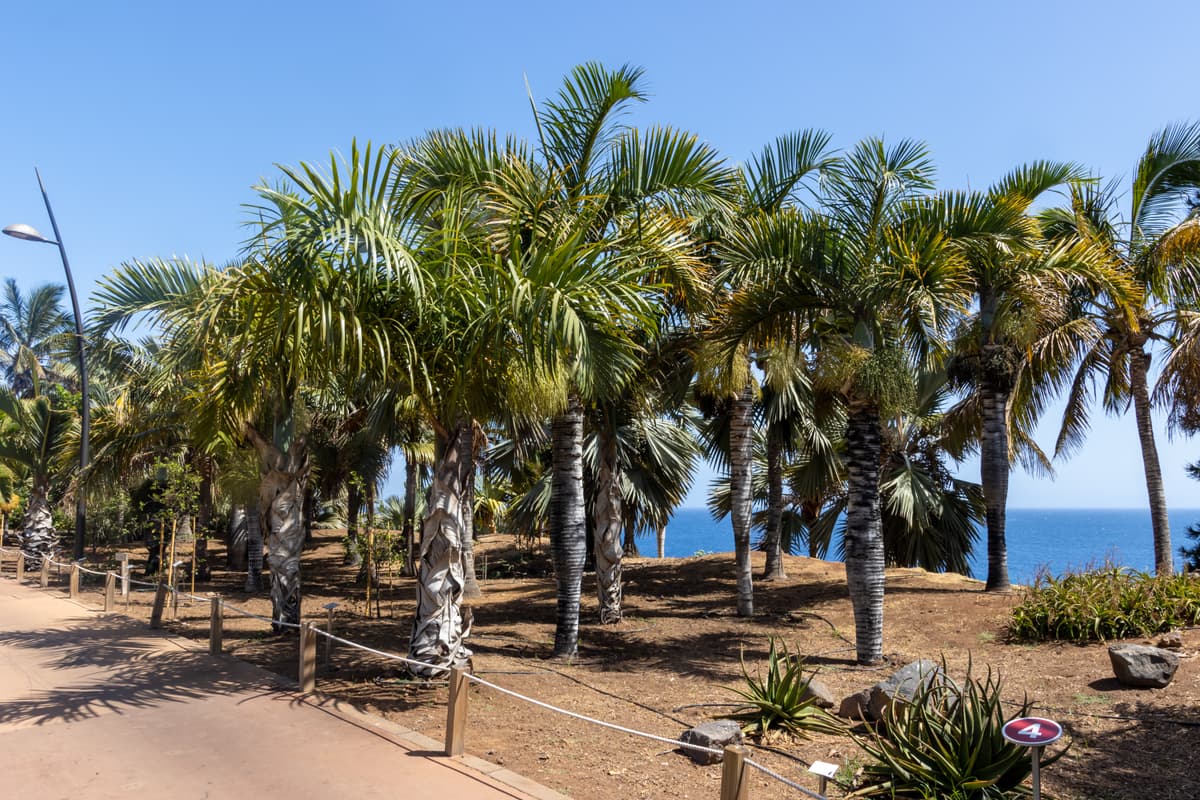
Botanical specimen of Hyophorbe Verschaffeltii.
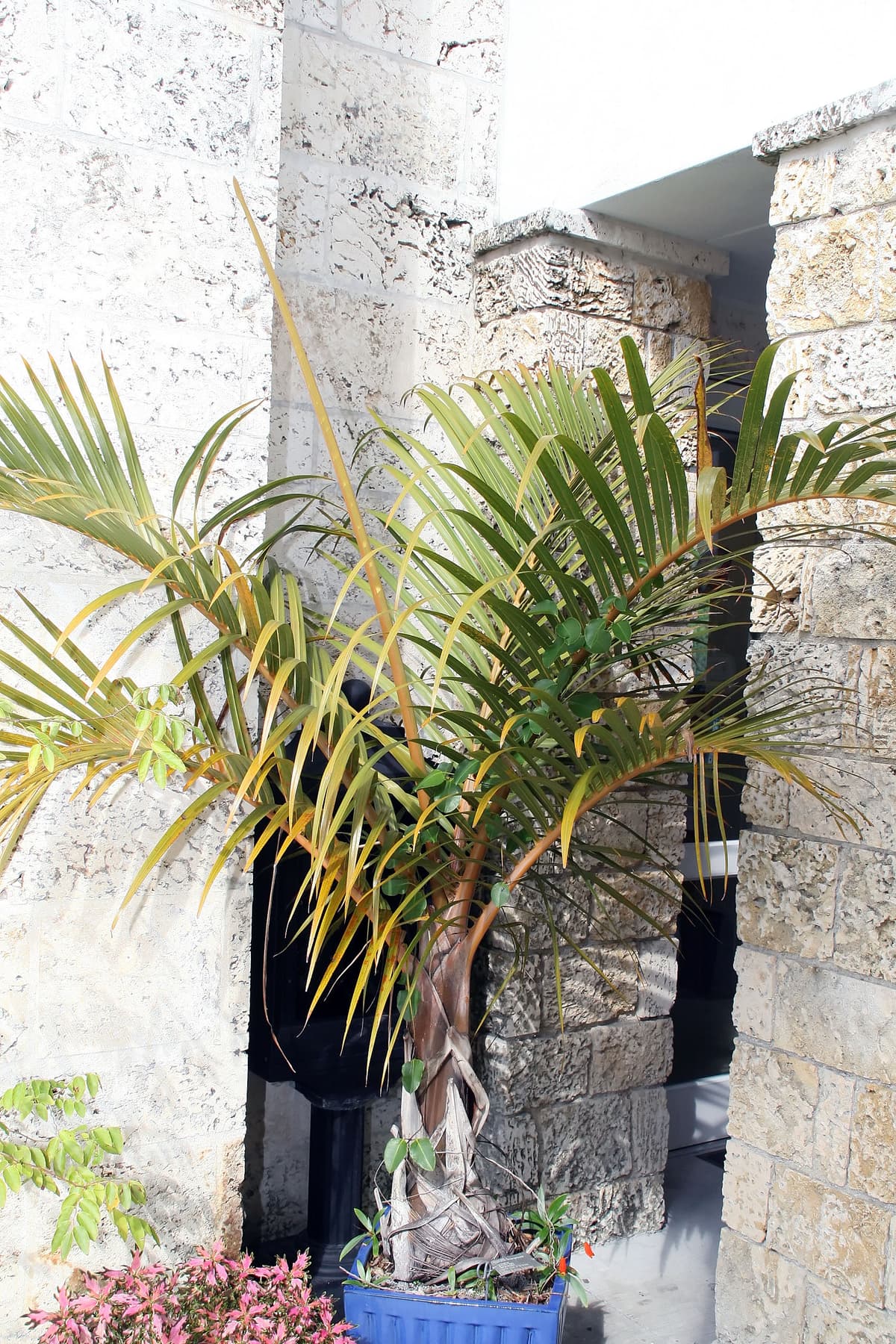
Botanical specimen of Hyophorbe Verschaffeltii.
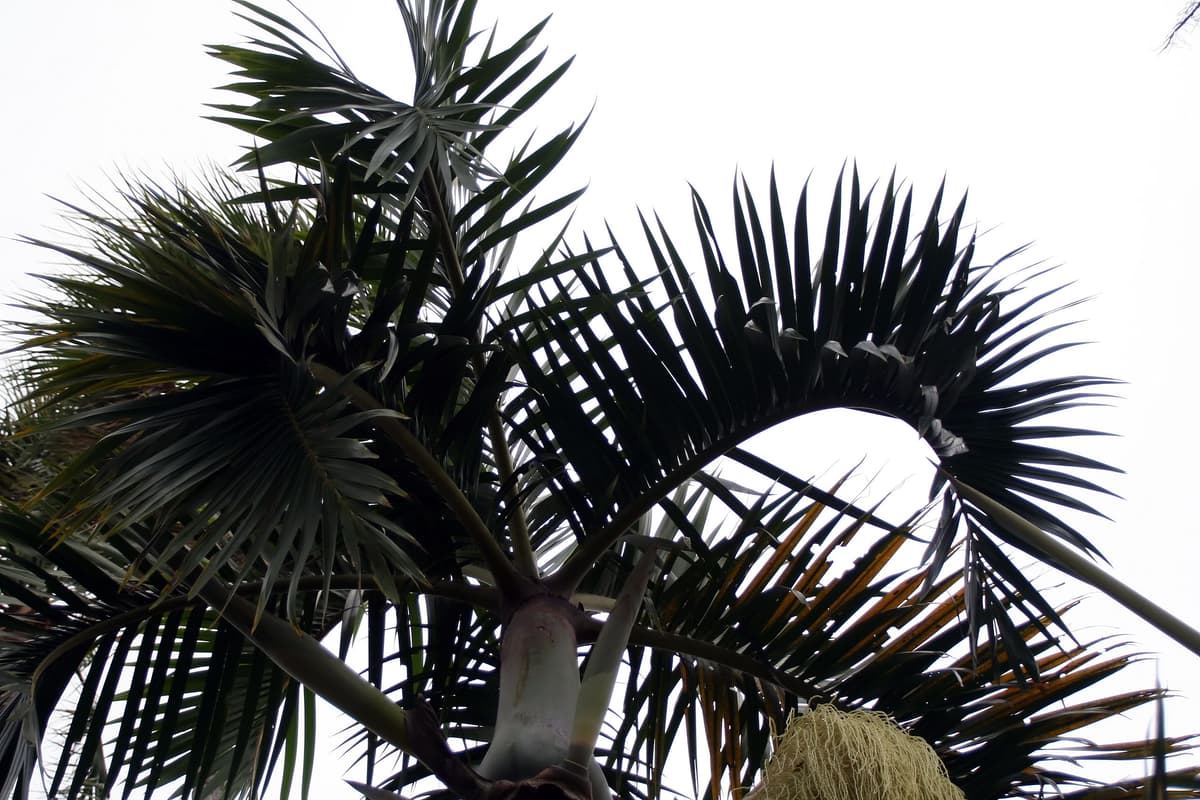
Botanical specimen of Hyophorbe Verschaffeltii.
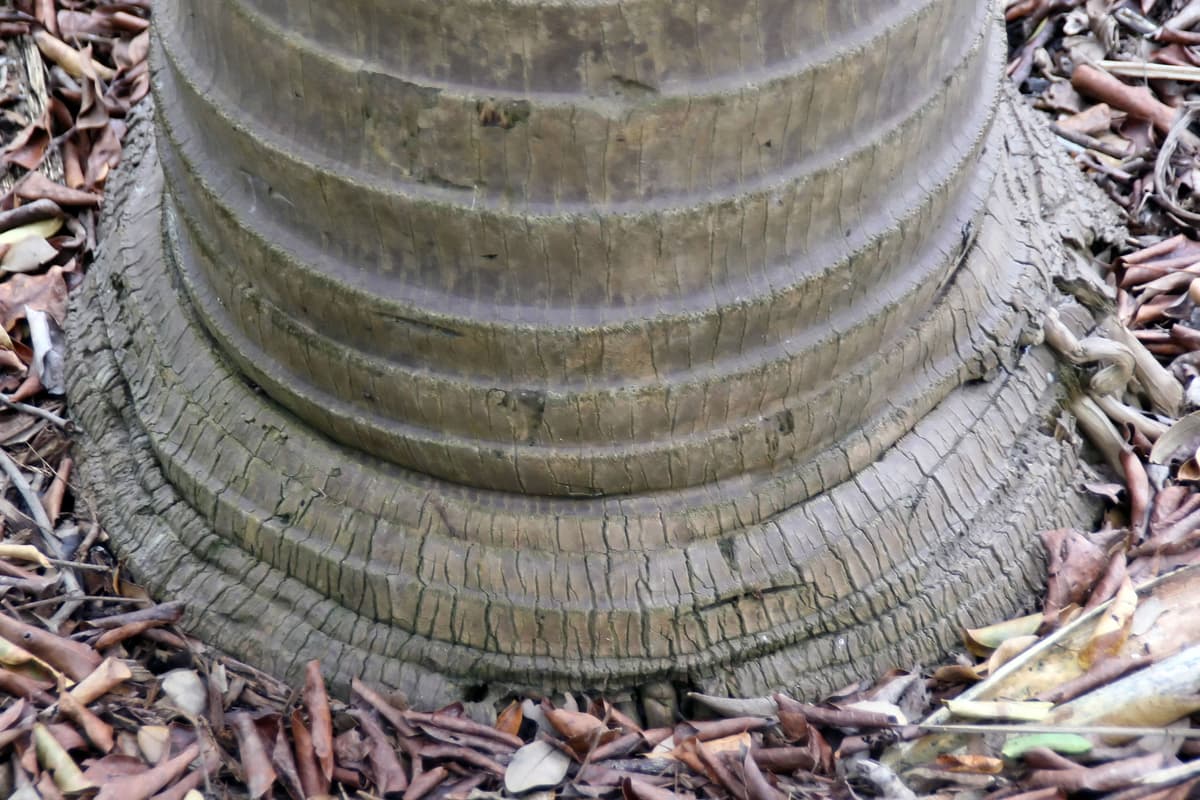
Botanical specimen of Hyophorbe Verschaffeltii.
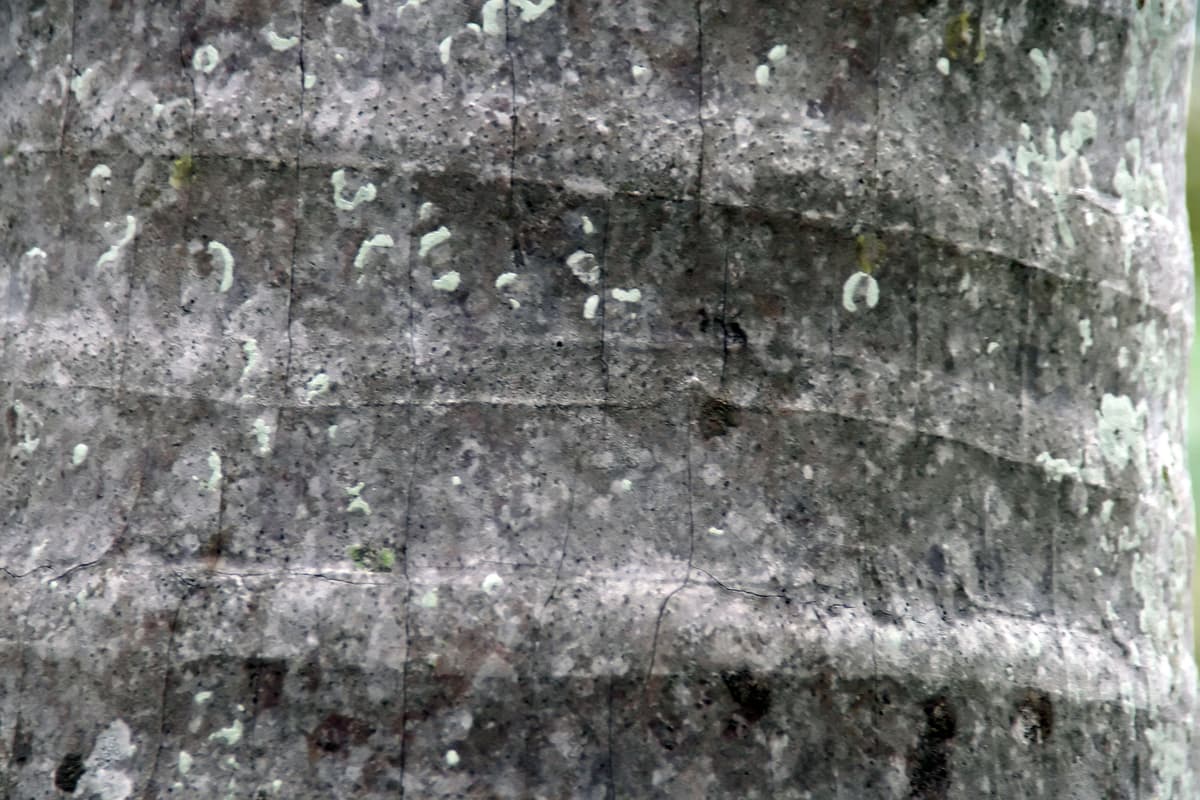
Botanical specimen of Hyophorbe Verschaffeltii.