Bailey palm
Copernicia Baileyana • Bailey's fan palm • Yarey palm • Cuban paddle palm • Yarey • Yarey hembra
Bailey palm in Motion
The Essence
"Copernicia baileyana is one of the largest Cuban fan palms, a solitary species endemic to the central and eastern part of the island. It carries a thick, smooth, whitish-grey trunk, sometimes swollen near the middle, topped by a dense crown of very rigid, stiffly ascending costapalmate leaves with a perfectly circular outline. A Florida grower's account notes that the leaves are not self-cleaning: the palm holds on to a limited number of dead leaves, which provide habitat for wildlife such as bats. In Cuba the leaves are used for thatching rural buildings and for weaving hats, baskets, bags and sandals. Genera Palmarum notes that the largest species of the genus, C. baileyana among them, make most imposing ornamentals but are notoriously slow growing; a Palm Beach County grower bears this out, reporting one 23-year-old plant still about a foot tall while other 21-year-old specimens in the same garden averaged 15 ft with stems some 22 inches thick. Because Copernicia species hybridise readily, C. baileyana is a parent of two named natural hybrids, Copernicia x textilis (with C. hospita) and Copernicia x oxycalyx (with C. rigida), and the same grower cautions that Florida nursery plants not raised from wild-collected seed are not guaranteed true to species."
The genus name Copernicia honours the Polish astronomer Nicolaus Copernicus (1473-1543), and the epithet baileyana commemorates the American horticulturist and botanist Liberty Hyde Bailey (1858-1954). Bailey was one of the specialists with whom Frere Leon corresponded on palms, and a Bailey collection is among the cited syntypes: Bailey 15159, gathered near Gamboa, Las Tunas.
The species was described by Frere Leon - born Joseph Sylvestre Sauget (1871-1955), a French-born Cuban botanist and De La Salle Brother who took up the study of Cuban palms in 1928 and later co-authored the five-volume Flora de Cuba with Brother Alain - in 1931 in the Revista de la Sociedad Geografica de Cuba. He did not describe it from a wild plant: the type, Leon 14831 collected 16 April 1931, came from a cultivated tree at Quinta Cobadonga in Cerro, Havana, a site that is today the Hospital Salvador Allende, with the label noting it was probably introduced from Camaguey or Oriente. Two later names Leon published, C. baileyana var. laciniosa (1936) and its f. bifida (1936), are now treated as synonyms. Fairchild Tropical Botanic Garden's original specimens were planted as mature palms in 1939; many toppled during Hurricane Andrew, were reset with cranes and mostly survived. Two large specimens are a feature of the Montgomery Botanical Center's Coconut Grove Palmetum.
Natural Habitat
Grows in savannas and dry woodland on clay soils at low elevations, in relatively dry situations; the IUCN assessment gives a lower elevation limit of 3 m and an upper limit of 200 m. A grower's field account from Cuba notes that populations that originally grew in savannas and woodlands are now largely relegated to pastures and agricultural land.
Curated Specimens
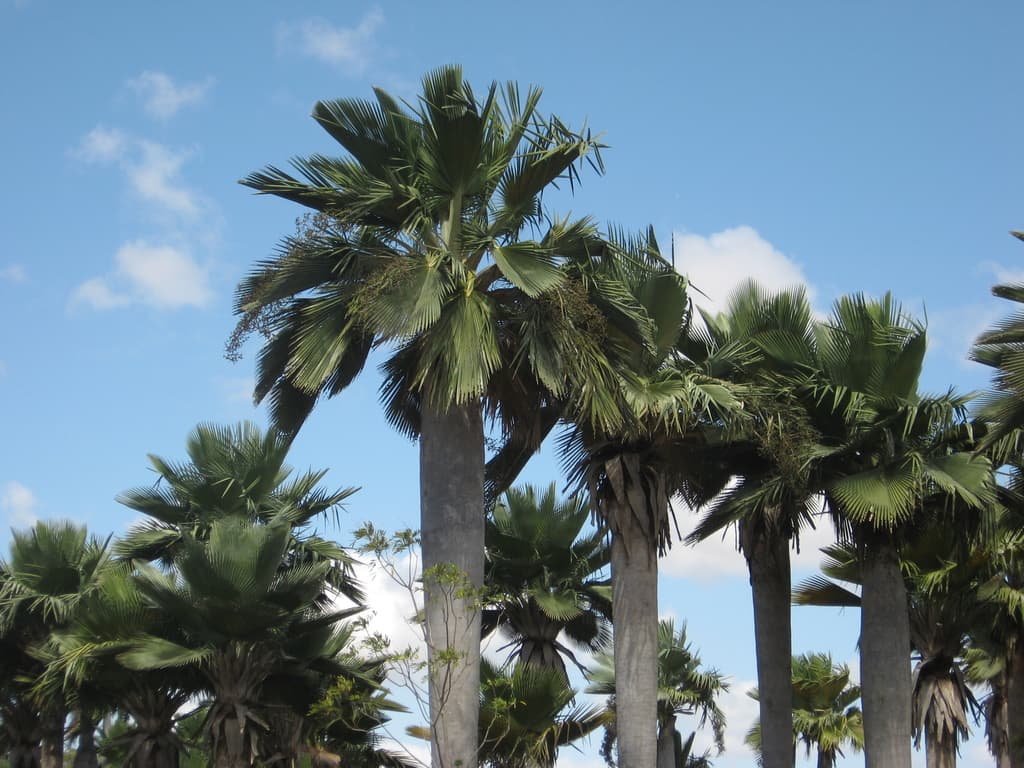
Botanical specimen of Copernicia Baileyana.
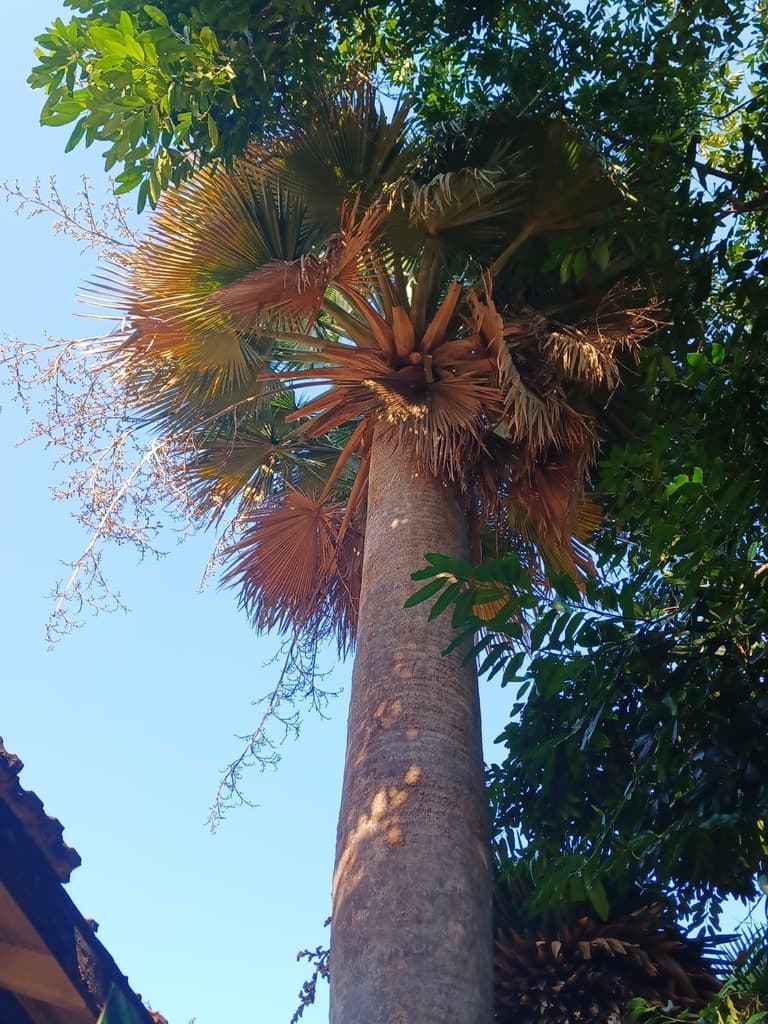
Botanical specimen of Copernicia Baileyana.
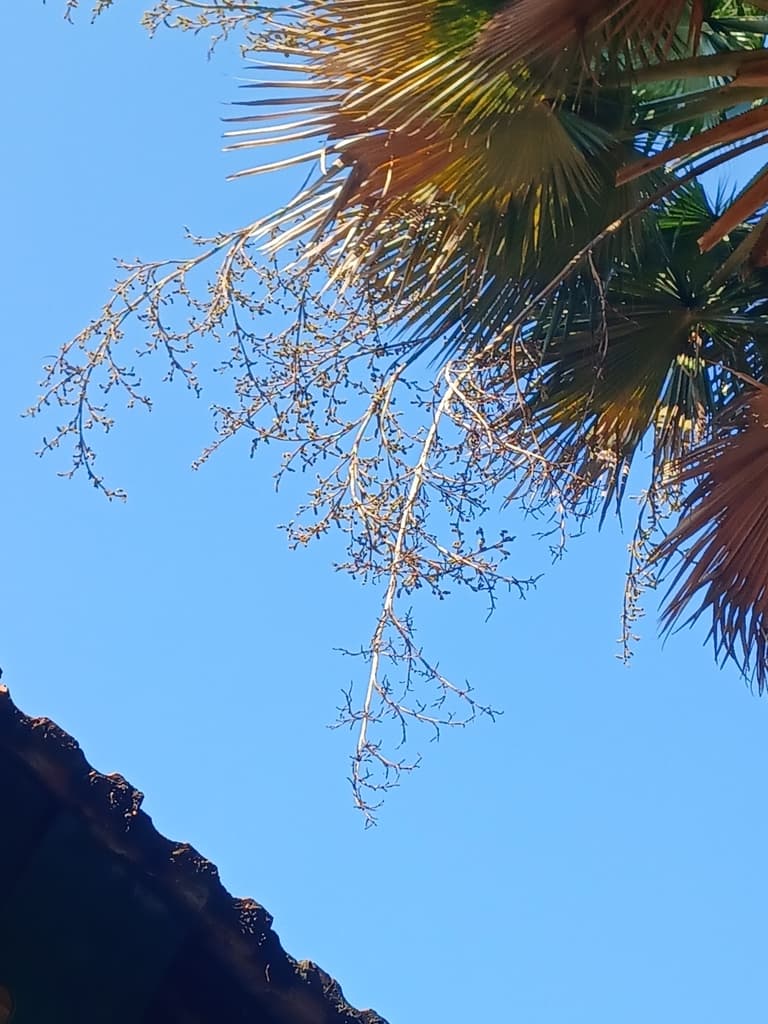
Botanical specimen of Copernicia Baileyana.