Guano palm
Copernicia Glabrescens • Guano blanco • Palma blanco
Guano palm in Motion
The Essence
"Copernicia glabrescens is a small Cuban fan palm, endemic to western and west-central Cuba, where Moya López (2022) records it from Pinar del Río, Artemisa and Mayabeque. Palmpedia gives a mature height of about 6 m (20 ft) and a spread near 1.5 m (5 ft), with stiff, circular costapalmate leaves that are light green above and waxy gray beneath, carried on a short, relatively slender trunk clad in old leaf bases. Unusually for the genus it suckers weakly: Palmpedia and Wikipedia both call it the only clustering Copernicia. POWO accepts two varieties, var. glabrescens and var. ramosissima. Both horticultural sources rate it slow-growing, and the IUCN assessed the species as Least Concern in 2016. No flower or fruit measurements were found in the sources consulted."
Copernicia is named after the astronomer Nicolaus Copernicus. The epithet glabrescens is the Latin present participle of glabrēscō, glossed by Wiktionary as "balding" — in botanical usage, becoming glabrous or smooth.
Odoardo Beccari validly published the name in Webbia 2: 170 (1907), attributing it to "Wendl., named in Wright Pl. Cub."; earlier listings by Sauvalle (1871) and Gómez de la Maza (1893) carried no description and are nomina nuda. Moya López (2022) argues the correct citation is therefore Copernicia glabrescens Becc., and treats the widely used "H.Wendl. ex Becc." — still the form given by POWO and GBIF — as an incorrect author citation. It was the second Copernicia described from Cuba and one of three Beccari named in 1907, alongside C. curtissii and C. macroglossa. Charles Wright (1811–1885), considered one of the most important naturalists of his era and a major contributor to knowledge of the Cuban flora, collected no other Copernicia, and the name rests on his specimen Wright 3968. With the Berlin material destroyed, Dahlgren and Glassman (1963) designated Wright 3968 at the Arnold Arboretum herbarium (A) as lectotype, and Moya López (2022) specified the exact sheet, A 00028318. Palmpedia's photo gallery documents cultivated specimens at the La Habana Botanical Garden in Cuba, Leu Gardens in Florida and Lyon Arboretum in Hawaii.
Natural Habitat
Coastal savannas of western and west-central Cuba, per Palmpedia; the IUCN assessment lists forest, savanna, shrubland and grassland. Field photographs in Moya López (2022) document it in dry forest on white-sand substrate in the San Ubaldo–Sabanalamar Managed Floristic Reserve (Guane, Pinar del Río), in disturbed shrubby vegetation and cleared pasture on white sand elsewhere around Guane, and in disturbed low forest on serpentine substrate at Cajálbana. Ramona Oviedo reported it, in a personal communication published by Moya López, from wetlands south of Güines and Melena del Sur in Mayabeque. POWO's coarse biome label is "wet tropical biome".
Curated Specimens
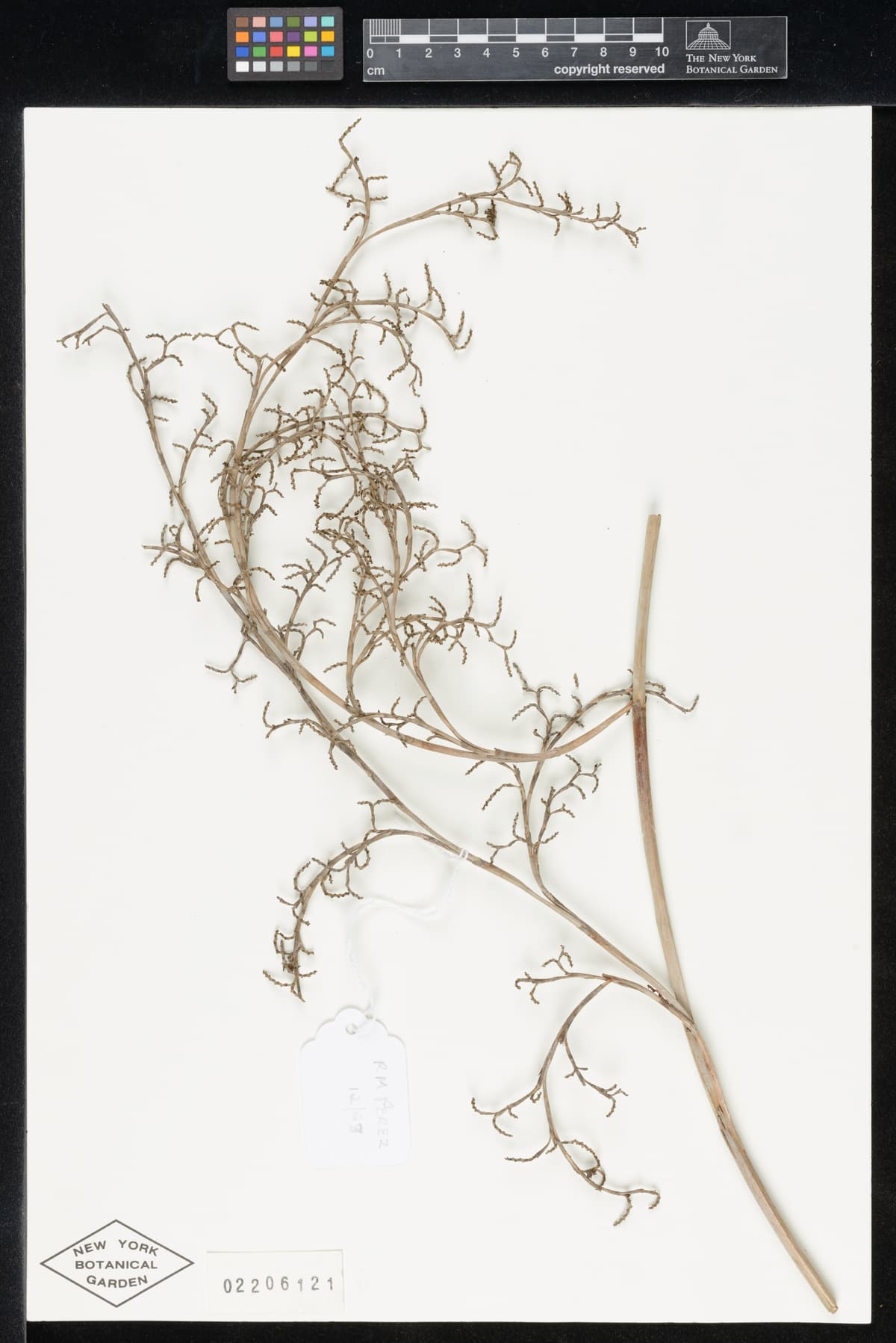
Botanical specimen of Copernicia Glabrescens.
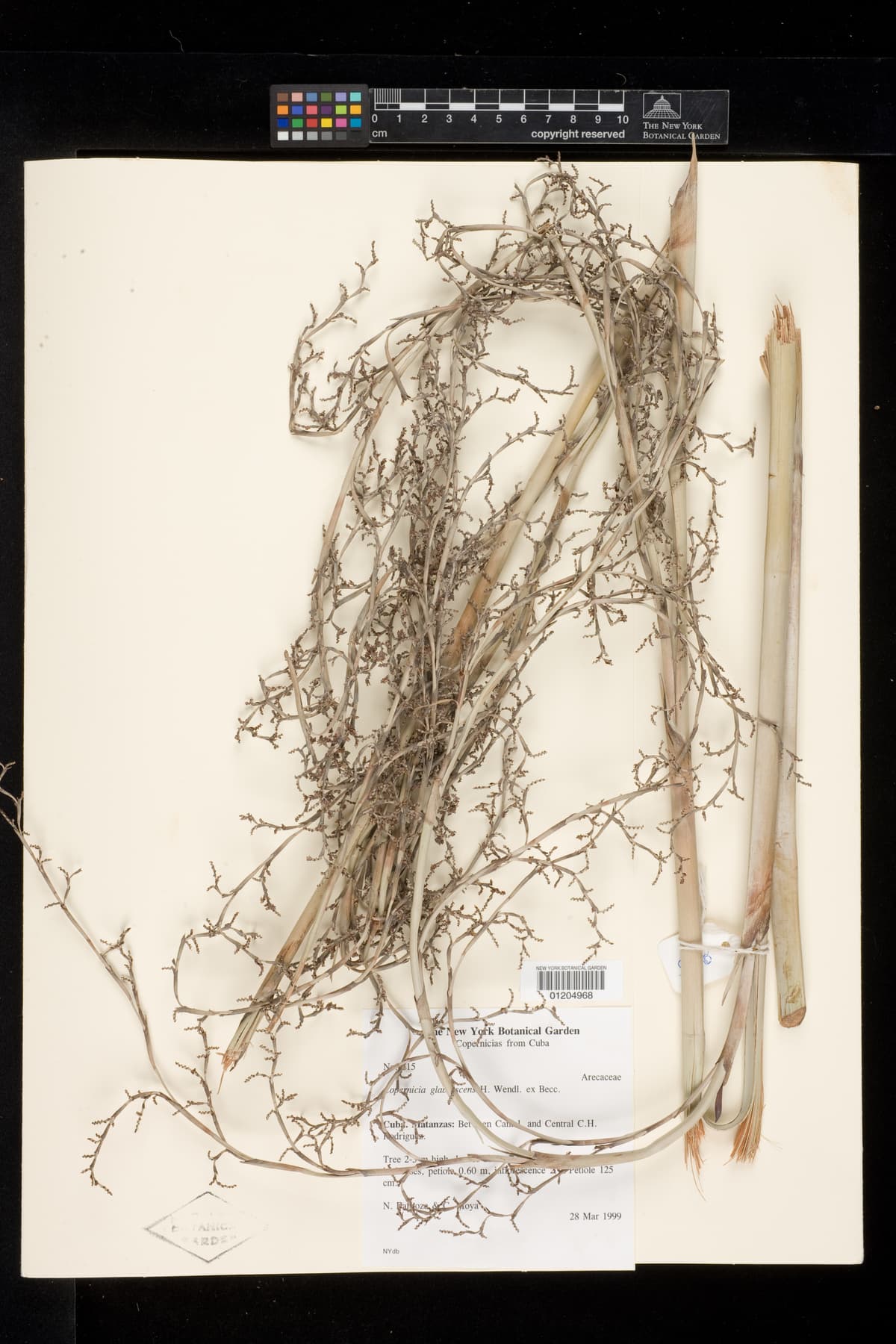
Botanical specimen of Copernicia Glabrescens.
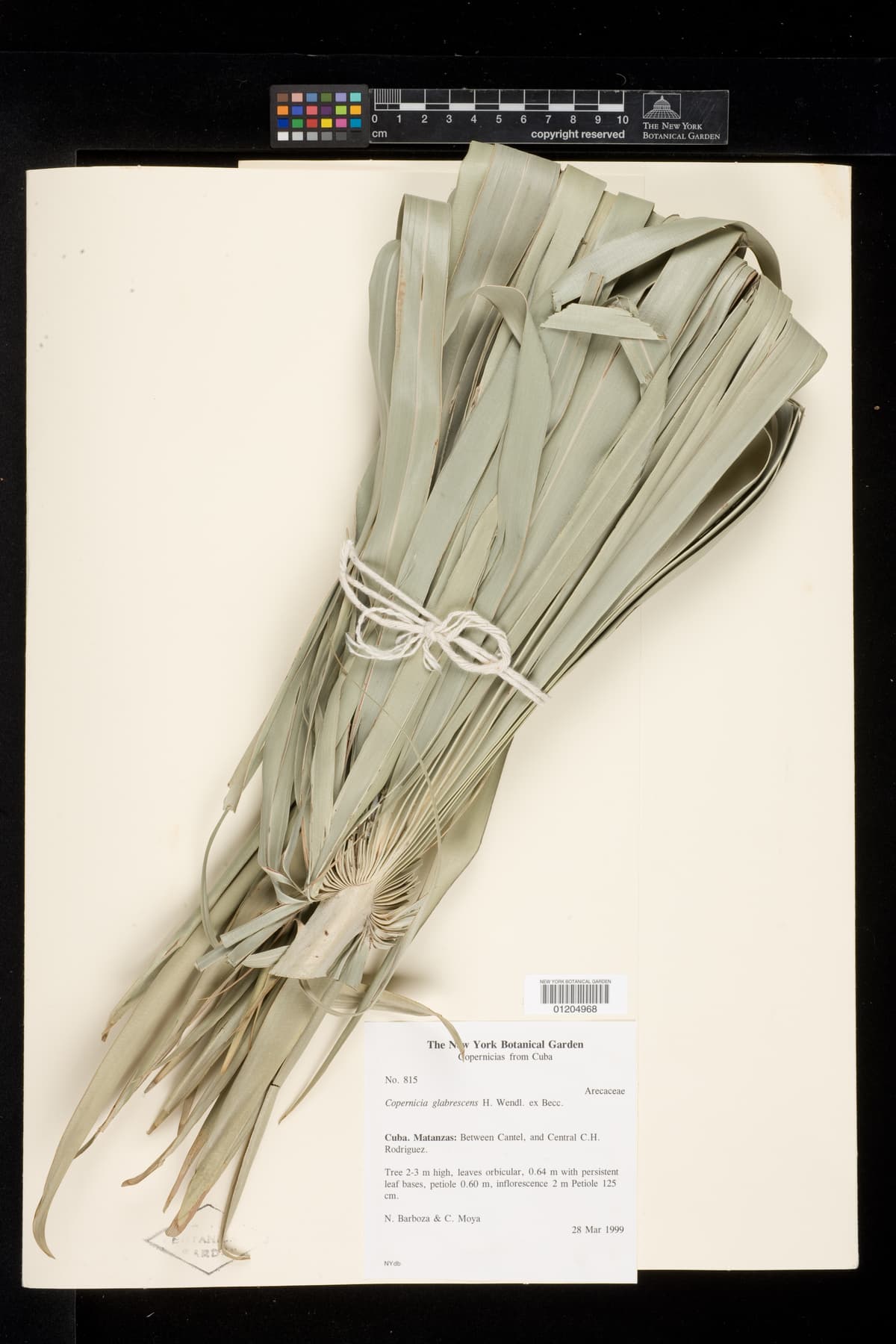
Botanical specimen of Copernicia Glabrescens.
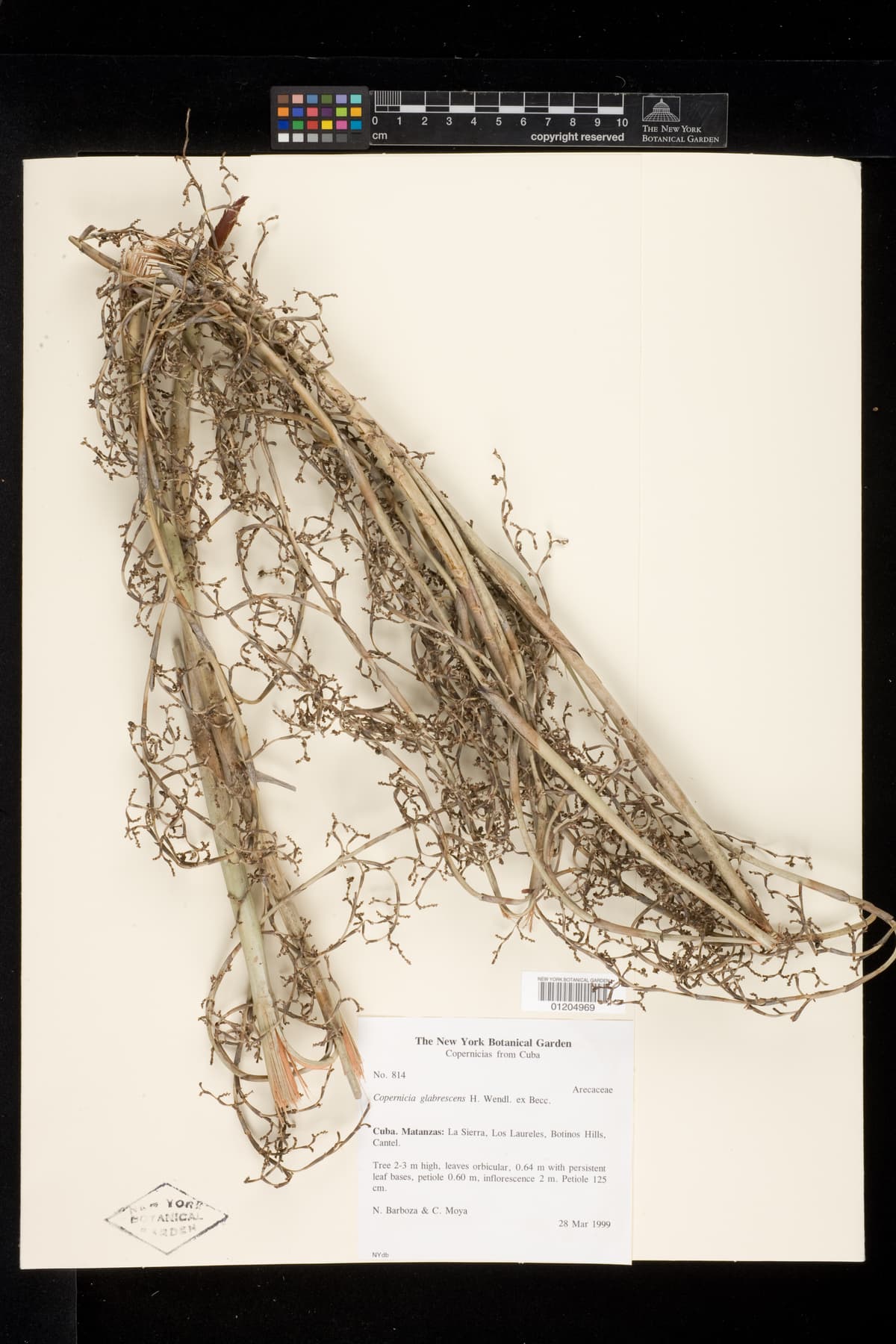
Botanical specimen of Copernicia Glabrescens.
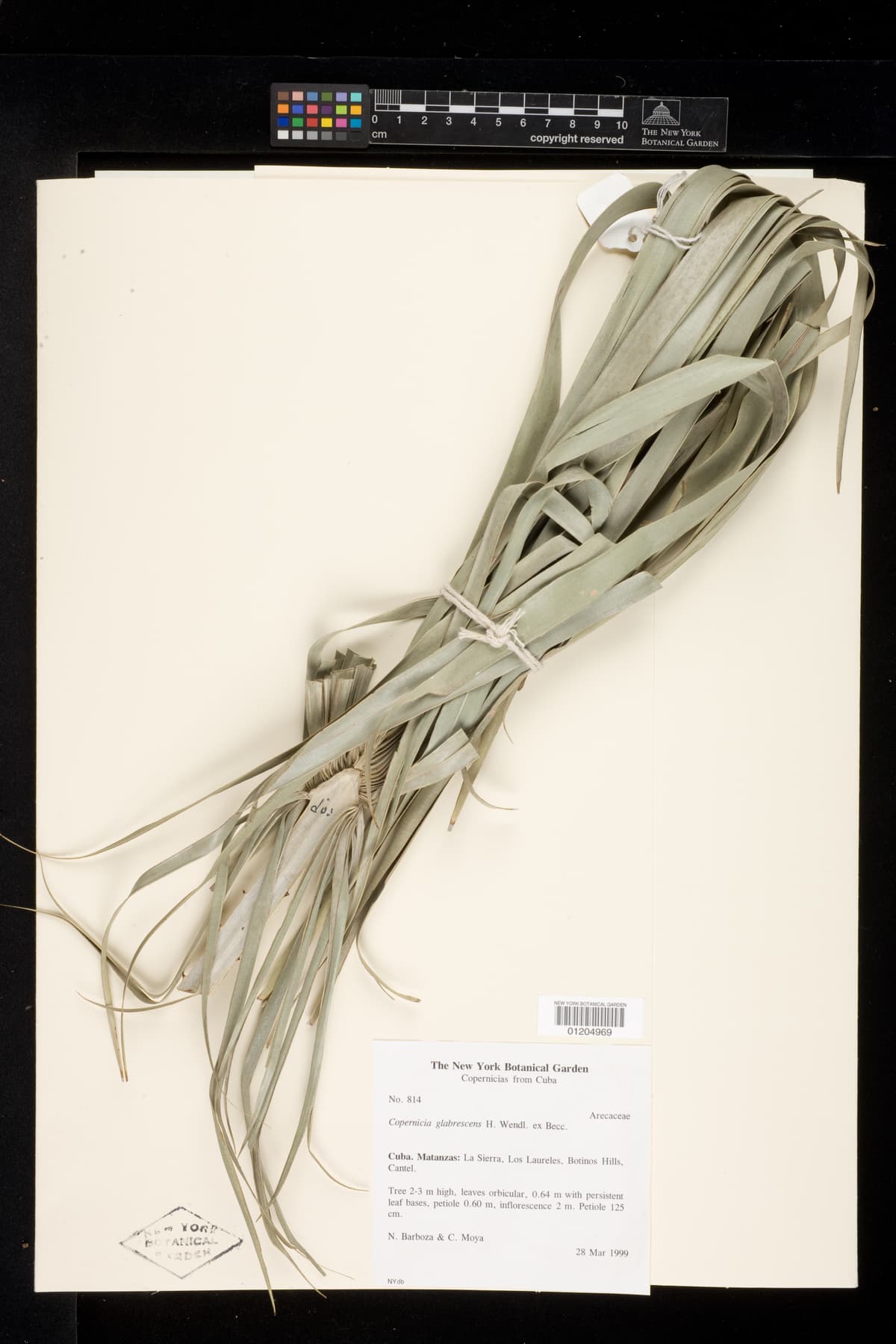
Botanical specimen of Copernicia Glabrescens.
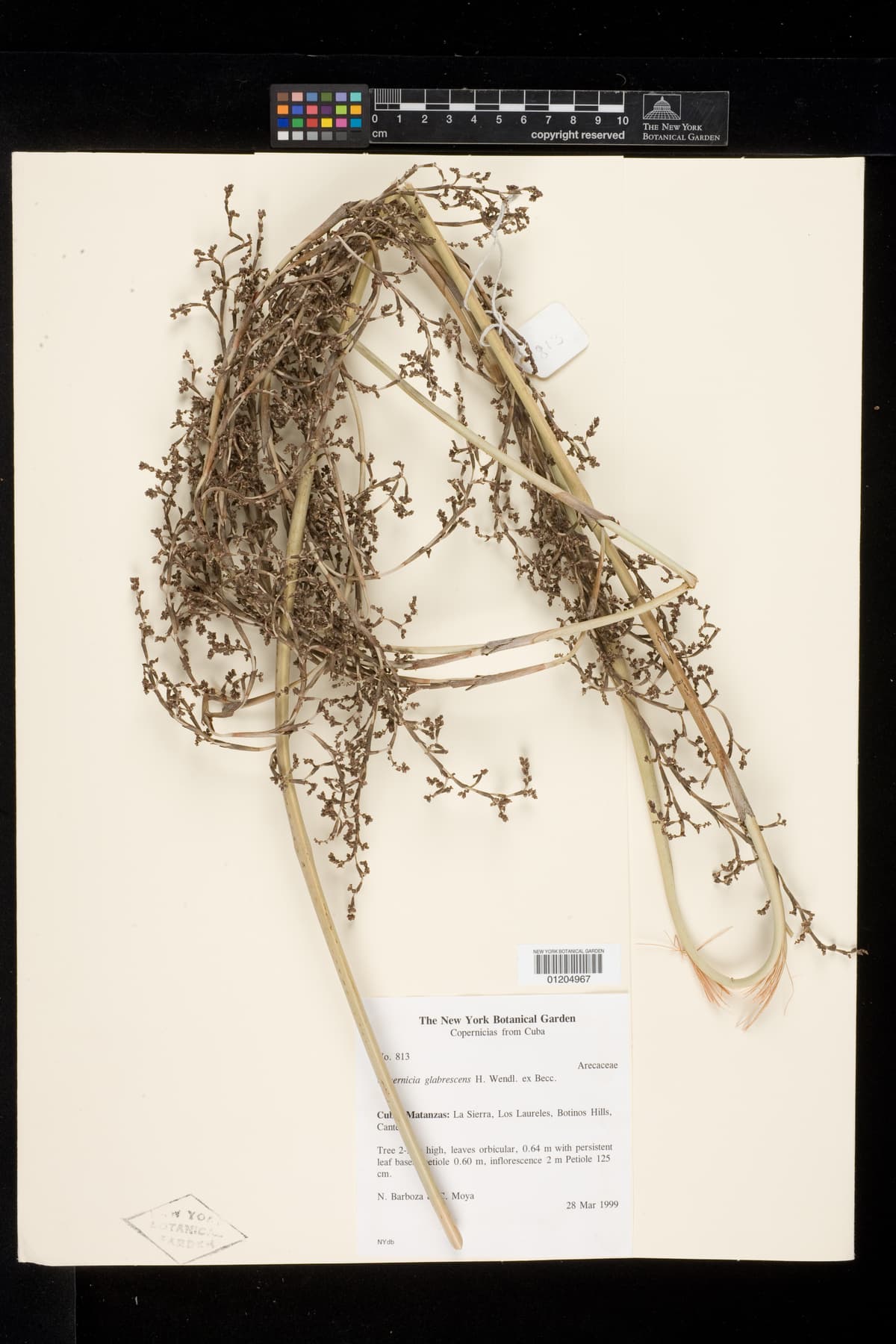
Botanical specimen of Copernicia Glabrescens.
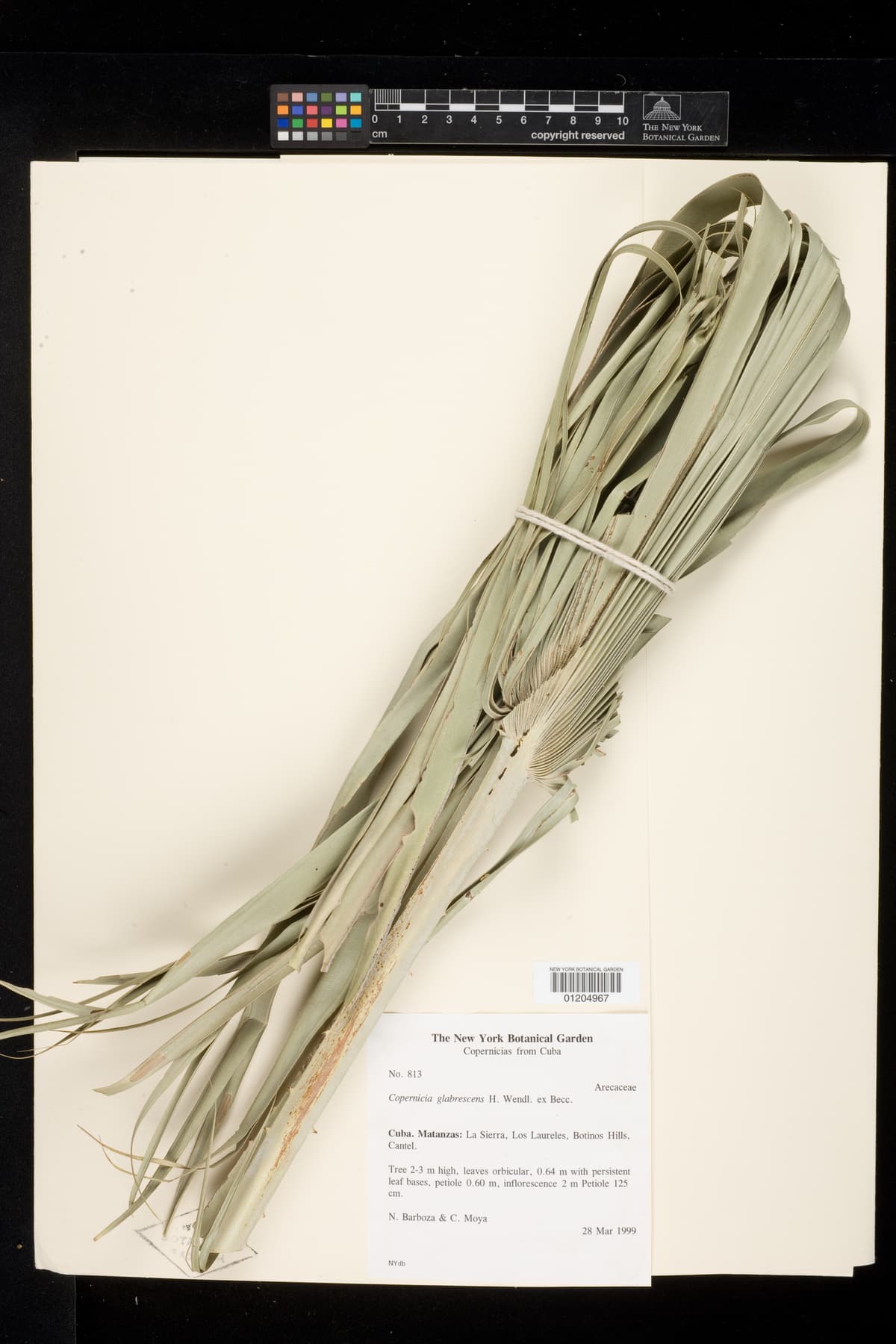
Botanical specimen of Copernicia Glabrescens.
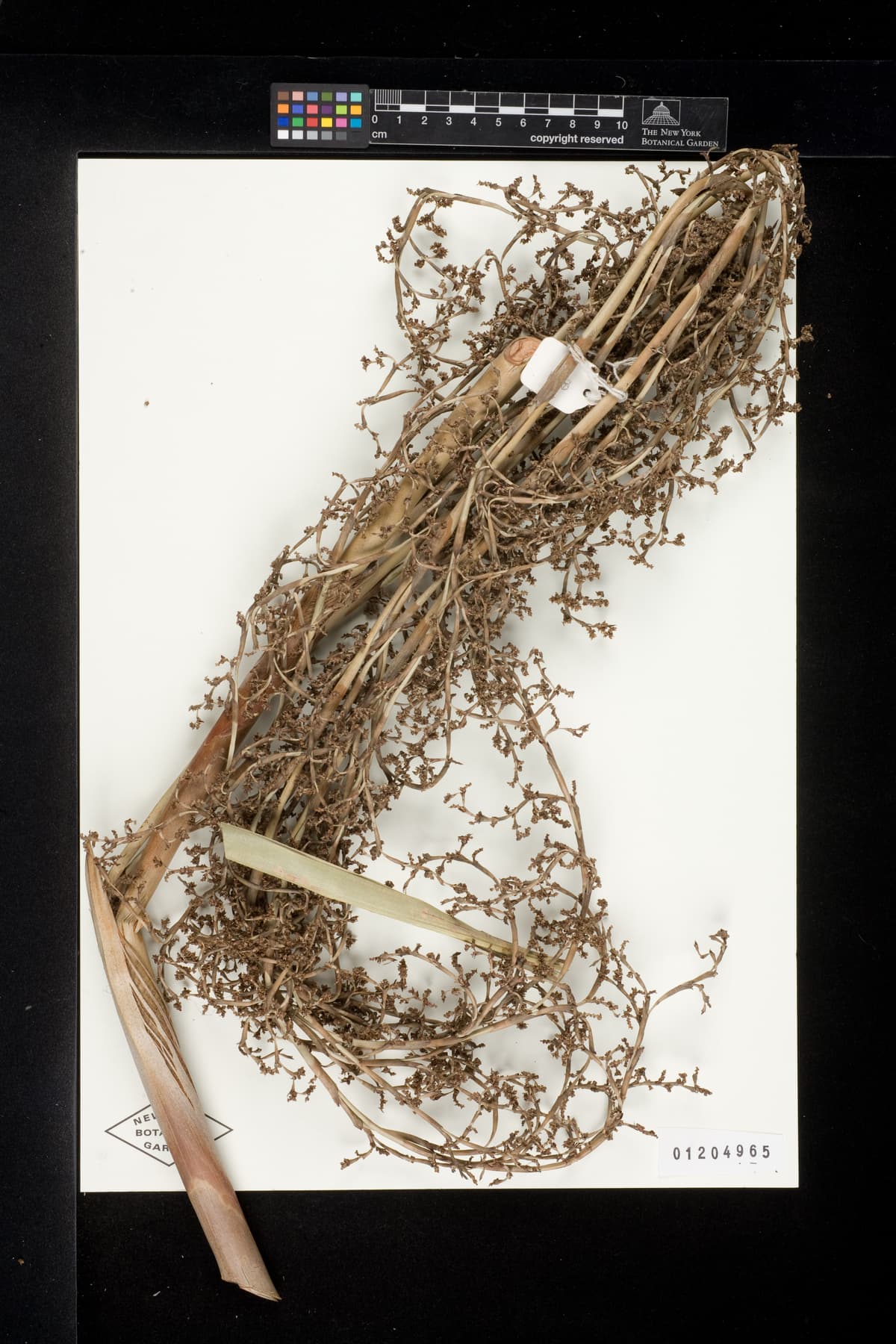
Botanical specimen of Copernicia Glabrescens.
Botanical specimen of Copernicia Glabrescens.
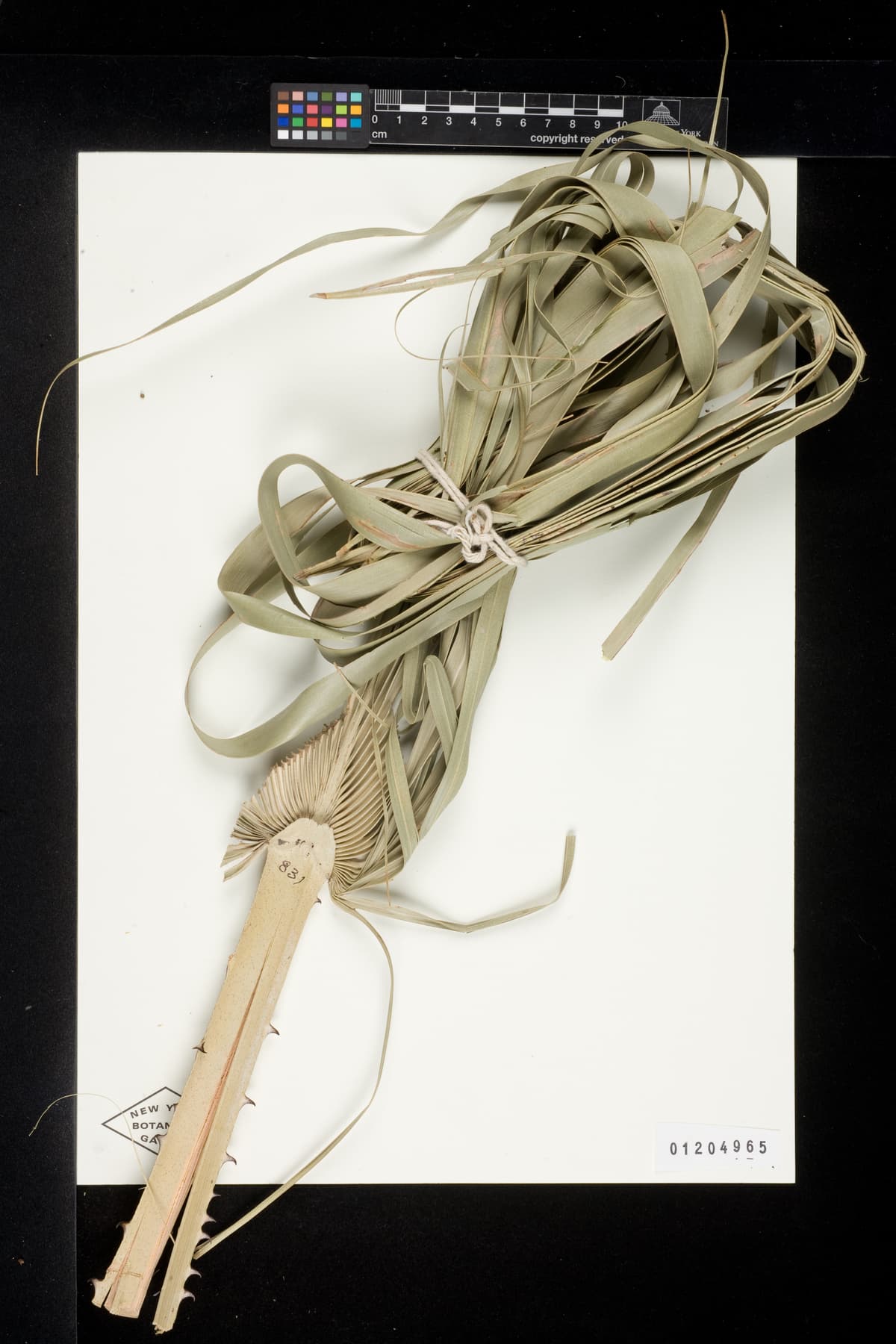
Botanical specimen of Copernicia Glabrescens.
Botanical specimen of Copernicia Glabrescens.
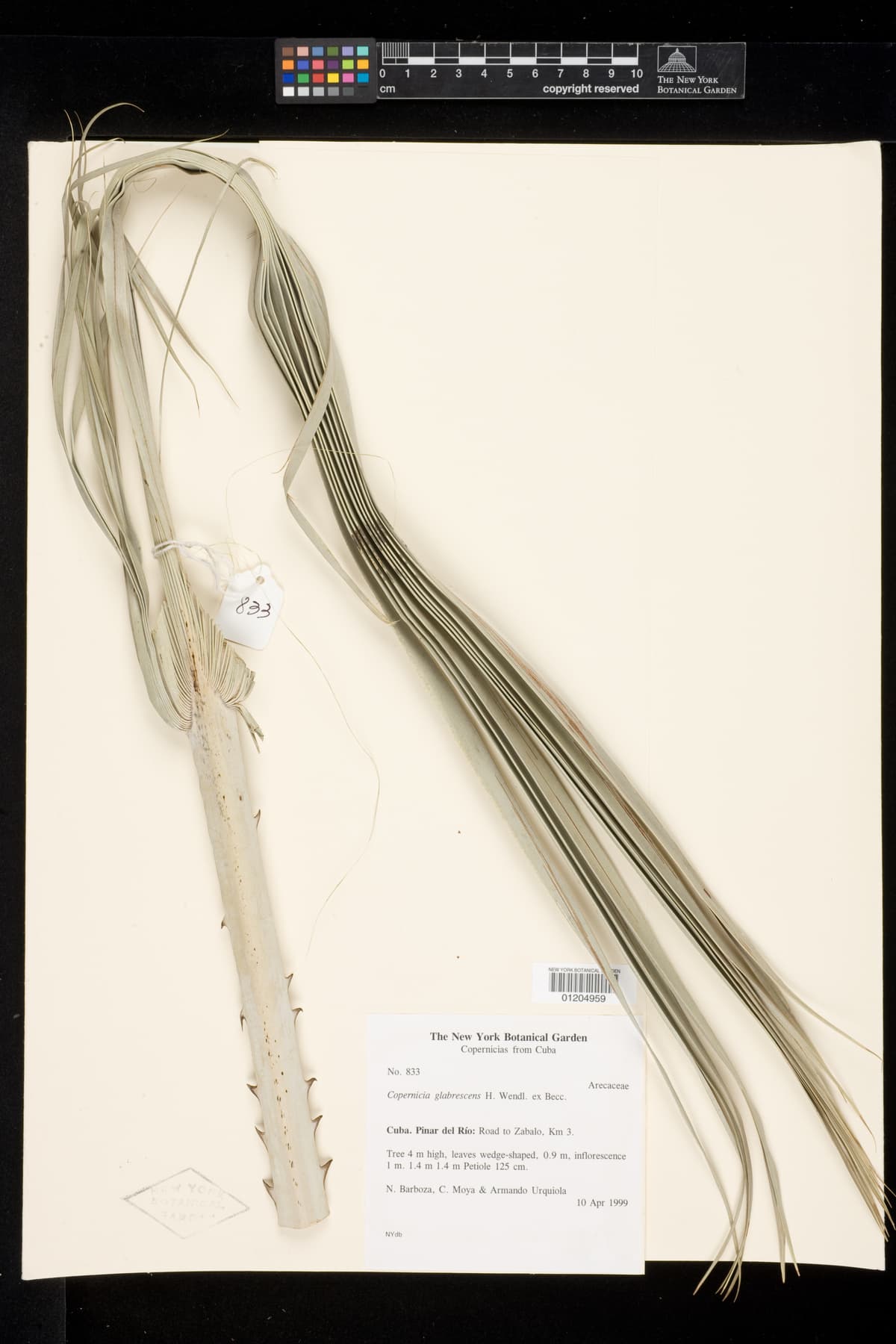
Botanical specimen of Copernicia Glabrescens.
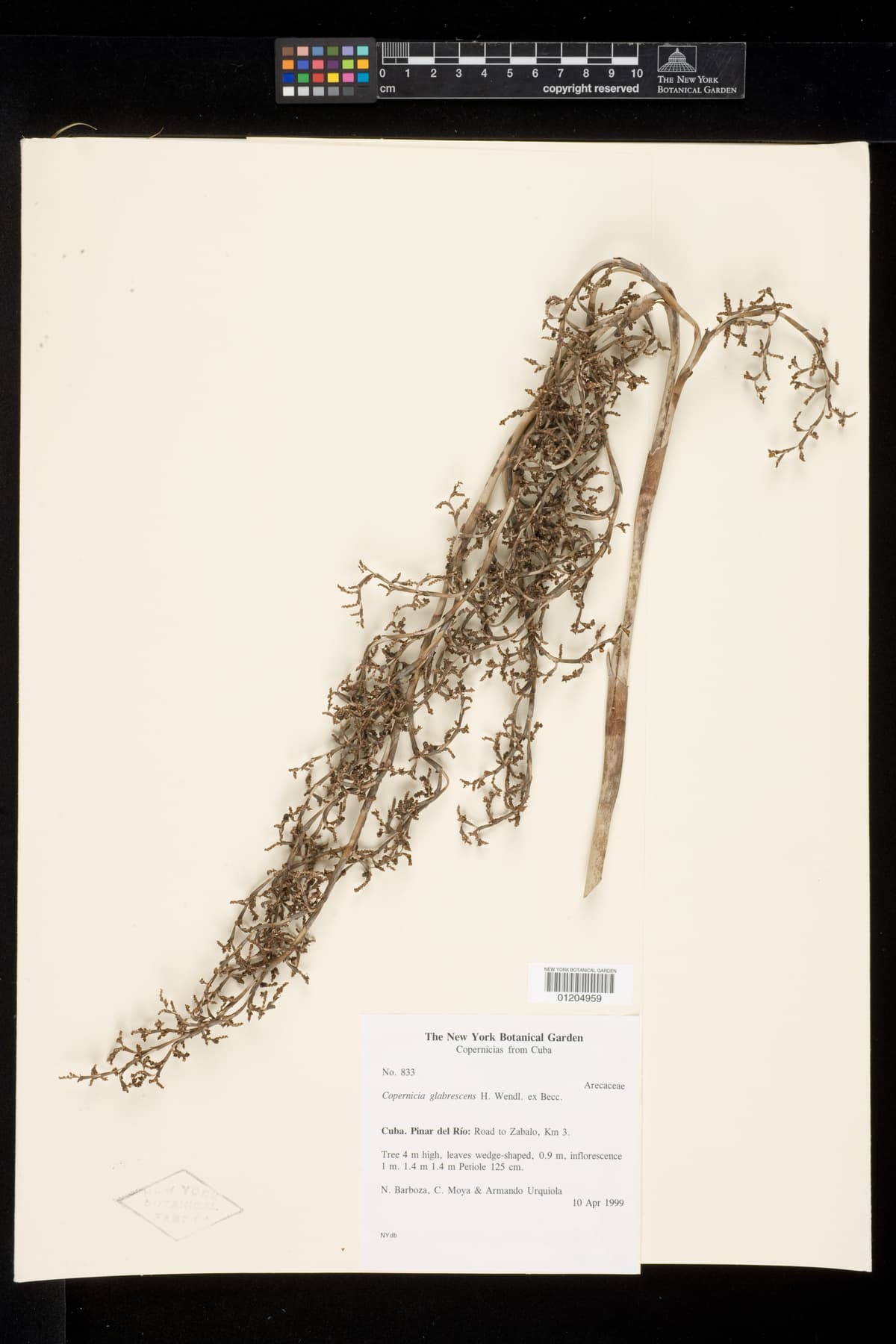
Botanical specimen of Copernicia Glabrescens.
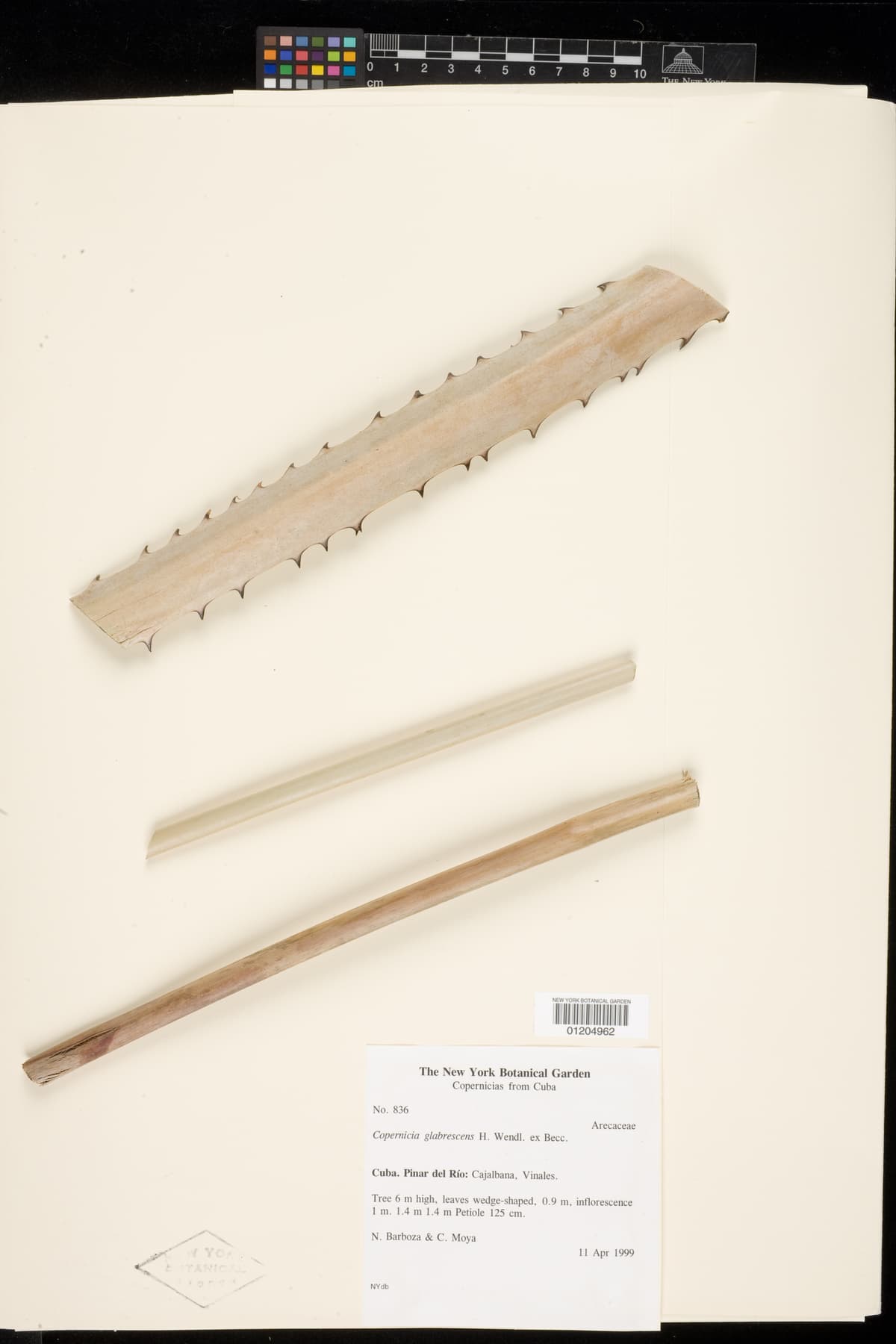
Botanical specimen of Copernicia Glabrescens.
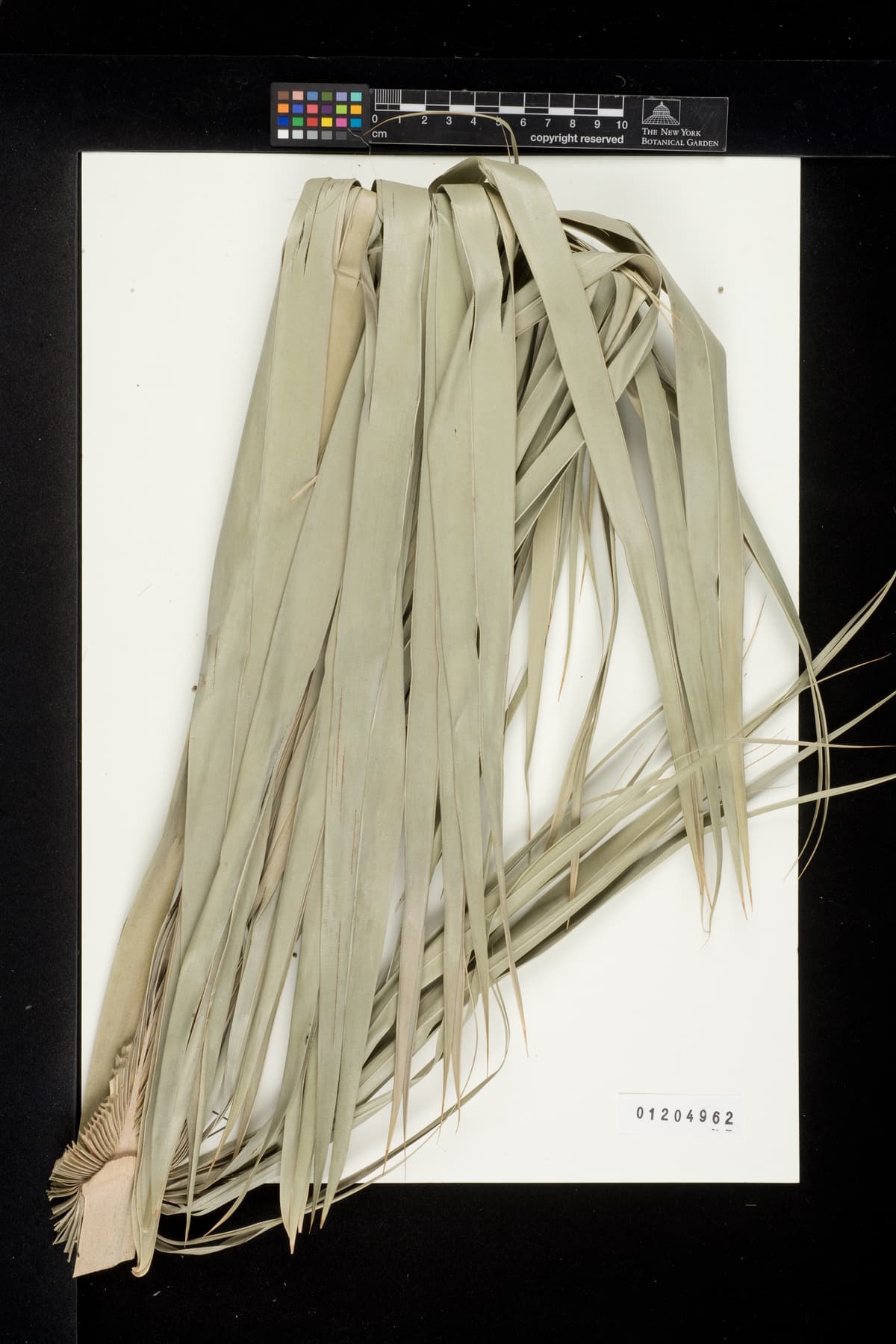
Botanical specimen of Copernicia Glabrescens.
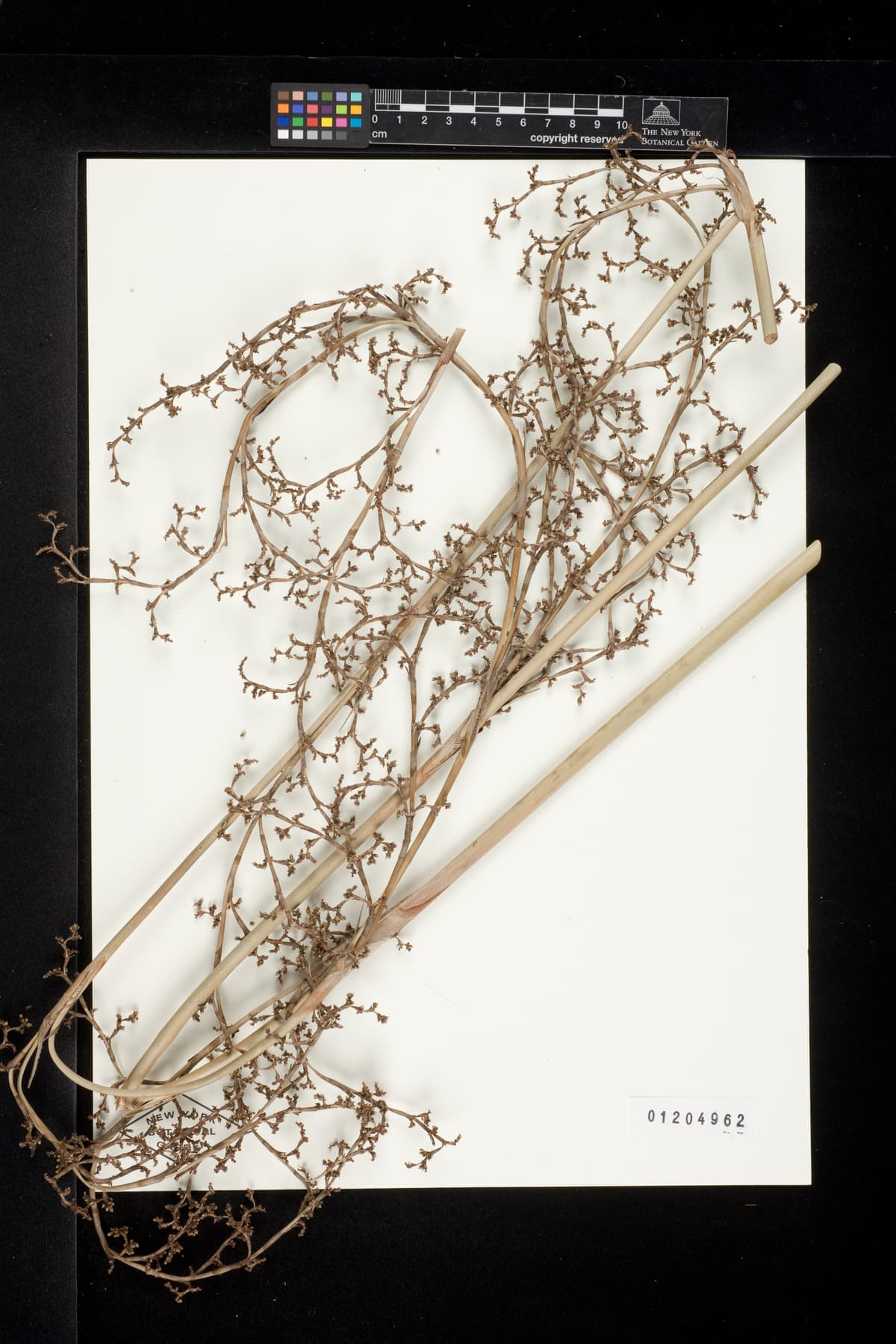
Botanical specimen of Copernicia Glabrescens.
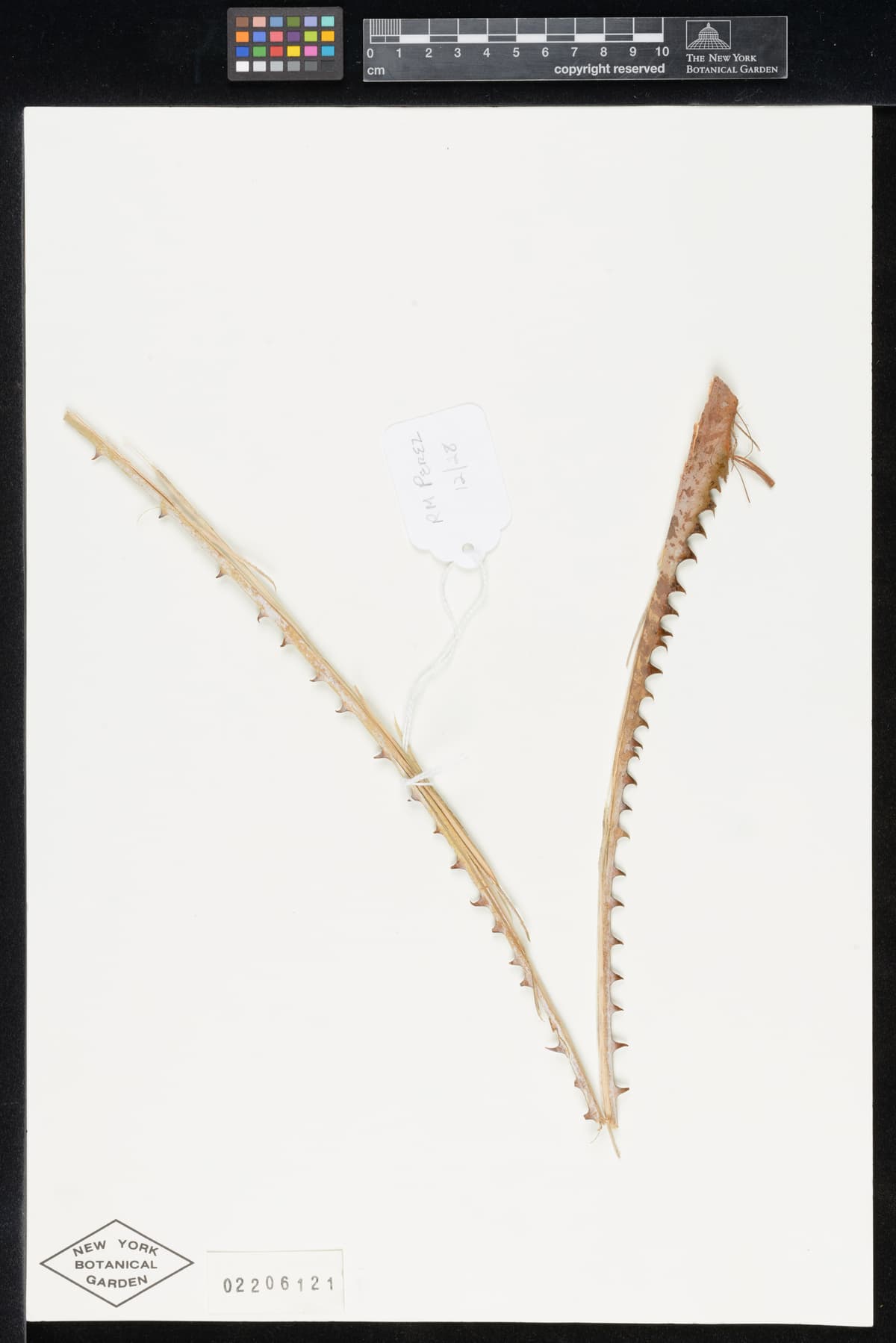
Botanical specimen of Copernicia Glabrescens.
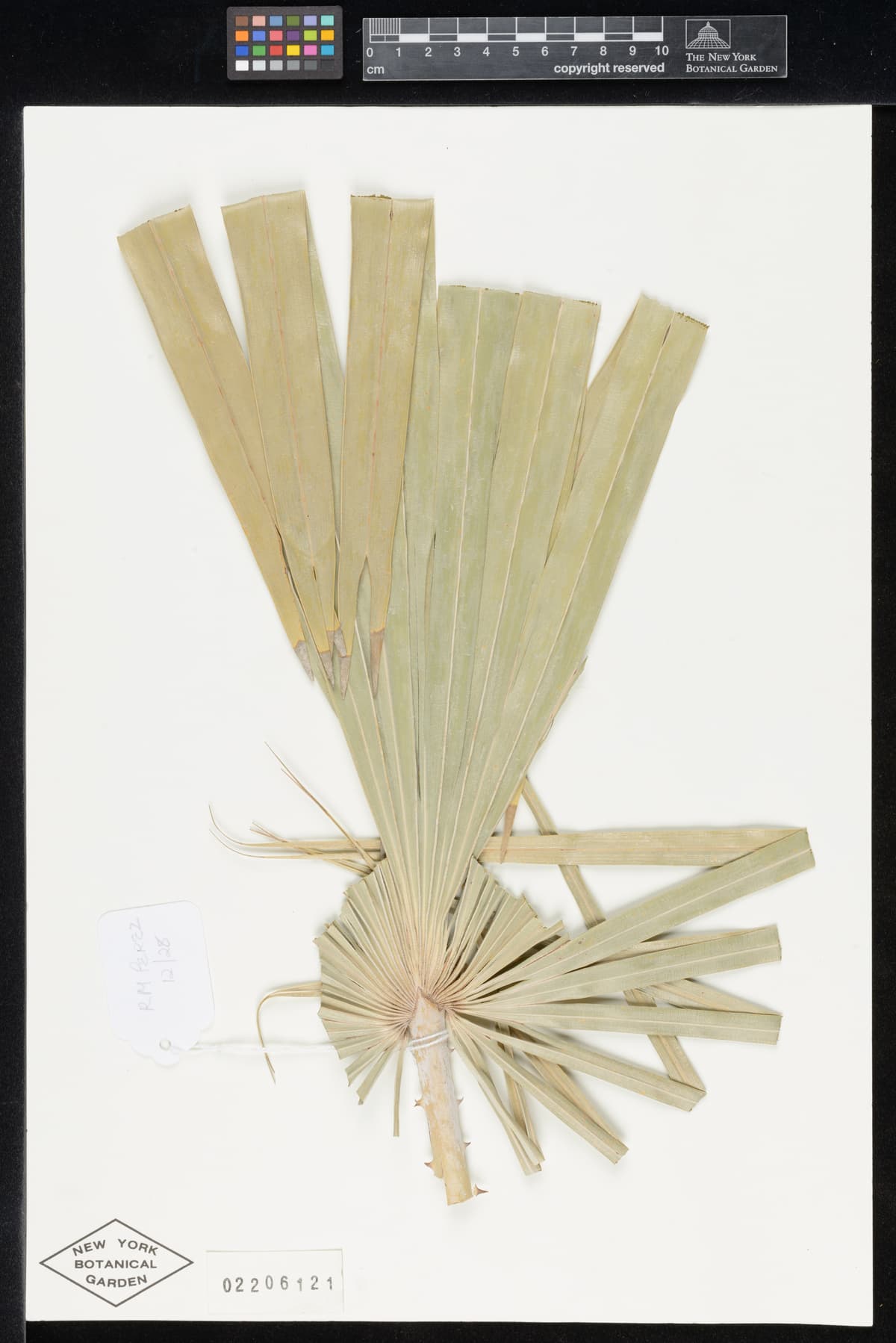
Botanical specimen of Copernicia Glabrescens.
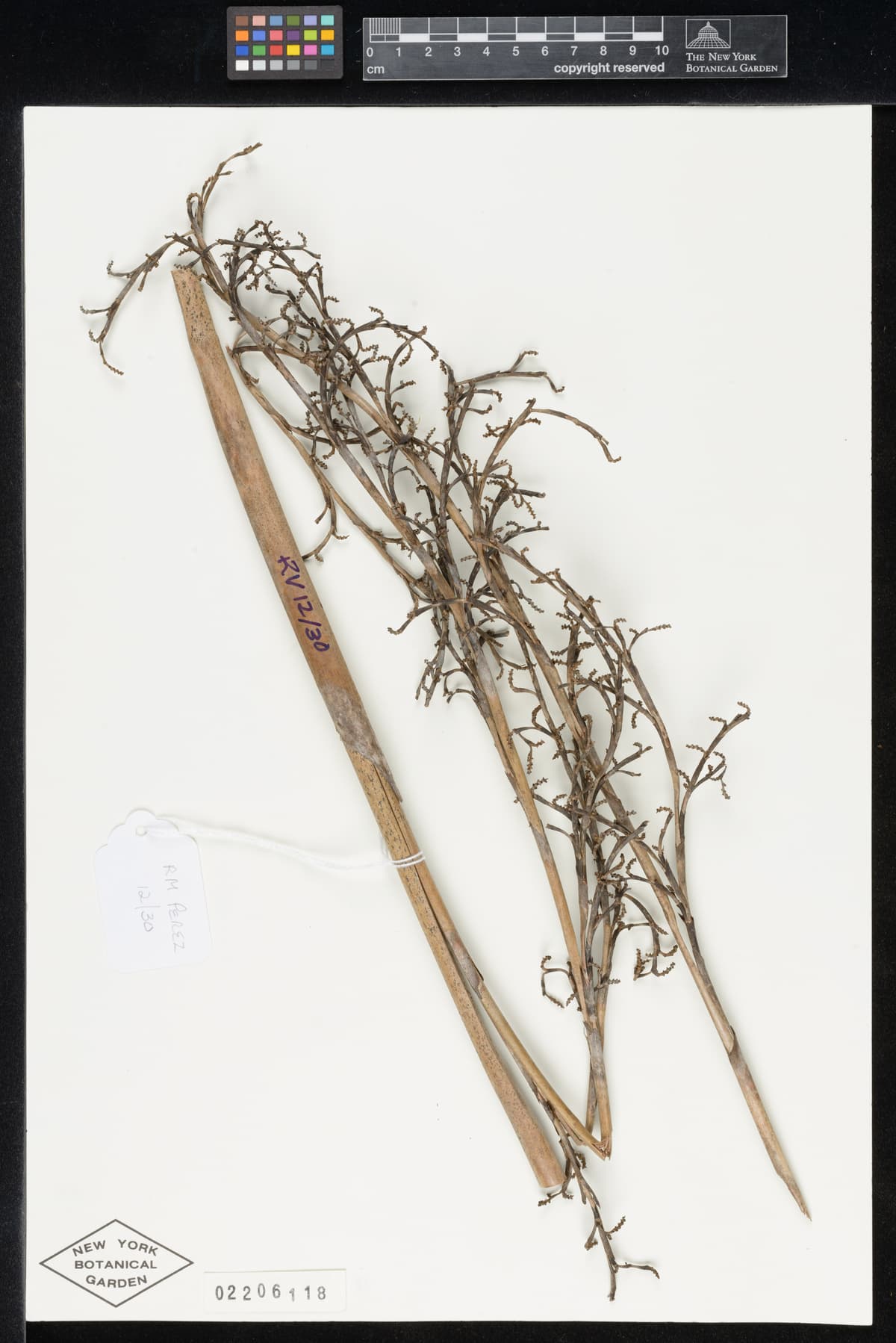
Botanical specimen of Copernicia Glabrescens.
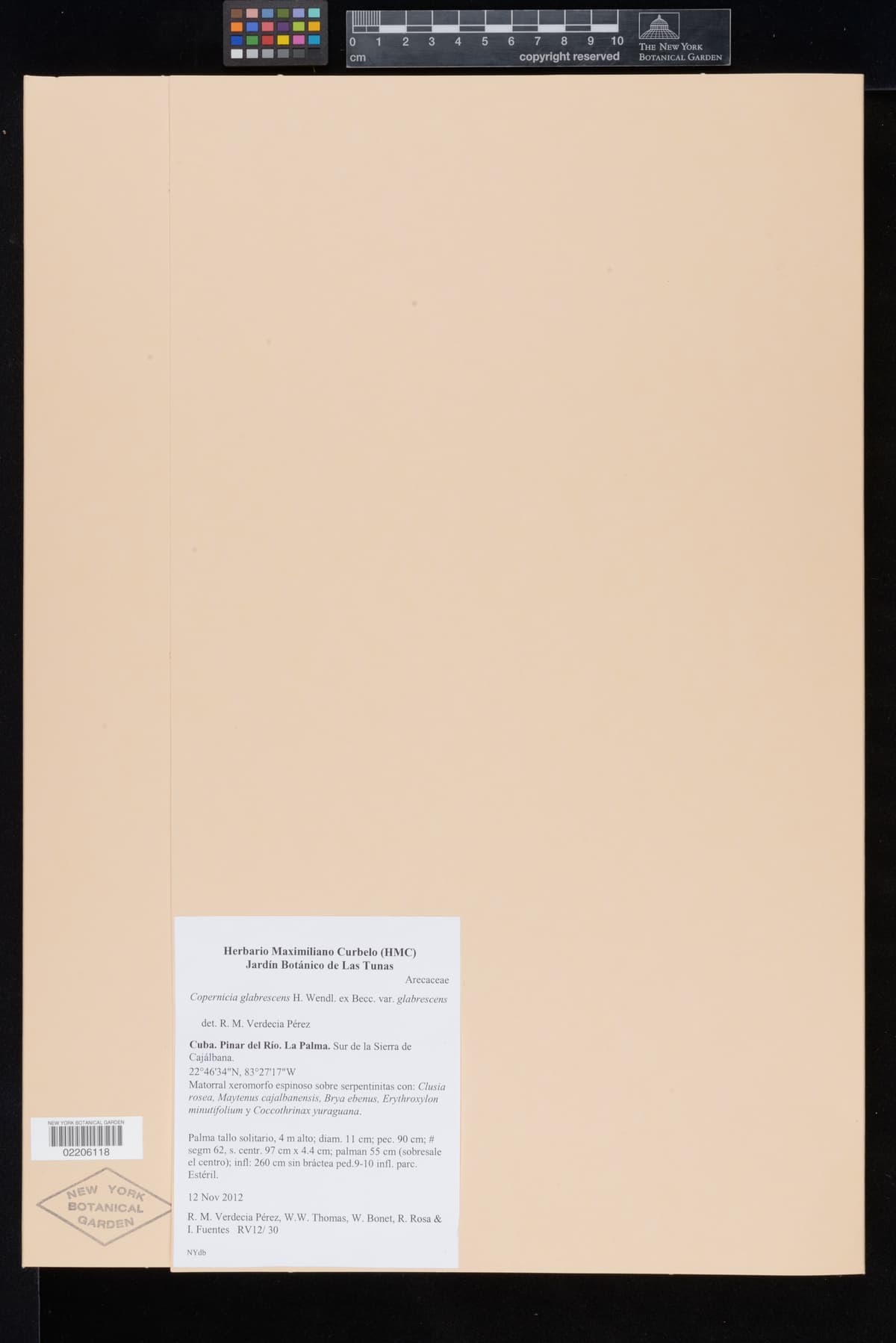
Botanical specimen of Copernicia Glabrescens.
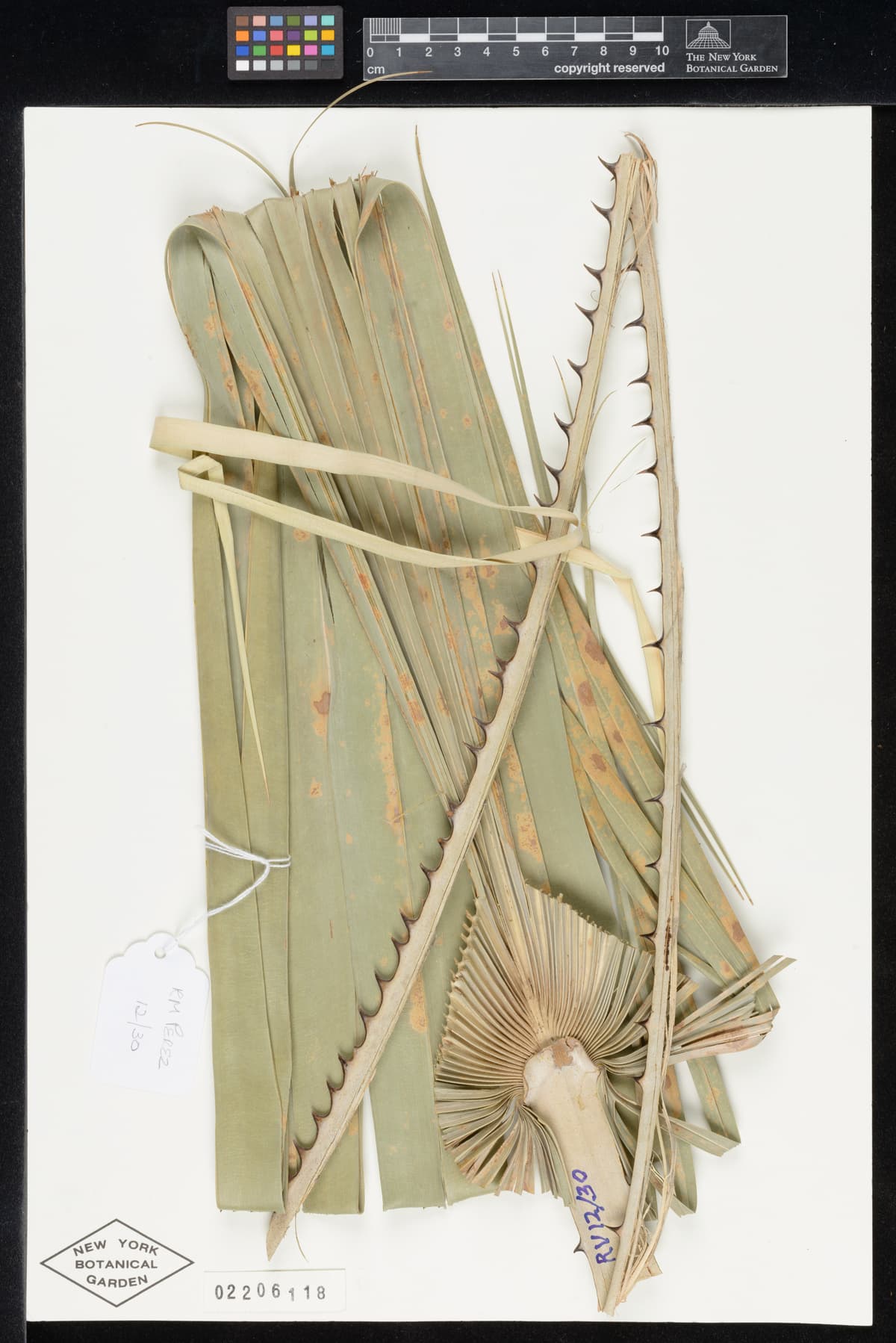
Botanical specimen of Copernicia Glabrescens.
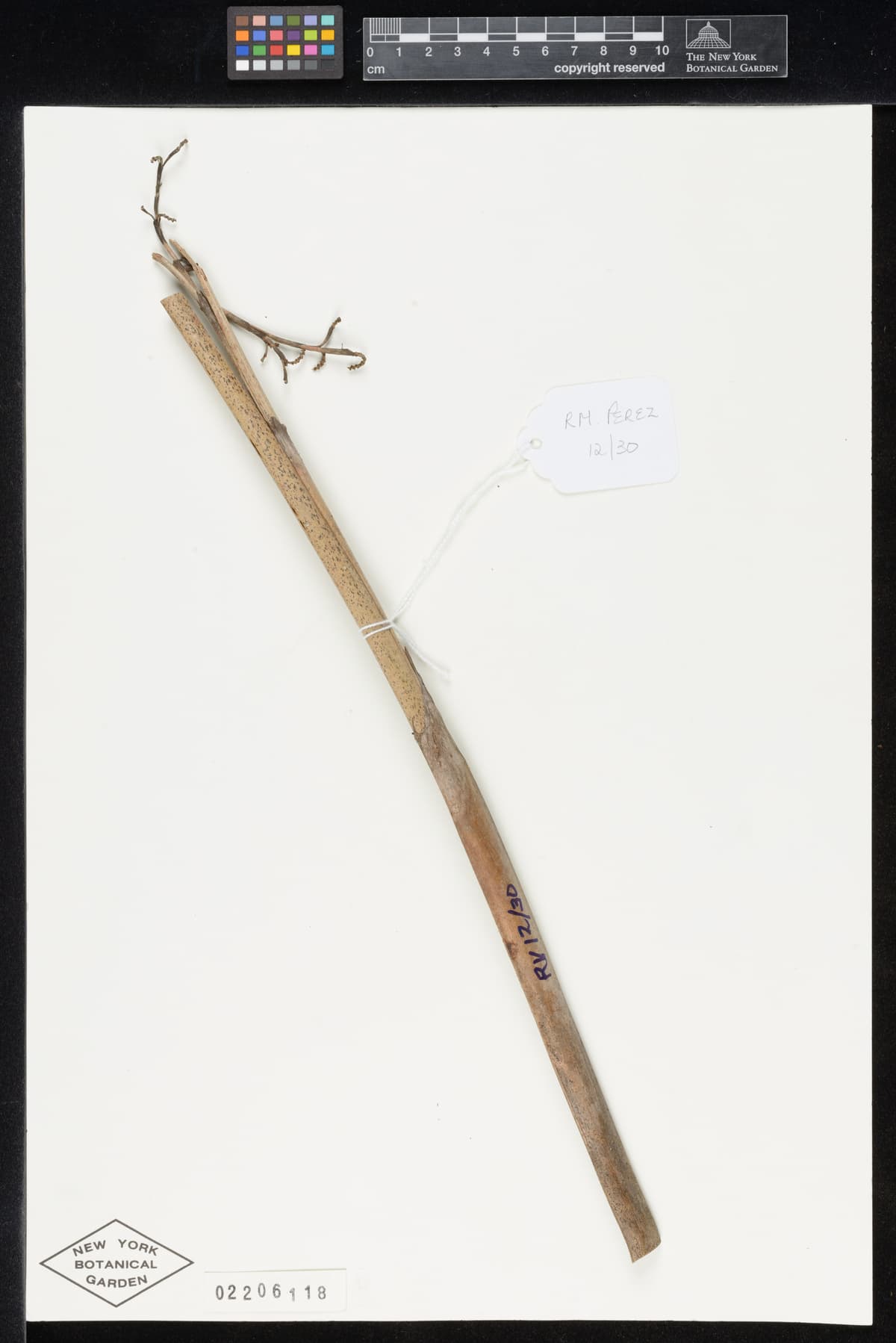
Botanical specimen of Copernicia Glabrescens.
Sources & Conservation
Curated- Moya López, C.E. 2022. Charles Wright and the Cuban Palms 8. Update of Copernicia glabrescens. PalmArbor 2022-03: 1-19 (UC ANR) · accessed 2026-09
- Copernicia glabrescens H.Wendl. ex Becc. — Plants of the World Online, Kew · accessed 2026-09
- IUCN Red List: Copernicia glabrescens (Least Concern, assessed 12 February 2016) · accessed 2026-09
- Copernicia glabrescens — Palmpedia, Palm Grower's Guide · accessed 2026-09
- GBIF Backbone Taxonomy: Copernicia glabrescens H.Wendl. ex Becc. (accepted; vernacular names and IUCN category via GBIF) · accessed 2026-09
- Copernicia glabrescens — Wikipedia · accessed 2026-09
- Copernicia (genus) — Wikipedia (etymology of genus name) · accessed 2026-09
- Copernicia glabrescens var. ramosissima — rarepalmseeds.com (description, culture attributes, germination ratings) · accessed 2026-09
- glabrescens — Wiktionary (Latin definition) · accessed 2026-09