Giant yarey palm
Copernicia Fallaensis • Yarey macho • Yarey • Yarey de Falla
Giant yarey palm in Motion
The Essence
"Copernicia fallaensis is the giant of its genus and of the Cuban fan palms. Its solitary trunk reaches about 20 m tall and roughly 80 cm in diameter, smooth and whitish-grey, faintly ringed with leaf scars; the 2016 PalmArbor paper devoted to the species compared it to a marble column from the colonnade of the Greek Parthenon and carried the title "Copernicia fallaensis: The Greatest Fan Palm of Them All", which its authors closed by suggesting should be amended to drop the word "fan" altogether. Some 30 to 40 stiff, waxy grey leaves form a canopy more than 8 m across, and about a dozen inflorescences up to 4 m long emerge erect before drooping over the leaves, flowering in May and June with the first rains. The palm is endemic to central Cuba. It was once widespread across Camagüey, Ciego de Ávila and Villa Clara, but the range is now highly restricted and fragmented. The 2025 IUCN Red List assessment places it in the Endangered category; published counts give 84 adults and 187 juveniles in heavily disturbed secondary forest at the type locality near Falla, 94 individuals at Coralia in Chambas municipality, a single surviving adult at La Esperanza in Villa Clara, and two further populations found in Baraguá municipality. Older and informal sources — the IUCN/IPS Palm Specialist Group flagship page, Palmpedia and Rare Palm Seeds — describe the palm as critically endangered, a rating that predates or differs from the formal 2025 category. Felling is no longer the main pressure; over-exploitation of the large, durable leaves for thatch and for weaving hats, mats, brushes and baskets is. Las Tunas Botanic Garden runs community education and works with local authorities, seed has been collected with local participation to build an ex situ collection of 50 specimens, and the landowners holding the last significant stand have largely prohibited leaf harvesting. Bats eat the yellow-green fruits and disperse the seed. In cultivation the species is exceedingly rare, and because Copernicia species hybridise easily, plants not raised from wild-collected seed are not guaranteed to be true to name."
The epithet fallaensis refers to Falla, the town in Ciego de Ávila province, central Cuba, near which Cervera collected the type material at Ranchuelo. Frère León published the name in 1931 as "fallense"; because Copernicia is feminine in gender, the spelling is automatically correctable under the rules of botanical nomenclature to fallaensis, and GBIF still carries Copernicia fallaense León as a synonym of the accepted name. Palmpedia gives the pronunciation as koh-pehr-nee-SEE-ah fall-EHN-sis.
Named and described in 1931 by Frère León (1871–1955), the French-born Cuban botanist and De La Salle Brother, from Cervera's collection at Ranchuelo near Falla, and published in Revista de la Sociedad Geográfica de Cuba 4: 21. Classic localities include ground between Florida (Camagüey) and La Esperanza (Villa Clara) and between Ciego de Ávila and Santayana (Camagüey); in 1954 the largest known stand was at Finca El Peru, between Florida and San Jerónimo in Camagüey. Henderson, Galeano and Bernal treated the palm as a synonym of C. baileyana in their 1995 Field Guide to the Palms of the Americas — León had described that species just one page later in the same 1931 article — but POWO, GBIF, IPNI and Catalogue of Life all currently accept C. fallaensis as distinct. Raúl Verdecia separates it from C. baileyana by its larger overall scale, leaves always silver or grey, a noticeably longer rachis and a more orbicular blade, with Hodel and colleagues adding solitary rather than clustered flowers and petioles toothed only proximally. With C. baileyana and C. gigas it makes up a trio sometimes called the Big Three, Three Kings or Magnificent Three of Cuban Copernicia. Fairchild Tropical Botanic Garden planted its specimens in 1987 and 1988, and a wild-collected plant transplanted from habitat grows at the Jardín Botánico Nacional in Havana.
Natural Habitat
Historically a component of mesic, seasonally dry semideciduous forest, savannas and woodlands on heavy but fertile clay soils in central Cuban lowlands, between roughly 0 and 20 m above sea level; the Palm Specialist Group gives 10–20 m. Hodel and colleagues characterise the setting as full-sun, dryish and open, while POWO records the species as growing primarily in the wet tropical biome. Today the palms are largely relegated to secondary savanna, pasture and agricultural land. Charlie Beck notes that although they tolerate dry ground, they also grow in wet or periodically inundated sites.
Curated Specimens
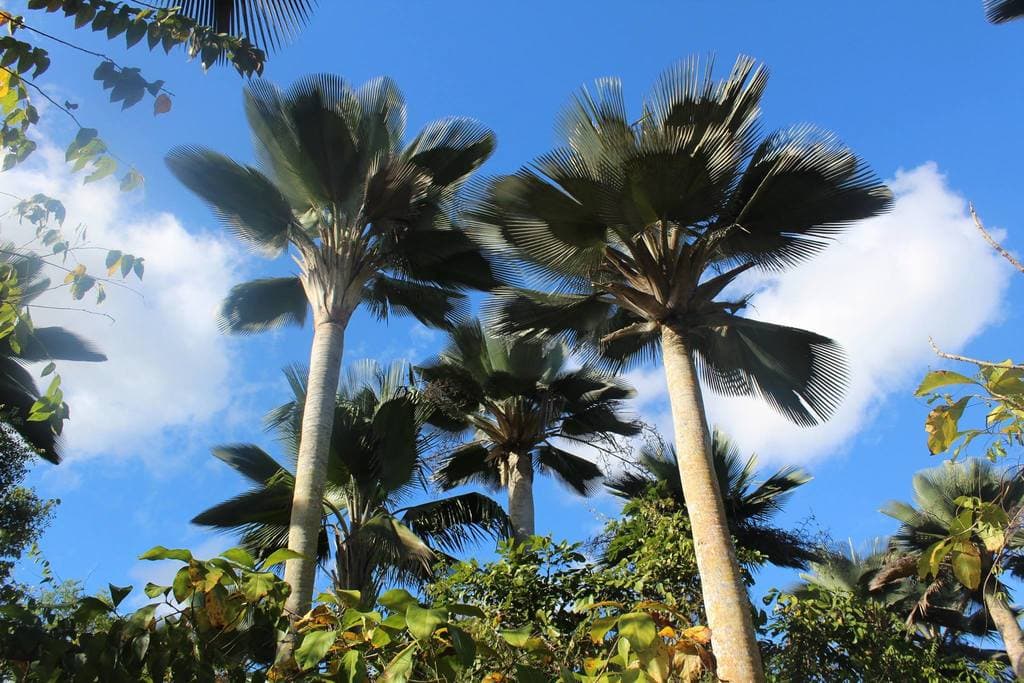
Botanical specimen of Copernicia Fallaensis.
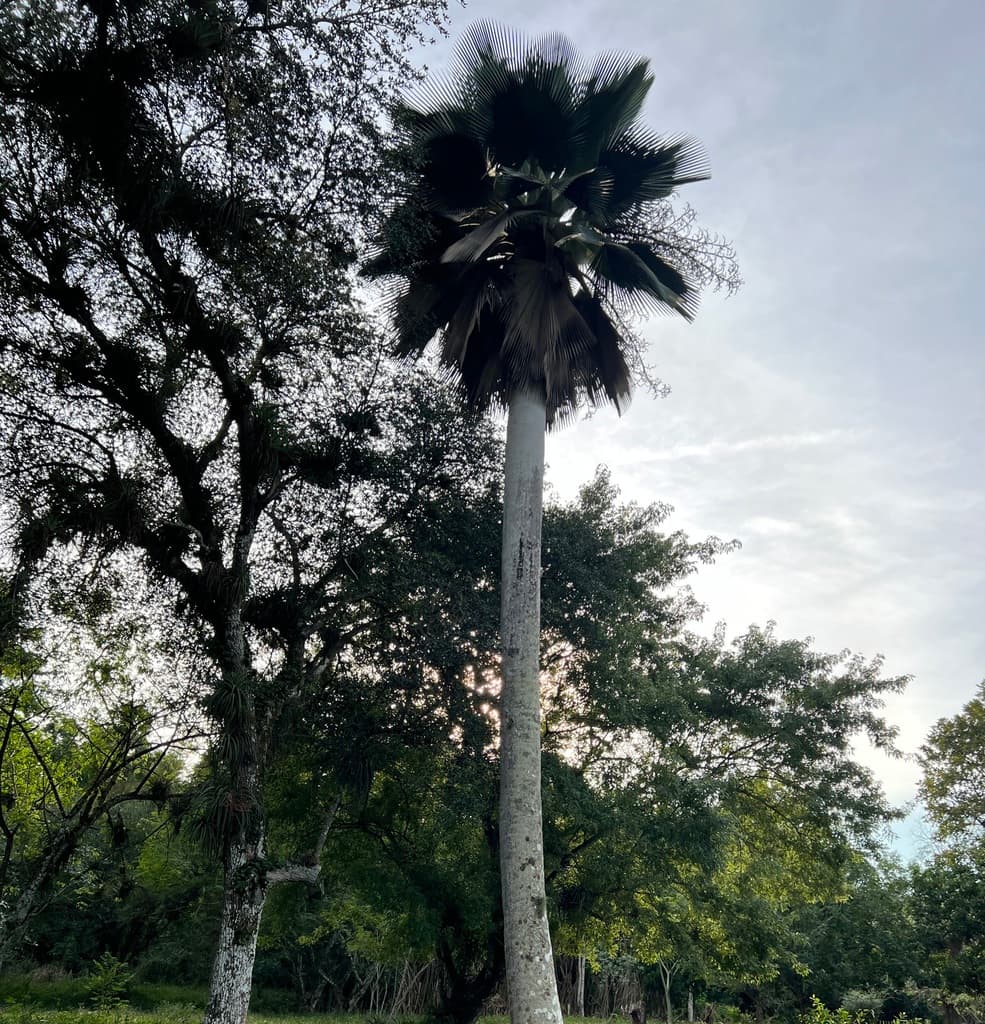
Botanical specimen of Copernicia Fallaensis.
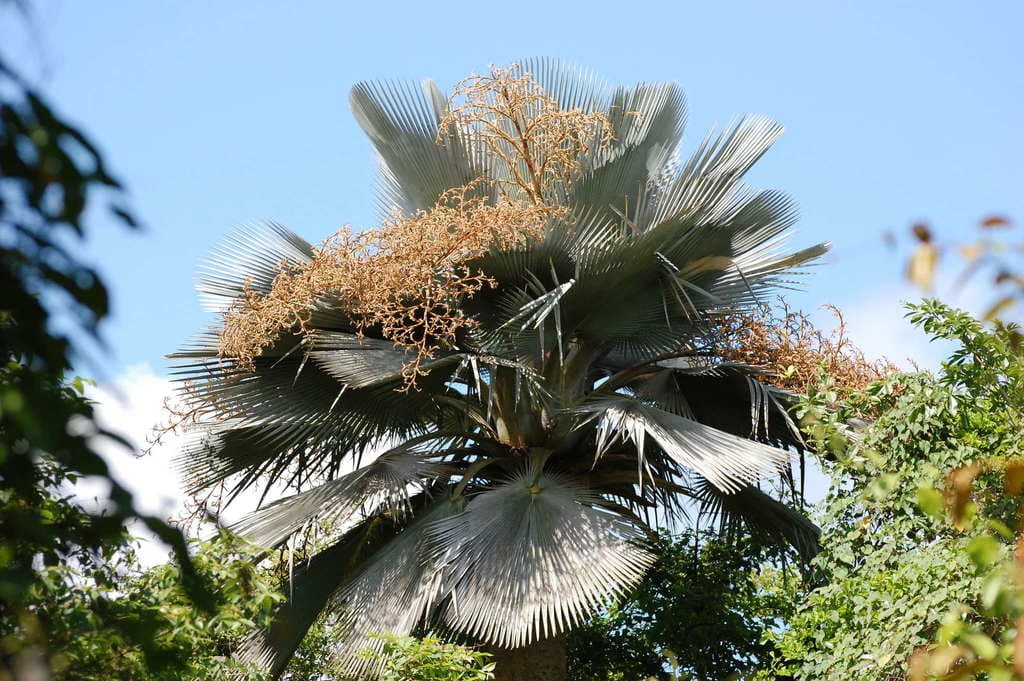
Botanical specimen of Copernicia Fallaensis.
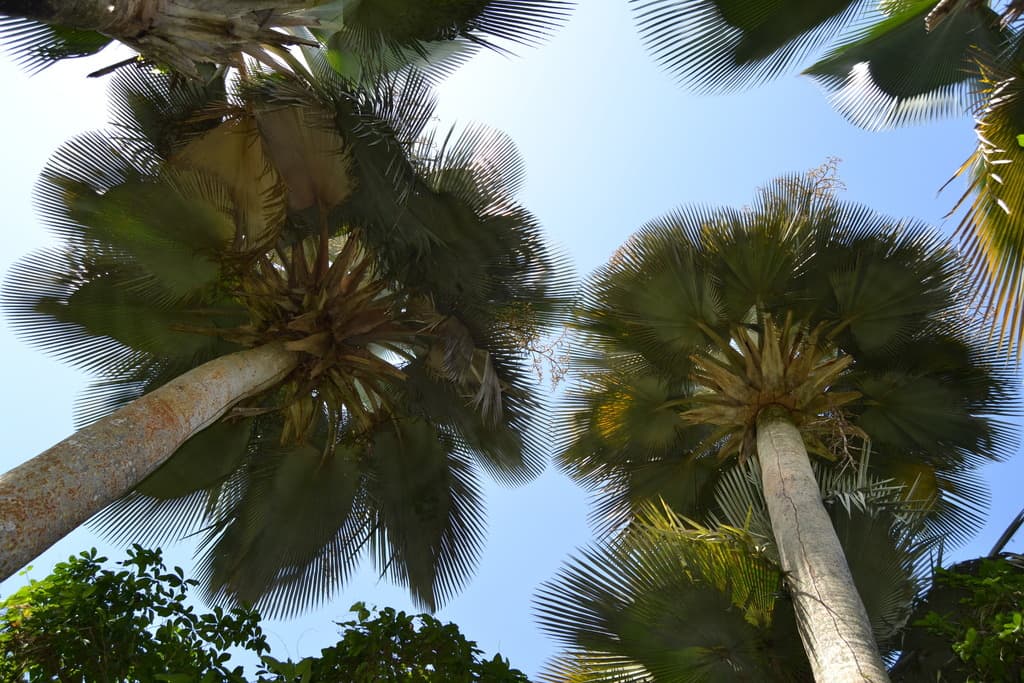
Botanical specimen of Copernicia Fallaensis.
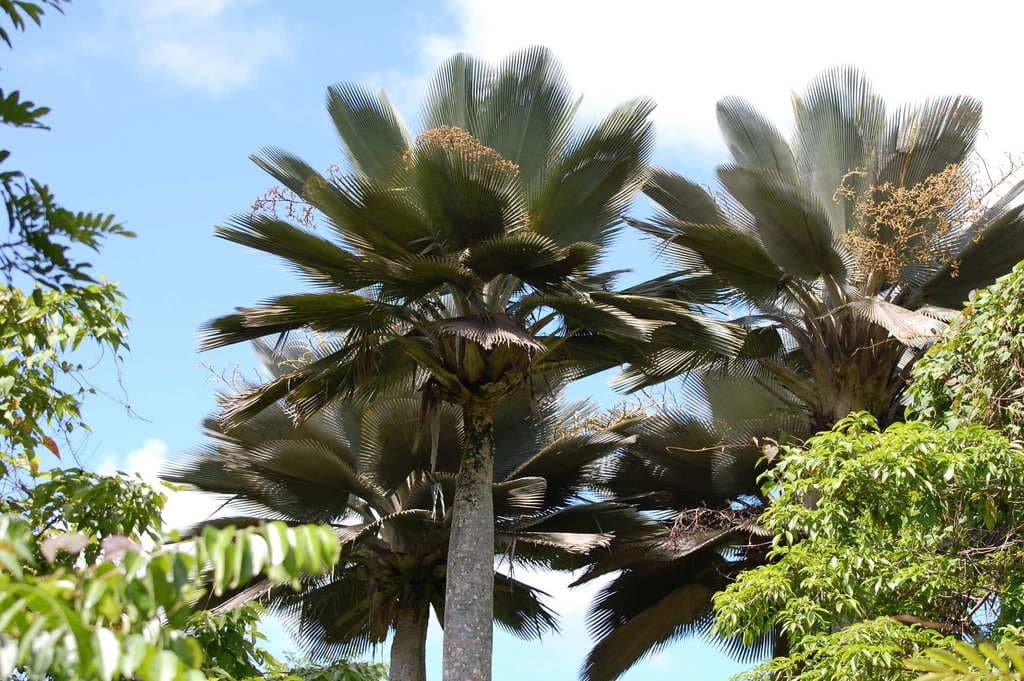
Botanical specimen of Copernicia Fallaensis.