Giant yarey palm
Copernicia Gigas • Barrigon • Hediondo • Palmeta • Carnauba-de-morcego
Giant yarey palm in Motion
The Essence
"Copernicia gigas is a massive fan palm endemic to eastern Cuba, and one of the three giant Cuban Copernicia species alongside C. baileyana and C. fallaensis. The name was published in 1929 by Max Burret, crediting the Swedish botanist Erik Ekman; Copernicia excelsa Leon (1931) is a heterotypic synonym. Charlie Beck reports that reference books treat it as distinct from the other Cuban species and more closely related to C. tectorum and C. brittonorum and to the Hispaniolan C. ekmanii and C. berteroana, and notes that Copernicia species hybridize readily - the cross with C. rigida is the named hybrid C. vespertilionum. Its wedge-shaped leaf outline separates it from all other Cuban Copernicia except the short-petioled C. rigida. In Cuba the leaves are used for roof thatching and the trunks have been hollowed out for canoes. Bats roost in the skirt of dead leaves and their guano fertilizes the tree; the Portuguese name carnauba-de-morcego means bat carnauba. The species is very rarely seen in cultivation. It reached Florida horticulture after palm society members visited Cuba between 1990 and 1996 and seed sources were established, and a Fairchild Tropical Botanic Garden specimen carrying a 2000 accession date prompted its selection as the Palm Beach Palm & Cycad Society's Palm of the Month."
The genus name honours the astronomer Nicolaus Copernicus (1473-1543). The epithet gigas comes from the Latin for 'giant', with obvious reference to the size of the plant.
The name Copernicia gigas Ekman ex Burret was published in 1929 by Max Burret, crediting the Swedish botanist Erik Ekman, in Kongl. Svenska Vetensk. Acad. Handl. ser. 3, 6(7): 3. It entered Florida horticulture only after palm society members visited Cuba between 1990 and 1996 and seed sources were established.
Natural Habitat
A strictly lowland palm, recorded by the IUCN between 0 and 20 m elevation in forest and savanna. It grows in low-elevation savanna and dry woodland near the coast, in wooded areas and clayey savannas, and in seasonally flooded woodland and savannah. Charlie Beck reports it in woodlands and pastures, especially abundant adjacent to mangrove swamps, and notes Dale Holton's observation of palms growing in seasonally flooded rice fields.
Curated Specimens
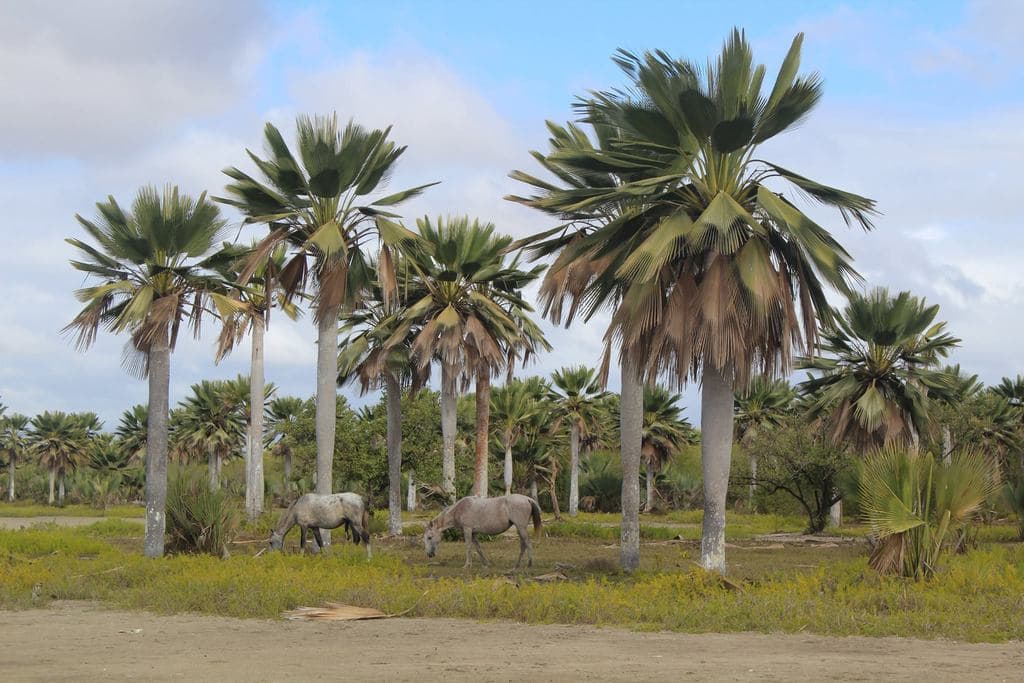
Botanical specimen of Copernicia Gigas.
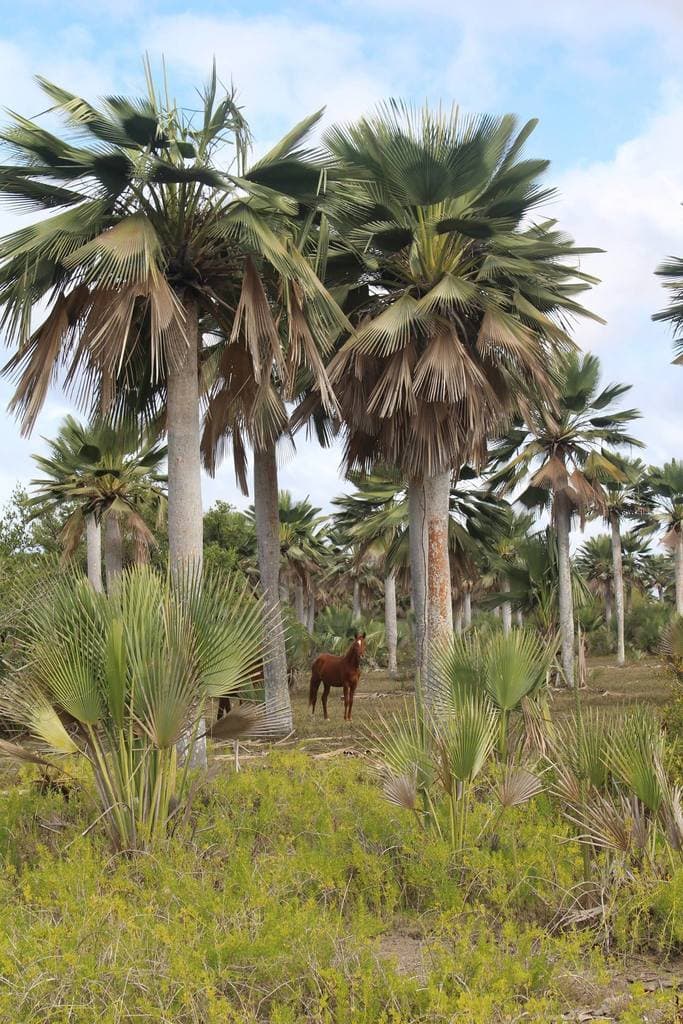
Botanical specimen of Copernicia Gigas.
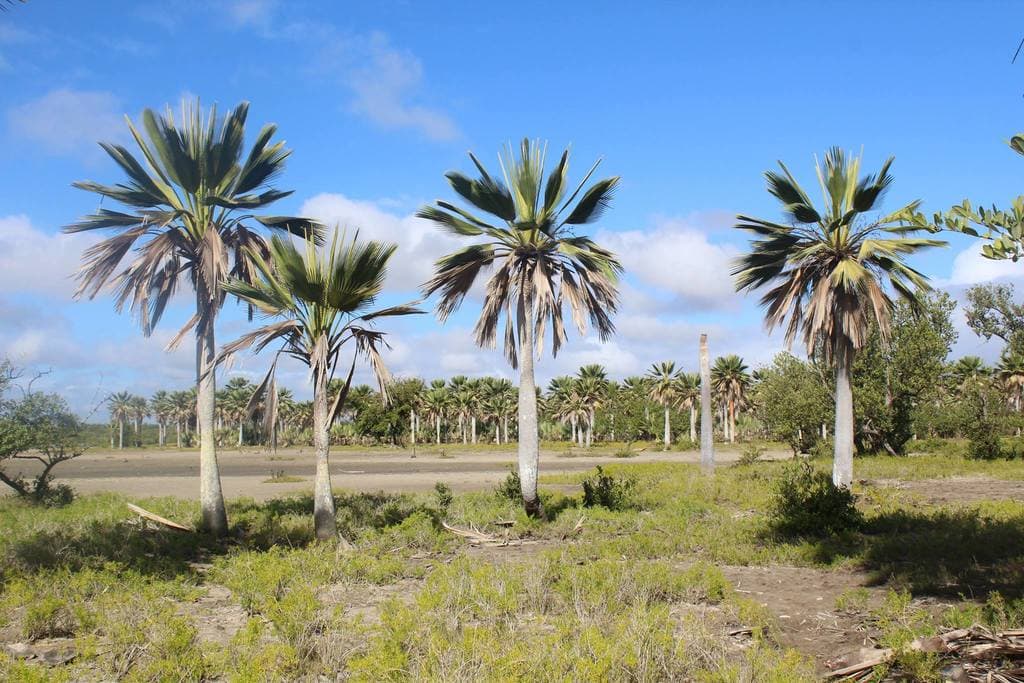
Botanical specimen of Copernicia Gigas.