Cuban petticoat palm
Copernicia Macroglossa • Petticoat palm • Jata palm • Jata de guanabacoa
Cuban petticoat palm in Motion
The Essence
"Copernicia macroglossa is a fan palm endemic to Cuba, recorded by the IUCN from the plains and hills of the western and central parts of the island between sea level and 50 m. Its defining feature is the petticoat: the large fan-shaped leaves sit on virtually no petiole, are arranged in a spiral, and do not fall away after dying, so a dense skirt of persistent dry leaves clothes about half the trunk and hides the stem from view. Wikipedia states plainly that the function of the petticoat is unknown. A second oddity is the hastula, the flap of tissue where the blade meets the petiole: Genera Palmarum remarks that the very large hastulae of some species, C. macroglossa among them, are most remarkable, but that their functional significance, if any, has yet to be explained. Height figures differ widely between sources, from 1.5-7 m in the Useful Tropical Plants database to about 9 m (30 ft) in Palmpedia and Wikipedia, on a trunk 12-20 cm thick. Erect, interfoliar inflorescences that often exceed the leaves appear in summer and carry bisexual flowers; the globose to oval fruits, roughly 1.5-2.5 cm across, ripen black. IUCN assessed the species as Least Concern in February 2022 (published 2025), with a decreasing population estimated at more than 10,000 mature individuals, an extent of occurrence of 57,391 km2, an area of occupancy of 92 km2 and 24 known locations. The assessors add that it could move into a threatened category given unsustainable harvesting of its fibres by local people; they list separately the intentional fires set to maintain pasture, which affect juveniles, and the invasive Dichrostachys cinerea, which limits recruitment. Its trunks are used as posts in rural building, and Useful Tropical Plants records the stems being harvested for fence posts."
The genus Copernicia commemorates the Polish astronomer Nicolaus Copernicus (1473-1543). The epithet macroglossa combines Greek makros (big, long) with glossa (tongue), meaning large tongue. Two readings circulate: Monaco Nature Encyclopedia suggests a reference to the hastula, the shred of tissue at the junction of blade and petiole, which is particularly evident in this species, while Palmpedia says it is believed to describe the long, wide leaves of mature plants. The hastula reading fits Genera Palmarum's remark that the very large hastulae of species such as C. macroglossa are most remarkable. The Spanish name Jata de guanabacoa, which IUCN gives as the vernacular, points to Guanabacoa, the La Habana municipality that opens the IUCN range description.
The nomenclature is tangled. POWO and IPNI accept Copernicia macroglossa Schaedtler, published in Hamburger Garten- und Blumenzeitung 31: 160 (1875), with Copernicia torreana Leon (1931) as its one heterotypic synonym. Palmweb still carries the later name Copernicia macroglossa H.Wendl. ex Becc., Webbia 2: 177 (1907); Gandhi, Francisco-Ortega, Noblick, Naranjo and Griffith (Webbia 80(2): 77-91, 2025) revisited six validly published names and treat that 1907 name as the hybrid C. x macroglossa H.Wendl. ex Becc., whose accepted name is C. x escarzana Leon. In 2025 the species also received a plant portrait, plate 1131, in Curtis's Botanical Magazine 42(1): 3-17 (Naranjo, Gandhi, Noblick, Figueroa, Francisco-Ortega and Griffith), which neotypifies the name, reviews its conservation status, maps its current and modelled potential distribution, and adds anatomical images and descriptions of leaf-segment sections, illustrated from plants cultivated at Montgomery Botanical Center in Coral Gables and Florida International University in Miami-Dade, Florida. Cuba is the centre of diversity for the genus: Genera Palmarum recognises twenty-one species of Copernicia, three in South America, two in Hispaniola and the remainder in Cuba.
Natural Habitat
A lowland, seasonally dry habitat specialist. IUCN classifies the habitat as dry savanna and subtropical/tropical dry shrubland, and names three vegetation types: thorny scrub on serpentine, semi-natural savannas on quartzitic sands, and a sandy-coastal vegetation complex. POWO gives the native range as western and central Cuba, the lifeform as shrub or tree, and the climate as seasonally dry tropical; Useful Tropical Plants records it from savannahs and other open places; Genera Palmarum notes that Caribbean Copernicia occur in savannahs or woodlands in the lowlands in relatively dry situations. The IUCN range description lists the municipality of Guanabacoa in La Habana province, Batabano and Madruga in Mayabeque, Rodas and Abreu in Cienfuegos, Manacas in Villa Clara, Trinidad in Sancti Spiritus and Camaguey in Camaguey, plus an outlying record of two individuals, one adult and one juvenile, on Cayo Caguamas in the Jardines de la Reina archipelago.
Curated Specimens
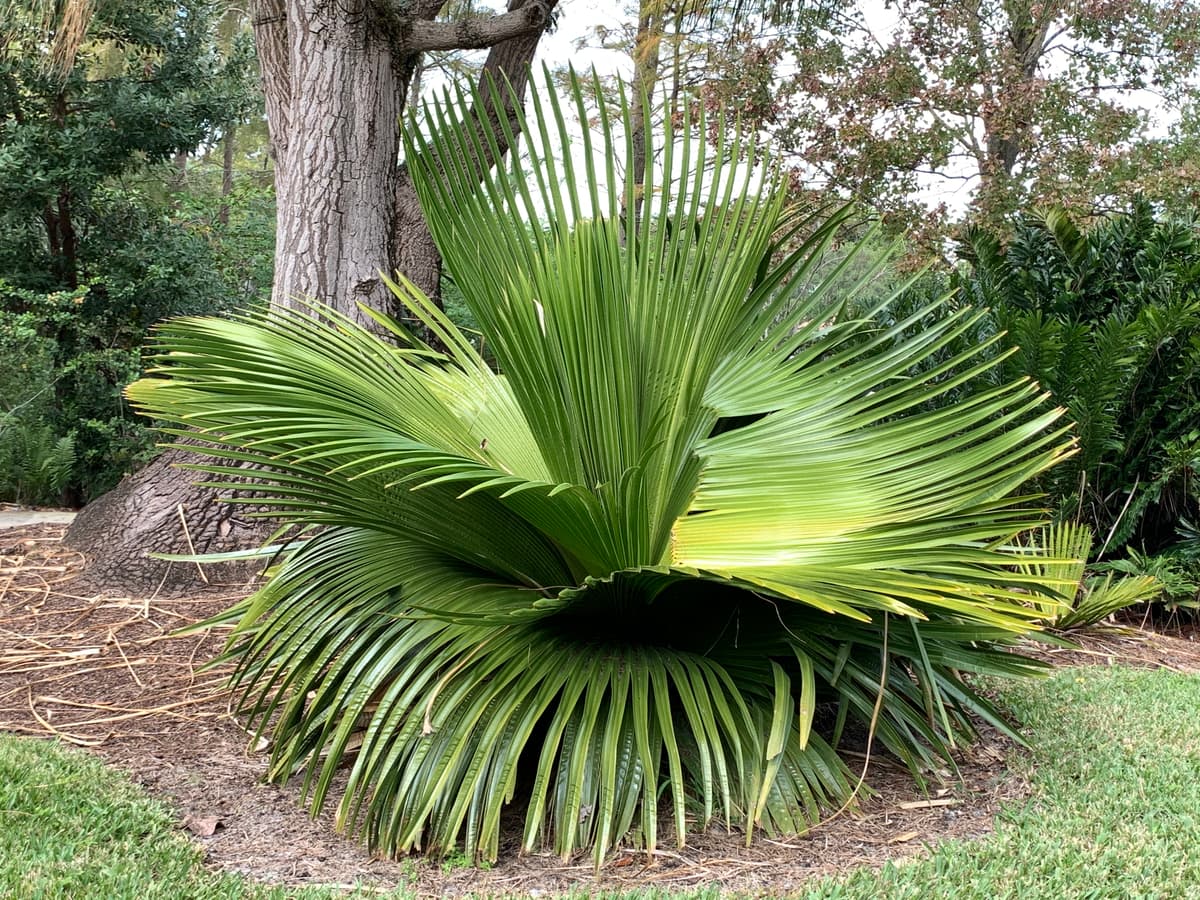
Botanical specimen of Copernicia Macroglossa.
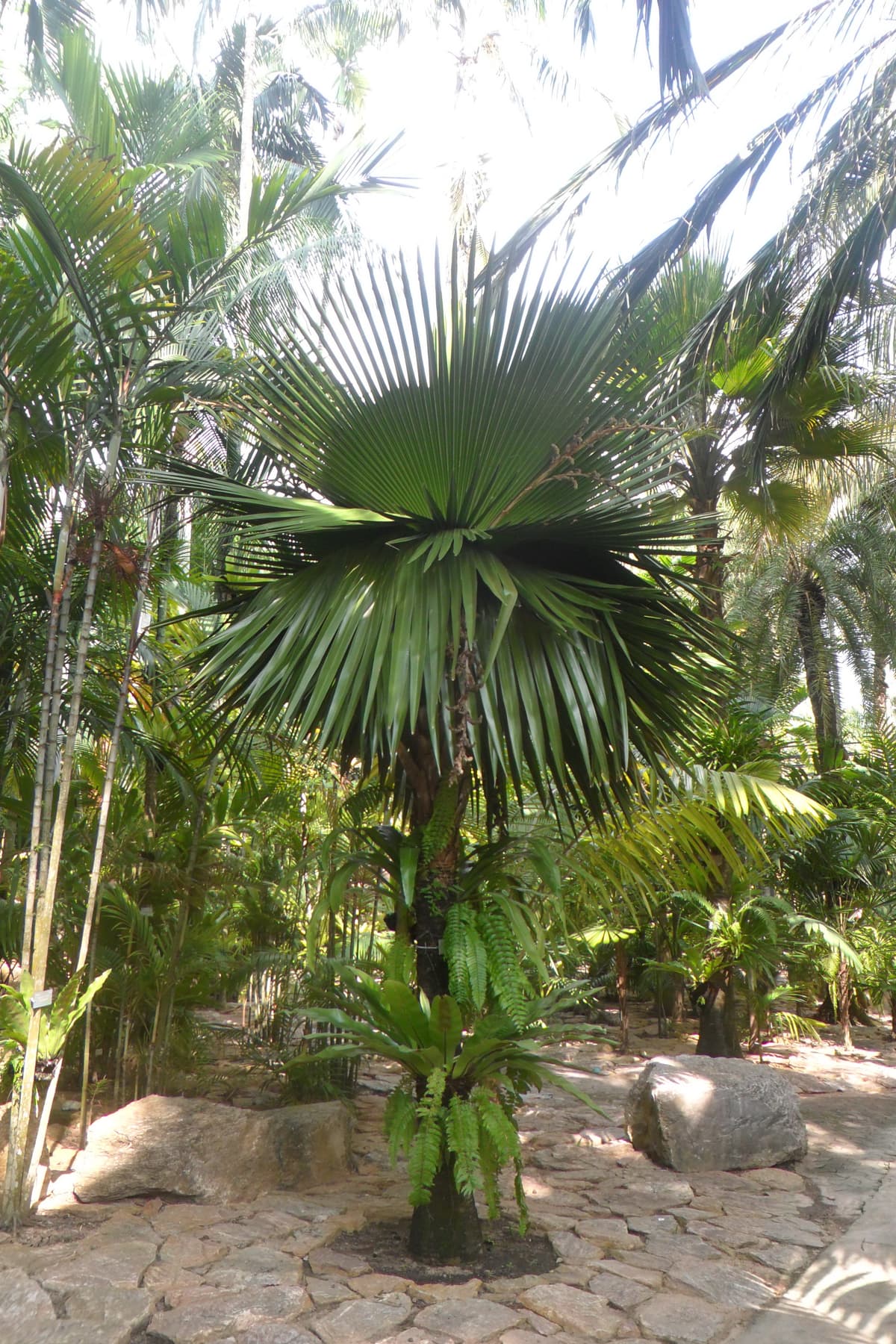
Botanical specimen of Copernicia Macroglossa.
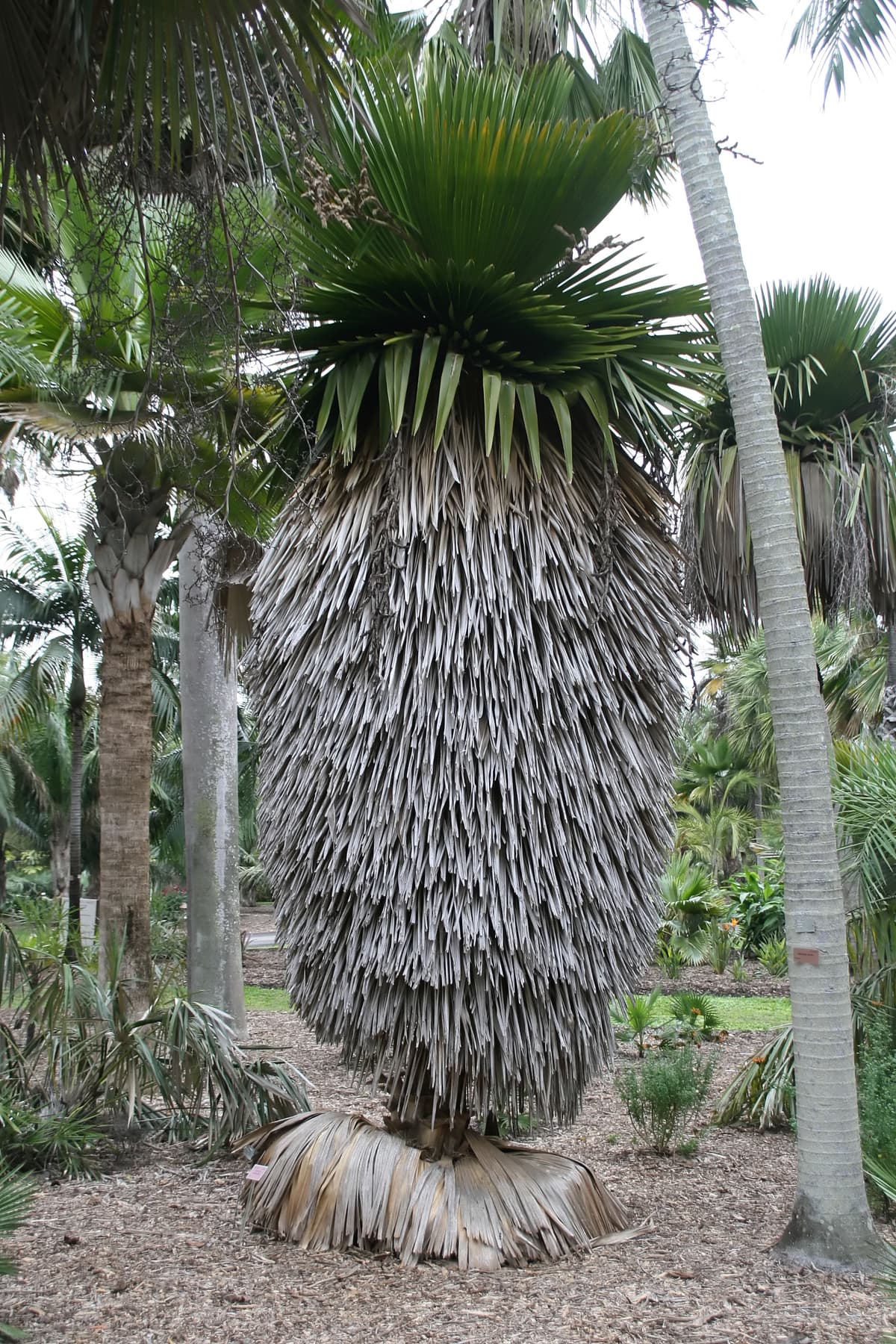
Botanical specimen of Copernicia Macroglossa.