Jata palm
Copernicia Rigida • Jata • Jata guatacuda
Jata palm in Motion
The Essence
"Copernicia rigida is a Cuban endemic fan palm, and one of the most instantly recognisable members of its genus. It grows a solitary, cylindrical gray trunk to about 15 m, but the crown is what sets it apart: stiffly erect, wedge-shaped, almost circular leaves funnel into the centre, giving the whole tree a shuttlecock or shaving-brush look, with old leaves persisting as a brown skirt below. Its ligules are reported as the largest of any palm, up to 100 cm long and 21 cm wide. Palmpedia also carries an unsourced suggestion that some botanists have raised the possibility that the species is carnivorous, on the reasoning that its leaf funnel forms an effective trap in which small animals die and rot, supplying nutrients; this is speculation rather than established fact. In Cuba the leaves are used to thatch rural dwellings and to make hats, bags, baskets and brooms, while the stems, durable even when immersed in water, serve in construction and for fences. The genus is centred on Cuba: 22 of its 27 known species and natural hybrids occur only on the island."
The genus is dedicated to the Polish astronomer Nicolaus Copernicus (1473-1543); the specific epithet is the Latin adjective rigidus, 'rigid', referring to the stiff leaf segments.
Described by Britton and P. Wilson, first published in the Bulletin of the Torrey Botanical Club 41: 17 (1914). The ligule measurements come from Dahlgren and Glassman's 1963 revision of Copernicia (Gentes Herbarum 9).
Natural Habitat
A tree of the seasonally dry tropical biome, growing in savannas and open forests at low altitude. Its distribution is disjunct: the typical gray form grows in the savannas of west-central Cuba, while an 'eastern form' occurs far away in the metal-rich mining region between Moa and Baracoa in eastern Cuba. The eastern populations grow on extreme serpentine-derived, ultramafic red soils; the Moa area receives more than 2000 mm of rain, yet the unusual soil composition causes an 'edaphic drought', and plants there develop more glaucous leaves with remarkable blue wax and orange strikes.
Curated Specimens
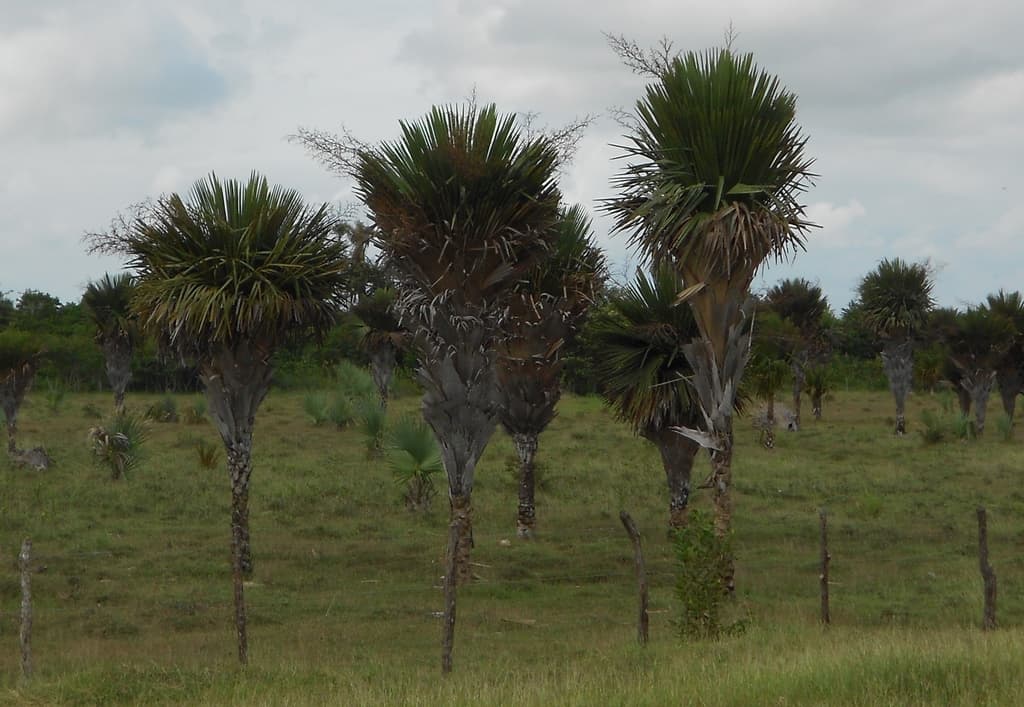
Botanical specimen of Copernicia Rigida.
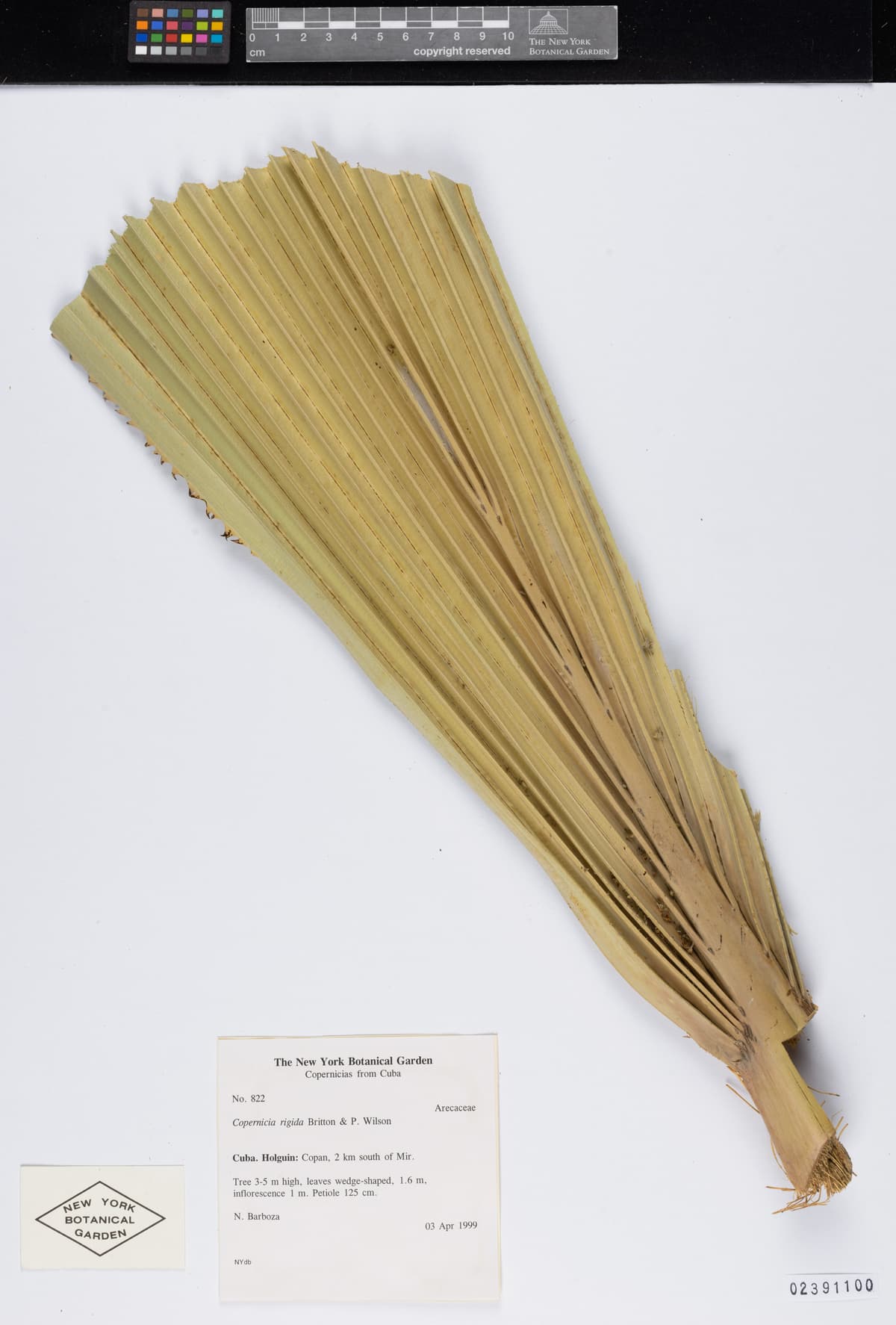
Botanical specimen of Copernicia Rigida.
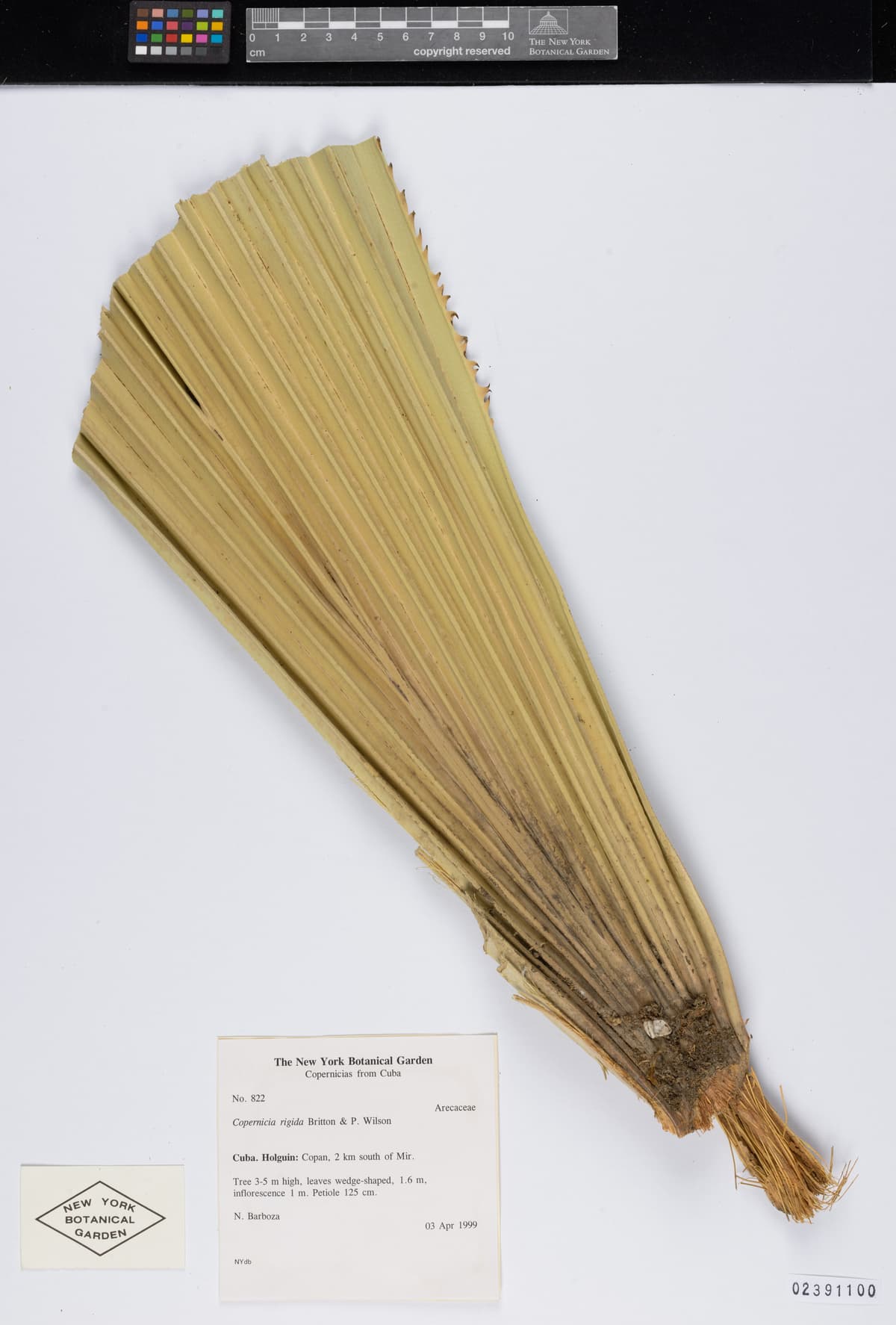
Botanical specimen of Copernicia Rigida.
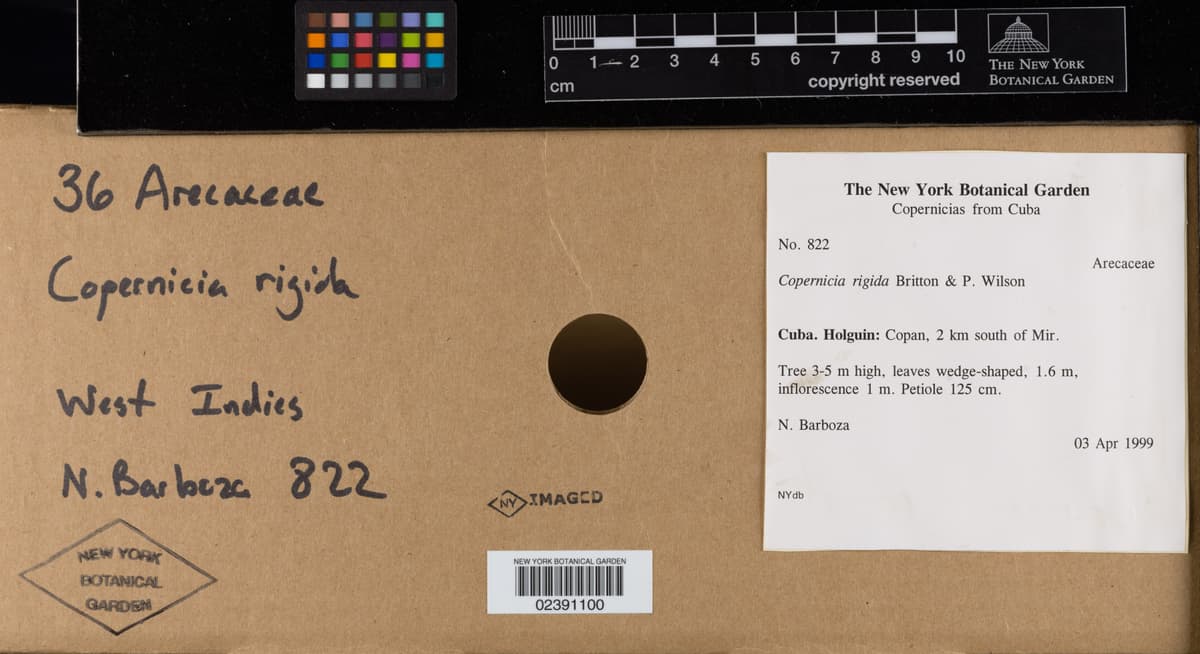
Botanical specimen of Copernicia Rigida.
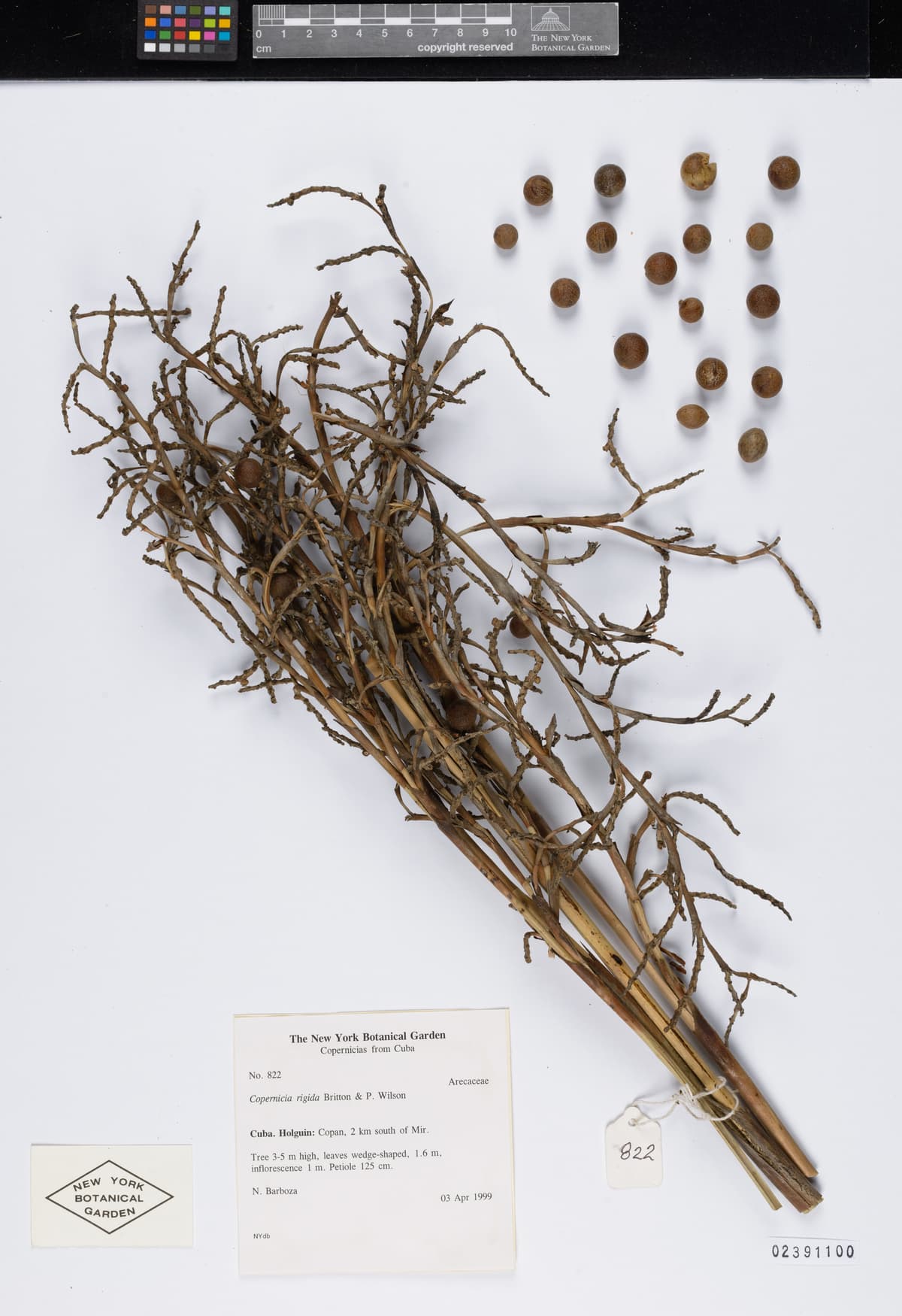
Botanical specimen of Copernicia Rigida.
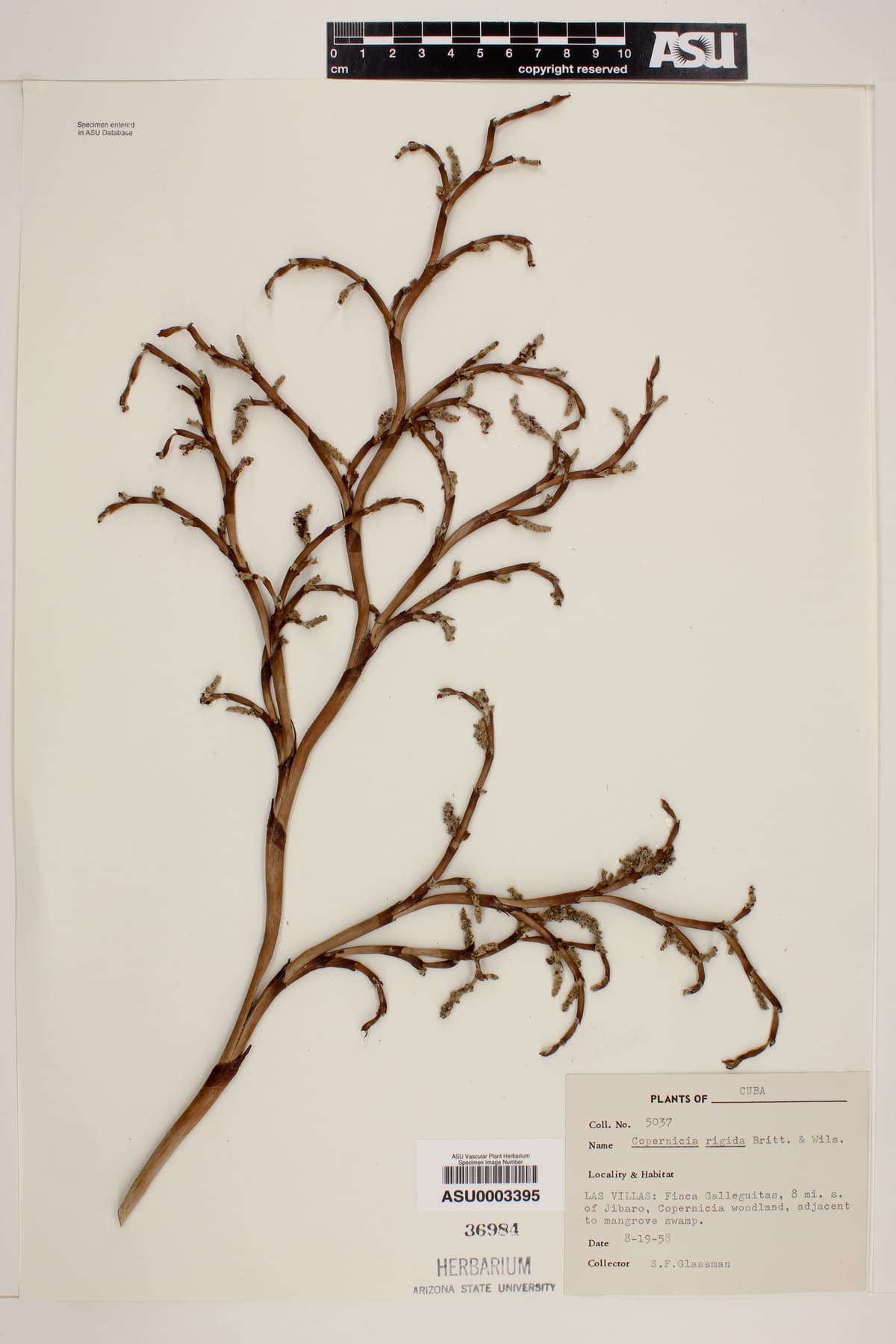
Botanical specimen of Copernicia Rigida.
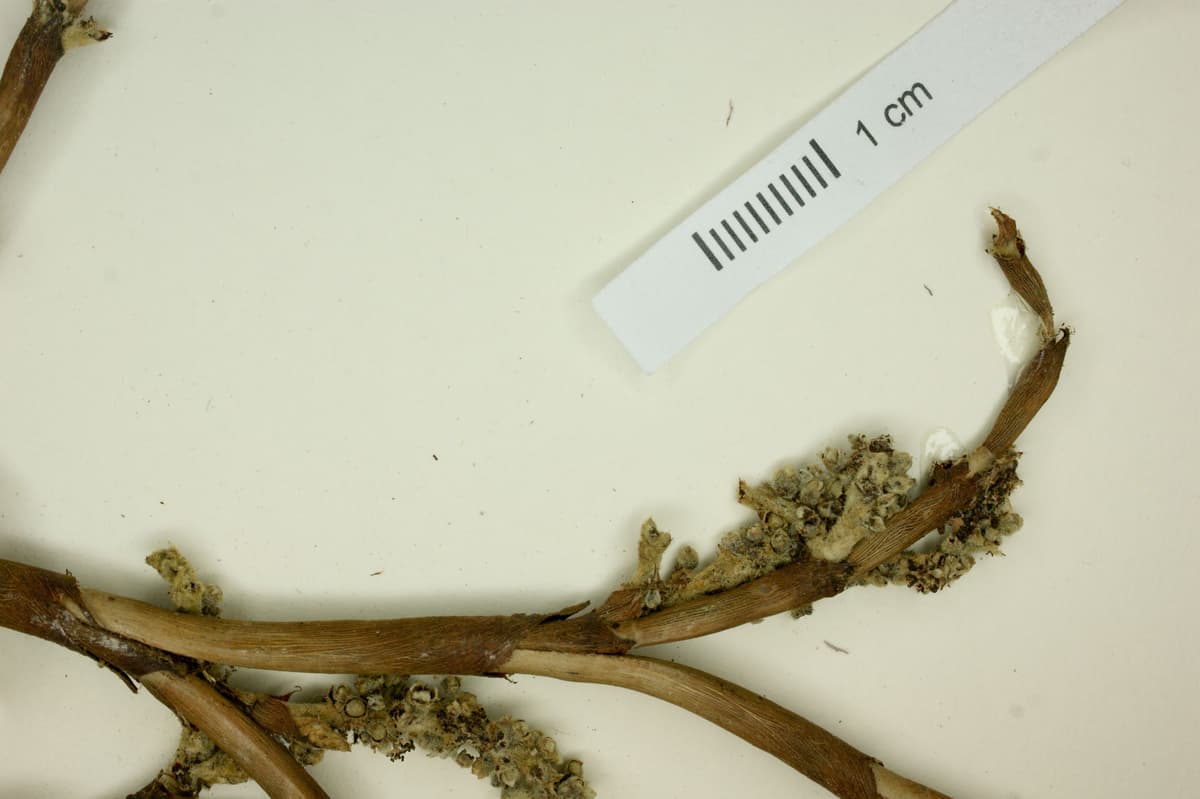
Botanical specimen of Copernicia Rigida.
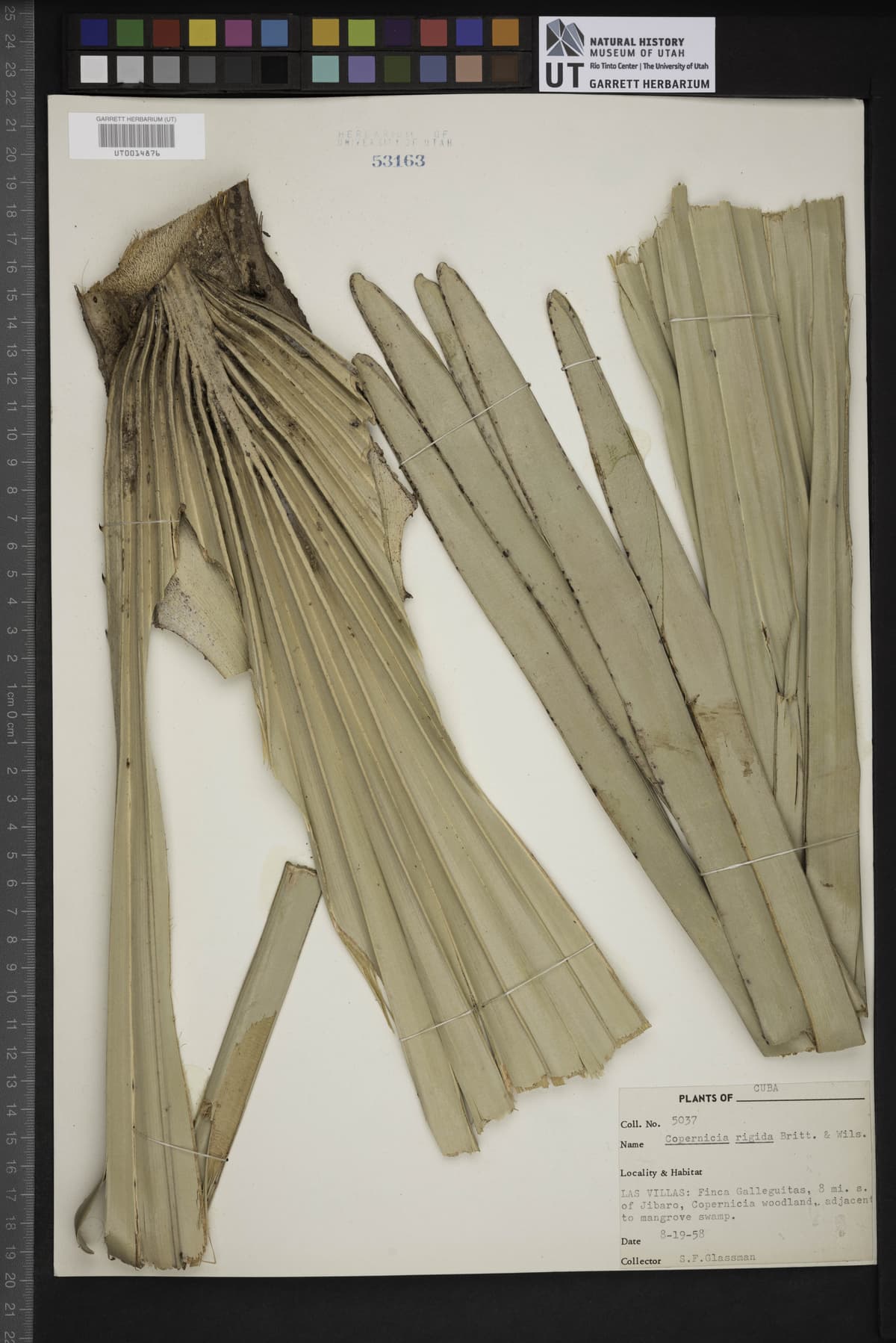
Botanical specimen of Copernicia Rigida.
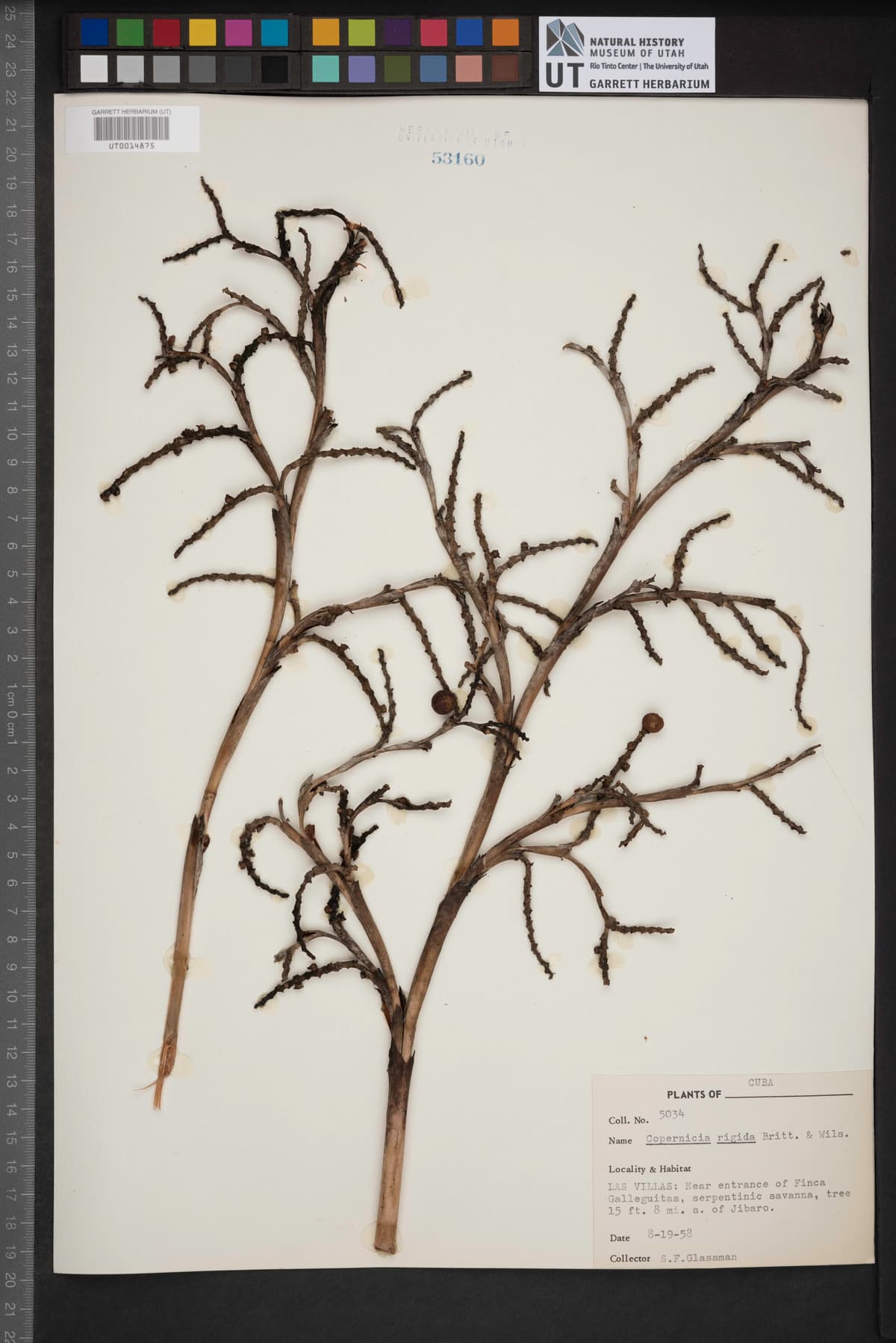
Botanical specimen of Copernicia Rigida.
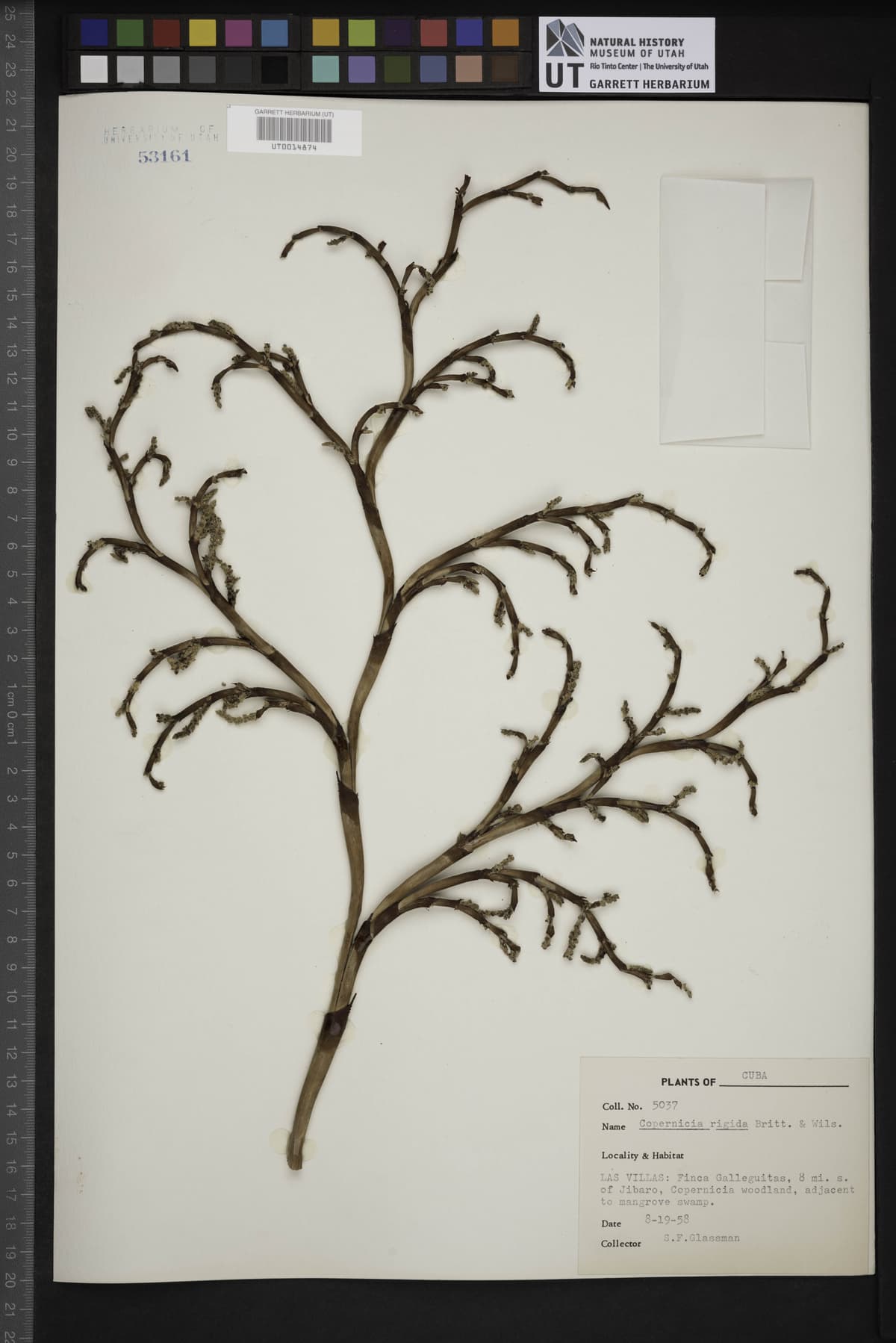
Botanical specimen of Copernicia Rigida.
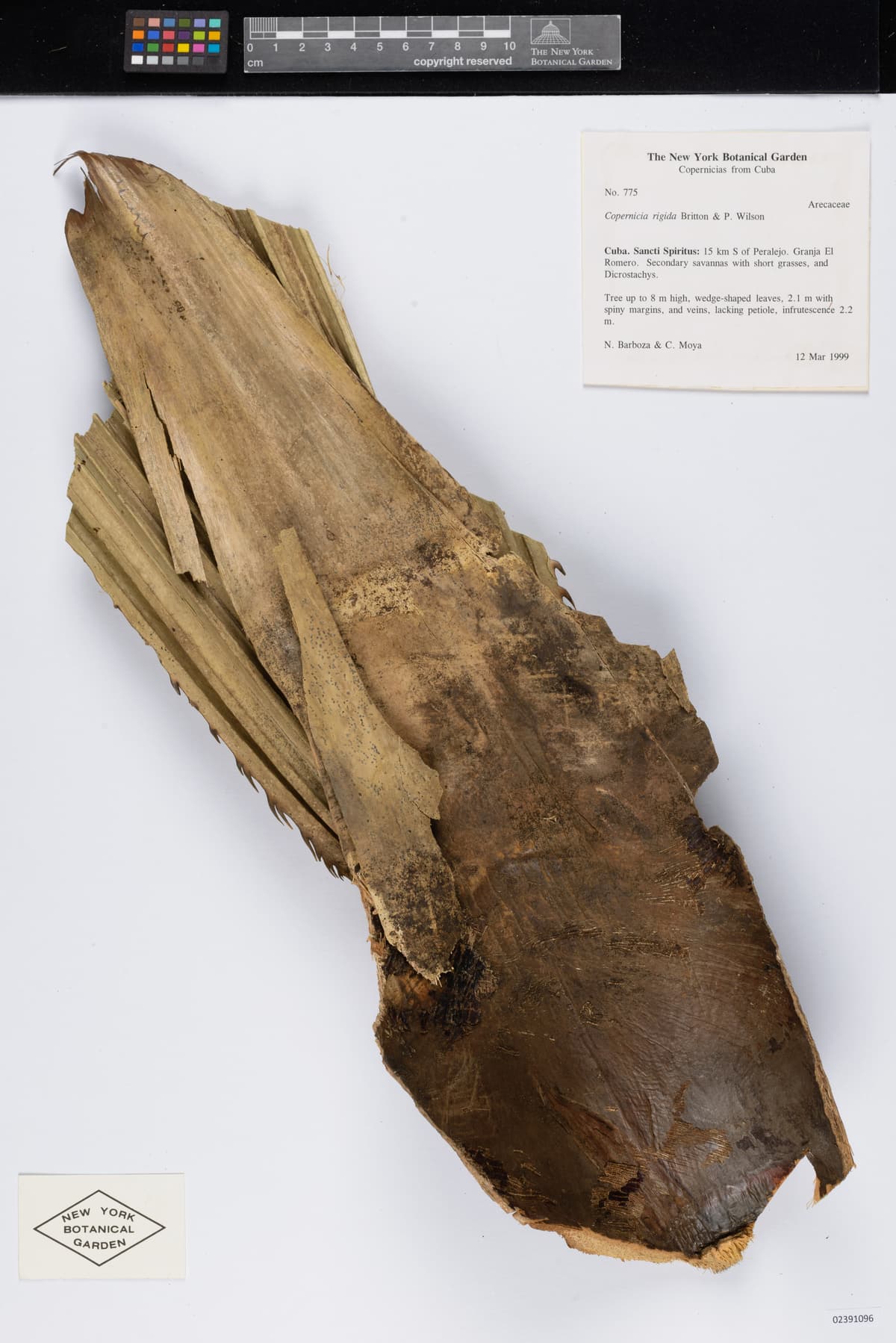
Botanical specimen of Copernicia Rigida.
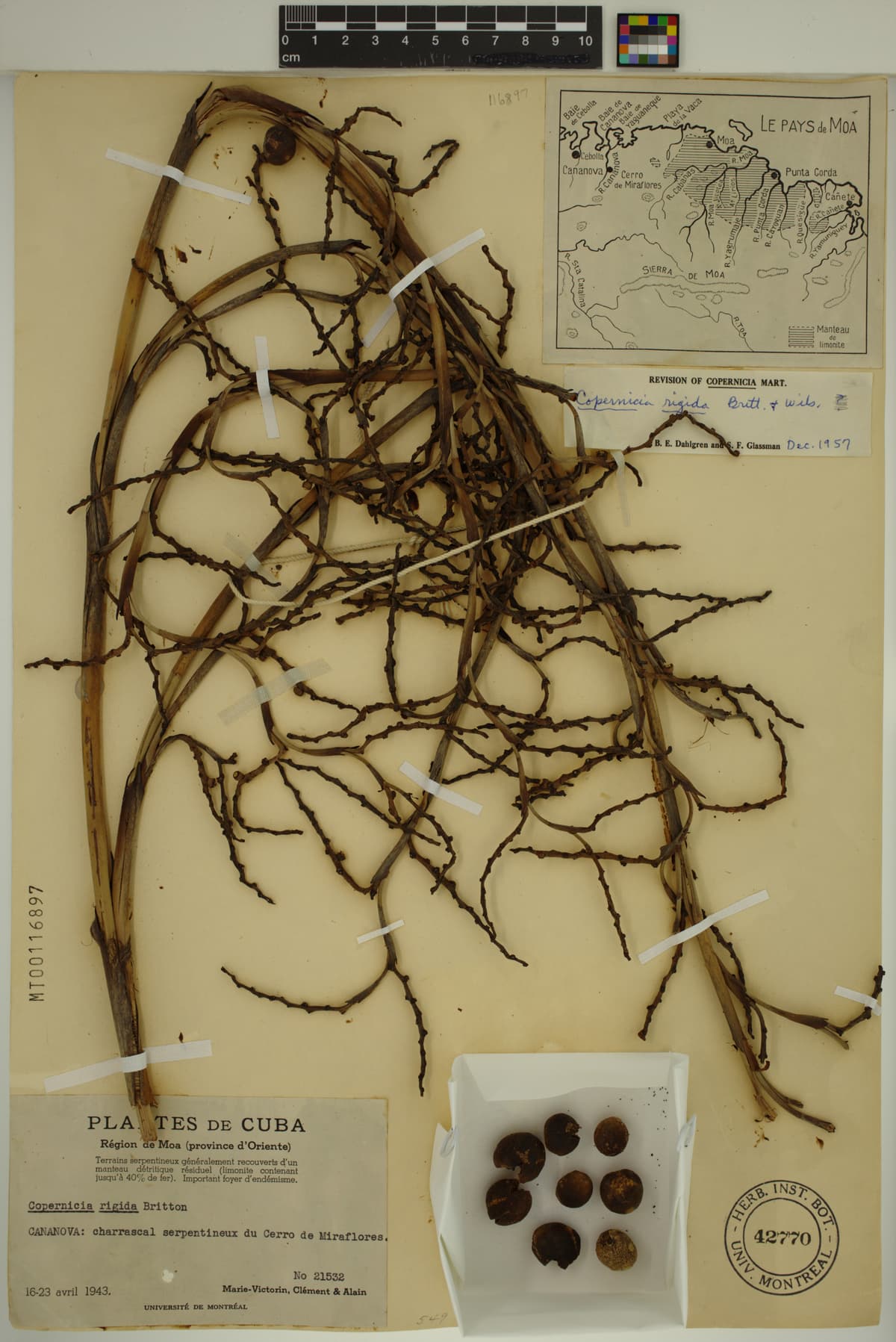
Botanical specimen of Copernicia Rigida.
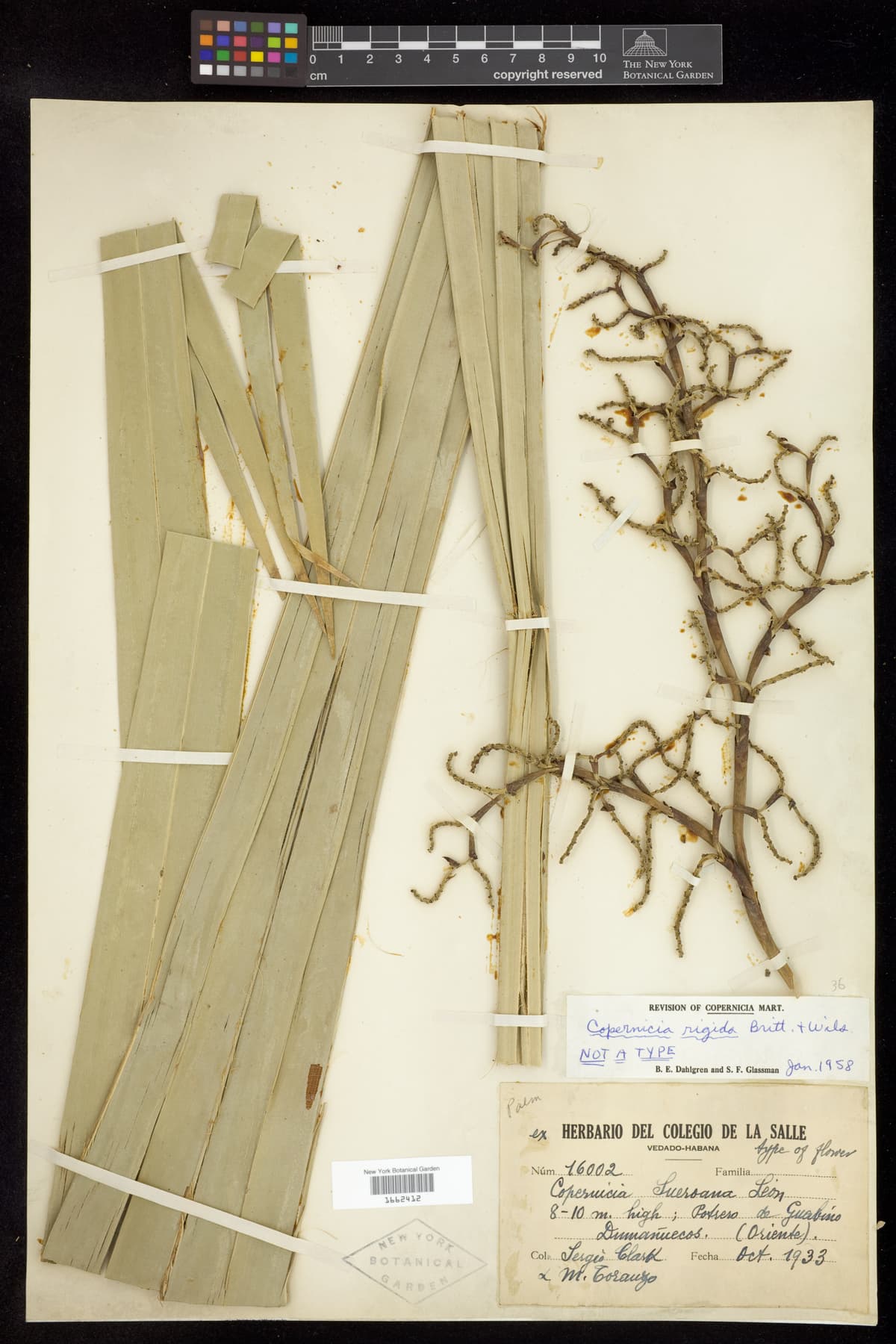
Botanical specimen of Copernicia Rigida.
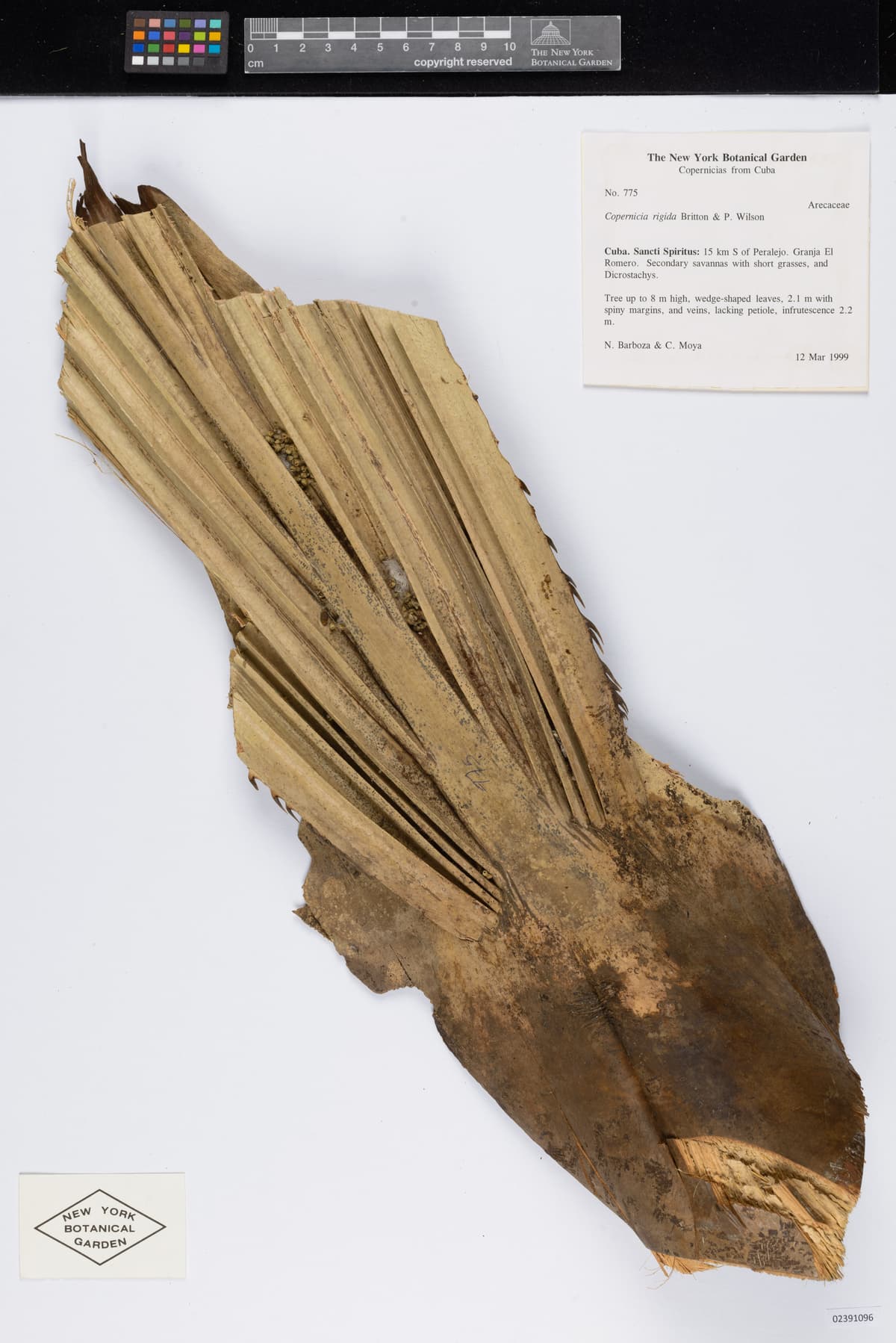
Botanical specimen of Copernicia Rigida.
Botanical specimen of Copernicia Rigida.
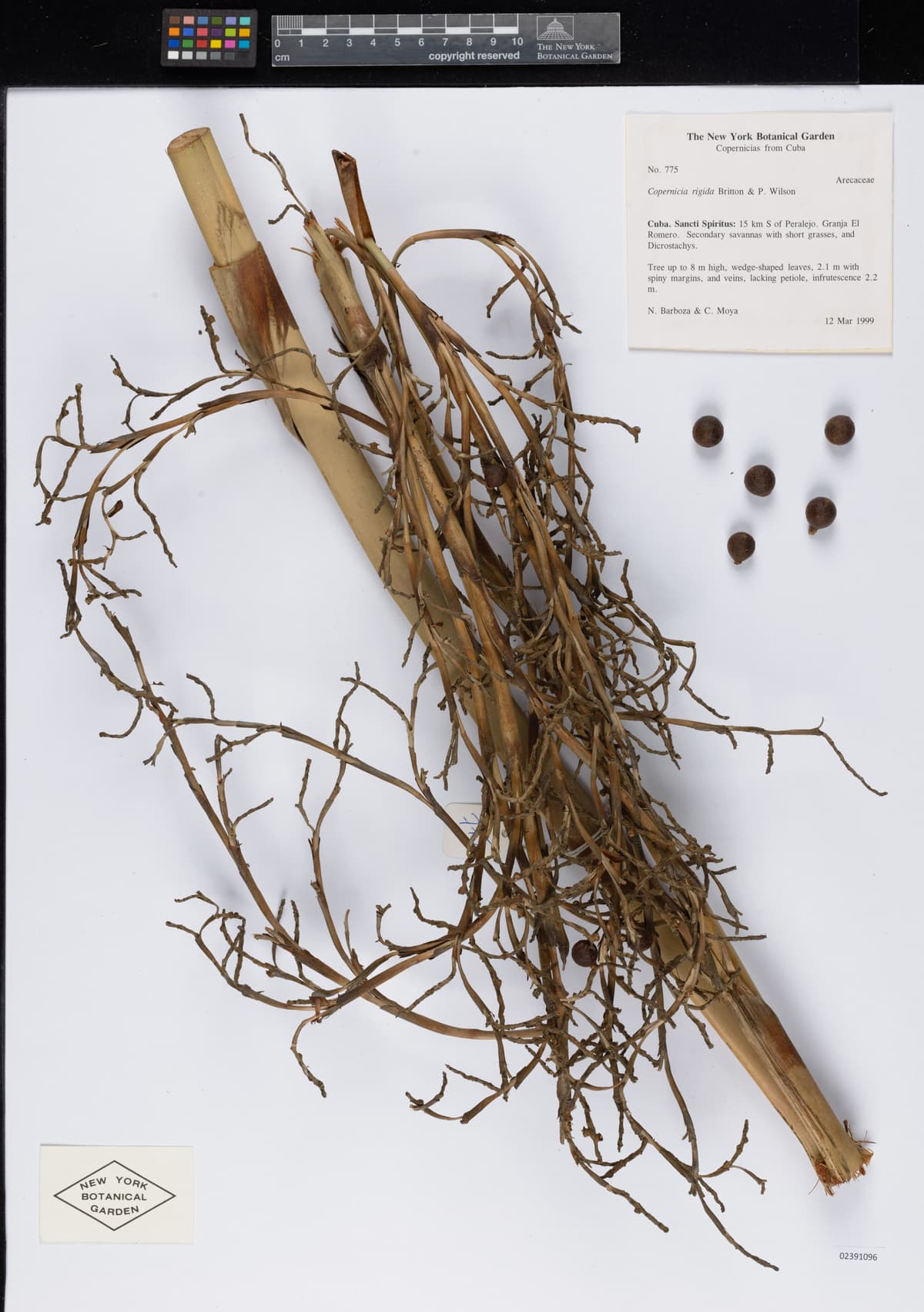
Botanical specimen of Copernicia Rigida.
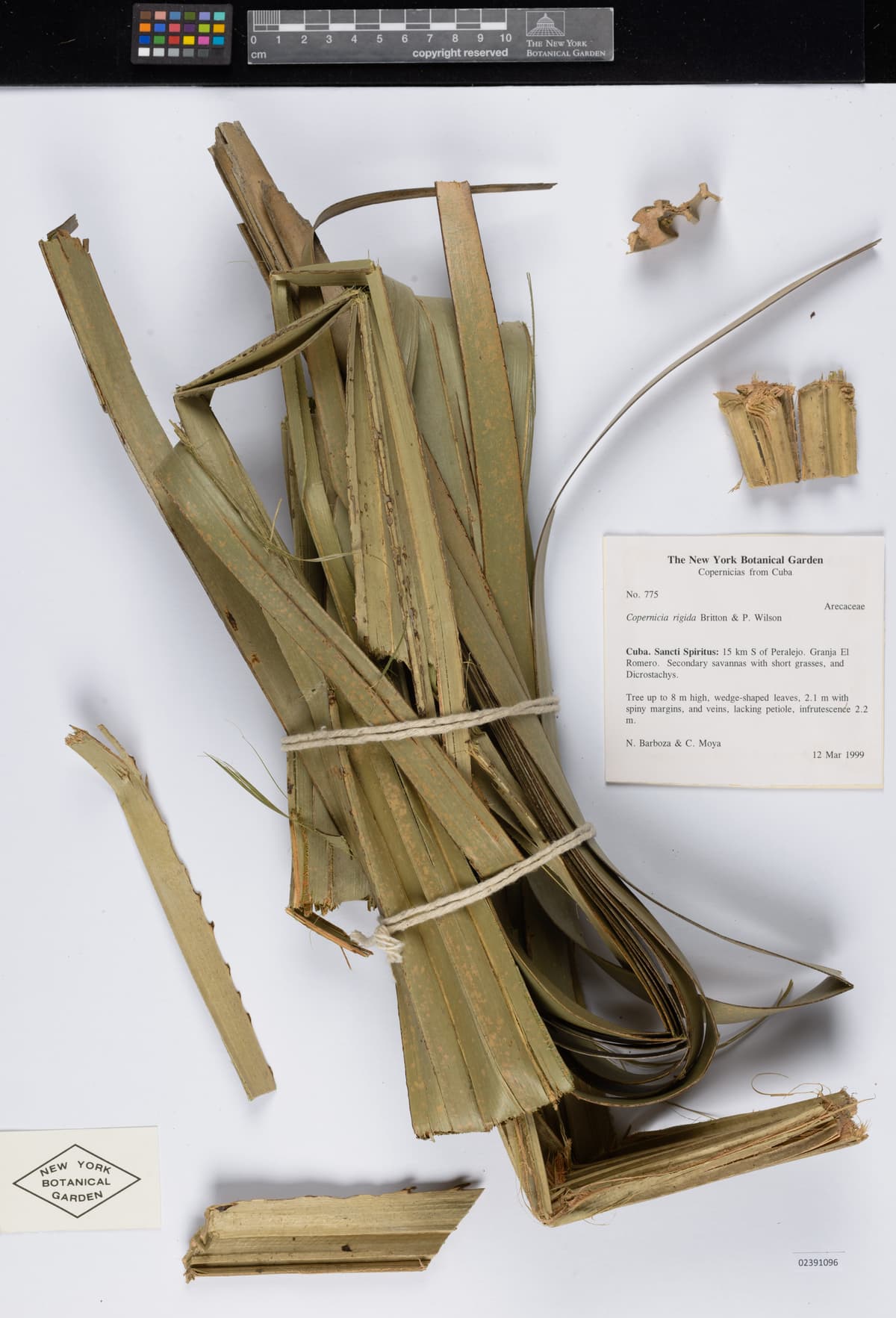
Botanical specimen of Copernicia Rigida.
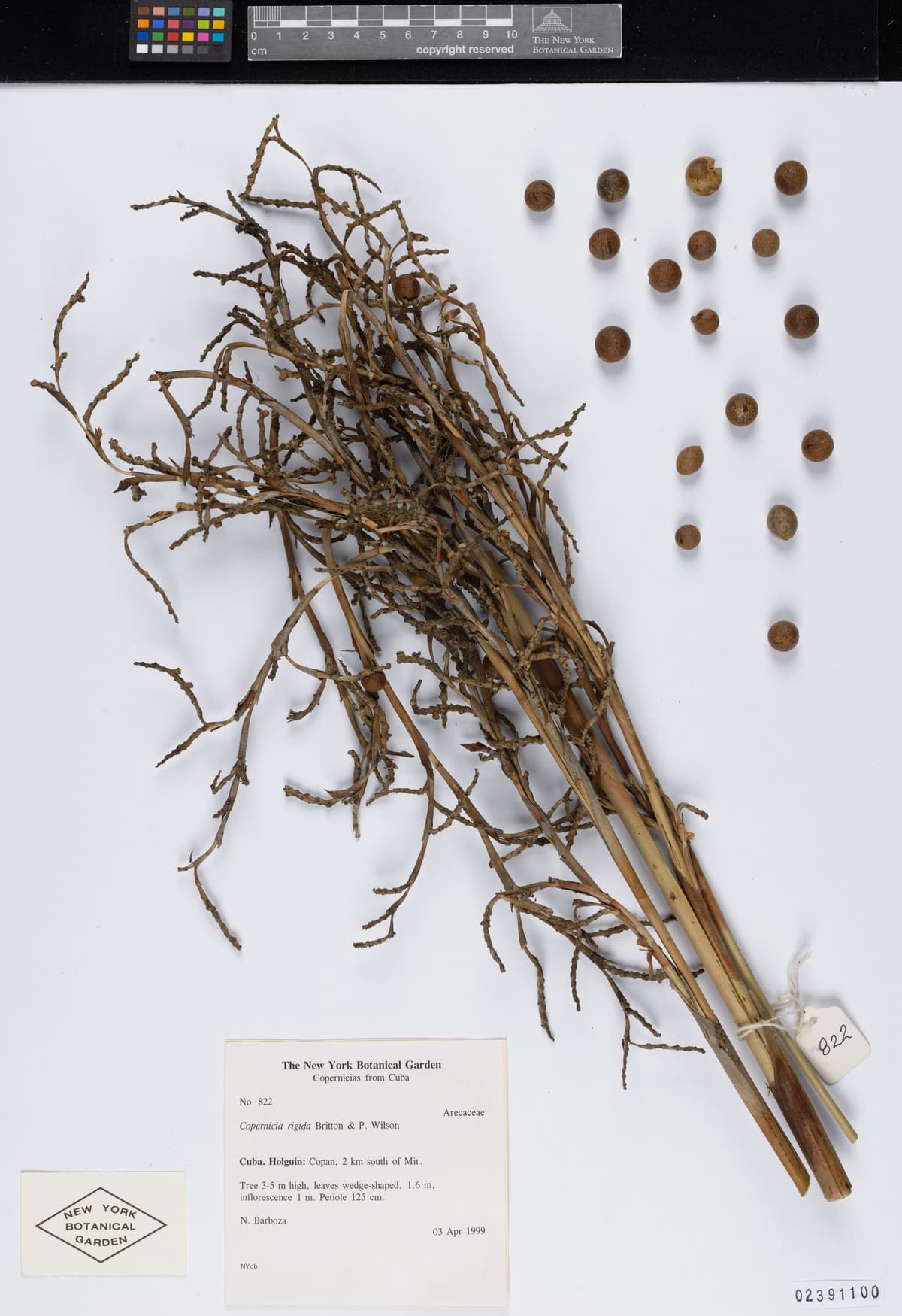
Botanical specimen of Copernicia Rigida.
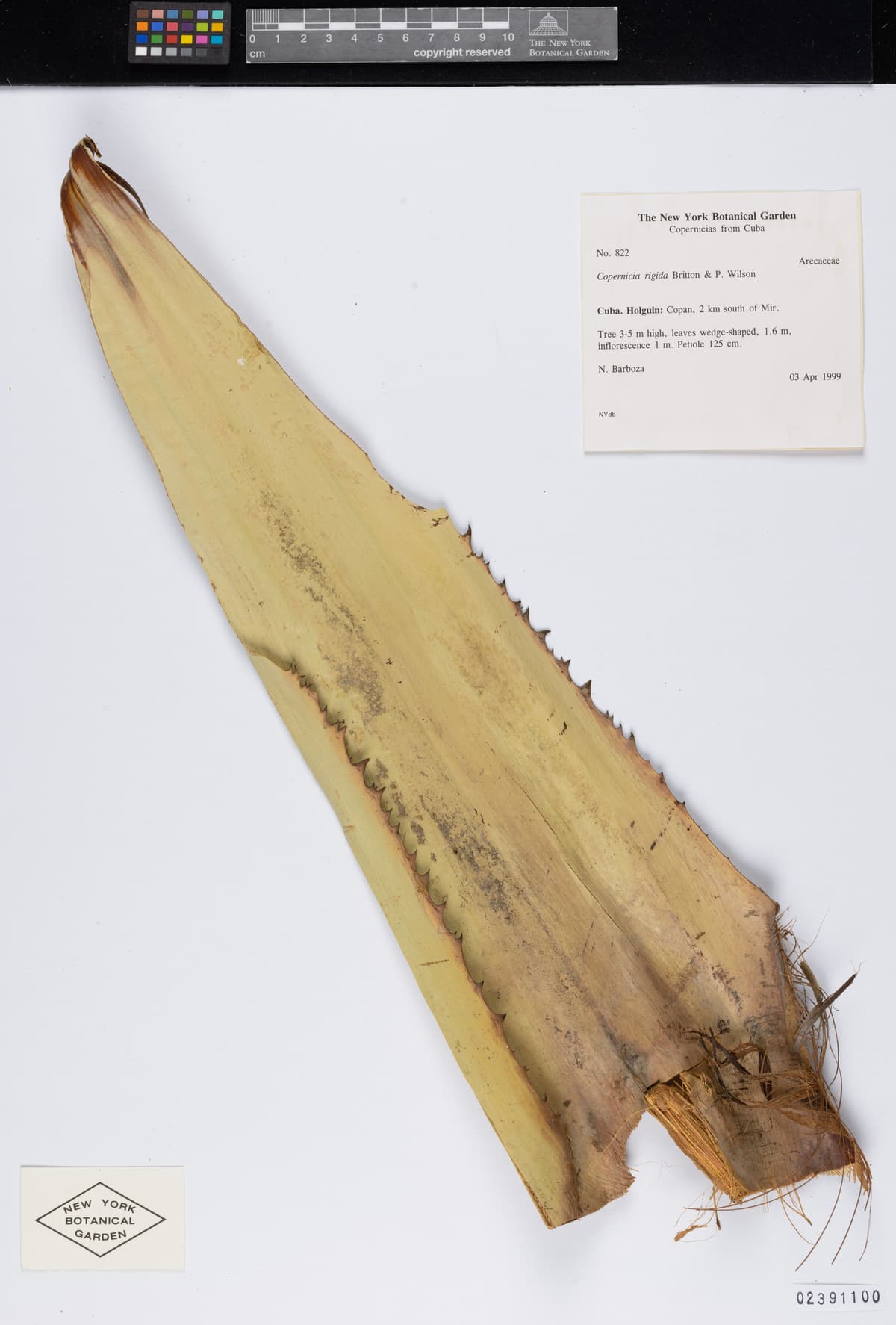
Botanical specimen of Copernicia Rigida.
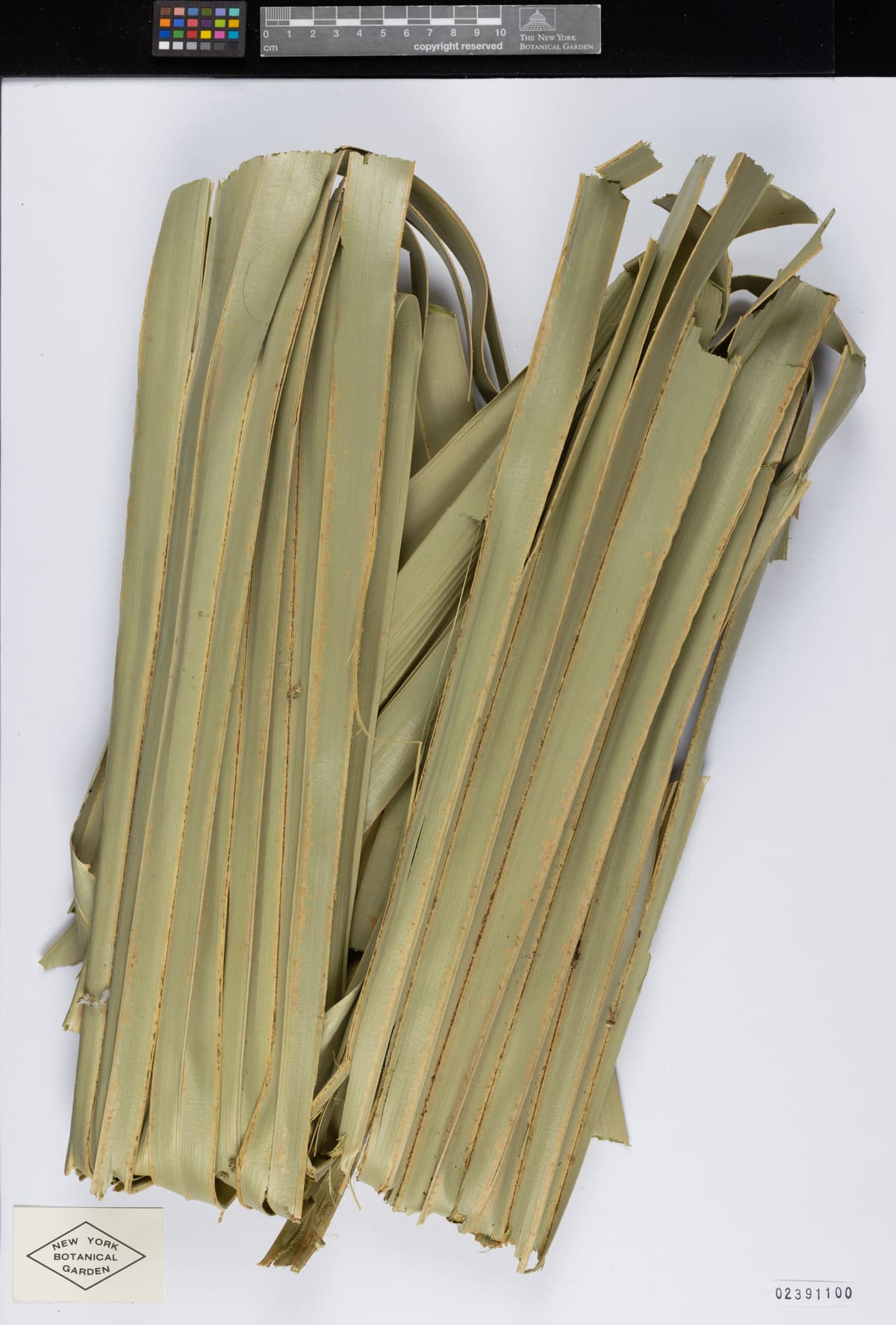
Botanical specimen of Copernicia Rigida.